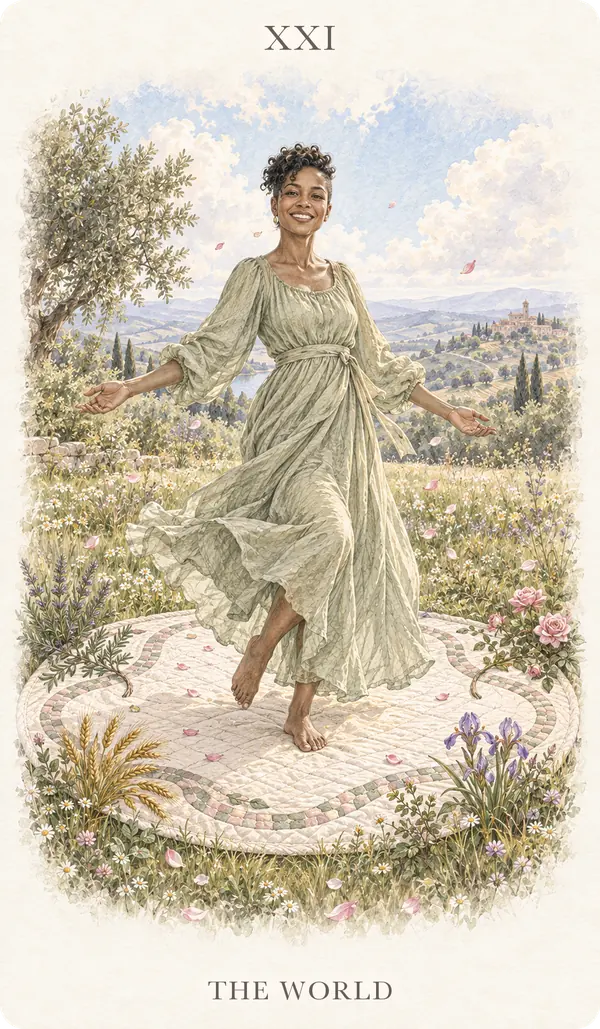
Justice
Justice in Everyday Wonders · Major Arcana XI
ChoiceIn short
Clear judgment, proportion, responsibility and consequences.
Reversed
Justifying a convenient conclusion, judging by appearance, or evading consequences.
- Major Arcana
- 11
- The Weigher of Letters
- clear judgment
- proportion
- responsibility
Upright
Check terms and consequences. Name your part in what happened and make a proportionate decision.
A man sits at a desk beside scales holding two identical sealed letters. One letter casts a feather’s shadow; the other casts the shadow of a stone.
An open ledger and a straight paper knife lie nearby.
A question to sit with
“What must I verify before I make this judgment?”
One step
Name your part in what happened and make a proportionate decision.
Reversed
Justifying a convenient conclusion, judging by appearance, or evading consequences. Two letters that look identical can carry very different weight, and the difference shows only in their shadows.
A verdict reached for comfort, or from the outside of things, tends to cost more later.
A question to sit with
“Does my conclusion hold up past appearances, or does it just happen to suit me?”
One step
Look again at one conclusion you reached quickly, and check one fact behind it.
How this deck reads reversed cards
Reversed, the wonder stalls or goes too far. The linen road may refuse to unroll, the small weather in a cup may spill over, a familiar habit may hide the step that is still open, or a settled pattern may be just beginning to change. It is not the opposite of the upright card and not a worse one, only the same day seen where it catches.
In love
Fair terms and honesty about each person’s part may matter in love now, letters weighed for what they truly carry.
- Supports
- Promises whose terms you both have read.
- Watch for
- Keeping score in a private ledger.
- One step
- Name one thing you added to a recent tension, plainly, as if writing it in a ledger.
Appearances may be doing the judging in love, or one person may be leaving their part of the letter unread.
- Supports
- Asking instead of guessing from the shadow.
- Watch for
- Reading a secret motive into the shape on the desk.
- One step
- Check one assumption about the other person by asking them directly.
At work
A fair, well-checked decision may be called for at work, with every letter opened and read.
- Supports
- Reading the details before breaking the seal.
- Watch for
- Signing off on a letter you haven’t opened.
- One step
- Before agreeing to anything this week, read it through once more with the paper knife beside you.
At work, a convenient conclusion may be covering a real cost, a stone dressed up as a feather.
- Supports
- Double-checking the ledger.
- Watch for
- Blaming others to keep a stone off your own side of the scale.
- One step
- Recheck one figure in the ledger you’ve been relying on.
The better option may be the one whose consequences you can carry, feather or stone.
- Supports
- Weighing each side honestly on the scale.
- Watch for
- Letting two identical envelopes decide by their looks.
- One step
- List what follows from each option, beyond what the envelope looks like.
The answer that’s easiest to justify may be pulling at you before the envelope is even opened.
- Supports
- Honesty about what each letter costs.
- Watch for
- Choosing the verdict first and finding reasons after.
- One step
- Argue for the option you’re not choosing, for five minutes, as fairly as you can.
Growth may lie in weighing your own part honestly, a feather where it was light and a stone where it was heavy.
- Supports
- An honest page in your own ledger.
- Watch for
- Weighing yourself with a heavy thumb on the scale.
- One step
- Name one mistake and one fair, proportionate way to make it right.
Excuses, or judging yourself by the outside of the envelope, may hold growth back.
- Supports
- A fair look at yourself, feather and stone.
- Watch for
- Explaining away what happened.
- One step
- Write down one consequence you’ve avoided weighing, and one small way to meet it.
Fairness and clear agreements may matter at home now, every sealed letter read before anyone decides.
- Supports
- Hearing both sides before the scale settles.
- Watch for
- Judging by the outside of the letter.
- One step
- Before settling a family disagreement, ask each person to put their side on the scale.
A family member may be judged unfairly, or may be dodging their share of the weight.
- Supports
- Clear, fair terms that everyone can read.
- Watch for
- Taking sides before the scale has settled.
- One step
- Ask one family member what they think is fair before you decide.
Yes or no
MixedNoThe answer may follow from what the check shows, so it leans neither way until the terms are clear.
Supports
- The terms can be checked.
- A fair decision is possible.
Limits
- Consequences need weighing first.
- Your own part needs naming.
One step
Read the terms again and list what follows from each side.
A judgment made for convenience leans toward no until the facts are checked.
Supports
- A second look can correct a hasty conclusion.
- Owning a consequence can make it lighter.
Limits
- A convenient answer may be hiding a real cost.
- Appearances may be misleading.
One step
Ask whether you’d reach the same conclusion if it were inconvenient.
What is in the picture
A man sits at a desk beside scales holding two identical sealed letters. One letter casts a feather’s shadow; the other casts the shadow of a stone. An open ledger and a straight paper knife lie nearby.
The letters look the same, yet their shadows show a feather and a stone; the weight of words is read in what follows from them.
- balance scales
- two identical sealed letters
- feather shadow
- stone shadow
- open ledger
- straight paper knife
- stone wall with jasmine
- lemon tree
- fountain
This card in other decks
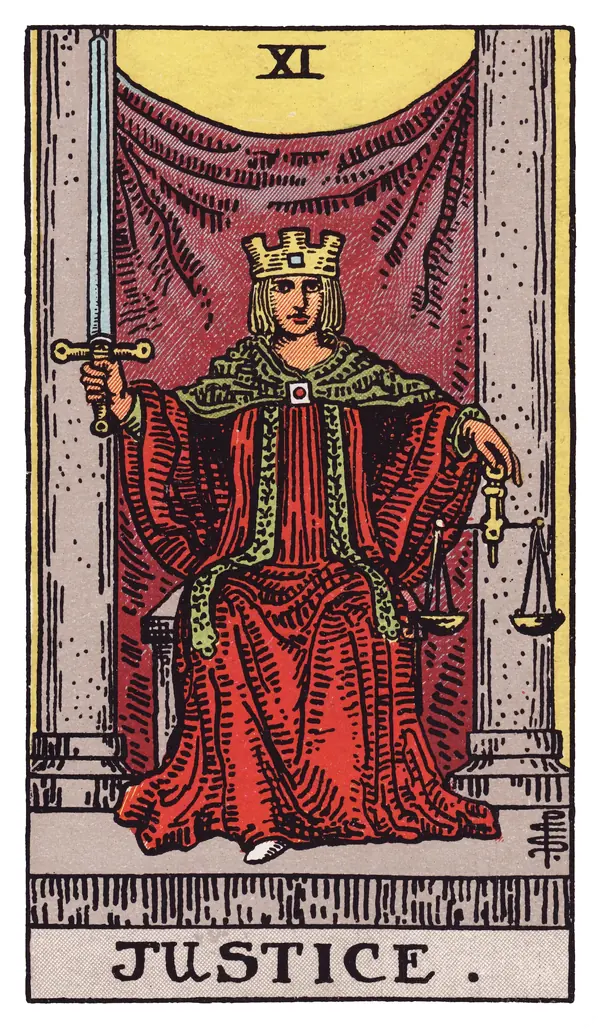 Rider–Waite–SmithJusticeA fair, honest look at the facts, including your own part in them, is what this situation needs right now.
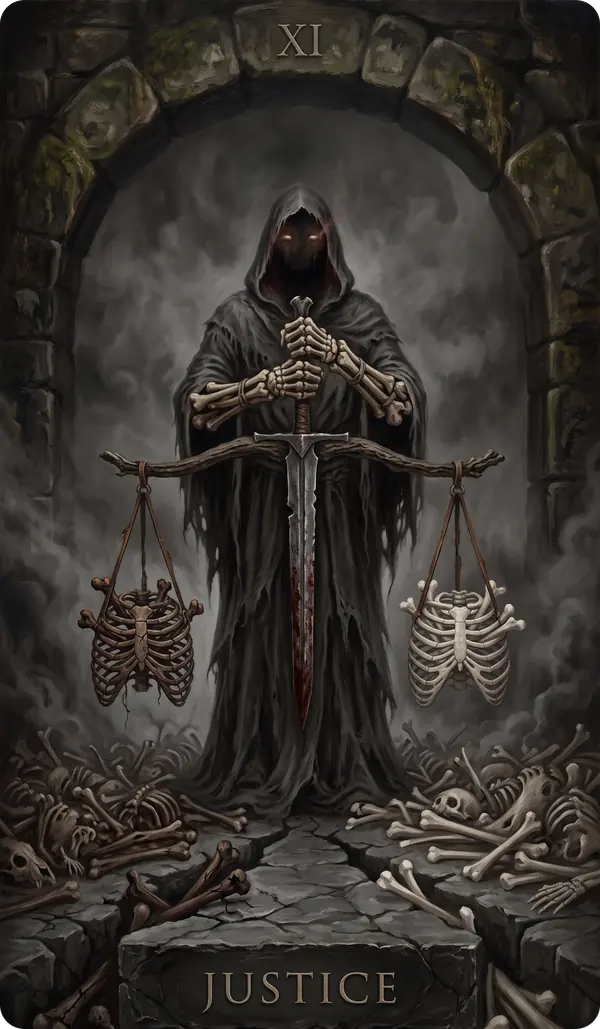 FamiliaJusticeAn honest reckoning across generations: debts and merits weighed evenly, each side receiving what it earned.
 City of WindowsJusticeChecking the facts, owning the consequences of what was done, setting fair terms.
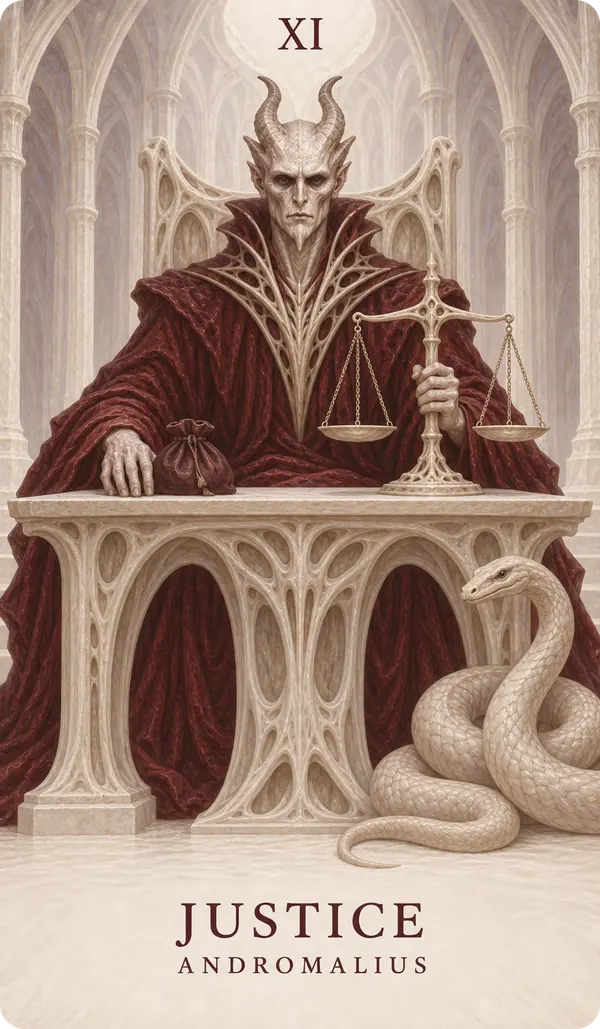 CarnalJusticeAccountability, proportion and the return of what is owed.
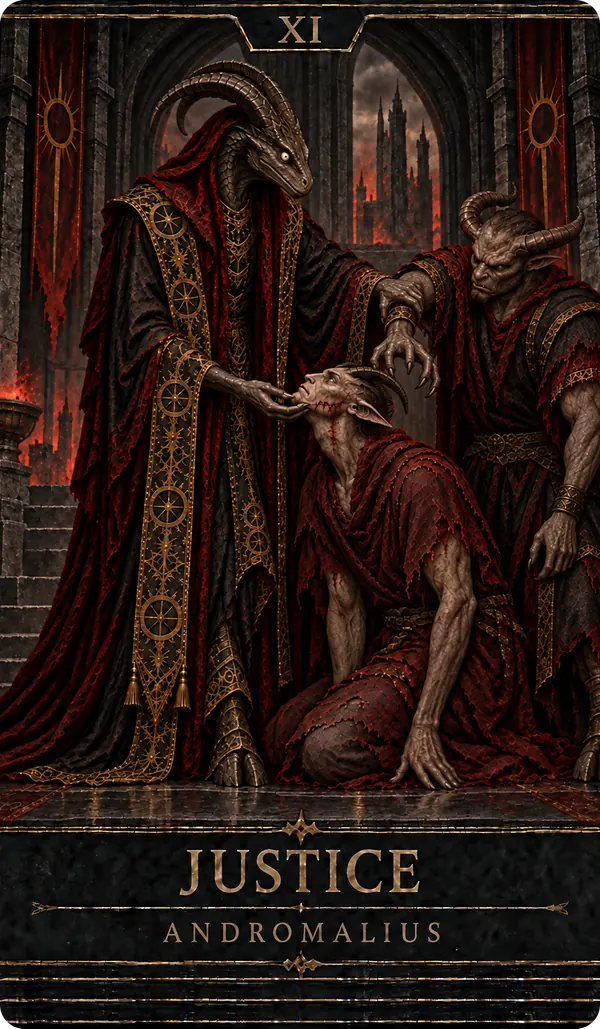 Crimson InfernoJusticeDistinguish proof from pressure.
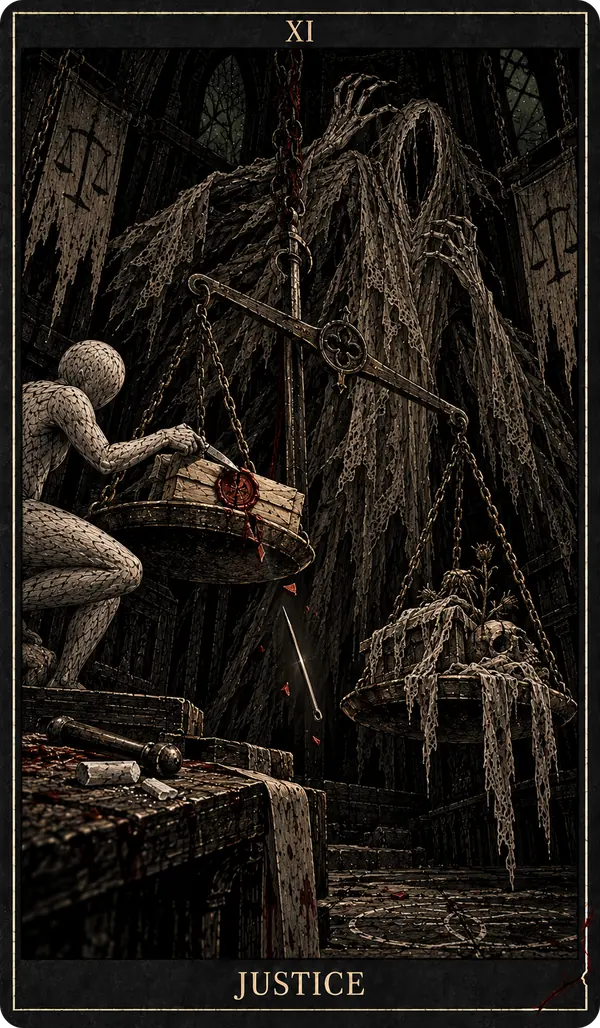 Mirror NightJusticeRevise the verdict when a hidden needle falls.
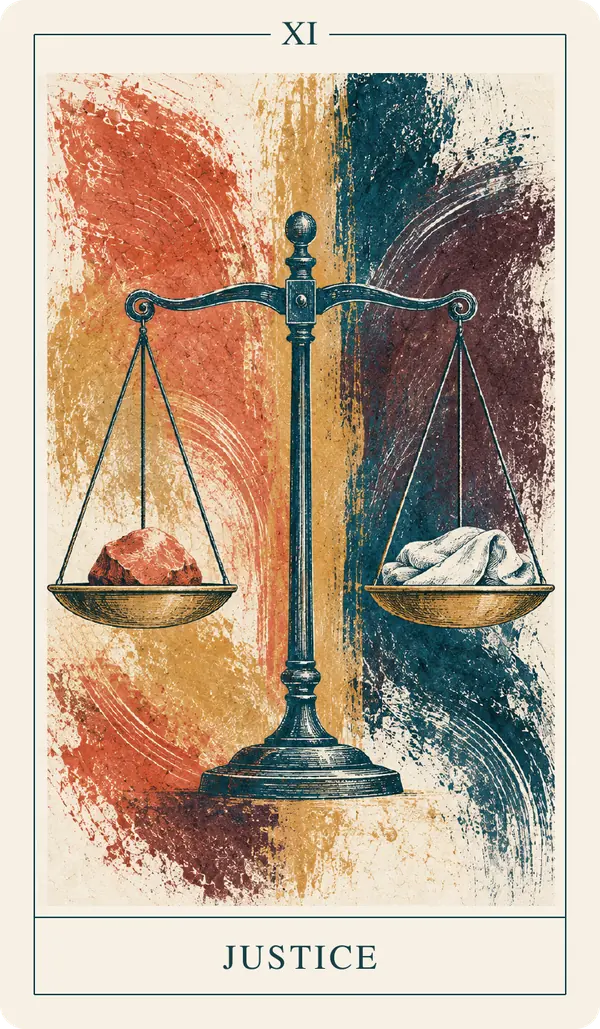 Self ContactJusticeApply the same measure to yourself and others.
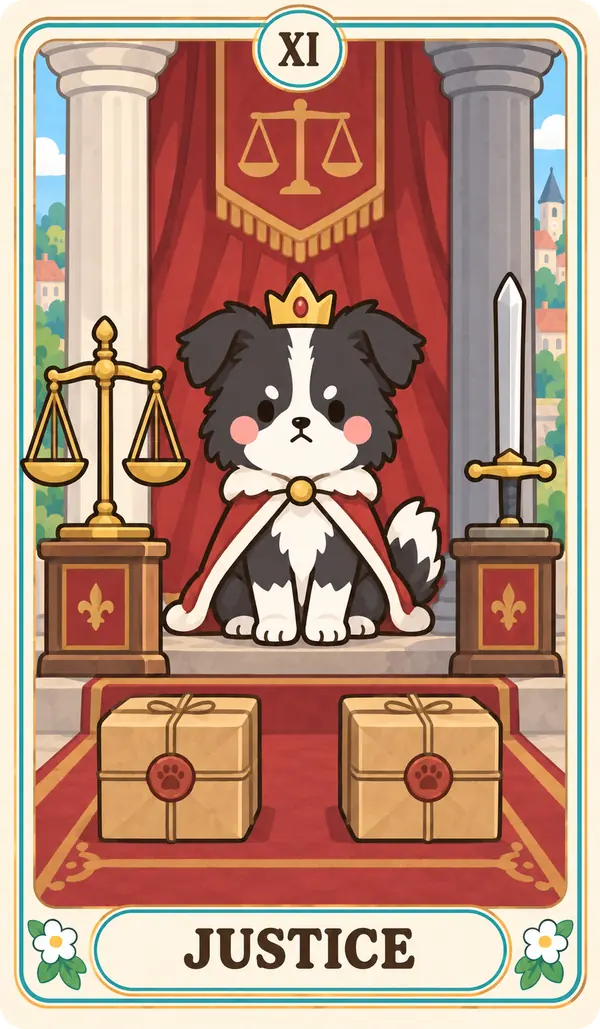 Shiba TownJusticeFairness; accountability; consequences based on facts.
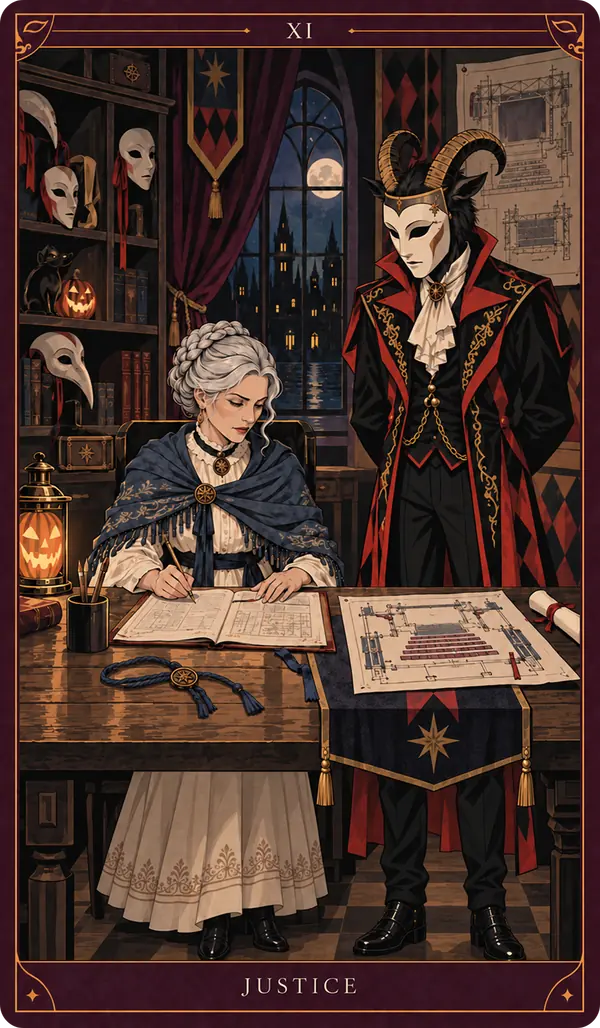 Velvet MasqueradeJusticeA fair consequence grounded in what can be checked.
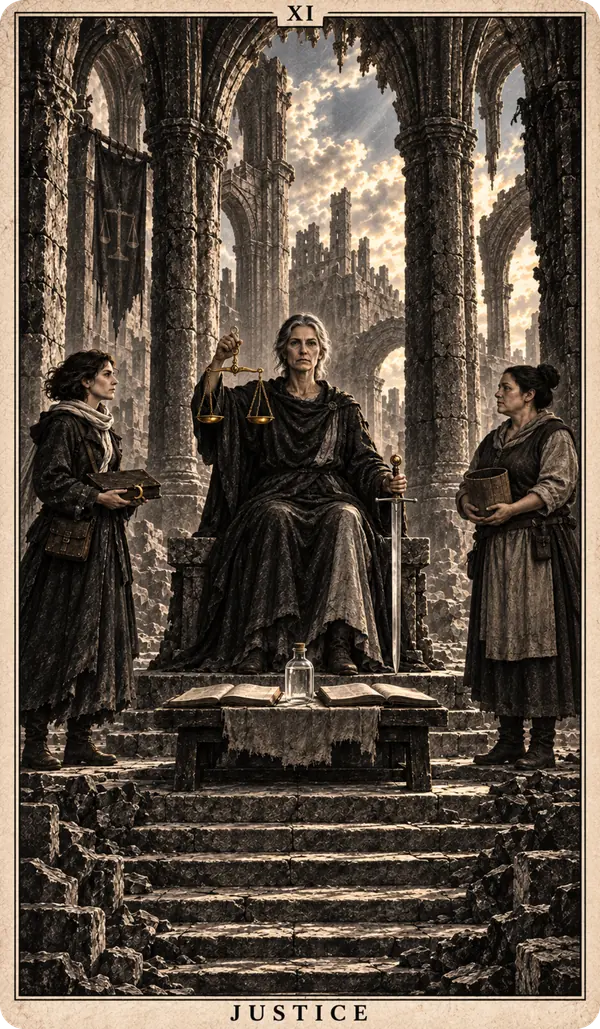 Four HorsemenJusticeExamine evidence, own your part and choose a proportionate response.
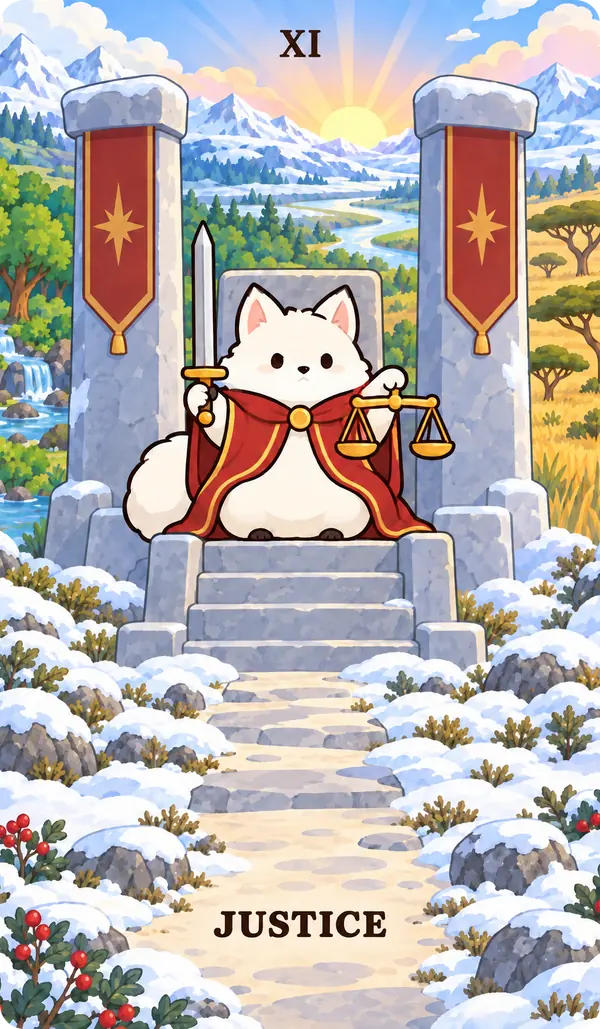 Four TrailsJusticeFairness, truth, consequences.
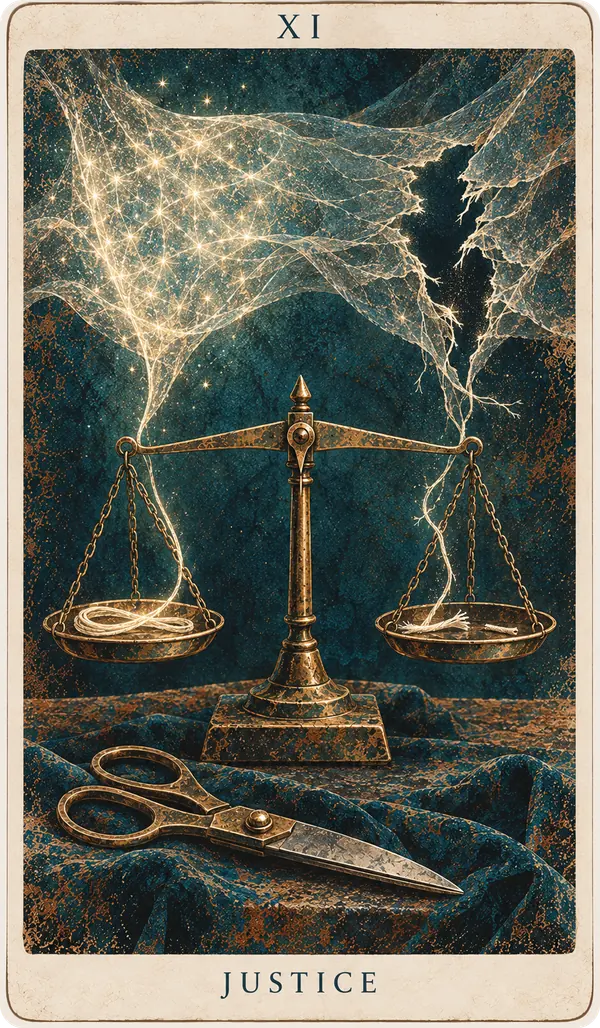 Living ThresholdJusticeThe balance reveals what a cut changes and where the fabric still needs mending.
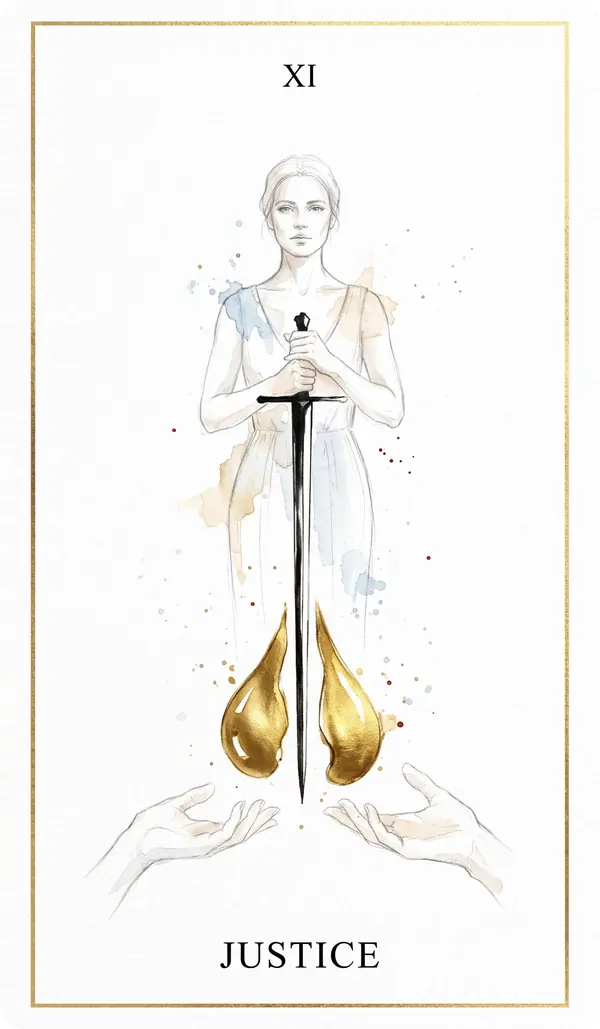 Colour of PowerJusticeAn honest cut: what was invested is counted, and the clean need not fear.
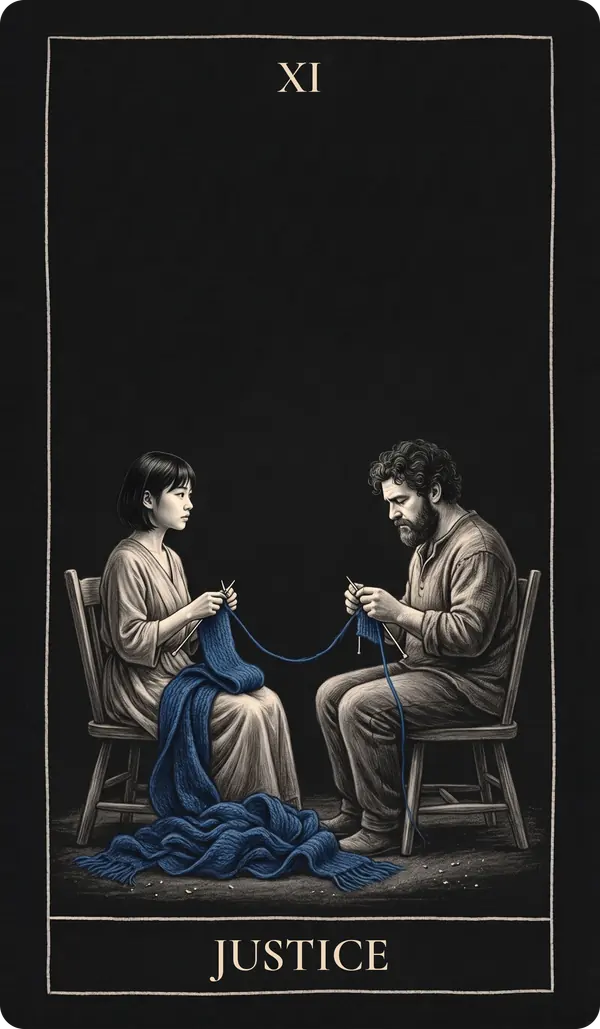 BoundJusticeAn honest count: the thread shows who has knitted how much.
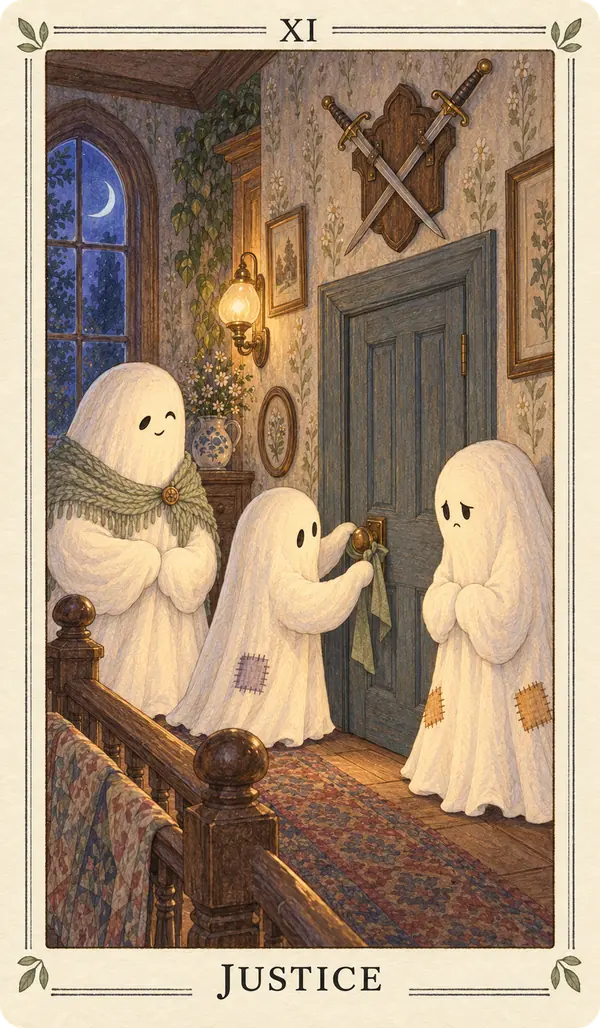 Cozy HauntJusticeAccountability and a fair boundary.
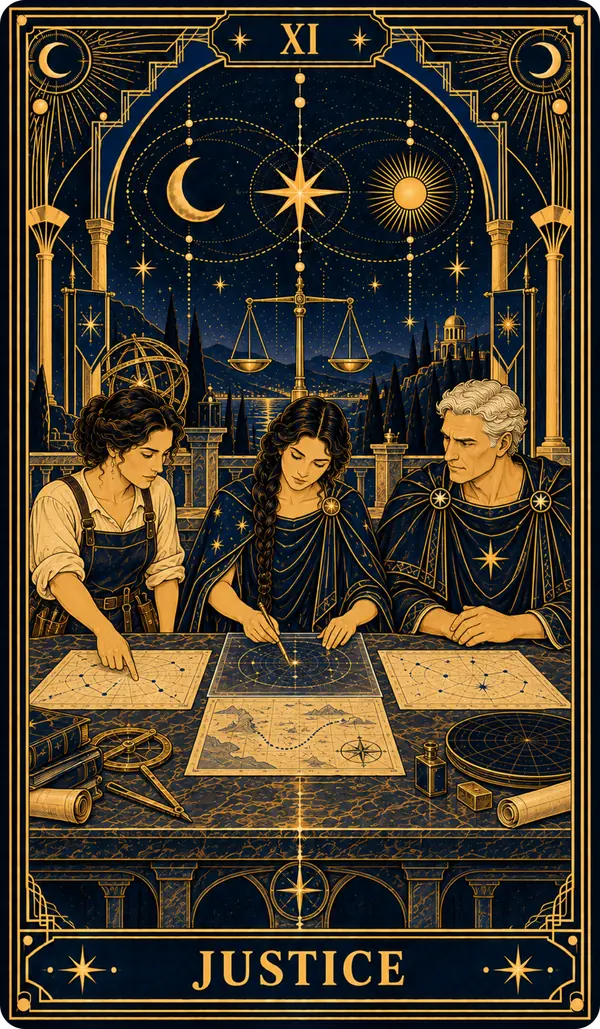 Celestial Night SkyJusticeAn answer open to checking.
Where it appears
Questions about this card
Is Justice a yes or no card in Everyday Wonders?
Justice is mixed upright: the answer follows from what the check shows, so it leans neither way until the terms are clear. Reversed, it leans no, because a judgment made for convenience or by appearance does not survive the facts. Read the terms or figures once, slowly, before you commit to either side.
What does Justice mean in love?
In love, Justice upright puts fair terms and honesty about each person’s part on the table, letters weighed for what they truly carry. Reversed, appearances may be doing the judging, or one person leaves their part of the letter unread. Check one assumption about the other person by asking them directly, and name one thing you added to a recent tension.
What does Justice mean reversed in Everyday Wonders?
Upside down, Justice shows a conclusion chosen for its convenience, a verdict passed on appearances, or consequences quietly dodged. The scales are still on the desk, and the letters are still sealed. Open one of them: pick the claim you are surest of and look for the evidence behind it.