Justice
Justice in Living Threshold · Major Arcana XI
ProtectionIn short
The balance reveals what a cut changes and where the fabric still needs mending.
Reversed
A verdict hides its cost, or incomplete facts are pressed into a simple answer.
- Major Arcana
- 11
- The Witnessing Scales
- fair limits
- visible consequences
- repair
Upright
Fairness needs clear facts, a response that fits what happened, and rules that hold for everyone. In a boundary dispute, identify what happened, what agreement existed, and what response fits the actual consequence. An esoteric reading can use the growing fabric to explore connections and costs symbolically. Keep the interpretation accountable to the question.
A separation may be necessary and still leave a tear worth acknowledging. Make room for repair, restitution or a revised agreement wherever they belong. The closed shears rest below the scales; the cut is done, and the torn fabric above shows what it changed.
A limit may hold more fairly when you also give the hurt it leaves a place in the conversation.
A question to sit with
“What consequence must I acknowledge before calling this fair?”
One step
Write one plain sentence about a limit and one about the care needed after it.
Reversed
Judgement may favour the person setting the rules while concealing who bears their cost. You may also want a simple verdict from a situation whose facts remain incomplete. Look at the rule being used. Would it apply equally if the positions were exchanged?
Which consequence has been left outside the balance? A fairer response begins by restoring the missing information and admitting the effect of your own choices. Both pans of the scales hang under the same fabric, so neither outcome can be set aside.
Your answer may need the part of the story that has been left on the farther side.
A question to sit with
“Whose side of the balance have I left out of my answer?”
One step
Ask for one missing detail before you give an answer about what would be fair.
How this deck reads reversed cards
Reversed, the living things work against the grain. An opening jams, a ward is pulled too tight, a lining has worn thin from long service, or a capacity that went quiet starts to come back. What changes is how the boundary does its work: a shelter may need loosening, a channel a gentler flow.
In love
Seeing both pans may help love keep a necessary limit while tending the tear it leaves.
- Supports
- A shared rule with care for its effects.
- Watch for
- Calling the cloth whole because the balance looks even.
- One step
- Say how one limit affects you and invite the other person to speak about their side.
One side of the torn cloth may carry the cost in a bond where the other side keeps naming the rule.
- Supports
- A pause that lets the missing side be heard.
- Watch for
- Asking for a simple verdict while the fabric still shows two different costs.
- One step
- Ask the other person for one detail you have not yet heard, then listen before replying.
At work
A clear workplace rule may hold more fairly when both sides of the balance leave room for mending.
- Supports
- A visible account of who carries the cost of the cut.
- Watch for
- Keeping the cost off the scales because the task is finished.
- One step
- Ask who will take care of one unfinished detail before agreeing on the next task.
Beyond the visible balance, an unseen work burden may remain after the task looks finished.
- Supports
- Bringing the cut-off thread back into view.
- Watch for
- Calling a rule fair from only one side of the scales.
- One step
- Name one piece of work still left over and ask who has room to help with it.
The fairer choice may show both its useful edge and the tear it could leave.
- Supports
- Room to name the cost of either answer.
- Watch for
- Choosing the neatest verdict over the fullest view of the cloth.
- One step
- List a benefit and a cost of each option, then ask about a missing detail.
One missing thread may leave a choice less fairly weighed than its neat answer suggests.
- Supports
- More light on the pan of the scales you have barely seen.
- Watch for
- Treating a confident answer as a full view of the cloth.
- One step
- List one thing you do not yet know and seek that detail before deciding.
Acknowledging your own cut may let growth begin at the place where the fabric needs a small repair.
- Supports
- Honesty after the shears have stopped cutting.
- Watch for
- Using a fair intention to hide a visible tear.
- One step
- Write one sentence acknowledging the effect of something you said, and keep it ready for a conversation.
Hiding the tear left by your own words may keep a growing practice of fairness outside its shelter.
- Supports
- A small mending made without defending the cut.
- Watch for
- Pointing to the level scales to avoid acknowledging the cut threads.
- One step
- Write a plain sentence about one effect of your action, without explaining it away.
At home, fairness may need the whole cloth seen, not only whose pan of the scales seems heavier.
- Supports
- The same rule applied from either side of the scales.
- Watch for
- Calling a limit equal while one side carries the cost of the cut.
- One step
- Ask how one shared rule feels from someone else’s place before asking them to follow it.
A family rule may seem equal while one person, tired and left at the torn edge, stays outside the shelter.
- Supports
- Listening from the farther side of the scales.
- Watch for
- Expecting the person who bears the cost of the cut to keep silent.
- One step
- Invite someone at home to name one part of a shared task that has felt uneven.
Yes or no
YesMixedThe balance leaves both light and tear visible, so the answer leans yes to a fair limit with care for its effects.
Supports
- Both pans bring their consequences into view.
- The shears rest while the tear is acknowledged.
Limits
- Level scales cannot make the cloth whole.
- A useful limit may still leave care to be given.
One step
Put into words an effect of your choice on each side and name a small piece of mending you can offer.
The torn edge has not yet been fully weighed, so the answer stays mixed while the missing side is heard.
Supports
- A missing thread can be brought back into the weighing.
- Keeping the shears at rest leaves time to hear another side.
Limits
- A confident verdict may hide an uneven burden.
- The facts in one pan may still be incomplete.
One step
Ask for one missing detail and leave your final answer open until you hear it.
What is in the picture
A brass balance holds an intact thread opposite a severed length and its scrap. Threads rise from both pans into a translucent fabric, carrying connected light on one side and an open dark tear on the other.
The pointer settles at the centre. Closed shears remain below, preserving the distinction between the act of cutting and the judgement of its effects. The threads disclose the different consequences of remaining whole and being cut. The settled balance cannot erase either outcome.
- brass balance
- intact coiled thread
- severed thread and scrap
- luminous fabric
- dark tear
- closed shears
This card in other decks
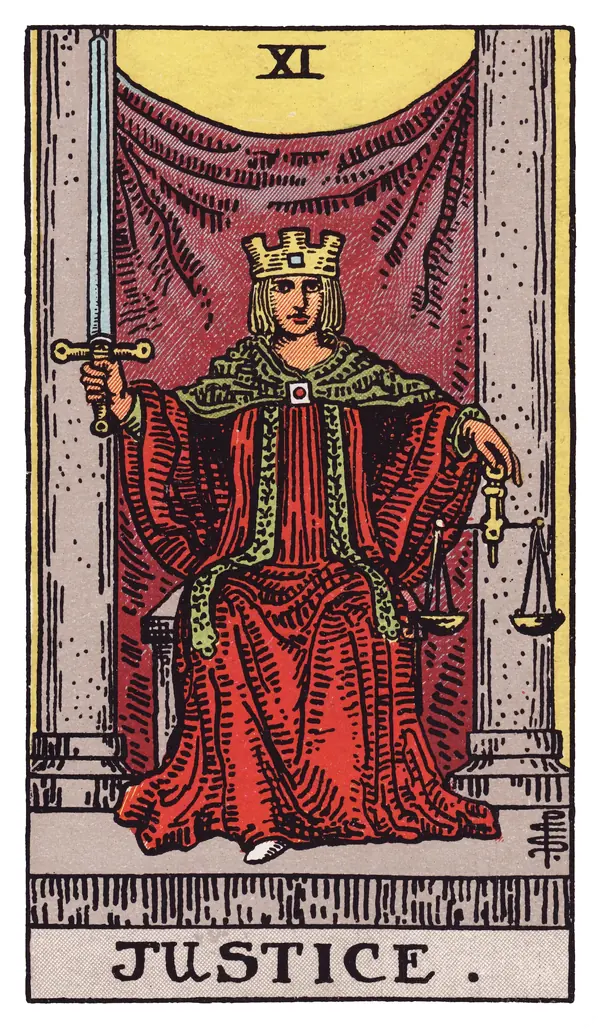 Rider–Waite–SmithJusticeA fair, honest look at the facts, including your own part in them, is what this situation needs right now.
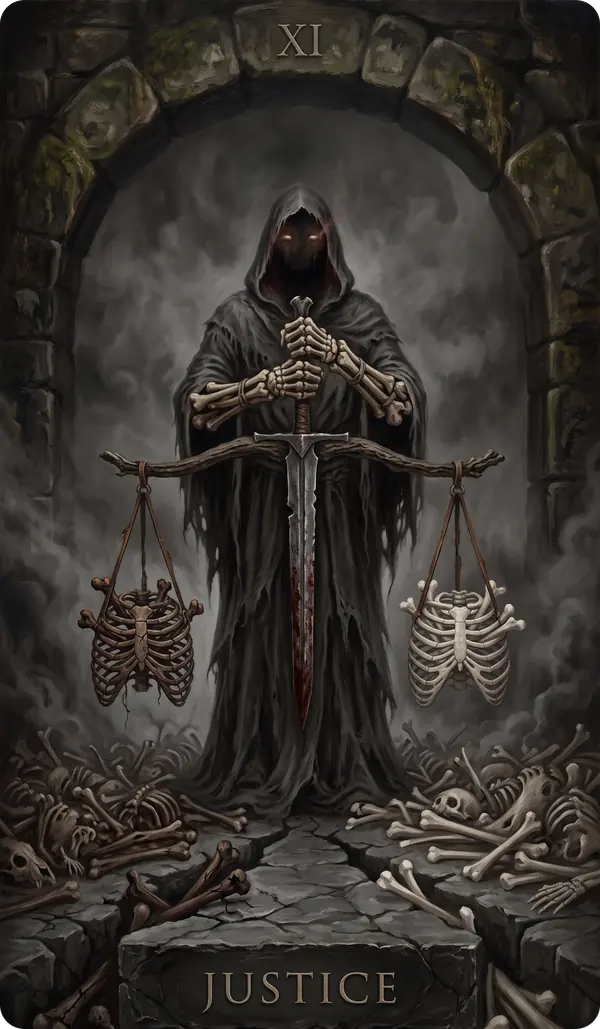 FamiliaJusticeAn honest reckoning across generations: debts and merits weighed evenly, each side receiving what it earned.
 City of WindowsJusticeChecking the facts, owning the consequences of what was done, setting fair terms.
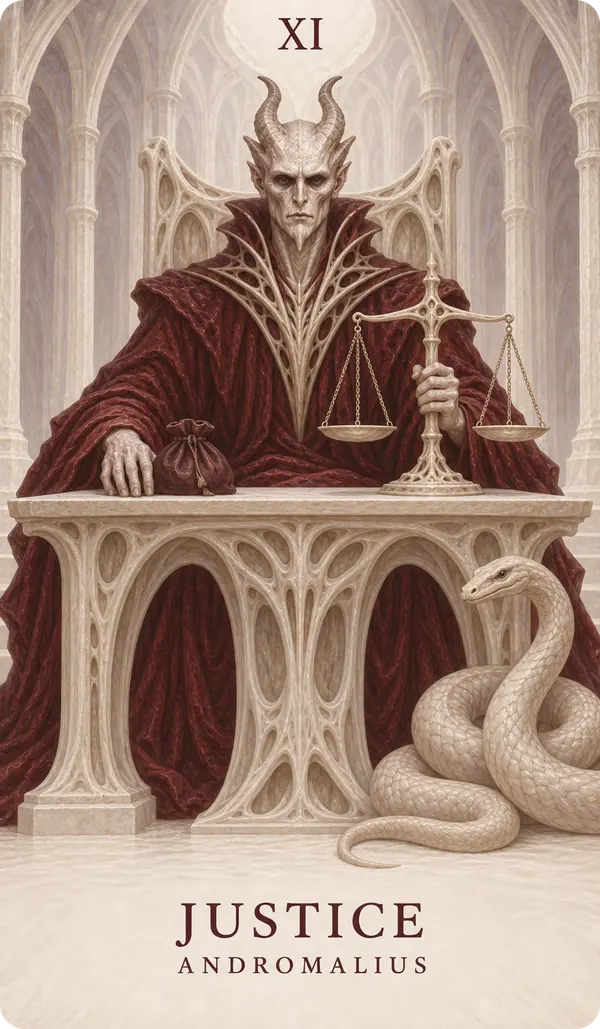 CarnalJusticeAccountability, proportion and the return of what is owed.
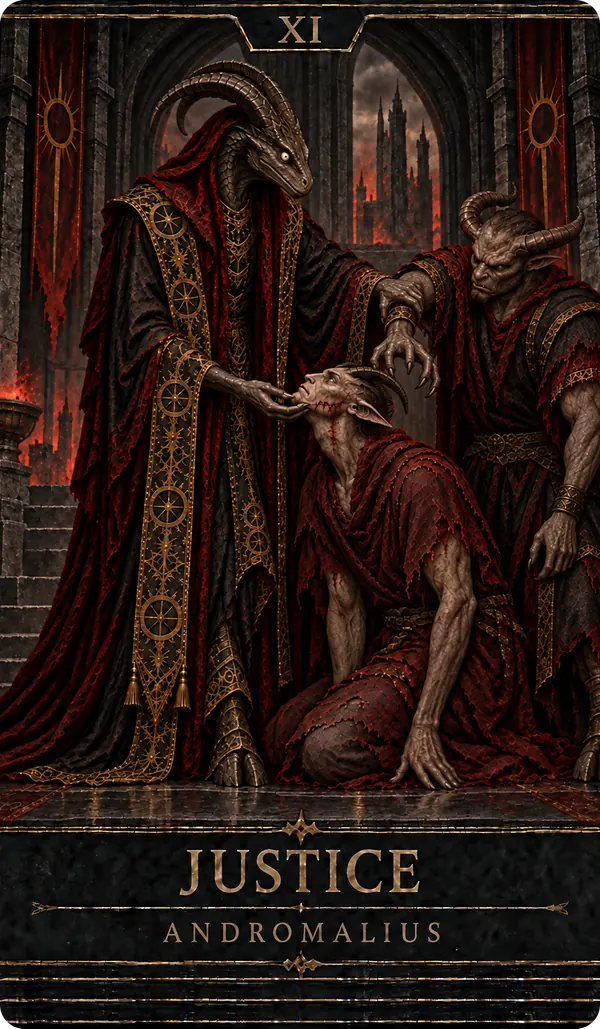 Crimson InfernoJusticeDistinguish proof from pressure.
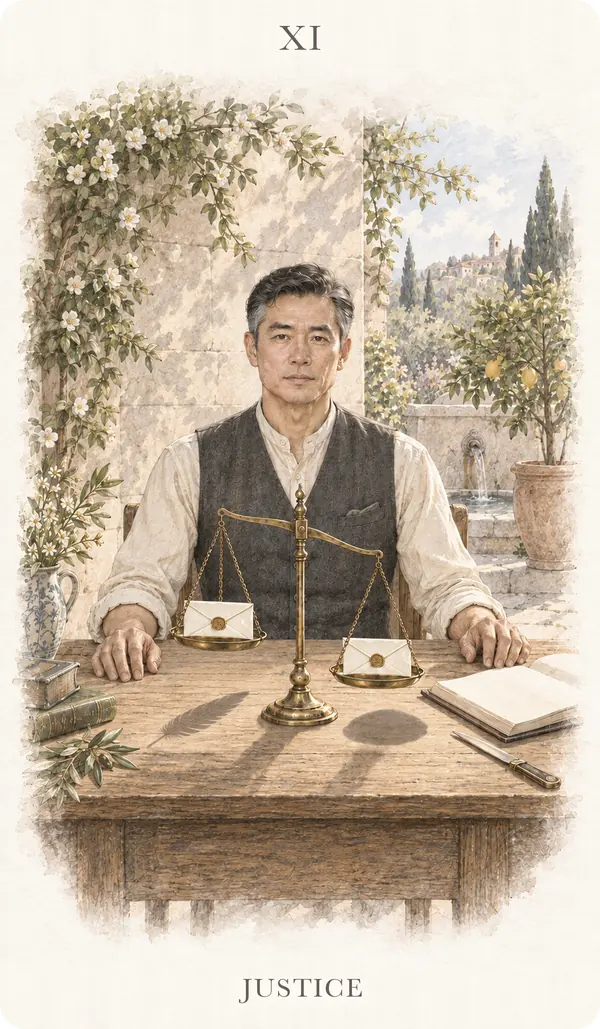 Everyday WondersJusticeClear judgment, proportion, responsibility and consequences.
 Mirror NightJusticeRevise the verdict when a hidden needle falls.
 Self ContactJusticeApply the same measure to yourself and others.
 Shiba TownJusticeFairness; accountability; consequences based on facts.
 Velvet MasqueradeJusticeA fair consequence grounded in what can be checked.
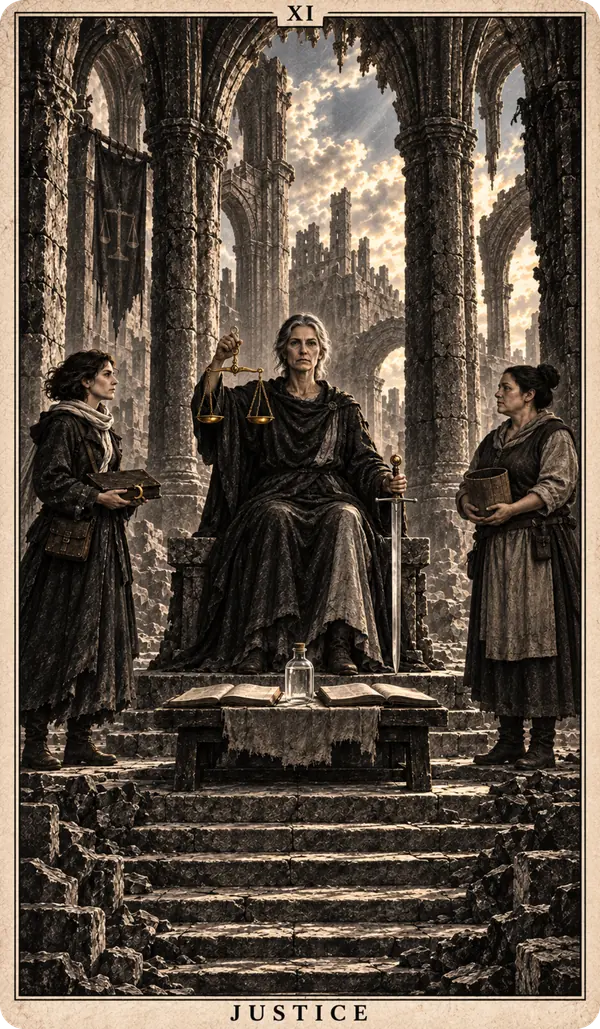 Four HorsemenJusticeExamine evidence, own your part and choose a proportionate response.
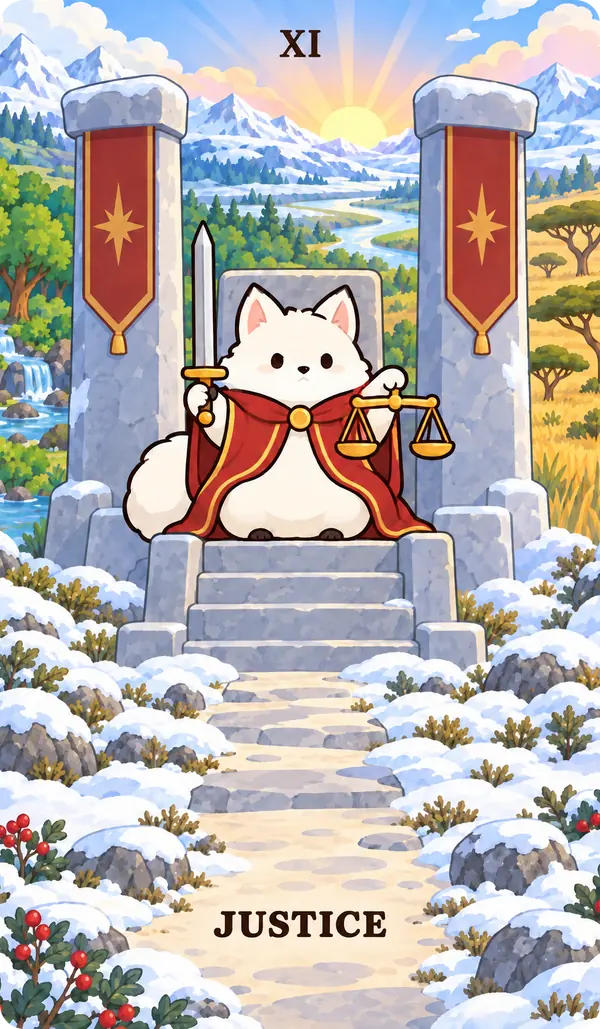 Four TrailsJusticeFairness, truth, consequences.
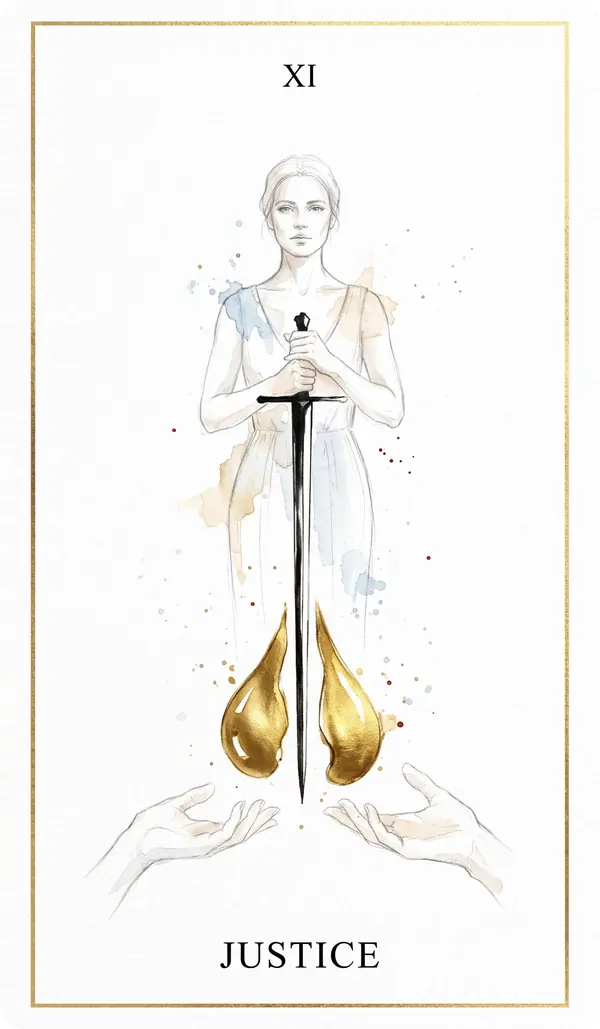 Colour of PowerJusticeAn honest cut: what was invested is counted, and the clean need not fear.
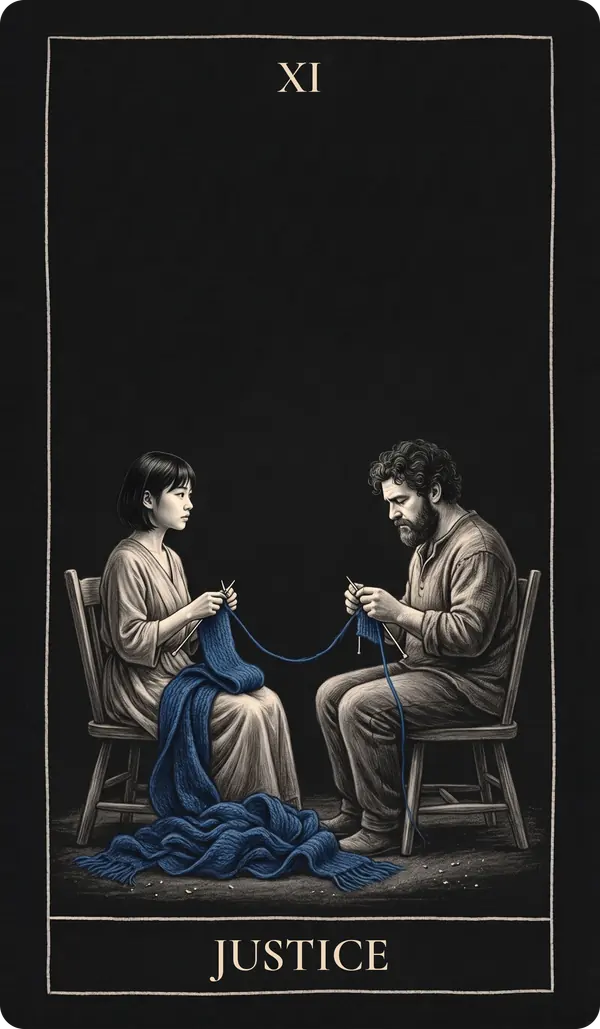 BoundJusticeAn honest count: the thread shows who has knitted how much.
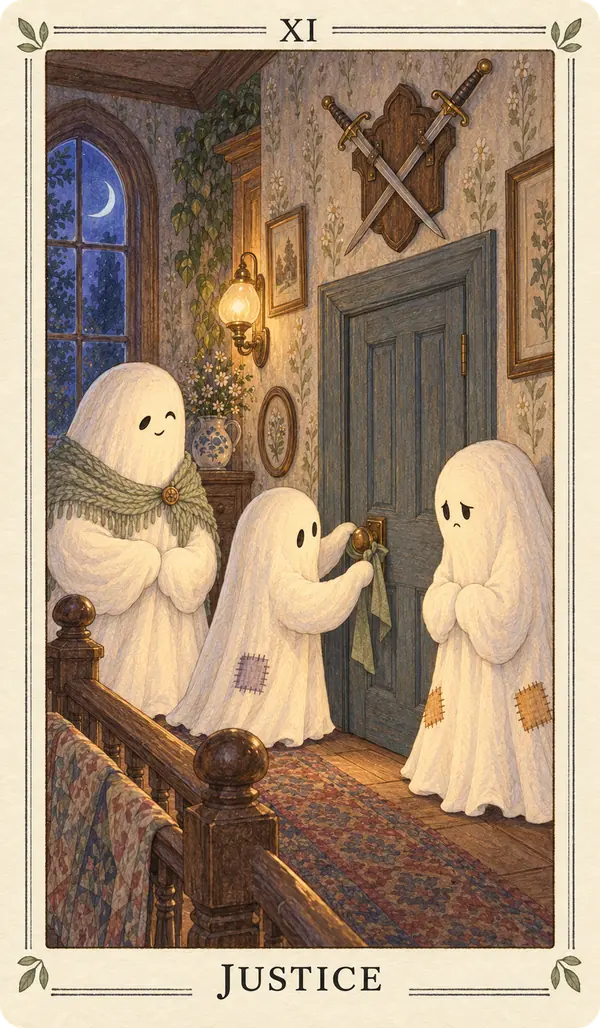 Cozy HauntJusticeAccountability and a fair boundary.
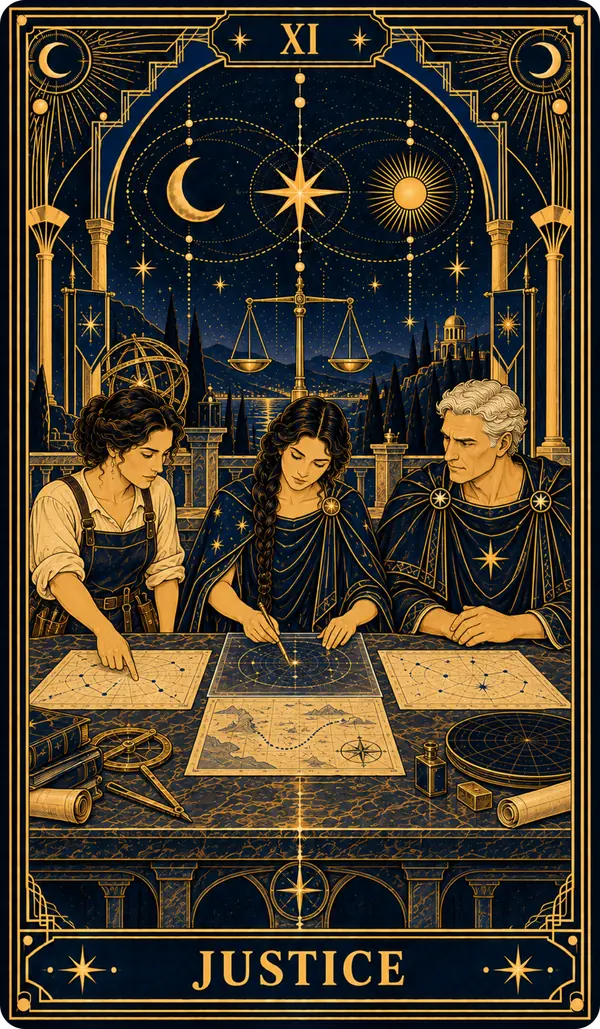 Celestial Night SkyJusticeAn answer open to checking.
Where it appears
Questions about this card
Is Justice a yes or no card in The Living Threshold Tarot?
Justice leans yes upright to a fair limit that pays attention to what it changes. Both light and a tear appear above the balance. Reversed, the answer is mixed until the missing side can be heard. Ask for one absent detail and offer a small piece of mending where your choice touches someone else.
What does Justice mean for protection and boundaries?
The balance may show protection whose effects need room on both sides of a threshold. A cut can free one thread and leave another edge torn. Let the ward include care for what it changes. Say how a limit affects you, invite the other person’s reply, and name one kindness you can still offer.
What does Justice mean reversed in The Living Threshold Tarot?
A torn edge may remain unheard when Justice is reversed. The rule protecting one side can leave its cost on the other, or a final answer may arrive before the whole story. Keep the threshold open to one more detail. Ask what has been left out before putting your refusal or welcome into final words.