What a reversed card is
A reversed card is one that lands upside down, with the picture facing away from you. Whether that means anything depends on the reader. Some turn every card upright and never think about it again. Others read a reversal as its own meaning, a variation on the upright card. Both are ordinary ways to work, and neither is the one correct method.
If you use reversals, you are working with 156 meanings instead of 78. That is more to learn, and it also lets a single card say more. A spark that is ready to go and a spark that keeps stalling are different situations, and a reversal lets one card tell them apart.
Trouble starts when a reversal is read as a verdict. The most common shortcut treats upside down as bad, or as the plain opposite of the upright card. It is quick, and it misses a lot. Below you’ll find how our decks read reversals, the approaches readers use more generally, and three cards worked through side by side.
Situation · Obstacle · Next Step
Untangle what is happening, what is in the way, and where you can move next.
- Situation
- Obstacle
- Next step
How our decks read a reversed card
Each deck on this site states its own rule for reversals, and its card texts are written to that rule. In our Rider–Waite–Smith deck a reversal is not the flat opposite of the upright card. It keeps the same energy and shows it shifted: blocked, turned inward, exaggerated or handled carelessly. The reversed meaning is written as a reading of its own, not as the upright one with a minus sign.
Familia puts the idea in its own terms. There a reversed card is not a weaker copy of the upright one. It shows the same force moving the other way, held back or pulled down into old patterns. The deck asks you to read where the strength is going, rather than treat the card as switched off.
The two rules agree on one thing: the card’s theme survives the turn.
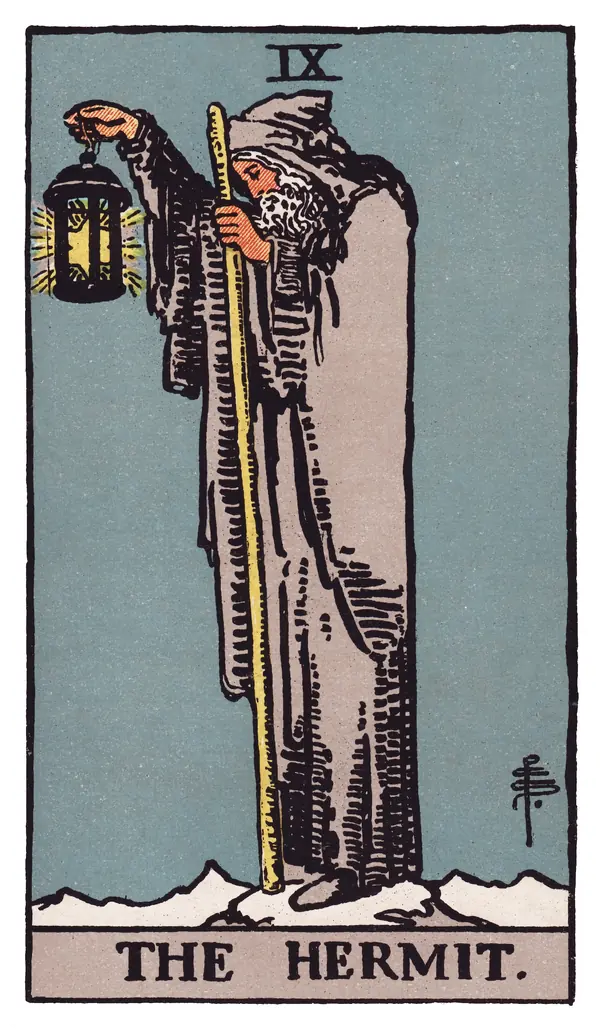
The two rules agree on one thing: the card’s theme survives the turn. A reversed Hermit is still about solitude, and a reversed Queen of Cups is still about feeling. What changes is how that theme is moving, and that movement is what you read.
Four common ways to read a reversal
Outside any single deck, readers lean on a handful of approaches. They are habits of reading, not laws, and many readers switch between them depending on the card and the question. These are the ones you meet most often:
- Blocked or delayed. The card’s energy is present but can’t move yet. A beginning waits, a result comes slowly, a plan stalls on something unfinished.
- Turned inward. What the upright card shows happening out in the world happens privately instead, as a conversation you have with yourself or a doubt nobody else sees.
- Too much or too little. The quality is out of balance. Care turns into overgiving, confidence into haste, caution into a grip that won’t open.
- The opposite. Some readers do read a reversal as the reverse of the upright meaning. It is the simplest method and the one our decks set aside, because it flattens cards whose upright meaning is already mixed.
A useful habit is to try more than one approach on the same card and see which fits the question. If a reversed card reads as blocked but nothing in the situation feels stuck, ask whether it reads better as too much of something.
Three reversals, worked through
The examples below paraphrase the short meanings on our Rider–Waite–Smith cards. Each one shows a different kind of shift.
Ace of Wands: the spark that stalls
Upright, the Ace of Wands points to a fresh spark of energy or an idea worth acting on before it fades. Reversed, the spark is still there, but it stalls. Delay, self-doubt or too many competing ideas get in the way. This is the blocked approach at its clearest: the card hasn’t lost its fire, it has lost its outlet. A question to take from it is which of the ideas in front of you is the one to start first.
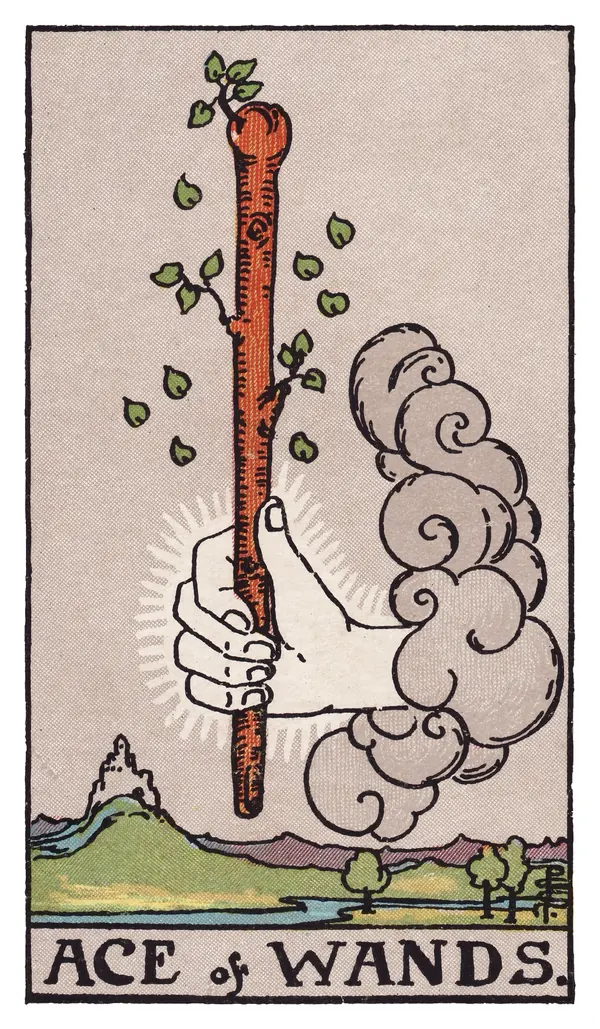 Ace of WandsA genuine spark of energy or inspiration is available right now, worth acting on before it fades.
Queen of Cups: care that tips over
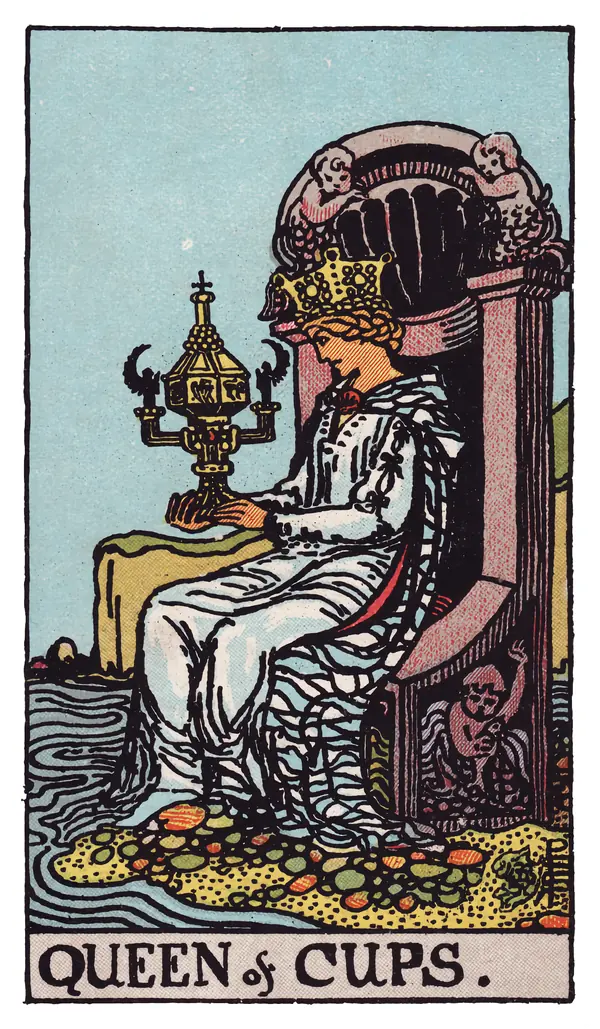
Upright, the Queen of Cups describes intuition and compassion that are worth trusting and offering. Reversed, the same empathy may tip into overwhelm, taking in other people’s feelings until your own go unattended. Here the reversal reads as too much, not too little. Nothing about the card turns cold. The question it raises is whose feelings you are carrying at the moment, and whether any of them are yours to put down.
Four of Cups: a reversal that eases
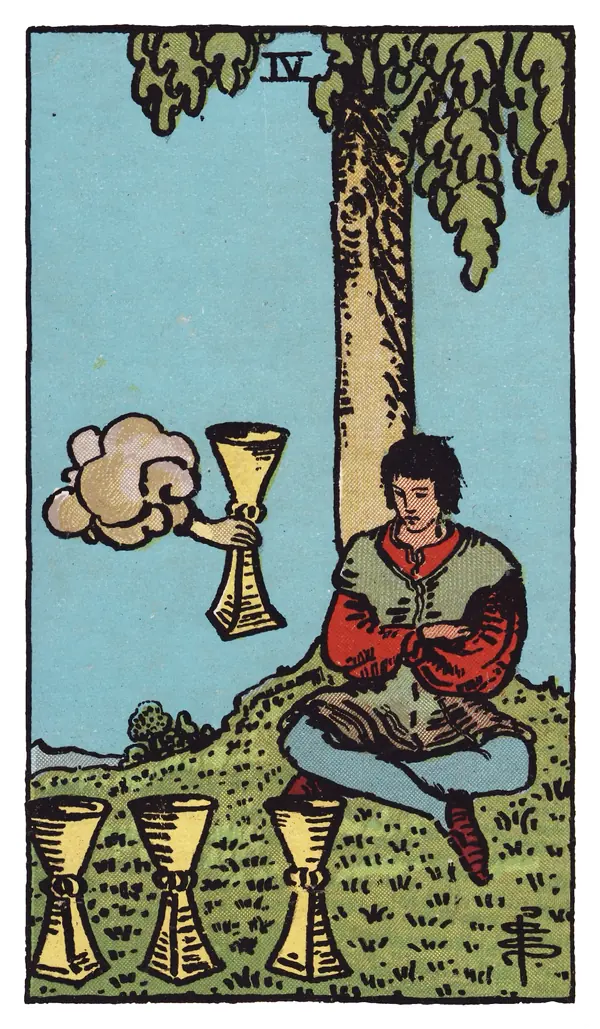
Upright, the Four of Cups shows something good on offer that is easy to miss while your attention sits on what already feels stale. Reversed, the card may point to interest coming back after a period of withdrawal, and to noticing what was there all along. This one surprises people who expect every reversal to be worse. The upright card is the stuck one, and the reversal loosens it.
Side by side, the three show why a single rule for reversals falls short. One stalls, one overflows, one eases. Reading each card on its own terms takes a little longer and gives you far more to work with.
Reversals inside a spread
In a spread, the position asks the question and the card answers it. A reversal changes the answer, not the question. In Situation · Obstacle · Next Step, a reversed card in the obstacle position is not a double obstacle. Read its reversed meaning as the friction in play, then move on to the next card.
It helps to count the reversals, too. When most of a spread comes up reversed, many readers take it as a sign that the situation is still forming, or that much of it is happening beneath the surface. When one card is reversed among several upright ones, it often marks the spot that needs the most attention. Both are ideas to test against the question, not rules.
The same care applies to a one-card reading. In yes or no tarot, a reversed card doesn’t automatically mean no. Each card carries its own lean in each orientation, and in our readings many reversed cards lean yes or mixed.
Reading without reversals
If you draw from a physical deck and prefer not to use reversals, turn any upside-down card the right way up and read it as it is. You lose nothing you need. Many readers find that the position and the surrounding cards already supply the nuance a reversal would add. You can also start with upright cards only and add reversals later, once the 78 upright meanings feel familiar.
Whichever way you choose, keep to it for the whole reading. Mixing methods halfway through, reading one card’s reversal and ignoring the next, makes it hard to compare the cards on the same terms.
Frequently asked questions
Do I have to read reversed tarot cards?
No. Plenty of readers never use them and read every card upright. Reversals add a second meaning to each card, which some people find useful and others find distracting. Pick one approach and keep it for a whole reading, so all the cards are read on the same terms.
Is a reversed tarot card bad?
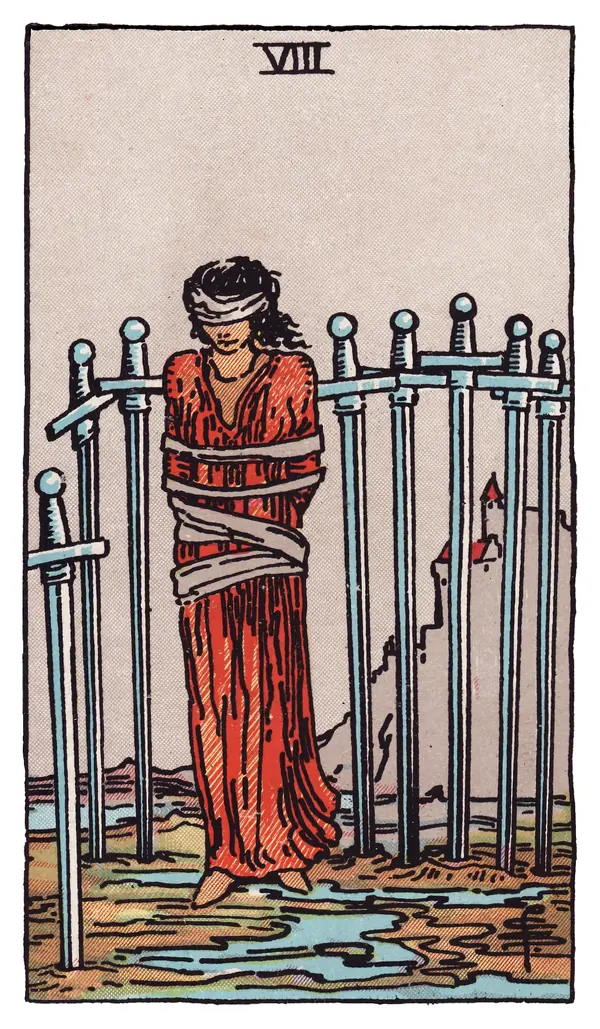
Not by itself. A reversal shows the card’s theme blocked, turned inward or out of balance, and some reversals ease a hard upright card. In our deck the Four of Cups and the Eight of Swords both work that way. Read the reversed meaning of the card you drew rather than a general rule.
Does a reversed card mean the opposite of the upright card?
Some readers use it that way. Our decks don’t: a reversed card keeps the upright theme and shows it shifted. The opposite method is simple, but it tends to lose the detail of cards that are already double-edged upright, such as the Hermit, which is about solitude that can steady you or cut you off.
What does it mean if most of my cards come up reversed?
Readers differ. Some take it as a situation still forming or happening mostly inside; others just read each card on its own. It isn’t a bad sign in itself. If you shuffle by hand, it is also worth checking that half the deck wasn’t left turned from an earlier reading.
Written by the editorial team · Reviewed on November 18, 2026 · Method →