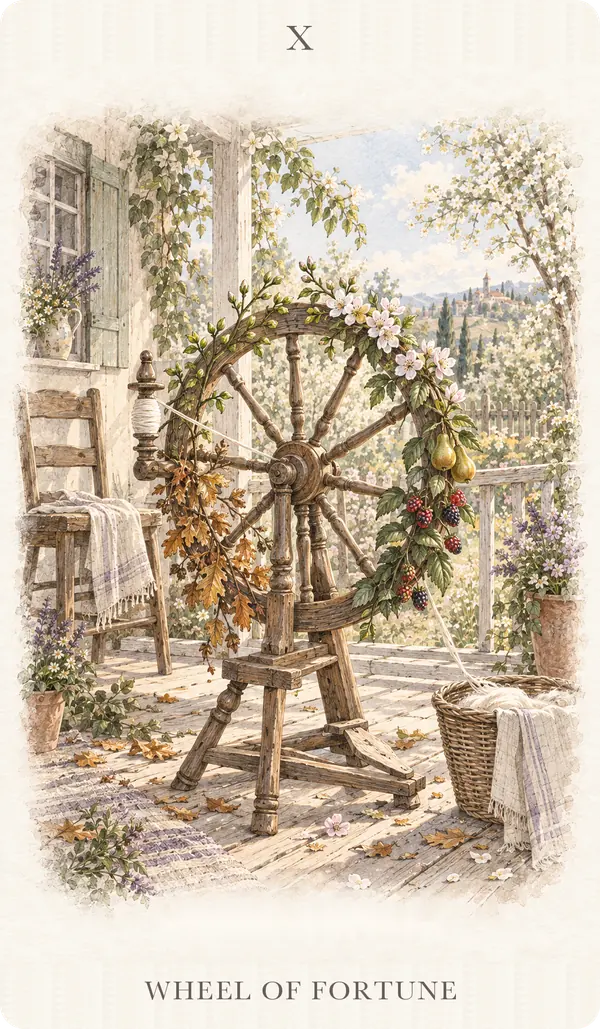
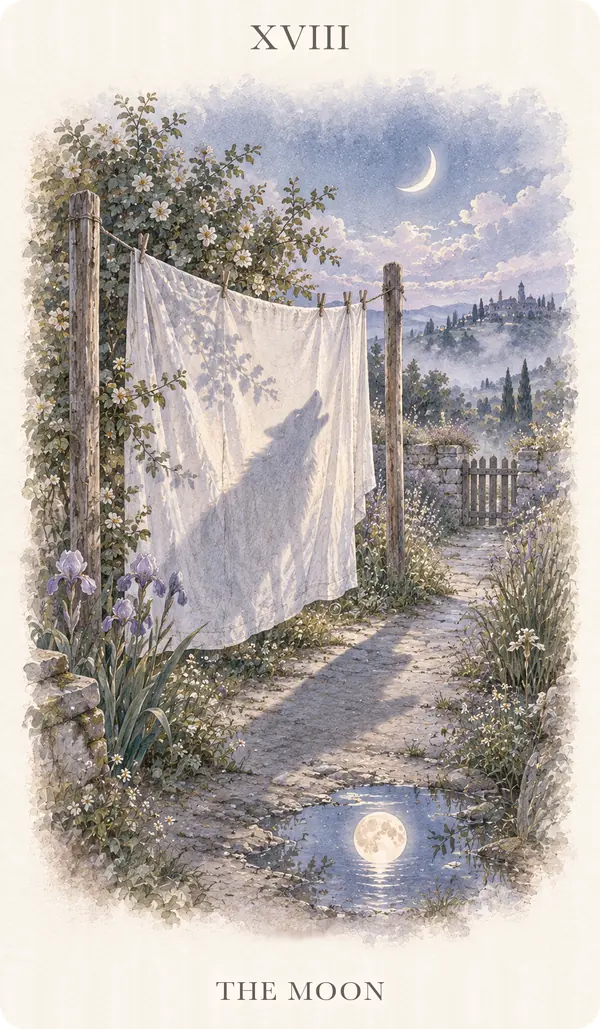
The Tower
The Tower in Everyday Wonders · Major Arcana XVI
ChoiceIn short
The failure of a false support, sudden clarity and disruptive release.
Reversed
Propping up an obvious crack, waiting for the old order to return, or destroying indiscriminately.
- Major Arcana
- 16
- The One Who Walked Out
- the failure of a false support
- sudden clarity
- disruptive release
Upright
Acknowledge the failure that has become visible. Leave an unsafe arrangement and examine its foundations.
A small garden tower has cracked open. Its crowded rooms slide partway out like drawers, exposing thin supports beneath.
A person who has already left the building stands safely on the path.
A question to sit with
“Which structure stands only because I refuse to look at the crack?”
One step
Leave an unsafe arrangement and examine its foundations.
Reversed
Propping up an obvious crack, waiting for the old order to return, or destroying indiscriminately. Pushing the drawers back into a cracked wall hides the thin supports for a while.
Knocking down the whole garden along with the tower is the opposite mistake.
A question to sit with
“Could I be patching over the crack, or knocking down the garden along with the tower?”
One step
Look at one support you’ve been propping up, and write down what it actually holds.
How this deck reads reversed cards
Reversed, the wonder stalls or goes too far. The linen road may refuse to unroll, the small weather in a cup may spill over, a familiar habit may hide the step that is still open, or a settled pattern may be just beginning to change. It is not the opposite of the upright card and not a worse one, only the same day seen where it catches.
In love
A false support in love may be giving way, rooms sliding out of the wall and showing what was holding them.
- Supports
- Honesty about what the crack shows, even when it’s uncomfortable.
- Watch for
- Pushing the drawers back in to hide the crack.
- One step
- Talk about one thing that no longer holds, and what would.
An obvious crack in love may be patched over and over, the drawers pushed back into the wall each time they slide.
- Supports
- Looking at the crack together from the path.
- Watch for
- Waiting for the old rooms to slide back by themselves.
- One step
- Ask one gentle question about something you’ve both been avoiding.
At work
A plan or arrangement at work may be showing its thin supports now that the wall has cracked.
- Supports
- Looking at the thin supports under the rooms.
- Watch for
- Hanging a picture over the crack.
- One step
- Write down which part of your work feels unsafe, and why.
At work, props may be holding up something that needs rebuilding from the supports up.
- Supports
- A real repair plan, support by support.
- Watch for
- Knocking down the whole garden in frustration.
- One step
- Name one work problem that needs repair rather than another prop.
Part of the choice may be made clearer by what is plainly not holding.
- Supports
- Accepting what the open wall shows you.
- Watch for
- Clinging to a room that is already sliding out.
- One step
- Set aside, for a week, the option you trust least, and see how that feels.
Choosing between propping things up and clearing everything may miss a third way: careful repair, room by room.
- Supports
- Examining each support before deciding.
- Watch for
- Saving the whole tower or knocking it all down.
- One step
- Choose one small part to keep and one to let go, and leave the rest for now.
A shake-up may clear space for something sturdier, with you standing on the path looking up.
- Supports
- Curiosity about foundations, not blame for the storm.
- Watch for
- Blaming yourself for the crack.
- One step
- Look at one belief you’ve leaned on and ask what it rests on.
Waiting for the old order may be holding your growth in place, the drawers half out and half in.
- Supports
- Accepting that the wall has changed.
- Watch for
- Pulling down rooms that still stand well.
- One step
- Write down one thing from the old order that still works, and one that doesn’t.
Something at home may be coming apart in plain view, its crowded rooms pulled out like drawers.
- Supports
- Safety first on the path, then repair.
- Watch for
- Holding the whole wall together alone.
- One step
- Check one household arrangement that feels shaky, and talk about what would make it safer.
The old way at home may be defended long after its supports gave out.
- Supports
- Honest conversation on the path outside.
- Watch for
- Pretending the drawers never slid out.
- One step
- Suggest one small new arrangement at home, as a trial.
Yes or no
NoNoWhat’s cracking leans toward no, though the clearer view helps what comes after.
Supports
- Clarity may be arriving.
- A false support is showing itself.
Limits
- The current arrangement may not hold.
- Things may be unsettled for a while.
One step
Look at whether the plan rests on supports that actually hold.
Holding up a cracked structure leans toward no for now.
Supports
- Repair is still possible.
- Not everything needs to go.
Limits
- Propping up a crack only delays it.
- Tearing everything down wastes what works.
One step
Ask whether you’re patching, destroying, or actually repairing.
What is in the picture
A small garden tower has cracked open. Its crowded rooms slide partway out like drawers, exposing thin supports beneath. A person who has already left the building stands safely on the path.
The rooms slide out above while the person stands on the path below, outside and looking up at what the crack has exposed.
- small garden tower
- crack running down the wall
- rooms sliding out like drawers
- thin wooden supports
- fallen stones
- curtain blowing loose
- person standing on the path
- storm clouds and rain
- a break of light in the sky
This card in other decks
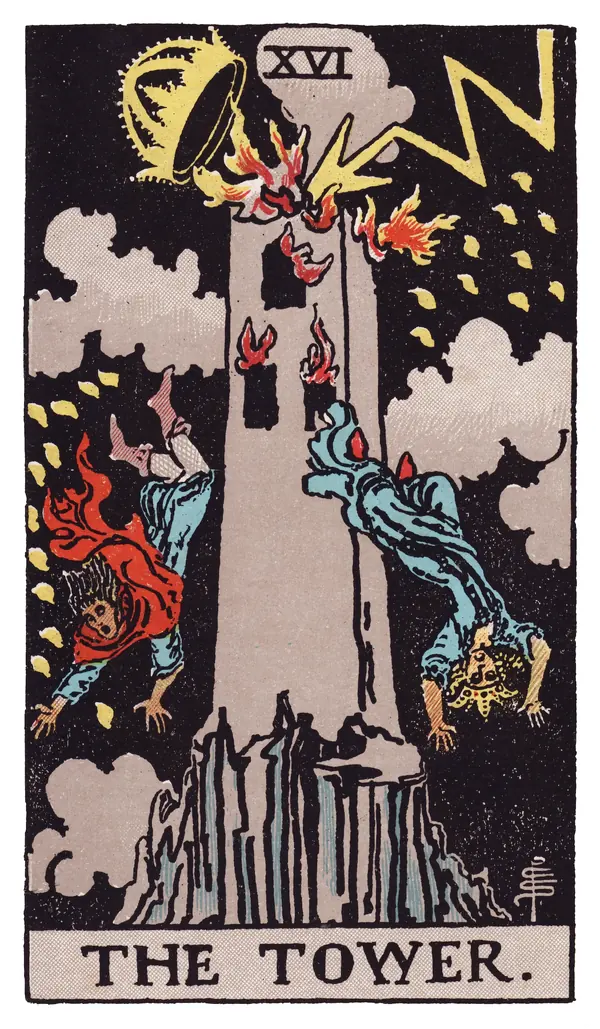 Rider–Waite–SmithThe TowerSomething built on a shaky foundation is collapsing suddenly, and as disruptive as it feels, it clears out what wasn’t real.
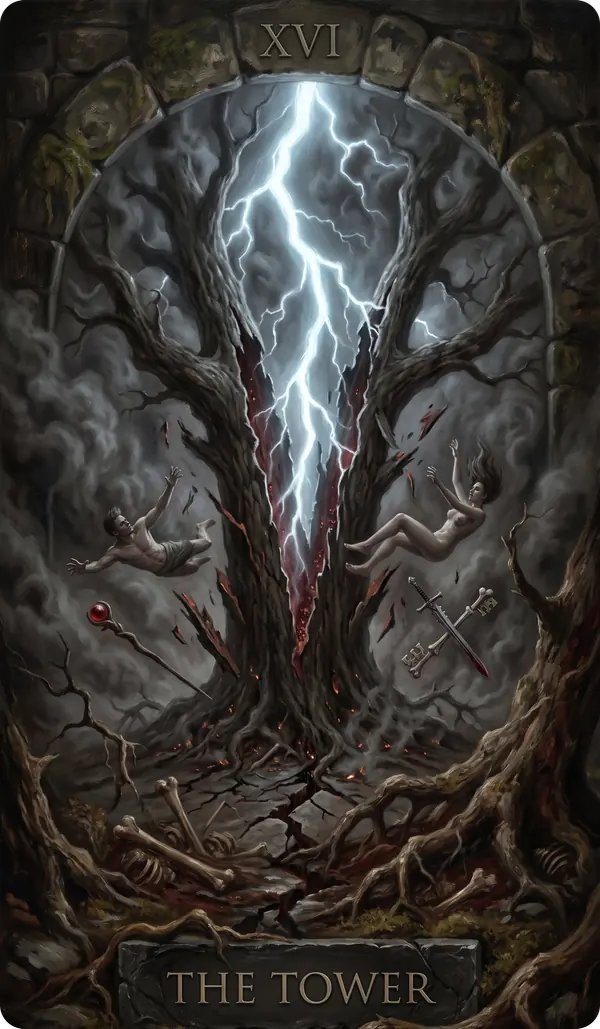 FamiliaThe TowerA false order in the family or the work comes down, and what was hidden behind it is finally visible.
 City of WindowsThe TowerA fact revealed, the loss of a false support, a painful release that makes a decision possible.
 CarnalThe TowerA structure fails where its concealed weakness has accumulated.
 Crimson InfernoThe TowerFace what the rupture has made undeniable.
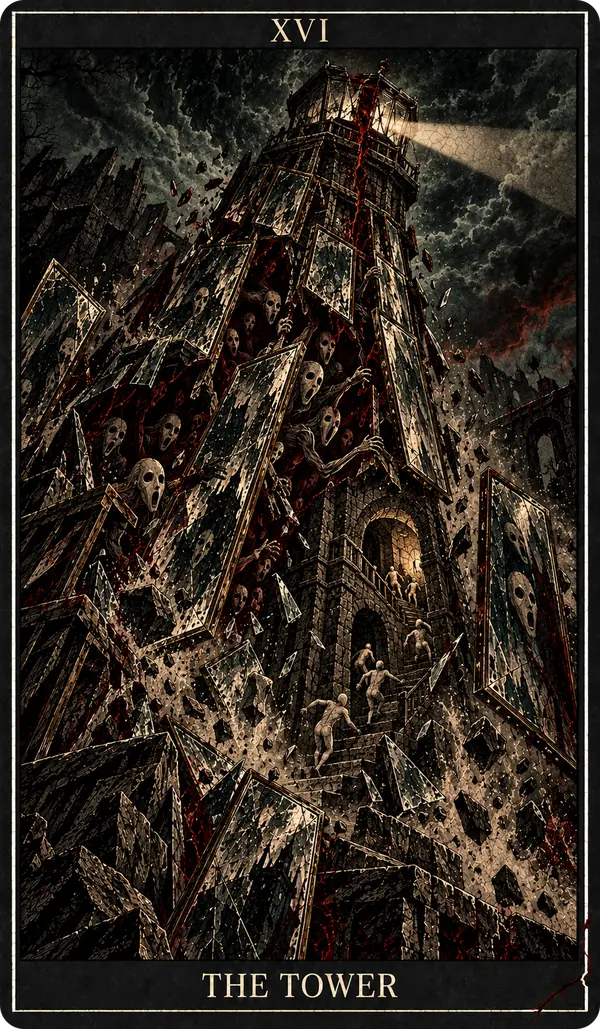 Mirror NightThe TowerUse the true stair exposed by collapse.
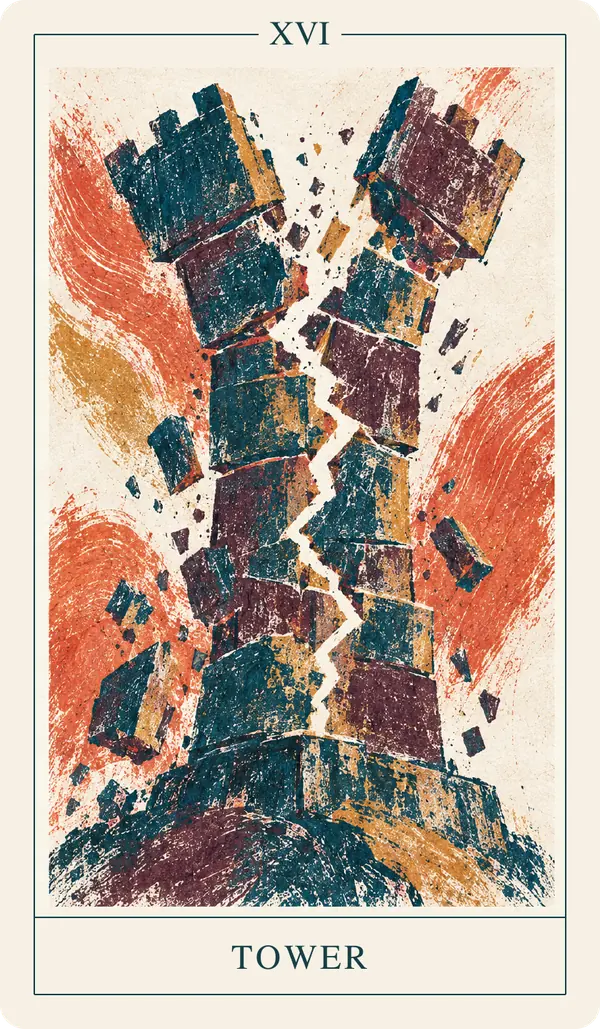 Self ContactThe TowerAn assumption or arrangement can no longer hold.
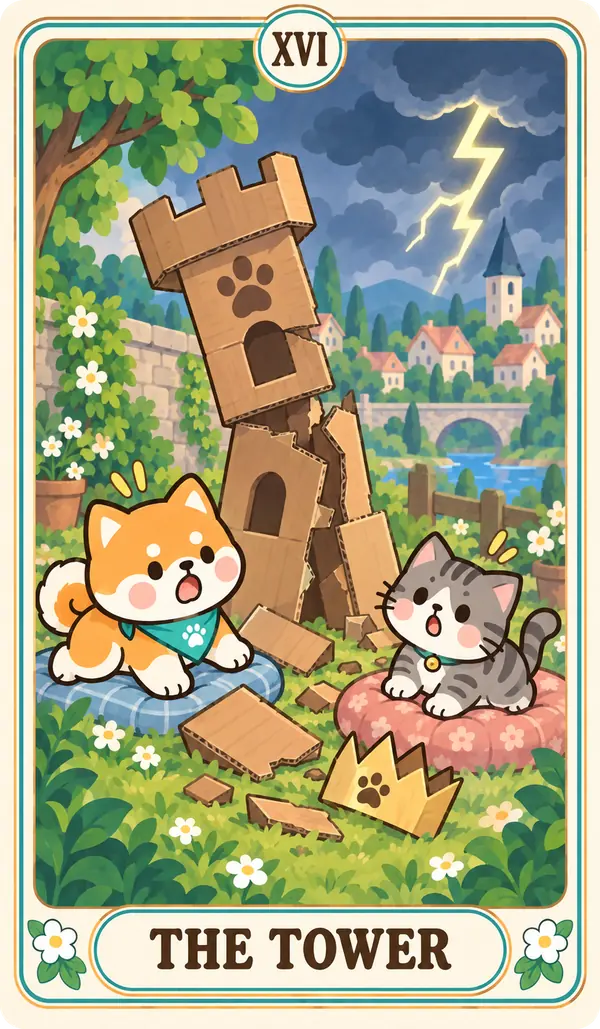 Shiba TownThe TowerDisruption; exposed weakness; rebuilding on honest foundations.
 Velvet MasqueradeThe TowerA failed structure exposing what its grand facade concealed.
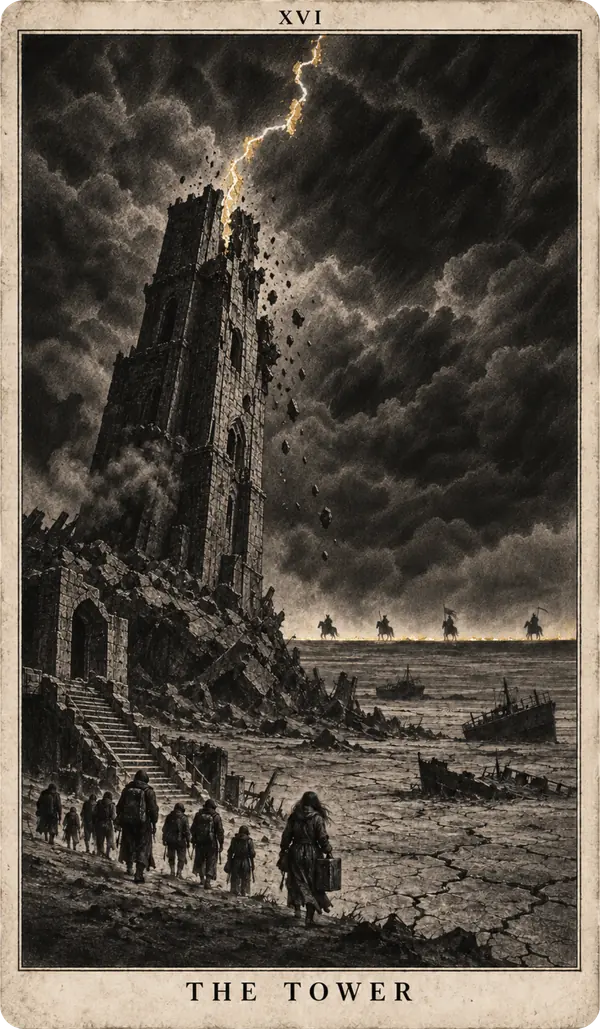 Four HorsemenThe TowerRecognise a structure’s failure and let the revealed truth change the plan.
 Four TrailsThe TowerSudden truth, disruption, collapse of false security.
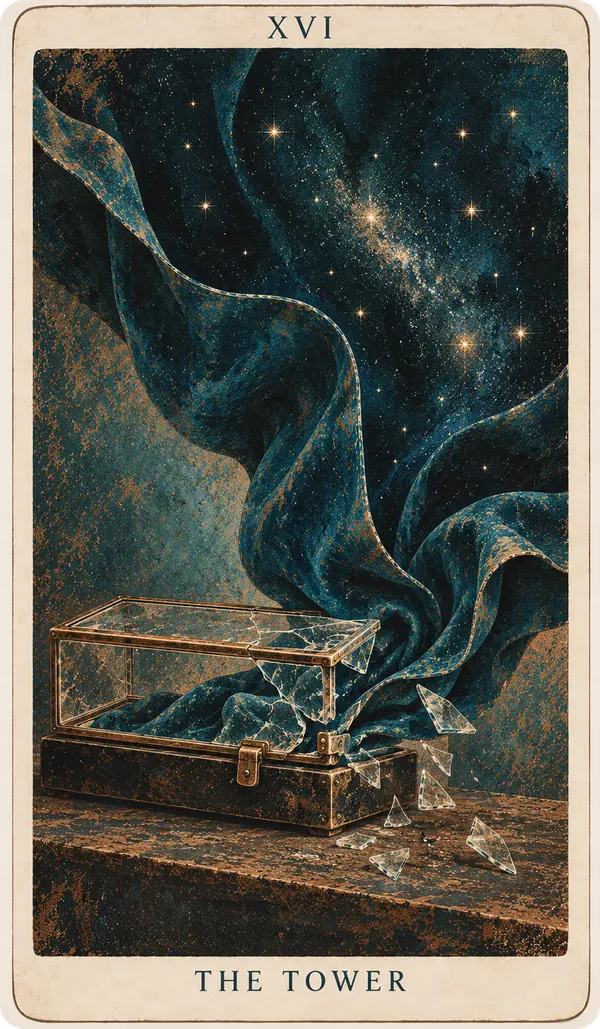 Living ThresholdThe TowerAn over-tight glass case cracks and shows what it could not hold.
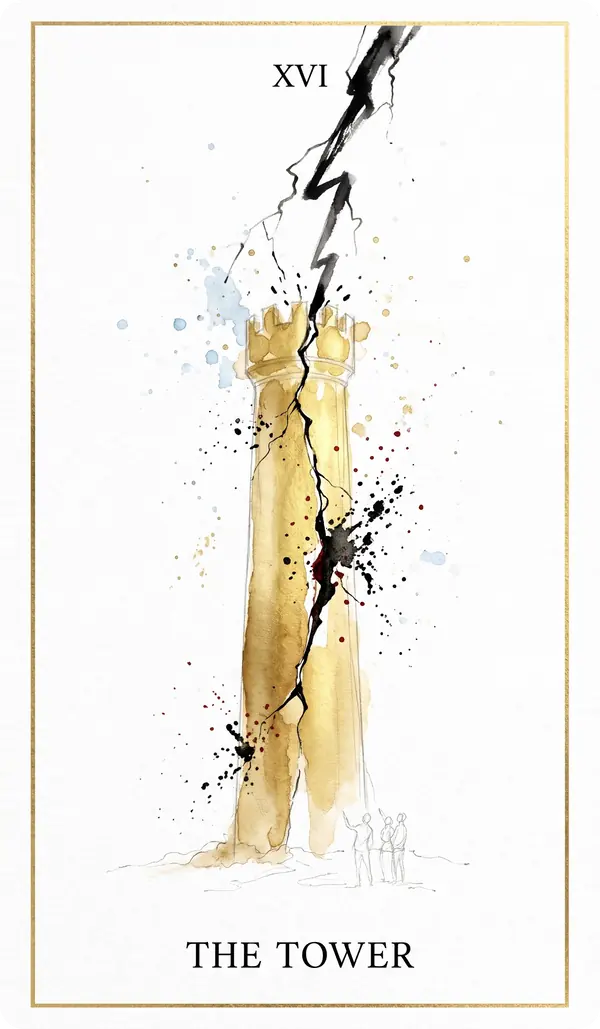 Colour of PowerThe TowerWhat was held up by lies falls in a day.
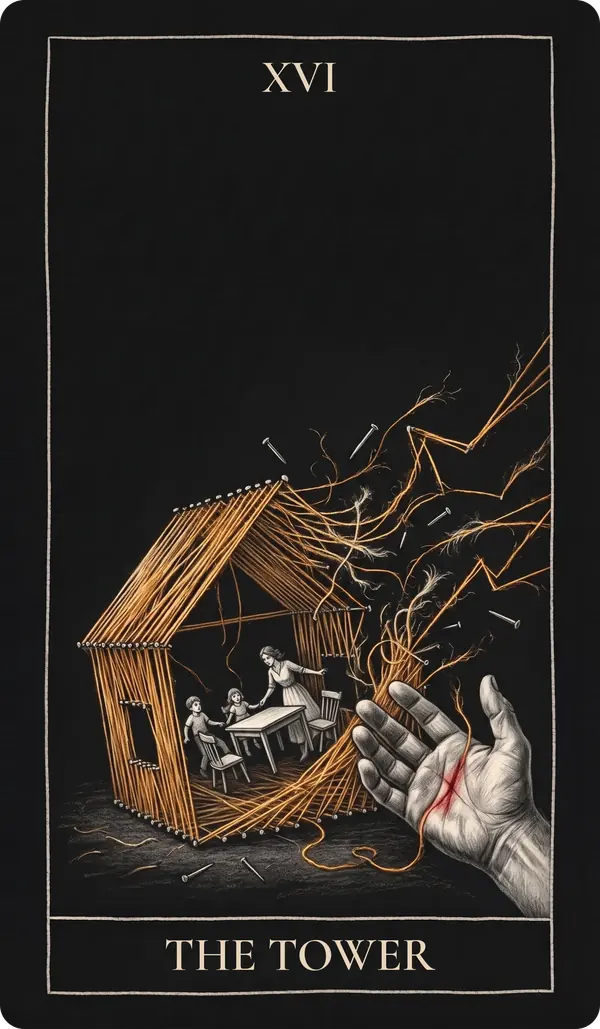 BoundThe TowerThe support opens, the house falls, and truth arrives all at once.
 Cozy HauntThe TowerA sudden break exposes what must change.
 Celestial Night SkyThe TowerPeople before a failing structure.
Where it appears
Questions about this card
Is The Tower a yes or no card in Everyday Wonders?
The Tower leans no both ways. Upright, what is cracking is not ready to carry the question, though the clearer view will help what comes after. Reversed, holding up a structure that is already cracked leans no for now. Look at which support is weakest and decide whether to reinforce it or step back from it.
What does The Tower mean in love?
In love, The Tower upright says a false support may be giving way, rooms sliding out of the wall and showing what was holding them. Reversed, an obvious crack is patched over and over, or the old rooms are expected to slide back by themselves. Ask one gentle question about something you have both been avoiding.
What does The Tower mean reversed in Everyday Wonders?
With The Tower reversed, the crack is already visible and the effort goes into propping it up, waiting for the old order to return, or knocking down more than needed. The person on the path is still safe. Look at the crack together from where you stand, and choose one thing to repair and one to let go.