Justice
Justice in Carnal · Major Arcana XI
ChoiceIn short
Accountability, proportion and the return of what is owed.
Reversed
A technically correct argument can conceal unequal treatment.
- Major Arcana
- XI
- The Reclaimer
- accountability
- proportion
- the return of what is owed
Upright
Andromalius exposes thieves and gives back what they took. One hand steadies the balanced scale while the other rests on the tied burgundy pouch: judgement here ends with something handed back.
Weigh evidence, obligations and consequences on equal terms.
Repair means returning what was taken, not only explaining why it happened.
A question to sit with
“What would a proportionate repair require?”
One step
List what is owed on each side in one matter, and return one small thing that is yours to return.
Reversed
Andromalius finds what was stolen and returns it. Reversed, his scale still looks level, but the burgundy pouch beside it stays tied: an argument can be correct on paper and still hide unequal treatment.
Do not excuse yourself, and do not punish beyond the harm that was done.
A question to sit with
“Would my correct argument survive a look at who it treats unequally, and am I punishing past the harm?”
One step
Apply the standard you are using to someone else to yourself, and note where it lands differently.
How this deck reads reversed cards
Reversed, the gesture turns back on itself: the hand that should let go holds on, the cup overflows, the bargain slips out of sight, or a weight is finally set down. It can mean an obstacle, an excess, a process gone inward or a release, and it is not always the worse outcome. The price is still there, only paid differently.
In love
Andromalius steadies the scale before he judges. What each of you gives and takes in love may need an honest weighing.
- Supports
- Fairness spoken plainly.
- Watch for
- Keeping a silent tally on one side of the scale.
- One step
- Name one thing you owe the other person, and give it.
Andromalius checks whether anything is still owed, however level the pans look. A bond may be carrying an imbalance that one of you keeps explaining away.
- Supports
- Owning the weight your own hand adds to the pan.
- Watch for
- Punishing the other beyond what the scale shows.
- One step
- Check whether you judge the other by the rule you use for yourself.
At work
He weighs a matter on evidence and brings the scale back to level. Work matters may be settled on the facts, and what is owed made right.
- Supports
- Clear records and fair terms.
- Watch for
- Explaining a mistake instead of fixing it.
- One step
- Correct one error you know about, and say so.
Andromalius would ask who the rule is actually applied to. A rule at work may be applied to some and not to others, a correct argument hiding unequal treatment.
- Supports
- Pointing out the double standard calmly.
- Watch for
- Winning the argument and losing the trust.
- One step
- Check one policy you rely on for who it treats unequally.
Andromalius trusts what can be weighed. The right choice may be the proportionate one, the option whose weight you can see.
- Supports
- Weighing consequences on equal terms.
- Watch for
- Choosing to look blameless.
- One step
- Write the consequences of each option side by side.
A choice may balance on paper and still tilt in practice. Andromalius looks past the level pans to the tied pouch: what has this choice quietly taken from someone?
- Supports
- Honesty about who pays.
- Watch for
- Clearing your own name before the weighing starts.
- One step
- Ask who bears the cost of each option.
Taking responsibility may be how you grow now: like Andromalius, untie the pouch and return what was taken.
- Supports
- Accountability weighed in plain view.
- Watch for
- Explanations in place of amends.
- One step
- Make one small repair you have been putting off.
Growth may stall between excusing yourself and punishing yourself, the scale never allowed to settle.
- Supports
- A proportionate view of your own mistakes.
- Watch for
- Harshness heavier than the harm.
- One step
- Name one mistake and one fitting repair, and stop there.
Andromalius hands each thing back to the one it belongs to. A family matter may need settling fairly, with what is owed returned.
- Supports
- Clear, equal terms.
- Watch for
- Old debts tied up in a pouch nobody opens.
- One step
- Raise one unsettled family matter plainly.
He weighs everyone on one scale. Family members may be weighed on different ones, with some asked to pay for what others are excused.
- Supports
- One rule for all at the table.
- Watch for
- Punishment that outlasts the harm.
- One step
- Notice where you hold one relative to a harder rule than another.
Yes or no
YesNoAn honest weighing favors a fair result, so the answer leans yes when the terms are proportionate.
Supports
- The facts may support a fair outcome.
- Repair may be within reach.
Limits
- Fairness also asks what you owe.
- The weighing may show things you would rather not see.
One step
Weigh evidence and obligations on both sides before you ask for anything.
Unequal treatment is weighting the scale, so the answer leans no until it is corrected.
Supports
- Seeing the imbalance is where fairness starts.
- A correct standard can still be applied evenly.
Limits
- An argument may be right on paper and unfair in practice.
- Blame or excuses may be tipping the scale.
One step
Apply the same measure to yourself that you apply to the other side.
What is in the picture
Andromalius sits before a narrow bone table, steadying a balanced scale with one hand. The other rests beside a tied burgundy pouch. A pale serpent coils at his feet.
His direct, unsmiling gaze keeps judgement attached to what can be weighed and returned.
- narrow bone table
- balanced scale
- tied burgundy pouch
- pale coiled serpent
- direct gaze
- curved horns
This card in other decks
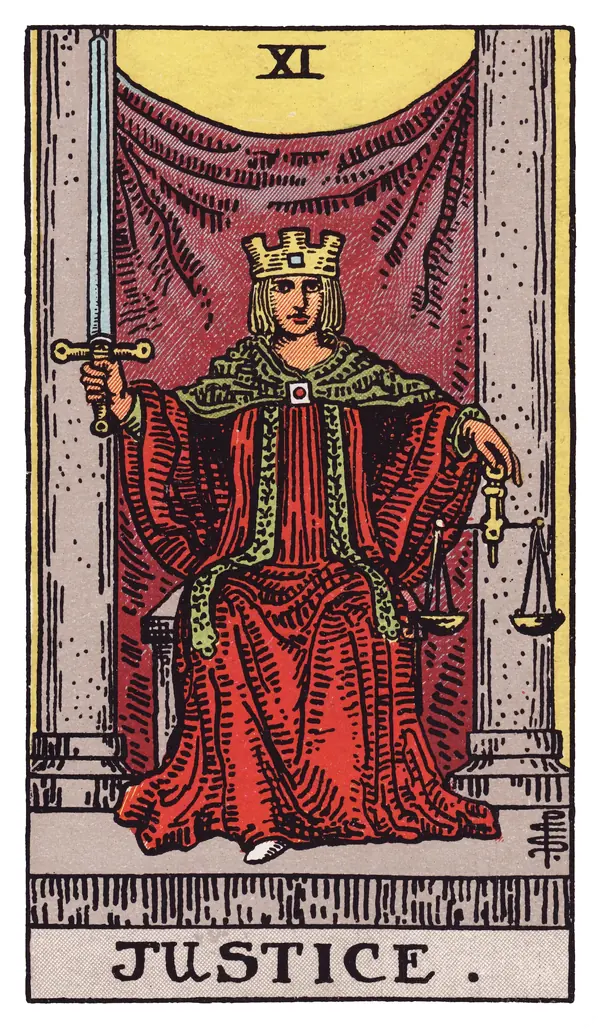 Rider–Waite–SmithJusticeA fair, honest look at the facts, including your own part in them, is what this situation needs right now.
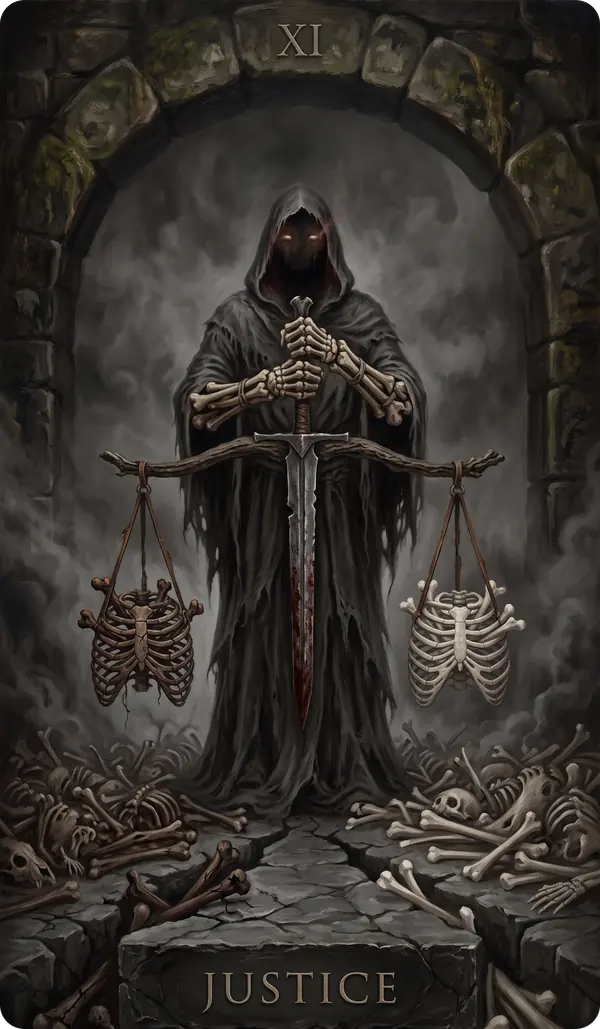 FamiliaJusticeAn honest reckoning across generations: debts and merits weighed evenly, each side receiving what it earned.
 City of WindowsJusticeChecking the facts, owning the consequences of what was done, setting fair terms.
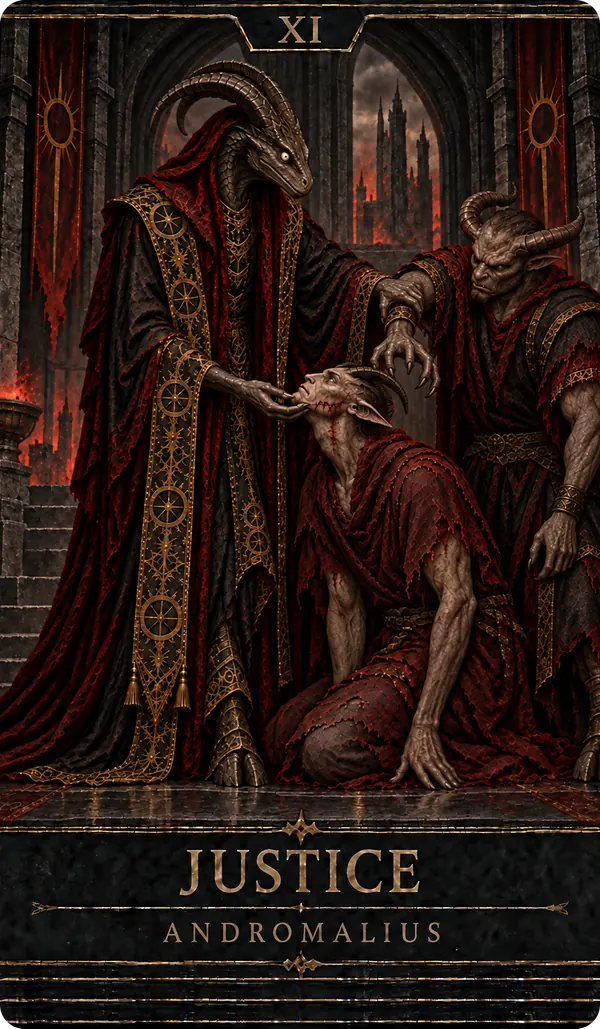 Crimson InfernoJusticeDistinguish proof from pressure.
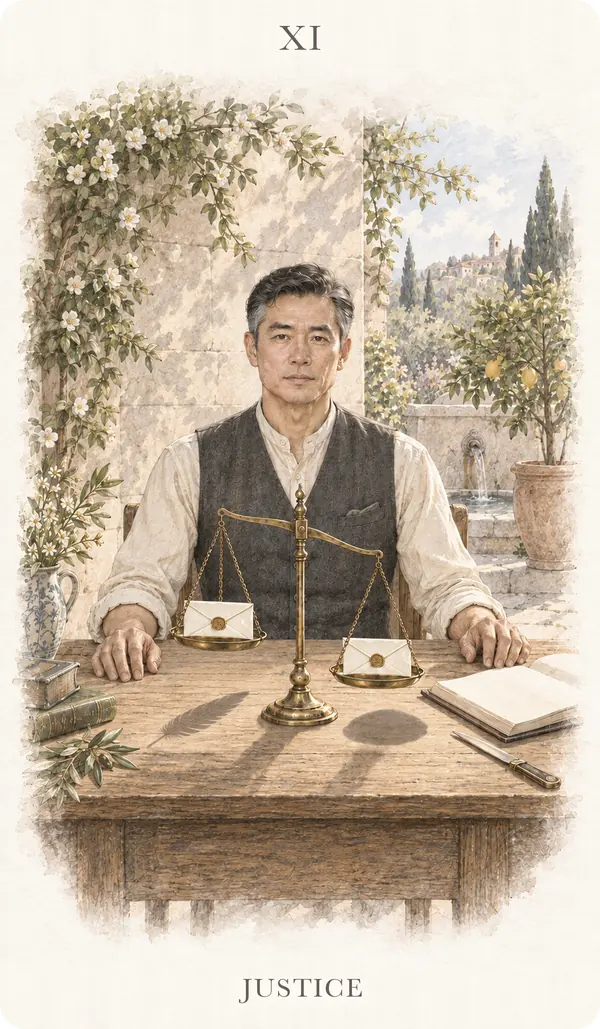 Everyday WondersJusticeClear judgment, proportion, responsibility and consequences.
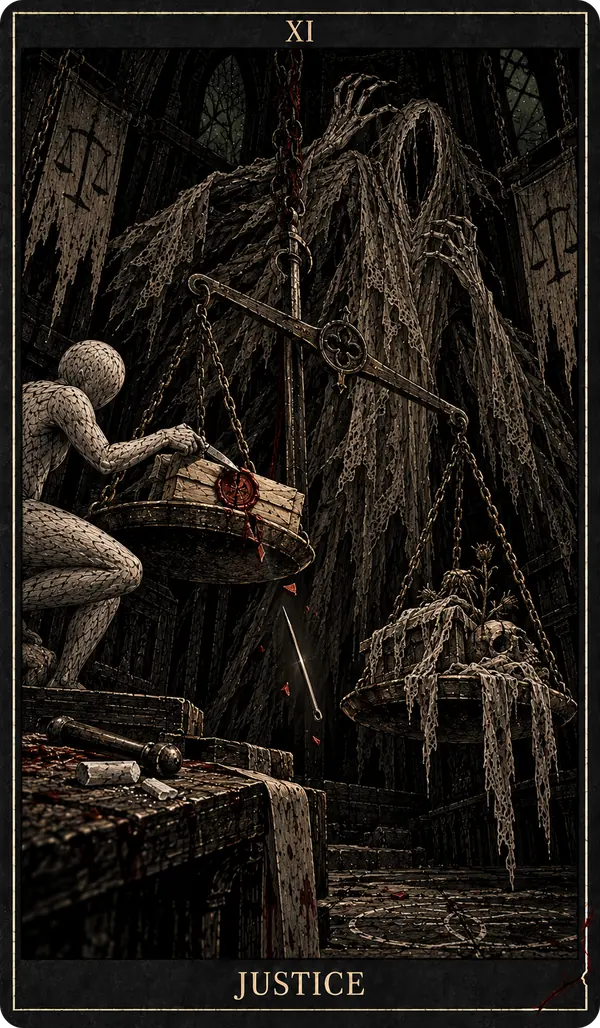 Mirror NightJusticeRevise the verdict when a hidden needle falls.
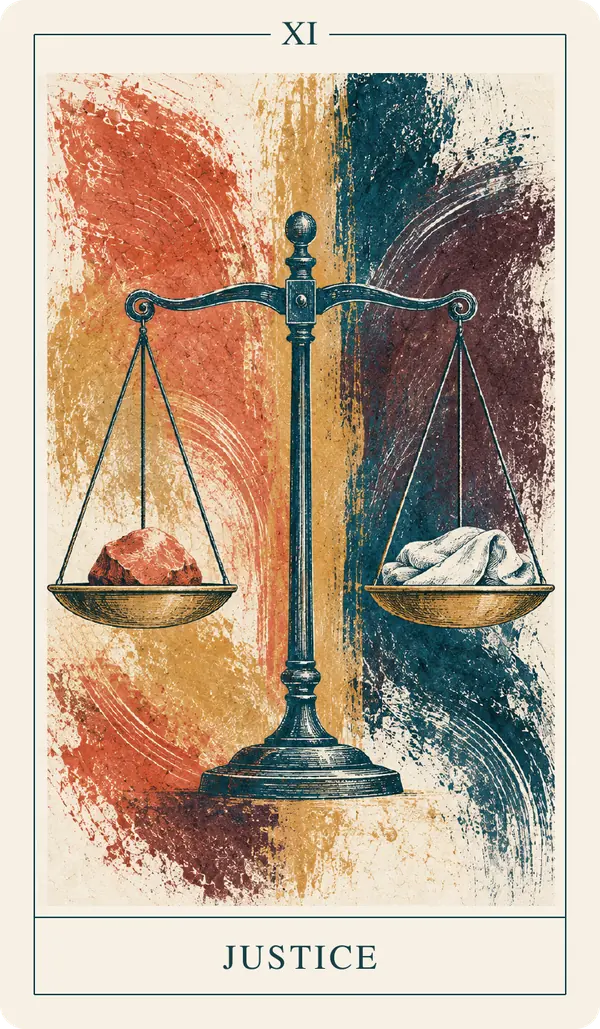 Self ContactJusticeApply the same measure to yourself and others.
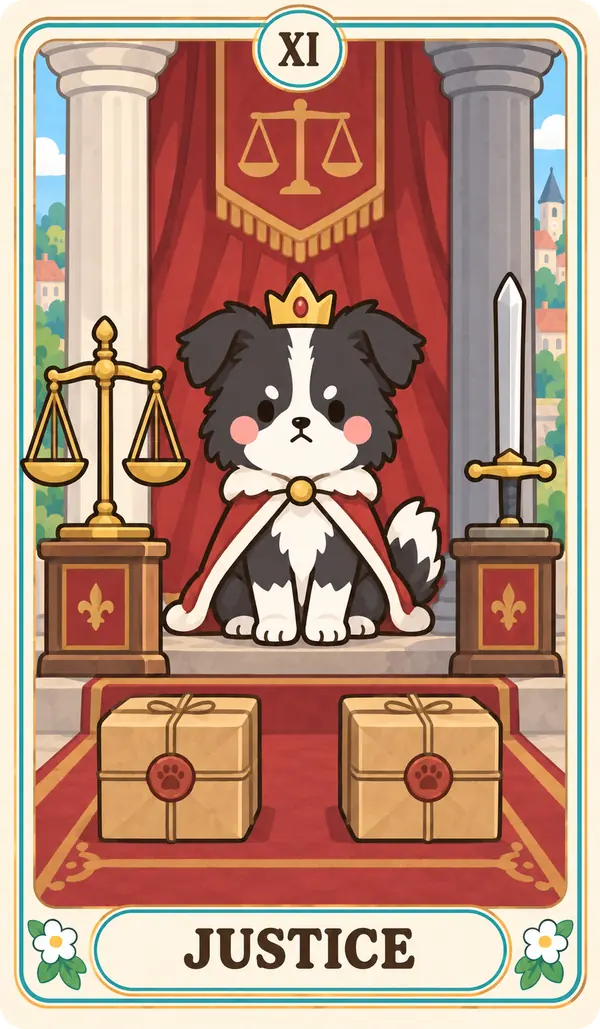 Shiba TownJusticeFairness; accountability; consequences based on facts.
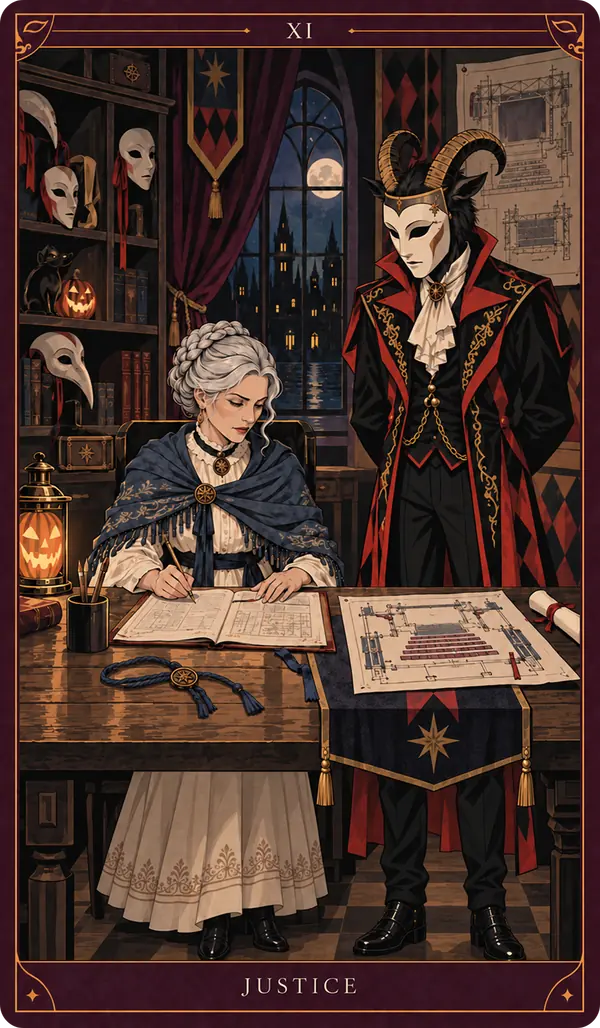 Velvet MasqueradeJusticeA fair consequence grounded in what can be checked.
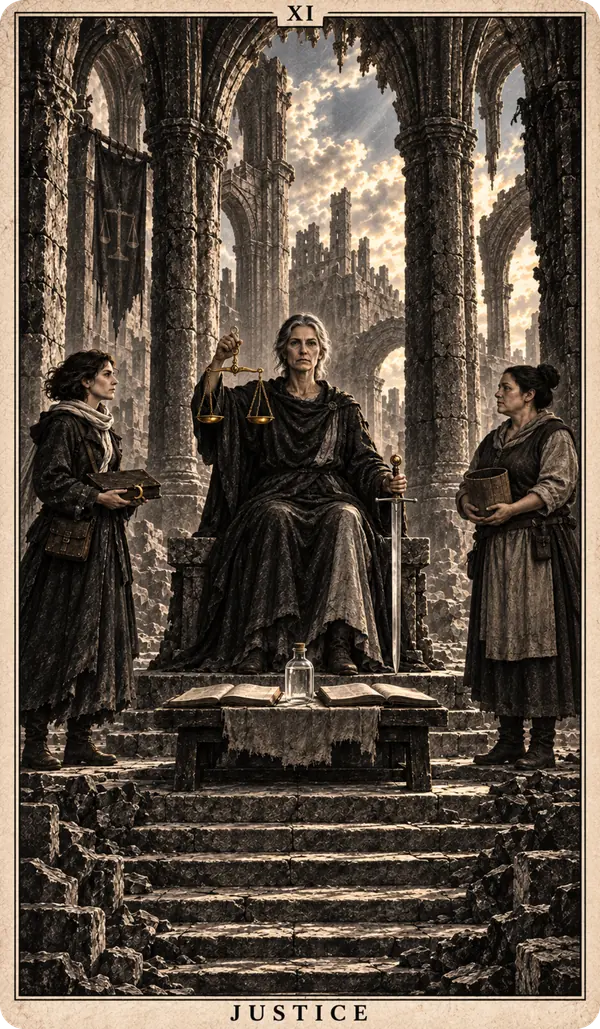 Four HorsemenJusticeExamine evidence, own your part and choose a proportionate response.
 Four TrailsJusticeFairness, truth, consequences.
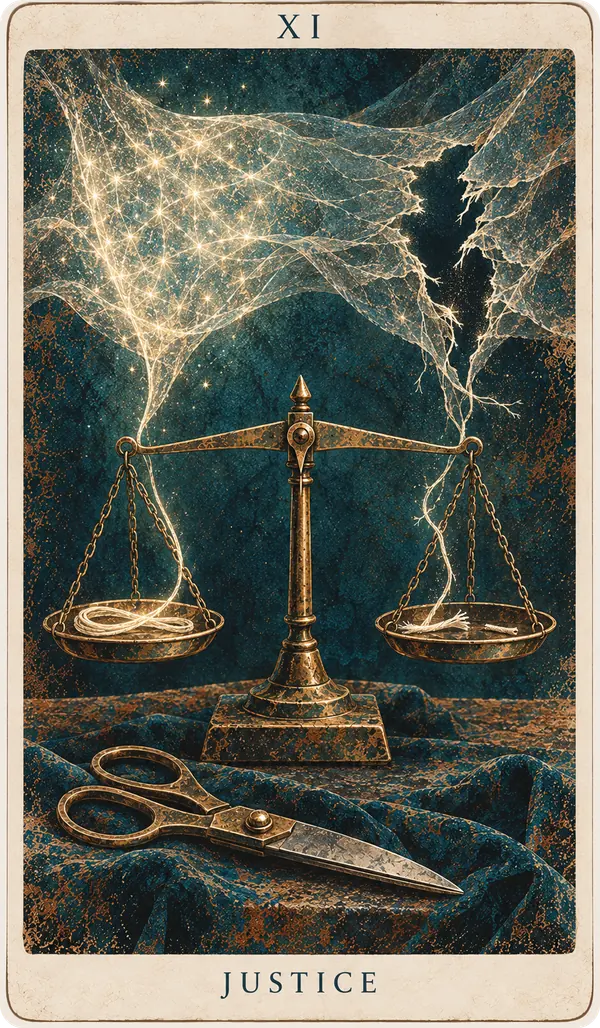 Living ThresholdJusticeThe balance reveals what a cut changes and where the fabric still needs mending.
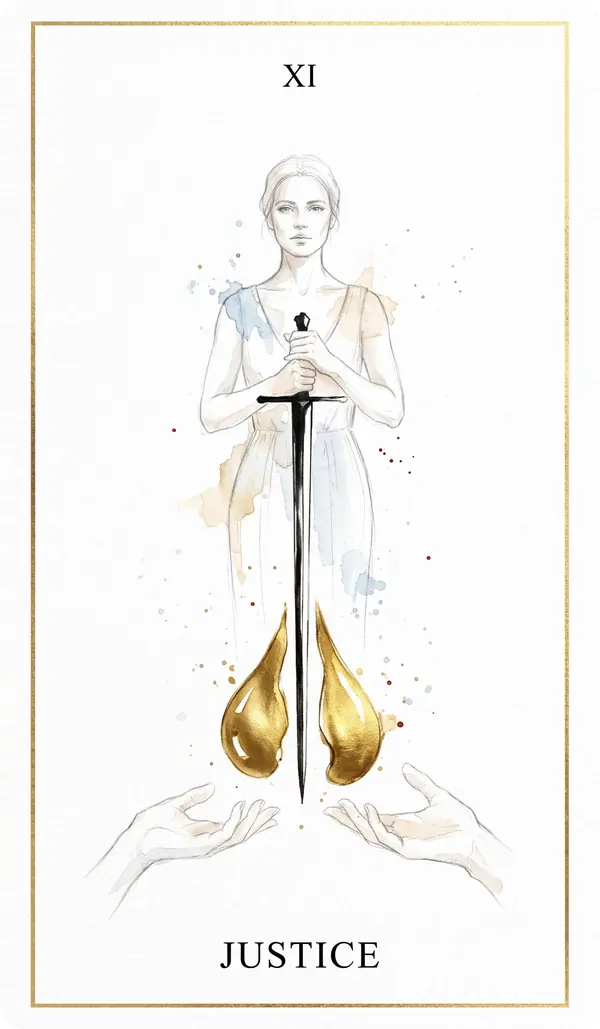 Colour of PowerJusticeAn honest cut: what was invested is counted, and the clean need not fear.
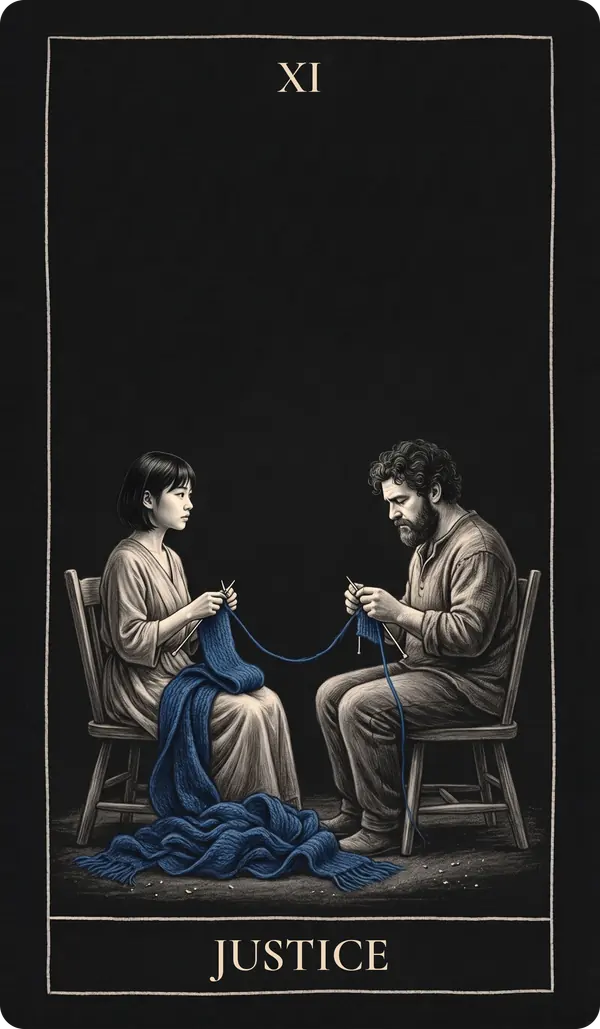 BoundJusticeAn honest count: the thread shows who has knitted how much.
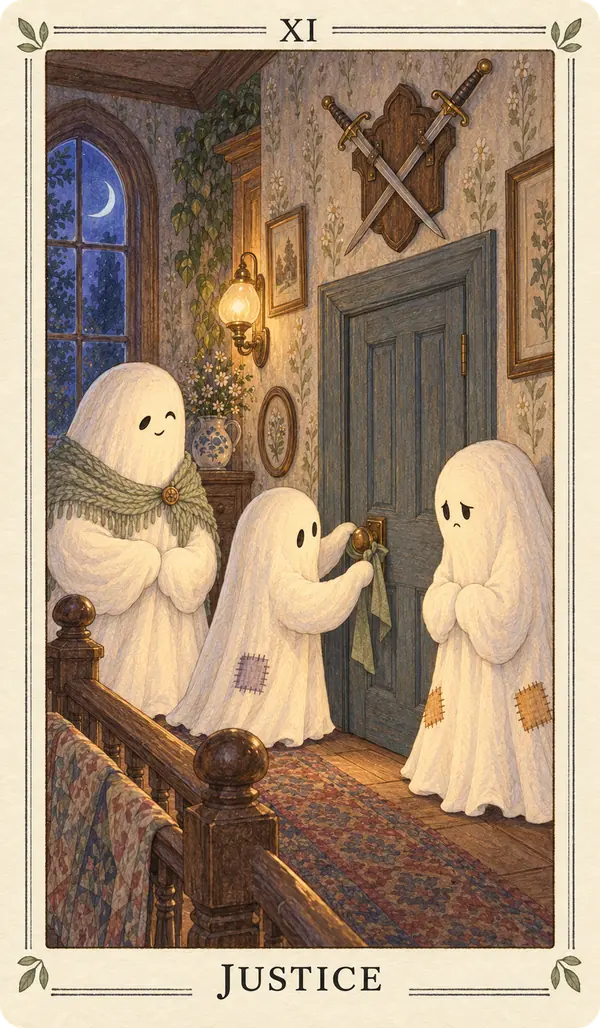 Cozy HauntJusticeAccountability and a fair boundary.
 Celestial Night SkyJusticeAn answer open to checking.
Where it appears
Questions about this card
Is Justice a yes or no card in Carnal?
Justice leans yes upright when the terms are proportionate, since an honest weighing favors a fair result. Reversed, it leans no until unequal treatment stops weighting the scale. Weigh evidence and obligations on both sides before you ask for anything, and apply to yourself the measure you apply to the other.
What does Justice mean in love?
On a love question, Justice upright may call for an honest weighing of what each of you gives and takes, with the scale steadied on a narrow table. Reversed, an imbalance is explained away while a hand rests on one pan. Name one thing you owe the other person, and give it.
What does Justice mean reversed in Carnal?
When reversed, Justice is a scale with a thumb on one side. Unequal treatment is explained away, or a verdict goes past what the scale actually shows. It asks whether you judge the other person by the rule you use for yourself. Check that before you decide who is owed what.