Death
Major Arcana · XIII
In short
Something here may have run its course, and letting it end is what gives something new room to begin.
Reversed
An ending that may be due is being put off, which can keep you stuck in something that has stopped working.
- Major Arcana
- 13
- Scorpio
- The Transformer
- a real ending
- clearing space for something new
- transformation, not literal loss
Upright
Death marks a definite ending: a phase or way of doing things that has run its course and needs to close before something new can start. It is almost never about literal death.
It’s about the discomfort of letting go of something familiar even when it no longer fits.
The card favors accepting the ending directly instead of dragging it out, because what comes after depends on the space the ending clears.
A question to sit with
“What feels finished in your life, and what would letting it end make room for?”
One step
Name one pattern or habit you’re ready to let end, and notice what it’s been costing you.
Reversed
Reversed, Death can mean resisting a necessary ending: holding onto a role, relationship, or way of working that has already stopped serving you, out of fear of the emptiness that would follow. It can also point to a slow, partial ending that never fully closes, leaving you stuck between what was and what’s next.
The card asks what you’re avoiding by refusing to let this end.
A question to sit with
“What are you keeping alive past its natural end, and what are you afraid of after it closes?”
One step
Pick one thing you’ve been prolonging, and ask what letting it end well would actually take.
How this deck reads reversed cards
Turned over, the scene keeps its energy and changes how it flows: blocked, turned inward, exaggerated or handled carelessly. A reversed card has its own meaning, never the flat opposite.
In love
A phase of this relationship, a pattern, a role, or a chapter, may need to end for something healthier to begin.
- Supports
- A pattern you can name separately from the person.
- Watch for
- Don’t confuse ending a pattern with necessarily ending the relationship.
- One step
- Name the specific pattern or phase that’s ready to close.
A relationship or pattern may feel like it’s run its course, even while still being held onto out of fear.
- Supports
- Being able to tell a tired pattern apart from the person.
- Watch for
- Watch for clinging to a familiar dynamic solely out of fear of the unknown.
- One step
- Name honestly what, if anything, in this relationship already feels finished.
At work
A project, a routine, or a way of working here may have run its course.
- Supports
- Your ability to close one phase of work cleanly, at your own pace.
- Watch for
- Don’t confuse ending one way of working with needing to leave the job itself.
- One step
- Identify one concrete boundary that marks the end of this current phase.
You may be putting off the end of a project or routine that already feels finished.
- Supports
- Your honest sense of what still works and what doesn’t.
- Watch for
- Watch for staying in a role solely out of comfort, without checking whether it still serves you.
- One step
- List what is keeping this phase going, and mark which reasons are fear.
Ending one thing so another can properly begin may be what this decision is really about.
- Supports
- Your willingness to accept the loss involved in choosing.
- Watch for
- Don’t try to keep both the old and the new at once.
- One step
- Name what you’re willing to let end to choose this.
Fear of the empty space afterward may be what’s really blocking this decision.
- Supports
- Your capacity to tolerate uncertainty for a while.
- Watch for
- Don’t choose the familiar option purely to avoid an ending.
- One step
- Name what scares you about the ending, then see if the choice still looks the same.
You’re growing by letting an old identity or habit end instead of holding onto it.
- Supports
- Willingness to grieve the version of yourself you’re leaving.
- Watch for
- Don’t rush the grief just to look like you’ve moved on.
- One step
- Name one old habit or identity you’re ready to let end.
An old identity or habit hasn’t been allowed to end, and that’s where growth has stalled.
- Supports
- Your willingness to finally let go, even without a replacement ready.
- Watch for
- Don’t wait for a replacement before releasing what no longer serves you.
- One step
- Let go of one specific old habit, without waiting for what’s next.
An old household arrangement or family role may be ready to close, clearing room for a new way of living together.
- Supports
- Letting habits change while the people stay.
- Watch for
- Treating every change at home as a loss.
- One step
- Name one family habit you’d be glad to retire, and say it aloud.
A family pattern that has stopped working may be kept alive out of fear of change.
- Supports
- Honest talk about what no longer fits.
- Watch for
- Clinging to how the family used to be.
- One step
- Pick one outdated routine at home and try a week without it.
Yes or no
YesNoSomething here looks like it has run its course, and what comes next may need the room its closing would make.
Supports
- A pattern or phase here may have stopped fitting, and you can probably name it.
- Letting that pattern close, at a pace you choose, could free up room.
Limits
- There’s real grief attached to letting this go.
- Ending it means facing an uncertain space right after.
One step
Name one pattern here you’d be ready to let go of, and try one day without it.
Something that may have stopped working is still being held, and the hard part of releasing it looks like the space after.
Supports
- Something here may be held onto past the point it stopped serving you.
- You can weigh what holding on costs against what letting go would.
Limits
- Fear of what comes after may be keeping this alive past its time.
- This has been allowed to drag on without a clear closing point.
One step
Write down what letting this pattern end would cost and what it would free, then sleep on it.
What is in the picture
A skeletal figure in black armor rides a white horse, carrying a black flag with a white rose. A bishop, a child, and a fallen king lie in its path, while a sun rises between two towers in the distance.
The rider moves steadily across figures of every rank, while the small rising sun in the distance keeps the image from reading as purely bleak.
- skeletal armored rider
- white horse
- black flag with white rose
- fallen figures of different ranks
- rising sun between towers
- river
This card in other decks
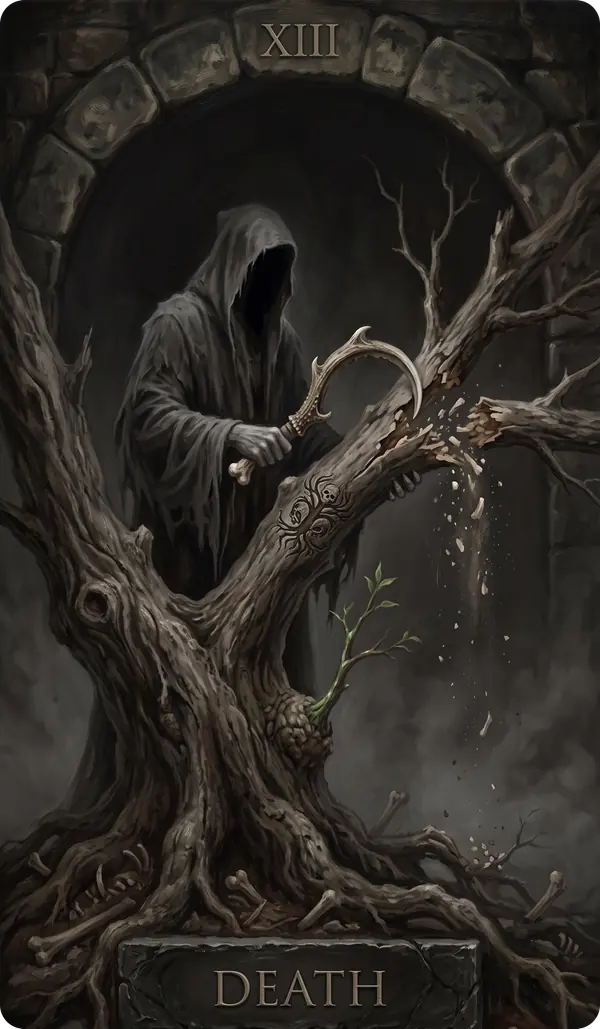 FamiliaDeathWhat is spent is cut in time, and the room it leaves goes to new growth.
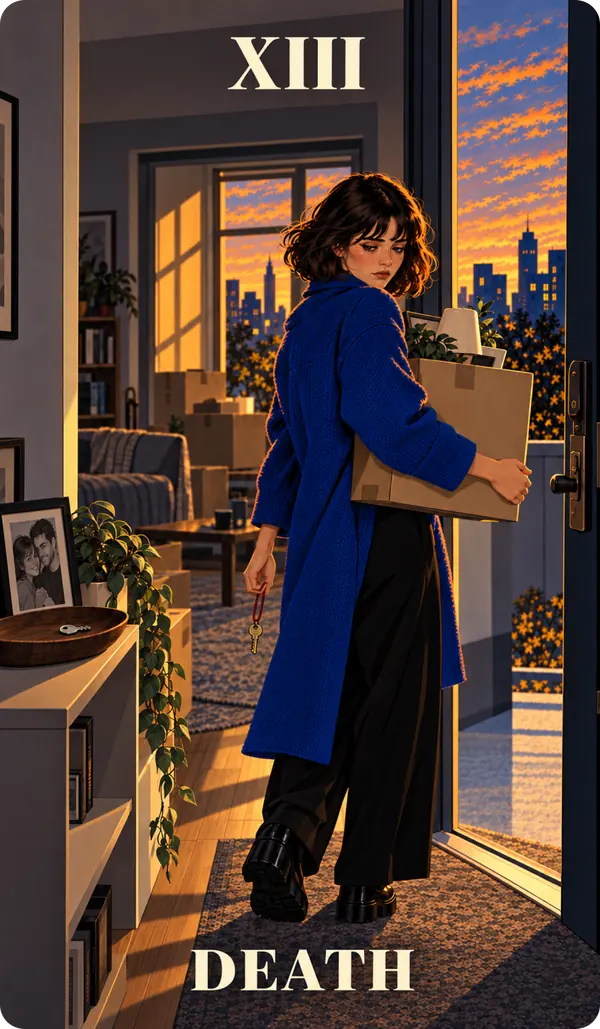 City of WindowsDeathAcknowledging the end of an old role, or of the way a relationship was set up.
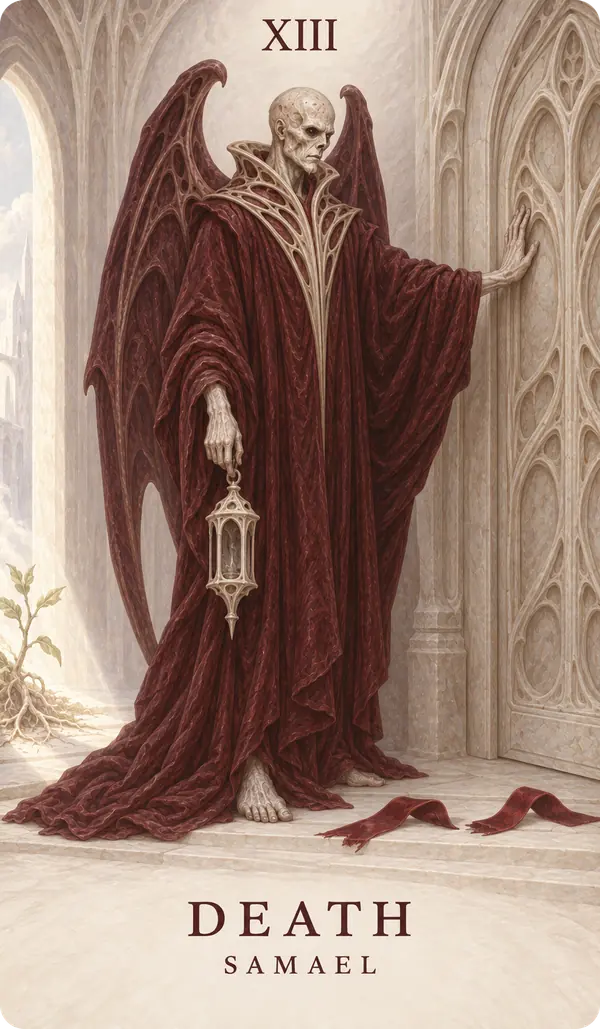 CarnalDeathAn ending that cannot be made into the old beginning.
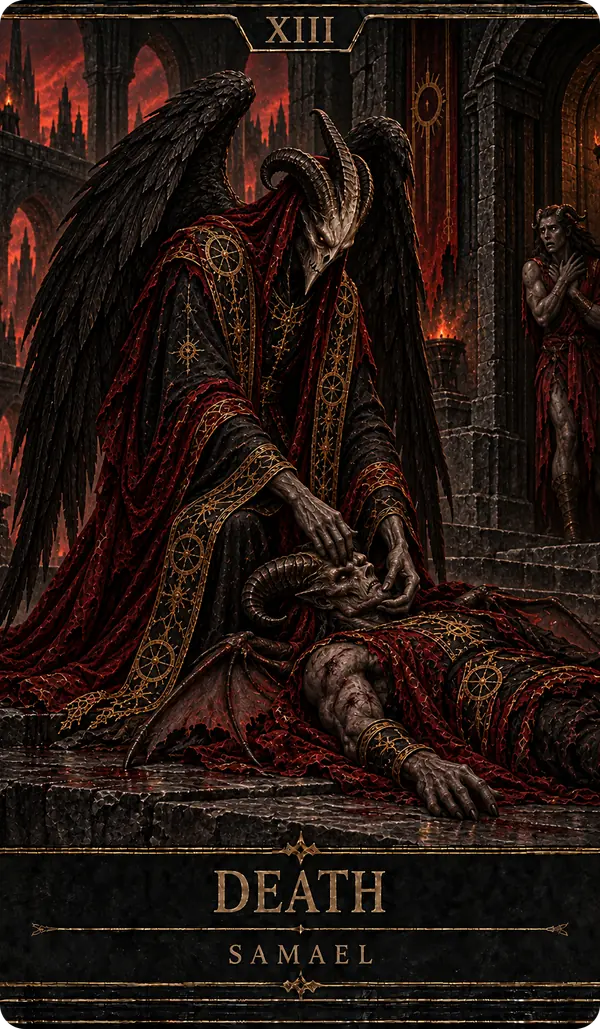 Crimson InfernoDeathRecognize an ending that cannot be negotiated away.
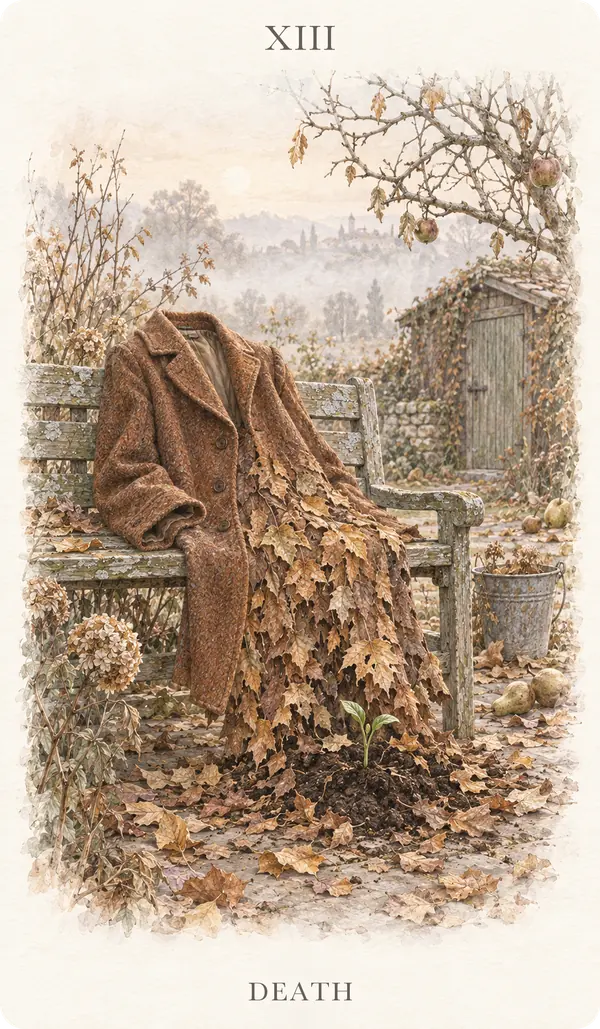 Everyday WondersDeathAn irreversible ending, release of space and a change of form.
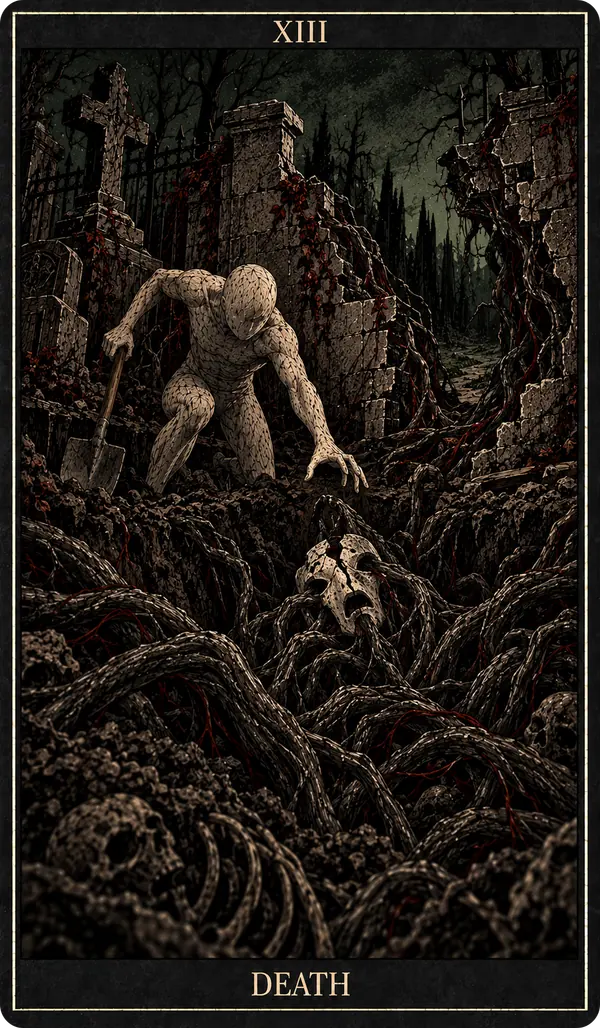 Mirror NightDeathBury an ended voice and use the opened path.
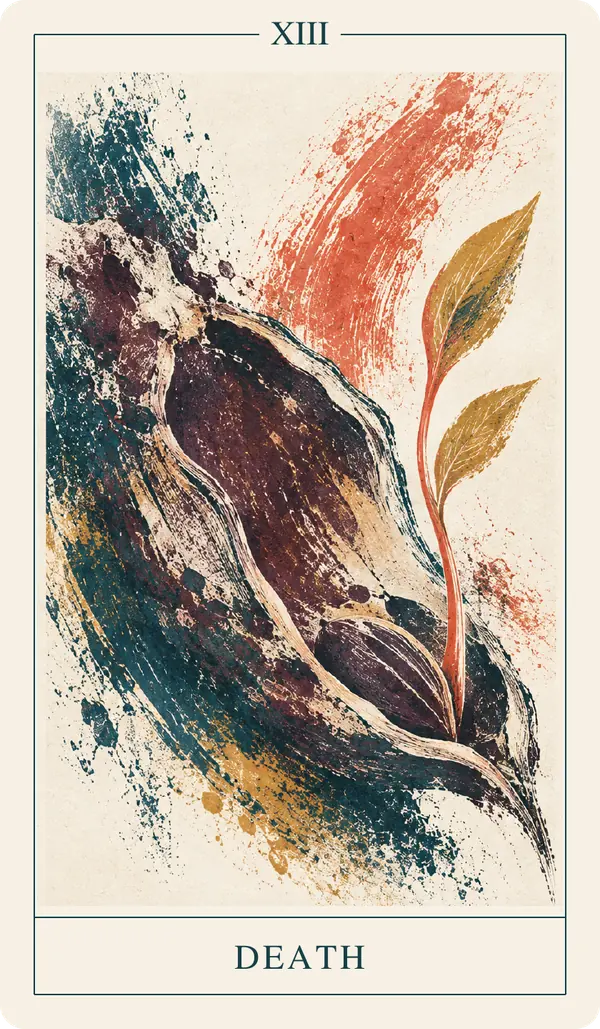 Self ContactDeathLet an ending make room without demanding immediate renewal.
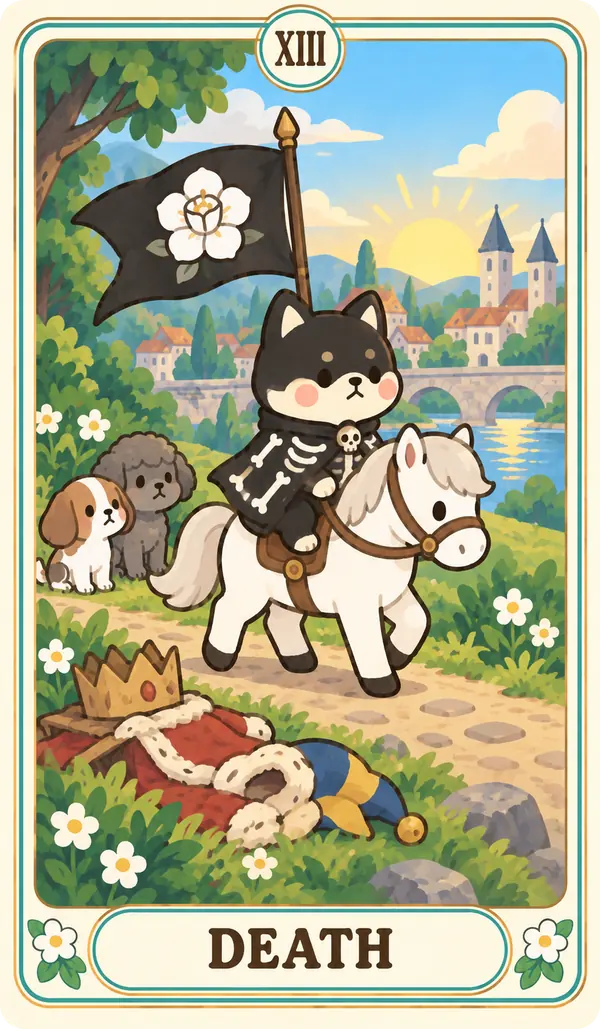 Shiba TownDeathAn ending; transition; releasing an exhausted form.
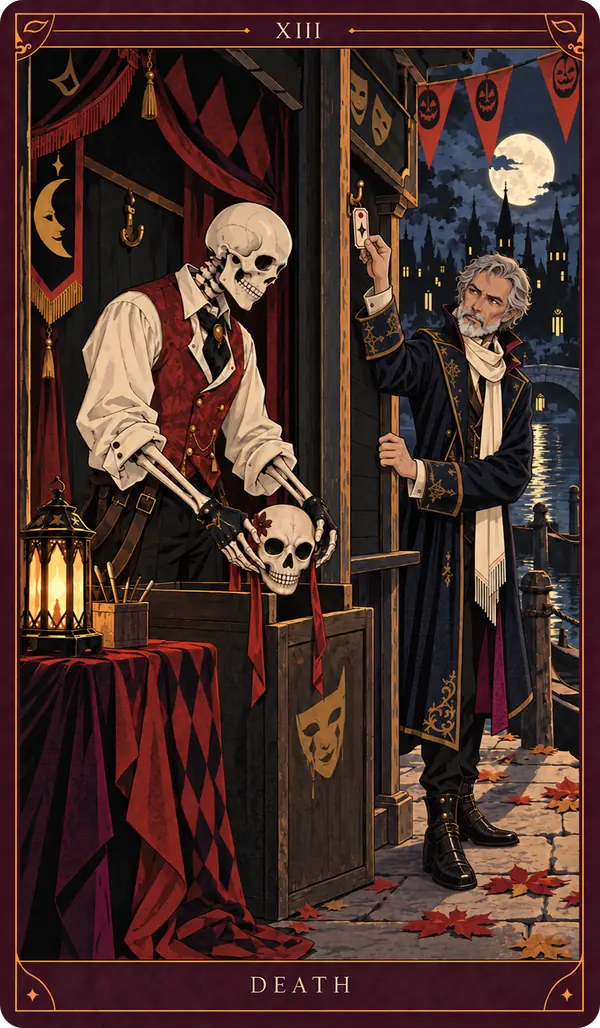 Velvet MasqueradeDeathAn ending given form, leaving room for change.
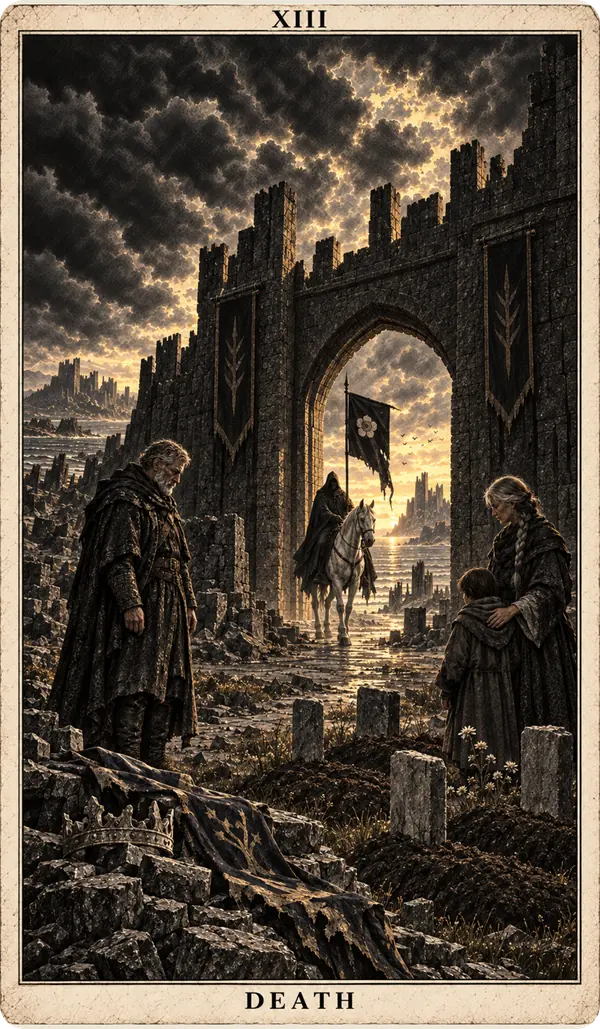 Four HorsemenDeathAllow an ending to be real; release a claim so another form of life can begin.
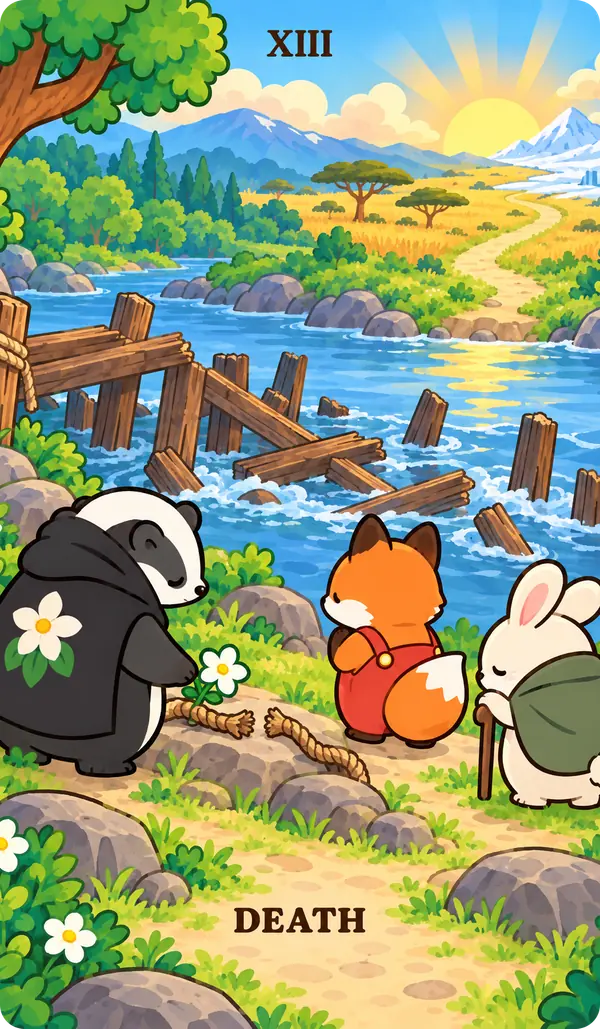 Four TrailsDeathEndings, release, transformation.
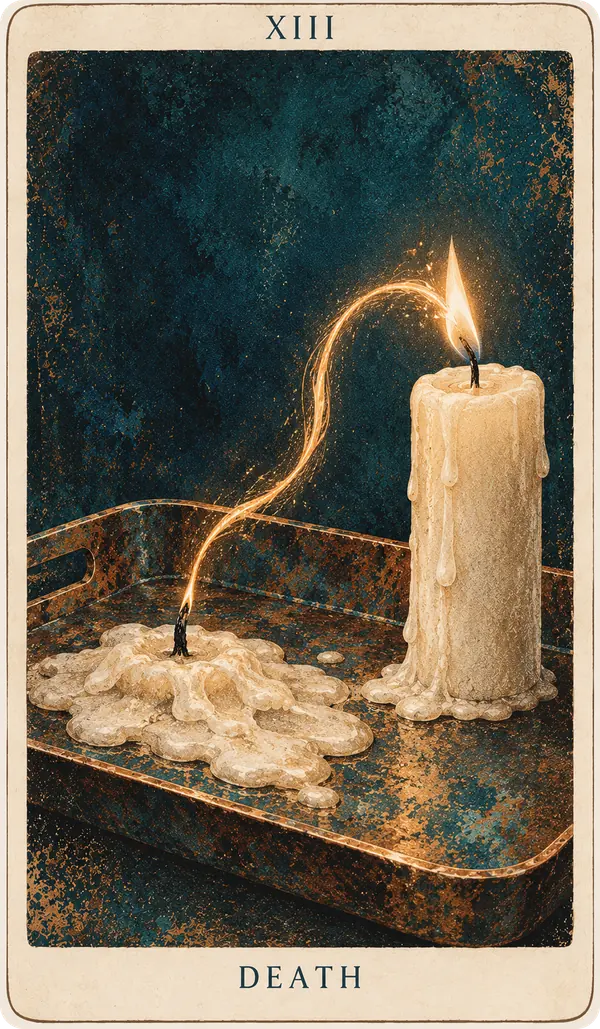 Living ThresholdDeathThe last warmth leaves spent wax and kindles a separate source.
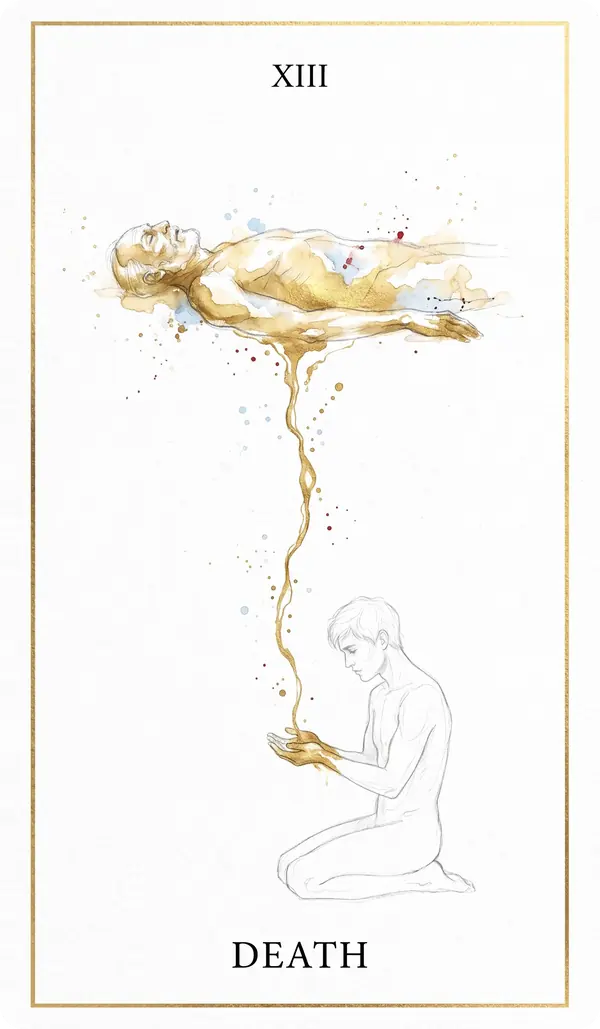 Colour of PowerDeathAn ending that frees what you hold, so it can pass to new hands.
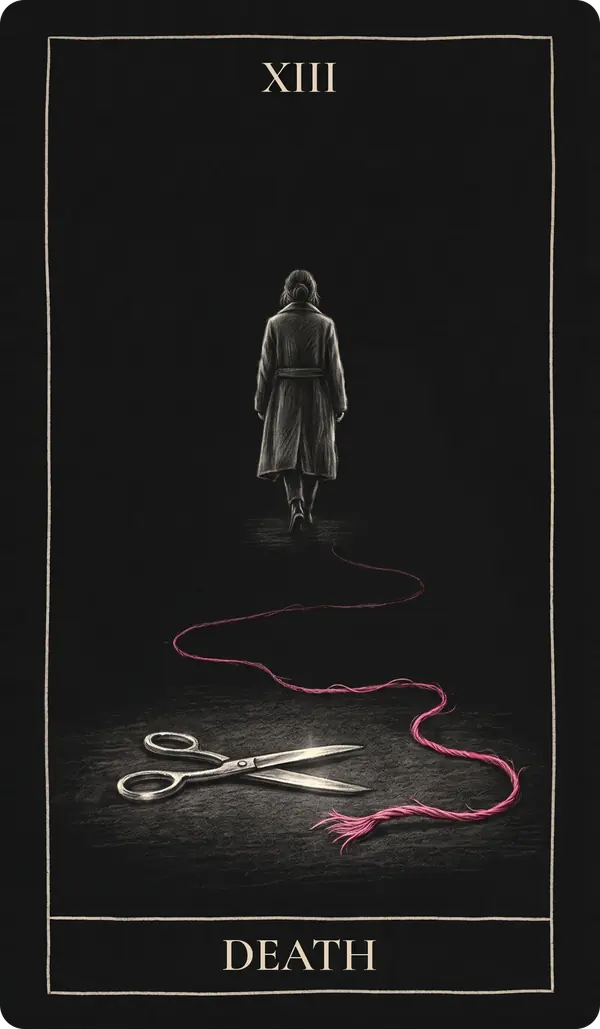 BoundDeathThe tie is dead; the cut was right. Let memory thin.
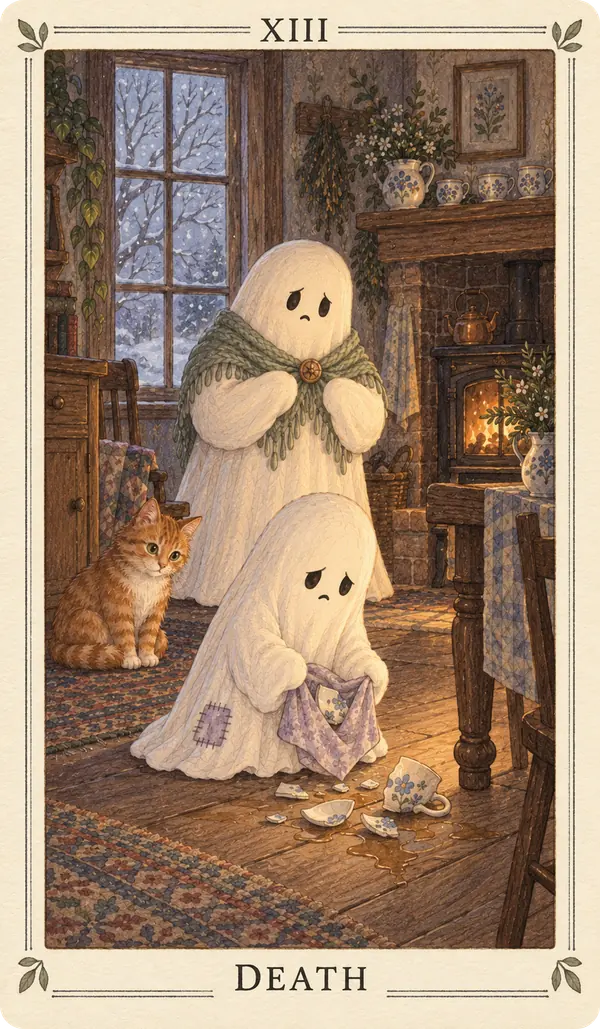 Cozy HauntDeathAn ending clears room for a changed identity.
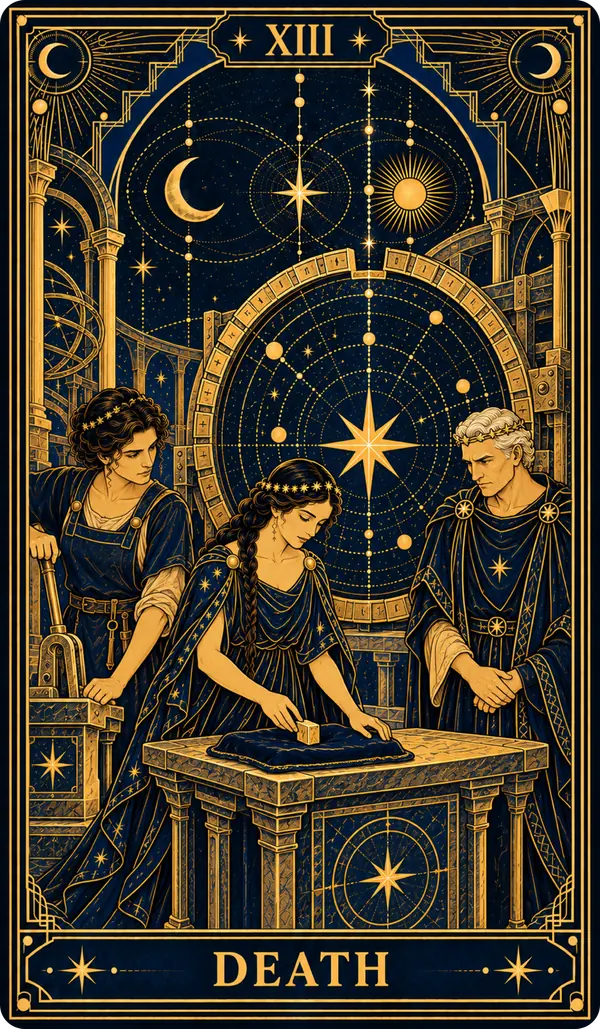 Celestial Night SkyDeathA worn form set aside.
Where it appears
Questions about this card
Does the Death card mean someone will die?
No. In tarot, Death is the card of a definite ending: a phase, a role or a way of doing things that has run its course and needs to close before something new can start. In a reading it asks what you are ready to let go of, even when the familiar thing no longer fits. Questions about anyone’s physical health belong with a doctor.
Is Death a yes or no card?
Upright, Death leans yes. Something in the question looks like it has run its course, and what comes next may need the room its closing would make. Reversed, it leans no: something that may have stopped working is still being held, and the hard part of letting go seems to be the empty space after.
What does Death mean in love?
In love, Death upright points to the end of a phase, a pattern or a role within the relationship, and it separates ending a pattern from ending the relationship itself. Reversed, it suggests a dynamic may feel finished while still being held onto out of fear, and it asks whether familiarity is the only thing keeping it in place.
Is Death a good or bad card?
It is a hard card but not a bad one. Death asks you to let something end, and endings are uncomfortable even when they are due. The card favors accepting the ending directly rather than dragging it out, because what comes after depends on the space it clears. Reversed, the difficulty runs the other way: putting off an ending keeps you stuck.