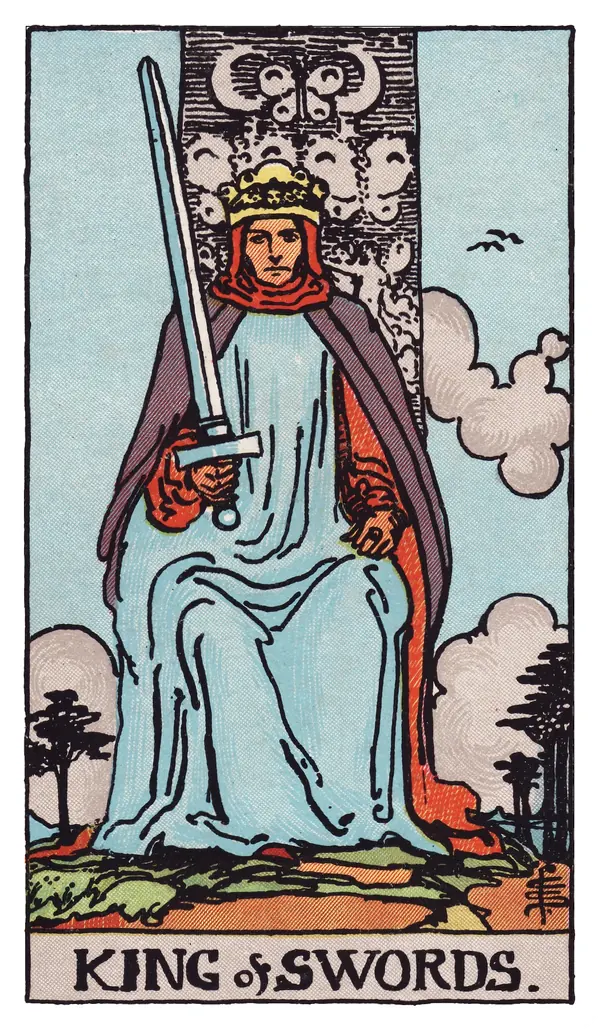
Three of Swords
Minor Arcana · Swords
In short
Real heartbreak or a painful truth deserves to be felt honestly, without minimizing how sharp it is.
Reversed
You may be starting to heal from a real heartbreak, releasing pain that’s been held onto for a while.
- Swords
- Three
- Air
- The Mourner
- real heartbreak or painful truth
- grief that needs to be felt
- emotional pain that’s clear, not vague
Upright
The Three of Swords favors acknowledging genuine heartbreak or a painful truth directly, rather than softening it into something more comfortable. This pain is clear and specific, not vague sadness, naming it honestly is more useful than avoiding it.
This card doesn’t promise the hurt will feel good; facing it clearly is the real way through.
It rewards honesty about the pain, without dramatizing it further.
A question to sit with
“What painful truth deserves to be felt clearly instead of softened or avoided?”
One step
Name the specific source of this pain honestly, even if just to yourself.
Reversed
Reversed, the Three of Swords can mean beginning to heal after real heartbreak, releasing pain that’s served its purpose and no longer needs to be carried so tightly. It can also mean reopening an old wound that hadn’t healed, or struggling to let go of pain that’s become familiar.
The card asks whether healing here is genuinely underway, or whether an old hurt is being revisited without real progress.
A question to sit with
“Is healing really underway here, or is an old hurt being revisited without real progress?”
One step
Take one concrete step today toward releasing pain you’ve been holding onto.
How this deck reads reversed cards
Turned over, the scene keeps its energy and changes how it flows: blocked, turned inward, exaggerated or handled carelessly. A reversed card has its own meaning, never the flat opposite.
In love
A real heartbreak or painful truth in this relationship deserves to be felt clearly, not minimized.
- Supports
- A hurt with a specific source rather than a vague ache.
- Watch for
- Don’t turn the pain into blame that dodges the real issue.
- One step
- Name the specific source of relationship pain honestly.
You may be genuinely healing from a real hurt in this relationship, or reopening an old wound.
- Supports
- Your capacity to tell the difference once you look honestly.
- Watch for
- Don’t mistake revisiting pain for actual healing progress.
- One step
- Take one concrete step toward real healing in this relationship.
At work
A real professional disappointment deserves honest acknowledgment, not minimizing.
- Supports
- Your ability to name the hurt without letting it define you.
- Watch for
- Don’t judge future opportunities by one painful setback.
- One step
- Name the career disappointment honestly, then look for the next step.
You may be recovering from a real career setback, ready to move forward from it.
- Supports
- Real progress that’s been made since the setback.
- Watch for
- Don’t let old professional pain keep coloring new opportunities.
- One step
- Take one step today that reflects genuine recovery from the setback.
A real loss may be part of this decision, and it deserves to be grieved honestly, not glossed over.
- Supports
- Your willingness to feel the loss involved in choosing.
- Watch for
- Don’t let avoiding the grief delay the actual decision.
- One step
- Name the loss involved in this choice honestly, then decide.
Grief over a past loss may be resolving enough to let you decide clearly now.
- Supports
- Genuine healing that lets you see this decision more clearly.
- Watch for
- Don’t let lingering old grief cloud a decision that’s separate.
- One step
- Decide based on the present situation, separate from old grief.
Real pain, faced honestly instead of minimized or dramatized, is where growth is happening.
- Supports
- Willingness to feel a sharp truth fully, once.
- Watch for
- Don’t let facing pain become dwelling in it indefinitely.
- One step
- Name one real hurt honestly today, then take one step forward.
Growth includes recognizing whether you’re genuinely healing or just revisiting old pain without progress.
- Supports
- Your ability to name the old pain without reopening it.
- Watch for
- Don’t judge yourself for how long healing has taken.
- One step
- Take one small, honest step toward real healing today.
A painful family truth or quarrel may hurt, and the hurt deserves honesty rather than a brave face.
- Supports
- Allowing the sadness its place.
- Watch for
- Pretending the words didn’t sting.
- One step
- If something stung, tell someone you trust how it felt.
Healing from a family hurt may be starting, and old pain may be ready to loosen.
- Supports
- Gentleness with yourself and others.
- Watch for
- Reopening the wound in every argument.
- One step
- Let one old family grievance go unmentioned at your next visit.
Yes or no
NoMixedThis hurt has a clear shape and a clear cause, and softening the description will not make it smaller.
Supports
- The pain here is specific enough to name clearly.
- Naming it honestly would likely bring some relief.
Limits
- The hurt is real and will take genuine time to process.
- There’s a temptation to minimize or avoid facing it directly.
One step
Name the specific pain honestly today, without minimizing or dramatizing it.
Healing here can be genuinely underway, or an old wound reopening without real progress, and only an honest check tells you which.
Supports
- Real healing progress has likely already been made.
- A concrete next step toward releasing this pain exists.
Limits
- The wound could reopen without resolving.
- It may be too soon to fully expect resolution.
One step
Take one small step toward release and notice honestly if it helps.
What is in the picture
A red heart pierced by three swords hangs in the air against a grey sky and rain.
The absence of any figure, just the pierced heart alone in the storm, keeps raw, unavoidable pain at the center without any distraction.
- heart pierced by three swords
- rain
- grey storm clouds
- clear, sharp piercing
- open sky
- no figure present
This card in other decks
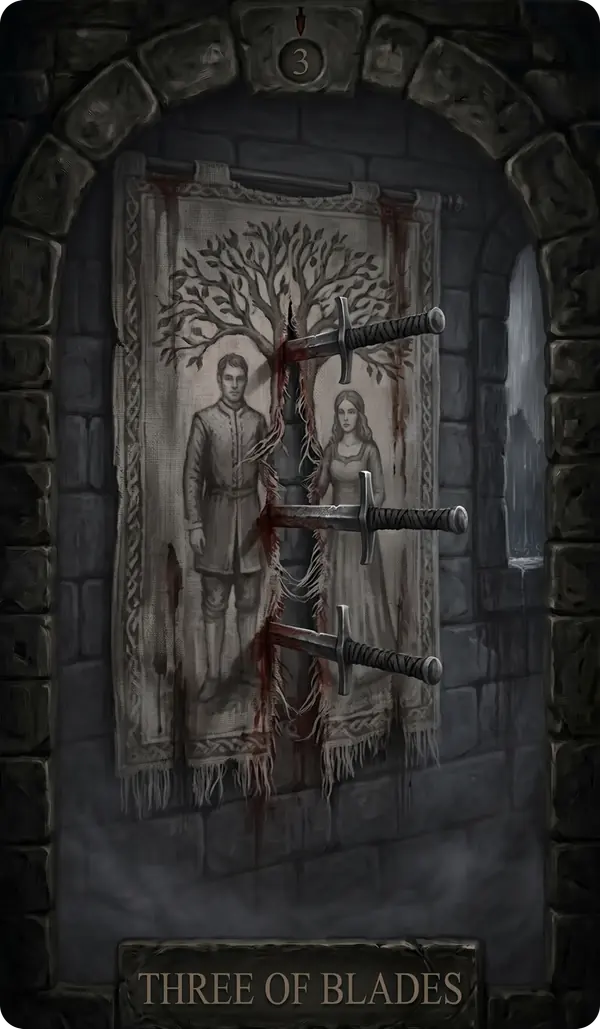 FamiliaThree of BladesA rift inside the family that is named and grieved openly, which is why it can start to close.
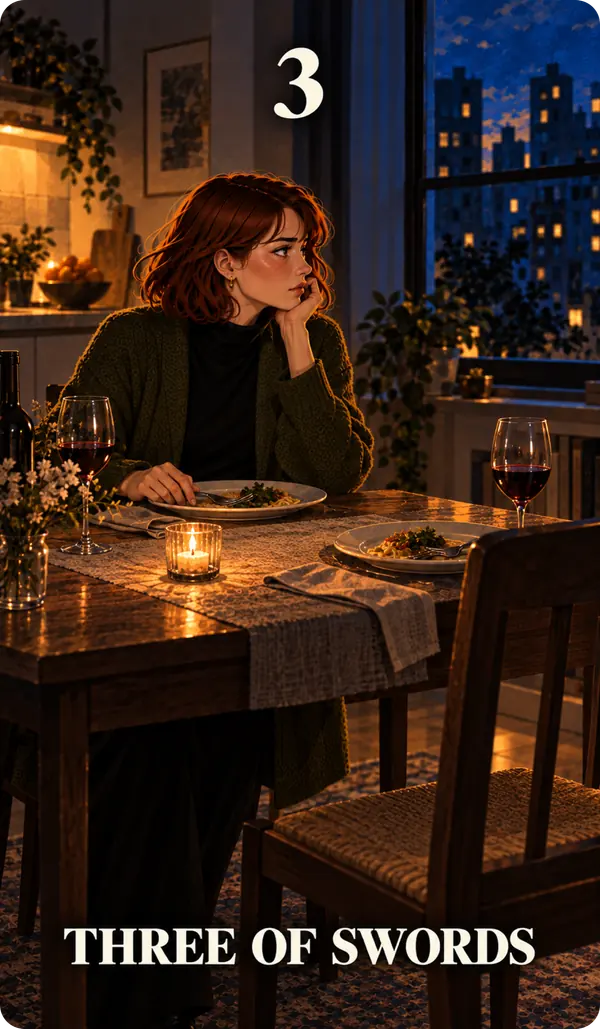 City of WindowsThree of SwordsAcknowledging the hurt without instantly turning it into a whole story about the other person.
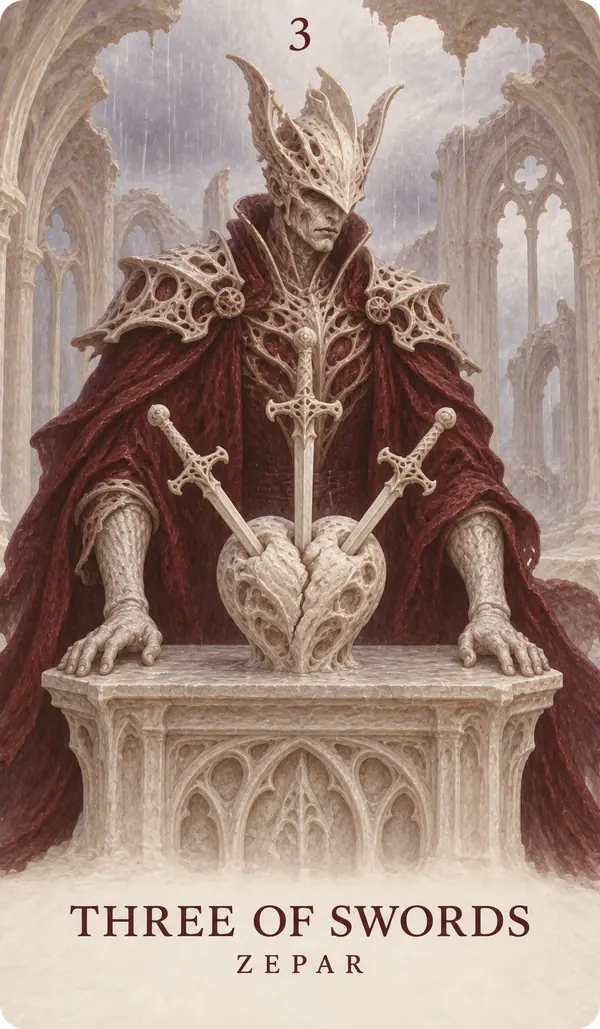 CarnalThree of SwordsPain makes a divided bond visible.
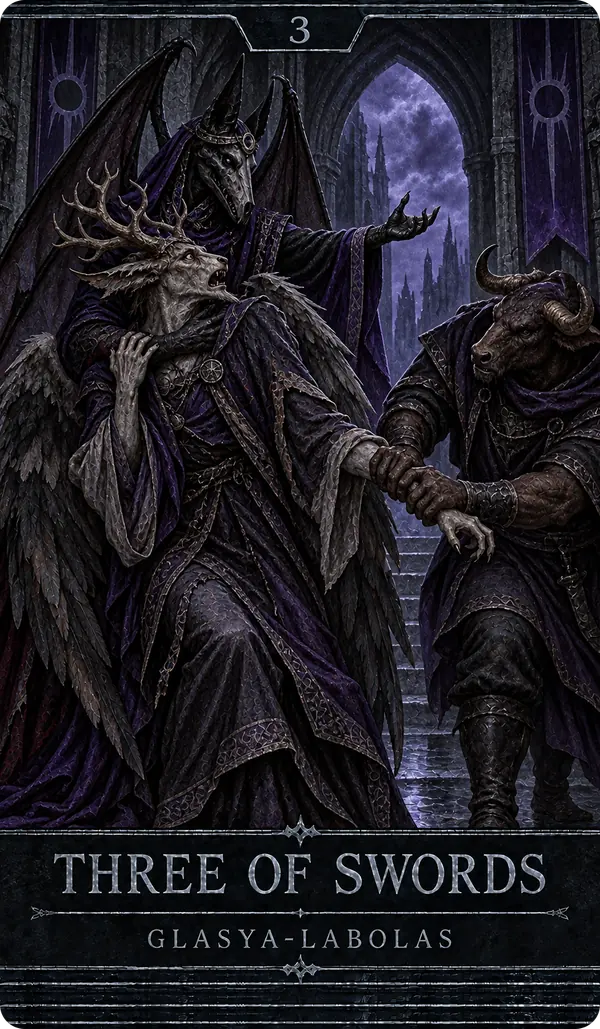 Crimson InfernoThree of SwordsName a painful truth without making it your whole identity.
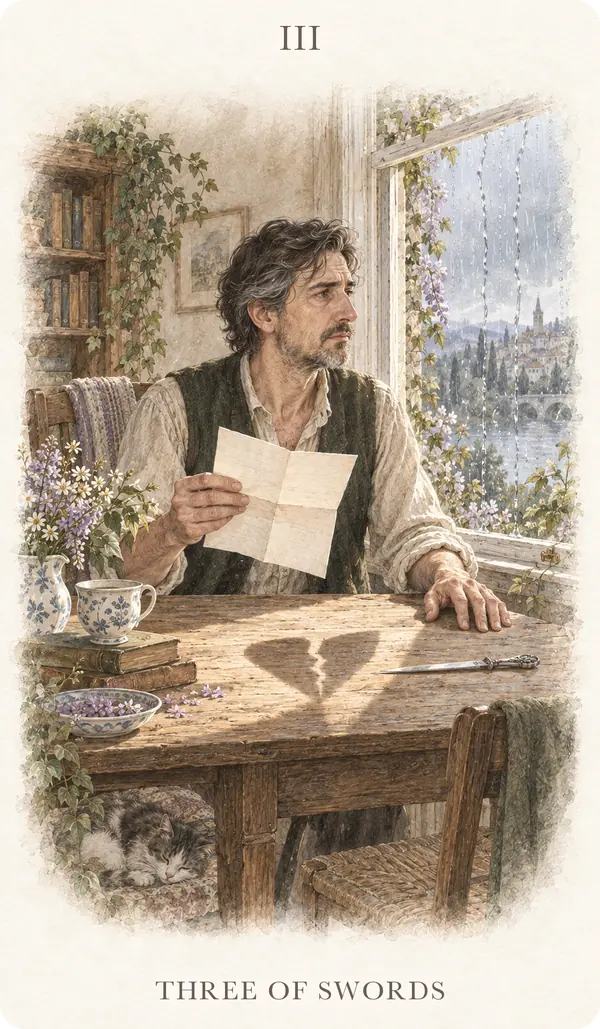 Everyday WondersThree of SwordsThe pain of seeing a hard truth clearly.
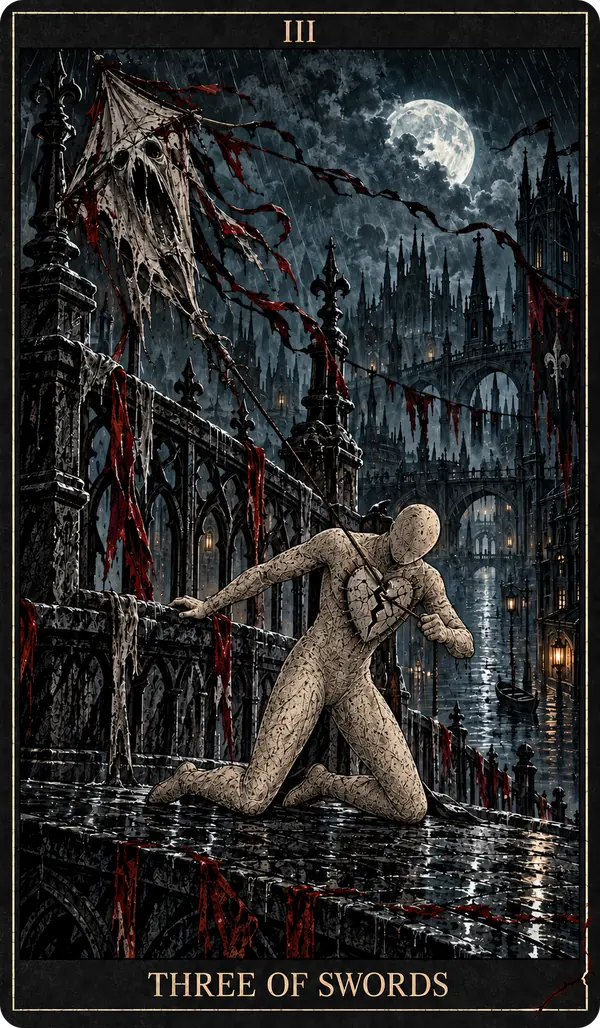 Mirror NightThree of SwordsName outside harm and personal repetition separately.
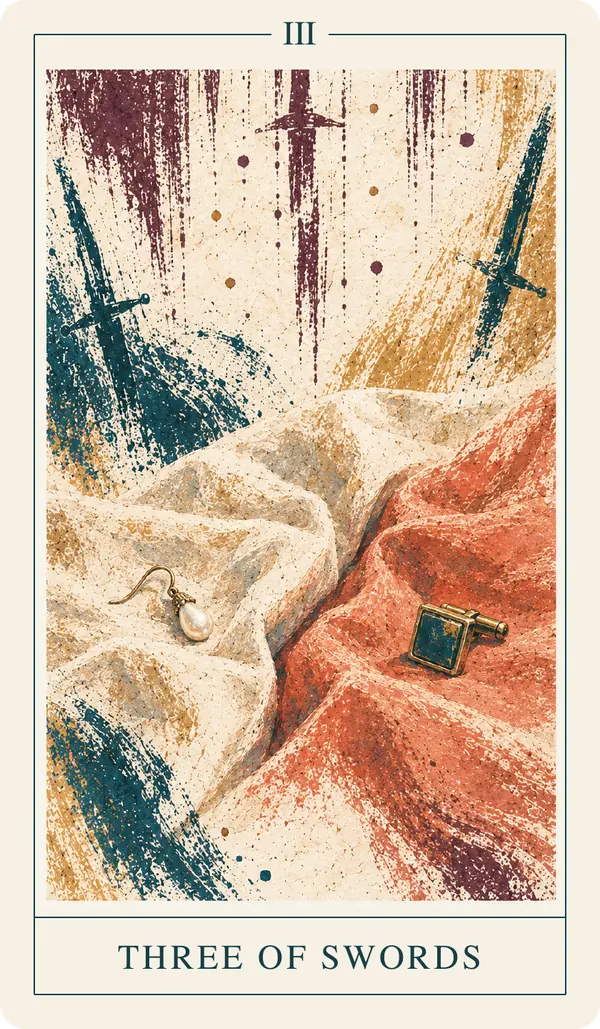 Self ContactThree of SwordsNaming a painful truth allows grief and clarity to coexist.
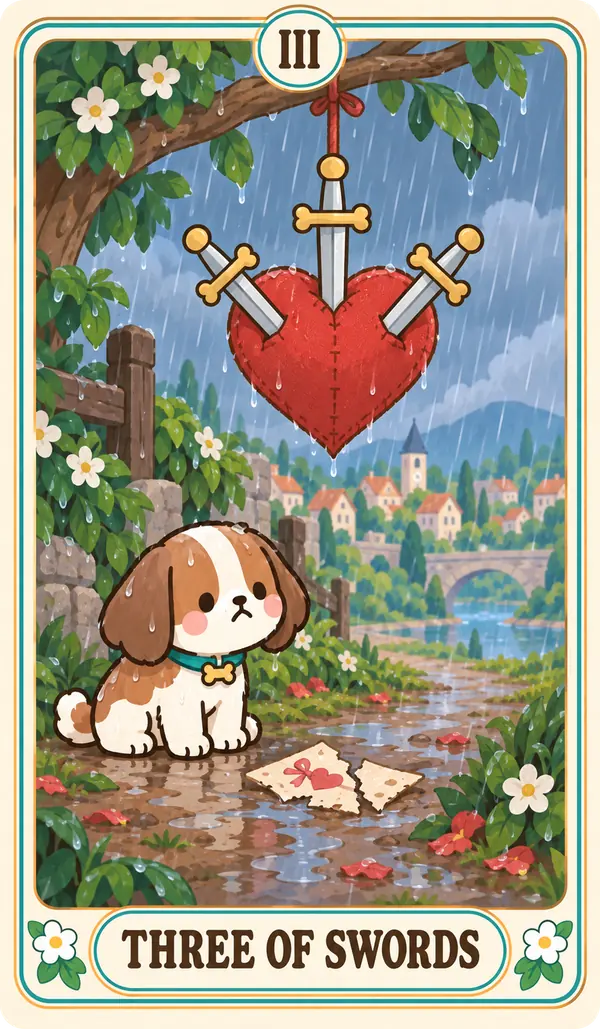 Shiba TownThree of SwordsHeartache; painful truth; a rupture that needs acknowledgment.
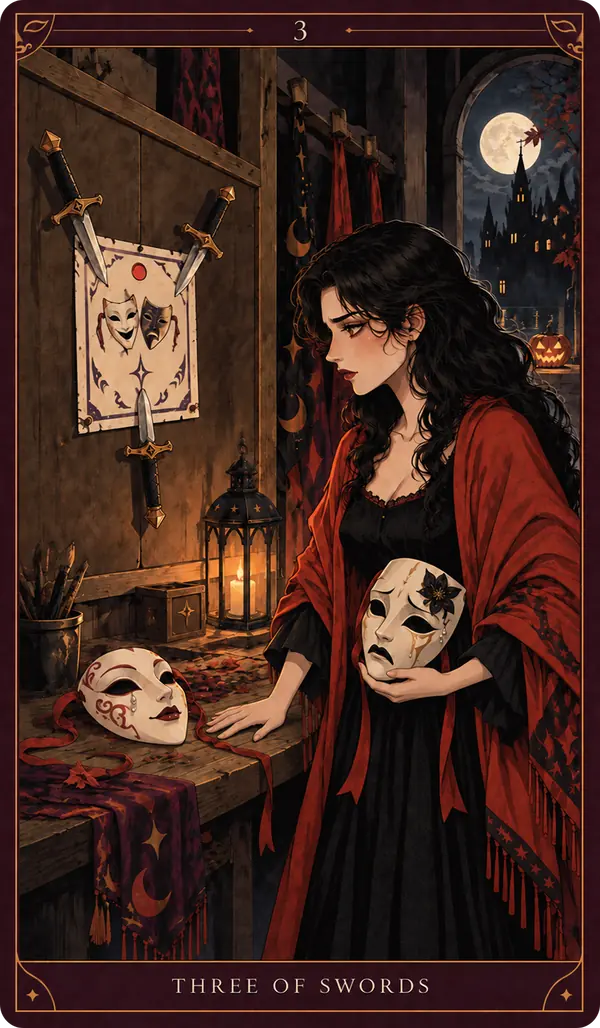 Velvet MasqueradeThree of SwordsHeartbreak around a changed agreement.
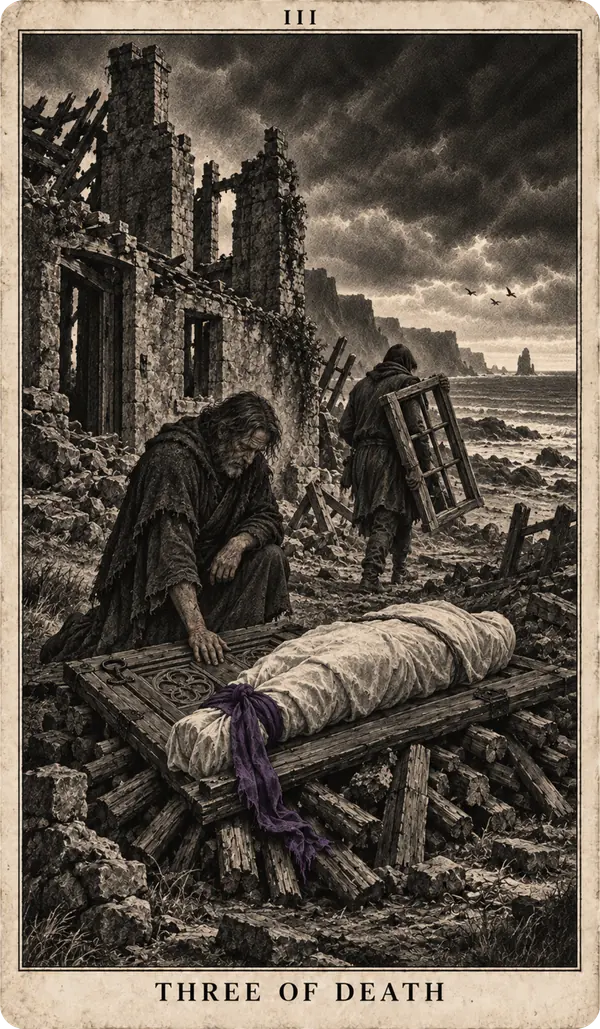 Four HorsemenThree of DeathLet the loss be named and witnessed.
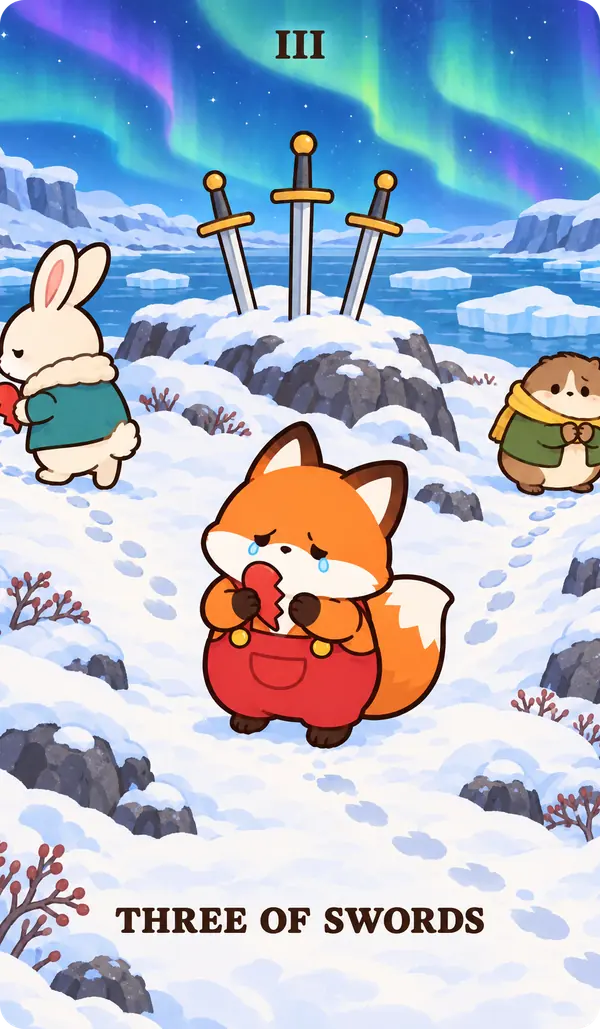 Four TrailsThree of SwordsHeartbreak, painful truth, separation.
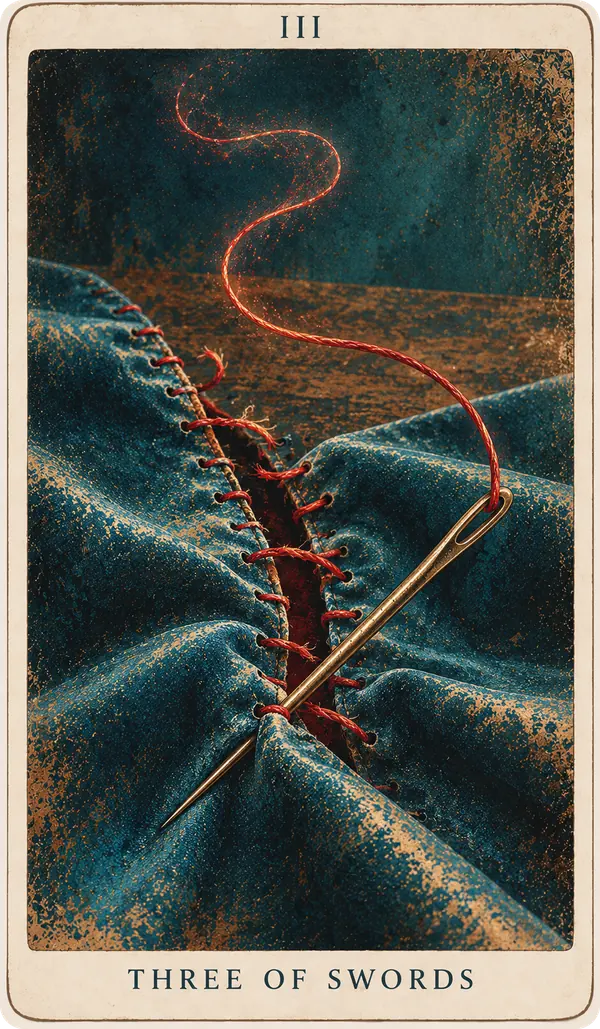 Living ThresholdThree of SwordsA strained seam comes apart, showing pain and the cloth still sound.
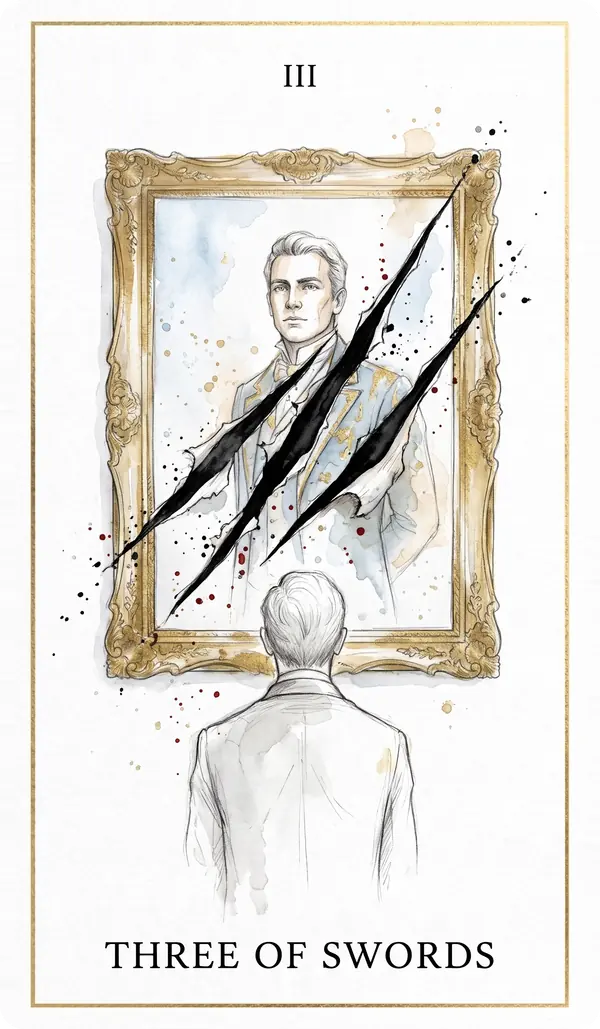 Colour of PowerThree of SwordsA truth has cut the image, not the man.
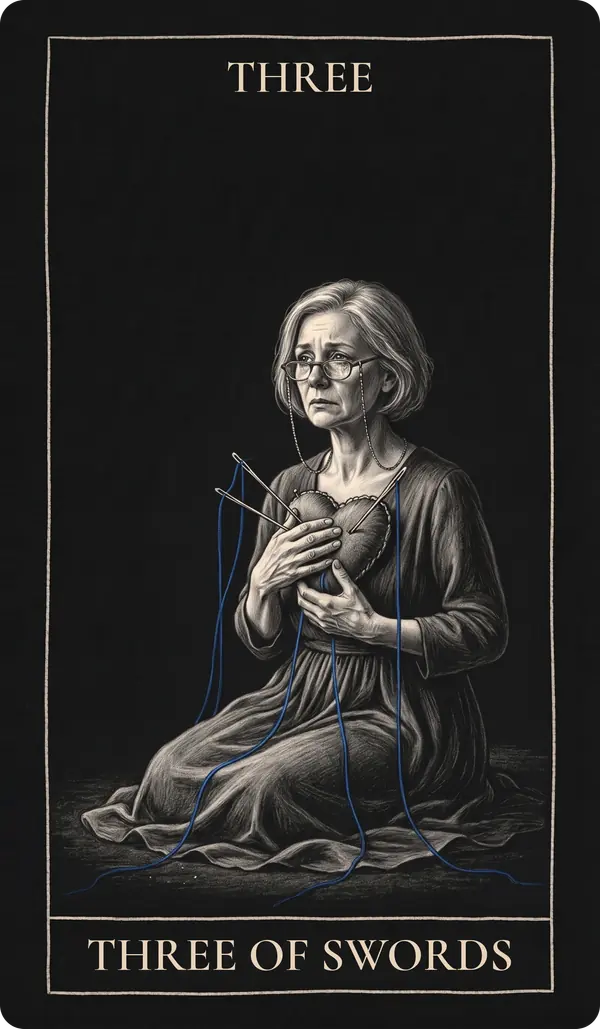 BoundThree of SwordsPain from words: a truth that wounded, a phrase you cannot forget.
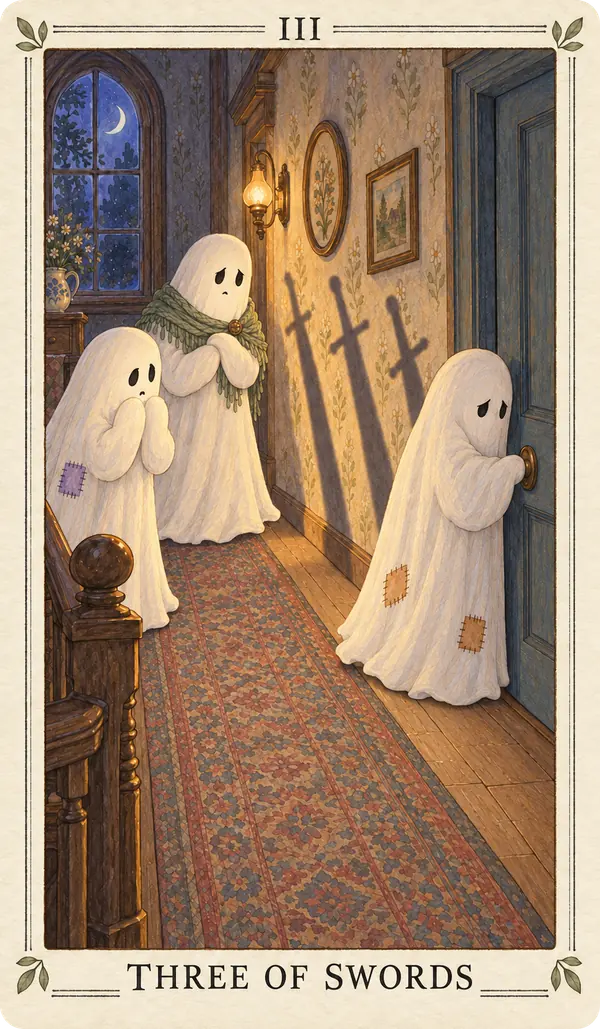 Cozy HauntThree of SwordsAcknowledge pain and its cause.
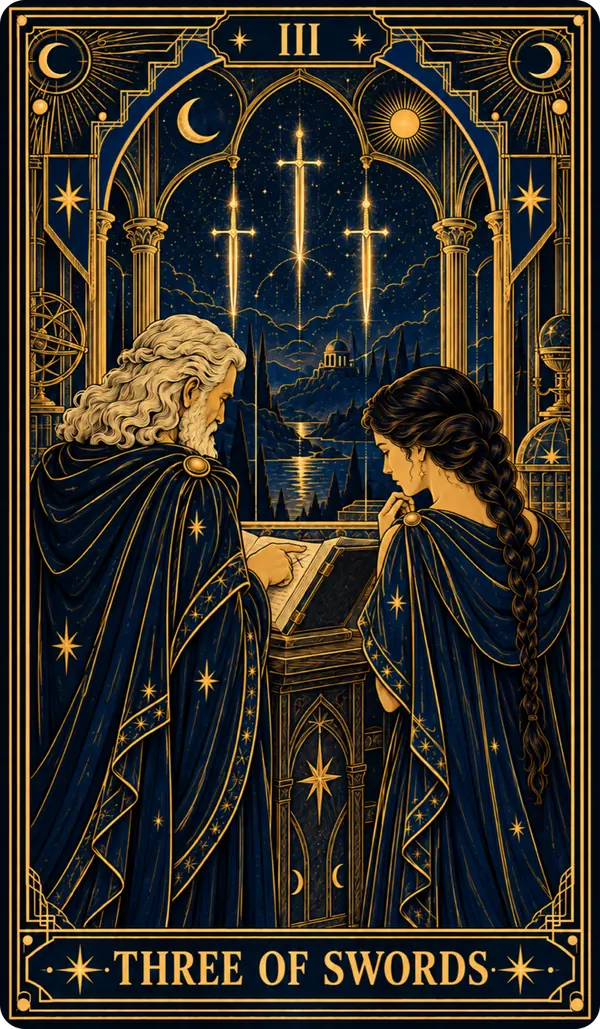 Celestial Night SkyThree of SwordsTruth about a trusted person’s mistake.
Where it appears
Questions about this card
Is the Three of Swords a yes or no card?
Upright, the Three of Swords leans no. The hurt in the question has a clear shape and a clear cause, and describing it more gently does not make it smaller. Reversed, the lean is mixed: healing may be genuinely underway, or an old hurt may be coming back without real progress, and only an honest look tells you which.
What does the Three of Swords mean in love?
In love, the Three of Swords upright is one of the hardest cards to draw. It names real heartbreak or a painful truth in the relationship and asks that it be felt clearly, not minimized, and not turned into blame that dodges the actual issue. Reversed, it can mean recovering from that hurt, or going back over it again and again without moving forward.
Does the Three of Swords mean a breakup?
Yes, it can. The Three of Swords is traditionally the heartbreak card, and it is one of the cards most often read as a breakup, a betrayal or a painful separation. In this deck the pain it describes is real and specific, and naming its source honestly helps more than softening it. If an ending is what the card brings up for you, an honest conversation is the way to find out what is really happening.