All readings

Yes · No · What Shapes It

A nuanced answer that still leaves the choice up to you.

Coming soon

Personal interpretation

A reading shaped by your question

When available, personal interpretation will use your question with the selected deck’s meanings, author notes, card orientations, and spread positions. Relevant date and time context will be included only when the reading supports it. This feature is still in development.

Your own question is still brewing in the cauldron; it will be ready soon.
or
Selected · Available now

Canonical reading

Read the card through one fixed position. No question needed.

Your one position

  1. The direction of the answer: Which way the answer leans, and what shapes it.

  • General overview
  • No typing
  • Immediate reading

About this spread

A longer guide to this spread

What it is for, how its positions are read, and where to go next.

Yes · No · What Shapes It is a one-card reading for a yes-or-no question. The card leans yes, no or mixed, then shows what works in your favor and what could get in the way. For a direct answer with its context in view.

For questions like

  • “Is this the right time to start my own business?”
  • “Should I say yes to leading this project at work?”
  • “Is it worth reaching out to an old friend after years of silence?”
  • “Is it time to set clearer boundaries with my mother?”

The positions

  1. 1The direction of the answer: Which way the answer leans, and what shapes it.

How to read it together

Start with the lean: yes, no or mixed. It shows which way things tilt as they stand, not a ruling. Then read the two lists side by side. “Working in your favor” names what you already have or can do; “What could get in the way” names what might block you. Neither list argues for the lean, so a no can still come with real strengths, and a yes with real risks. The practical check at the end is often the most useful part: one concrete thing to find out or test before deciding. A reversed card keeps the card’s theme but meets it with more resistance or delay, and the lean and both lists are written for that version.

A worked example

Say the question is: “Is now a good time to ask my manager for more responsibility?”

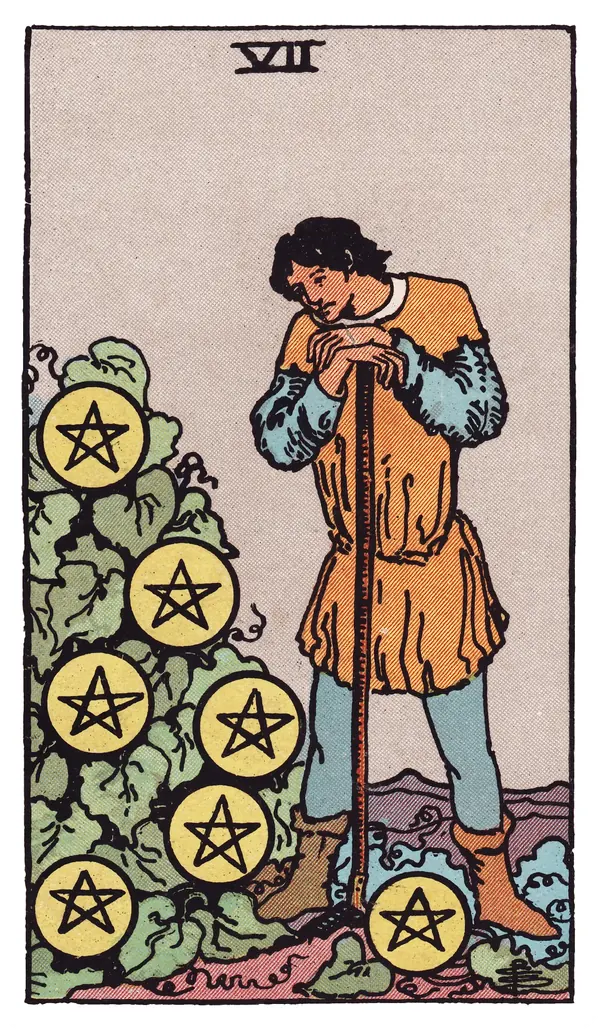
1 · The direction of the answer: Seven of Pentacles
  1. 1 · The direction of the answerSeven of Pentacles

    Assess the honest evidence of progress today before deciding anything further.

Reading it together

Say someone asks whether now is a good time to ask for more responsibility, and draws the Seven of Pentacles upright. The lean is mixed. On one side, real progress has likely been made, even if slowly, and an honest look at it is possible now. On the other, the full results may still need time to show, and slow gains are easy to undercount. The practical check ties it together: gather the evidence of progress first. The card leaves the timing with the person asking, now with a clearer picture of what they can point to.

Questions about this spread

Does a reversed card mean no?

Not here. Each card has its own lean in both orientations, and a reversed card can still lean yes or mixed. Reversal changes how the card’s theme shows up, usually with more resistance or delay, and the two lists are written for that version. Read the lean the card gives rather than the direction it landed.

What does a mixed answer mean?

Mixed means the situation, as it stands, carries real weight on both sides. It is a legitimate answer, not a failed one. The two lists matter most here: they show what is already working in your favor and what could get in the way, so you can see which side you are able to strengthen before you decide.

What kind of question works with a yes-or-no spread?

Any yes-or-no question works, and it works best on one decision or one step in your own hands: “Is now a good time to ask for more responsibility?” rather than “Will I get promoted?” The card reads where things stand and what shapes them. When the question is about someone else’s choice, the lean still shows how things tilt, and the lists show what you can do; their answer is the one that settles it.

Why doesn’t the card just say yes or no?

It does give a lean. The two lists sit beside it because a bare yes or no leaves out what matters most: what you already have going for you and what could trip you up. Neither list argues that the lean is right. They give you the material, and the decision stays yours.

How a reading works →