

Rider–Waite–Smith
Classic
The classic deck: traditional meanings, and a daily card too.
The classic Rider–Waite–Smith tarot: clear, story-like imagery that has shaped most modern English-language tarot decks.
About this deck
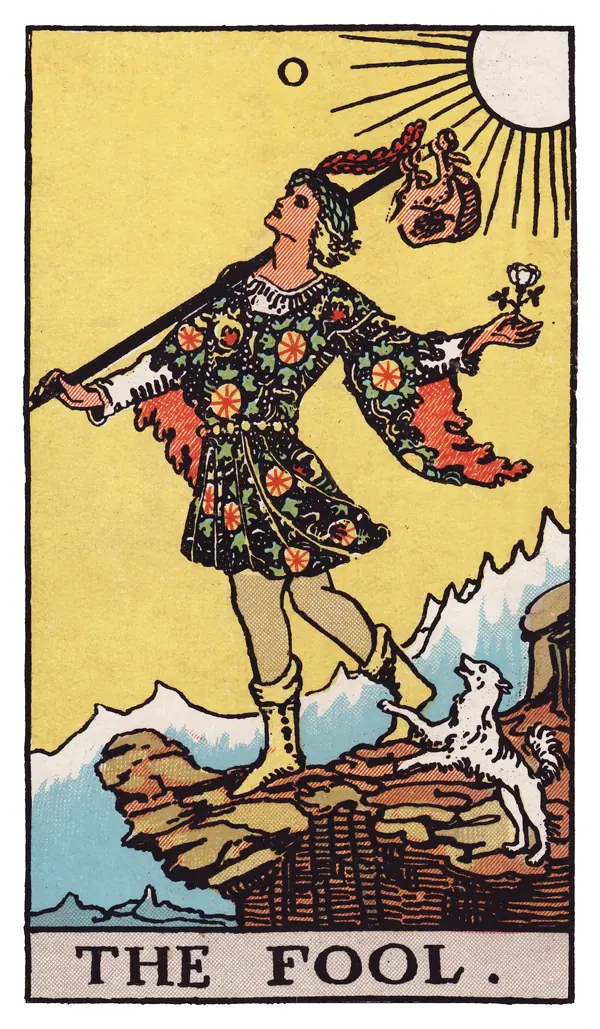
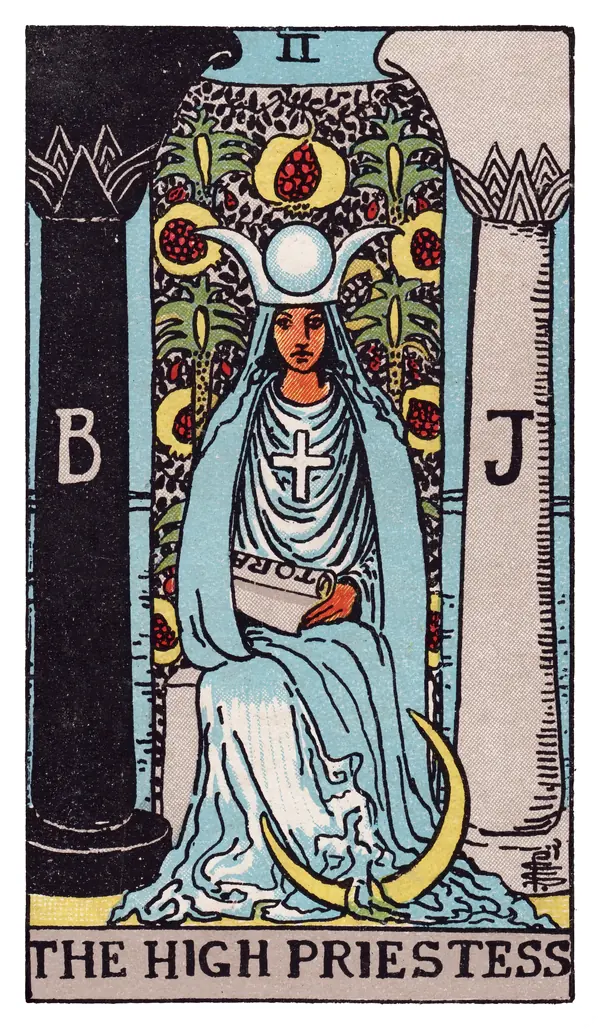
Every card here is a scene, a still moment from a longer story. A young traveler stands at the edge of a cliff, a small dog at their heel. A woman in white closes a lion’s jaw with her bare hands and stays gentle. Pillars and thresholds keep returning, landscapes open behind the figures, and the colors are gold, deep blue, warm red and green.
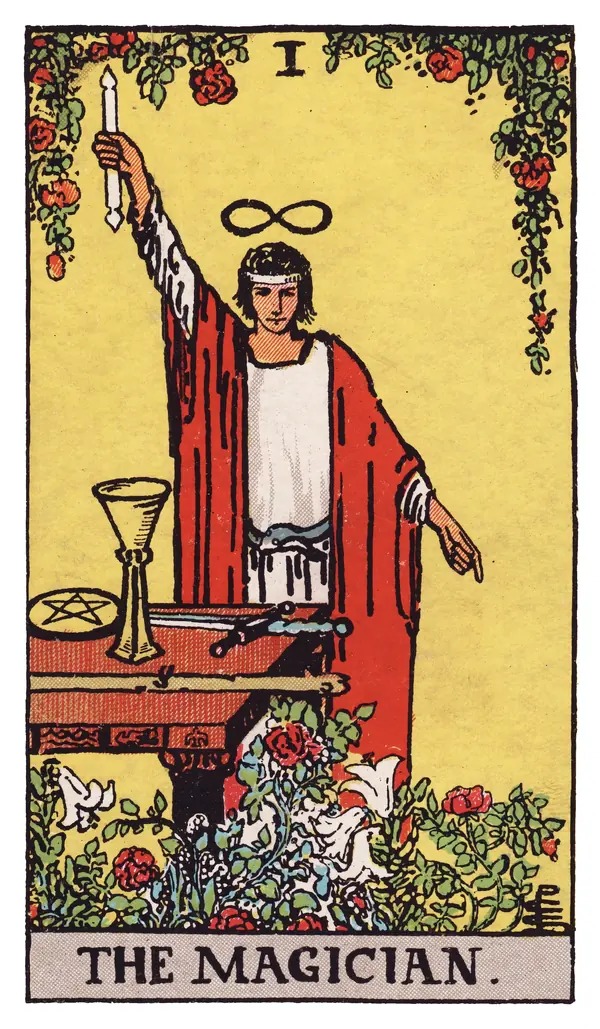
Pamela Colman Smith drew these scenes, and William Rider & Son published the deck in London in 1909. It has no single hero. Its people are a figure at a table laid with a cup, sword, wand and pentacle, an emperor on a stone throne, and a sphinx above a wheel in the sky. So many later decks were made as answers to this one that its pictures became a common language of tarot.
The suits are the four elements, each with its own scenes. Fire runs through the Wands, where two figures raise garlands under flowers strung between four wands. Water fills the Cups, from a cloaked figure over three spilled cups to a rainbow of ten above a family and a home. Air sharpens the Swords: a red heart pierced by three swords hangs in gray rain. Earth is the slow work of the Pentacles: a craftsman carves pentacles one by one at his bench.
Rider–Waite–Smith is the classic: clear, calm and story-driven. It shows what is happening in the picture first and only then what that may mean, so it suits a first reading and still gives a seasoned reader common ground.
Rider–Waite–Smith tradition (RWS), first published in 1909 and the most widely used foundation for modern English-language tarot systems.
Voice and tone
A thoughtful friend sitting beside you over the card, talking about what the scene really shows and what it might mean. Plain words instead of mystical ones, options instead of verdicts.
- clear
- grounded
- story-driven
- calm
- classic
For whom
It suits a first reading, a quiet question at the start of the day, and anyone who would rather find a meaning in what is happening in the picture than in abstract theory.
- beginner
- intermediate
- advanced
The literal scenes make a first reading easy to follow. Because nearly every later deck answers this one, it keeps giving experienced readers a common point of reference.
Reversed cards
Turned over, the scene keeps its energy and changes how it flows: blocked, turned inward, exaggerated or handled carelessly. A reversed card has its own meaning, never the flat opposite.
All 78 cards
- The Fool
- The Magician
- The High Priestess
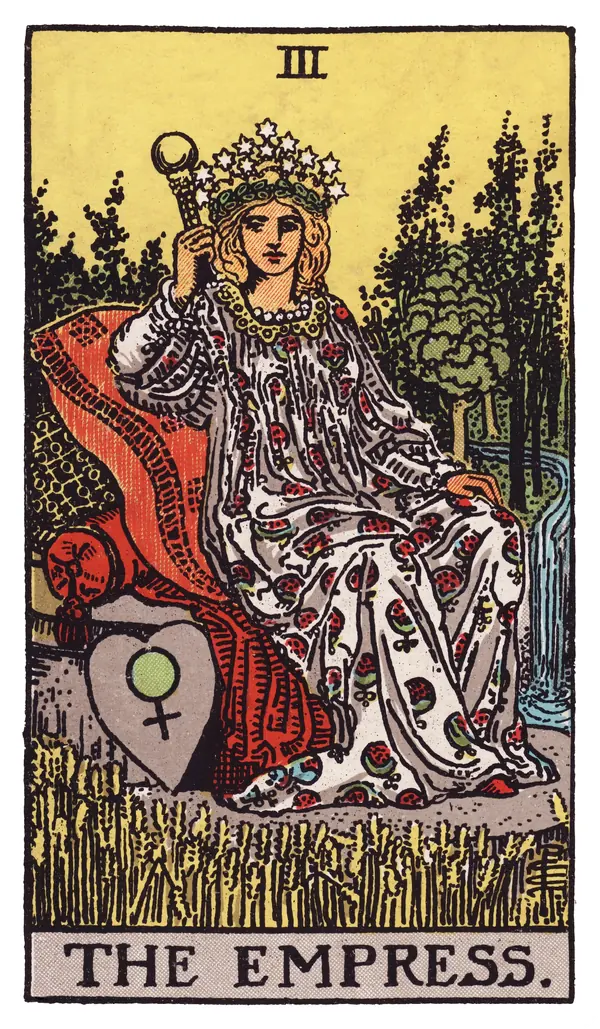 The Empress
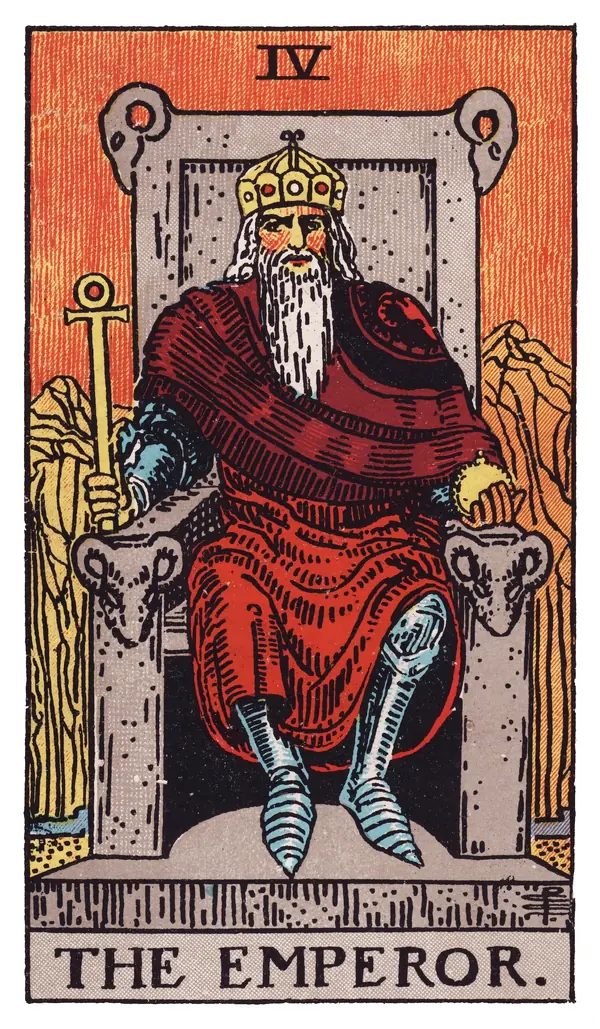 The Emperor
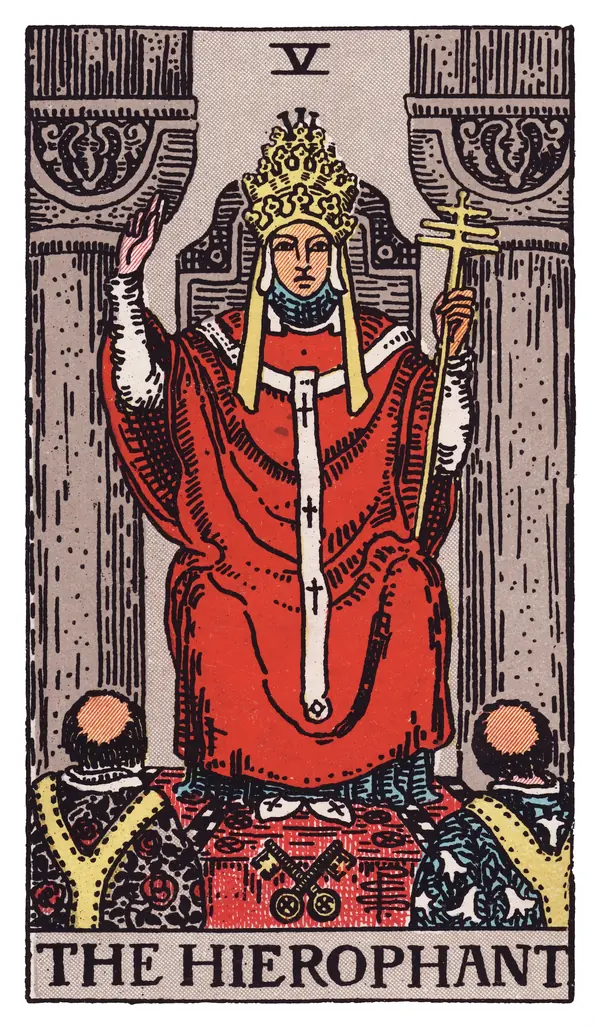 The Hierophant
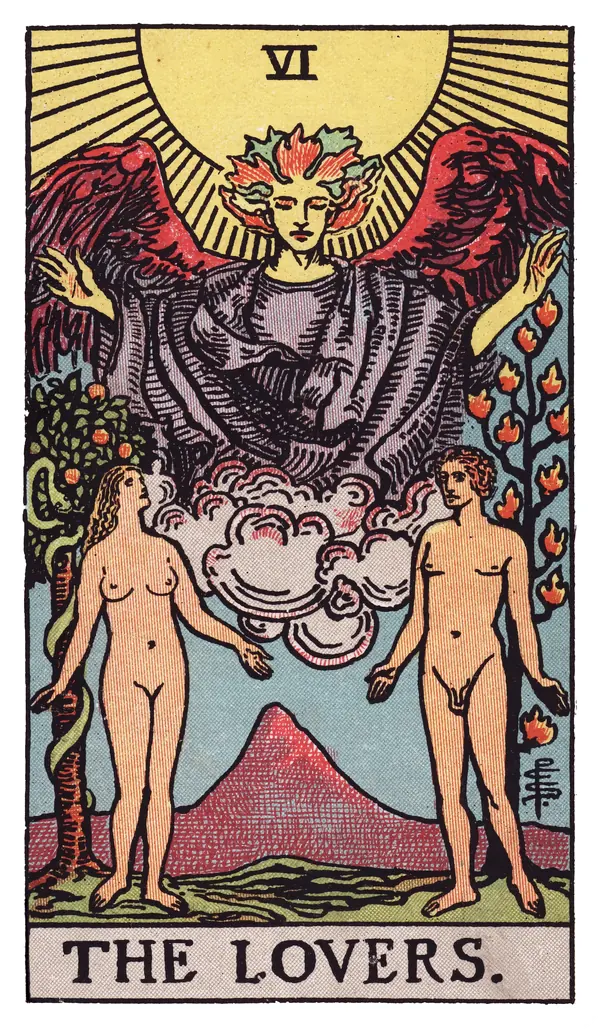 The Lovers
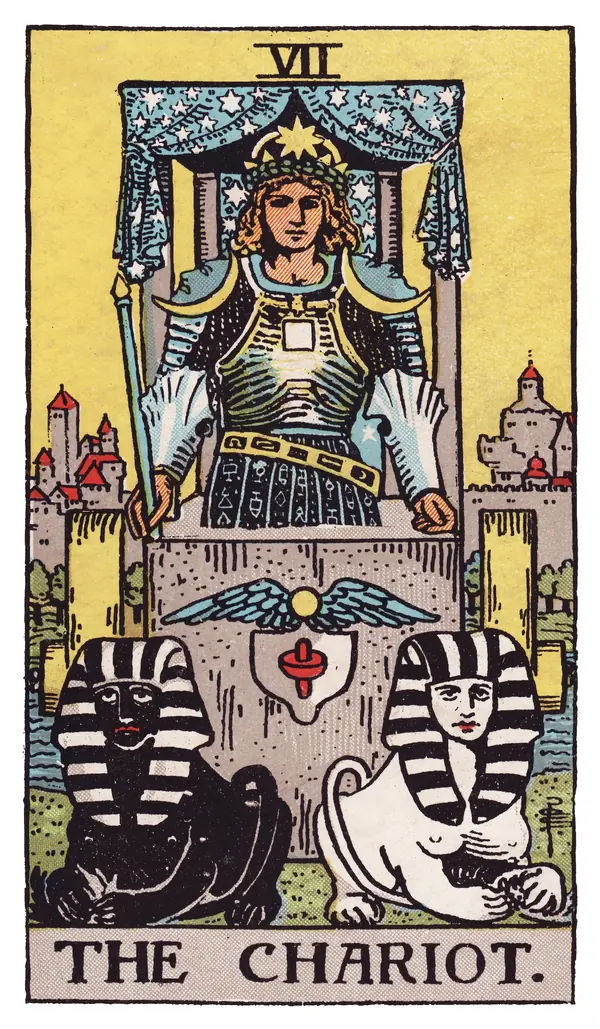 The Chariot
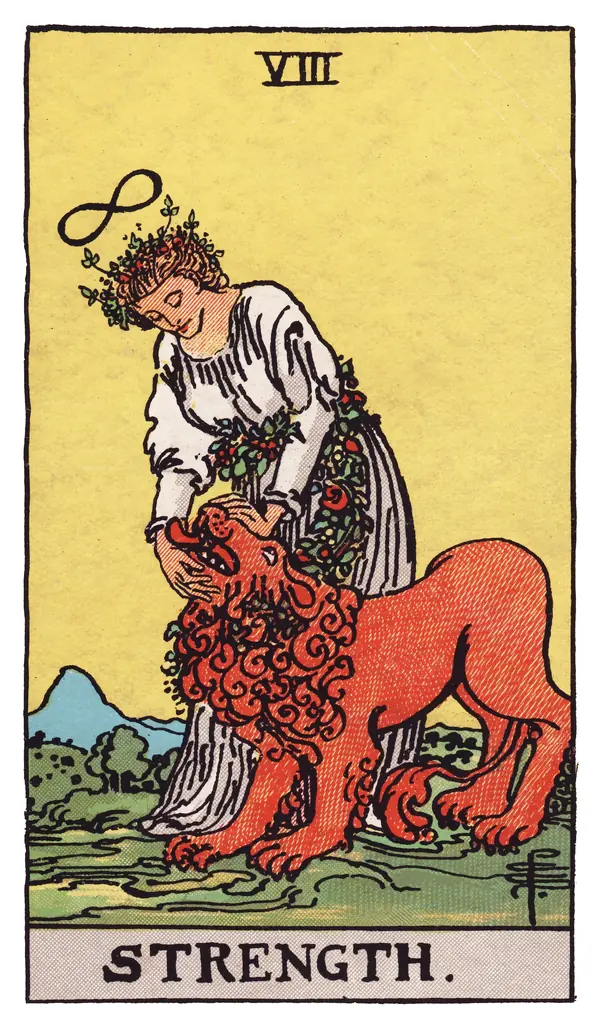 Strength
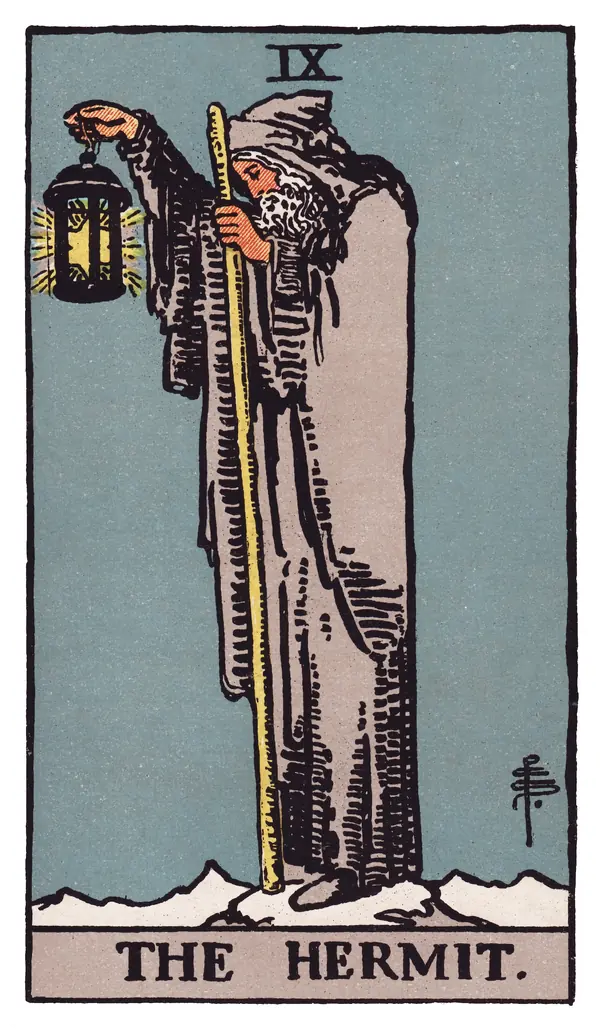 The Hermit
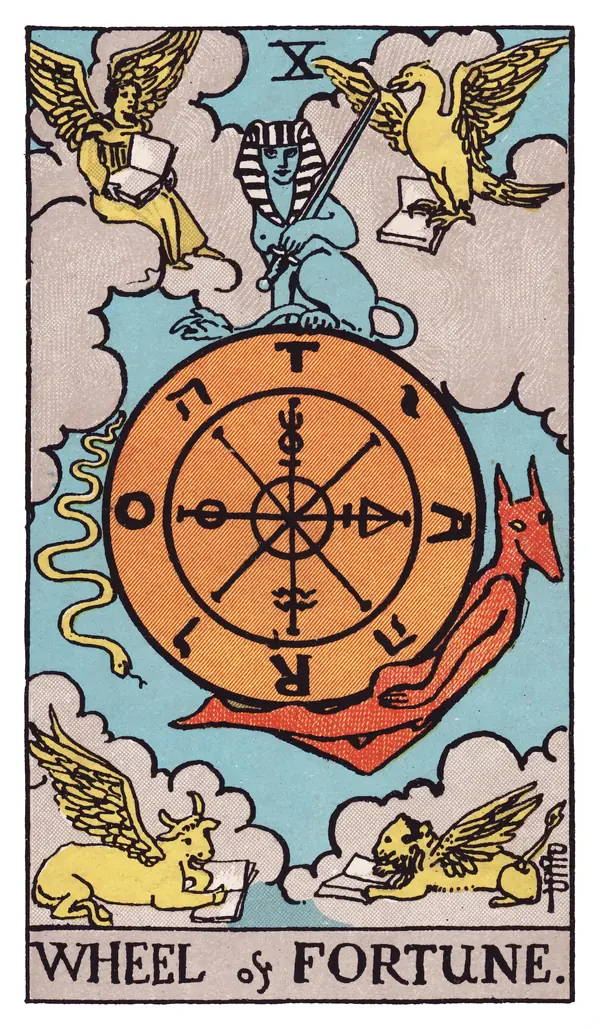 Wheel of Fortune
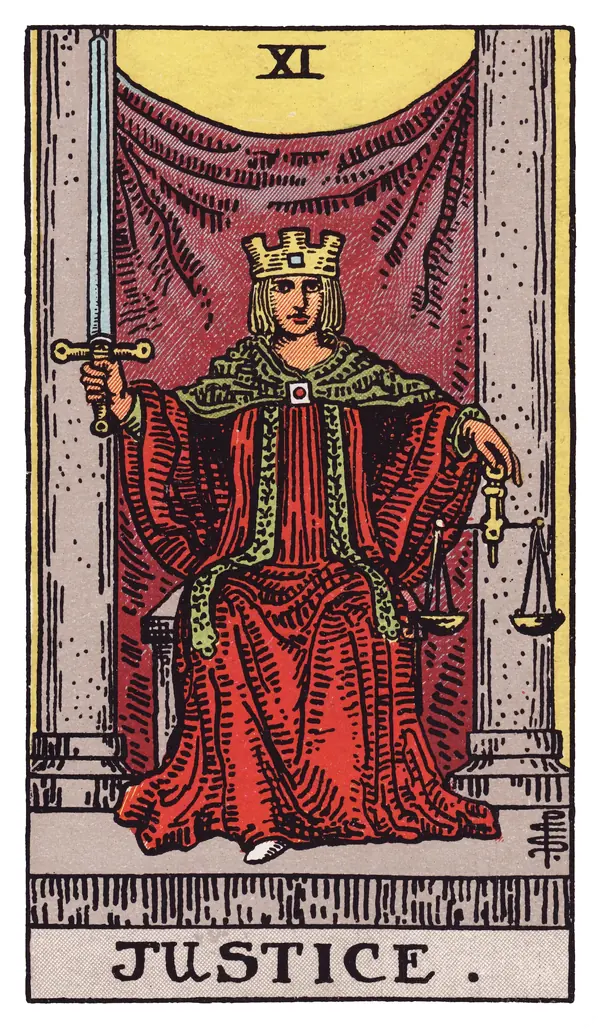 Justice
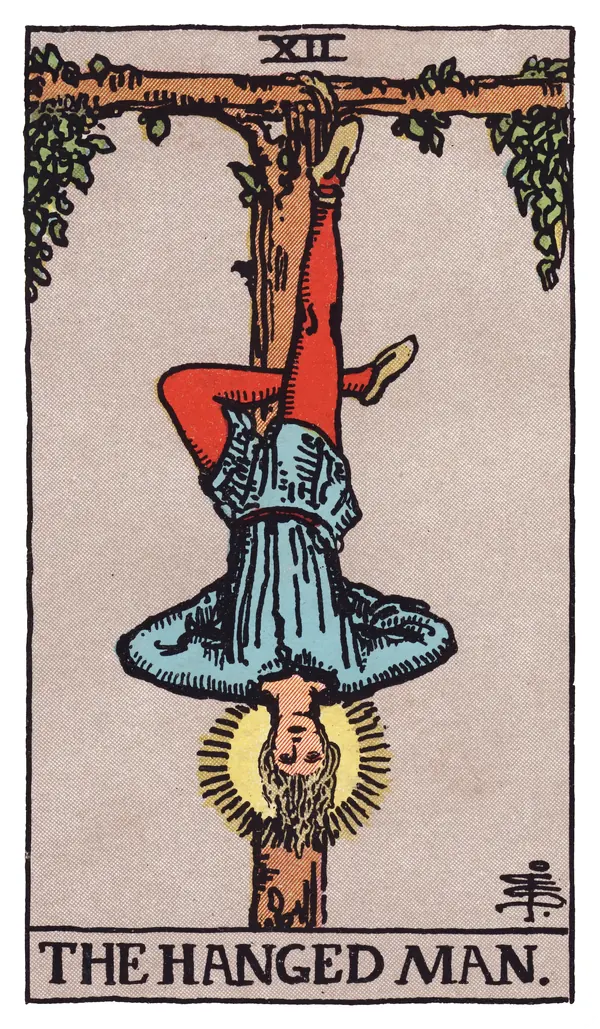 The Hanged Man
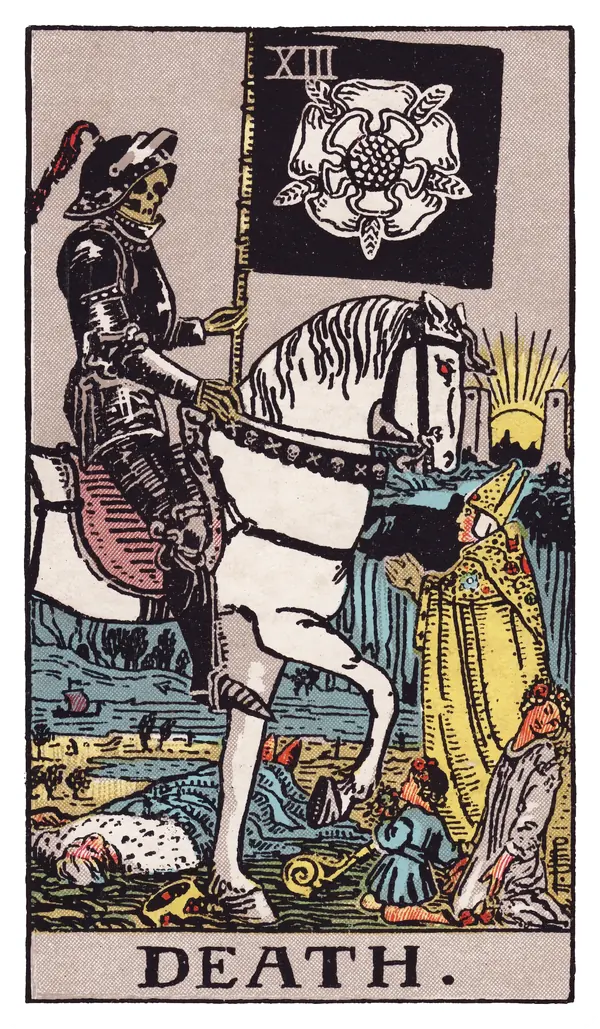 Death
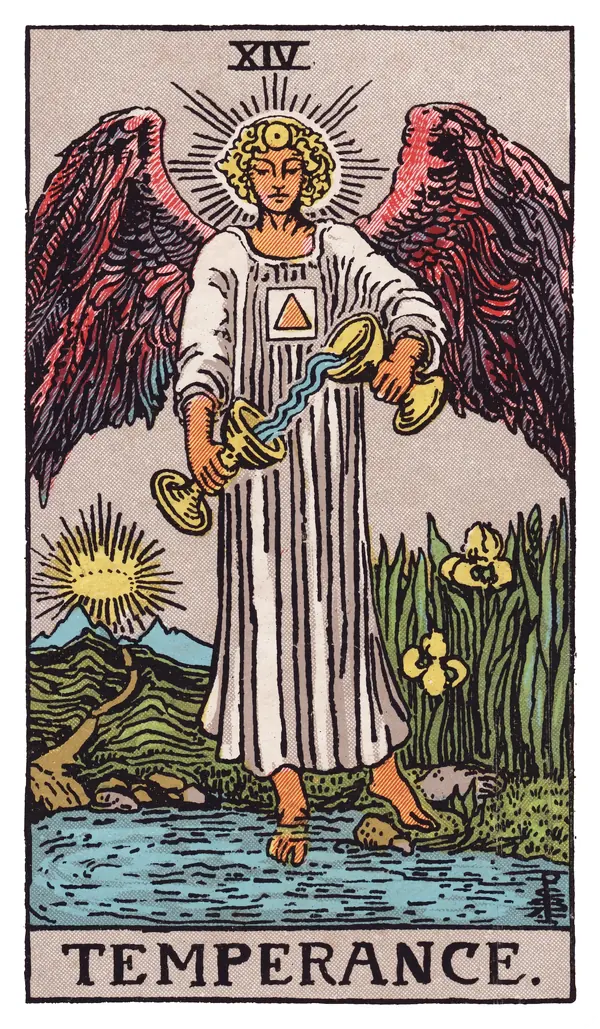 Temperance
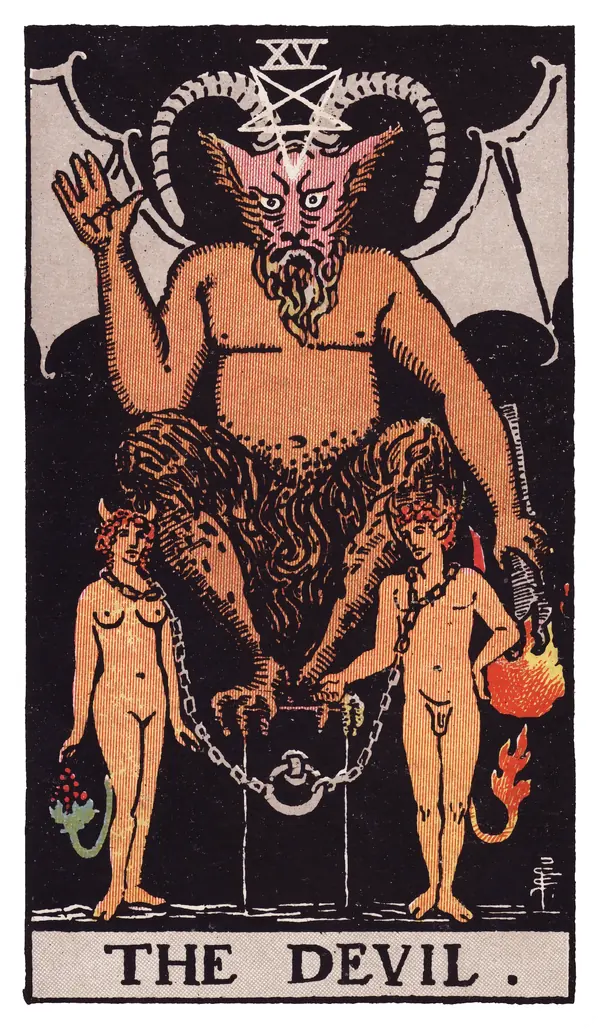 The Devil
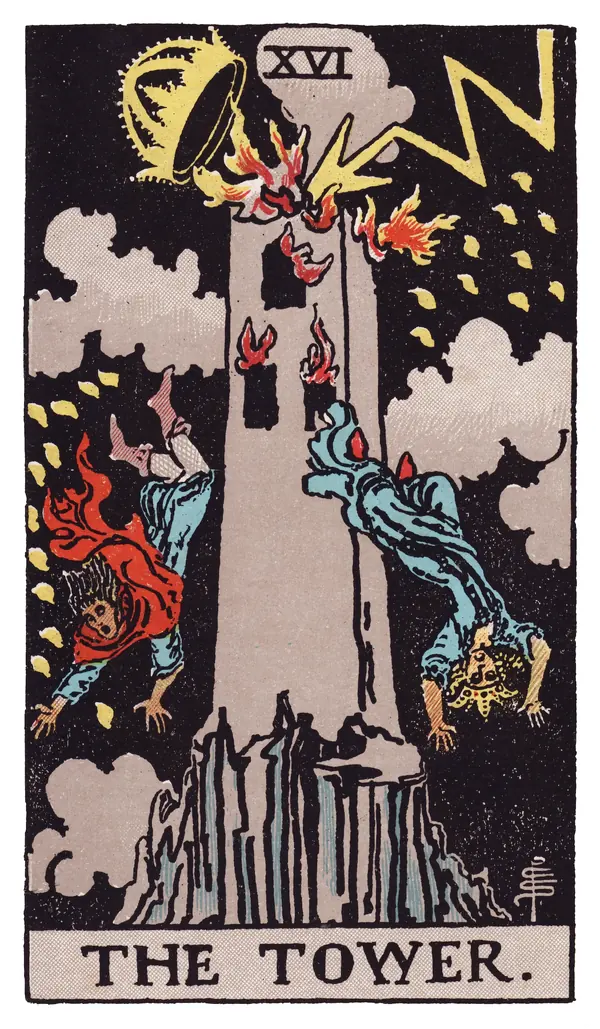 The Tower
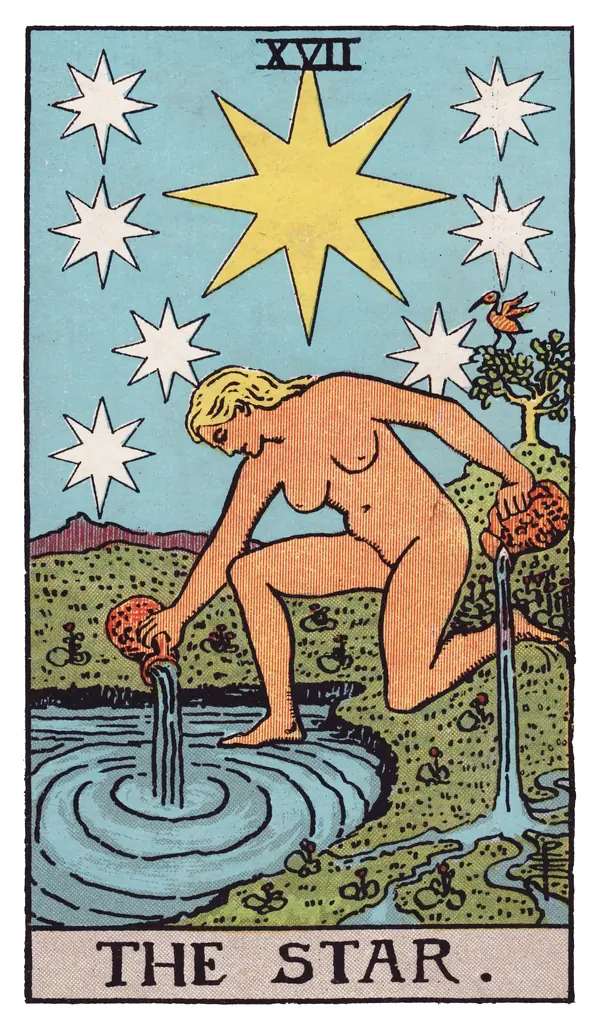 The Star
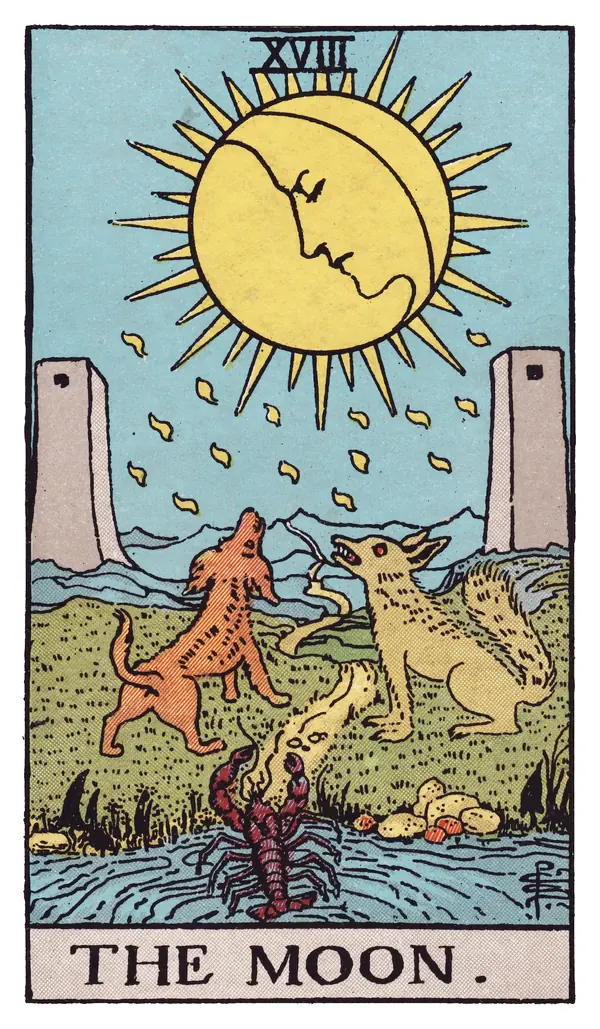 The Moon
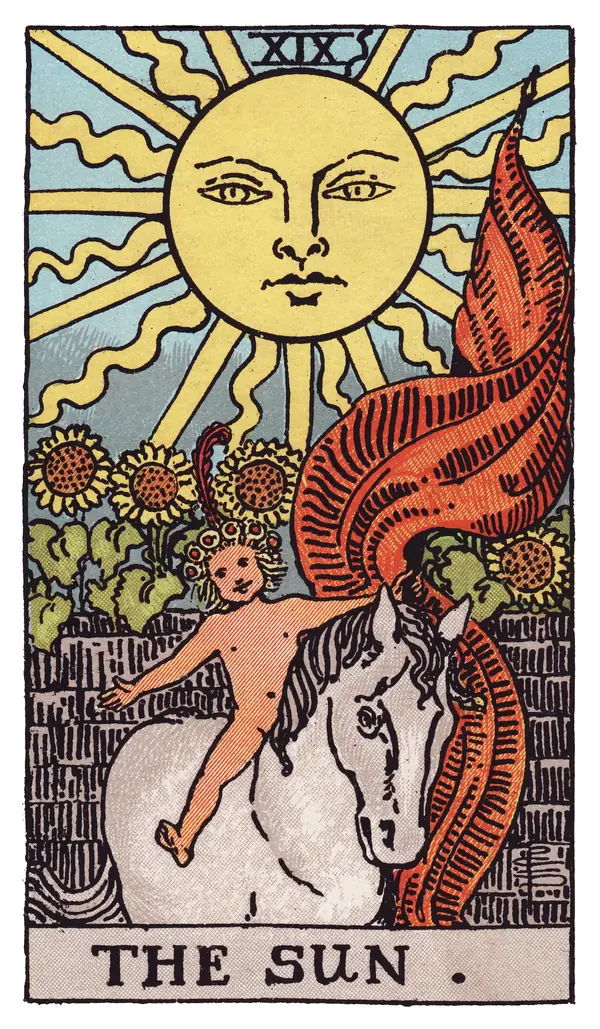 The Sun
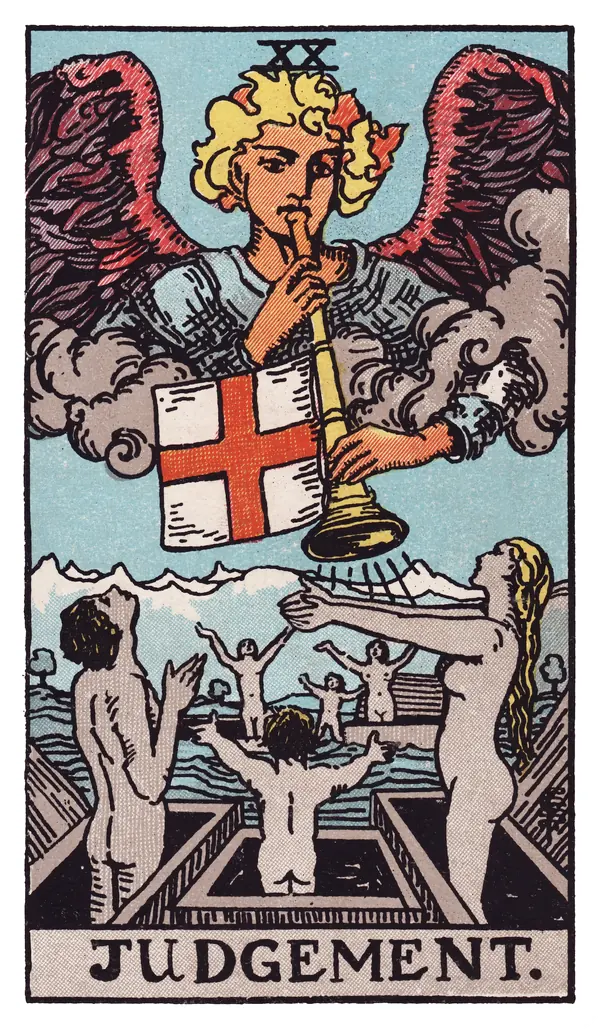 Judgement
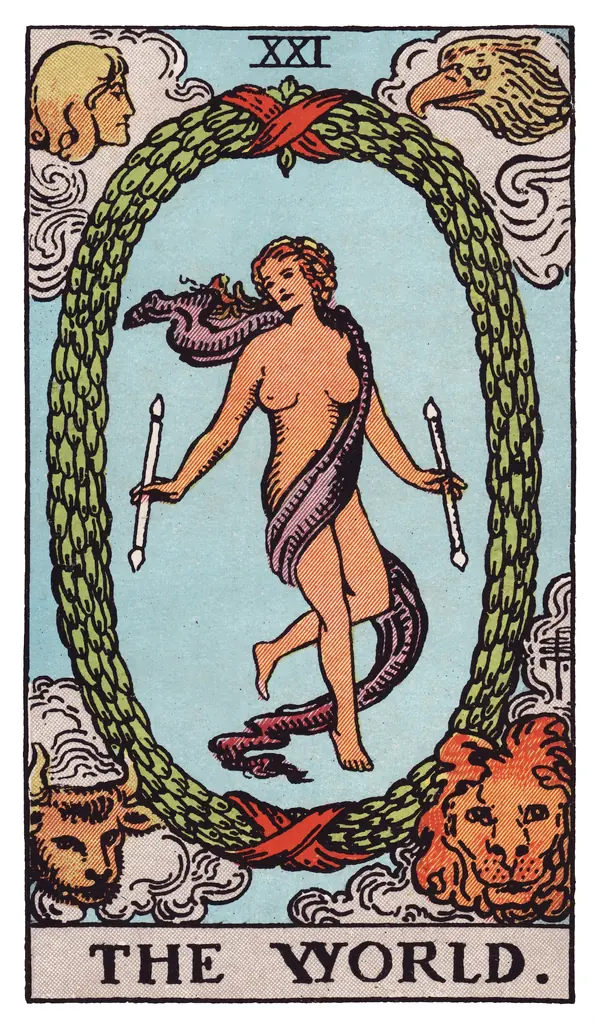 The World
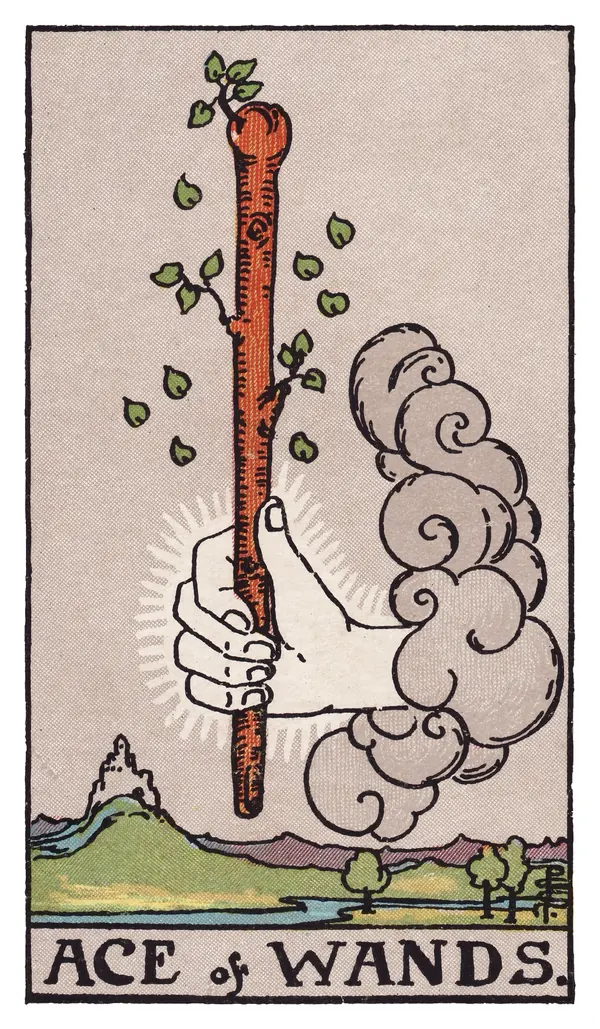 Ace of Wands
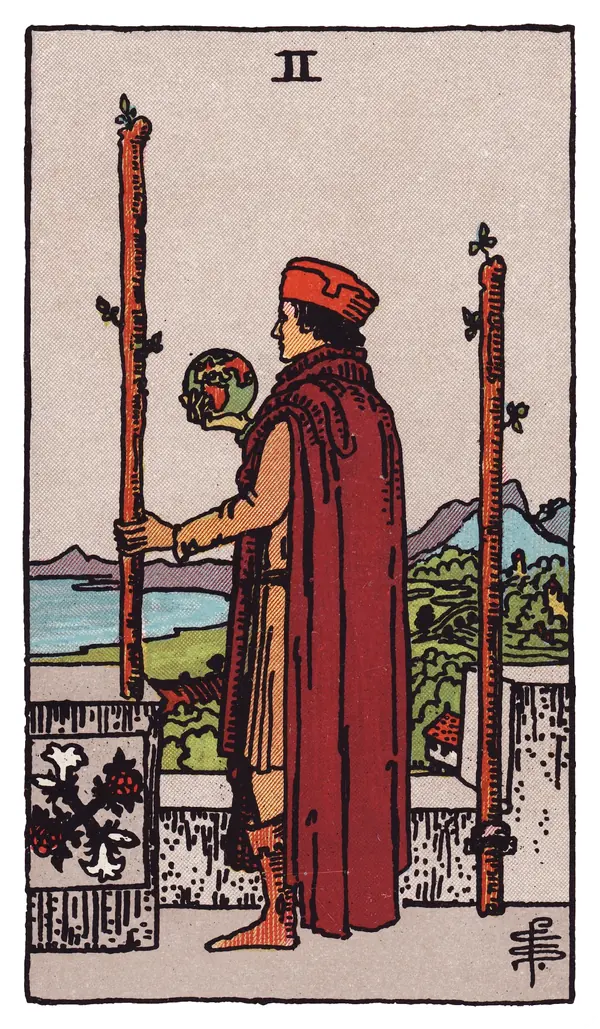 Two of Wands
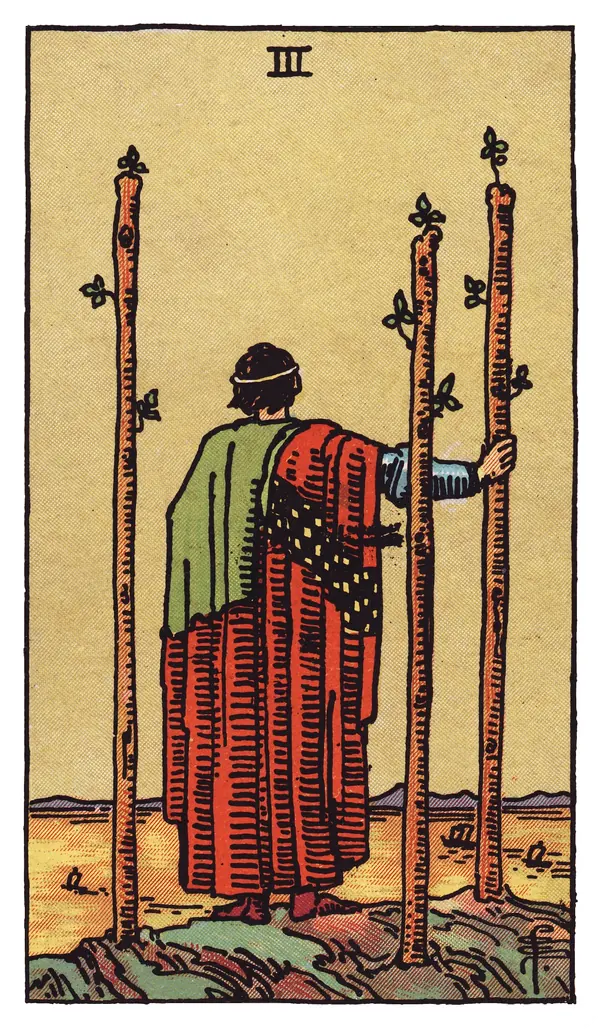 Three of Wands
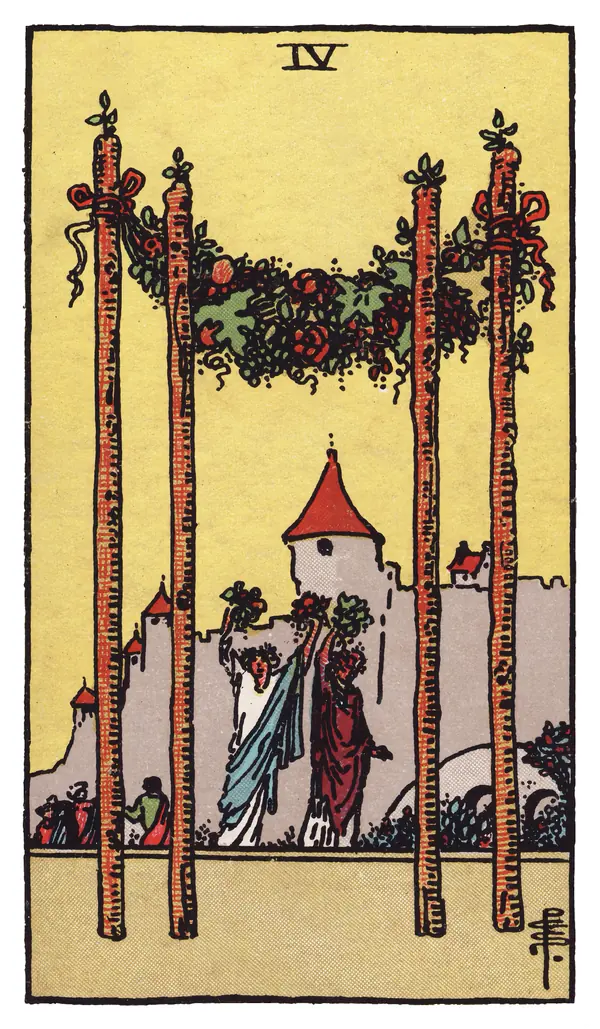 Four of Wands
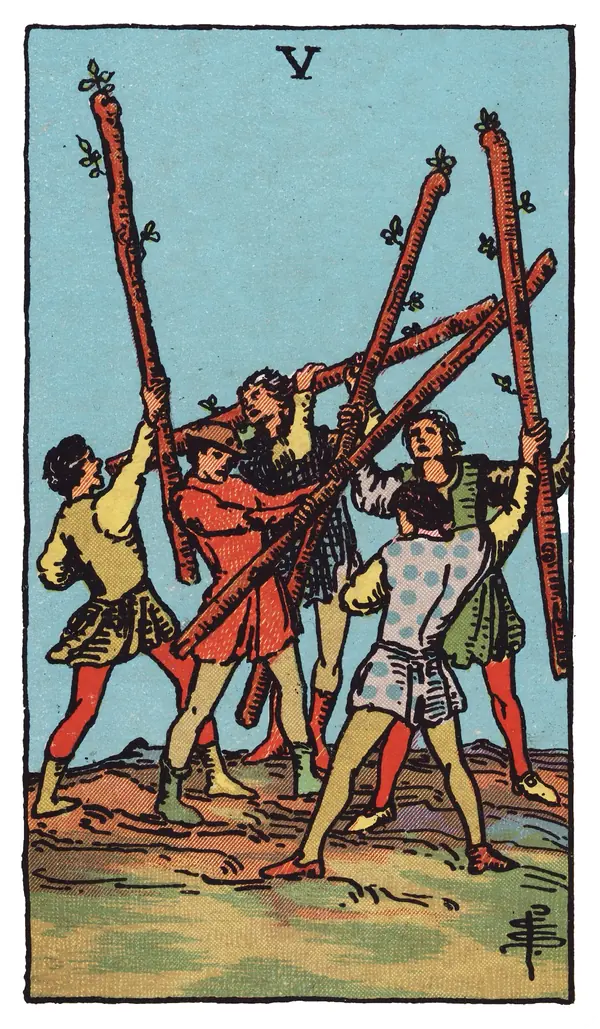 Five of Wands
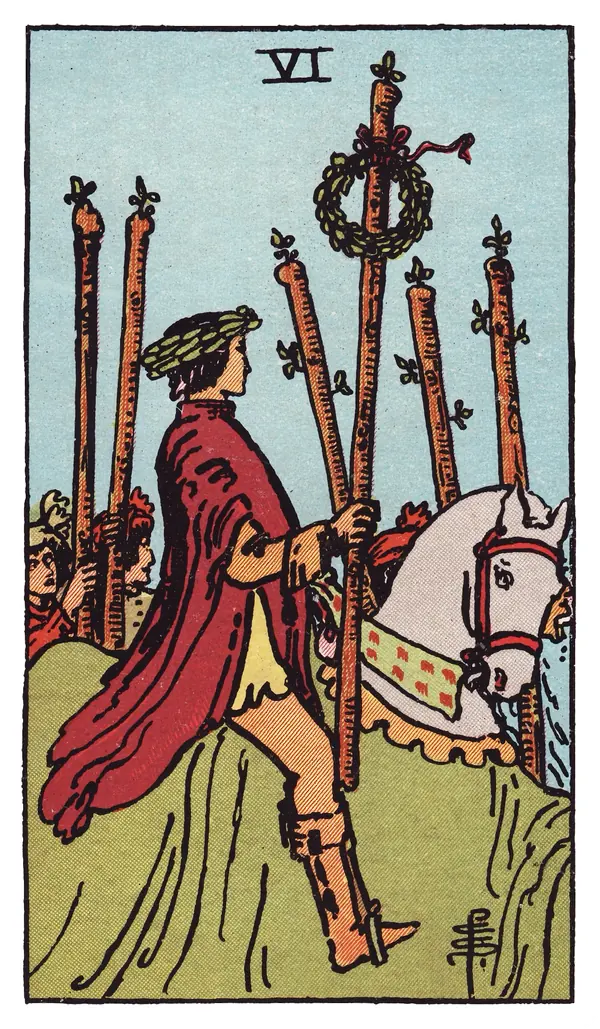 Six of Wands
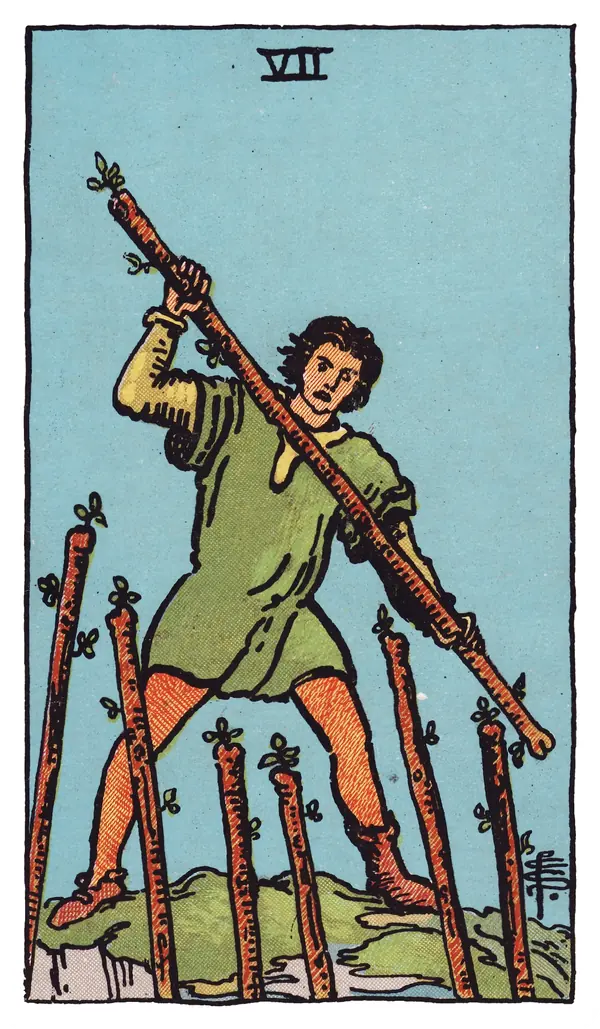 Seven of Wands
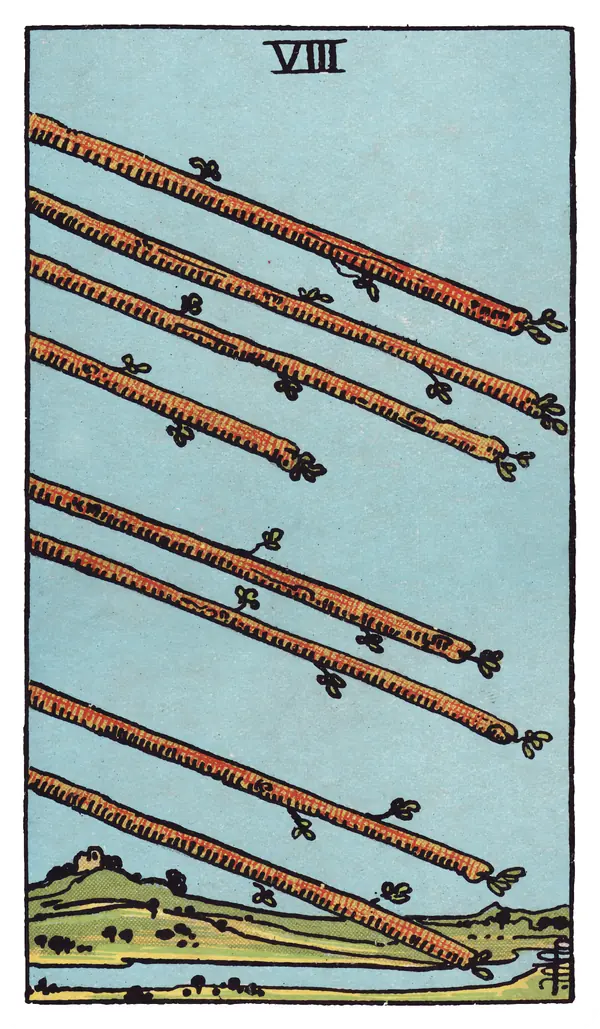 Eight of Wands
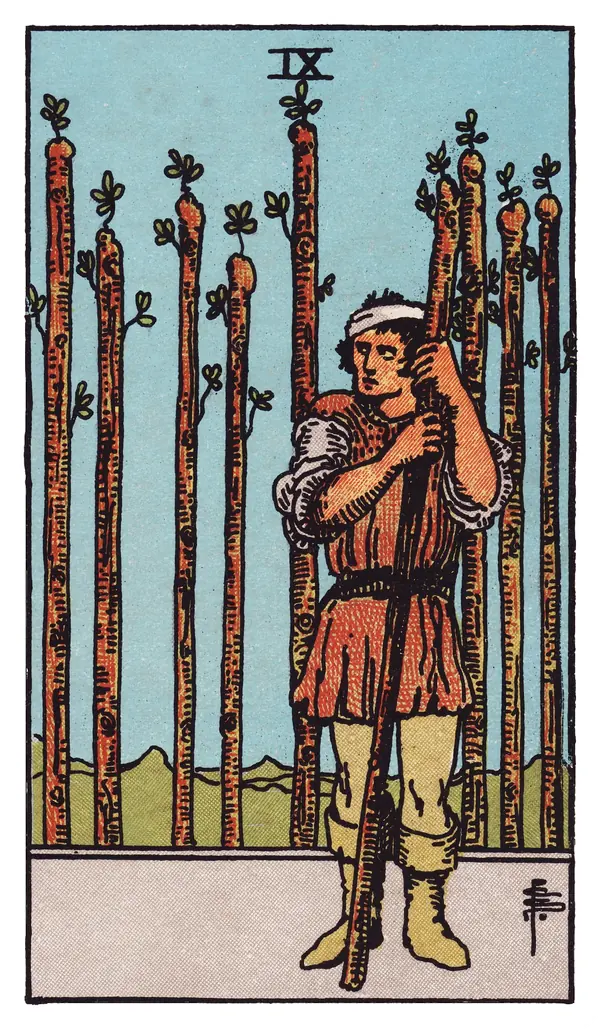 Nine of Wands
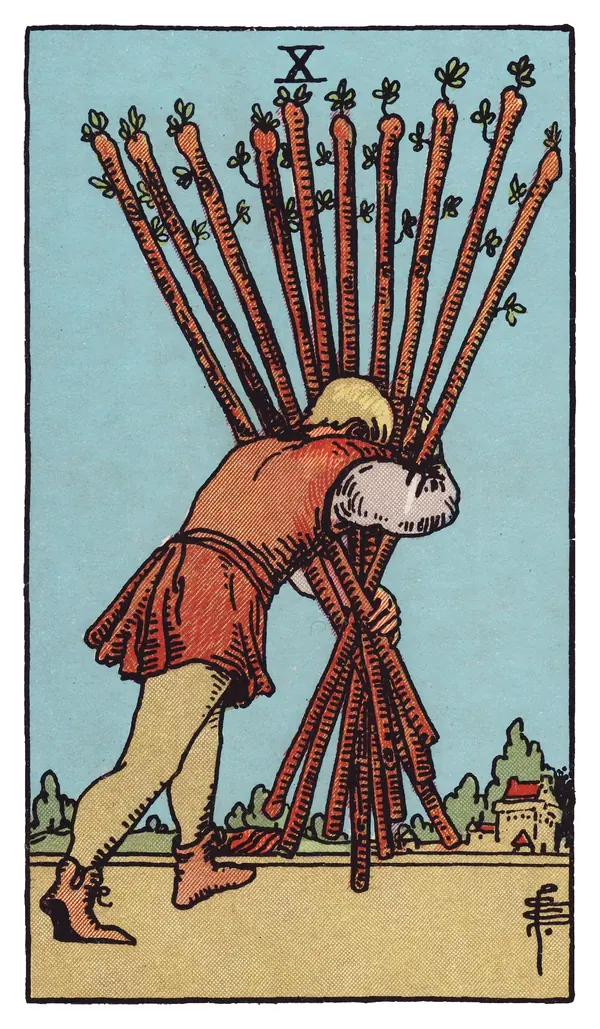 Ten of Wands
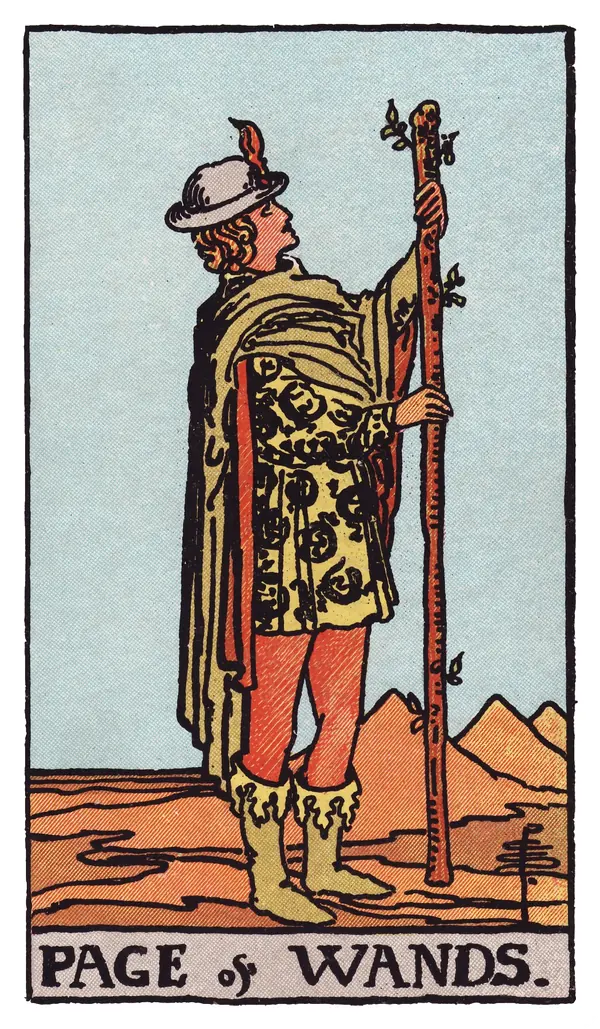 Page of Wands
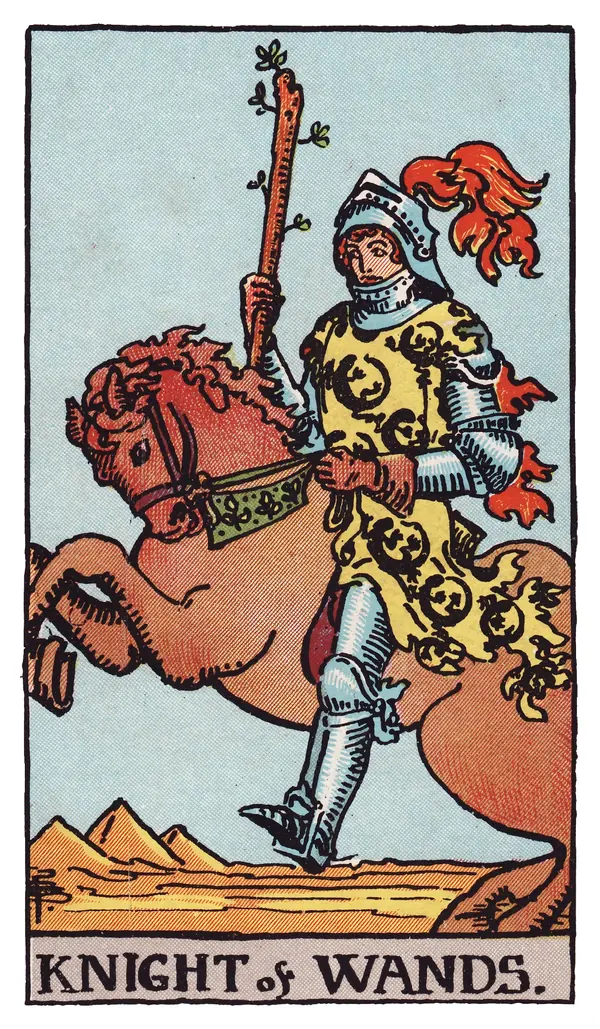 Knight of Wands
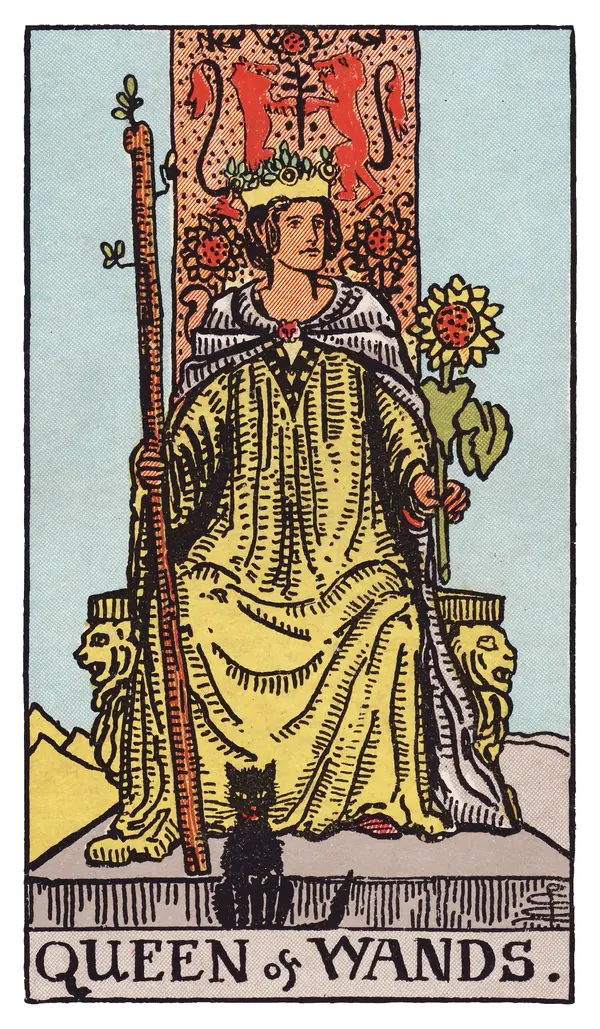 Queen of Wands
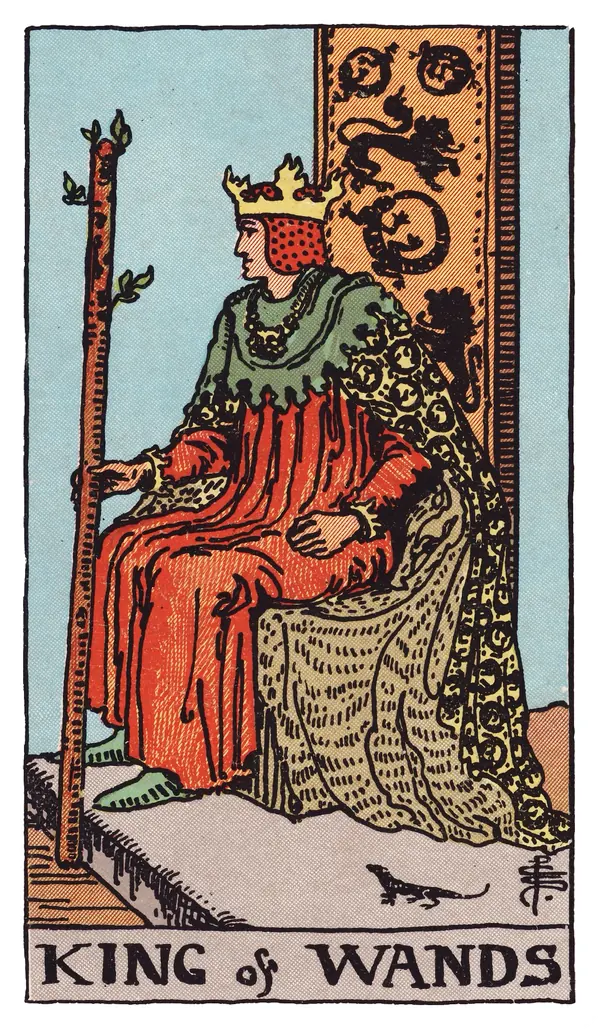 King of Wands
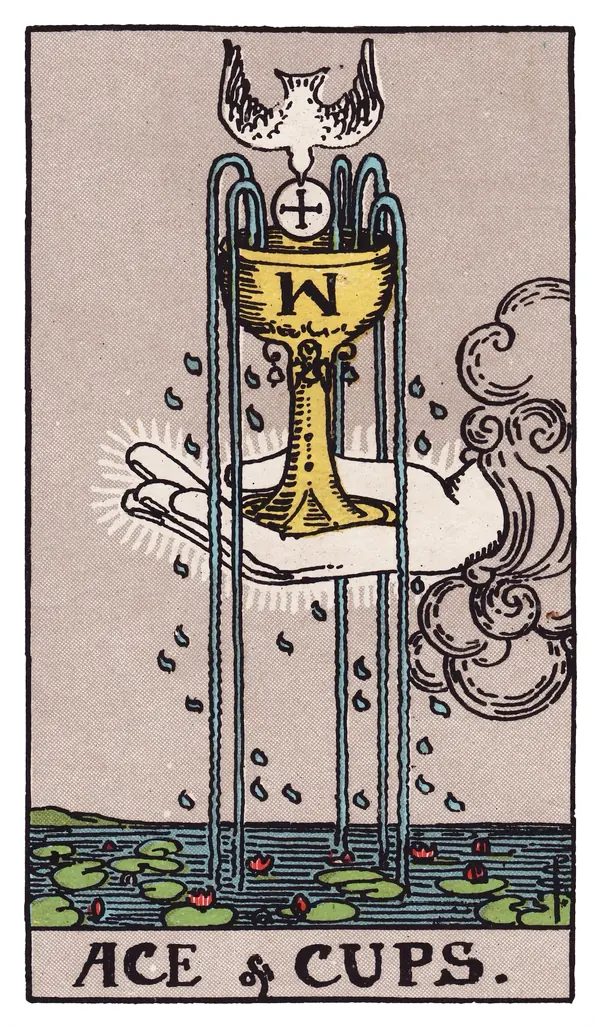 Ace of Cups
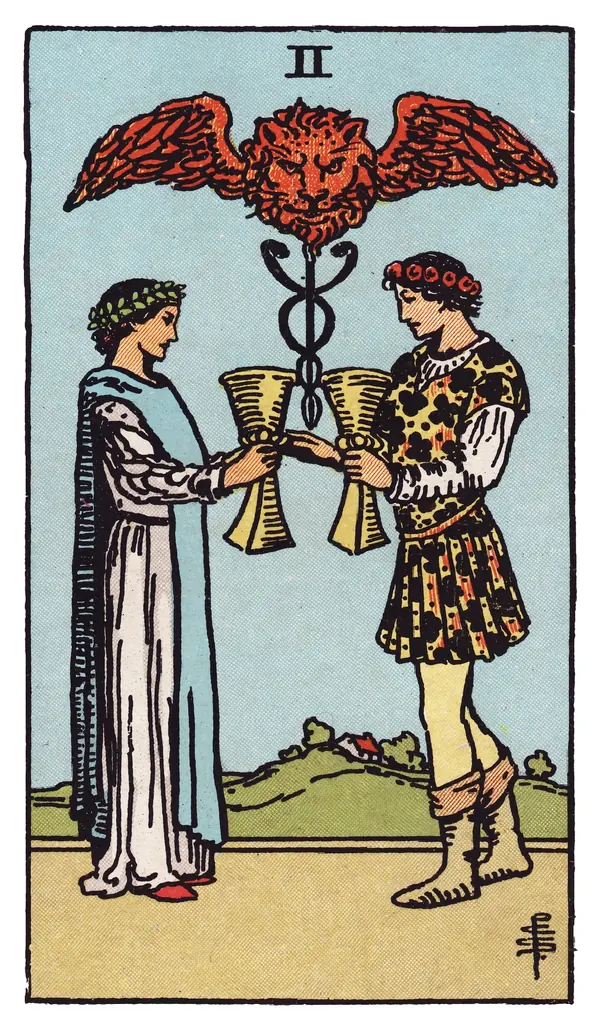 Two of Cups
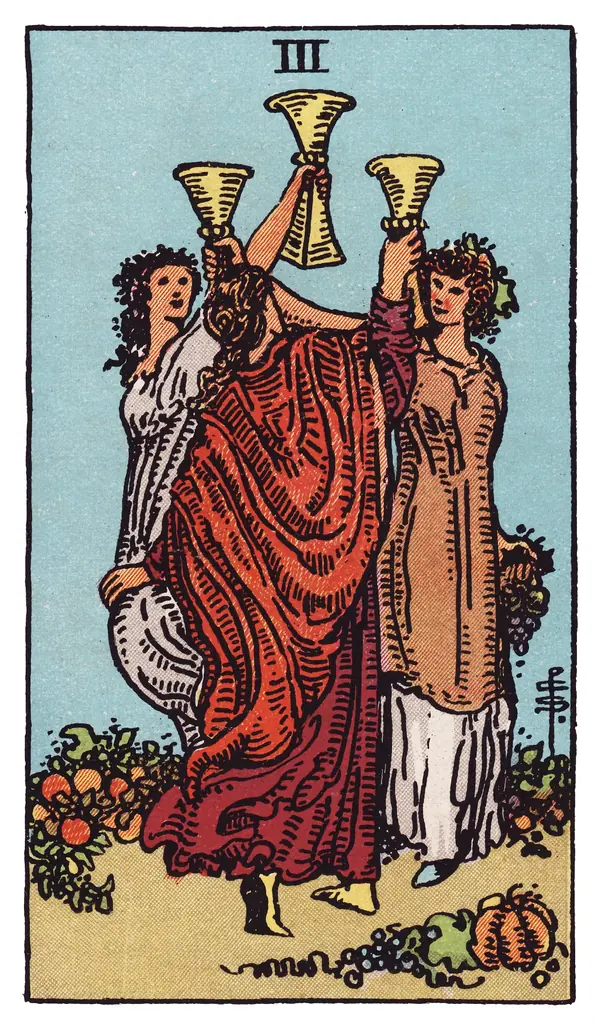 Three of Cups
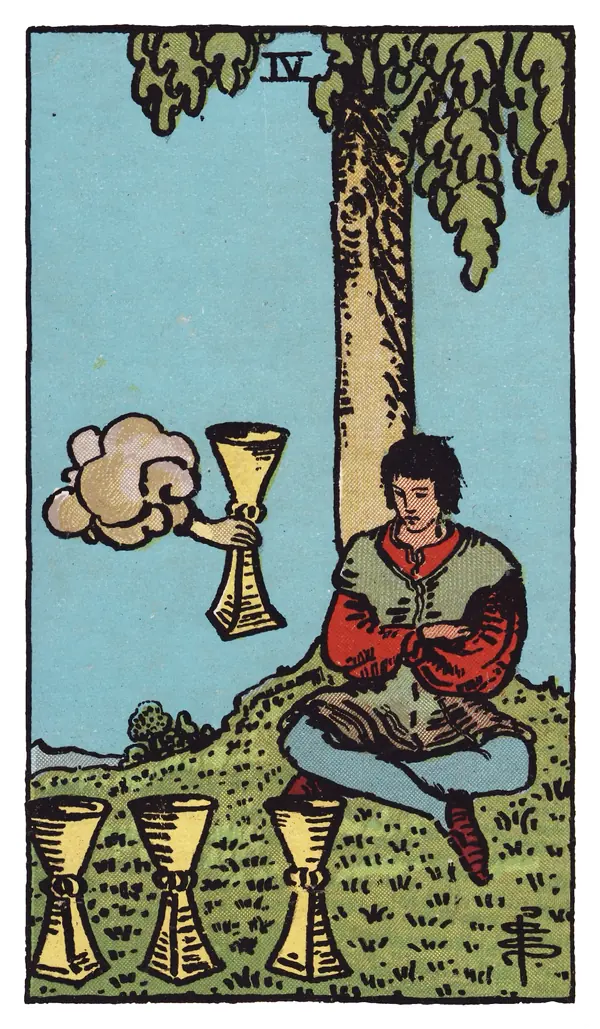 Four of Cups
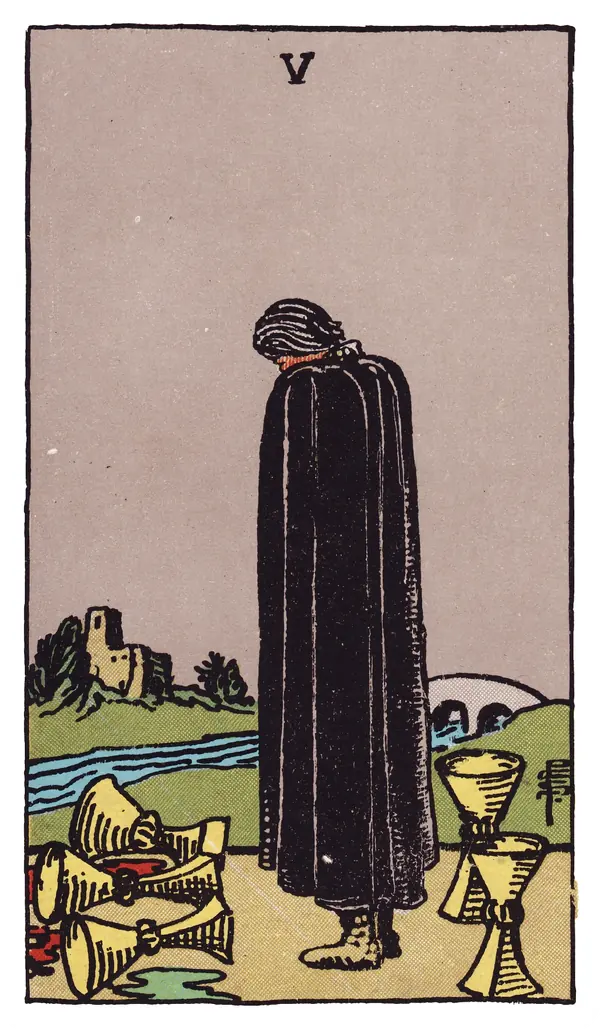 Five of Cups
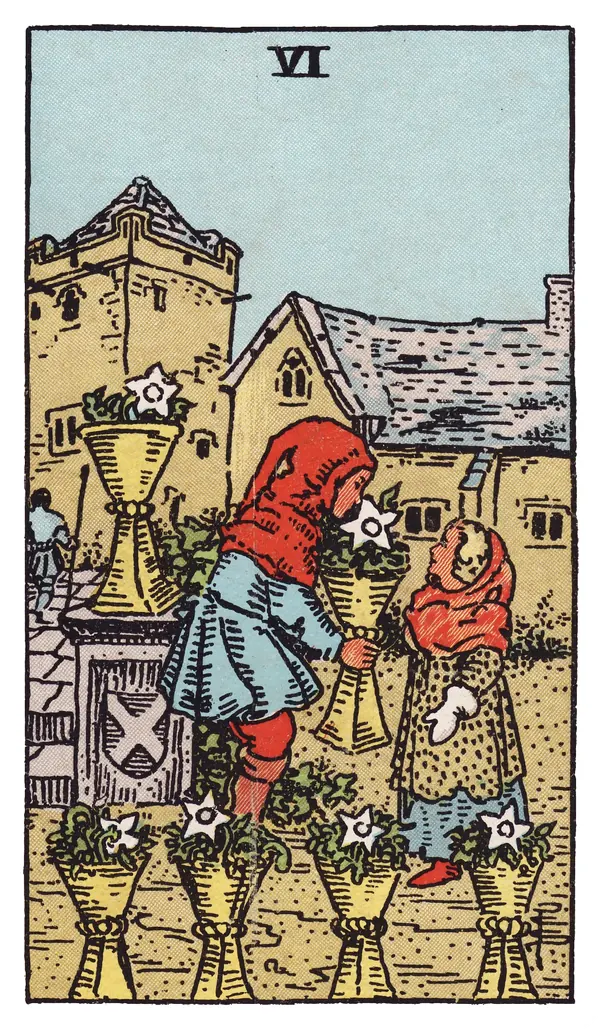 Six of Cups
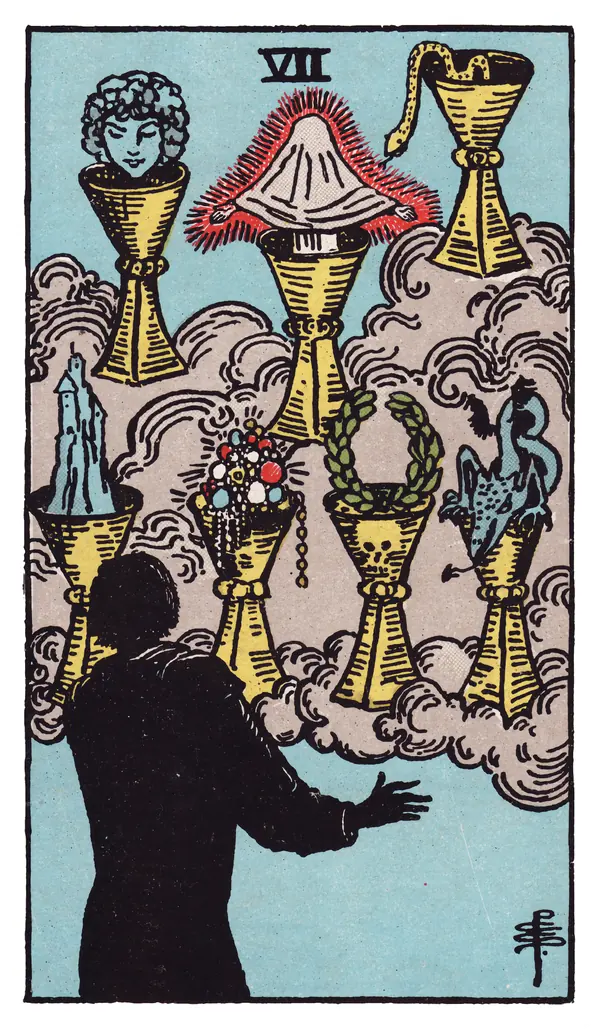 Seven of Cups
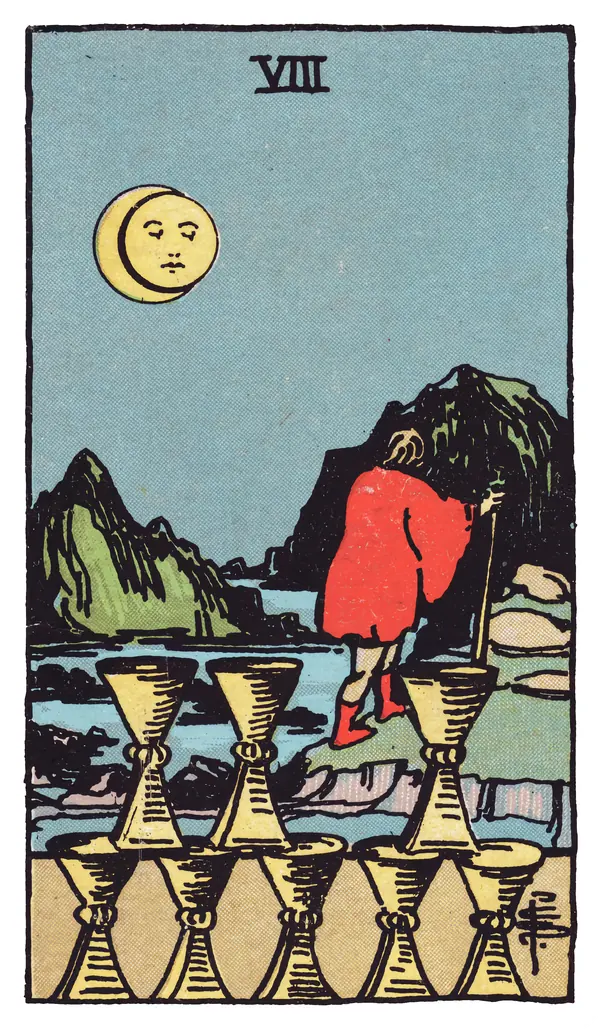 Eight of Cups
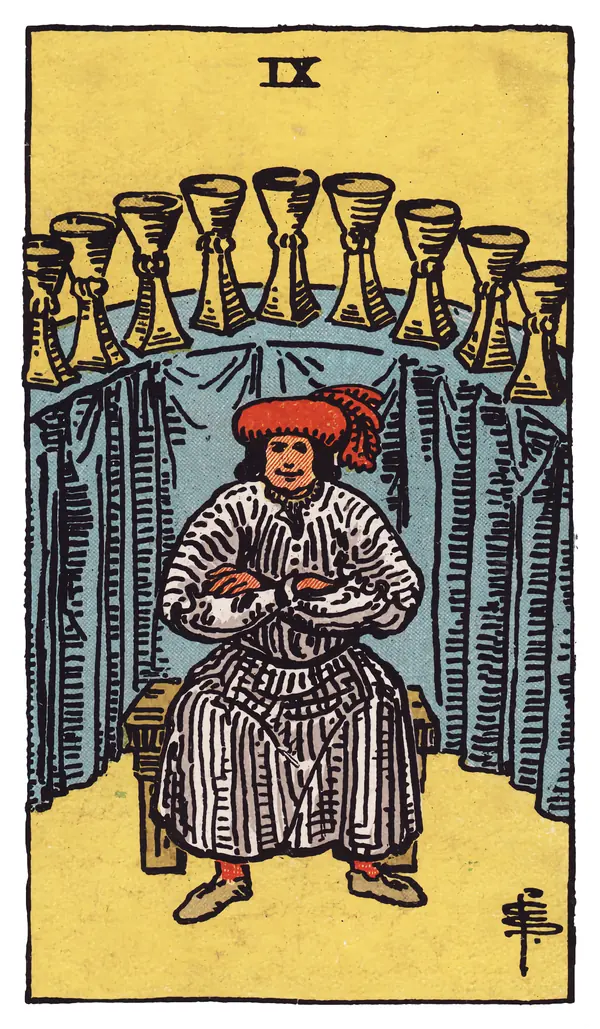 Nine of Cups
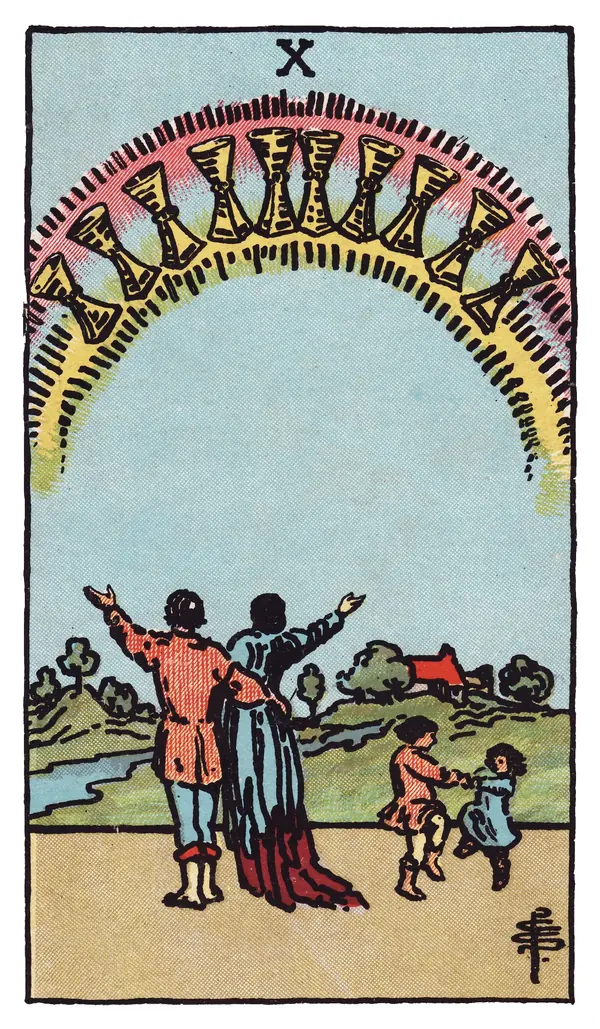 Ten of Cups
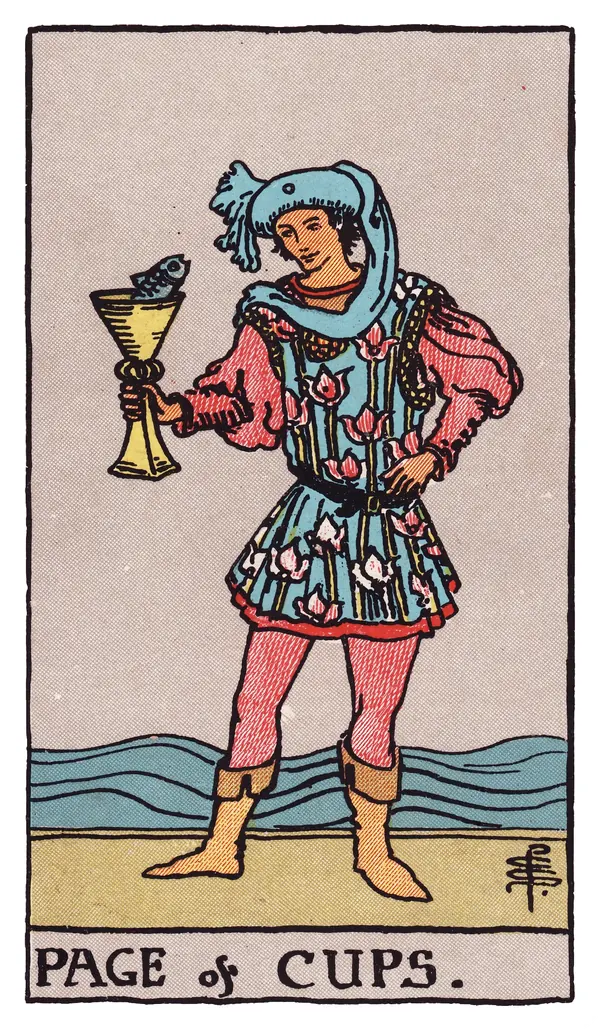 Page of Cups
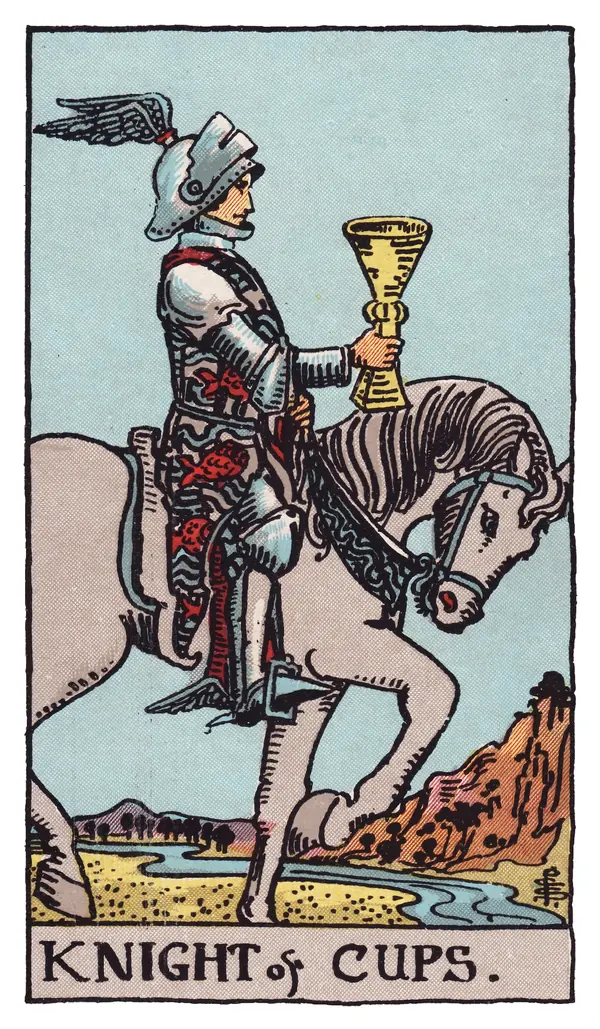 Knight of Cups
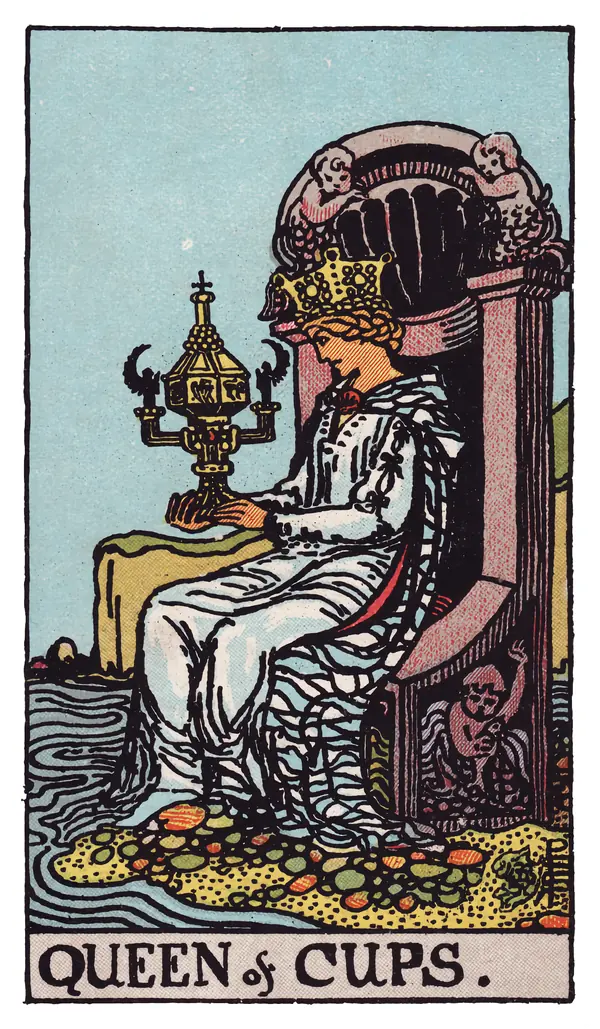 Queen of Cups
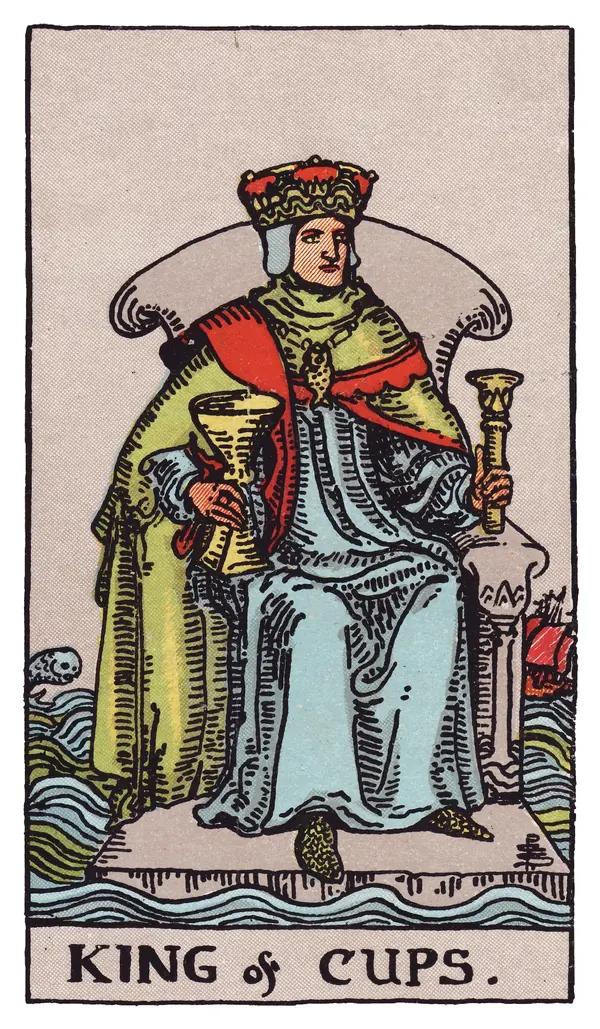 King of Cups
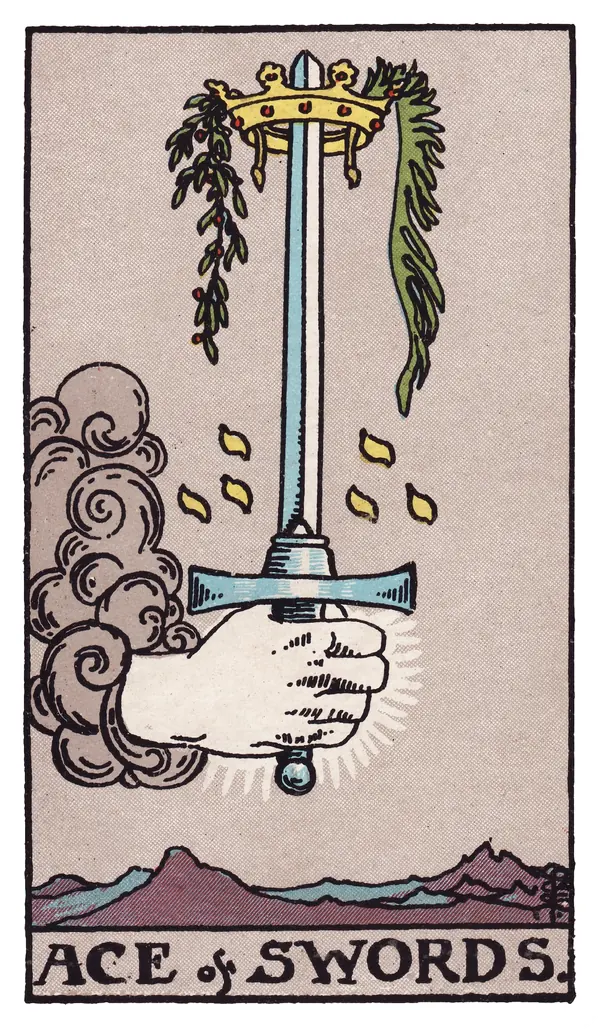 Ace of Swords
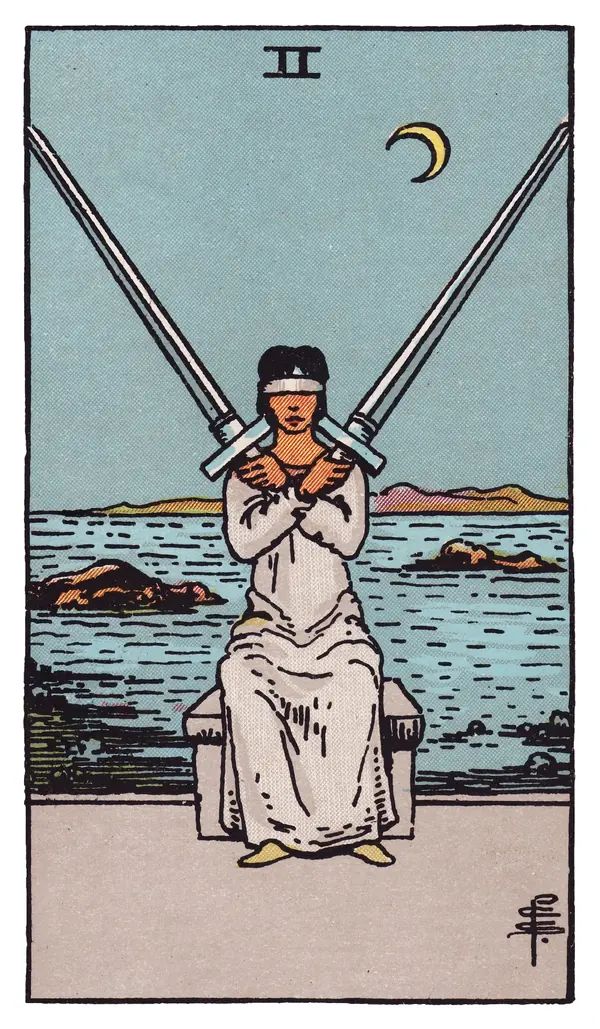 Two of Swords
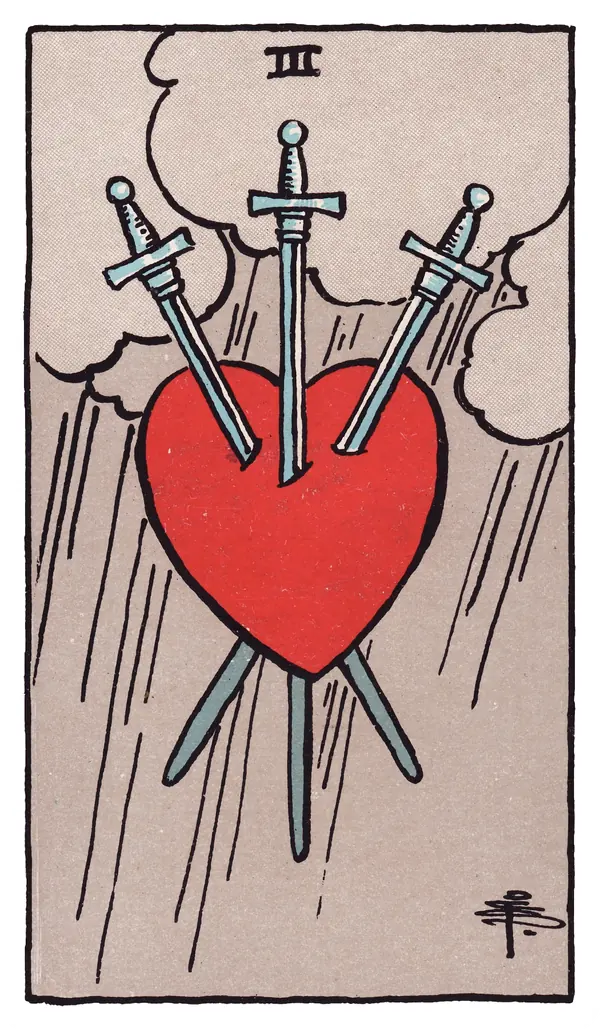 Three of Swords
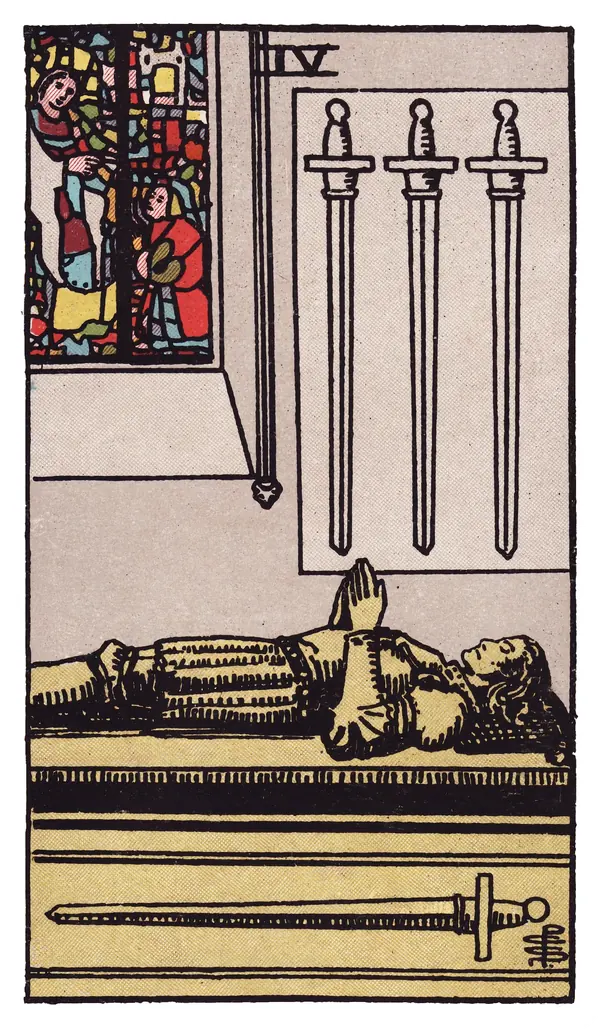 Four of Swords
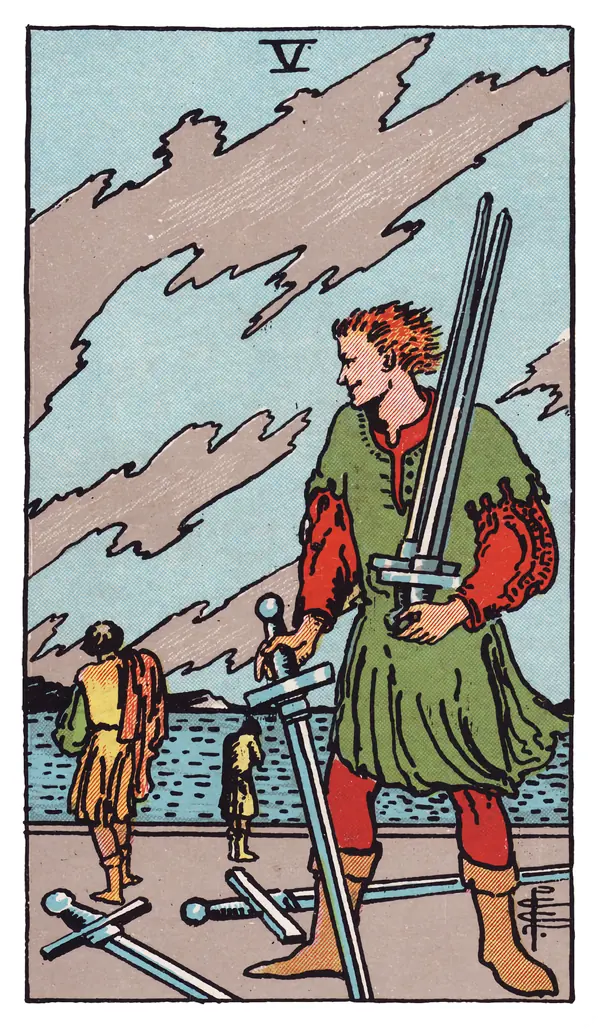 Five of Swords
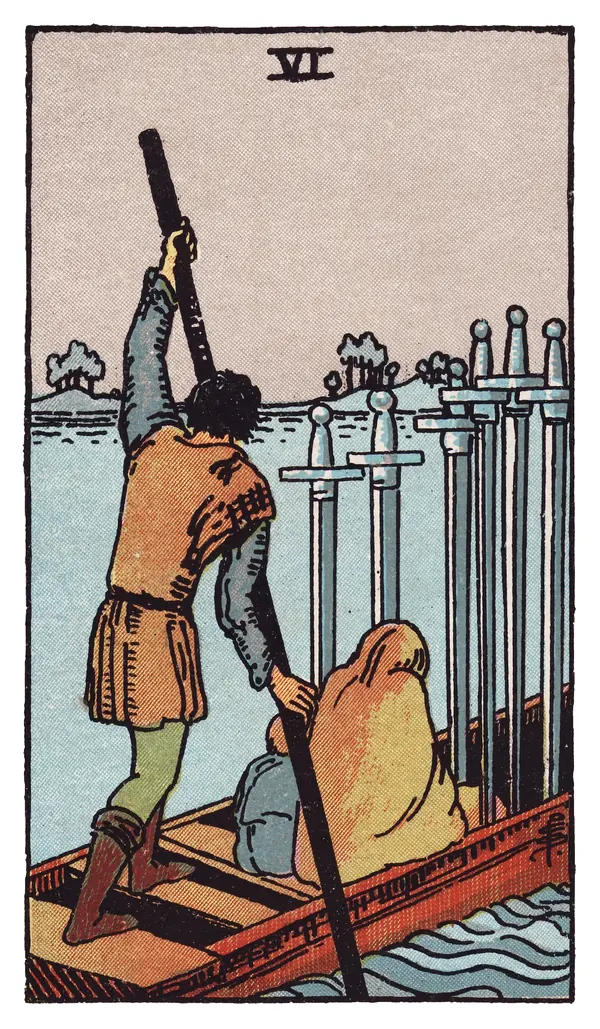 Six of Swords
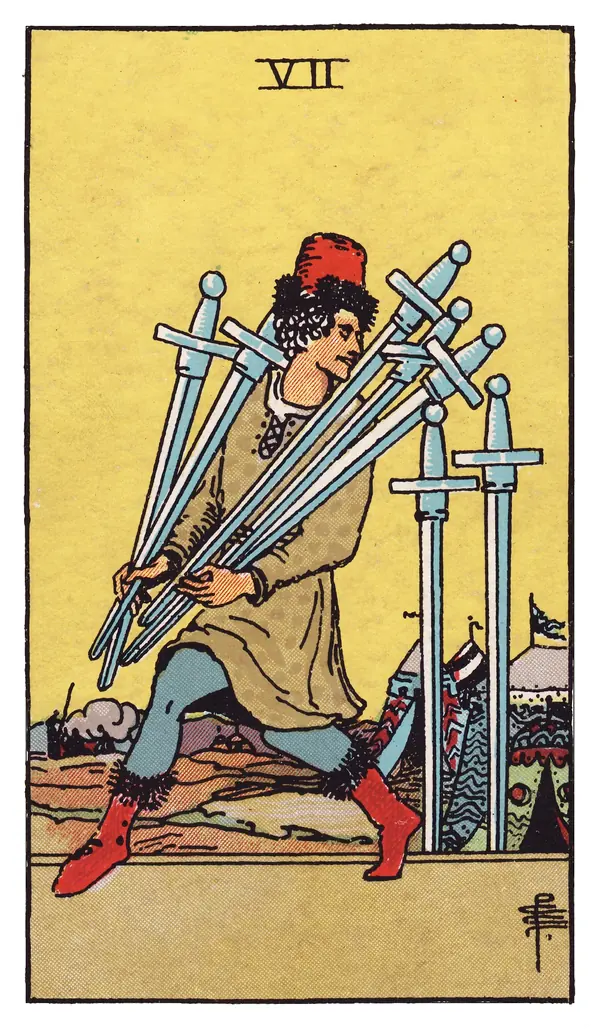 Seven of Swords
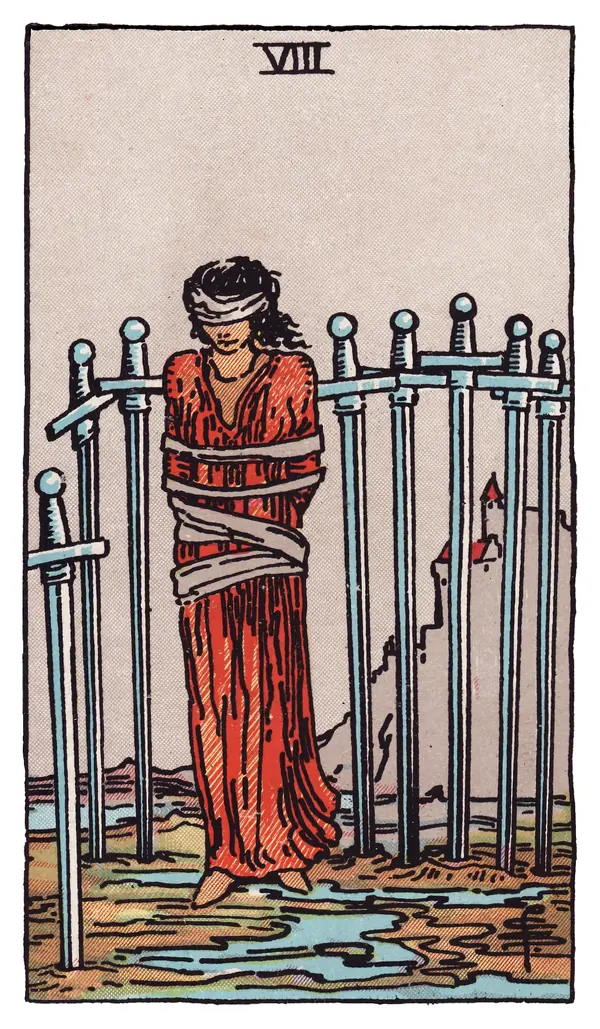 Eight of Swords
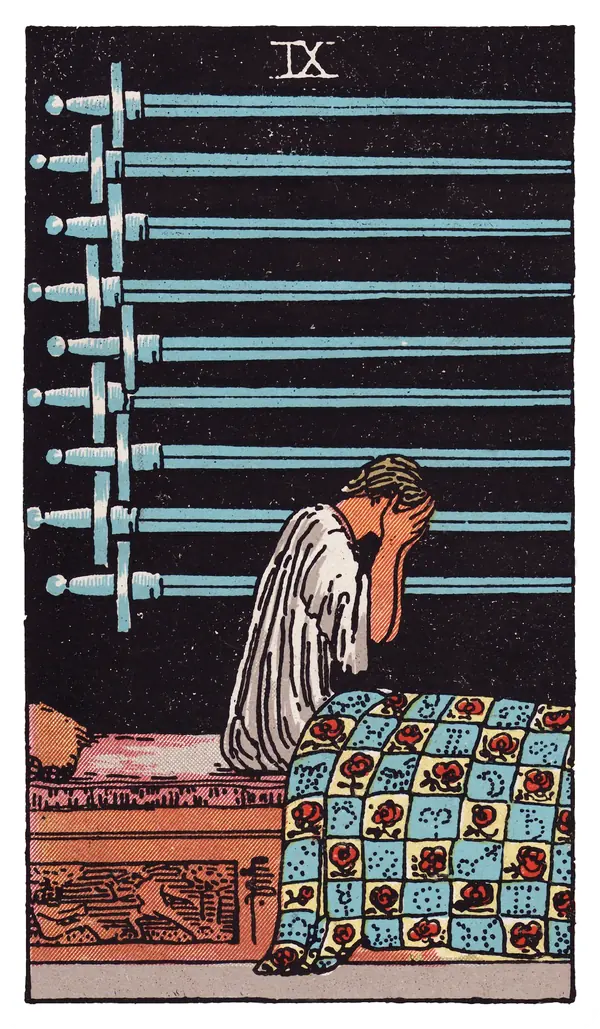 Nine of Swords
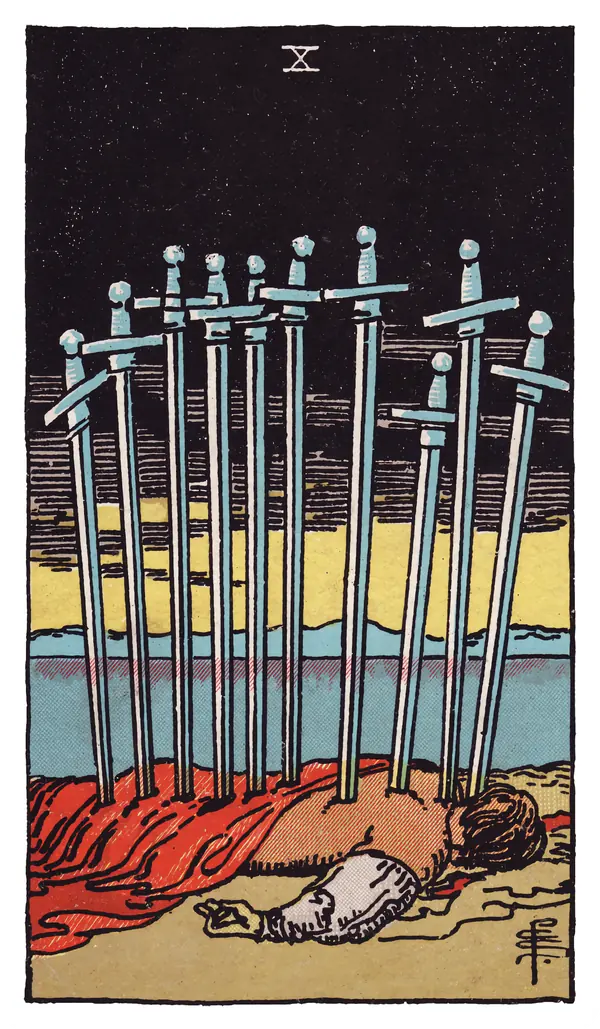 Ten of Swords
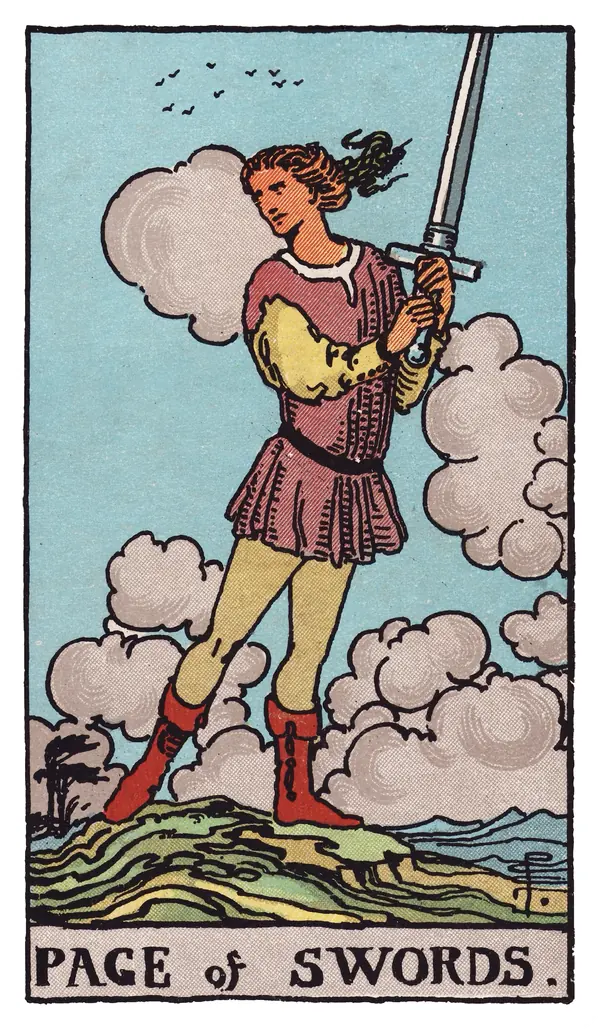 Page of Swords
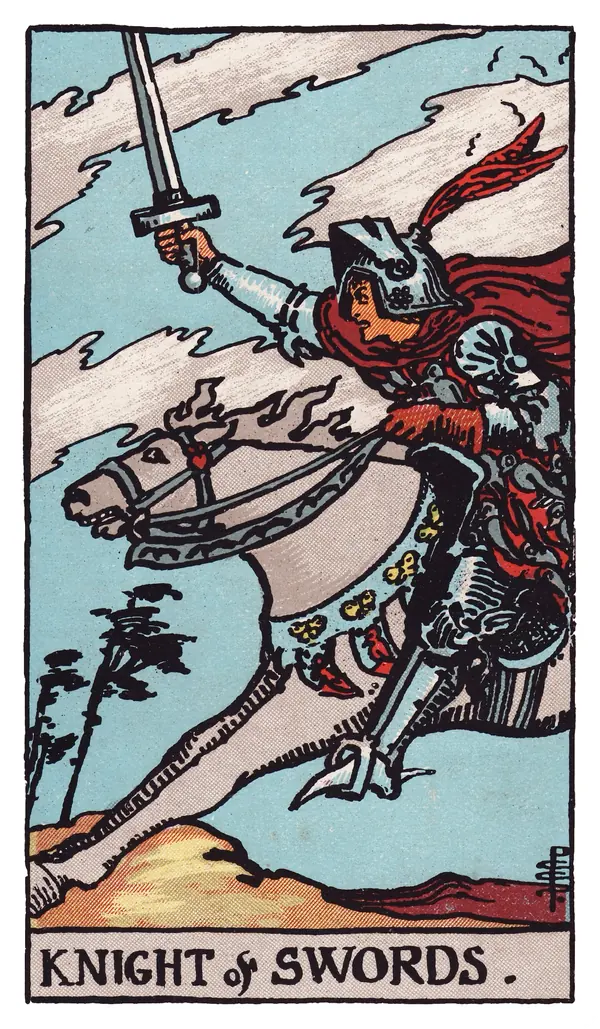 Knight of Swords
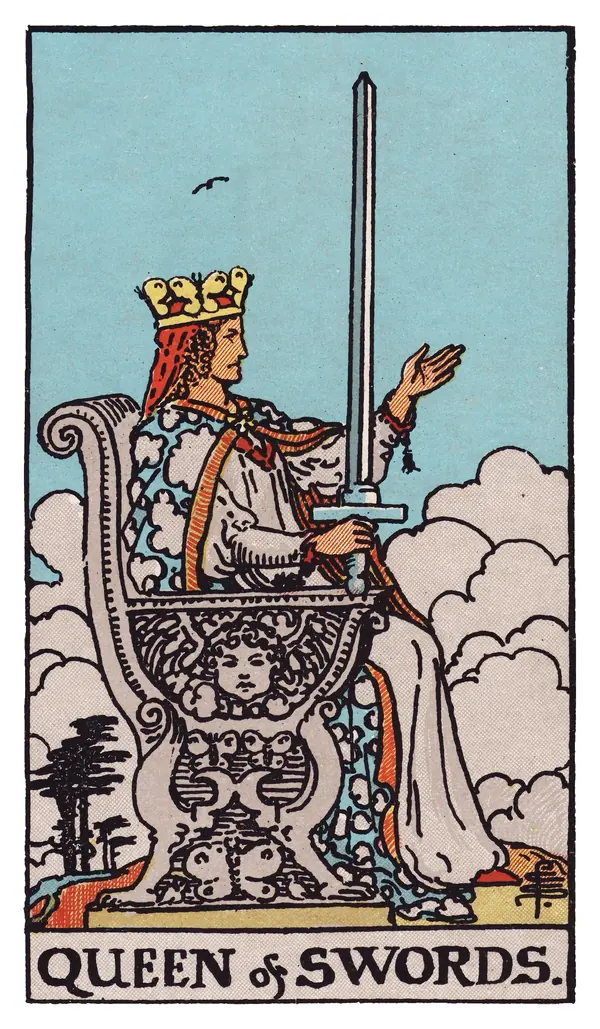 Queen of Swords
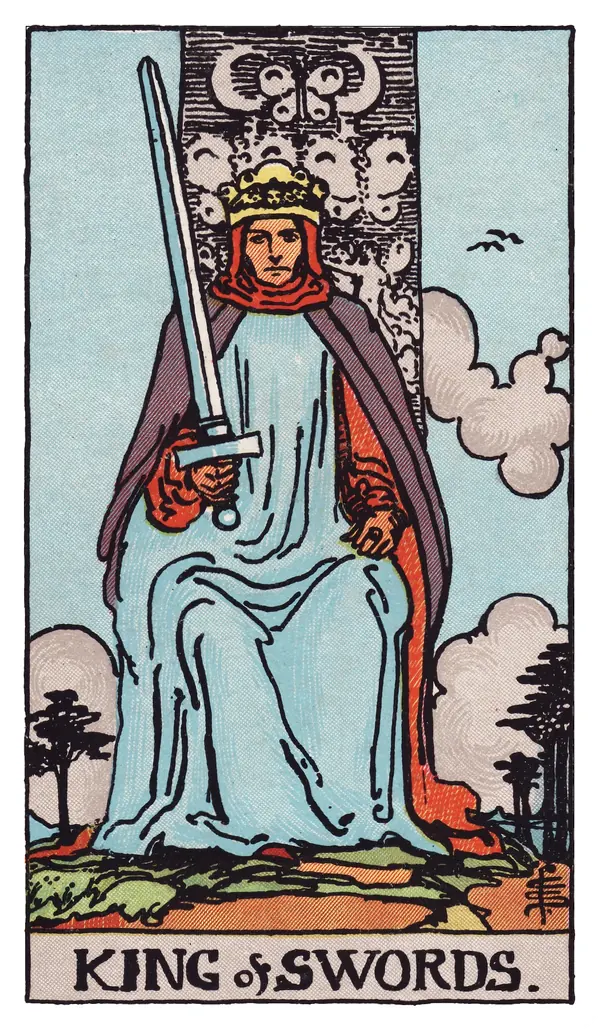 King of Swords
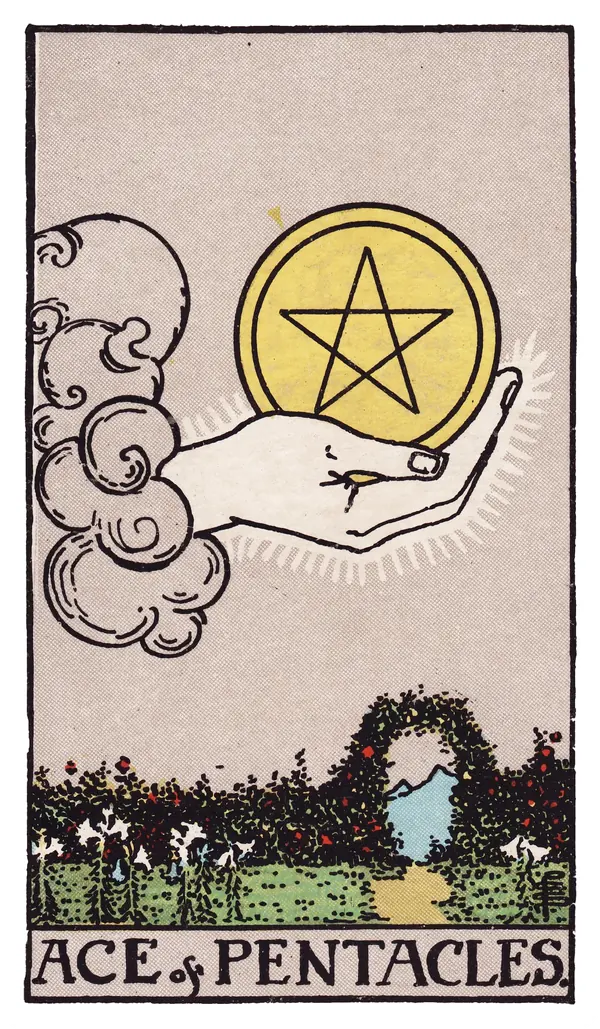 Ace of Pentacles
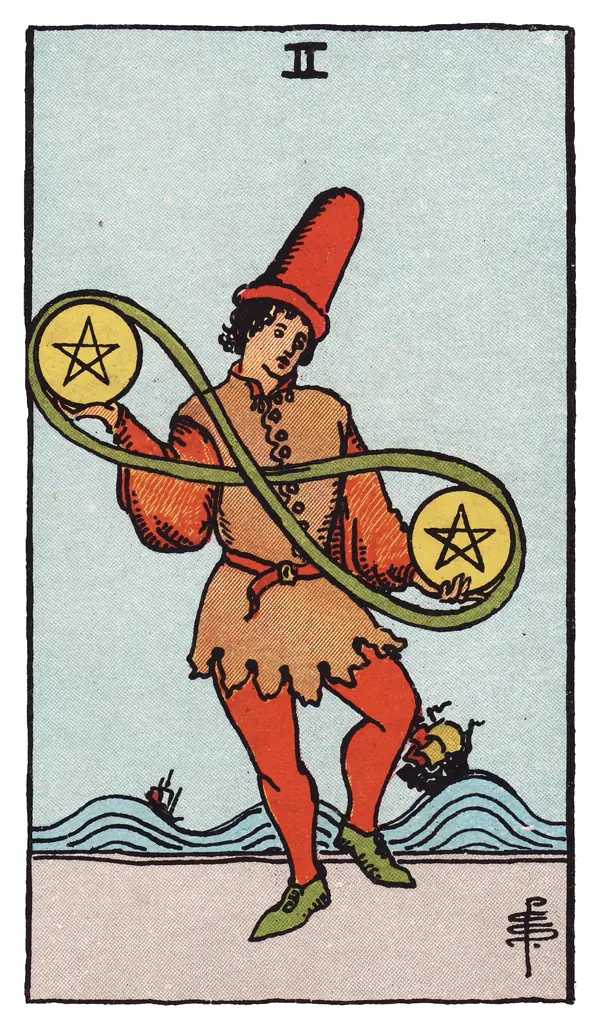 Two of Pentacles
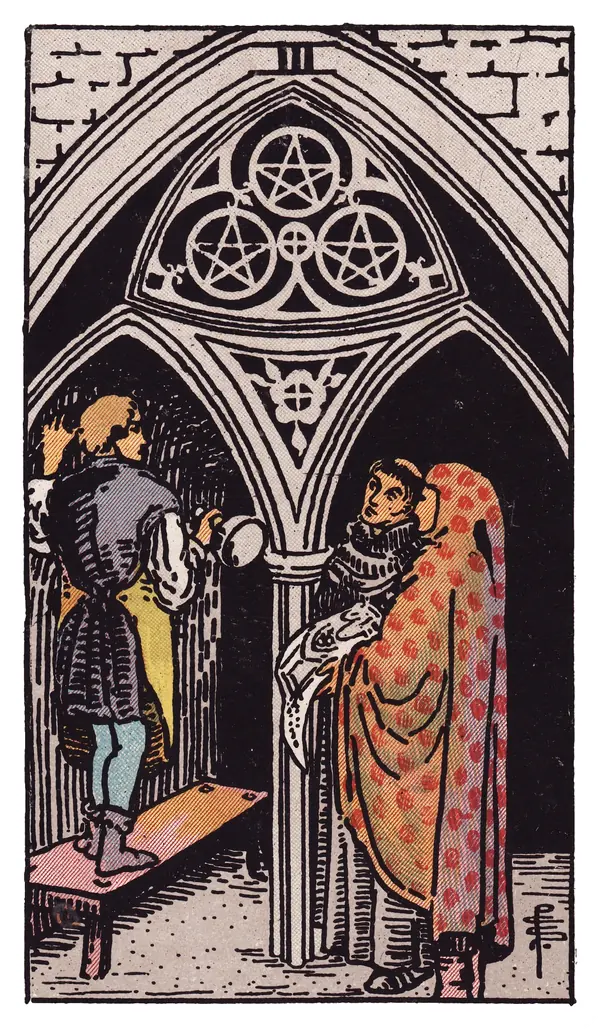 Three of Pentacles
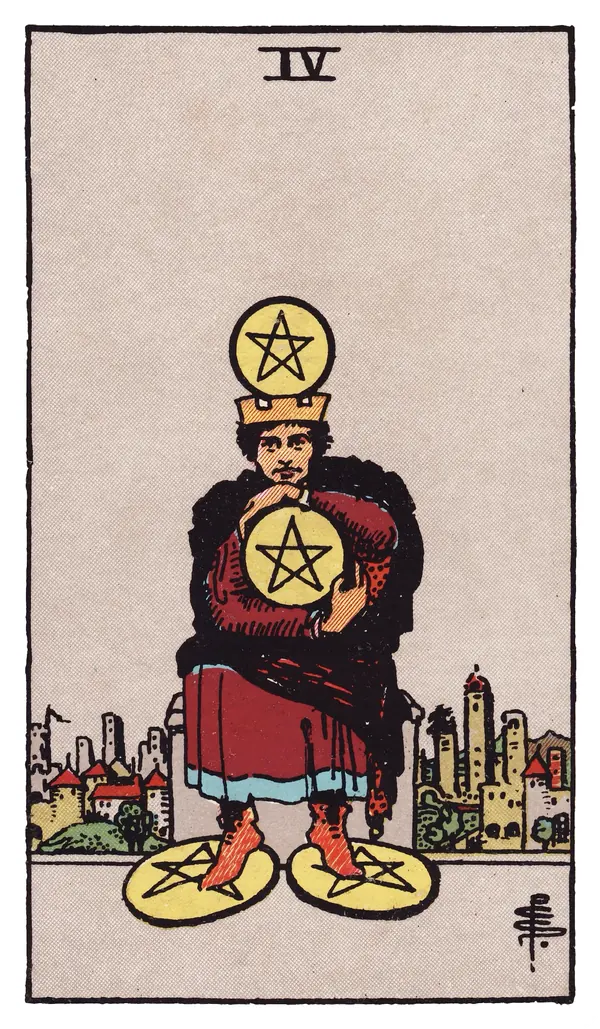 Four of Pentacles
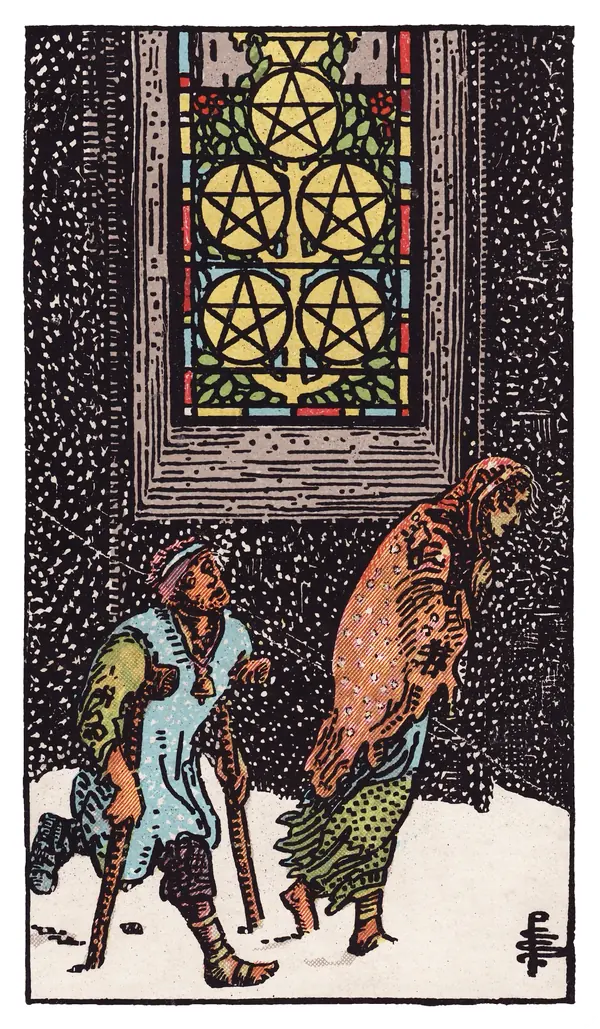 Five of Pentacles
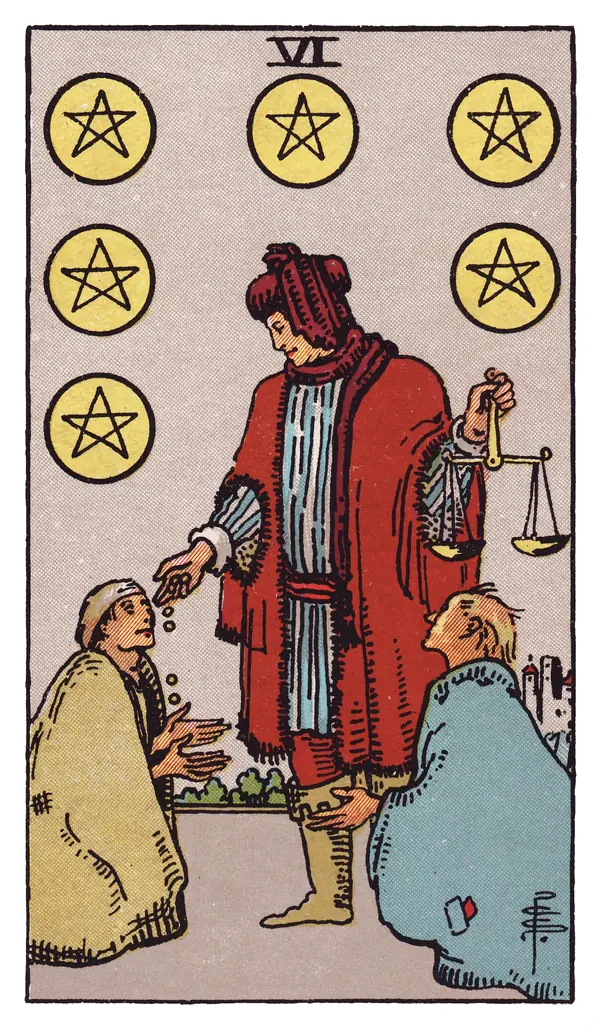 Six of Pentacles
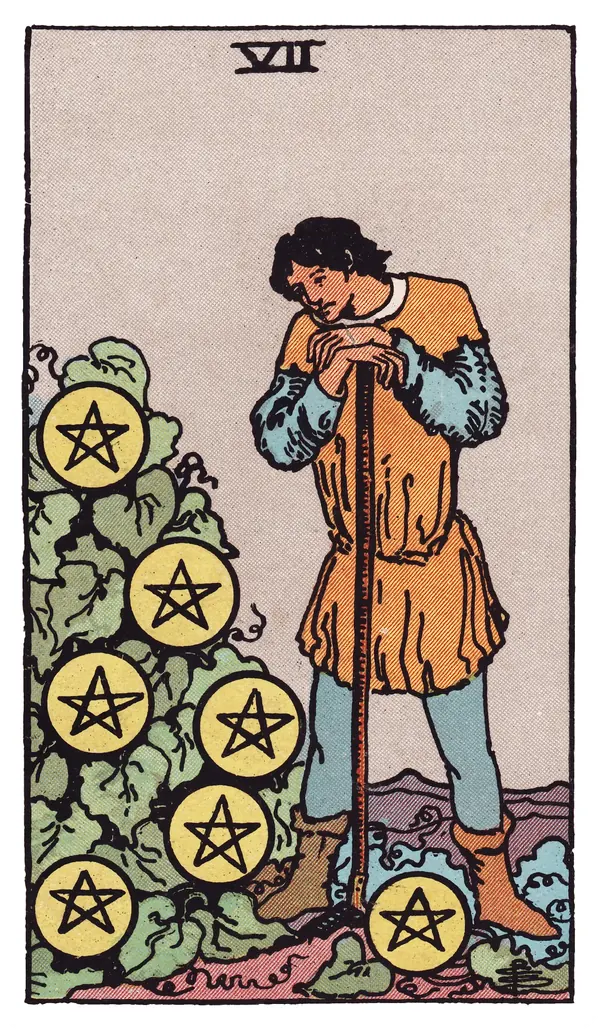 Seven of Pentacles
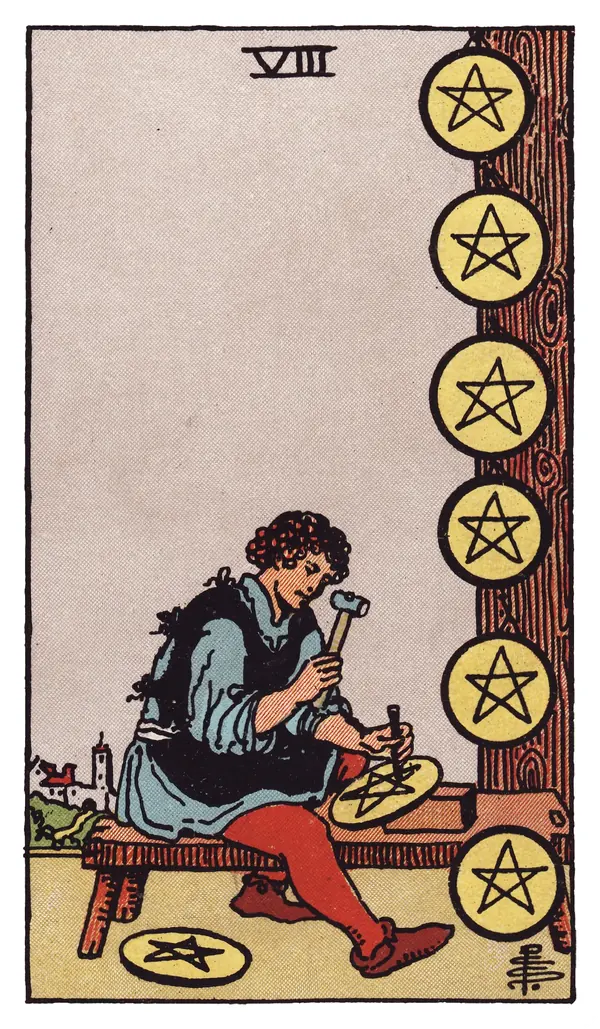 Eight of Pentacles
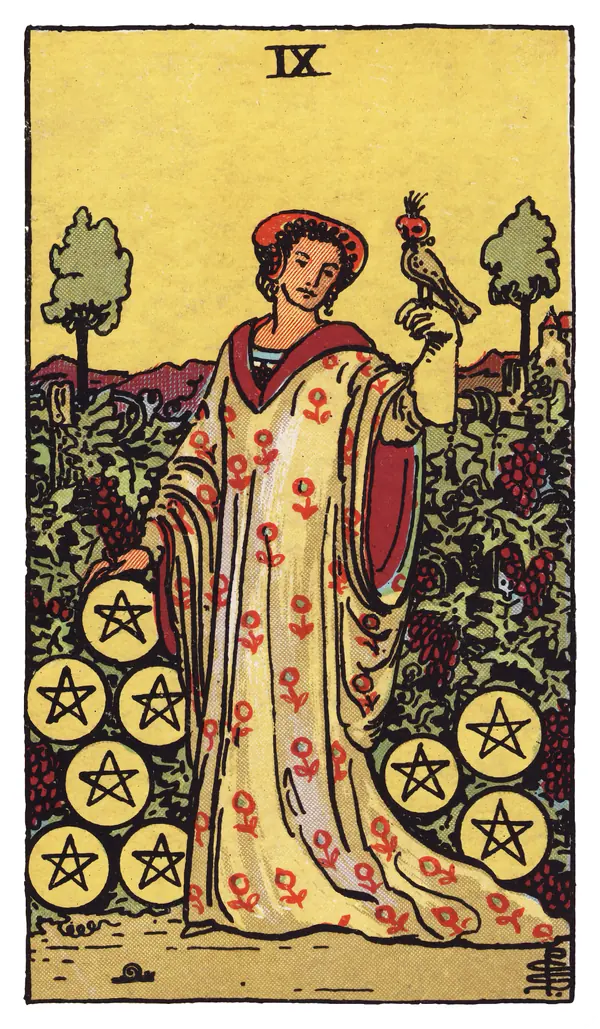 Nine of Pentacles
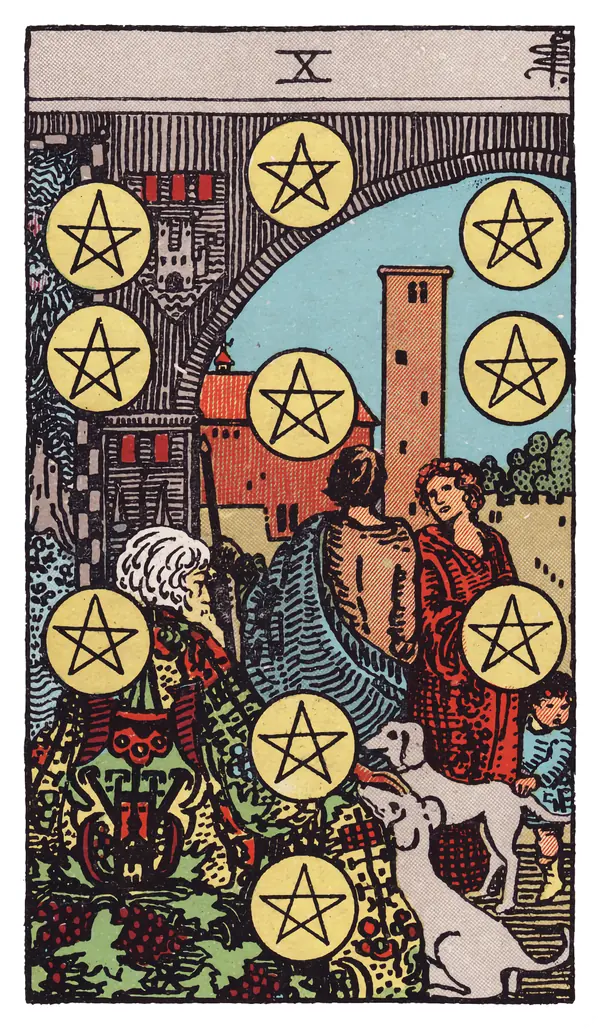 Ten of Pentacles
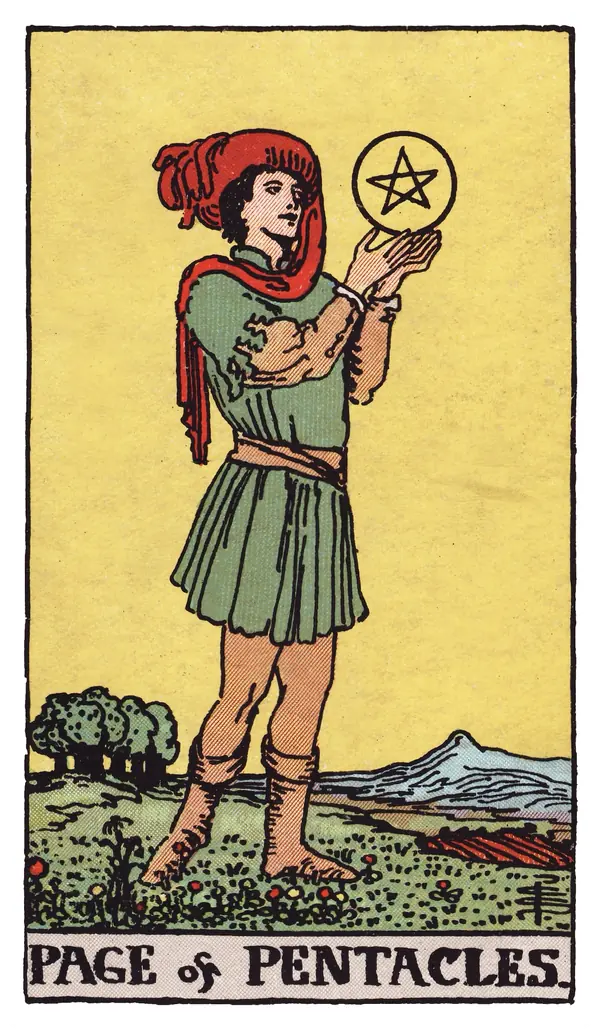 Page of Pentacles
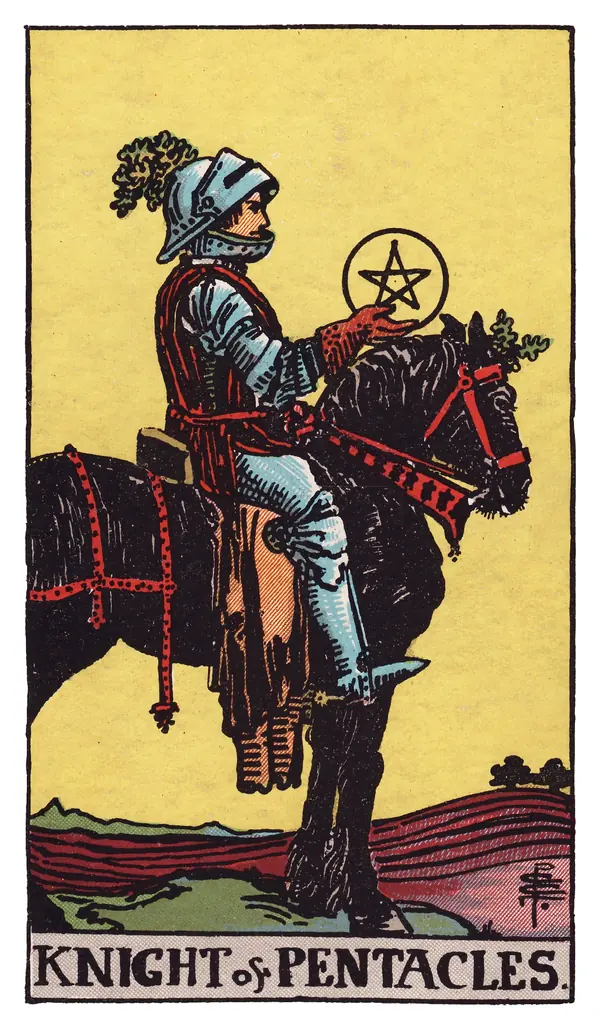 Knight of Pentacles
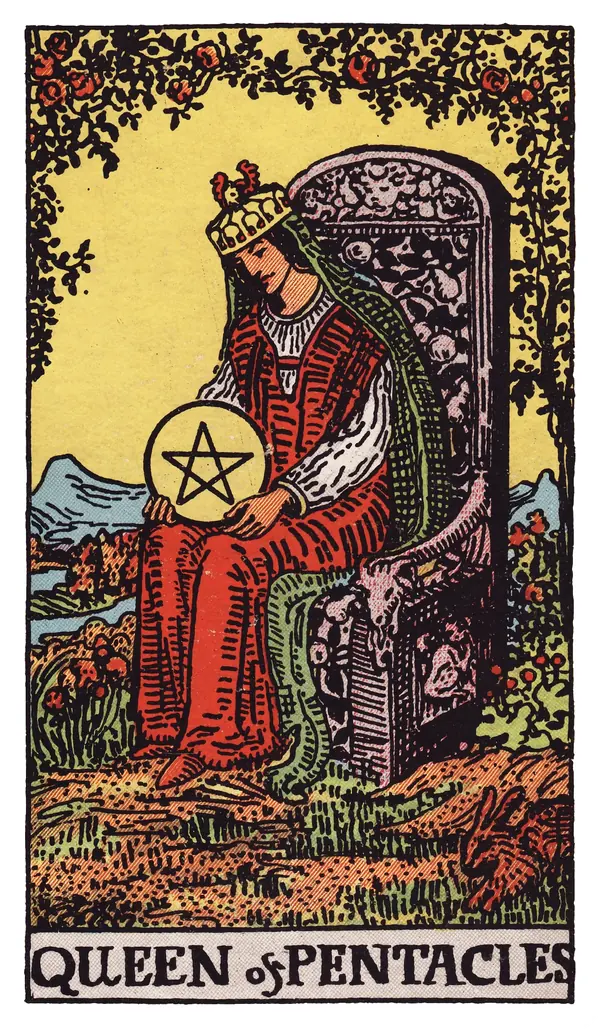 Queen of Pentacles
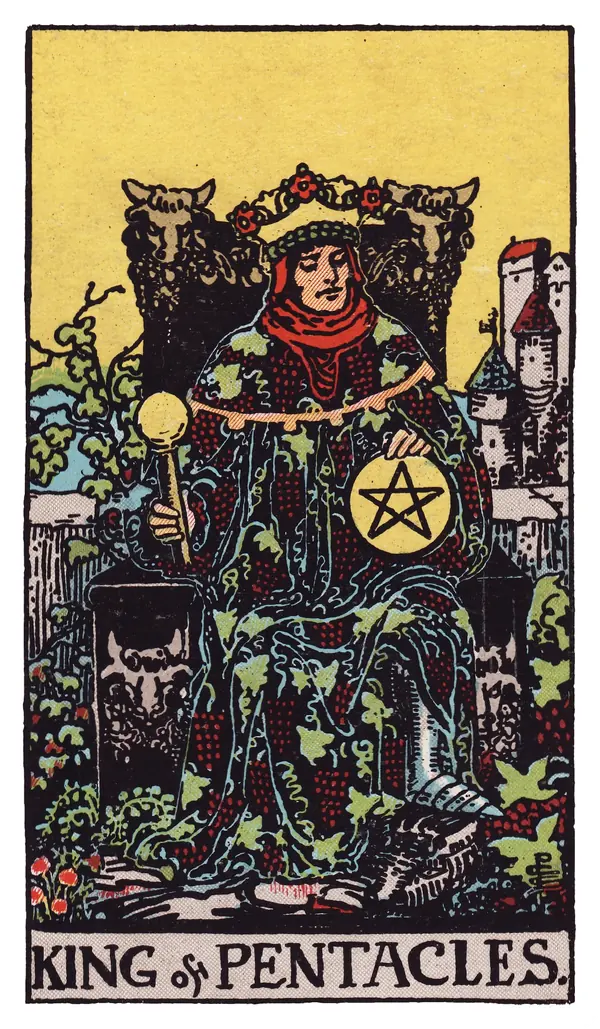 King of Pentacles
Rights
- Artist
- Pamela Colman Smith
- First published
- 1909, William Rider & Son (London)
- Licence
- Public domain