Death
Death in Everyday Wonders · Major Arcana XIII
ChoiceIn short
An irreversible ending, release of space and a change of form.
Reversed
Holding onto what has already come apart, delaying a necessary goodbye, or forcing an ending prematurely.
- Major Arcana
- 13
- The Empty Coat
- an irreversible ending
- release of space
- a change of form
Upright
Acknowledge what has ended and let its form change without demanding the old form back. An empty worn coat lies across a garden bench.
Its cloth has begun to come apart into dry leaves, and the lowest hem has already become dark soil.
A single new shoot rises from it.
A question to sit with
“What has finished even though I still treat it as alive?”
One step
Acknowledge what has ended and let its form change without demanding the old form back.
Reversed
Holding onto what has already come apart, delaying a necessary goodbye, or forcing an ending prematurely. An empty coat can keep its shape after the life has gone out of it, and it’s tempting to treat it as whole.
Cutting something off before its time is the opposite mistake.
A question to sit with
“Is there a goodbye I keep putting off, or an ending I’m rushing before its time?”
One step
Name one thing you still treat as alive, and write down what its ending would make room for.
How this deck reads reversed cards
Reversed, the wonder stalls or goes too far. The linen road may refuse to unroll, the small weather in a cup may spill over, a familiar habit may hide the step that is still open, or a settled pattern may be just beginning to change. It is not the opposite of the upright card and not a worse one, only the same day seen where it catches.
In love
An old way of being together may be turning to soil, and the bond may be changing form around a new shoot.
- Supports
- Letting the old pattern turn to soil.
- Watch for
- Buttoning up a coat that has already come apart.
- One step
- Name one old habit between you that has worn thin, and talk about what could grow in its place.
An old pattern in a bond may be over while it is still being acted out, an empty coat kept in shape.
- Supports
- Gentle honesty about how worn the cloth is.
- Watch for
- Clinging to the coat, or tearing it off in a hurry.
- One step
- Notice one old habit between you, and ask whether it still fits.
At work
A role, a project or a way of working may be coming apart like an old coat on the bench.
- Supports
- Clearing space for what grows next.
- Watch for
- Wearing a finished project like a coat out of habit.
- One step
- Archive one finished task you’re still carrying about.
At work, something finished may still be taking your time, or a change may be rushed before its season.
- Supports
- Good timing, autumn’s and not your own hurry.
- Watch for
- Tearing the coat before the cloth is ready.
- One step
- Before ending anything at work, write down what’s actually finished and what isn’t.
One option may be about honouring an ending, the coat laid down and its cloth left to the garden.
- Supports
- Honesty about which coat is done.
- Watch for
- Choosing to keep the old shape at any cost.
- One step
- Ask of each option what it lets finish and what it lets grow.
You may be keeping an empty coat in shape, an option that has already closed, or tearing at one that’s still open.
- Supports
- Seeing which parts have already become soil.
- Watch for
- Decisions made from grief or impatience, before the leaves have fallen.
- One step
- Wait a week before any step you can’t undo, and use it to notice what’s really over.
An old version of yourself may be turning into leaves and then soil, and that may be growth.
- Supports
- Patience with the in-between, leaves on their way to soil.
- Watch for
- Digging up the new shoot to check on it.
- One step
- Set one outgrown habit aside for a week, folded like an old coat, and see how it feels.
Clinging to an old self, or forcing change too fast, may be holding growth back.
- Supports
- Letting the season finish in its own time.
- Watch for
- Hurrying a goodbye that has its own season.
- One step
- Write a short note of thanks to a habit or phase you’re ready to lay down on the bench.
A stage of family life may be ending and taking a new shape, like the last apples coming down in autumn.
- Supports
- Marking the change together, the way you might sweep up fallen pears.
- Watch for
- Holding everyone to a role they have outgrown.
- One step
- Talk at home about one thing that’s different now, and what it makes room for.
A stage at home may be over while everyone acts as if it isn’t, or change may be pushed too fast.
- Supports
- Gentleness with each other while things change shape.
- Watch for
- Pretending the empty coat still fits.
- One step
- Ask one family member how the recent changes feel to them.
Yes or no
MixedNoAn ending leans toward no for the old form and toward yes for what grows after it.
Supports
- Something finished can make room for something new.
- Accepting an ending can free energy.
Limits
- The old form isn’t coming back.
- A change of form takes its own time.
One step
Ask whether you’re hoping for the old form, or for what could grow next.
Holding on past an ending, or forcing one early, leans toward no for now.
Supports
- Acknowledging an ending can ease it.
- Waiting for the right time can prevent a rushed break.
Limits
- Something finished may be kept alive by habit.
- An ending may be pushed too soon.
One step
Ask yourself whether you’re holding on or rushing to let go.
What is in the picture
An empty worn coat lies across a garden bench. Its cloth has begun to come apart into dry leaves, and the lowest hem has already become dark soil. A single new shoot rises from it.
The coat keeps its shape above while its hem turns to soil below, so one form ends and the ground for the next is already there.
- empty worn coat
- garden bench
- cloth turning into dry leaves
- hem turned to dark soil
- single new shoot
- apple tree with last fruit
- garden shed
- fallen pears
- zinc bucket
This card in other decks
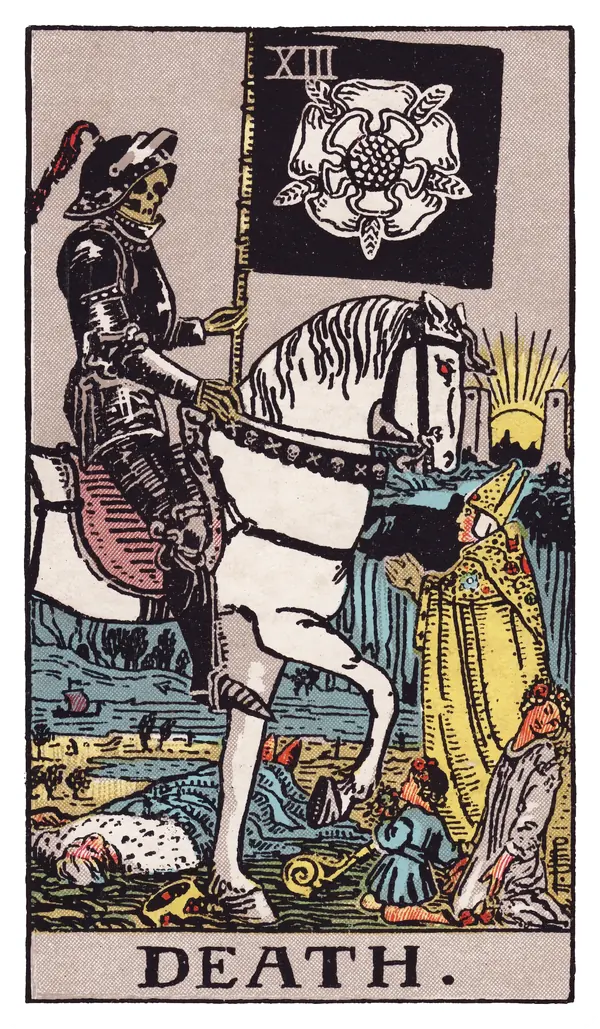 Rider–Waite–SmithDeathSomething here may have run its course, and letting it end is what gives something new room to begin.
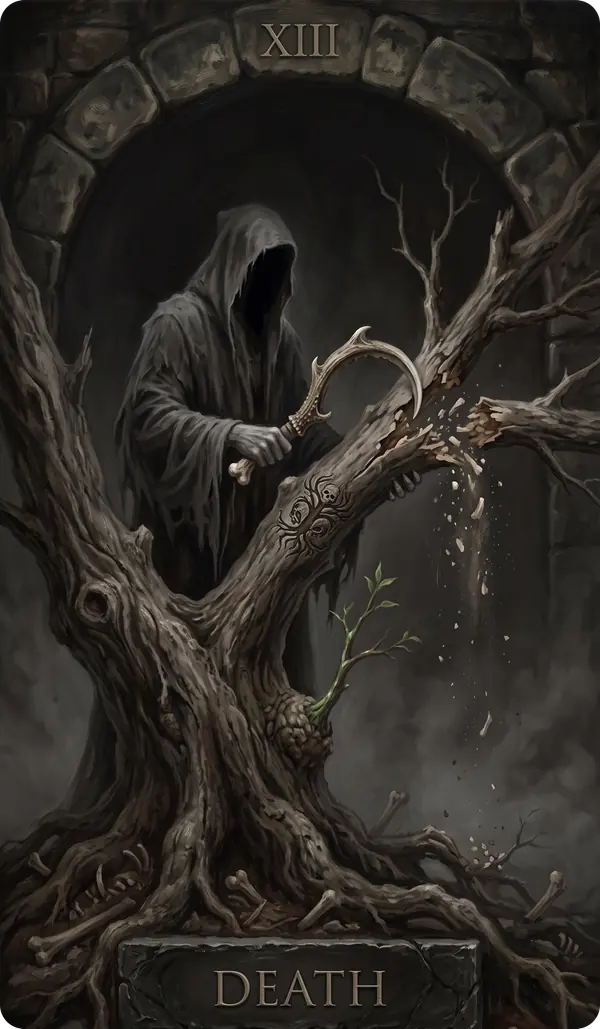 FamiliaDeathWhat is spent is cut in time, and the room it leaves goes to new growth.
 City of WindowsDeathAcknowledging the end of an old role, or of the way a relationship was set up.
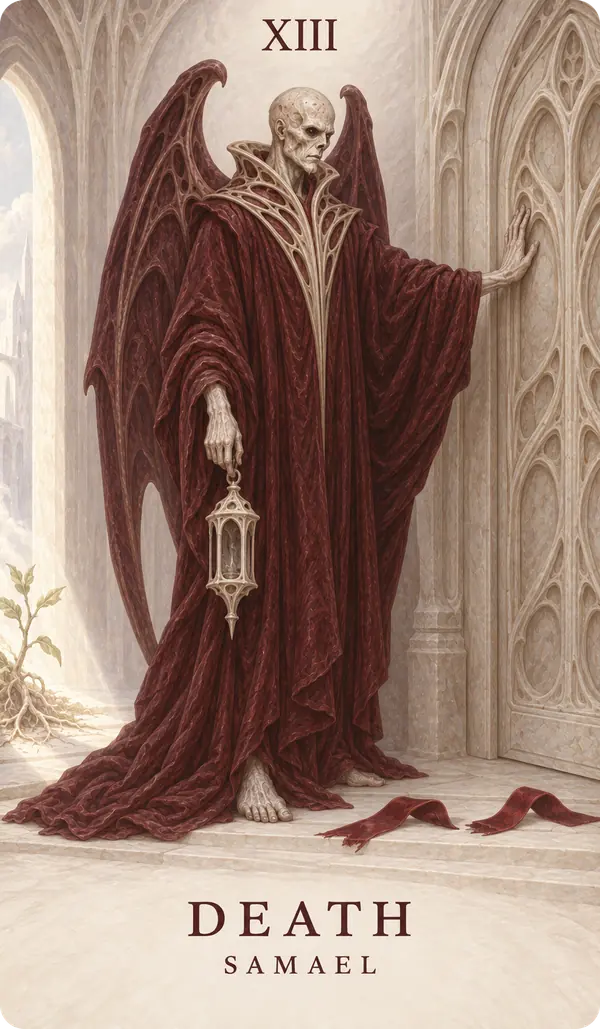 CarnalDeathAn ending that cannot be made into the old beginning.
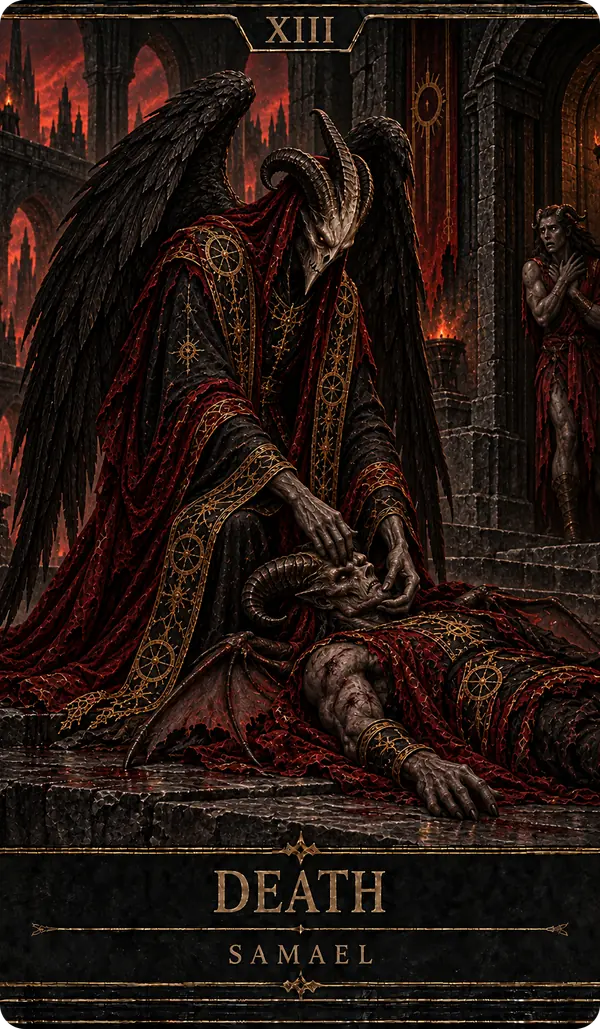 Crimson InfernoDeathRecognize an ending that cannot be negotiated away.
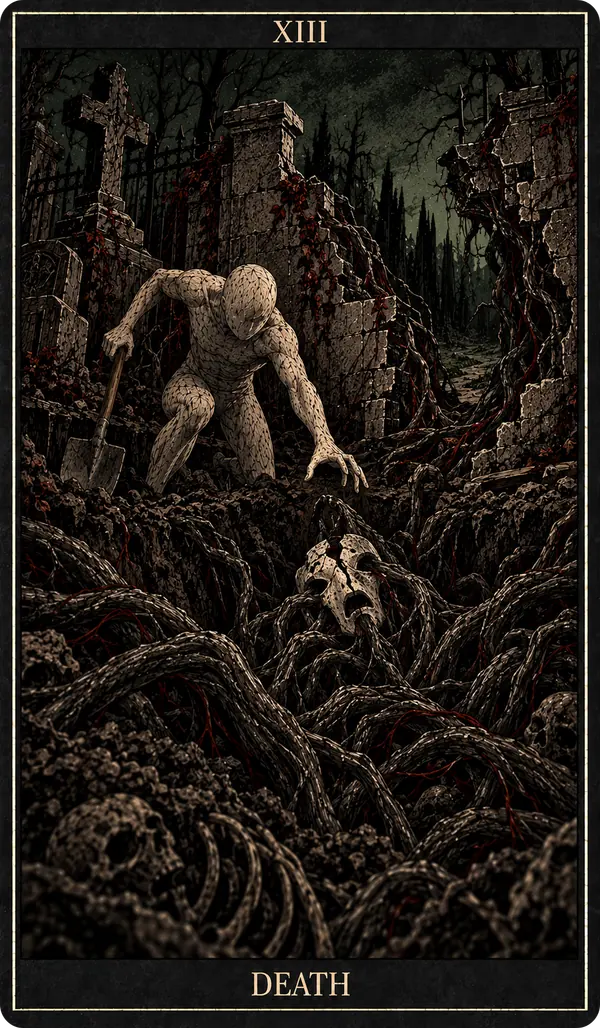 Mirror NightDeathBury an ended voice and use the opened path.
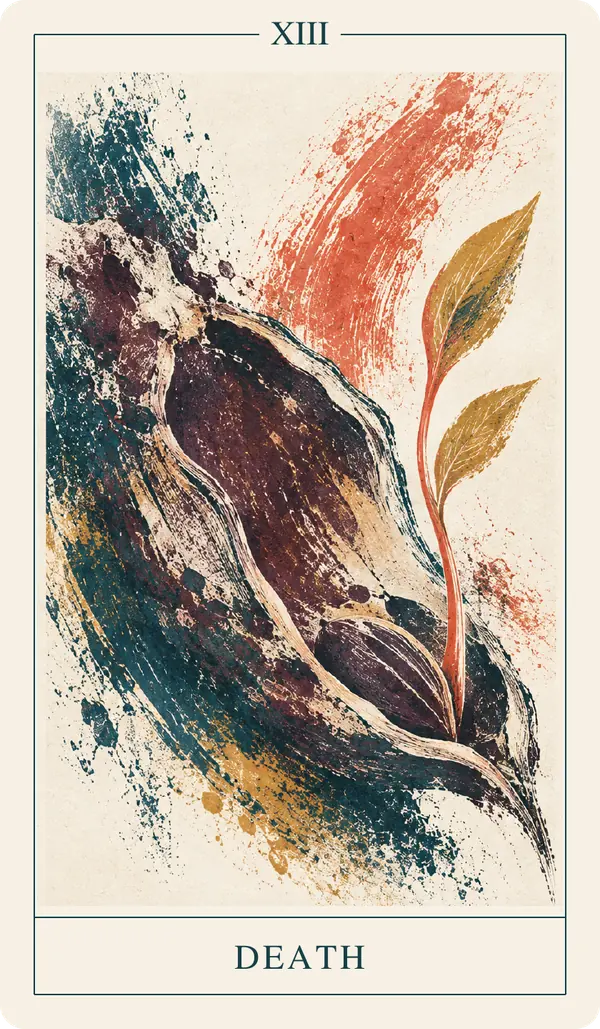 Self ContactDeathLet an ending make room without demanding immediate renewal.
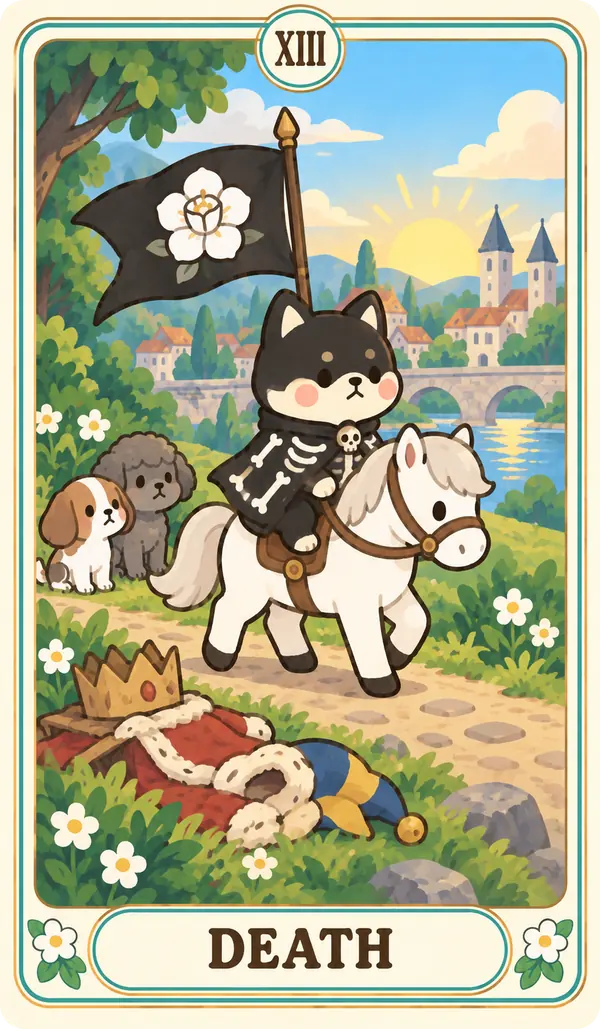 Shiba TownDeathAn ending; transition; releasing an exhausted form.
 Velvet MasqueradeDeathAn ending given form, leaving room for change.
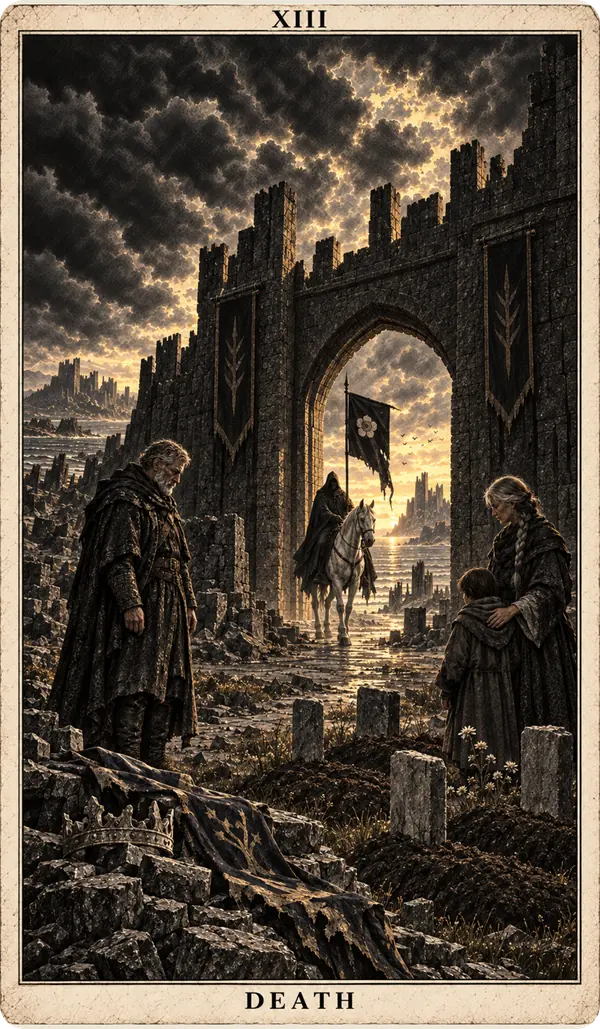 Four HorsemenDeathAllow an ending to be real; release a claim so another form of life can begin.
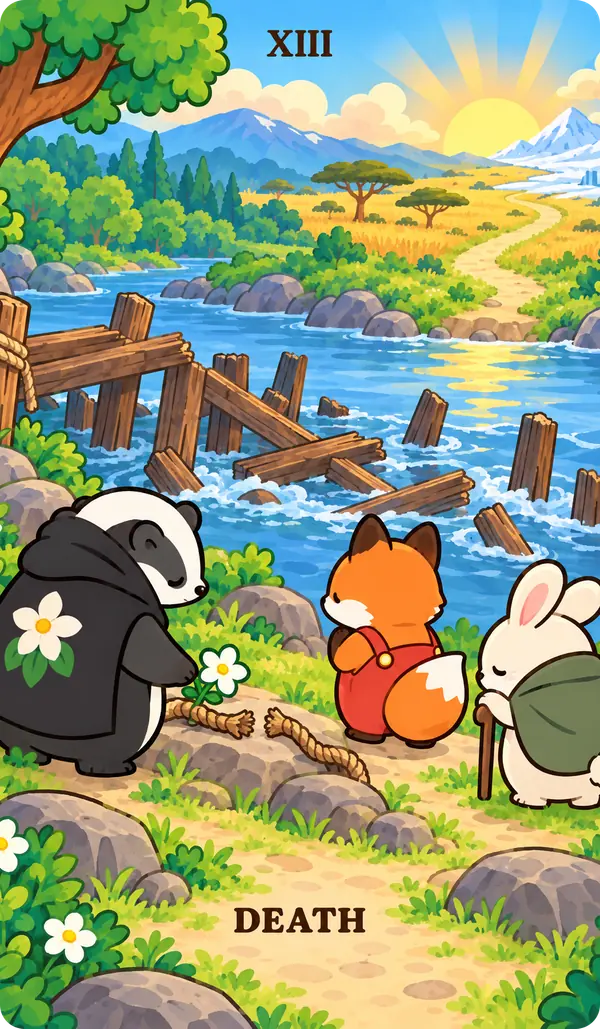 Four TrailsDeathEndings, release, transformation.
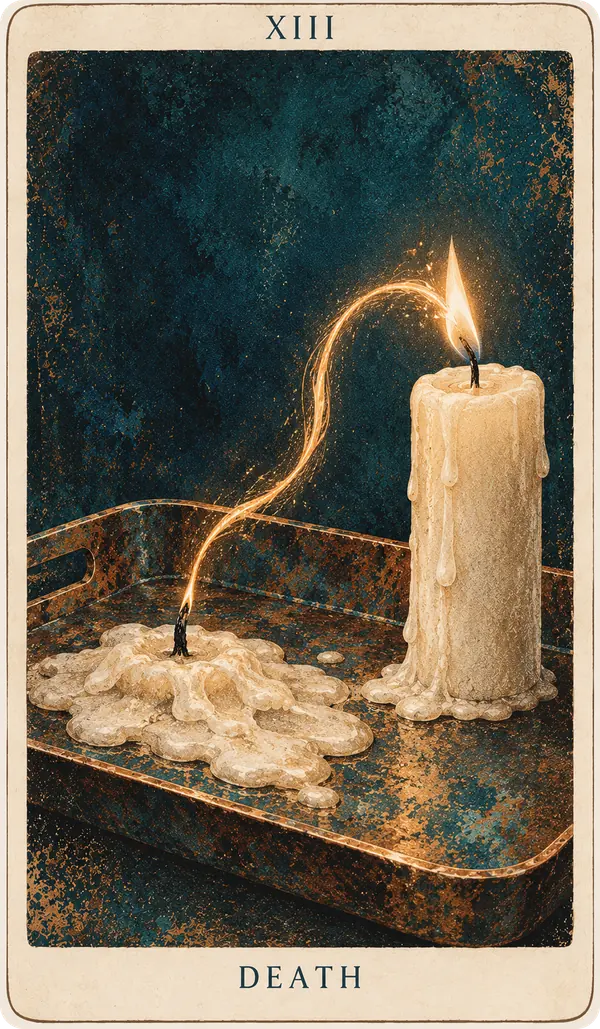 Living ThresholdDeathThe last warmth leaves spent wax and kindles a separate source.
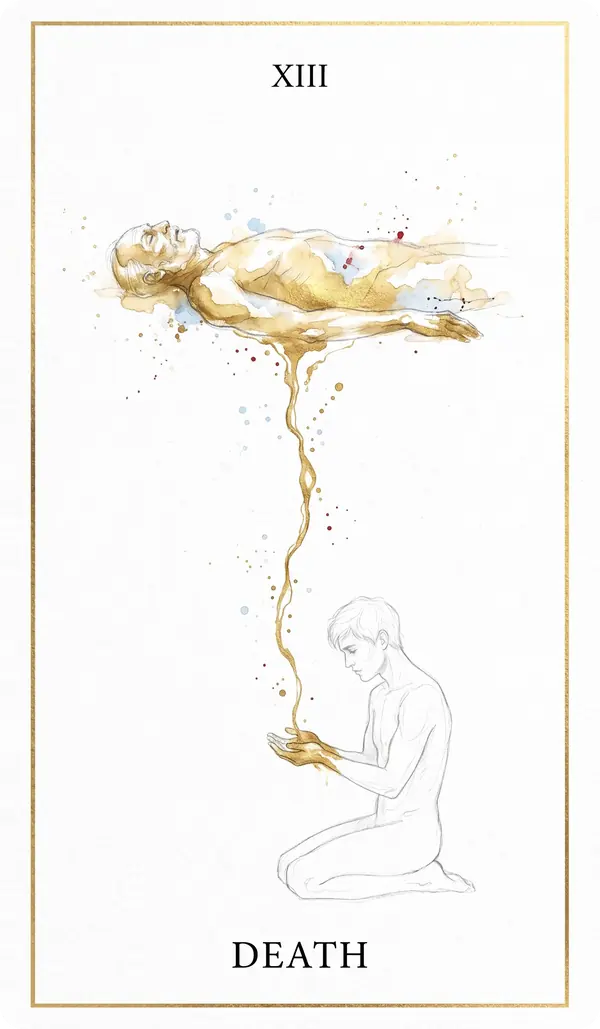 Colour of PowerDeathAn ending that frees what you hold, so it can pass to new hands.
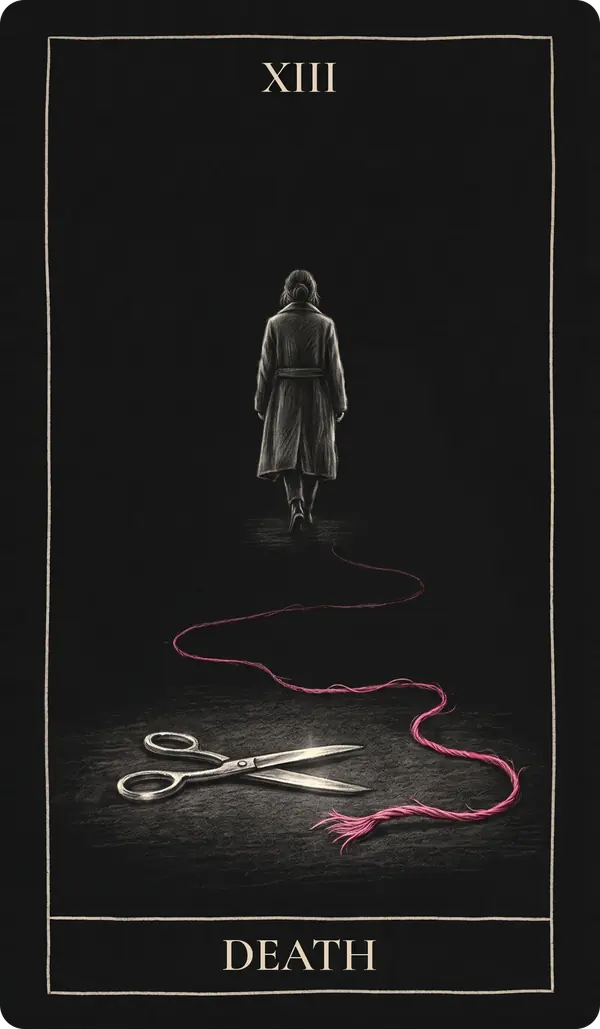 BoundDeathThe tie is dead; the cut was right. Let memory thin.
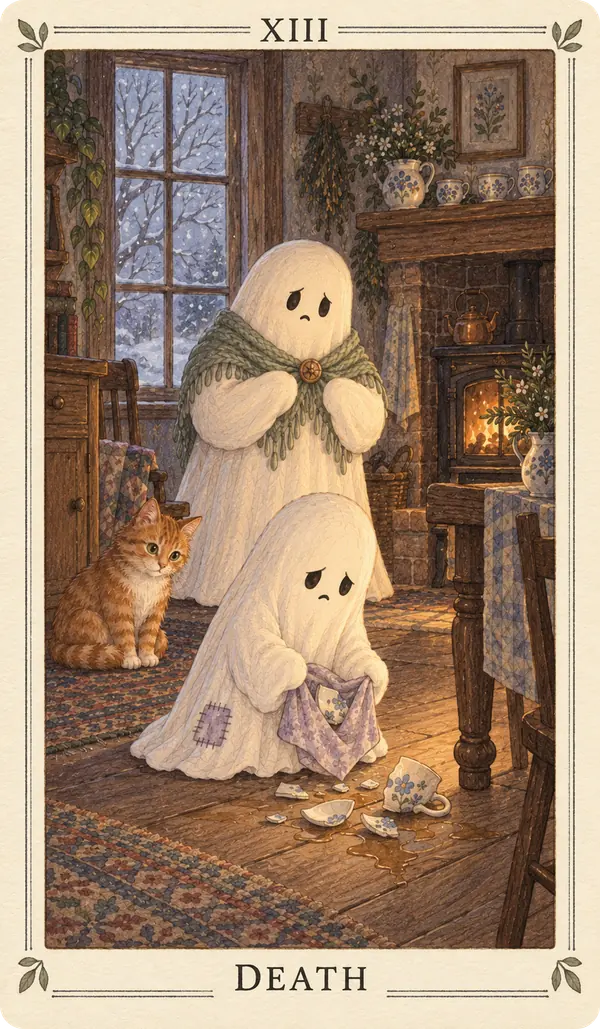 Cozy HauntDeathAn ending clears room for a changed identity.
 Celestial Night SkyDeathA worn form set aside.
Where it appears
Questions about this card
Is Death a yes or no card in Everyday Wonders?
Death is mixed upright: an ending leans no for the old form and yes for what grows after it. Reversed, the answer is no for now, because holding on past an ending, or forcing one early, helps neither. Name what is finished and what is still alive before you act, and give each its own answer.
What does Death mean in love?
Asked about love, Death upright shows an old way of being together turning to soil while the bond changes form around a new shoot. It points to a pattern ending, not a person. Reversed, a worn pattern is kept in shape like an empty coat. Name one old habit between you that has worn thin, and talk about what could grow in its place.
What does Death mean reversed in Everyday Wonders?
Reversed, Death is the empty coat buttoned up again: holding onto what may already have come apart, delaying a goodbye, or tearing something out before it is ready. Its subject is a form or a habit reaching its end. Notice one habit that no longer fits and ask yourself, and then the other person, whether it still does.