Justice
Major Arcana · XI
In short
A fair, honest look at the facts, including your own part in them, is what this situation needs right now.
Reversed
Something here is being judged unfairly, or a fair consequence is being avoided instead of faced.
- Major Arcana
- 11
- Libra
- The Judge
- fair, honest accounting
- facing a real consequence
- balance restored
Upright
Justice favors clear-eyed honesty about cause and consequence: what happened, who did what, and what fair outcome follows. It rewards weighing facts calmly instead of letting emotion or loyalty distort the account.
This can mean facing a consequence you’ve been avoiding, or getting clarity on a murky situation. The card isn’t about punishment.
It’s about restoring an accurate, balanced view of what’s true.
A question to sit with
“What would an honest, balanced accounting of this situation show?”
One step
Write down the plain facts of the situation, separate from how you feel about them.
Reversed
Reversed, Justice can mean avoiding accountability for something you know is true, or being judged unfairly by circumstances, other people, or your own harsh self-assessment. It can also mean a decision or account that’s been skewed by bias, self-interest, or an incomplete set of facts.
The card asks you to check whether the account you’re working from is accurate, whether it’s yours or someone else’s.
A question to sit with
“Where are you avoiding a consequence, or judging a situation unfairly?”
One step
Name one fact you’ve been leaving out of your own account of this situation.
How this deck reads reversed cards
Turned over, the scene keeps its energy and changes how it flows: blocked, turned inward, exaggerated or handled carelessly. A reversed card has its own meaning, never the flat opposite.
In love
An honest look at what’s been happening in this relationship matters more right now than keeping the peace.
- Supports
- Facts plain enough to look at without blame.
- Watch for
- Don’t turn honesty into a courtroom instead of a conversation.
- One step
- Share one honest observation you’ve been holding back.
One of you may be avoiding a fair conversation about something that needs to be said.
- Supports
- The conversation is still there to be had.
- Watch for
- Don’t allow resentment to build instead of naming the issue.
- One step
- Name the avoided issue plainly and calmly.
At work
A fair, factual review of a work situation, credit, blame, or a decision, is overdue.
- Supports
- Your ability to separate facts from feelings here.
- Watch for
- Don’t mistake office politics for the actual picture.
- One step
- Write down the plain facts of the situation before raising it.
A work consequence, credit, feedback, or a decision, may be getting avoided instead of faced.
- Supports
- Your ability to face it once you decide to.
- Watch for
- Don’t let unfair blame go unaddressed either way.
- One step
- Raise the avoided issue directly with the right person.
Weighing the real facts evenly, not the version that’s easiest to hear, is what benefits this decision most.
- Supports
- Your willingness to look at unwelcome facts too.
- Watch for
- Don’t let bias toward one option skew your read of the facts.
- One step
- List the facts for and against each option honestly.
Bias may be shaping this decision more than the actual facts warrant.
- Supports
- Your willingness to check your own bias here.
- Watch for
- Don’t decide based on what you want to be true.
- One step
- Ask someone neutral to sanity-check your read of the facts.
This growth comes from holding yourself to an honest account instead of a flattering one.
- Supports
- Willingness to admit your own part in a pattern.
- Watch for
- Don’t swing into harsh self-judgment instead of fair accounting.
- One step
- Write one honest sentence about your own role in a recent situation.
Growth requires facing a consequence or fact about yourself you’ve been avoiding.
- Supports
- Honesty with yourself, even when it’s uncomfortable.
- Watch for
- Don’t let avoidance turn into self-punishment instead of change.
- One step
- Name one fact about yourself you’ve been avoiding, plainly.
A fair look at who carries what at home, including your own part, may settle a family grievance.
- Supports
- Even-handed talk where every side gets heard.
- Watch for
- Keeping score instead of looking at the facts.
- One step
- Before judging a family dispute, write down each person’s side in one sentence.
Someone in the family may be carrying blame that isn’t theirs, or dodging a fair share of it.
- Supports
- Your right to ask for fairness at home.
- Watch for
- Taking sides before hearing everyone out.
- One step
- Ask the quietest person in the dispute what they think happened.
Yes or no
YesNoCause and consequence are both visible here, and the account holds up whether or not it favors anyone you like.
Supports
- Looking honestly at the facts here leaves little room for doubt.
- You’re willing to accept a fair outcome, even if it’s not the easiest one.
Limits
- Emotion or loyalty is currently shaping the account more than fact.
- A consequence is being avoided rather than addressed directly.
One step
Write the plain facts down separately from your feelings, then decide from that list.
The version of events being worked from here is missing the part you already know and have not said.
Supports
- You can name the specific fact you’ve been avoiding.
- You can weigh what facing this would ask against what avoiding it costs.
Limits
- Bias, yours or someone else’s, is shaping the current account.
- A fair consequence is currently being dodged.
One step
Ask someone neutral to review the facts and tell you honestly what they see.
What is in the picture
A seated figure in red robes holds an upright sword in one hand and a balanced scale in the other, flanked by two grey pillars and a hanging curtain. The gaze is direct and level.
The symmetrical seated pose and level scale keep the whole image balanced, with the sword as the only sharply vertical line.
- upright sword
- balanced scale
- two pillars
- hanging curtain
- direct gaze
- seated posture
This card in other decks
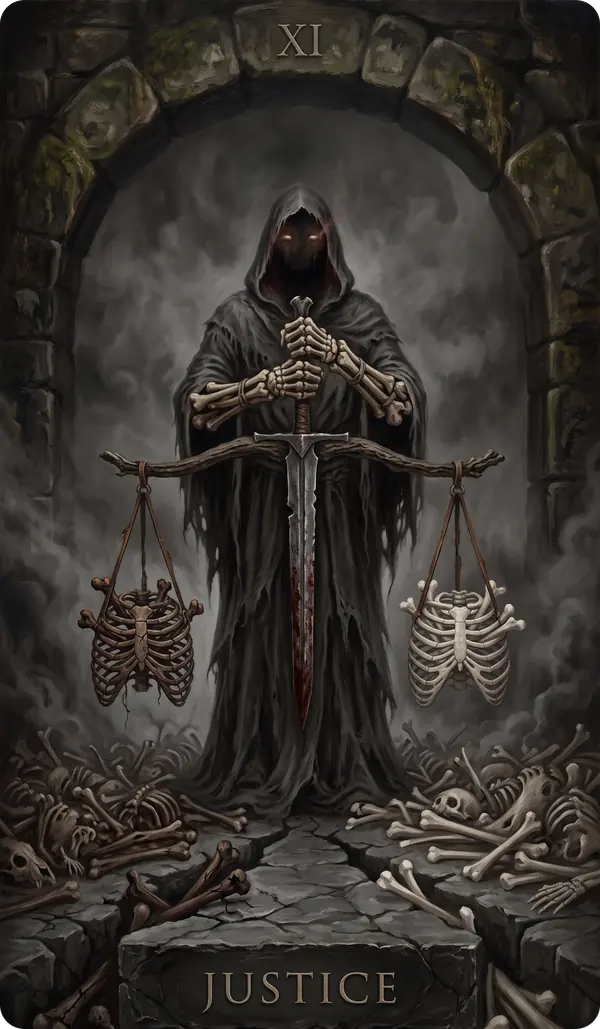 FamiliaJusticeAn honest reckoning across generations: debts and merits weighed evenly, each side receiving what it earned.
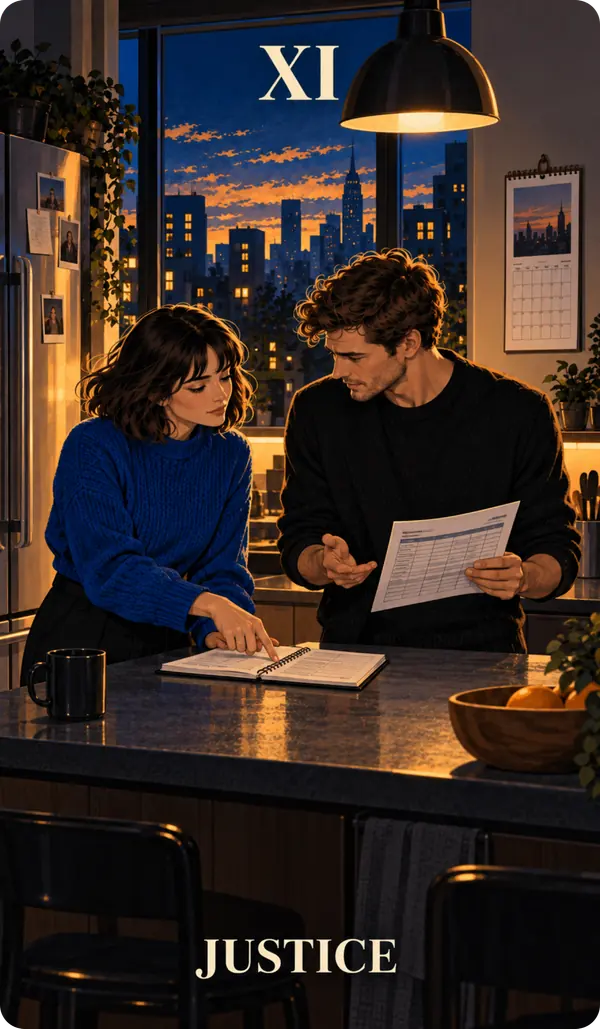 City of WindowsJusticeChecking the facts, owning the consequences of what was done, setting fair terms.
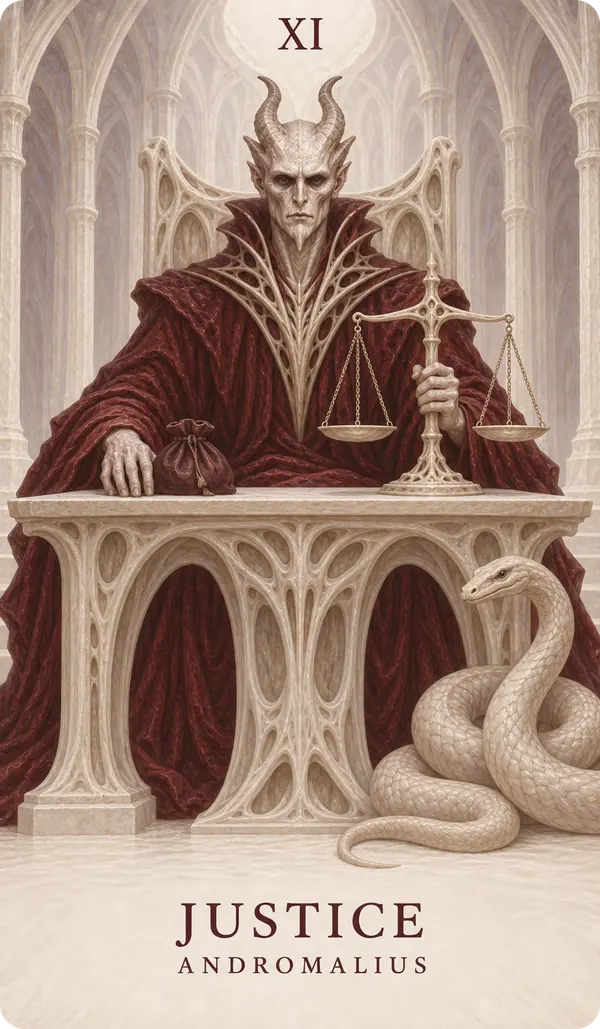 CarnalJusticeAccountability, proportion and the return of what is owed.
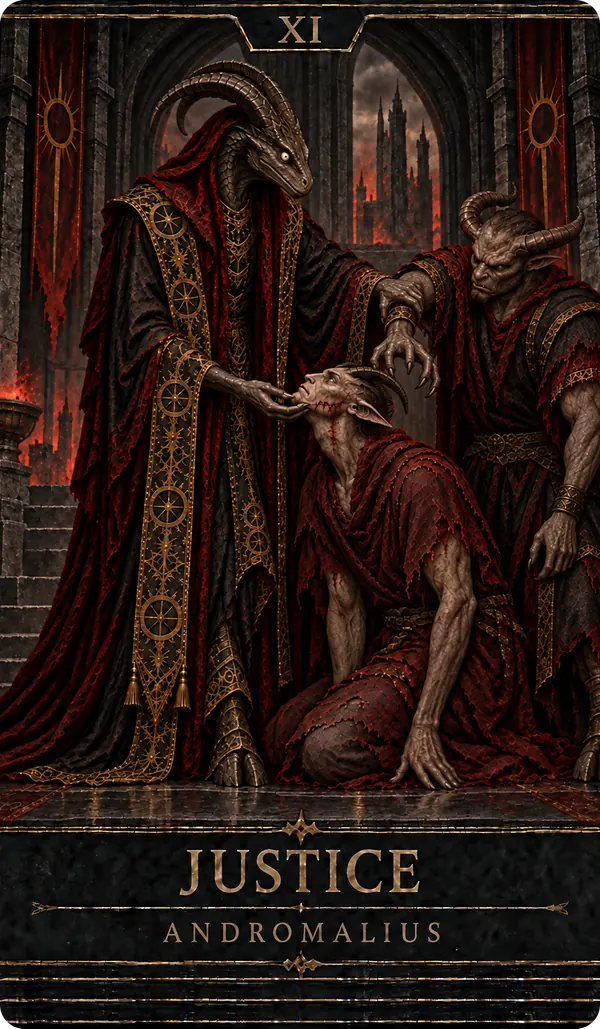 Crimson InfernoJusticeDistinguish proof from pressure.
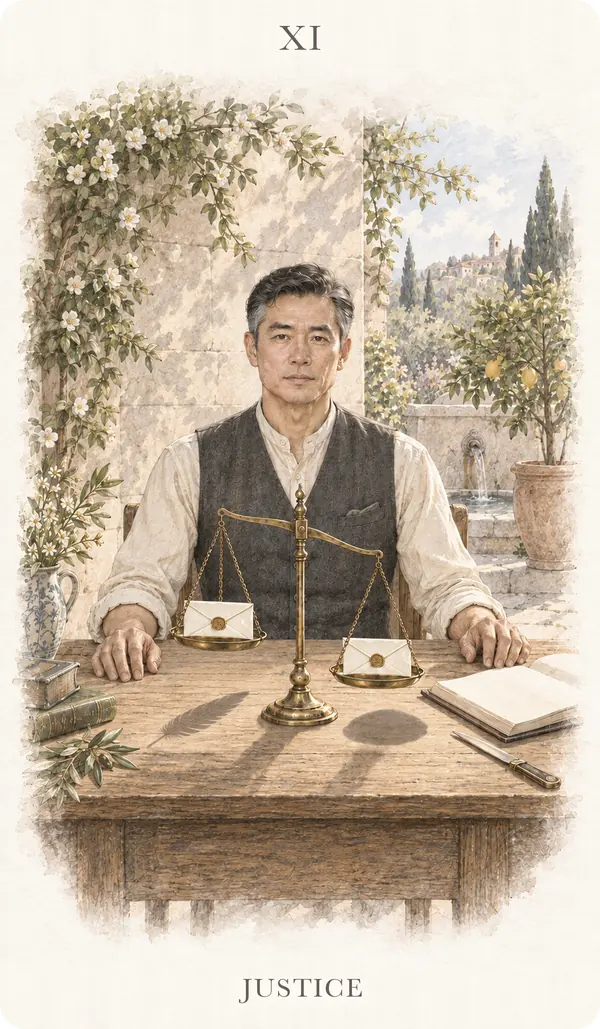 Everyday WondersJusticeClear judgment, proportion, responsibility and consequences.
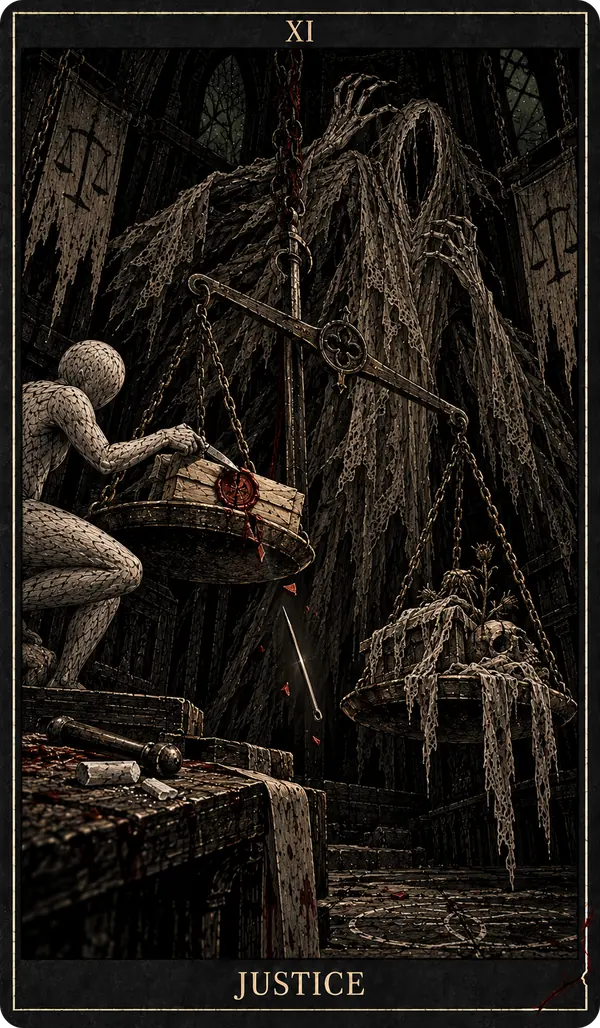 Mirror NightJusticeRevise the verdict when a hidden needle falls.
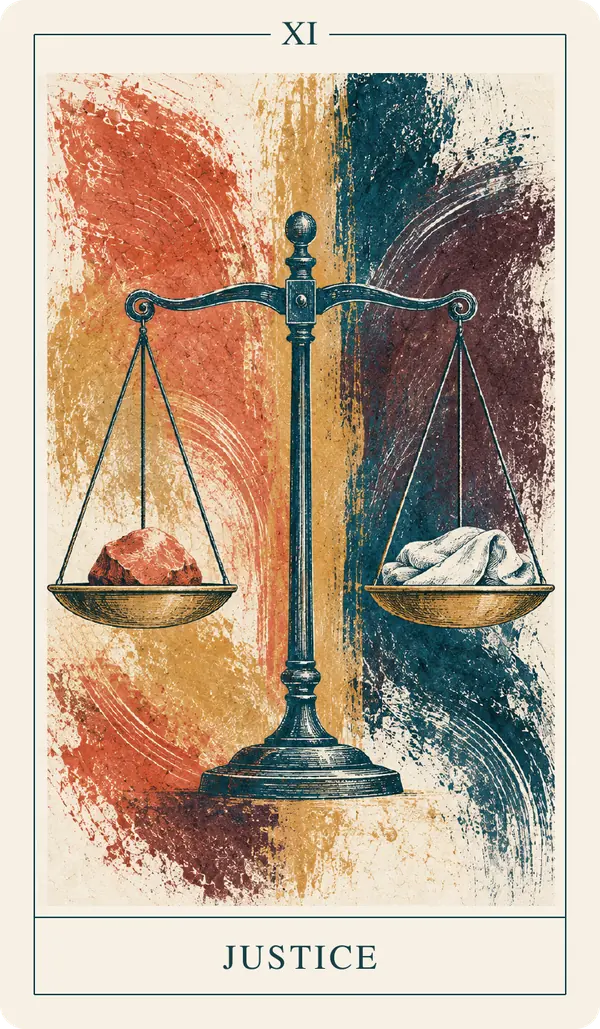 Self ContactJusticeApply the same measure to yourself and others.
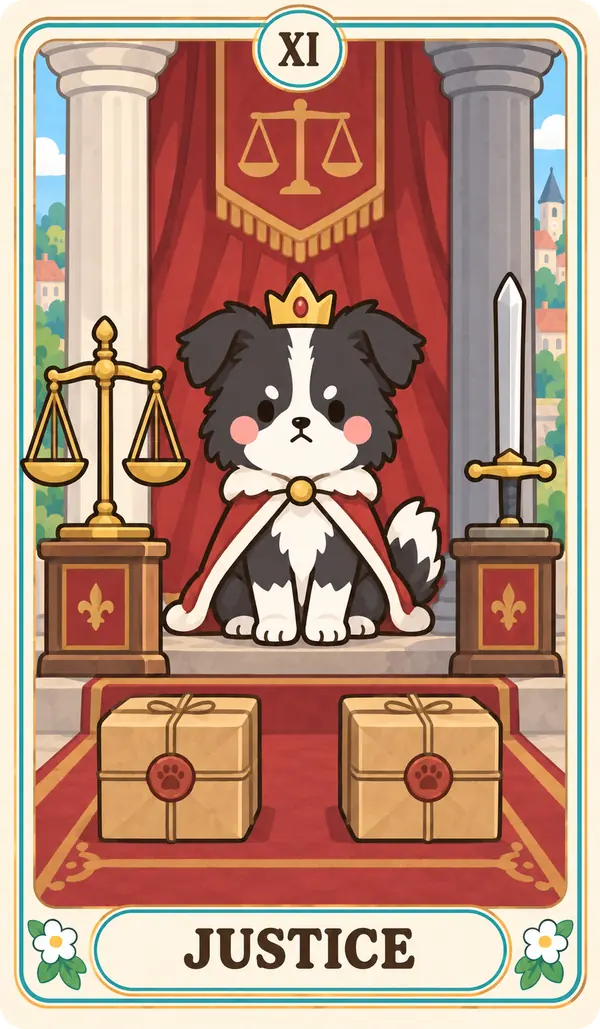 Shiba TownJusticeFairness; accountability; consequences based on facts.
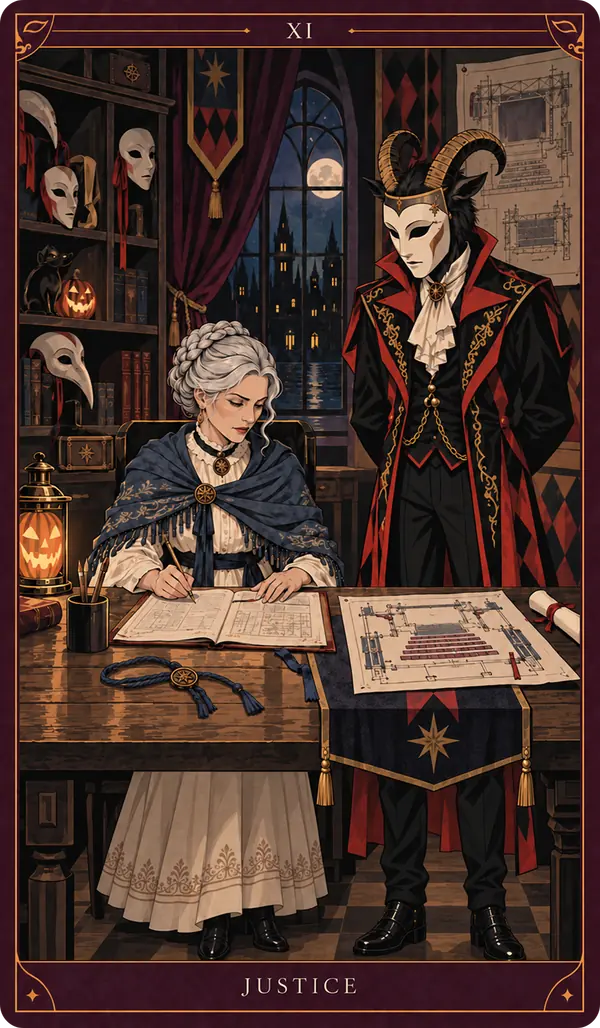 Velvet MasqueradeJusticeA fair consequence grounded in what can be checked.
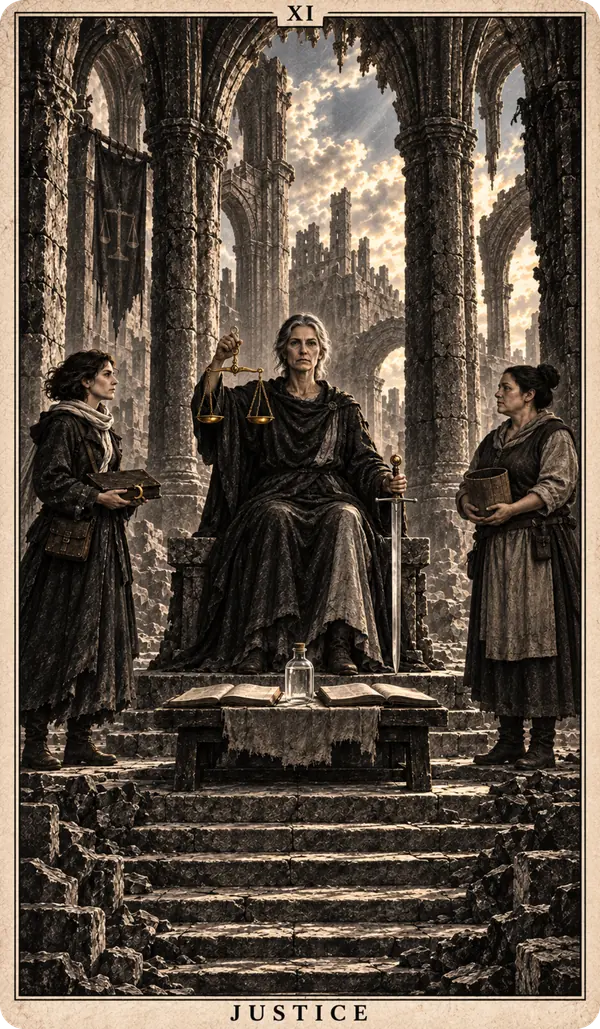 Four HorsemenJusticeExamine evidence, own your part and choose a proportionate response.
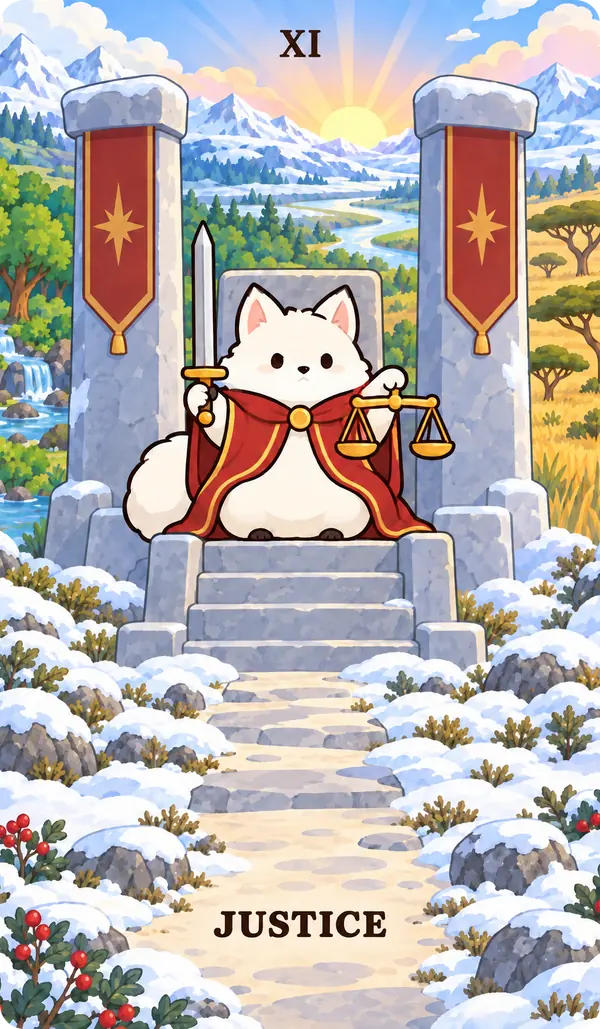 Four TrailsJusticeFairness, truth, consequences.
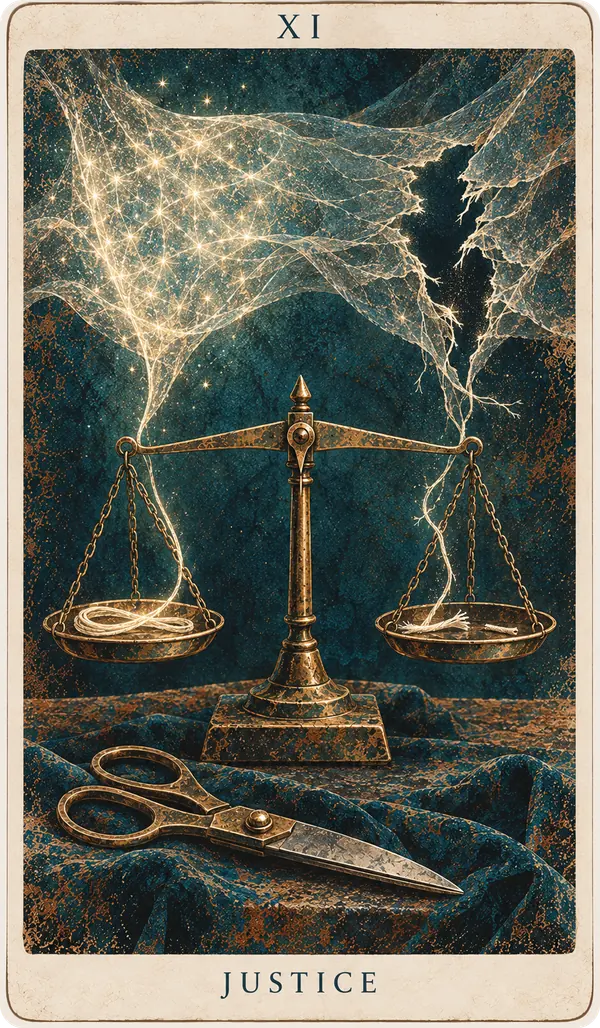 Living ThresholdJusticeThe balance reveals what a cut changes and where the fabric still needs mending.
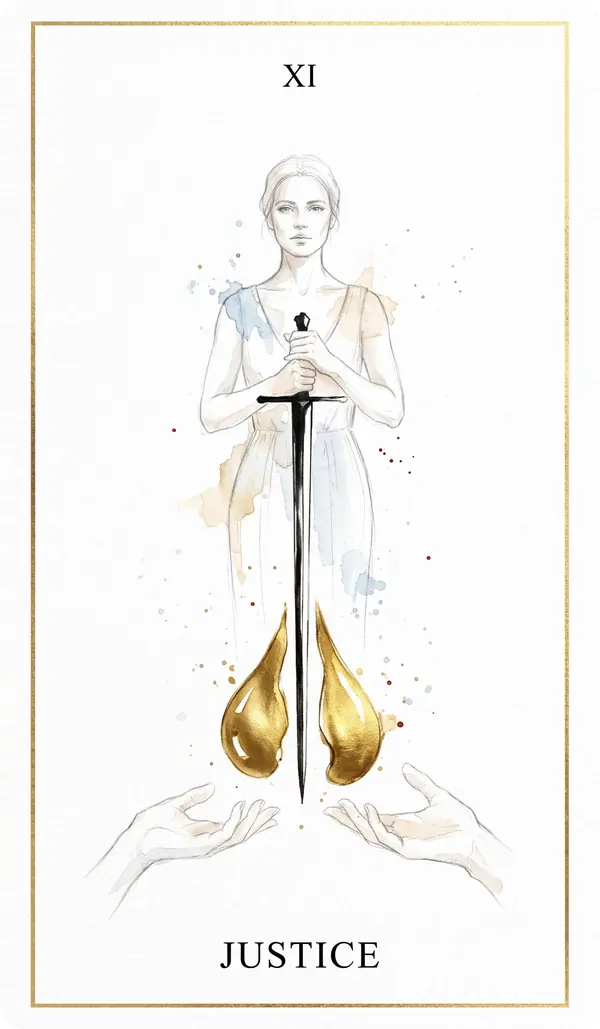 Colour of PowerJusticeAn honest cut: what was invested is counted, and the clean need not fear.
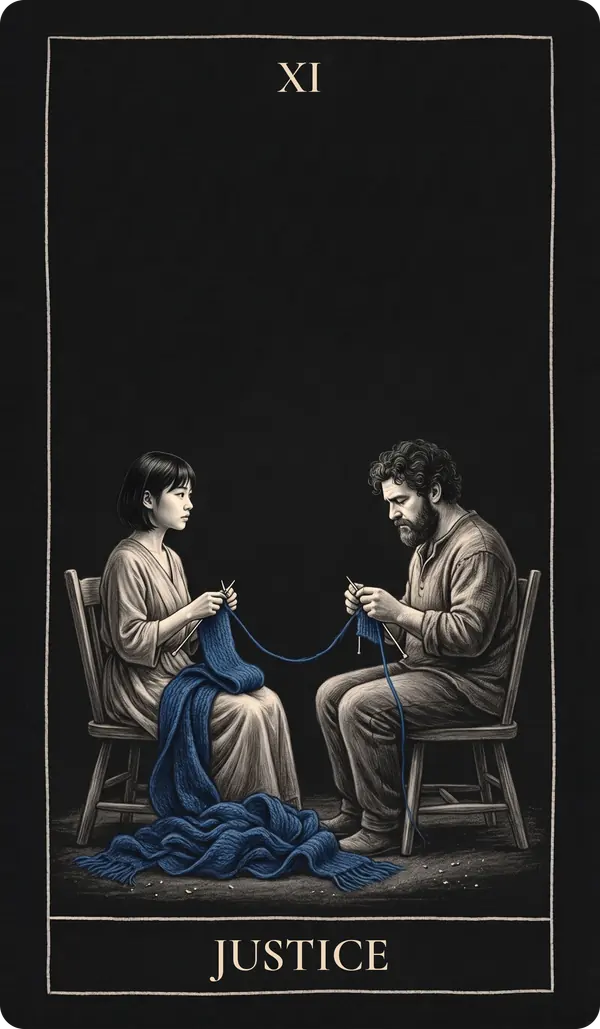 BoundJusticeAn honest count: the thread shows who has knitted how much.
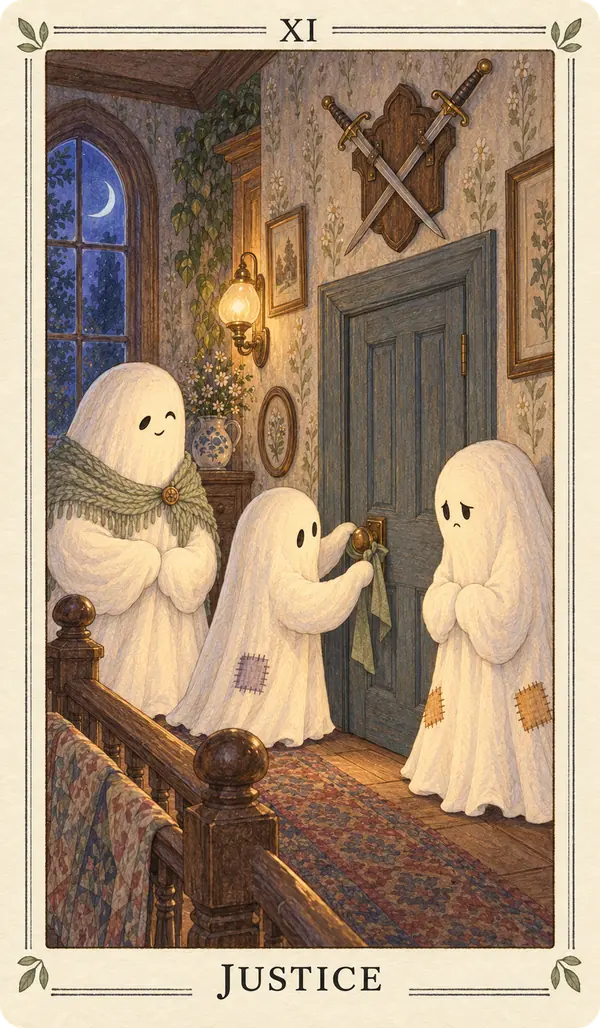 Cozy HauntJusticeAccountability and a fair boundary.
 Celestial Night SkyJusticeAn answer open to checking.
Where it appears
Questions about this card
Is Justice a yes or no card?
Upright, Justice leans yes. Cause and consequence are both visible, and the account holds up whether or not it favors anyone you like. Reversed, it leans no: the version of events being worked from is missing a part, possibly one you already know and have not said.
Does the Justice card mean a legal case?
Yes, it can. Justice is the card traditionally tied to courts, contracts and legal decisions, because it weighs cause and consequence and asks what a fair result would look like. In this deck it asks for a clear look at the facts, including your own part, in any situation that needs weighing fairly. If a real legal matter is on your mind, a lawyer can tell you where you stand.
What does Justice mean in love?
In love, Justice upright says an honest look at what has been happening matters more now than keeping the peace, as long as honesty stays a conversation and not a courtroom. Reversed, it suggests one of you may be avoiding a fair conversation about something that needs saying, and it warns against letting resentment build instead of naming the issue.