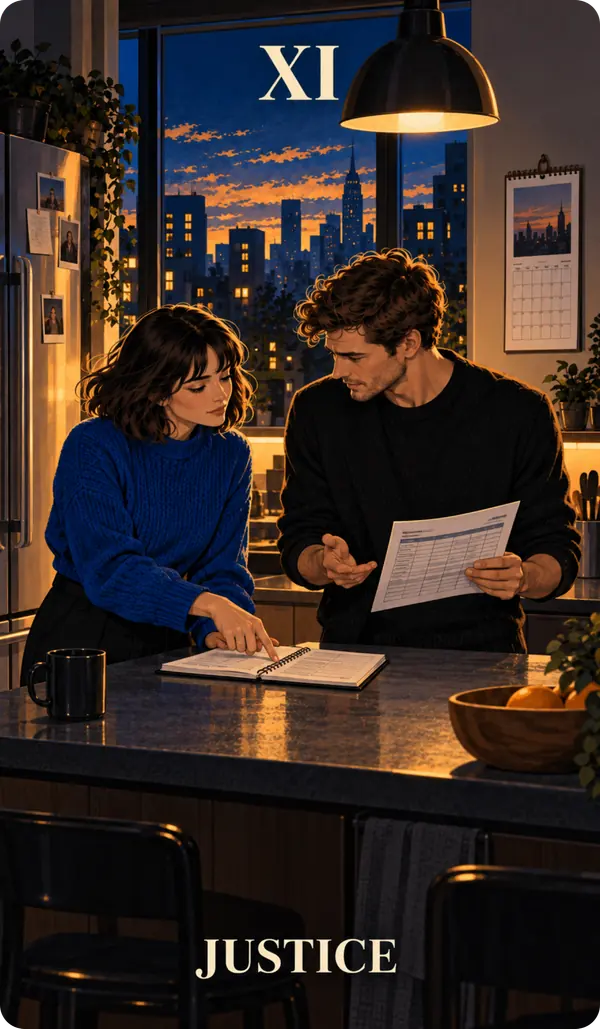
Death
Death in City of Windows · Major Arcana XIII
RelationshipsIn short
Acknowledging the end of an old role, or of the way a relationship was set up.
Reversed
A breakup that drags on, trying to live inside a form that has already ended, a fear of empty space.
- Major Arcana
- 13
- Scorpio
- The One Moving Out
- the irreversible end of a form
- making room for what comes next
Upright
Acknowledging the end of an old role, or of the way a relationship was set up. Name what can no longer come back in its old form. Mira decides to end the life they share at home.
She carries a box to the open door, leaves the shared key on the shelf and keeps her old key on its red cord. She looks back in pain, but she does not retreat.
The old way of living together is over; Lev’s motives are still unknown to her.
A question to sit with
“Which earlier form of the relationship may already have come to an end?”
One step
Name what can no longer come back in its old form.
Reversed
A breakup that drags on, trying to live inside a form that has already ended, a fear of empty space.
A question to sit with
“What are you holding on to: the person, or a familiar picture of your life?”
One step
Write down one habit of the old shared life you may still be keeping up, and ask whether it still serves you.
How this deck reads reversed cards
Reversed, a window may show a delay, an imbalance, a defensive reaction or the first step out of one; the neighboring cards help tell which. A reversal does not mean “a bad person”, and one card proves no one’s motive.
In love
An old way of being together may be coming to the end of its form, a shared key set on the shelf while your own stays in your hand.
- Supports
- Naming what cannot come back as it was.
- Watch for
- Hiding from a change by refusing to name it.
- One step
- Write one sentence about a pattern in love that you are ready to let go of.
An ending may be dragging on, both people living inside a form that no longer holds, or fear of an empty room may be keeping the old picture on the shelf.
- Supports
- Asking whether you hold on to a person or to a picture of your life.
- Watch for
- Living in the old arrangement because the empty room frightens you.
- One step
- Put on paper what you fear about empty space, and one small thing that could fill an evening of it.
At work
A role at work may be reaching the end of its old shape, and naming that may clear space for what you do next.
- Supports
- Clearing a desk, a role or a habit that has served its time.
- Watch for
- Keeping the old title as if nothing had changed.
- One step
- Clear out one folder or routine you no longer use.
A job or project may be kept going past its season out of fear of the gap after it.
- Supports
- Planning for the empty space instead of avoiding it.
- Watch for
- Staying in a role only because what comes after is unknown.
- One step
- Sketch what a lighter week could hold if one old task came to an end.
One option may ask you to carry a box out of a familiar room; the cost may show on your face and still be worth naming.
- Supports
- Honesty about what each option ends.
- Watch for
- Choosing an option because it changes nothing.
- One step
- For each option, write what it would close as well as what it would open.
The choice may keep returning because an old form is still being propped up, every option measured against how things used to be.
- Supports
- Letting the past stop being one of the options.
- Watch for
- Choosing whatever delays the change.
- One step
- On paper, cross out the option that only means going back, and look at what is left.
Letting an old picture of yourself come to an end may be the growth here, with your own key carried on into whatever comes.
- Supports
- Grief allowed to show on your face.
- Watch for
- Rushing past the loss to look fine.
- One step
- Mark the end of one old habit with a small act, like clearing a shelf.
Growth may stall in a half-packed room, holding on to a familiar picture of life because the space after it feels empty.
- Supports
- Tolerating an empty shelf for a while.
- Watch for
- Filling the gap with the first thing that comes along.
- One step
- Leave one shelf, drawer or evening empty this week and notice how it feels.
The way a household is arranged may be ending its old form: a room put to new use, a role handed on, a routine closed.
- Supports
- Saying goodbye to how things were, out loud.
- Watch for
- Keeping a room exactly as it was so no one has to feel the change.
- One step
- Choose one object at home that belongs to an old stage and give it a new place.
An old arrangement at home may be lasting long after anyone believes in it, out of fear of what the change would mean.
- Supports
- Talking about what the family is afraid to lose.
- Watch for
- Keeping up the old routine for appearances.
- One step
- Ask your household which old routine still matters to them and which could go.
Yes or no
NoNoWhere the question asks for an old form to carry on as it was, the answer leans away: that form may already have come to an end.
Supports
- You can name what can no longer come back in its old form.
- Clearing space may leave room for something new.
Limits
- An ending hurts, even when it is chosen.
- Not every part of the past has to go with the old form.
One step
Write down one thing that has changed for good, and one thing you still keep.
When an ending drags on and an old form is kept going, the answer leans away until the ending is named.
Supports
- You can see what you are still holding on to.
- The fear of empty space can be looked at directly.
Limits
- An ending may be dragging on.
- You may be living inside a form that has run its course.
One step
Ask yourself what you are holding on to: the person, or a familiar picture of your life.
What is in the picture
One ordinary room with boxes and furniture; Mira in blue is walking out with a box in her hands. On the nearest shelf lies a metal key left behind, and in Mira’s lowered hand is another key, on a red cord. Evening light comes in through the door; her face and the way she turns back show what the decision costs.
A plant and a small photo of the couple stay where they were, traces of a lived-in space.
- metal key left on the shelf
- key on a red cord
- box in her arms
- open door
- small photo of the couple
- trailing plant
This card in other decks
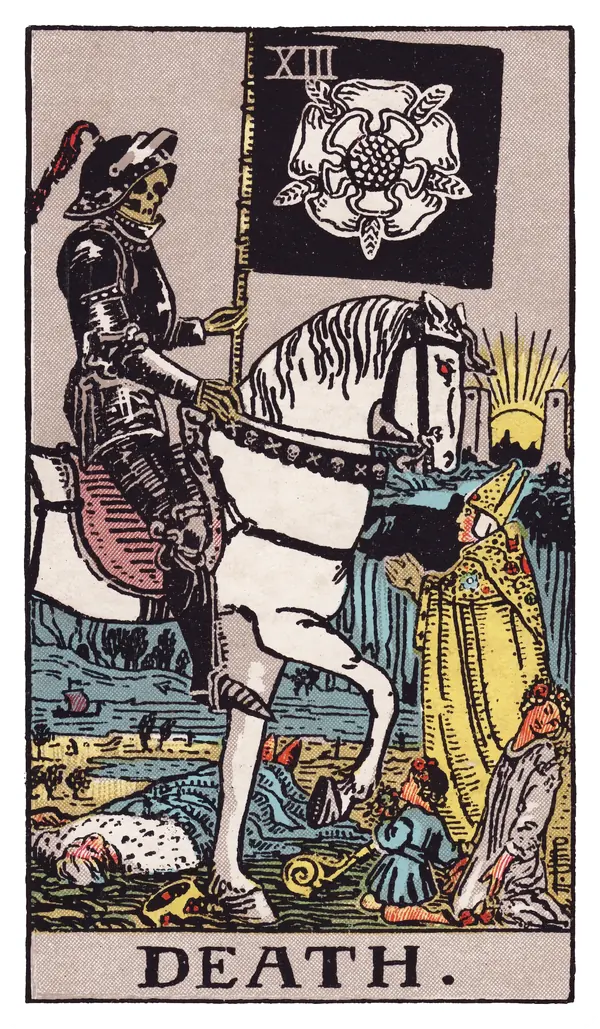 Rider–Waite–SmithDeathSomething here may have run its course, and letting it end is what gives something new room to begin.
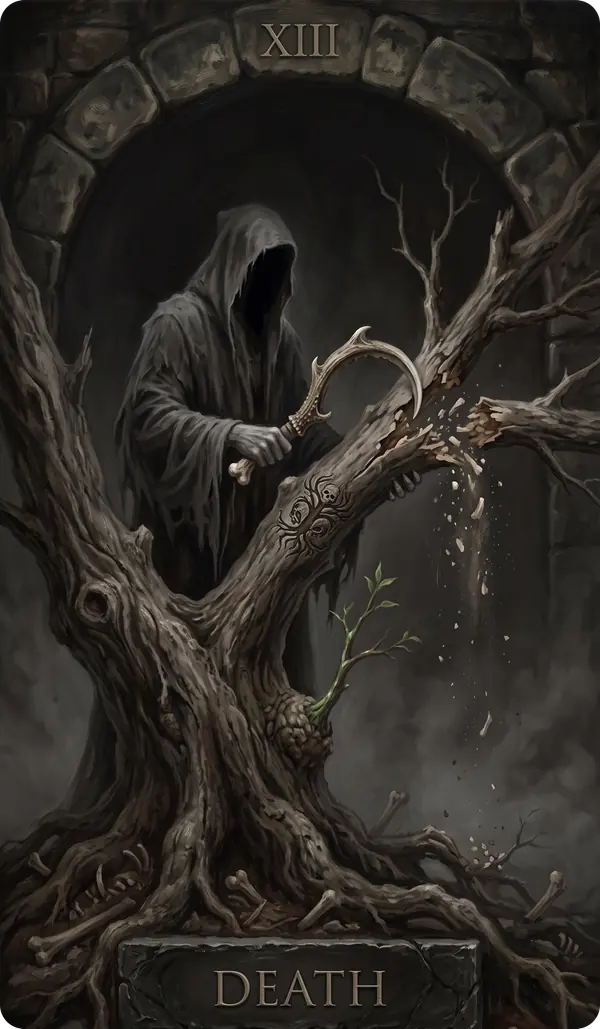 FamiliaDeathWhat is spent is cut in time, and the room it leaves goes to new growth.
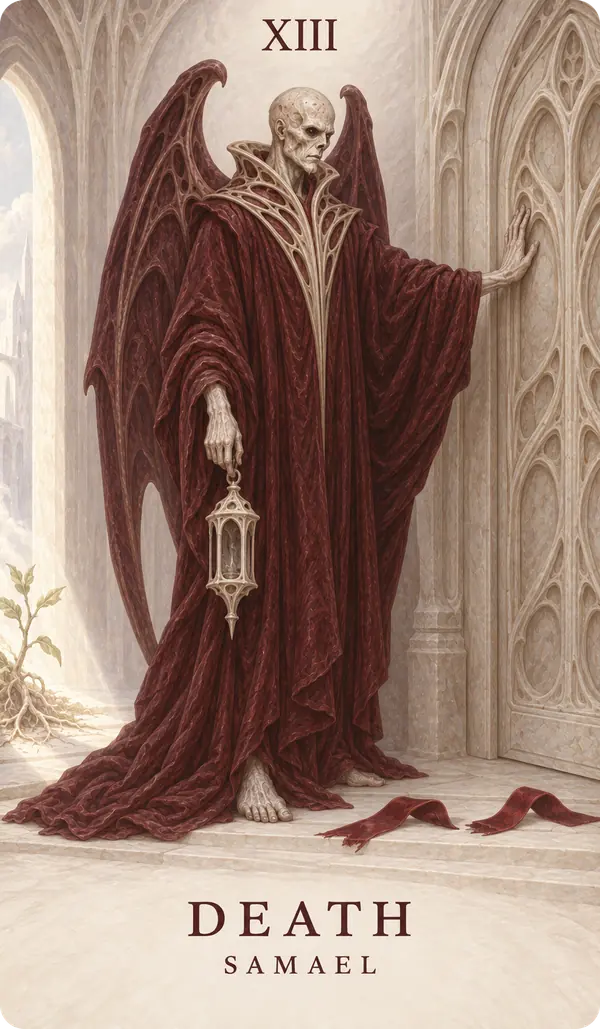 CarnalDeathAn ending that cannot be made into the old beginning.
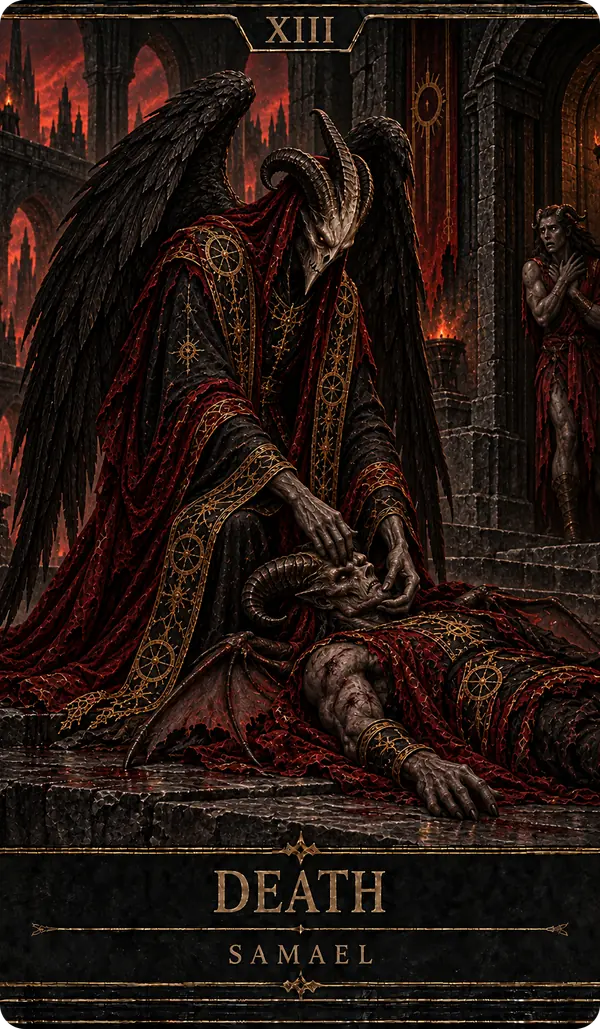 Crimson InfernoDeathRecognize an ending that cannot be negotiated away.
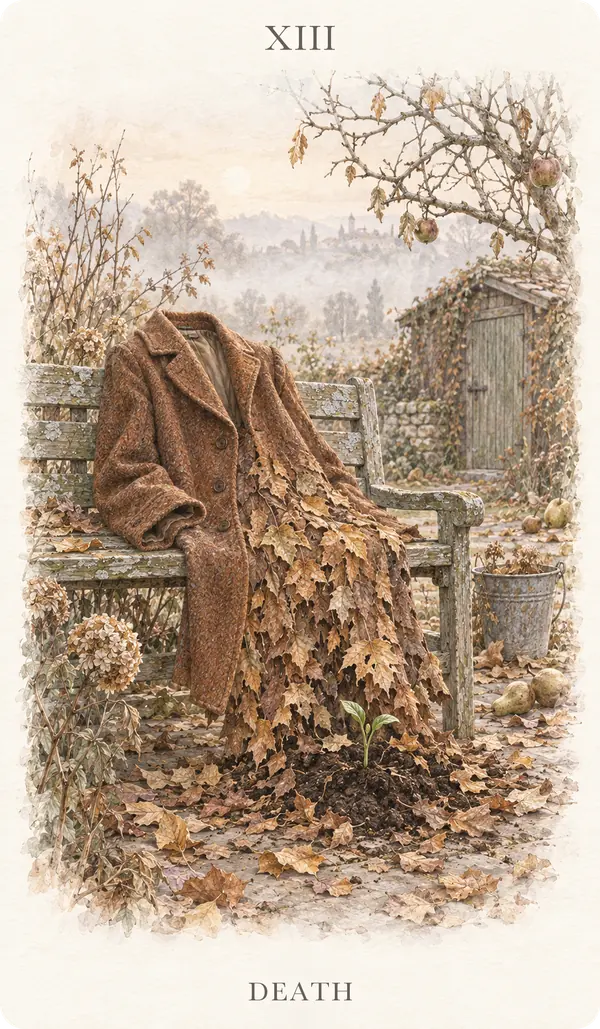 Everyday WondersDeathAn irreversible ending, release of space and a change of form.
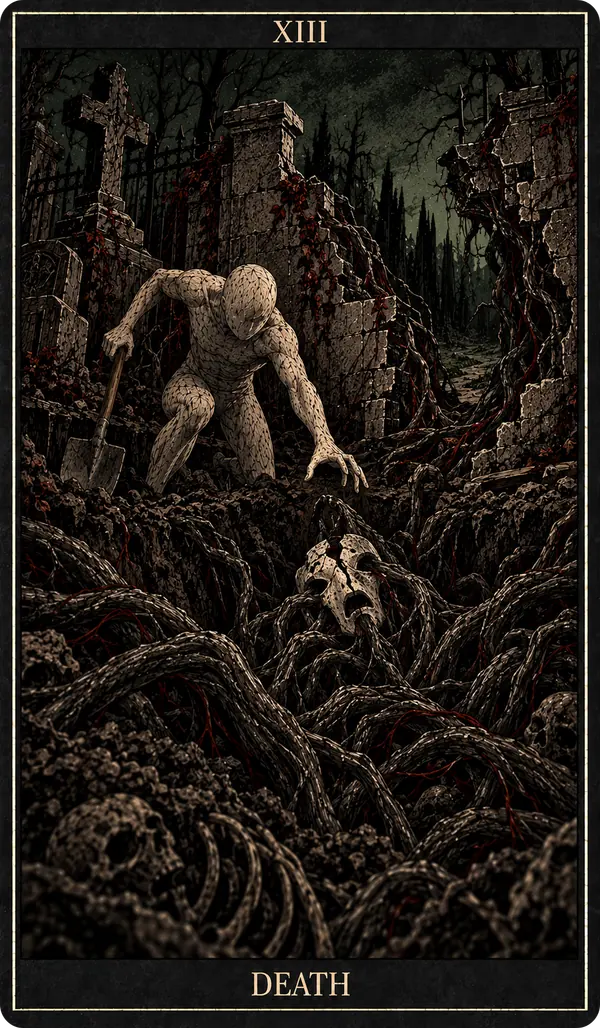 Mirror NightDeathBury an ended voice and use the opened path.
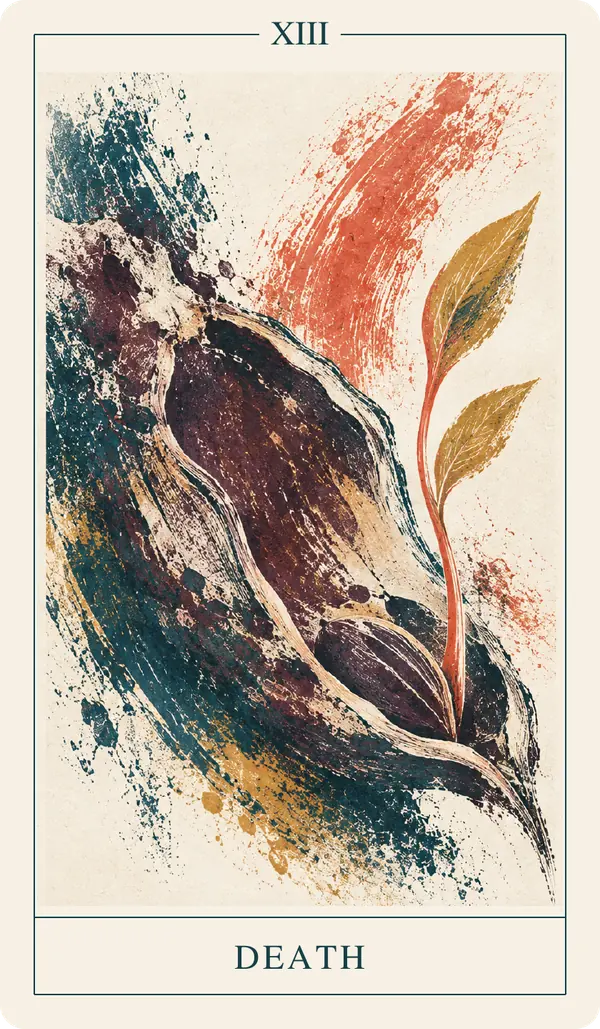 Self ContactDeathLet an ending make room without demanding immediate renewal.
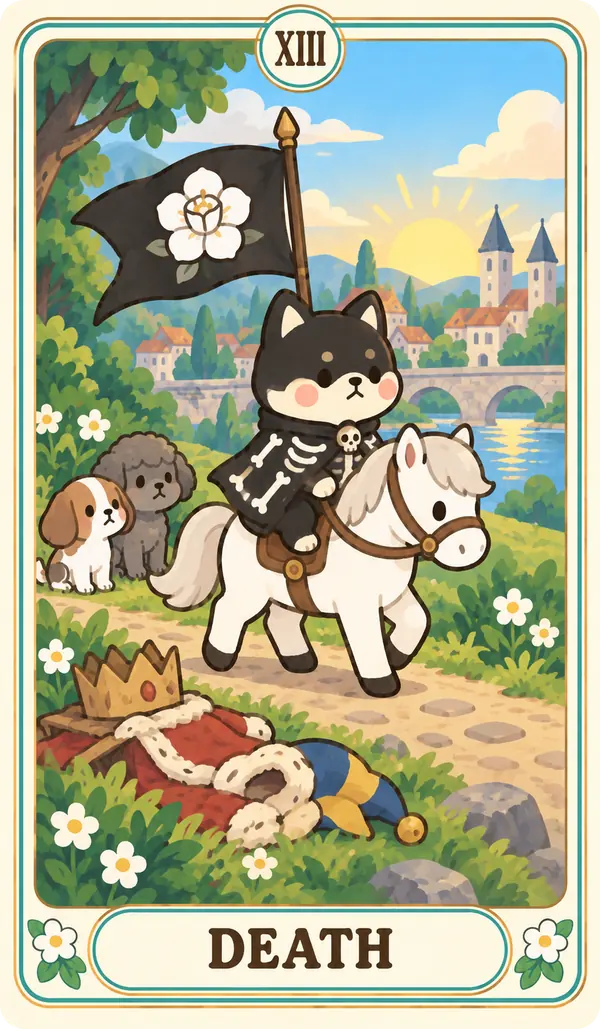 Shiba TownDeathAn ending; transition; releasing an exhausted form.
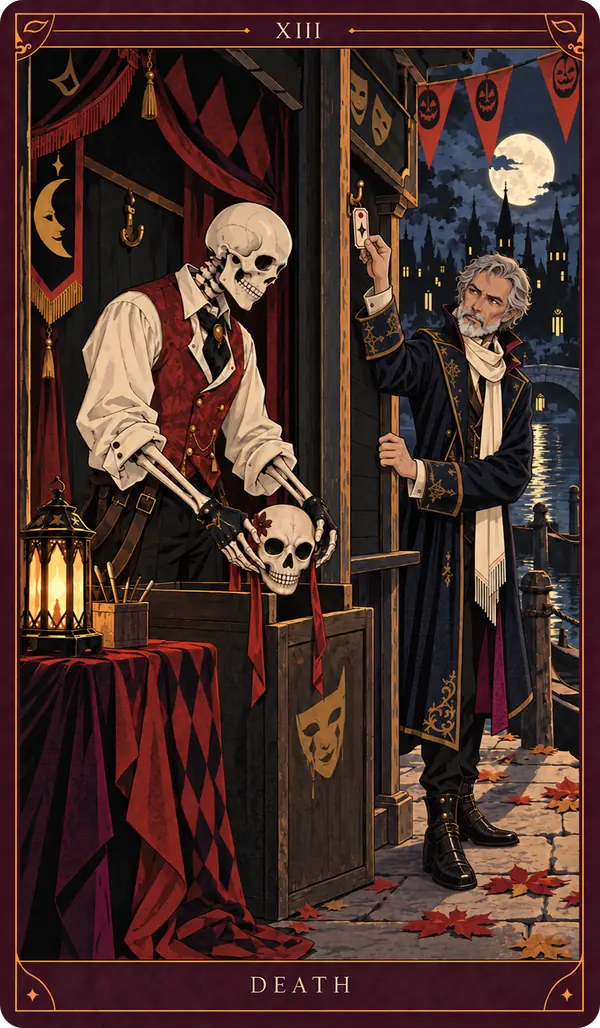 Velvet MasqueradeDeathAn ending given form, leaving room for change.
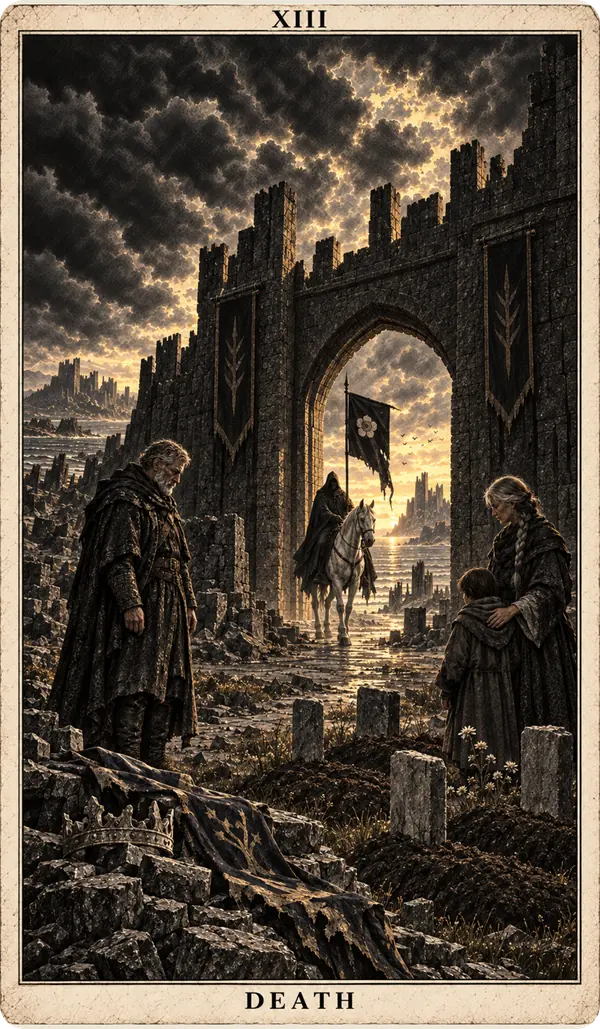 Four HorsemenDeathAllow an ending to be real; release a claim so another form of life can begin.
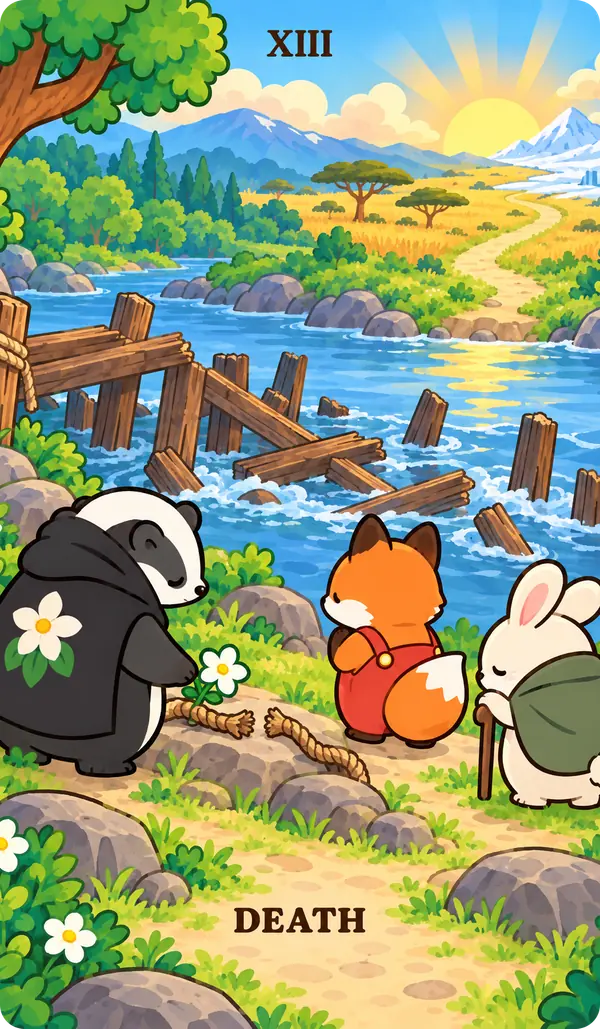 Four TrailsDeathEndings, release, transformation.
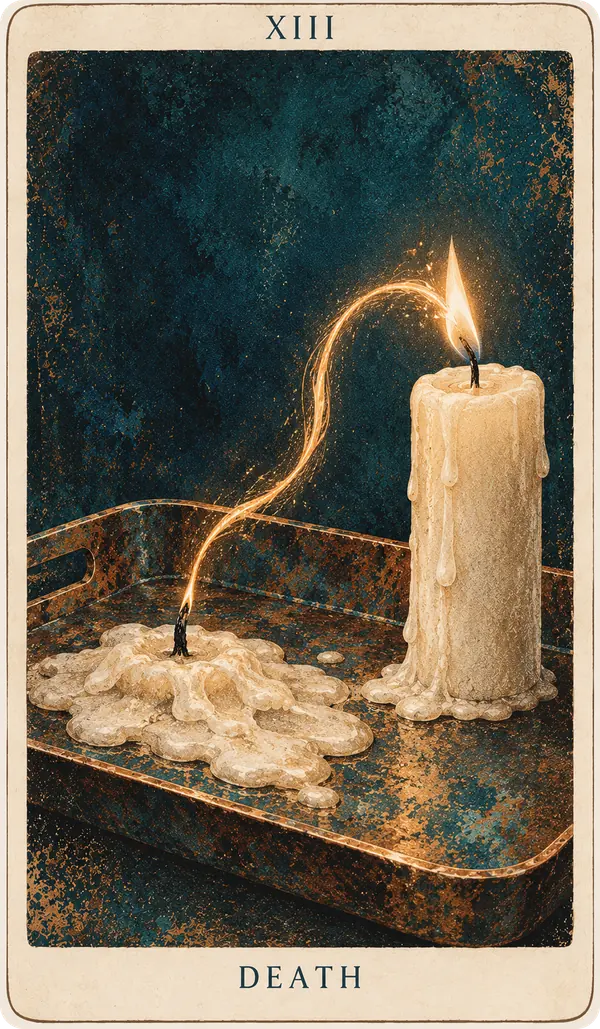 Living ThresholdDeathThe last warmth leaves spent wax and kindles a separate source.
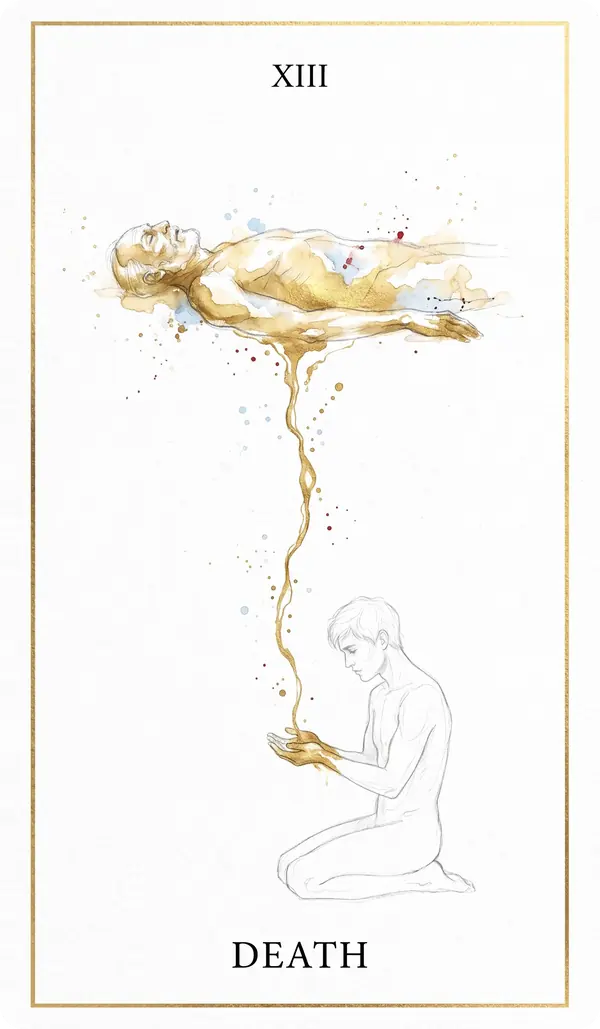 Colour of PowerDeathAn ending that frees what you hold, so it can pass to new hands.
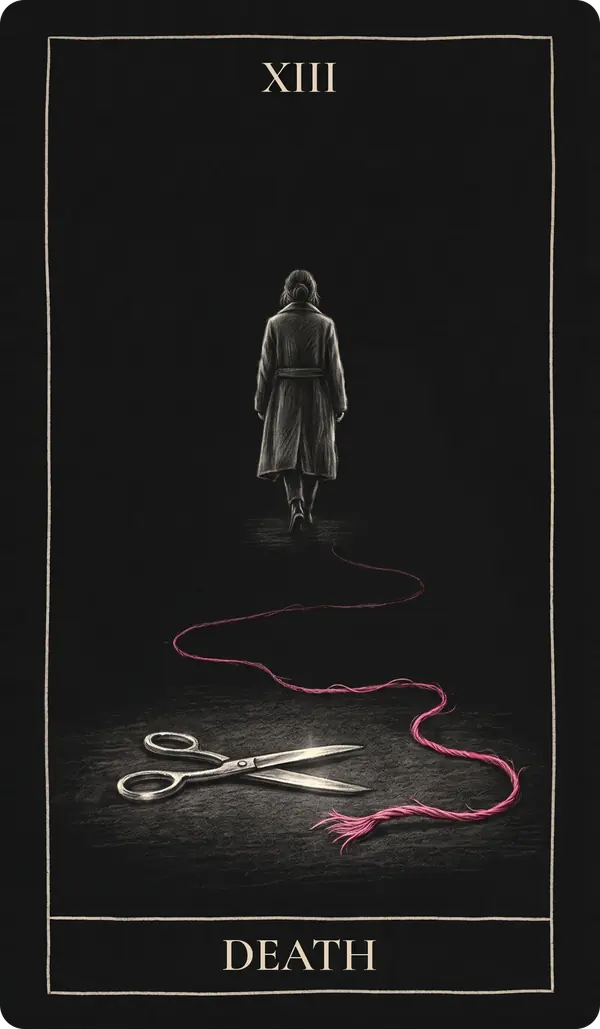 BoundDeathThe tie is dead; the cut was right. Let memory thin.
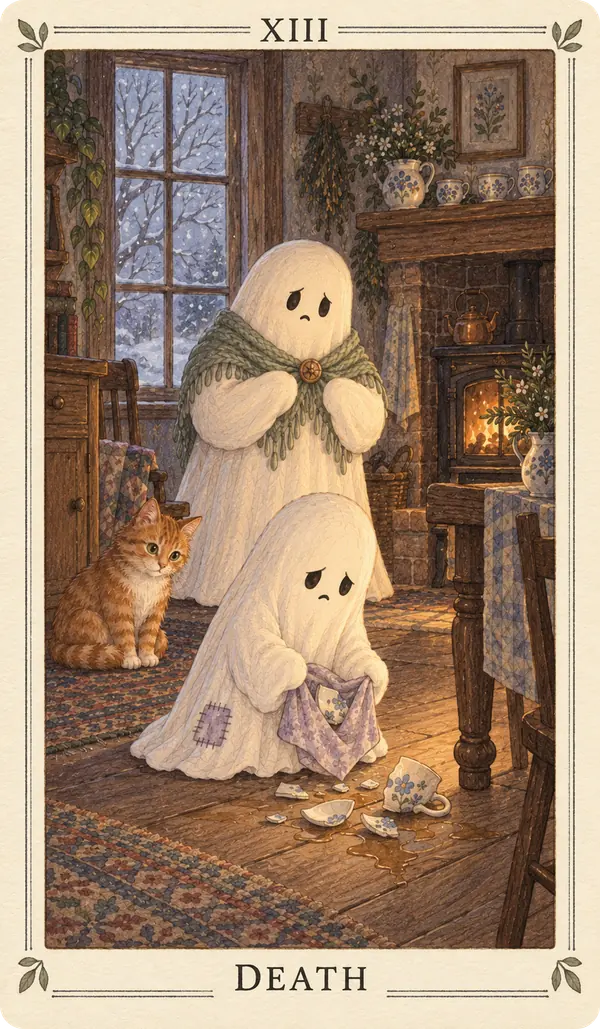 Cozy HauntDeathAn ending clears room for a changed identity.
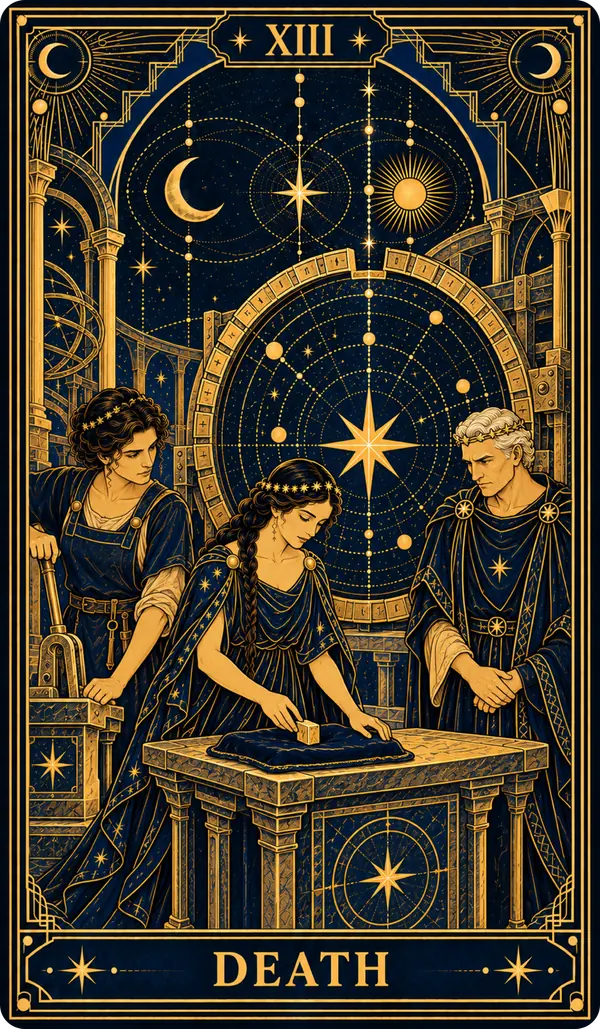 Celestial Night SkyDeathA worn form set aside.
Where it appears
Questions about this card
Is Death a yes or no card in love?
Death leans no in City of Windows, upright and reversed, when the question asks for an old form to carry on as it was. Upright, that form may already have ended. Reversed, the ending is dragging on while the old arrangement is kept going, and the answer waits until the ending is named. A new question about what comes next can get a different answer.
Does Death mean a breakup?
It can. Death points to the end of an old way of being together, and in City of Windows that end is a real move: Mira carries out a box, leaves the shared key on the shelf and keeps her own key on its red cord. The card can also mean the end of a role inside a relationship that continues. Name one part of the old arrangement that has changed for good.
What does Death mean reversed in love?
Reversed, Death points to a breakup that drags on, or to living inside a relationship whose form may already have ended. The fear of empty space can feel very like love. Ask what you are holding on to: the person, or a familiar picture of your life with them. Writing down what you would miss often shows which one it is.