Death
Death in Familia · Major Arcana XIII
Family lineIn short
What is spent is cut in time, and the room it leaves goes to new growth.
Reversed
The wrong thing is cut, or nothing is: a stuck past goes on drawing on everything that lives.
- Major Arcana
- 13
- The Passage into Nav
- a timely ending
- change of generation
- space set free
Upright
Death is the Passage into Nav, the change of generation, and here it is a gardener and not a killer. Upright the spent branch is cut on time, and its strength goes to the new shoot beside it, which the cut does not touch.
The old gives way without clinging. In everyday life what has to end ends honestly: a position, a relationship, a way of life.
Ending a pattern is not the same as ending a bond, and the card does not choose which.
A question to sit with
“What in your life has done its work and is ready to give way?”
One step
Name one specific thing that has run its course, and nothing beyond it.
Reversed
Reversed, Death is the wrong cut, or the refusal to cut. A living branch that is still needed is taken, or a rotten one is left hanging and keeps drawing sap from the whole tree.
The change of generations is either forced and premature or, just as often, blocked by a past that has got stuck, which no one dares to let go although everyone can see it is finished.
A question to sit with
“What are you keeping alive that everyone can see is finished?”
One step
Make two short lists: what is finished, and what is still growing.
How this deck reads reversed cards
Reversed, the card is not weaker. The same strength runs the other way: blocked, sealed, or drained downward into old patterns instead of reaching the living. The red thread does not break; it carries the strength somewhere else.
In love
Something spent in love may be ready to fall away, an old habit or belief cut cleanly so that a fresh shoot has room.
- Supports
- Letting a worn pattern in the bond end with dignity.
- Watch for
- Calling every change in love an ending.
- One step
- Choose one habit in the bond that has worn thin, and drop it for a week.
A past that should have closed may be kept hanging in love, drawing sap from the present.
- Supports
- Seeing which old pattern still feeds on the bond.
- Watch for
- Cutting at the bond itself when the dry part is a habit.
- One step
- Leave one old story about love out of your next conversation with someone close.
At work
A stage of work may be closing in its proper time, the dry branch cut so its strength goes to a new shoot.
- Supports
- Clean endings of tasks or roles that are spent.
- Watch for
- Dragging out a farewell to work that has finished.
- One step
- Close one finished task properly this week, with a short note of what it taught you.
A living project may be cut too soon, or a rotten one left hanging and drawing on everything else.
- Supports
- Telling what still lives from what only lingers.
- Watch for
- Keeping a spent task going out of fear of the gap.
- One step
- Pause one task that only lingers for a week, and see what changes.
The choice may be about what to cut, the dry branch marked with an old sign while the unmarked shoot below stays whole.
- Supports
- Telling the spent from the living before the sickle moves.
- Watch for
- Cutting near the green shoot in a hurry.
- One step
- Sort what in this choice is spent and what is still growing into two plain columns.
The cut everyone can see is due may be dodged here, or the sickle swung at the wrong branch.
- Supports
- A slower look before any cut.
- Watch for
- Cutting in panic, or not cutting at all.
- One step
- Before deciding, put in one sentence which branch you would cut and why it is spent.
An old version of you may be crumbling at the cut so that a shoot with no family sign on it can grow.
- Supports
- Letting an old self-image go.
- Watch for
- Mourning the dry branch so long that the shoot goes unseen.
- One step
- Find one belief about yourself you have outgrown, and cross it out on paper.
A past you cannot let go may be blocking you, a branch long dry that keeps hanging from the trunk.
- Supports
- Letting yourself grieve what is spent so it can fall.
- Watch for
- Holding on to an old self out of loyalty.
- One step
- Skip one habit that only lingers, once this week.
A generation may be handing over, the old giving way to the new without clinging, the line’s strength freed for a new shoot.
- Supports
- Honest transitions between generations.
- Watch for
- Drawn-out farewells that keep everyone waiting.
- One step
- Ask an elder what they would like to hand on, and listen without planning.
The line may be holding on to a past no one dares release, or cutting what is still alive, the change of generations jammed.
- Supports
- Speaking honestly about what in the family has worn out.
- Watch for
- A stuck past kept in place out of fear.
- One step
- Talk with one relative about one family custom that may have run its course.
Yes or no
YesMixedWhere something has done its work, letting it end in time opens room, and the answer favours that ending, not a wider cut.
Supports
- Something finished can be let go cleanly.
- The ending frees room and strength.
Limits
- Letting go leaves a gap for a while.
- The familiar shape is lost.
One step
Name the one thing that has run its course, and check that nothing living is attached to it.
It turns on whether the thing in question is finished or still alive, and only a careful look tells which.
Supports
- You can tell a spent branch from a living one.
- Nothing has to be cut in a hurry.
Limits
- A spent pattern may be drawing on everything else.
- A cut made too soon could take the wrong thing.
One step
Write down what you are holding on to, and ask whether it still grows or is kept only because it was handed down.
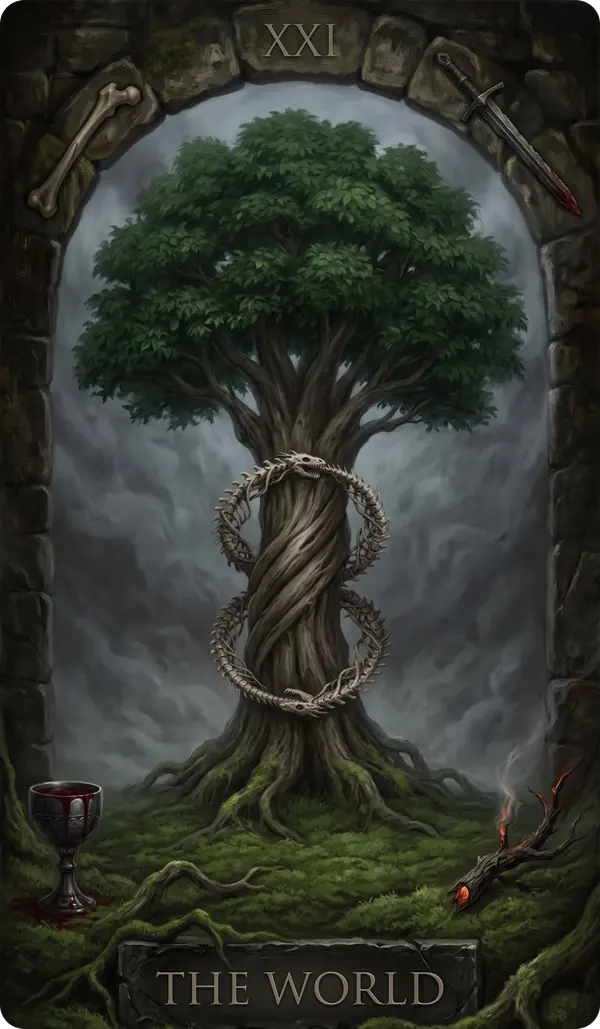
What is in the picture
A faceless hooded figure cuts through a thick dry branch of the Ancestral Tree with a curved bone sickle. An ancestral sign is carved at the cut, and the severed end crumbles into bones and dust. Lower on the trunk a fresh green shoot with no sign on it stays untouched. Bones of earlier cuts lie among the roots.
The sickle and the shoot sit close together on one trunk. The cut falls above the new growth and does not touch it.
- hooded figure
- bone sickle
- dry branch
- ancestral sign on the bark
- crumbling bones and dust
- fresh green shoot
- bones among the roots
This card in other decks
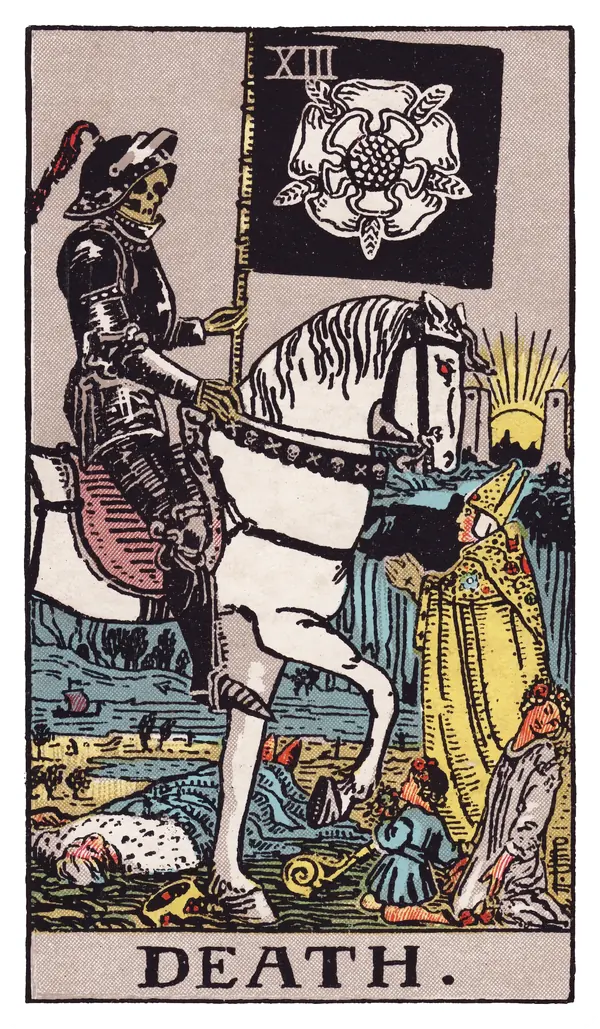 Rider–Waite–SmithDeathSomething here may have run its course, and letting it end is what gives something new room to begin.
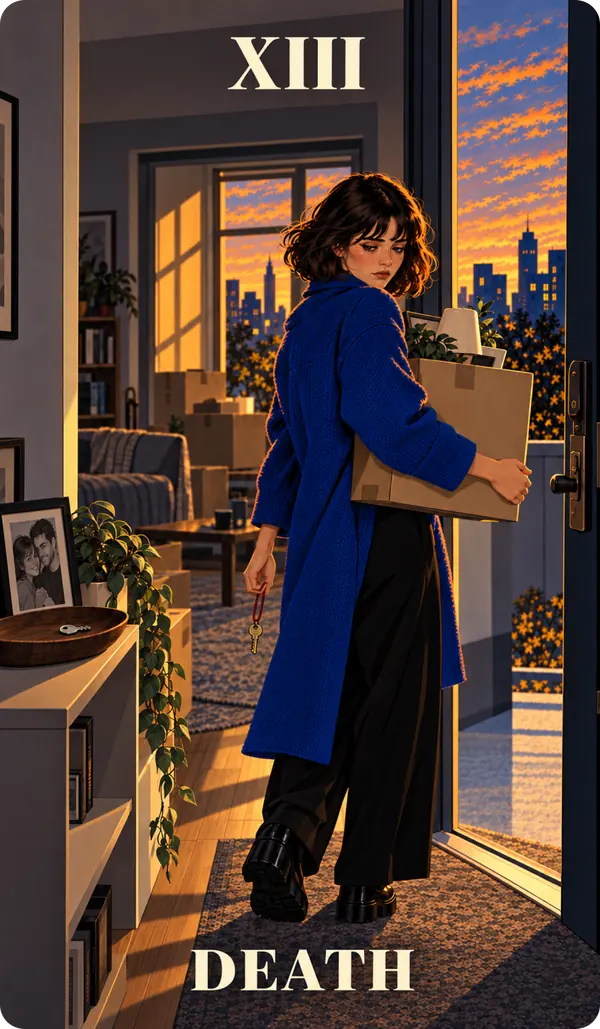 City of WindowsDeathAcknowledging the end of an old role, or of the way a relationship was set up.
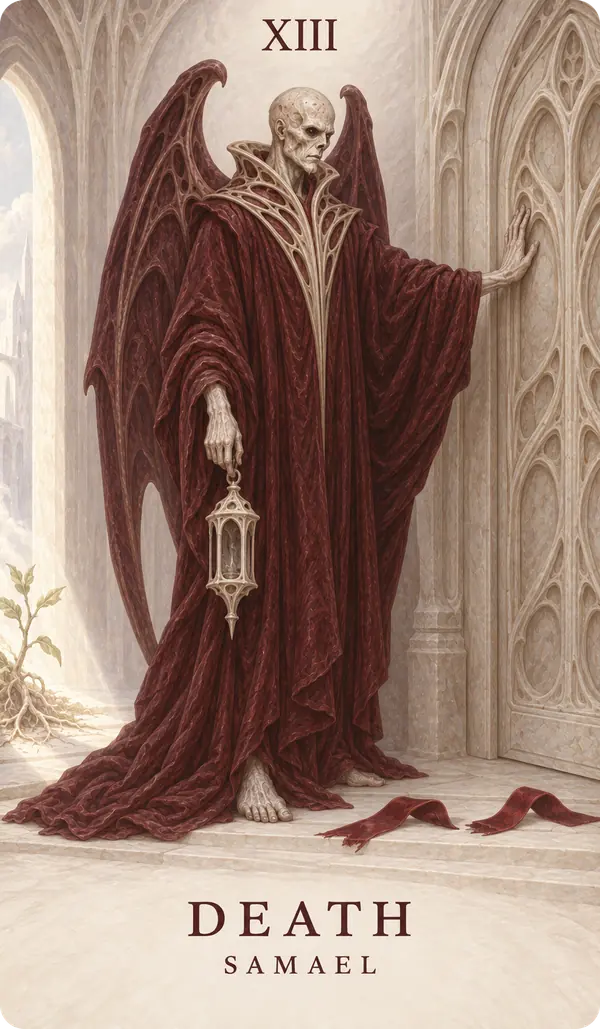 CarnalDeathAn ending that cannot be made into the old beginning.
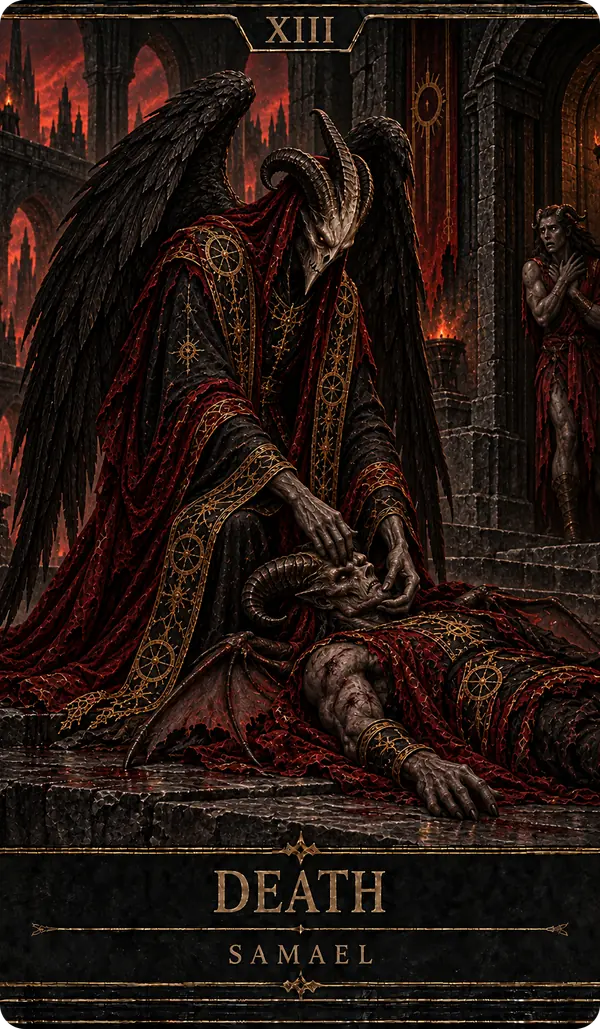 Crimson InfernoDeathRecognize an ending that cannot be negotiated away.
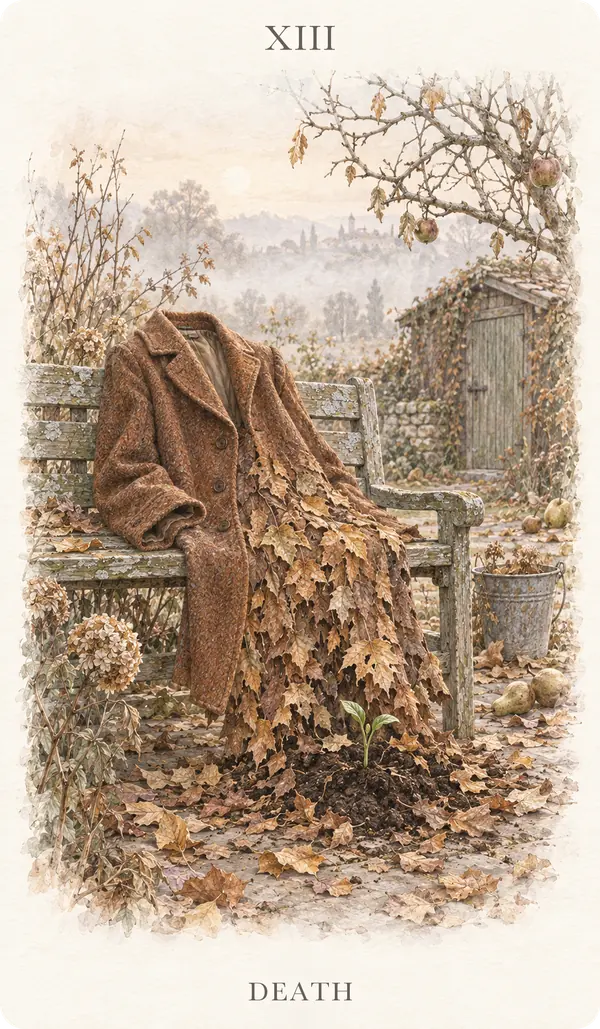 Everyday WondersDeathAn irreversible ending, release of space and a change of form.
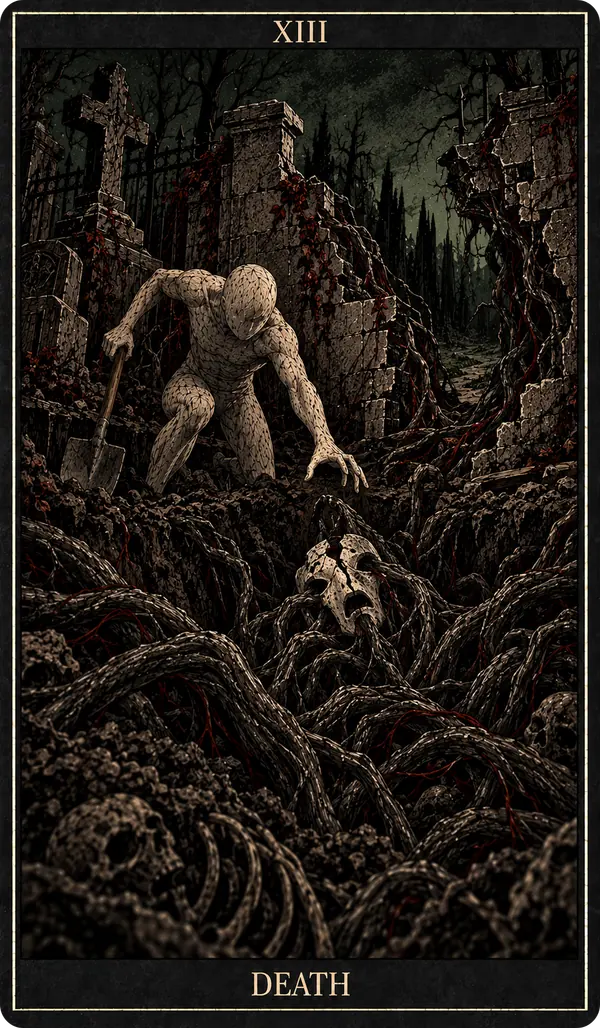 Mirror NightDeathBury an ended voice and use the opened path.
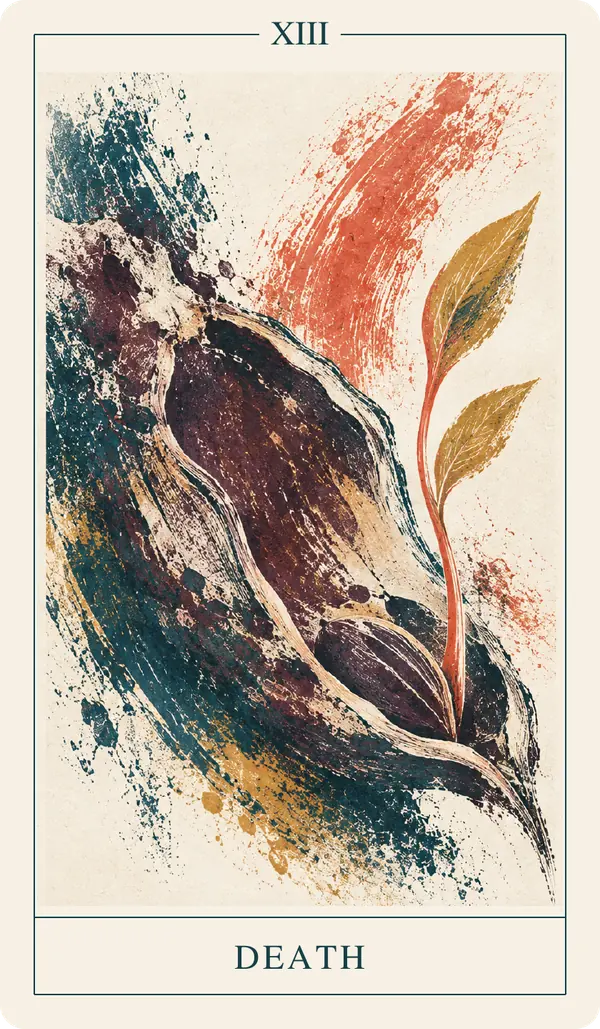 Self ContactDeathLet an ending make room without demanding immediate renewal.
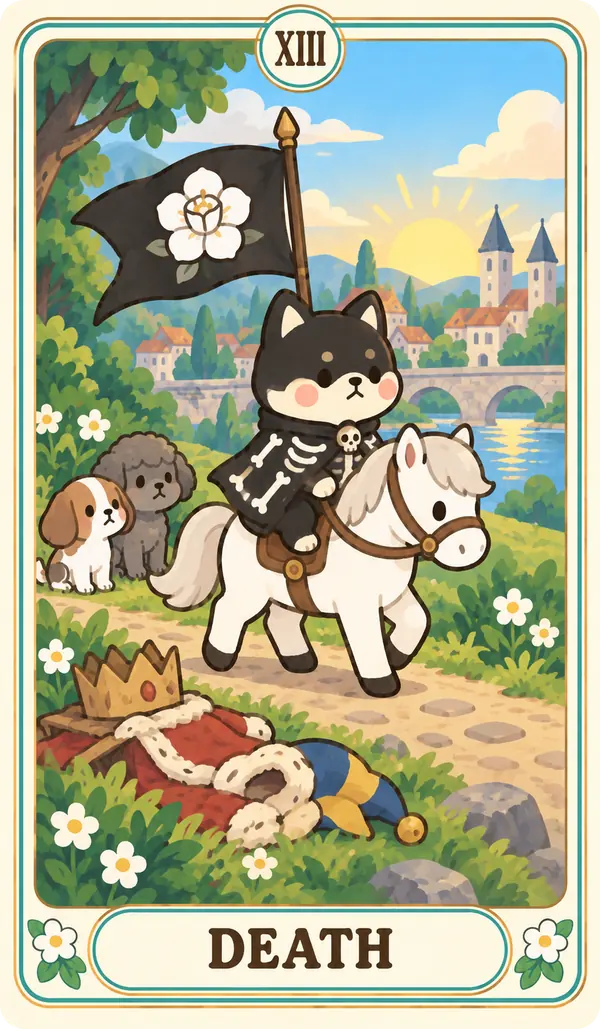 Shiba TownDeathAn ending; transition; releasing an exhausted form.
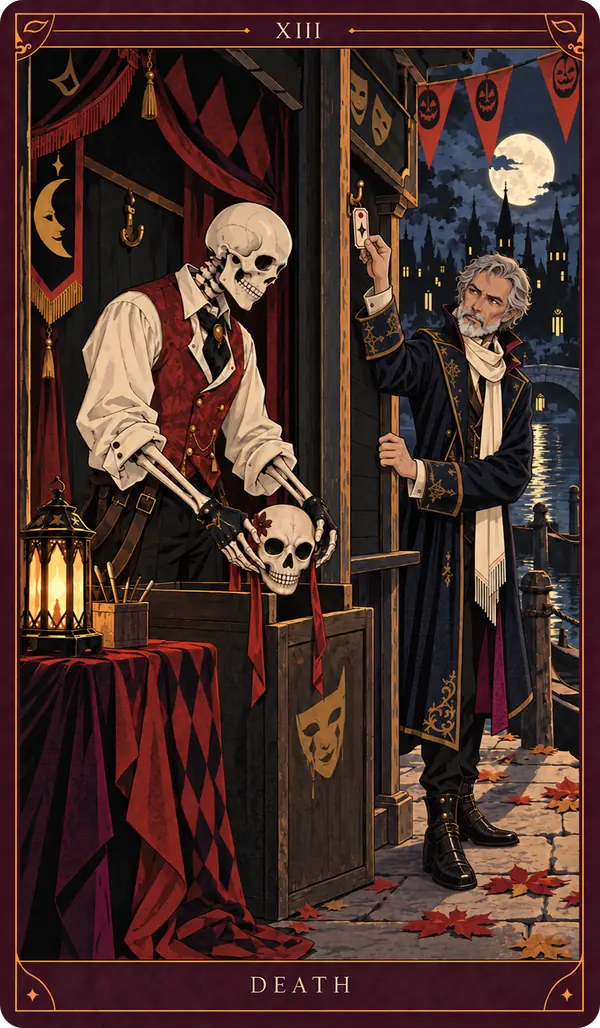 Velvet MasqueradeDeathAn ending given form, leaving room for change.
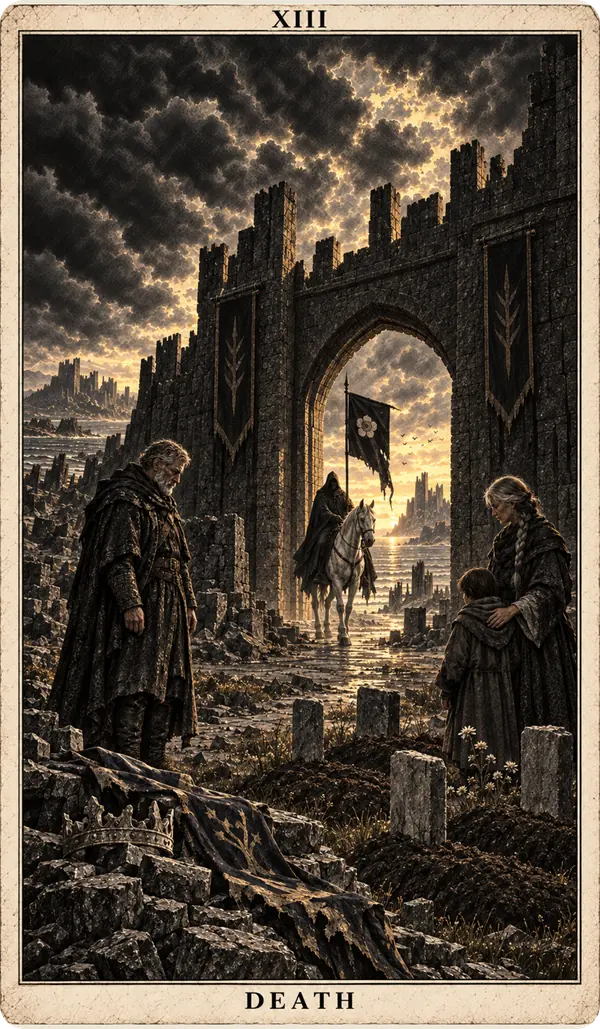 Four HorsemenDeathAllow an ending to be real; release a claim so another form of life can begin.
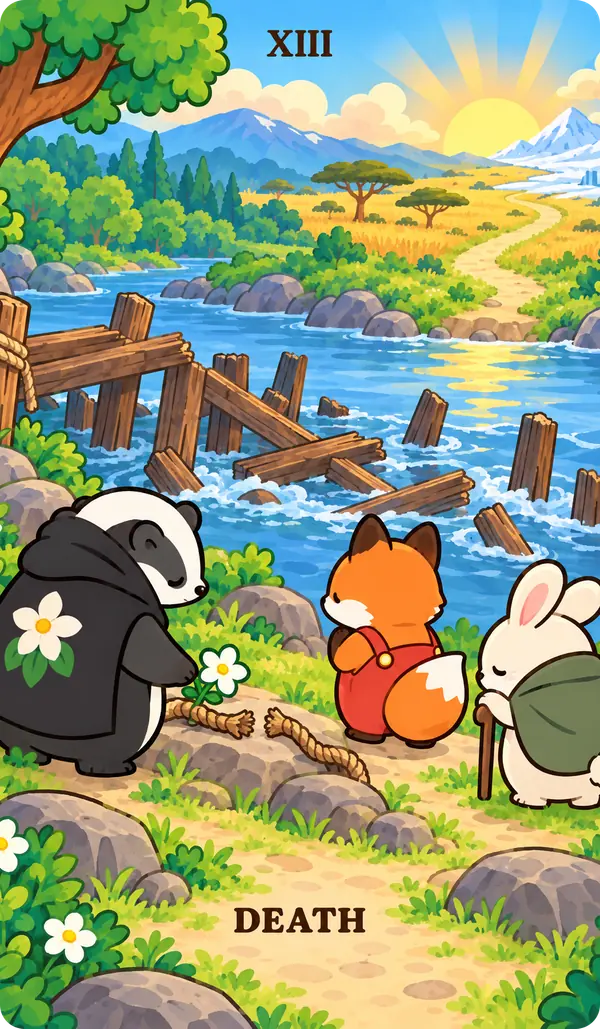 Four TrailsDeathEndings, release, transformation.
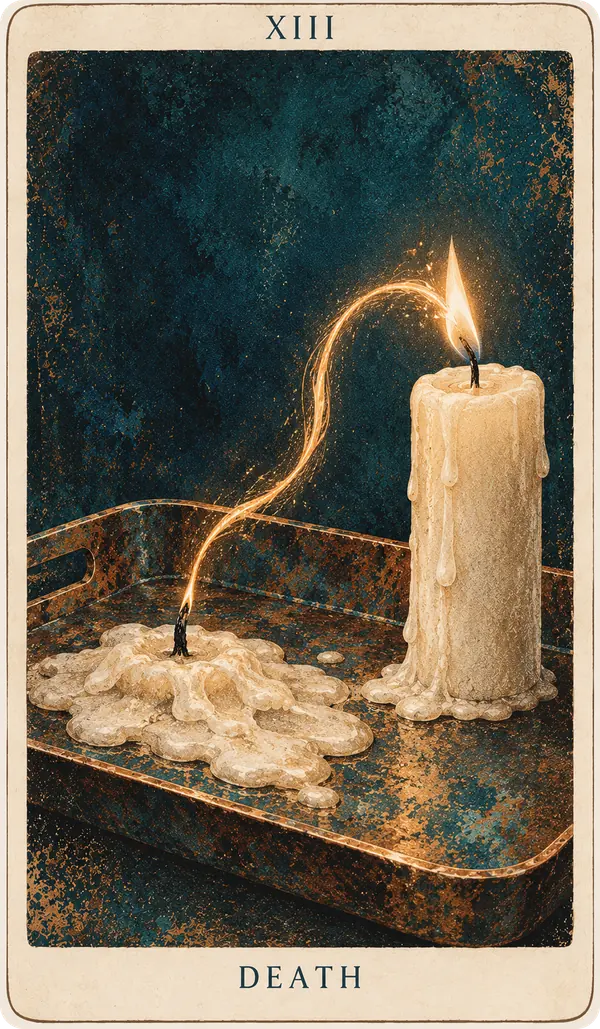 Living ThresholdDeathThe last warmth leaves spent wax and kindles a separate source.
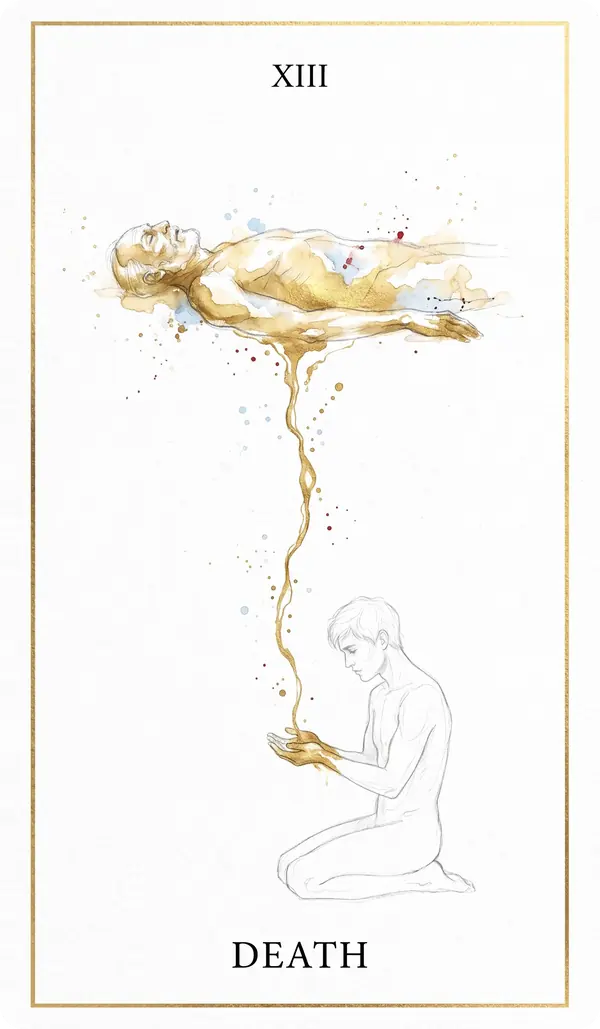 Colour of PowerDeathAn ending that frees what you hold, so it can pass to new hands.
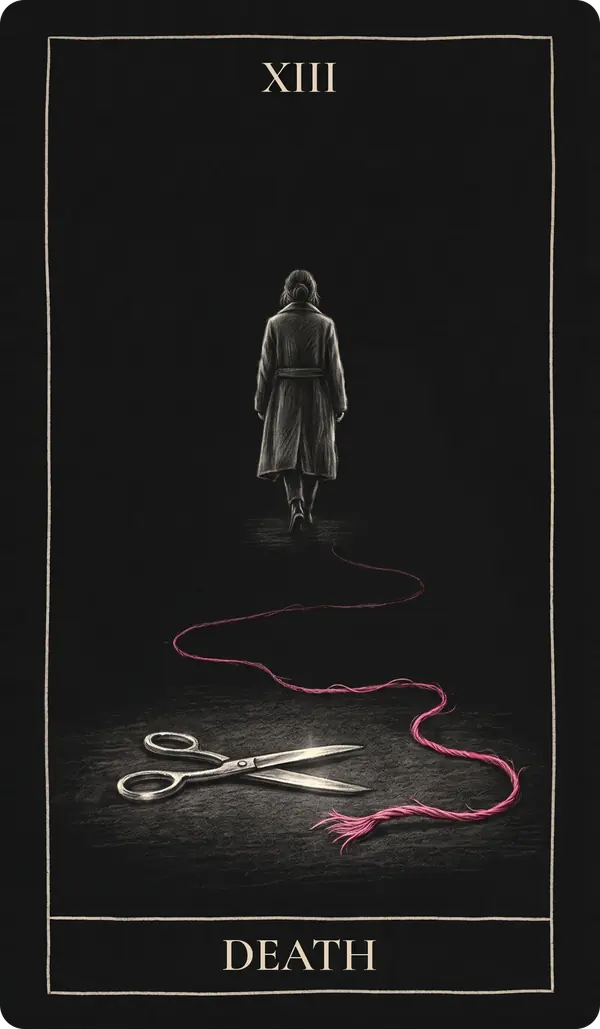 BoundDeathThe tie is dead; the cut was right. Let memory thin.
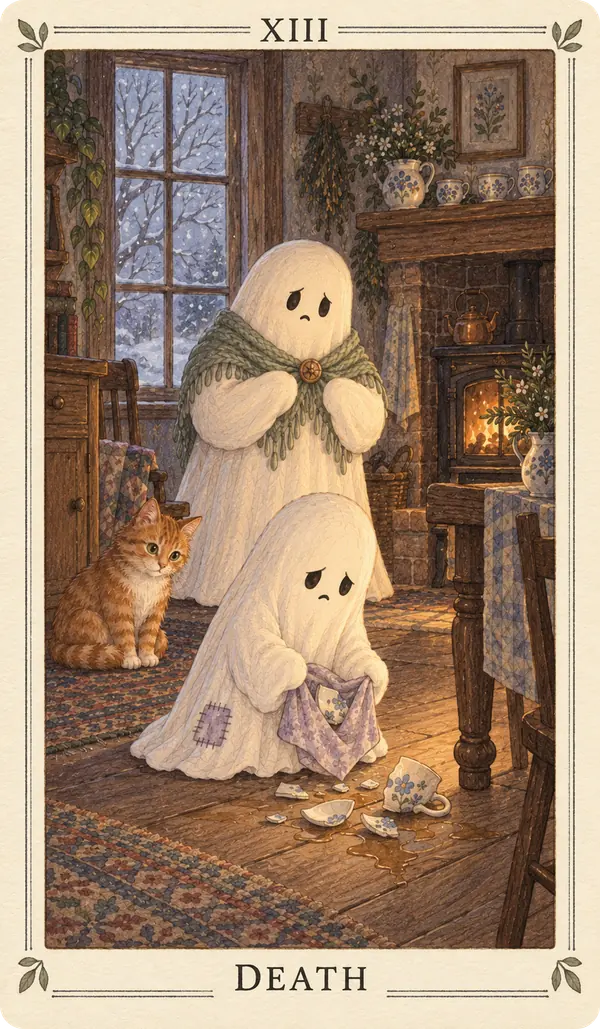 Cozy HauntDeathAn ending clears room for a changed identity.
 Celestial Night SkyDeathA worn form set aside.
Where it appears
Questions about this card
Is Death a yes or no card in Familia?
Death leans yes upright. Something has done its work, letting it end in time opens room, and the answer favours that ending, not a wider cut. Reversed, the lean is mixed. It turns on whether the thing in question is finished or still alive, and only a careful look at it tells you which.
What does Death mean for family?
In family terms, Death upright is a change of generation arriving in its time: roles pass on, and the room left behind goes to new growth. A change in roles is not the loss of a person. Reversed, the family holds on to a stage everyone can see has passed, or cuts the wrong thing. Releasing a pattern and cutting off a person are different acts, and the card keeps them apart.
Does the Death card mean a death in the family?
In Familia, Death is the passage of what is spent. It stands for a timely ending, a change of generation and room set free for growth, and it points to a stage or pattern that has finished its work. Reversed, it shows a past that will not let go, or the wrong thing cut. If health is what worries you, a doctor is the one to ask.