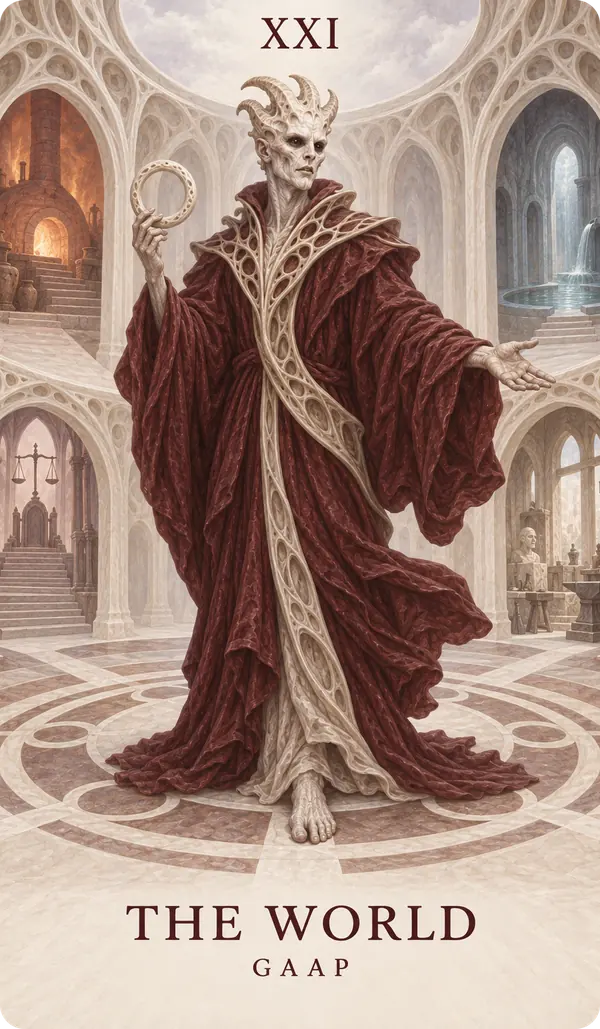
Death
Death in Carnal · Major Arcana XIII
ChoiceIn short
An ending that cannot be made into the old beginning.
Reversed
Clinging and premature renewal can both postpone grief.
- Major Arcana
- XIII
- The Closer of Doors
- an ending
- what cannot return
- releasing the old form
Upright
Samael, the angel of death in the Zohar, holds a closed bone door shut with one long pale hand and carries a dim lantern in the other. He does not let what has ended walk back through, and behind him a second arch lets light fall on a small plant that has taken root.
Acknowledge the ending and stop making it look alive: space becomes usable only once the ending is allowed to be real.
A question to sit with
“What am I maintaining only because I have not named its ending?”
One step
Write down one thing you are still maintaining after its time, and name its ending to yourself.
Reversed
Samael’s hand stays pressed to the door, but reversed, the ending is dodged in two ways: by clinging to the old room, or by hurrying toward the lit arch before grief has had its time.
A necessary ending does not require every remaining connection to be destroyed.
A question to sit with
“What grief am I putting off, by clinging on or by rushing to start over?”
One step
Give the loss a quiet half hour before you plan anything new, and keep the ties that still matter.
How this deck reads reversed cards
Reversed, the gesture turns back on itself: the hand that should let go holds on, the cup overflows, the bargain slips out of sight, or a weight is finally set down. It can mean an obstacle, an excess, a process gone inward or a release, and it is not always the worse outcome. The price is still there, only paid differently.
In love
Samael carries a dim lantern to the closed door and does not open it. Something in a bond may be ending, and its old form may not come back.
- Supports
- Honesty about which door is closing.
- Watch for
- Working to keep something only apparently alive.
- One step
- Name to yourself one part of the bond that belongs to the past.
He waits at the door without hurrying anyone. In a bond, grief may be held off by gripping the door or by rushing past it into something new.
- Supports
- Time to mourn.
- Watch for
- Tearing down every tie because one door is shut.
- One step
- Write down which connections you want to keep, whatever else changes.
At work
Samael closes the door on work that is finished. A role, a project or a way of working may be reaching its end.
- Supports
- Clearing space on the threshold.
- Watch for
- Propping up what no longer works.
- One step
- Write down one task you keep doing only out of habit.
The spirit lets the torn cloth lie on the threshold, a mark that something ended. An ending at work may be denied, or stepped over too quickly.
- Supports
- Letting a loss register.
- Watch for
- Burning bridges on the way out.
- One step
- Keep one good working connection while something else closes.
The choice may be to admit an ending more than to pick a new start. Samael keeps the door shut so the room behind it can be used; let the old option close first.
- Supports
- Naming the door that is closing.
- Watch for
- Trying to make the old beginning happen again.
- One step
- Mark the option that only pretends the old thing is still alive.
Samael wants the ending admitted before anything new is let in. A choice may be driven by fear of loss, or by haste to fill the doorway with something new.
- Supports
- Patience with grief.
- Watch for
- Deciding before the loss has been felt.
- One step
- Delay one decision until you have named what you are losing.
Growth may begin where something old is allowed to end, the way light through another arch reaches a small rooted plant.
- Supports
- Room for new roots.
- Watch for
- Carrying a finished habit through the door with you.
- One step
- Pause one habit for a week and see what the space holds.
Growth may wait on grief that has not been given room, the lantern dim and the door half held.
- Supports
- Mourning at its own pace.
- Watch for
- Covering loss with busyness.
- One step
- Set aside a short, quiet time to feel what has gone.
A family arrangement may have run its course behind a quiet door, and the angel’s hand keeps that door from swinging open again.
- Supports
- Naming what has changed.
- Watch for
- Keeping up an old form for appearances.
- One step
- Say aloud to yourself one family habit that no longer fits.
The spirit ends only what has ended, not everything around it. A family may be gripping an old form, or tearing up everything at once.
- Supports
- Keeping the ties that still hold.
- Watch for
- Cutting everyone off to escape one loss.
- One step
- Keep in touch with one family member while something else changes.
Yes or no
NoMixedThe old beginning cannot return, so the answer leans no to restoring it, whatever grows after.
Supports
- Space may open once the ending is admitted.
- Something new may already be rooting in other light.
Limits
- The old form cannot come back as it was.
- Grief may come first.
One step
Ask whether you want the old thing back, or something that can grow after it.
An ending is being postponed, so the answer is mixed: some ties can stay, the old form cannot.
Supports
- Not every connection has to be lost with the ending.
- Grief given room can loosen its hold.
Limits
- Clinging may be keeping an old form going.
- A new start may be rushed to avoid the loss.
One step
Look at what you are keeping alive, and whether it is still alive at all.
What is in the picture
Samael presses a long pale hand against a closed bone door. His other hand carries a lantern with a dim interior; two torn strips of burgundy cloth lie across the threshold.
Behind the winged figure, light enters through another arch and reaches a small rooted plant.
- closed bone door
- long pale hand
- dim lantern
- two torn strips of burgundy cloth
- light through another arch
- small rooted plant
This card in other decks
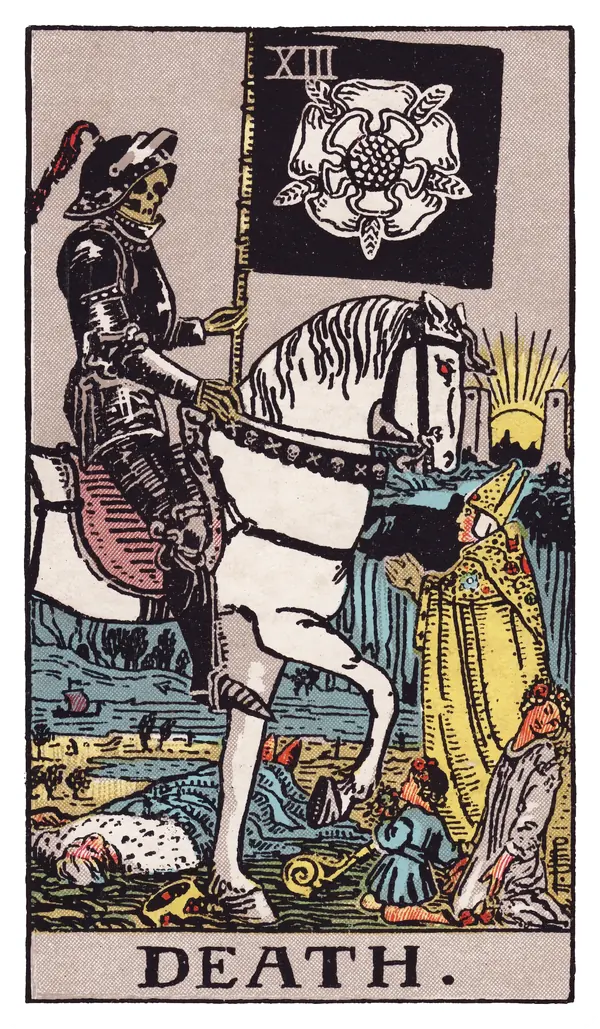 Rider–Waite–SmithDeathSomething here may have run its course, and letting it end is what gives something new room to begin.
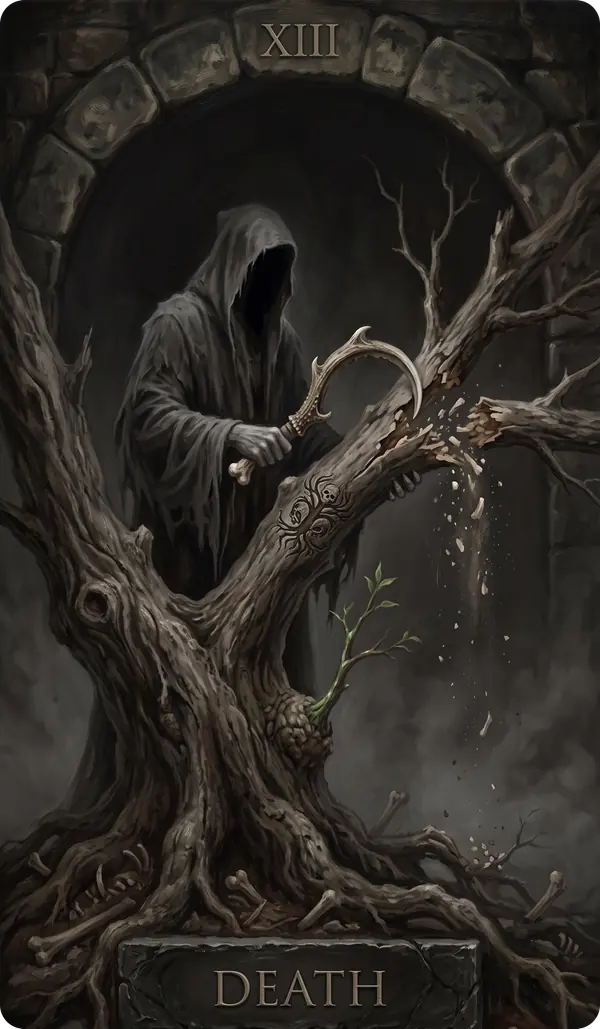 FamiliaDeathWhat is spent is cut in time, and the room it leaves goes to new growth.
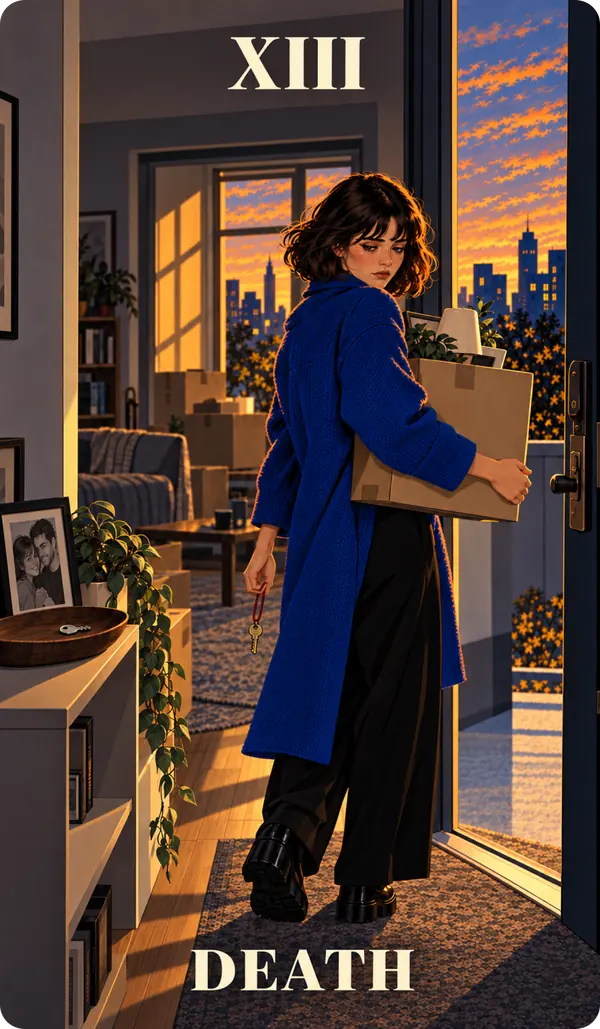 City of WindowsDeathAcknowledging the end of an old role, or of the way a relationship was set up.
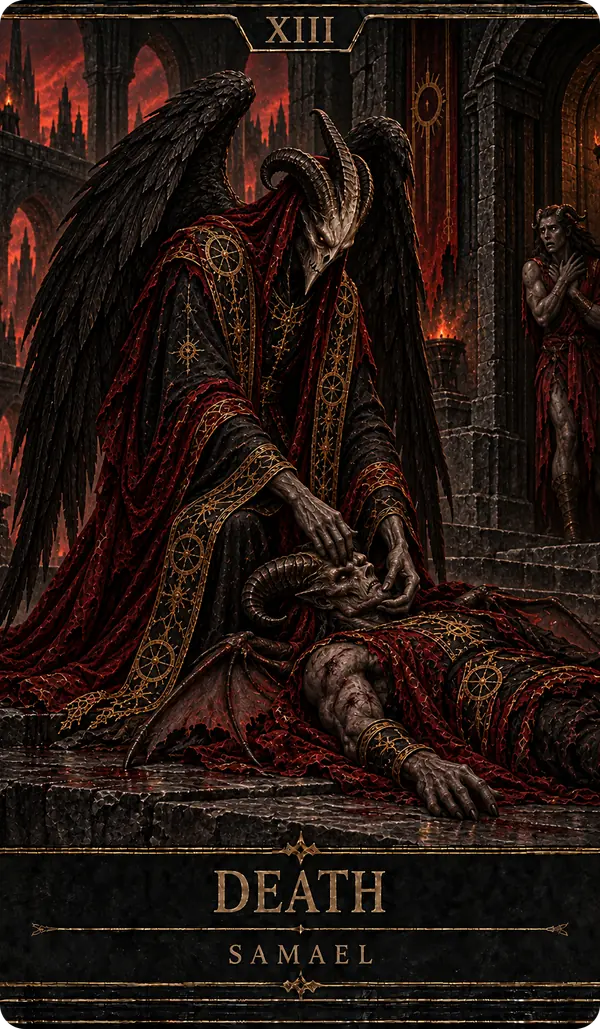 Crimson InfernoDeathRecognize an ending that cannot be negotiated away.
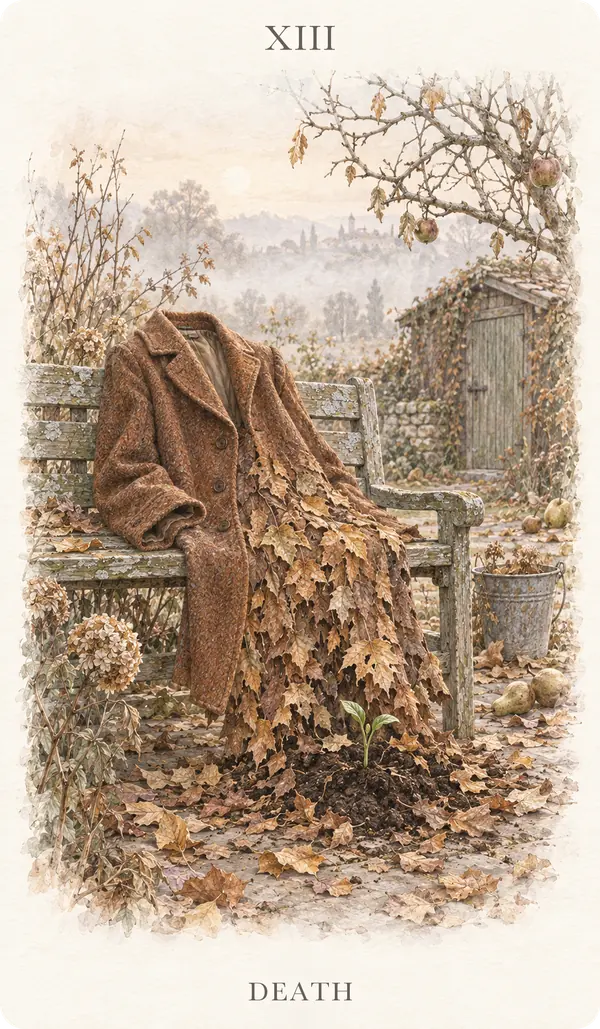 Everyday WondersDeathAn irreversible ending, release of space and a change of form.
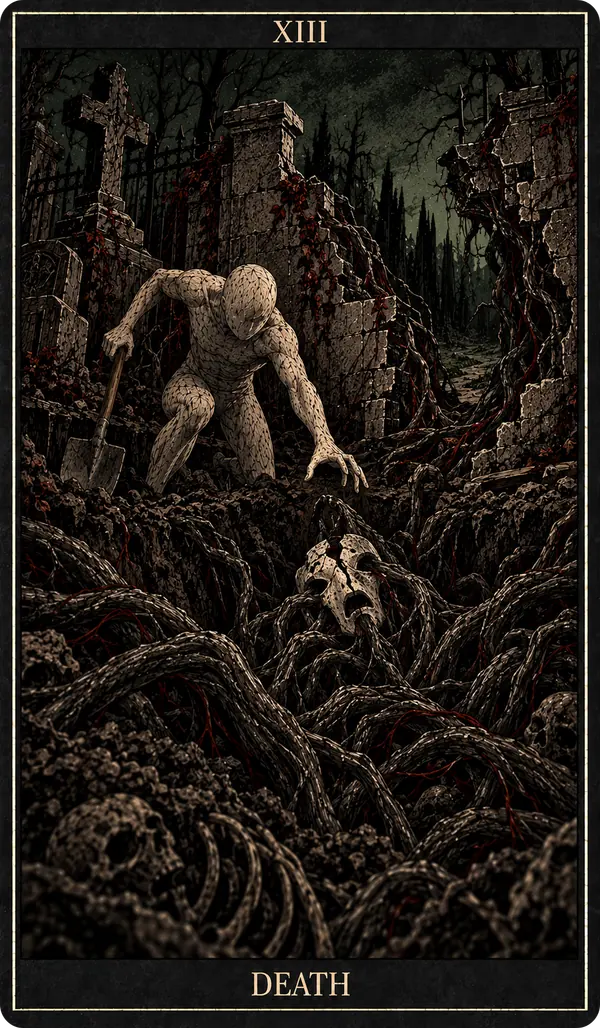 Mirror NightDeathBury an ended voice and use the opened path.
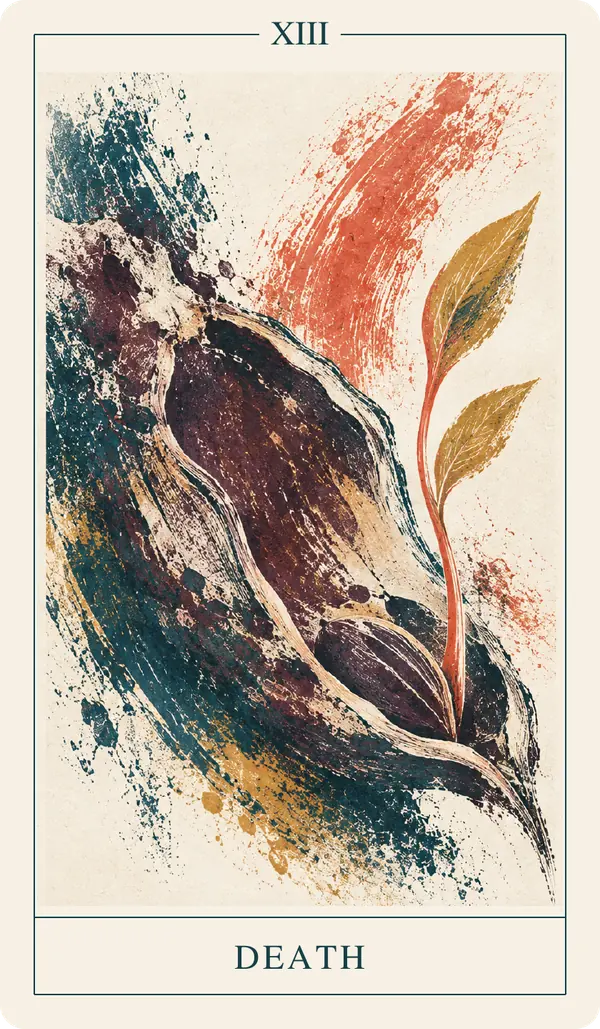 Self ContactDeathLet an ending make room without demanding immediate renewal.
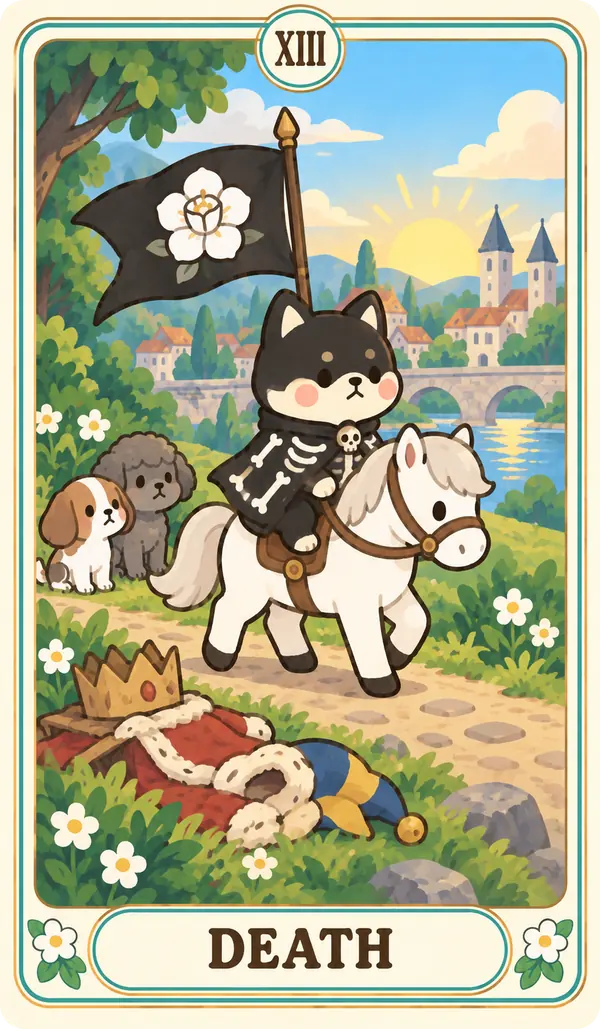 Shiba TownDeathAn ending; transition; releasing an exhausted form.
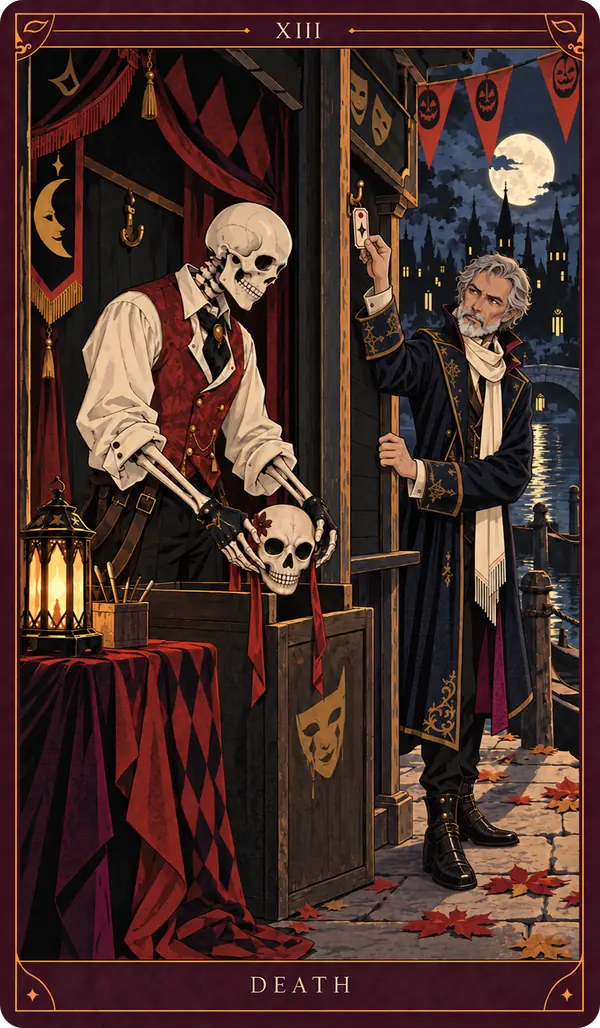 Velvet MasqueradeDeathAn ending given form, leaving room for change.
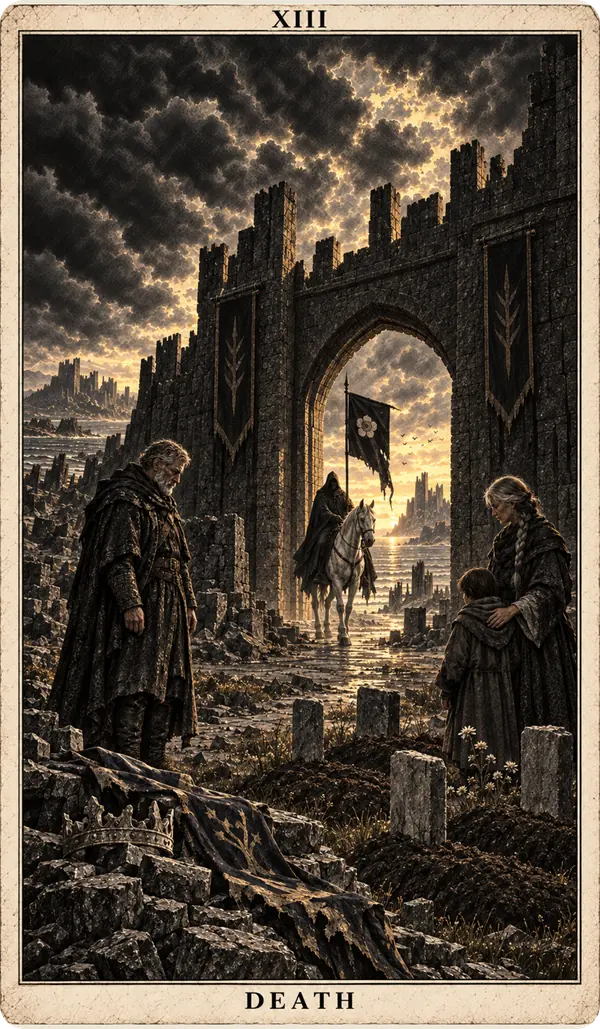 Four HorsemenDeathAllow an ending to be real; release a claim so another form of life can begin.
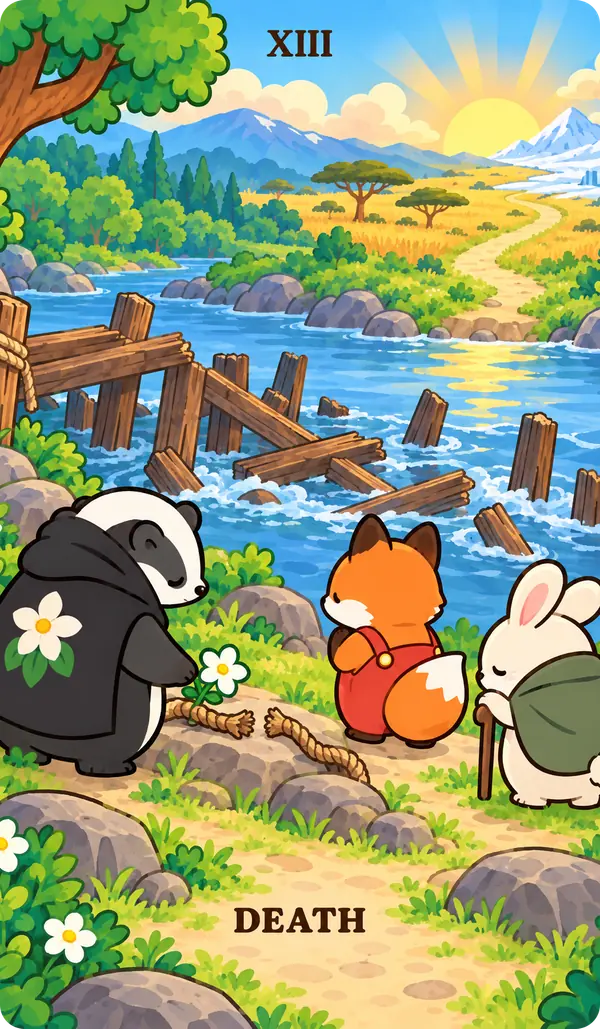 Four TrailsDeathEndings, release, transformation.
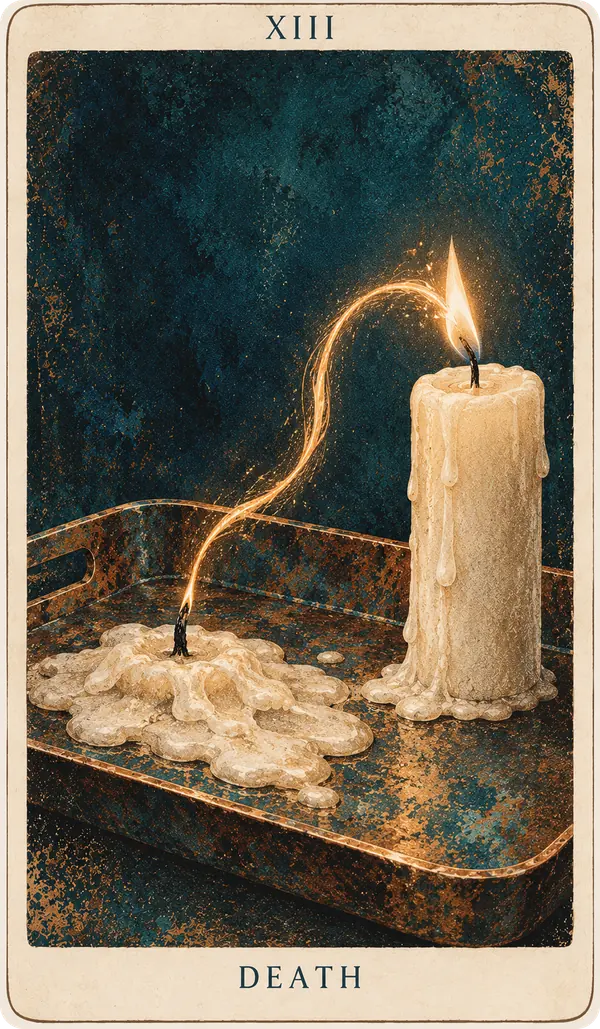 Living ThresholdDeathThe last warmth leaves spent wax and kindles a separate source.
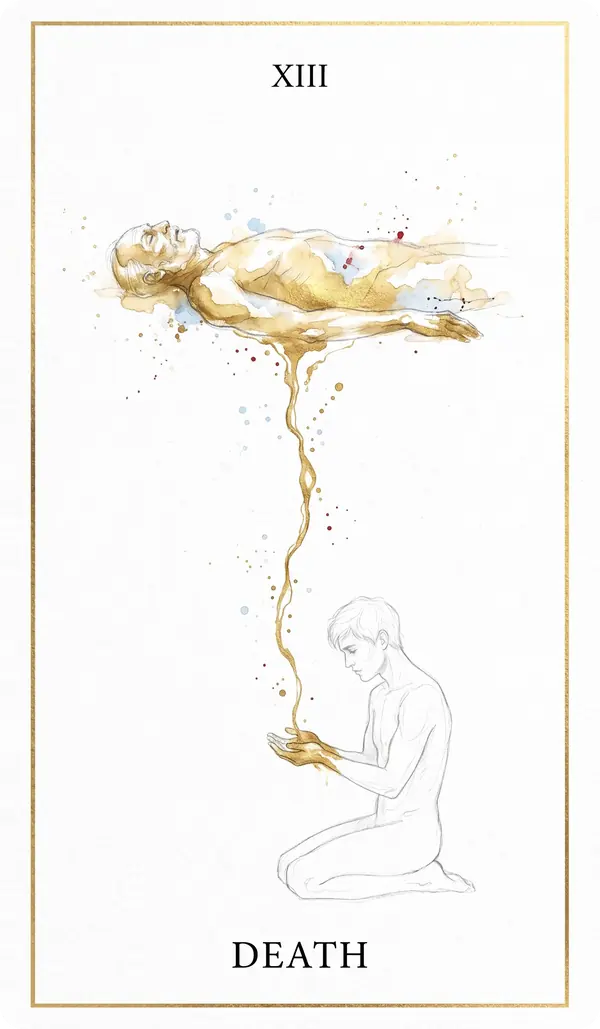 Colour of PowerDeathAn ending that frees what you hold, so it can pass to new hands.
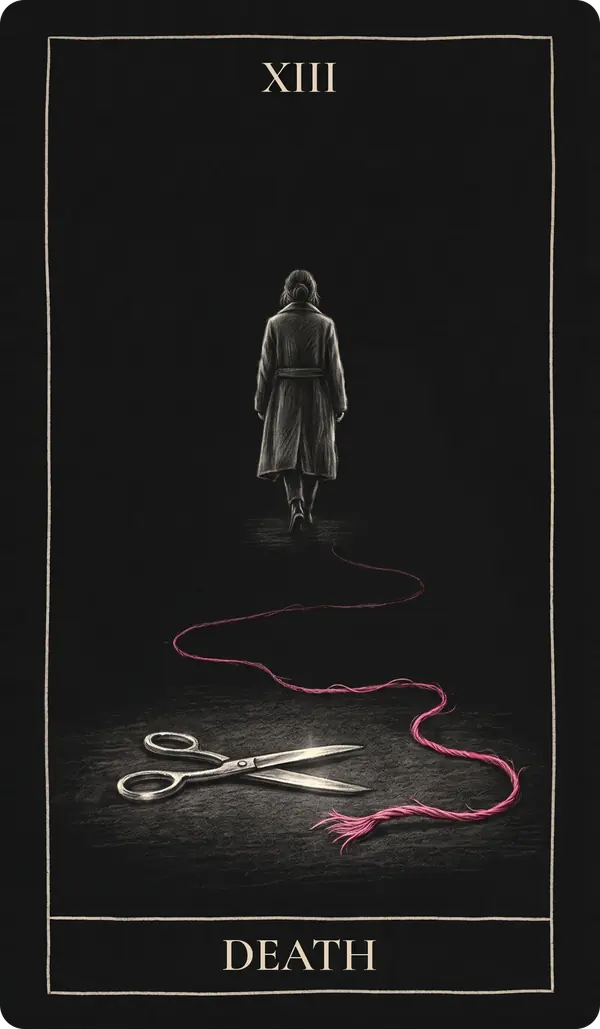 BoundDeathThe tie is dead; the cut was right. Let memory thin.
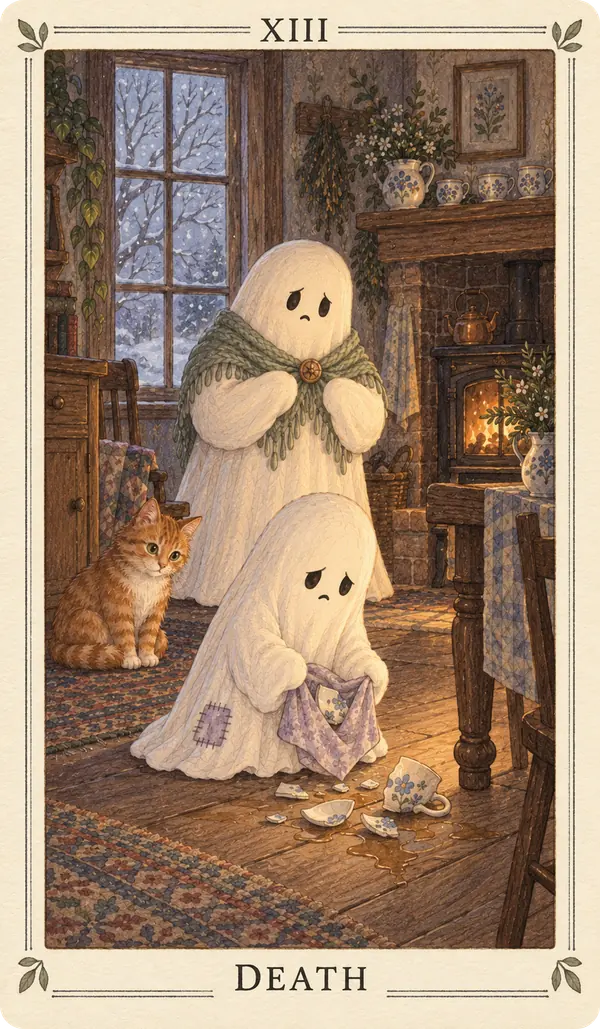 Cozy HauntDeathAn ending clears room for a changed identity.
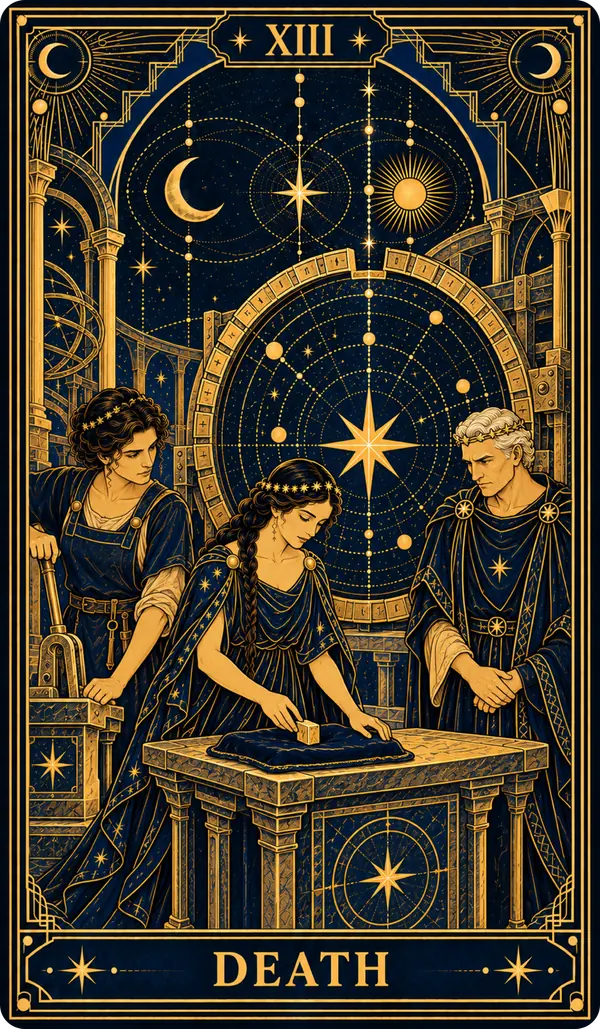 Celestial Night SkyDeathA worn form set aside.
Where it appears
Questions about this card
Is Death a yes or no card in Carnal?
For a yes or no question, Death leans no upright, meaning no to restoring the old form, whatever may grow afterwards. Reversed, it is mixed: an ending is being postponed, so some ties can stay and the old form cannot. Ask whether you want the old thing back or something that can grow after it.
What does Death mean in love?
About love, Death upright may show something in a bond closing like a door under a pale hand, its old form unlikely to return. Reversed, grief is held off by gripping the door, or by rushing into something new. Name to yourself one part of the bond that belongs to the past.
What does Death mean reversed in Carnal?
Reversed, Death is an ending put off. Grief is held back by gripping the door, or the whole bond is torn down because one door has shut. Neither is a clean closing. Write down which connections you want to keep whatever else changes, and look at what you are keeping alive and whether it still lives.