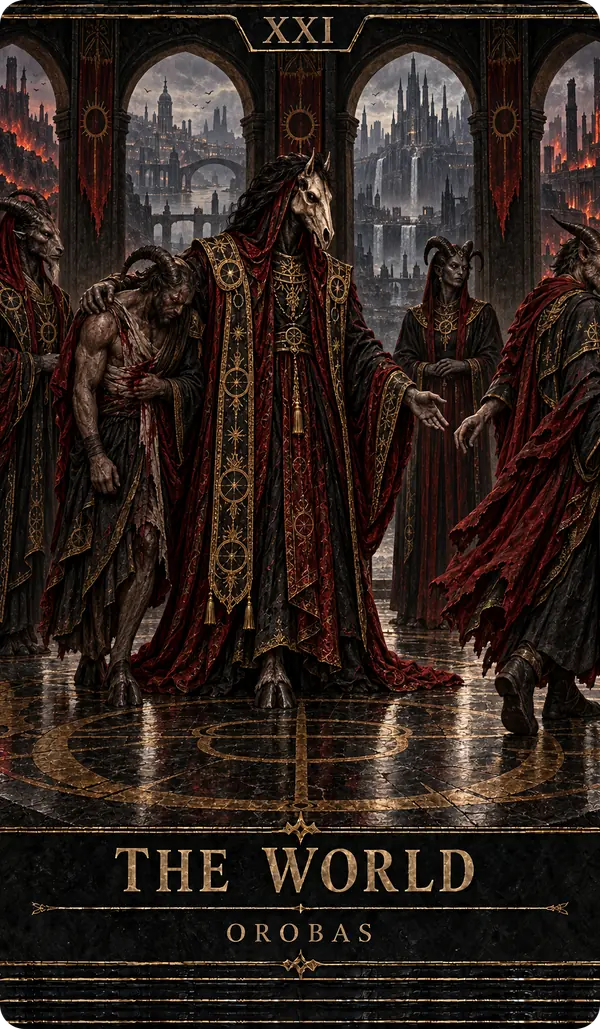
Death
Death in Crimson Inferno · Major Arcana XIII
ConflictIn short
Recognize an ending that cannot be negotiated away.
Reversed
Denial of a necessary ending, or clinging to a failed arrangement.
- Major Arcana
- XIII
- The Closer of Eyes
- ending
- transformation
- the irreversible threshold
Upright
Samael kneels beside Zagan on a prison landing and closes the dead demon’s eyes with one hand. Some losses cannot be bargained back.
Call this one by its name, and let the grief reshape the promises and plans that were built around what is gone.
A question to sit with
“What has truly ended, and what must now change because of it?”
One step
Pick one thing that may have ended and write down one commitment that was built around it.
Reversed
Denial of a necessary ending, clinging to a failed arrangement or treating every change as total annihilation.
A question to sit with
“What am I keeping alive past its end, and which small change do I fear as if it were annihilation?”
One step
Name one arrangement you keep propping up, and write what you would do with the effort it takes.
How this deck reads reversed cards
Reversed, a card may show excess, blockage, a hidden price or a hard release, and it is rarely a simple opposite. In the basalt city an upright card can already show a power through its misuse, and turning it over softens nothing in the picture. A mark may loosen or bite deeper, and the city does not promise which.
In love
Samael waits for the last breath to pass before letting go. Something in the bond may have ended, and the rest may need to change around it.
- Supports
- Grief given room.
- Watch for
- Bargaining for what cannot come back.
- One step
- Write down one habit in the relationship that belonged to an earlier stage, and talk about it.
Samael cannot restore the bargain the guards broke. In love, you may be holding to an arrangement the other side no longer keeps, or every change may feel like the end.
- Supports
- Seeing that change is not the same as loss.
- Watch for
- Propping up a form the bond has outgrown.
- One step
- Name to yourself one thing in the bond you keep pretending has not changed.
At work
A role, a project or a way of working may have come to its end.
- Supports
- Letting commitments change with it.
- Watch for
- Mourning the old job while doing the new one badly.
- One step
- List the tasks that belonged to what ended and cross off one.
A failed project or role may be kept alive past its time, or every change may be treated as the end.
- Supports
- Letting a finished project be buried.
- Watch for
- A reorganization read as the end of everything.
- One step
- Pick one project you keep alive only because stopping feels like failure, and write down why.
Samael looks at the survivor and offers nothing that would undo the death. The choice may get easier once you admit which option is no longer alive.
- Supports
- Clarity about what is gone.
- Watch for
- Negotiating with an ending.
- One step
- Cross out the option that exists only on paper.
You may be choosing to keep something that has failed, or refusing any option that means change.
- Supports
- Separating change from destruction.
- Watch for
- Picking the option that lets you avoid grief.
- One step
- Next to each option, write what would end if you took it.
Growth may come from letting grief change what you commit to.
- Supports
- Mourning without rushing.
- Watch for
- Carrying on as if nothing had ended.
- One step
- Write one sentence about an ending you may be carrying, and one about what could change because of it.
The refugee Zagan saved stands frozen in the doorway. If they never stepped past it, the loss would keep them there. You may be stuck denying an ending, or dread of change may freeze you.
- Supports
- Small changes that show change can be survived.
- Watch for
- Treating each shift as total loss.
- One step
- Change one small habit this week and notice what stays.
Samael closes the eyes on a death that also ended the group’s trust in imperial mercy. A stage of family life may have ended with a shared belief, and roles may need to change.
- Supports
- Space for everyone’s grief.
- Watch for
- Keeping the old roles out of loyalty to what was.
- One step
- Ask each person at home what has changed for them, and listen.
The family may be clinging to an arrangement that has failed, or reading every change as its undoing.
- Supports
- Plain words that something is finished.
- Watch for
- A family custom kept up to avoid mourning.
- One step
- Name one family custom that belongs to a time that has passed.
Yes or no
MixedNoIf the question is about bringing something back, the answer leans no; if it is about changing what follows, it leans yes, so it reads as mixed.
Supports
- An ending seen clearly can be grieved and built on.
- Commitments can be reshaped to fit what is left.
Limits
- What has gone cannot be negotiated back.
- Grief may need time before anything new.
One step
Ask whether your question is about something still alive or something that may already be gone.
Denial of an ending, or dread of change, may be shaping the question, so the answer leans no until you can look at what has gone.
Supports
- Admitting an ending can free the effort spent denying it.
- Change and total loss are not the same thing.
Limits
- A failed arrangement may be kept alive by force.
- Every change may feel like annihilation.
One step
Write whether you are keeping something alive or dreading any change at all.
What is in the picture
Samael kneels beside Zagan’s body on a prison landing. One hand closes the dead demon’s eyes; the other releases the slack jaw after the final breath. Zagan’s wings lie folded awkwardly beneath him, and the bruising from the guards’ beating remains visible. The adult refugee he saved stands at the doorway, unable to take another step. Samael looks at the survivor without offering to reverse what has happened.
Zagan dies after the escape bargain is broken. A genuine life and the group’s remaining belief in imperial mercy end together. No later card brings Zagan back to bodily life.
- hand closing the eyes
- body on the prison landing
- wings folded beneath the body
- refugee at the doorway
- long bone face and black hooked wings
- sun-disc banner
- burning arches
This card in other decks
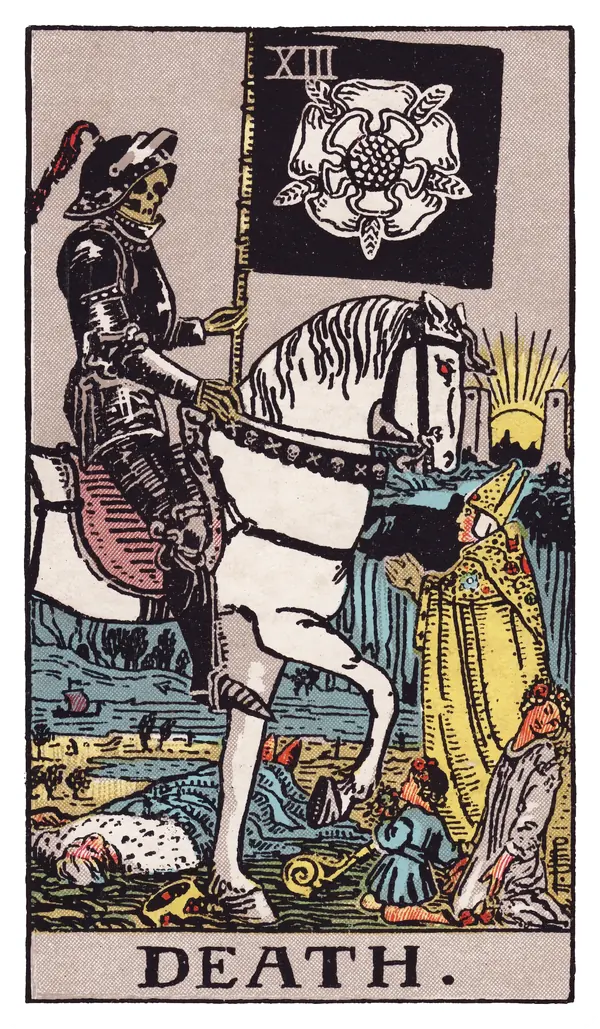 Rider–Waite–SmithDeathSomething here may have run its course, and letting it end is what gives something new room to begin.
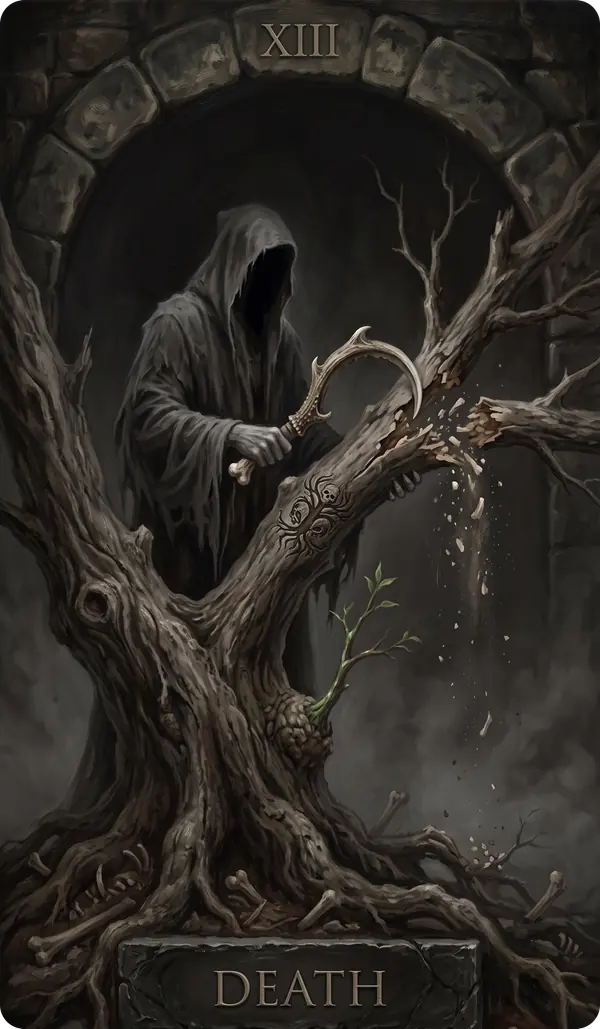 FamiliaDeathWhat is spent is cut in time, and the room it leaves goes to new growth.
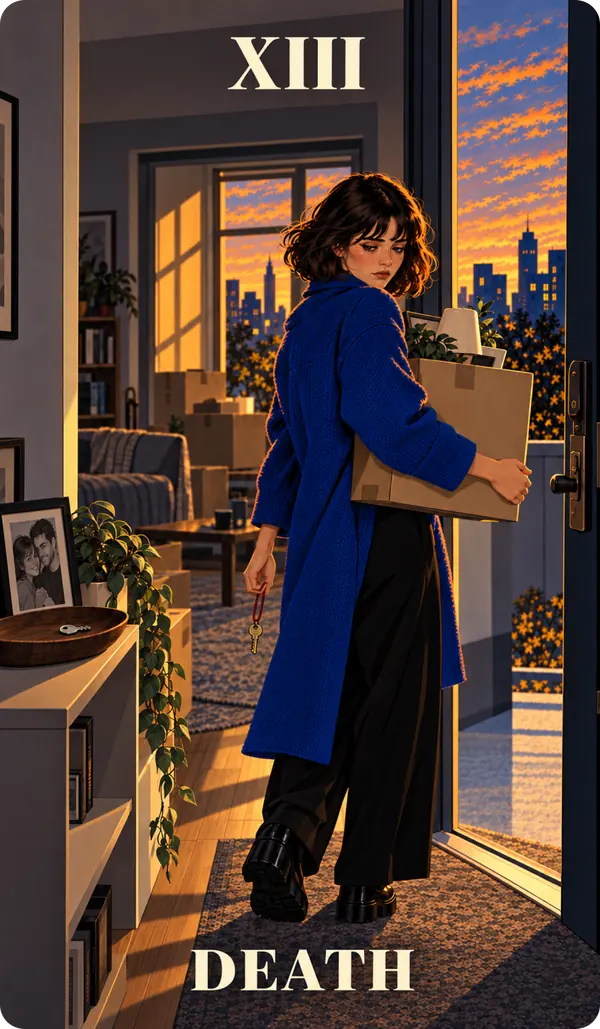 City of WindowsDeathAcknowledging the end of an old role, or of the way a relationship was set up.
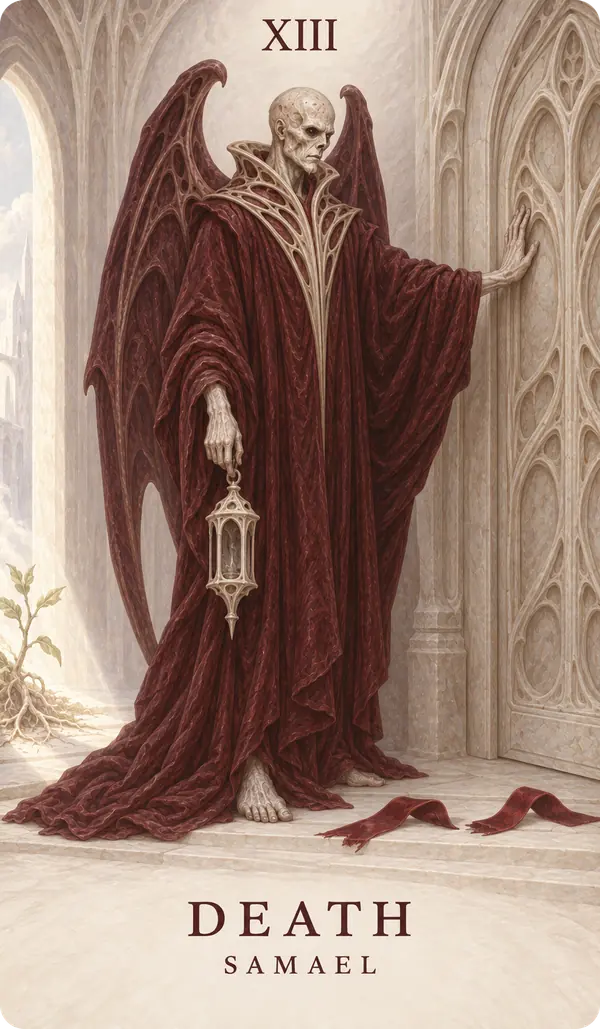 CarnalDeathAn ending that cannot be made into the old beginning.
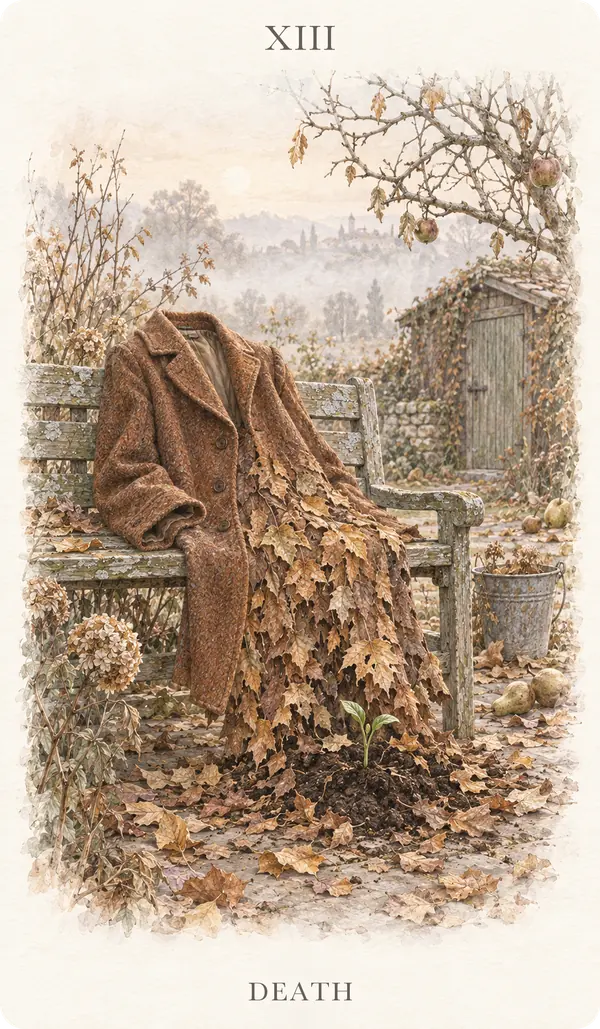 Everyday WondersDeathAn irreversible ending, release of space and a change of form.
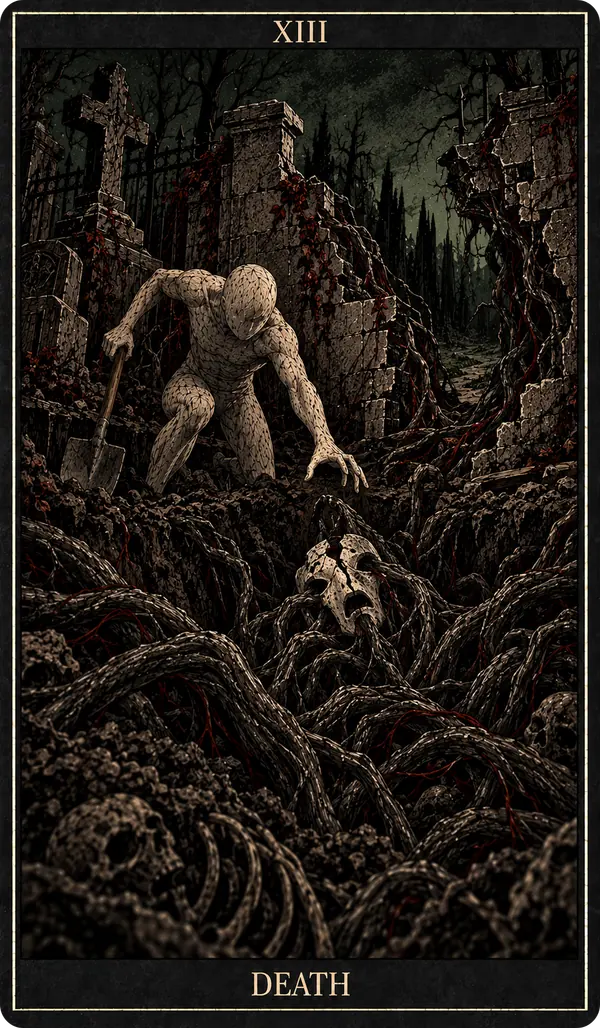 Mirror NightDeathBury an ended voice and use the opened path.
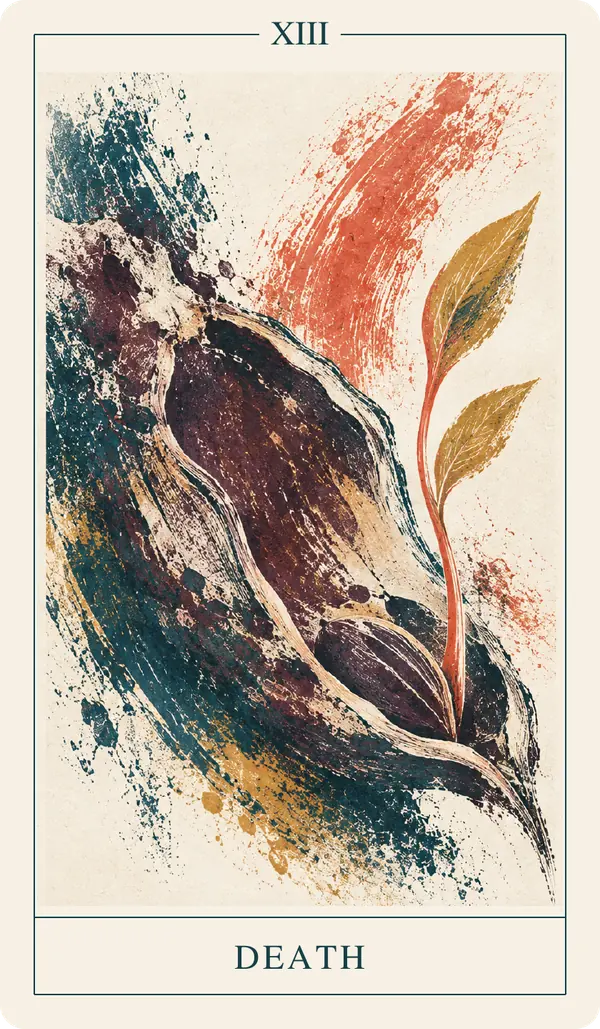 Self ContactDeathLet an ending make room without demanding immediate renewal.
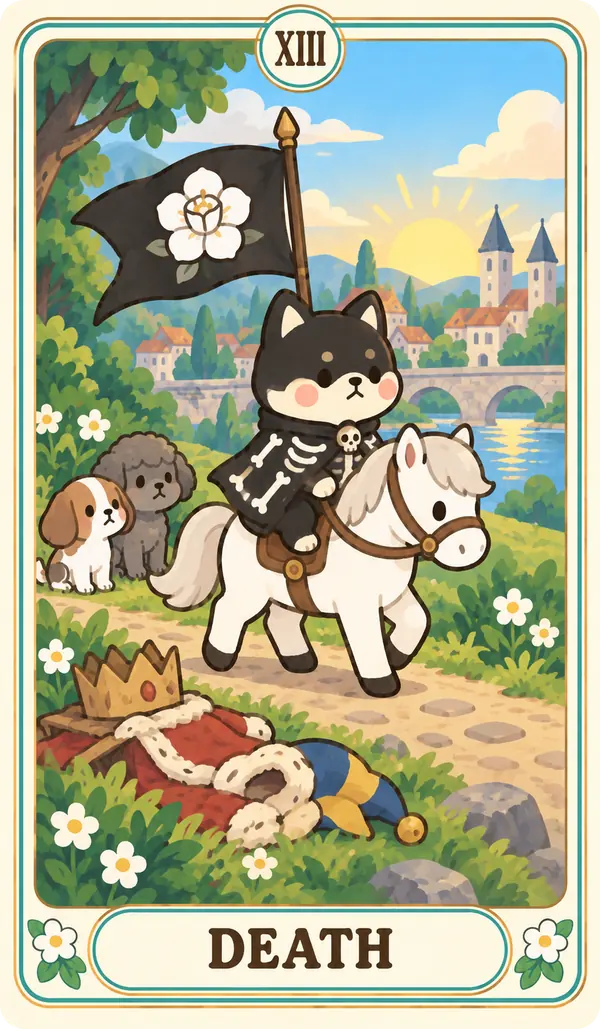 Shiba TownDeathAn ending; transition; releasing an exhausted form.
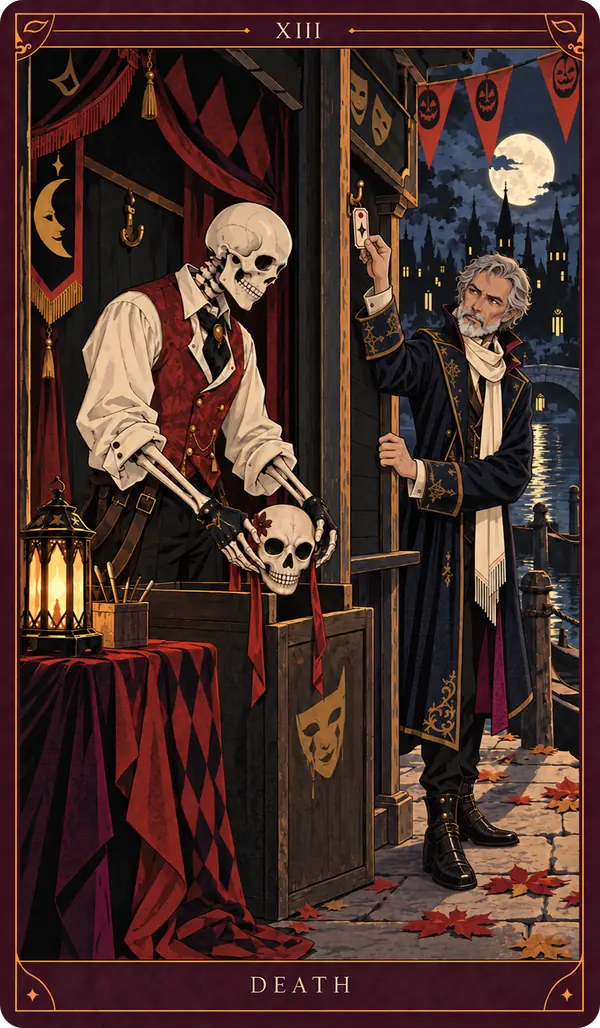 Velvet MasqueradeDeathAn ending given form, leaving room for change.
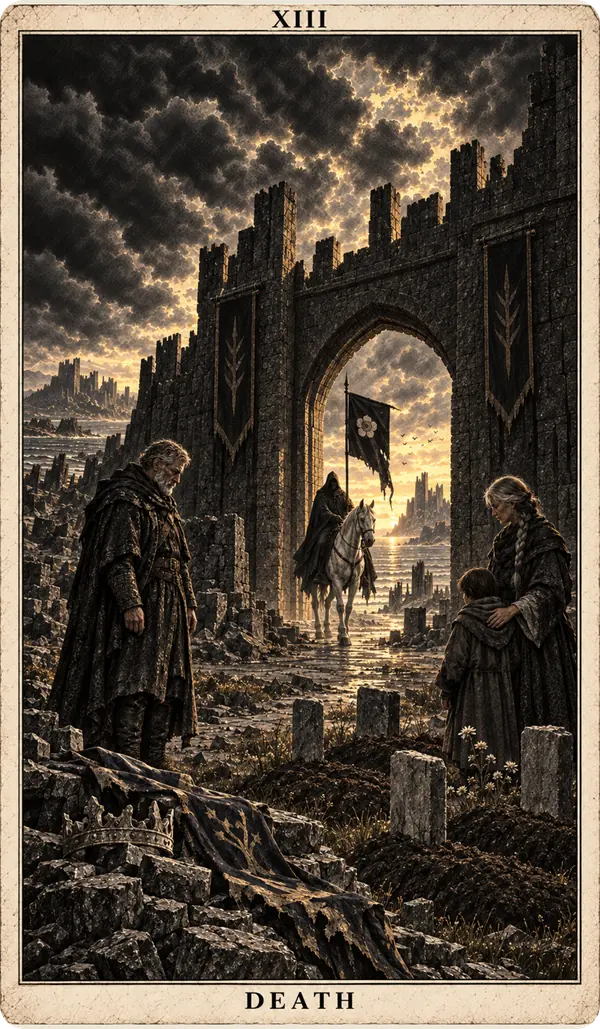 Four HorsemenDeathAllow an ending to be real; release a claim so another form of life can begin.
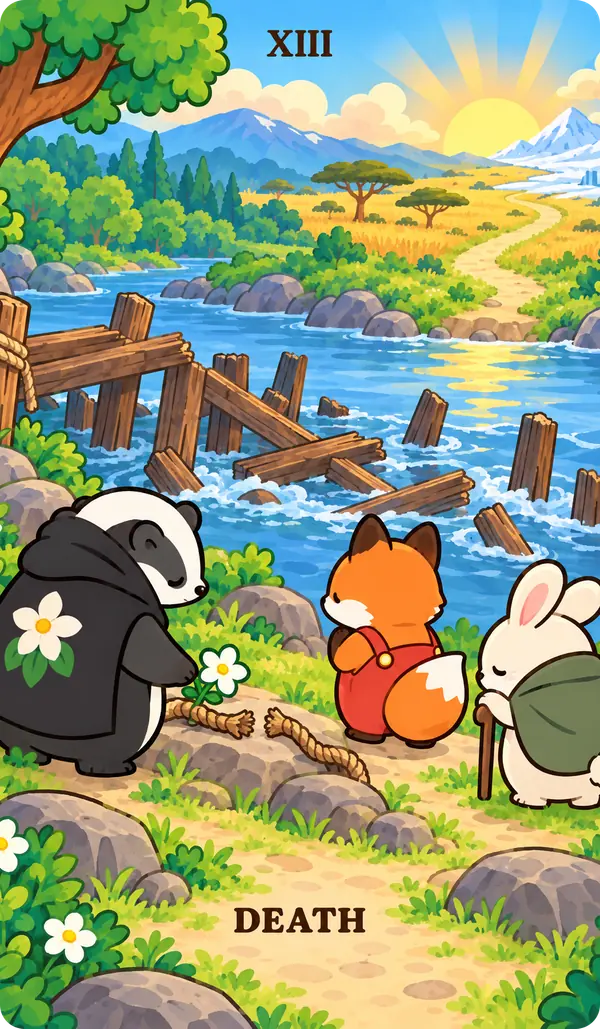 Four TrailsDeathEndings, release, transformation.
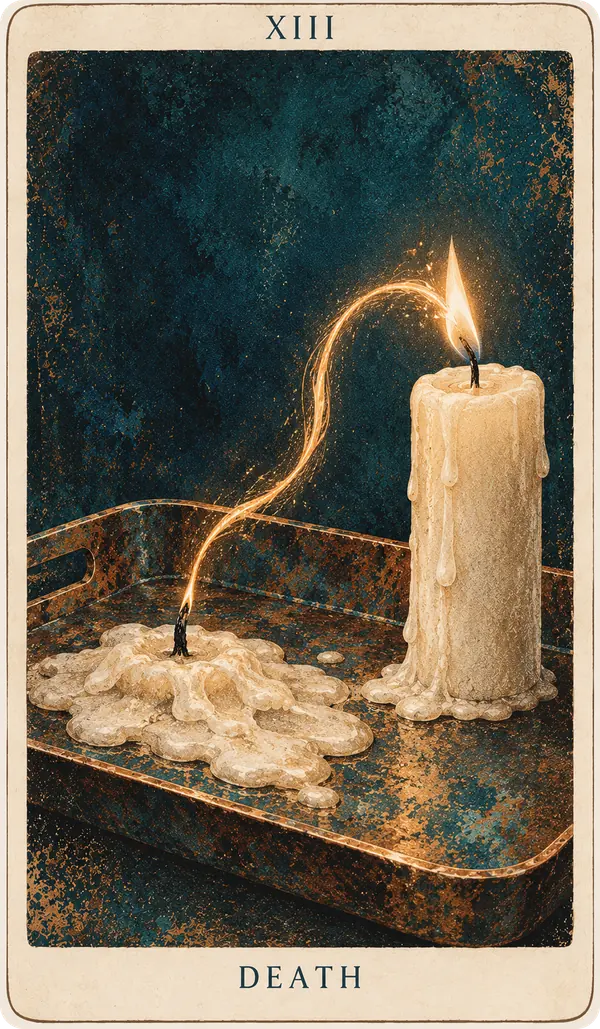 Living ThresholdDeathThe last warmth leaves spent wax and kindles a separate source.
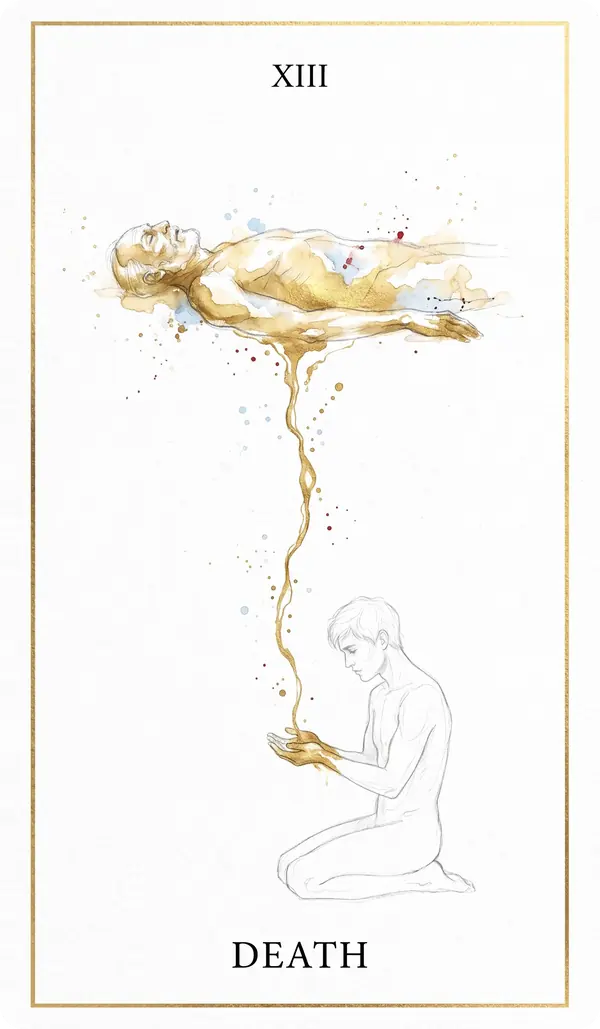 Colour of PowerDeathAn ending that frees what you hold, so it can pass to new hands.
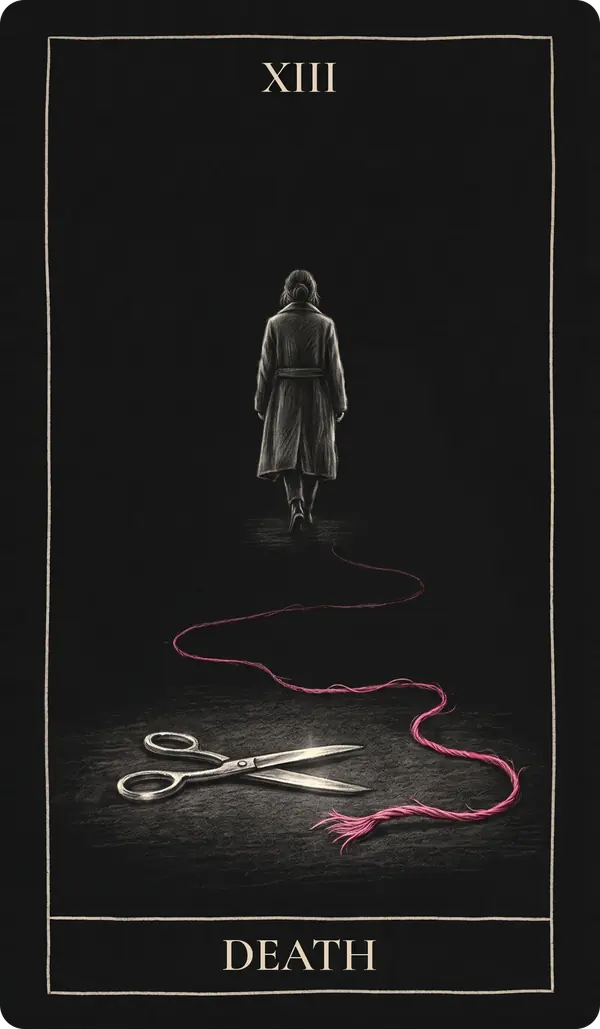 BoundDeathThe tie is dead; the cut was right. Let memory thin.
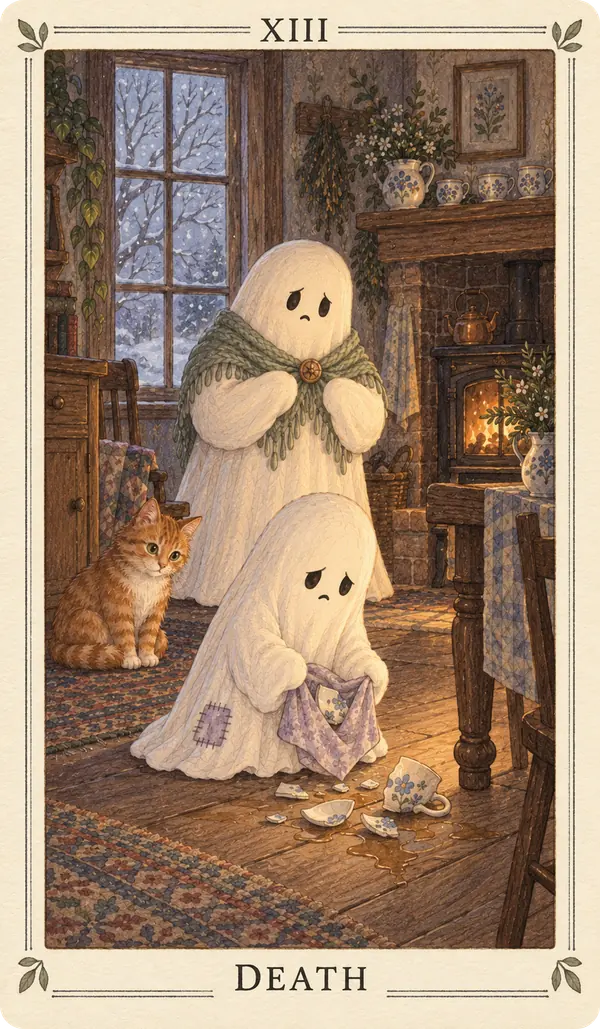 Cozy HauntDeathAn ending clears room for a changed identity.
 Celestial Night SkyDeathA worn form set aside.
Where it appears
Questions about this card
Is Death a yes or no card in Crimson Inferno?
Upright, Death reads mixed. If your question is about bringing something back, it leans no; if it is about changing what follows, it leans yes. Reversed, it leans no until you can look at what has gone. Ask whether your question concerns something still alive or something that may already be over.
What does Death mean in love?
In love, Death upright may point to something in the bond having ended, with the rest needing to change around it. Reversed, the bond may be held to an arrangement that no longer works. Write down one habit that belonged to an earlier stage, and talk about it.
What does Death mean reversed in Crimson Inferno?
Reversed, Death means denial of an ending that has to happen, or clinging to a failed arrangement. Crimson Inferno does not offer a way to reverse a loss, so the card turns to what remains. Name to yourself one thing in the bond you keep pretending has not changed.