Death
Death in Four Horsemen · Major Arcana XIII
LossIn short
Allow an ending to be real; release a claim so another form of life can begin.
Reversed
Clinging to what has run its course, confusing remembrance with keeping everything as it was, or resisting a loss that has already happened.
- Major Arcana
- XIII
- The Pale Rider
- allowing an ending to be real
- releasing a claim
- room for another form of life
Upright
Allow an ending to be real; release a claim so another form of life can begin. The graves outside the wall are new, and the people in them are not coming back.
The commander lays his standard on the ground because the order it stood for died with them. The pale rider passes through the gate without stopping.
What falls to the living is plain: stand beside the grief, hold the child, and stop asking loyalty for something that no longer exists.
A question to sit with
“What has ended even if I have not yet changed my behaviour?”
One step
Name, aloud or on paper, one thing that may be over, and one small duty you still owe the living around it.
Reversed
Clinging to what has run its course, confusing remembrance with keeping everything as it was, or resisting a loss that has already happened. An ending can be refused long after it has come.
The standard stays raised over a city that is gone, and orders go on being given to people no longer there to hear them.
Keeping the dead in memory is an obligation; keeping a dead order running in their name is something else, and it drains the strength the living still need.
A question to sit with
“Whose name am I using to keep a dead order running?”
One step
Choose one way of remembering that does not require keeping the old form alive, and try it once.
How this deck reads reversed cards
Reversed, the act on the card turns inward, meets an obstacle, grows harsher or shows its price. On this road a reversal is not automatically the opposite, and not automatically something worse.
In love
A bond may be ending in a way that cannot be undone, or grief for someone lost may sit at the centre of the question.
- Supports
- Room to grieve without hurrying.
- Watch for
- Demanding that an ending behave as if it had not come.
- One step
- Set aside a time to acknowledge the loss, alone or with someone you trust.
A relationship may be kept in its old form after the life has gone out of it, or grief may be held off.
- Supports
- Remembering without preserving.
- Watch for
- Keeping a shape alive that no longer holds anyone.
- One step
- Name to yourself, honestly, what has already changed between you.
At work
A role, a trade or a way of working may have come to a real end.
- Supports
- Honesty about what cannot be restored.
- Watch for
- Loyalty to an order that no longer stands.
- One step
- Write down one thing at work that may have come to an end, and one skill you carry forward from it.
An exhausted role or project may be kept running at a cost to those still in it.
- Supports
- Recognising what the effort is really keeping alive.
- Watch for
- Confusing tradition with survival.
- One step
- Ask what would be freed if one tired routine at work were allowed to stop.
Your choice may not be whether to keep something, but how to live after it has gone.
- Supports
- Accepting the ending as real.
- Watch for
- Choosing as though the old form were still alive.
- One step
- Remove one option that depends on what is gone, and look at what remains.
The decision may be avoided because making it would mean admitting an ending.
- Supports
- The courage to see what is already present.
- Watch for
- Delay that prolongs an exhausted form.
- One step
- Write one sentence naming what may be over, then read your options again.
Growth here may be grief itself: letting a loss be real before any new form of life begins.
- Supports
- Time, and people who stay with you through it.
- Watch for
- Hurrying past the loss to look recovered.
- One step
- Do one small thing today that honours a loss, whatever its size.
You may be preserving the past in place of remembering it.
- Supports
- A way of honouring the loss that lets you move.
- Watch for
- Holding grief in a form that stops all growth.
- One step
- Choose one keepsake or ritual that remembers without keeping the old form going.
A family may be facing a loss that is final: a death, a home, or an order that held everyone together.
- Supports
- Those who remain, and the duties they still share.
- Watch for
- Asking loyalty to the way things were.
- One step
- Share one practical task of mourning or care with another member of the family.
A family may keep an old order running in the name of someone lost, at the expense of the living.
- Supports
- Shared remembrance.
- Watch for
- Demanding loyalty to a way of life that is gone.
- One step
- Ask the family what the person or the place would need from the living now, and do one small part of it.
Yes or no
NoNoIf the old form is spent, the answer to keeping it is no; what remains open is how the living go on.
Supports
- Accepting the ending frees strength for those still living.
- Something else can take root once the old claim is released.
Limits
- What ends here does not return.
- Grief has its own time and cannot be hurried.
One step
Name one thing in this situation that can no longer be restored, whatever you do.
Prolonging an ending costs the living, so the answer leans no to holding on.
Supports
- Remembering is still possible without holding the old form.
- The loss can be acknowledged, even late.
Limits
- An exhausted form may be kept running at great cost.
- Holding on may be draining those who remain.
One step
Name one thing you are keeping alive that stopped living some time ago.
What is in the picture
The commander has lowered the old standard beside new graves. The healer supports a child as a pale mounted figure passes through the city gate.
The survivors acknowledge what cannot be restored and cease demanding loyalty to a dead order.
- pale horse
- hooded rider
- dark banner with a white rose
- lowered standard with a crown
- new graves
- city gate
- healer holding a child
- drowned city beyond
This card in other decks
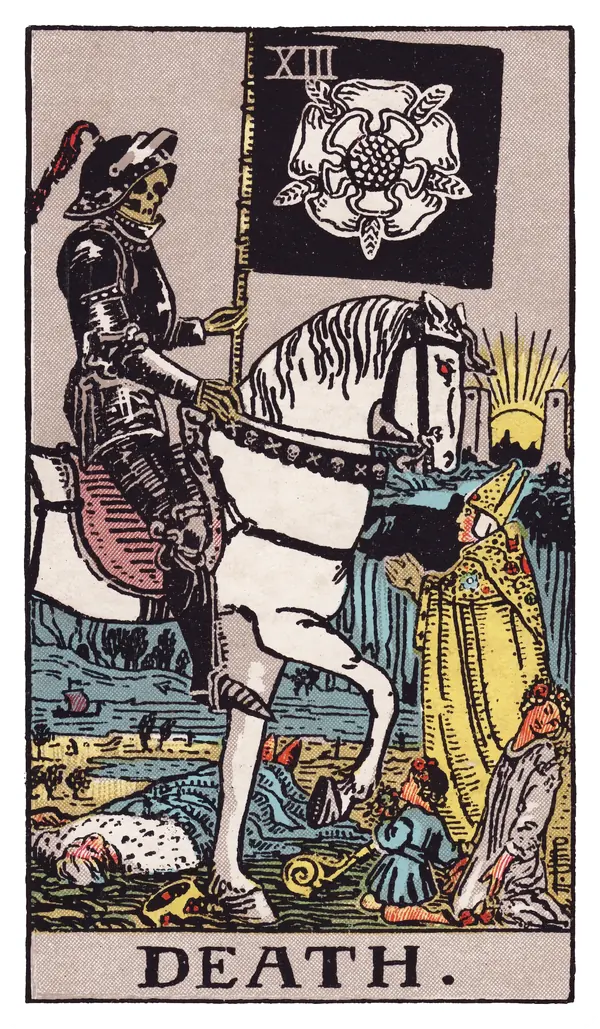 Rider–Waite–SmithDeathSomething here may have run its course, and letting it end is what gives something new room to begin.
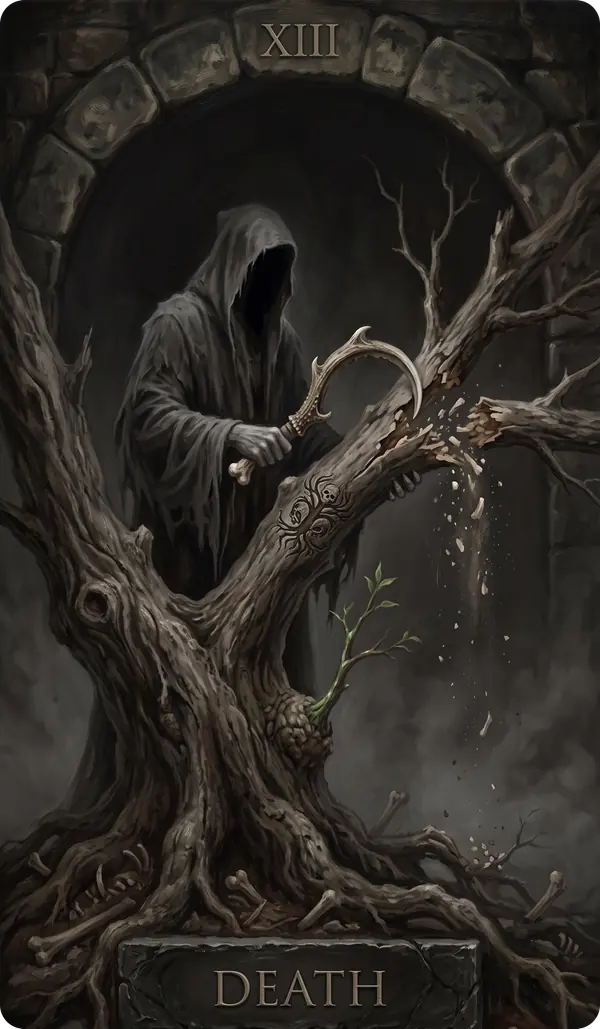 FamiliaDeathWhat is spent is cut in time, and the room it leaves goes to new growth.
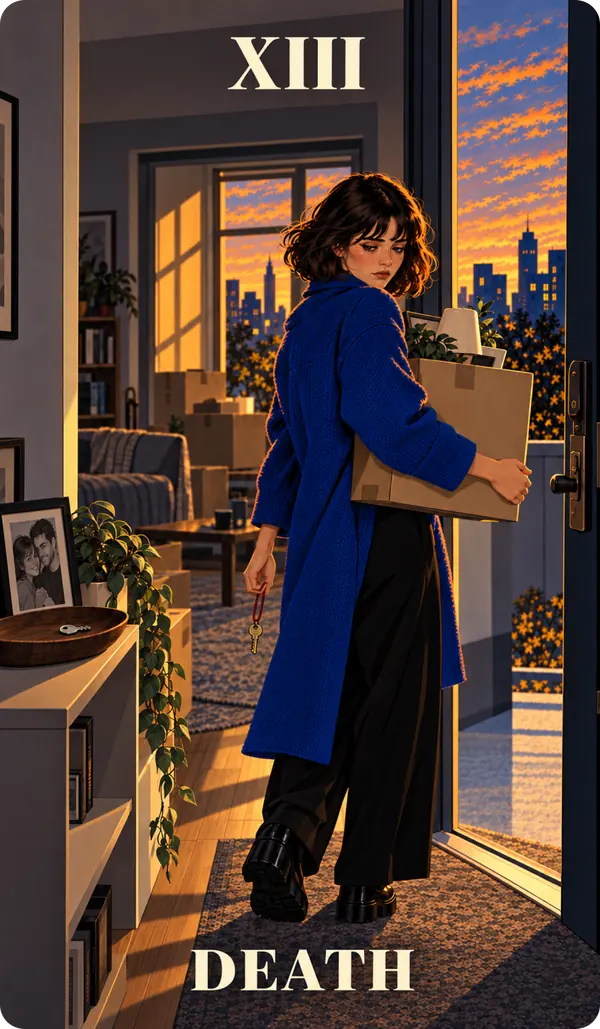 City of WindowsDeathAcknowledging the end of an old role, or of the way a relationship was set up.
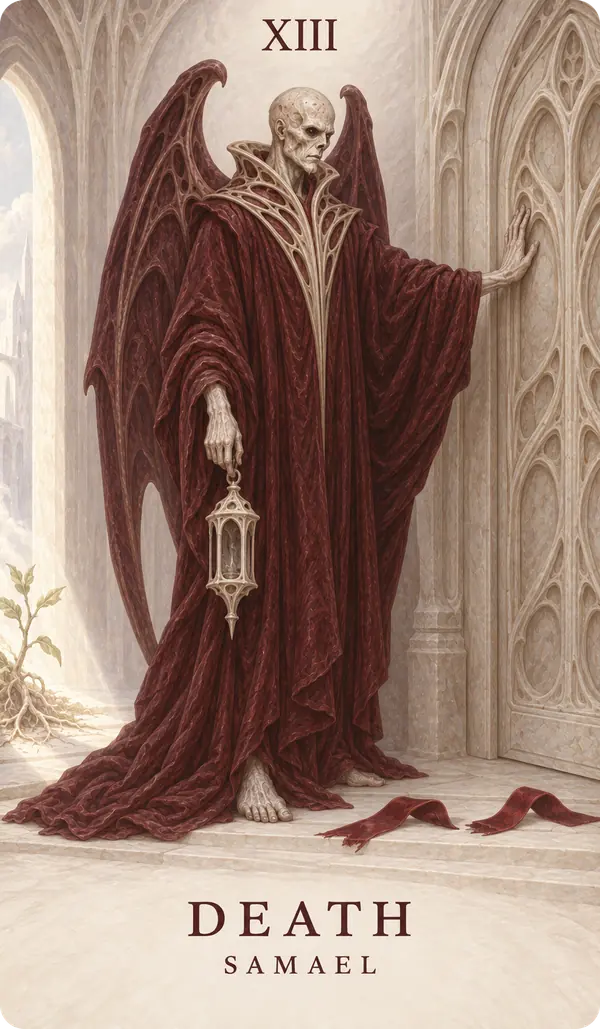 CarnalDeathAn ending that cannot be made into the old beginning.
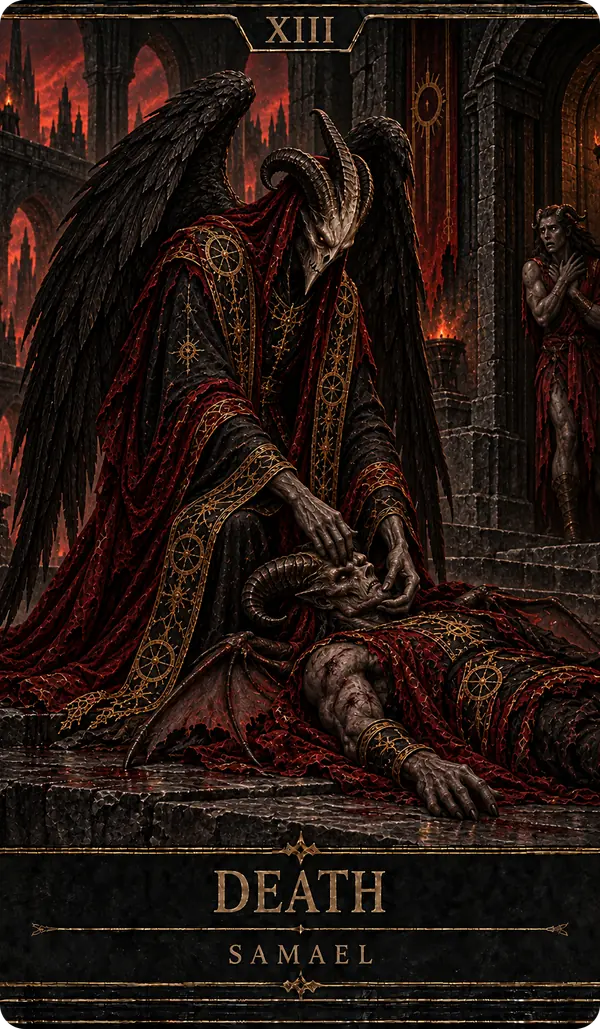 Crimson InfernoDeathRecognize an ending that cannot be negotiated away.
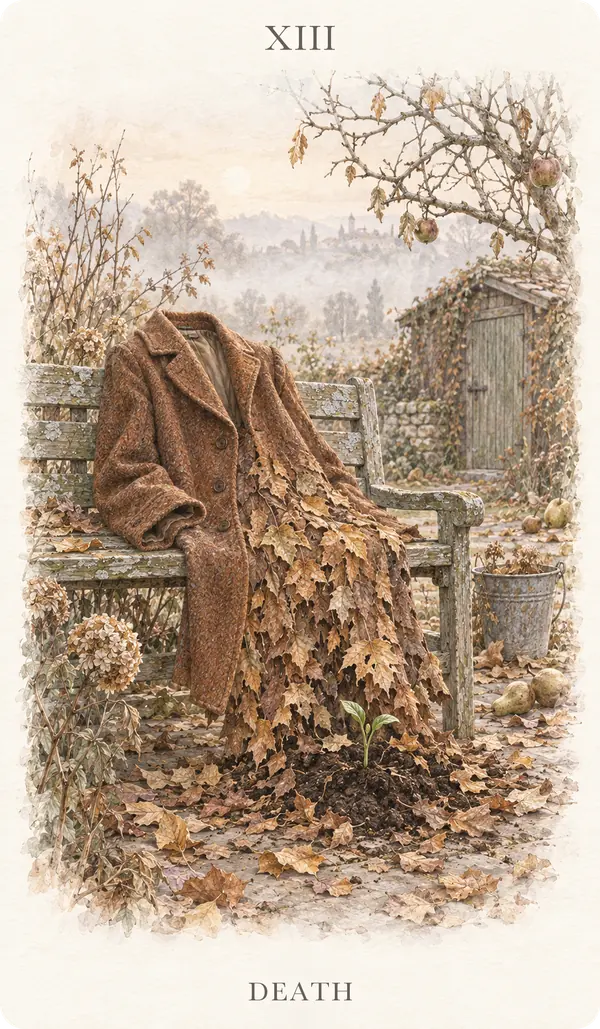 Everyday WondersDeathAn irreversible ending, release of space and a change of form.
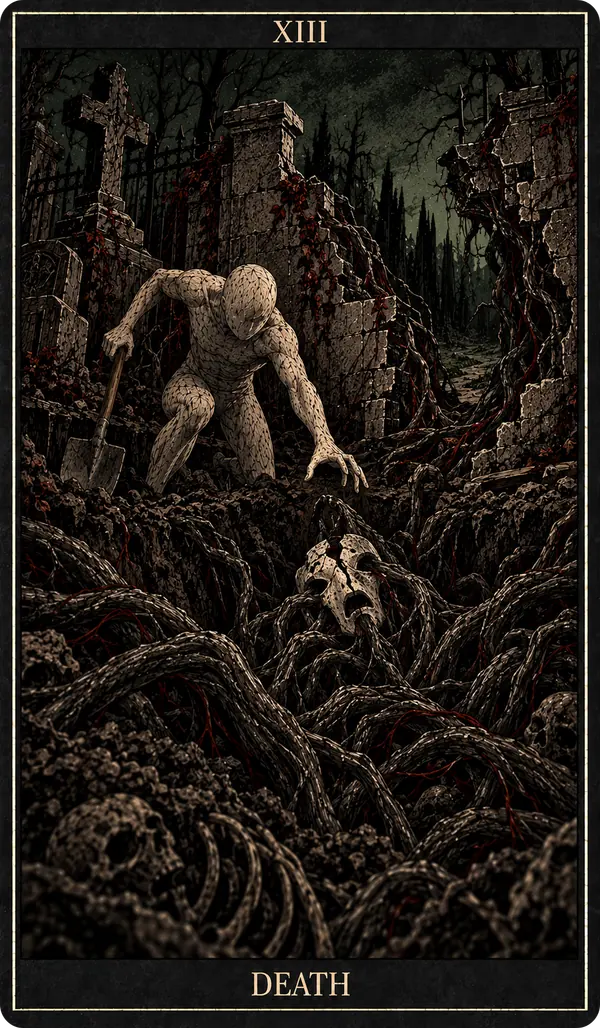 Mirror NightDeathBury an ended voice and use the opened path.
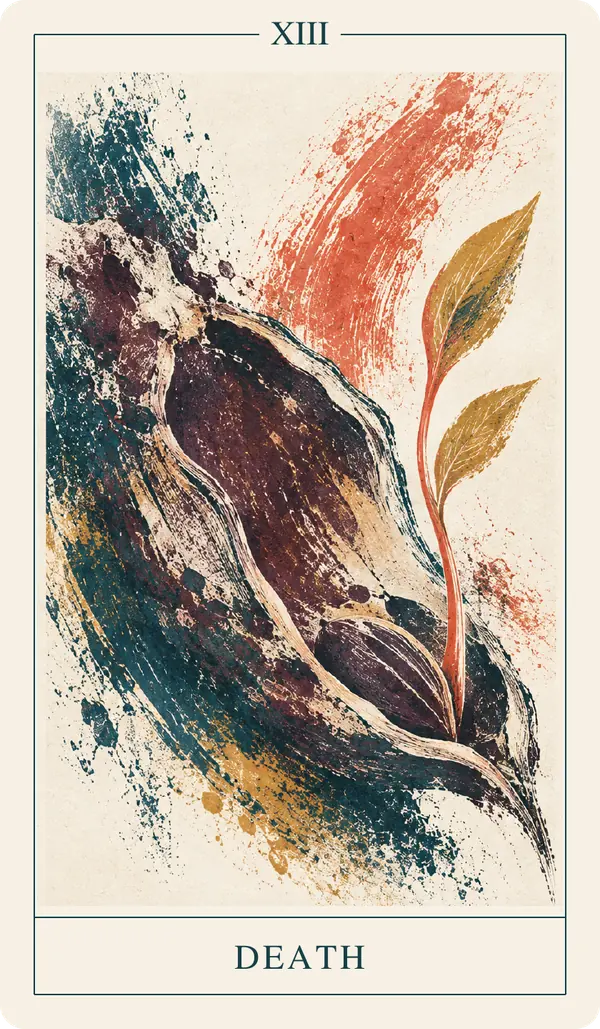 Self ContactDeathLet an ending make room without demanding immediate renewal.
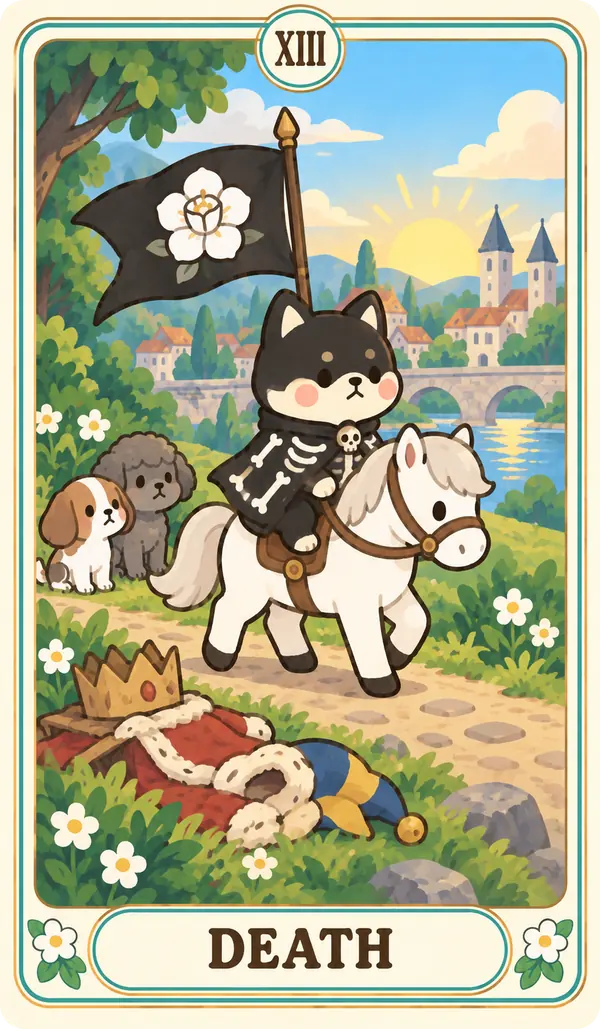 Shiba TownDeathAn ending; transition; releasing an exhausted form.
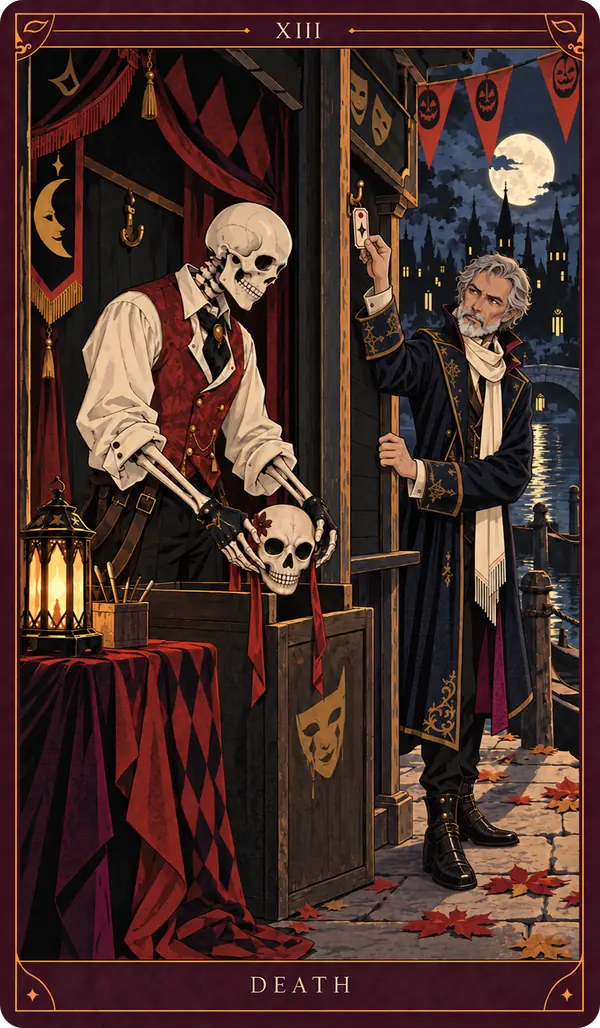 Velvet MasqueradeDeathAn ending given form, leaving room for change.
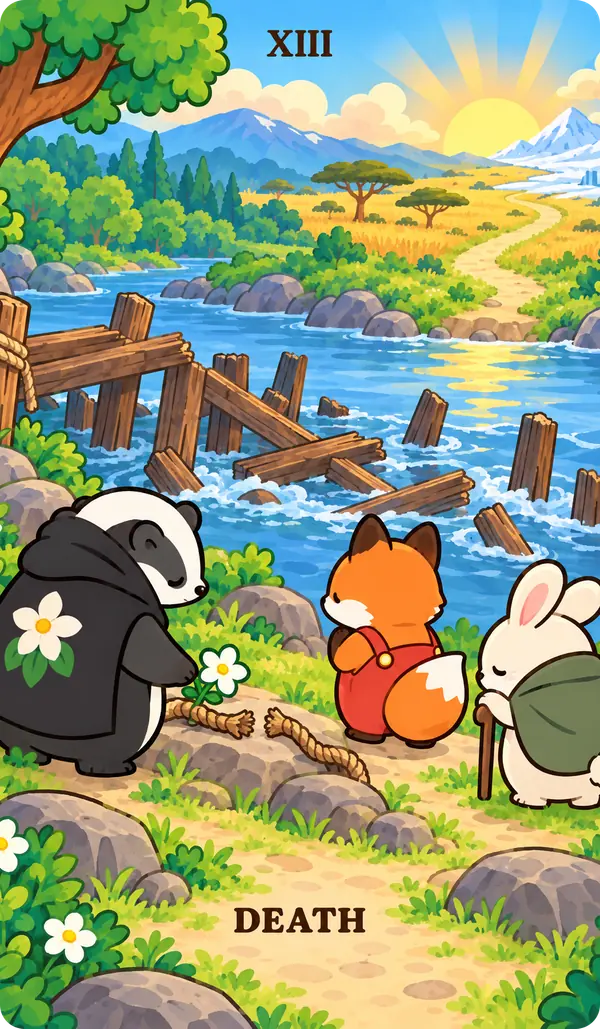 Four TrailsDeathEndings, release, transformation.
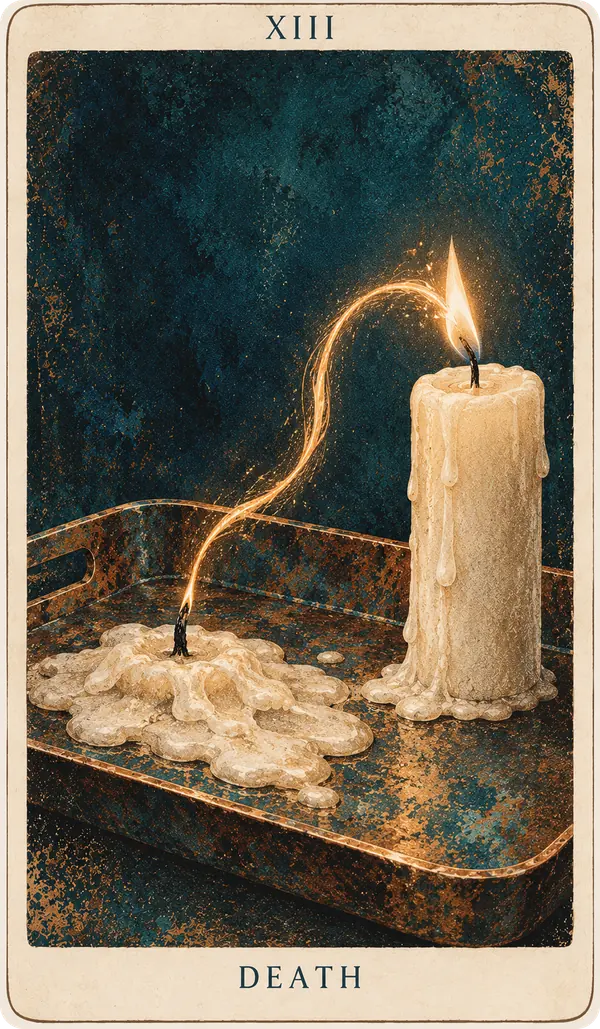 Living ThresholdDeathThe last warmth leaves spent wax and kindles a separate source.
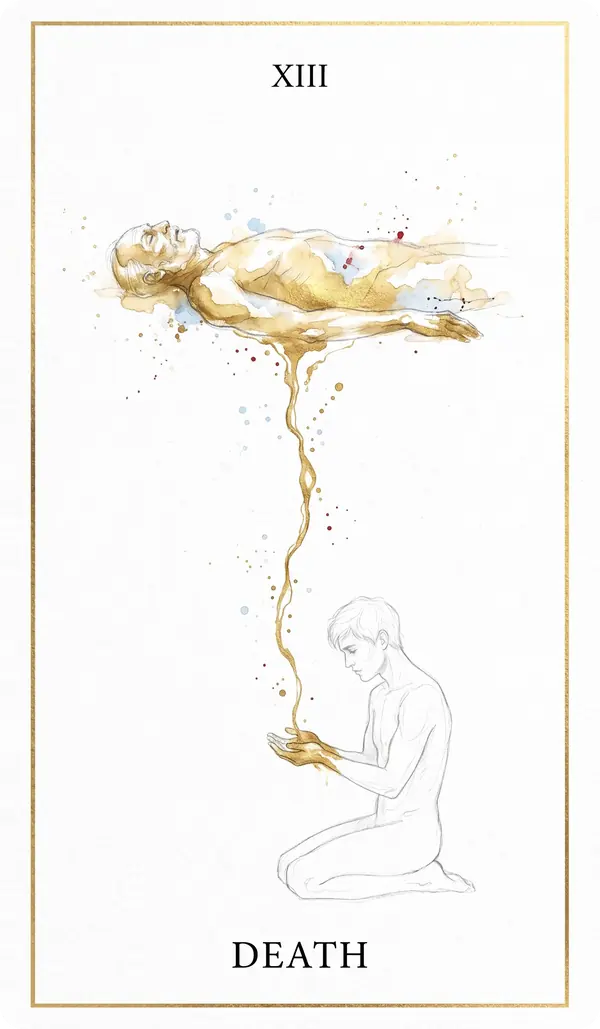 Colour of PowerDeathAn ending that frees what you hold, so it can pass to new hands.
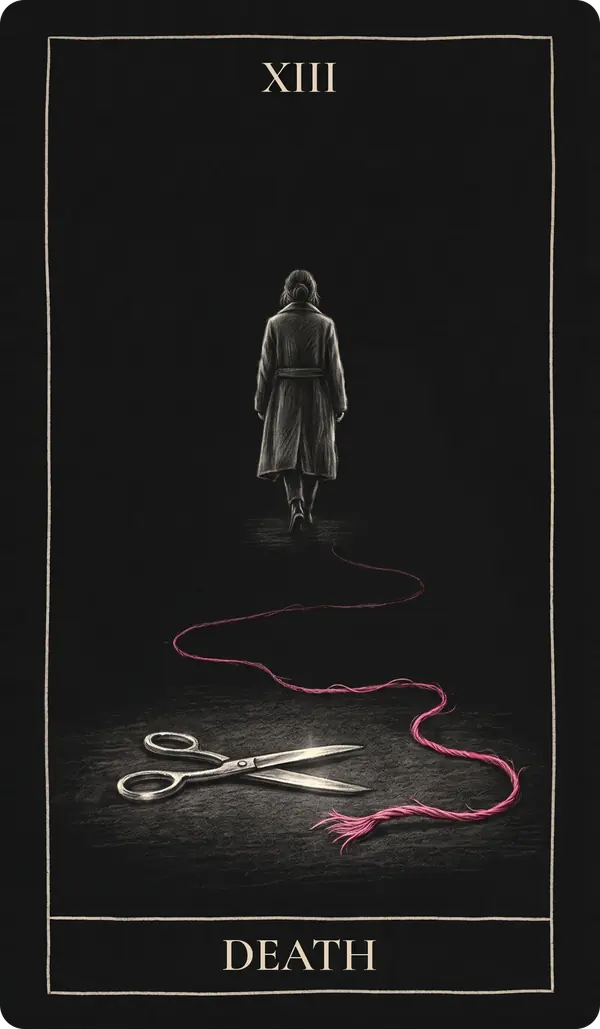 BoundDeathThe tie is dead; the cut was right. Let memory thin.
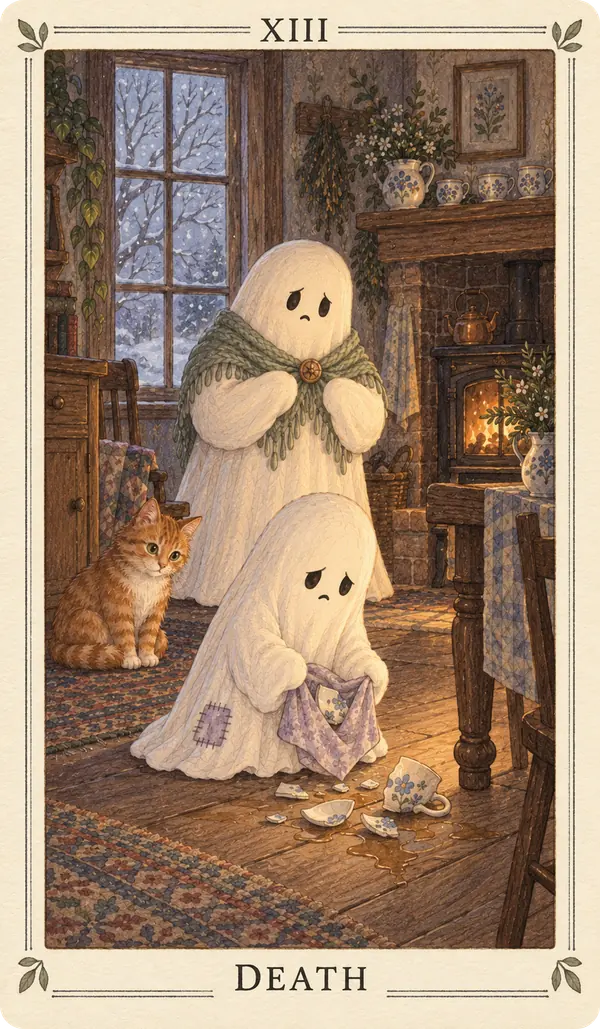 Cozy HauntDeathAn ending clears room for a changed identity.
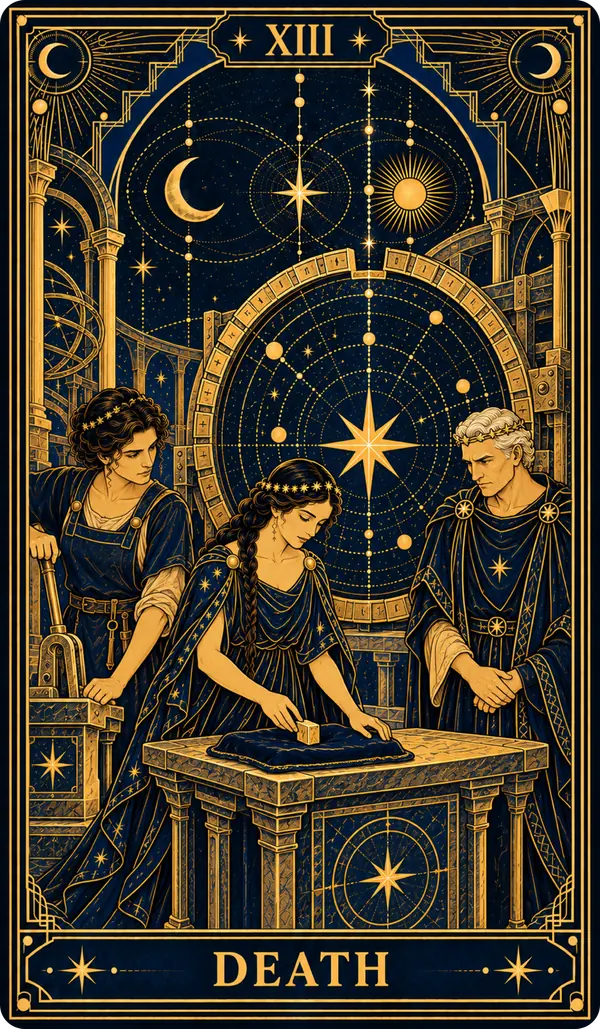 Celestial Night SkyDeathA worn form set aside.
Where it appears
Questions about this card
Is Death a yes or no card in Four Horsemen?
Asked as a yes or no card, Death leans no to keeping the old form, upright and reversed, because what is spent cannot be restored and prolonging it costs the living. The open question is how people go on. Name one thing here that can no longer be restored whatever you do, and one you are keeping alive after it stopped living.
What does Death mean in love?
Death in a love reading may point to a bond ending in a way that cannot be undone, or to grief for someone lost sitting at the centre of the question. Reversed, a relationship may be kept in its old form after the life has gone out of it. Set aside a time to acknowledge the loss, alone or with someone you trust.
What does Death mean reversed in Four Horsemen?
When Death appears reversed, it may describe prolonging an exhausted form, confusing remembrance with preservation, or holding back a change that is asking to be let in. In this deck it speaks of a way of living giving way to the next. Name to yourself, honestly, what may have changed, and give that change a place to be acknowledged.