The Hierophant
The Hierophant in Carnal · Major Arcana V
ChoiceIn short
Learning within a tradition, including the duty to question it.
Reversed
Habit may impersonate wisdom.
- Major Arcana
- V
- The Teacher at the Lectern
- learning within a tradition
- a method that can be examined
- the duty to question
Upright
Furcas teaches philosophy, rhetoric and logic, and he points his rod at a diagram in an open book, so whoever takes the two empty stools can check the lesson instead of only obeying it. Seek a method that can be passed on and examined.
A teacher owes you reasons and practice, not only membership or certainty.
A question to sit with
“Which rule can I explain rather than merely repeat?”
One step
Take one rule you follow and write out the reason for it in your own words.
Reversed
Furcas still points to the diagram, but reversed, the lesson may be recited and never checked, habit passing for wisdom. Throwing out every tradition is no cure: you may spend years reinventing tools others have already tested.
Look for the reasons behind a rule before you follow it or reject it.
A question to sit with
“Which of my rules is habit wearing the robes of wisdom?”
One step
Ask someone who knows the old method how it works before you keep it or set it aside.
How this deck reads reversed cards
Reversed, the gesture turns back on itself: the hand that should let go holds on, the cup overflows, the bargain slips out of sight, or a weight is finally set down. It can mean an obstacle, an excess, a process gone inward or a release, and it is not always the worse outcome. The price is still there, only paid differently.
In love
Furcas points to a diagram where anyone can examine it. Shared values or a tradition may be shaping your bond, laid out so both of you can look at them.
- Supports
- Agreements that come with reasons.
- Watch for
- Following an inherited script for love without asking if it fits.
- One step
- Talk through one expectation you each inherited.
He recites the lesson and no longer looks at the diagram. An old rule about love may be repeated without question, or every tradition may be thrown out at once.
- Supports
- Keeping what fits and setting down what does not.
- Watch for
- Obeying a rule that harms the bond.
- One step
- Name one belief about relationships you learned early, and ask whether it is yours.
At work
Furcas keeps two stools ready before his lectern: a mentor, a method or a training may serve you now, with room for your questions.
- Supports
- Learning from those who have tested the tools.
- Watch for
- Bowing to the hierarchy without reading the diagram.
- One step
- Ask someone experienced to explain the reasoning behind their rule.
Workplace habits may pass for wisdom, or you may be redrawing a diagram others already worked out.
- Supports
- Questions asked with respect for what works.
- Watch for
- Dogma, or its twin, contempt for all precedent.
- One step
- Find out how one task was done before, then decide.
Furcas teaches by showing the diagram. An option you can explain this way may serve you better than one you defend by custom alone.
- Supports
- Reasons over habit.
- Watch for
- Taking the expected seat without knowing why.
- One step
- Write down one reason of your own for each option.
A choice may follow an old rule nobody opens to examine, or a rebellion that kicks over the lectern for its own sake.
- Supports
- Examining both the rule and the revolt.
- Watch for
- Repeating a family or group verdict.
- One step
- Write down whose rule you are following, and whether you would choose it now.
Study may be the road here, with a teacher who points to the reasons more than to the rod.
- Supports
- Structured learning on the stool before the lectern.
- Watch for
- Collecting certainty instead of understanding.
- One step
- Practise one method from a teacher and note why it works.
Habit may be keeping you small, or turning away from every teacher may leave you rebuilding the lesson from the first line.
- Supports
- Trust given selectively.
- Watch for
- Membership taken for learning.
- One step
- Keep one lesson that works and drop one that is only habit.
He opens the book and shows why. Family traditions may carry something worth passing on, if someone will explain the reason behind it.
- Supports
- Rituals that still hold meaning.
- Watch for
- Obedience asked without reasons.
- One step
- Ask an elder why one family custom exists.
Furcas teaches to empty stools, and nobody asks why. A family rule may be repeated without anyone remembering its reason, or every custom may be refused on sight.
- Supports
- Room to question respectfully.
- Watch for
- Tradition used to silence someone.
- One step
- Name one family rule you would keep and one you would not.
Yes or no
YesMixedA sound, examinable path supports the question, so the answer leans yes if you understand what you follow.
Supports
- A tested method exists for what you are trying.
- Someone may be able to teach you the reasons behind the rules.
Limits
- Learning within a tradition takes time and humility.
- A rule you cannot explain is only borrowed.
One step
Check that you can say why the method works, beyond the fact that others use it.
Tradition is either followed blindly or refused wholesale, so the answer is mixed until you sort which parts serve.
Supports
- Questioning a habit can sharpen it.
- Old tools may still be useful once you look at them fresh.
Limits
- Habit may be passing for wisdom.
- Rejecting everything may mean rebuilding what already works.
One step
Look for one part of the old way worth keeping and one worth dropping.
What is in the picture
Furcas points to a diagram in an open book, a plain teaching rod held in the other hand. Two empty stools wait before the lectern.
His age and severe presence carry the weight of instruction, but the diagram puts the lesson where another person could examine it instead of simply obeying.
- open book with a diagram
- plain teaching rod
- lectern
- two empty stools
- pale horse
- red banner
- long beard
This card in other decks
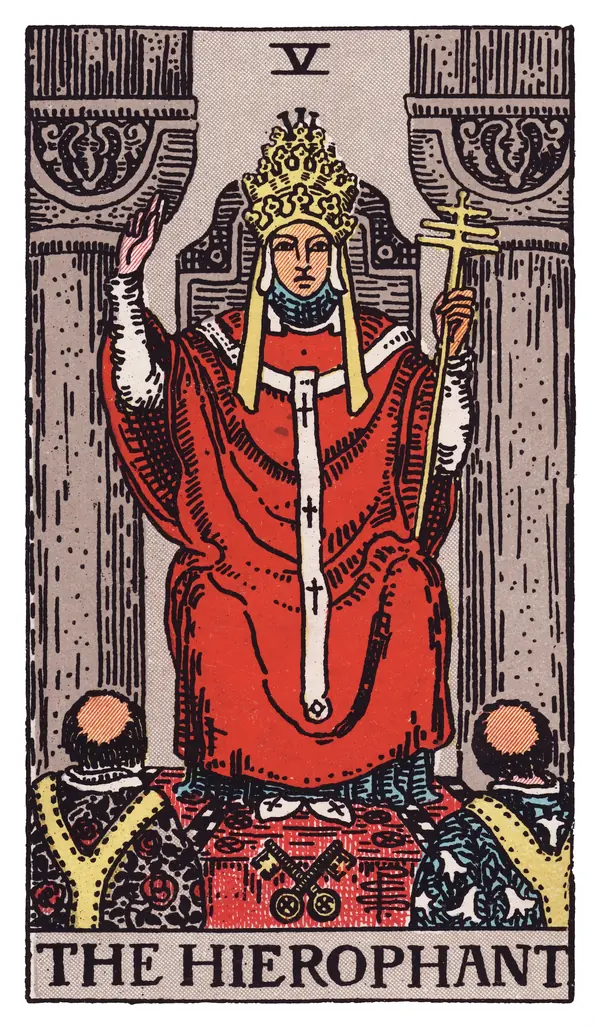 Rider–Waite–SmithThe HierophantA traditional method, mentor, or shared set of values has something genuinely useful to offer you right now.
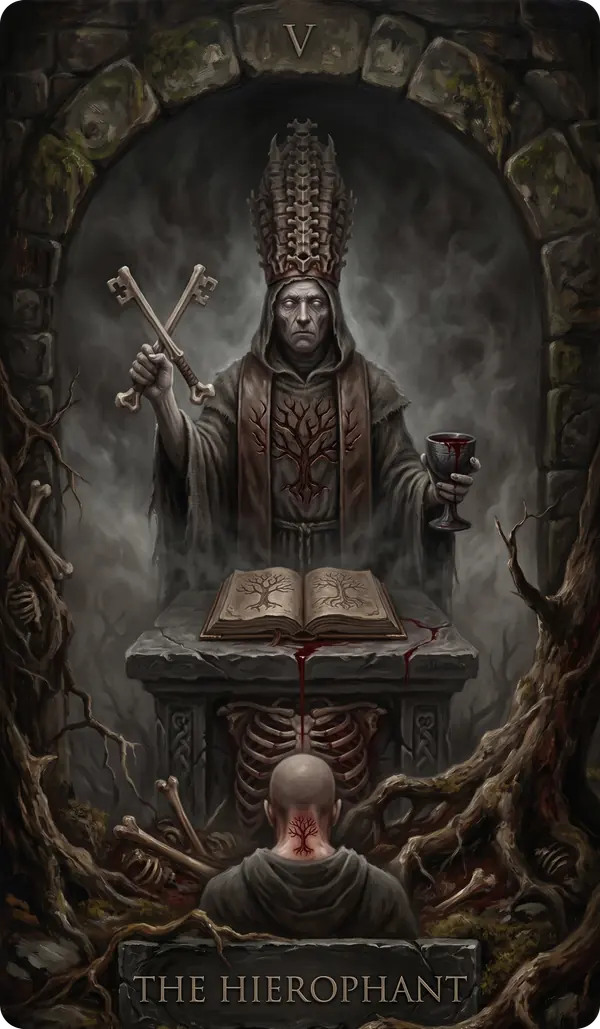 FamiliaThe HierophantA real acceptance into the line: the newcomer is admitted, and the tradition passes on unbroken.
 City of WindowsThe HierophantValues named honestly, the support of a community, a union with clear rules.
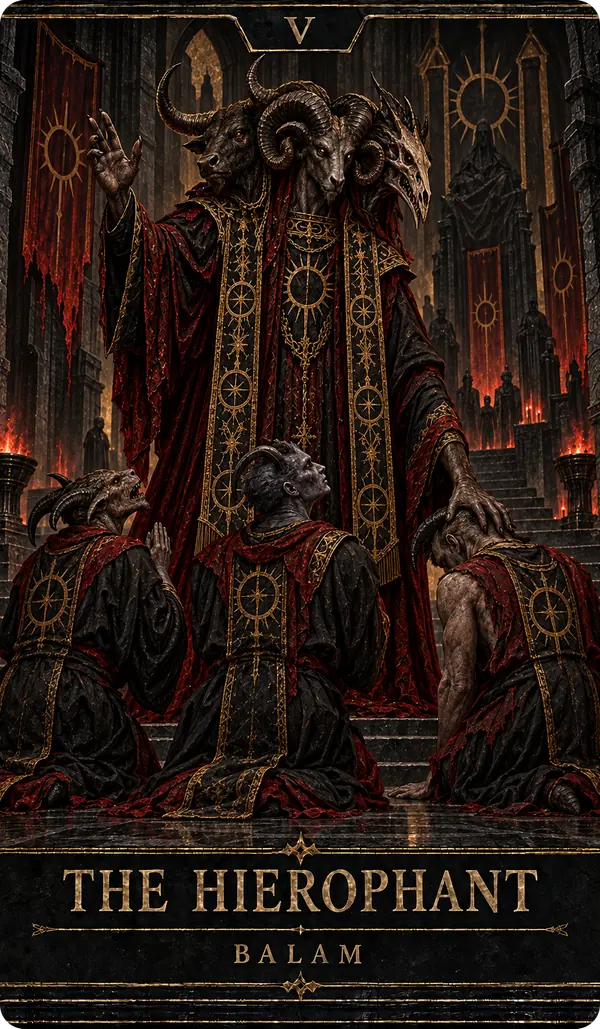 Crimson InfernoThe HierophantExamine inherited teachings, shared practices and the responsibilities of belonging.
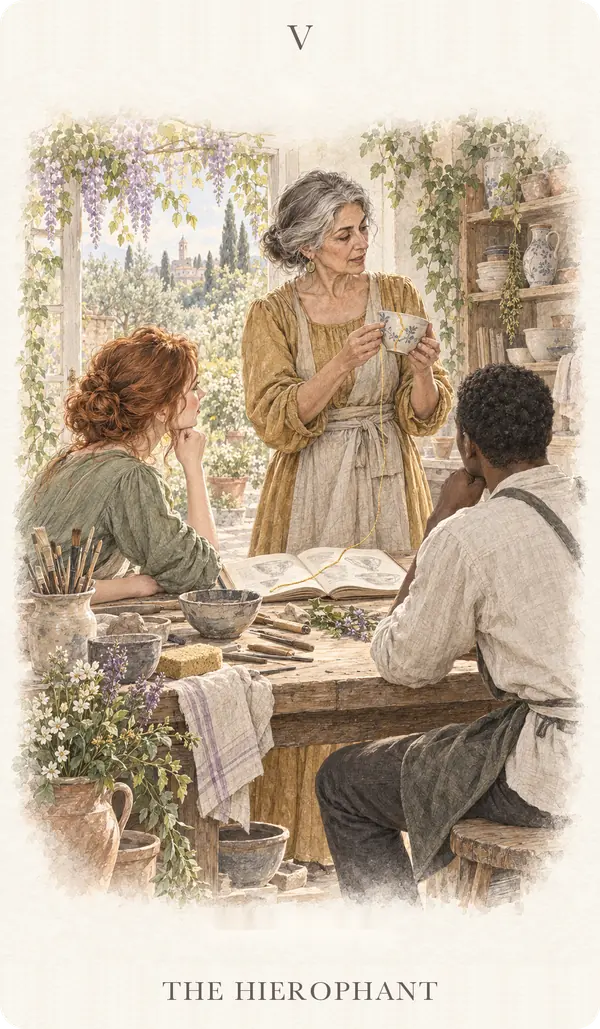 Everyday WondersThe HierophantTradition, shared knowledge, a common language and teaching.
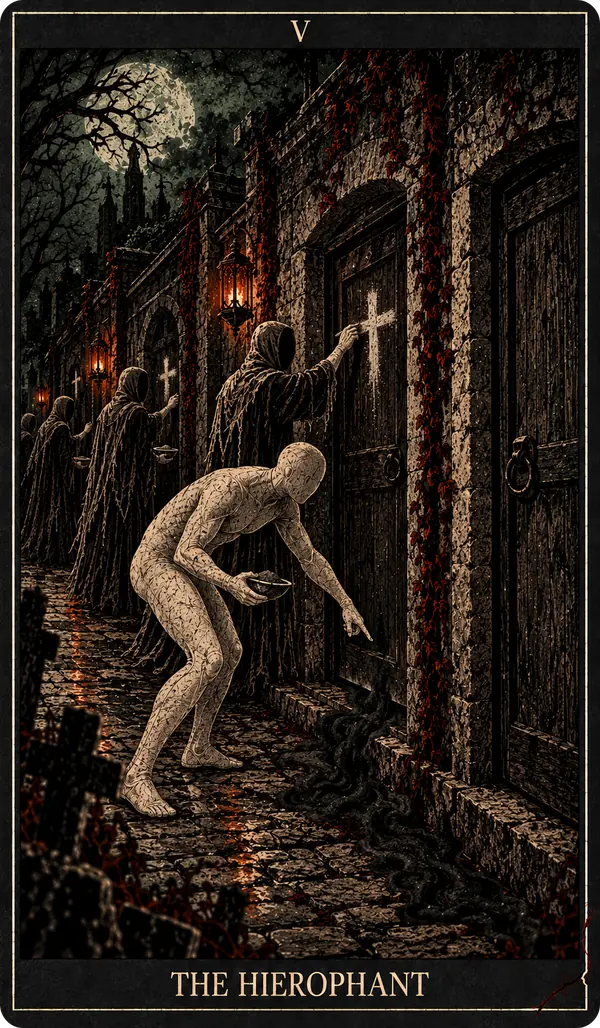 Mirror NightThe HierophantKeep only a rite that survives observation.
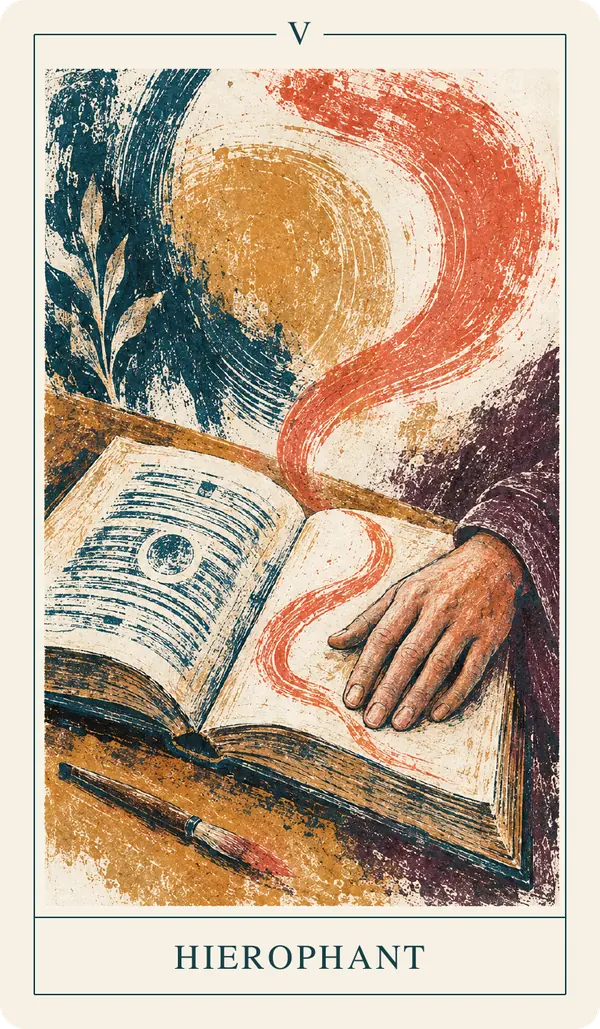 Self ContactThe HierophantLearn from a practice or teacher, then understand the reasons behind what you inherit.
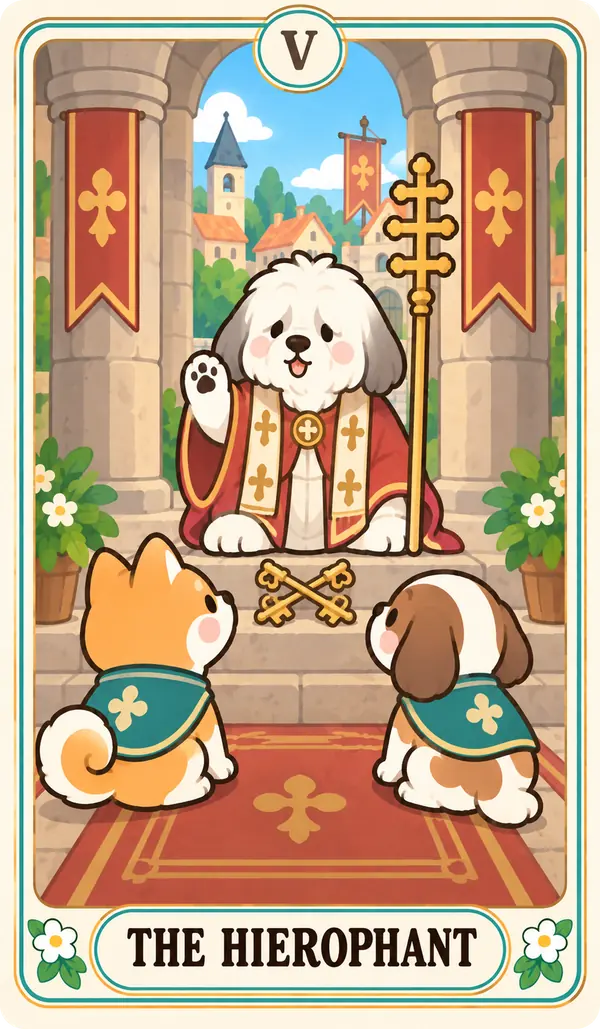 Shiba TownThe HierophantTradition; shared practice; learning from a teacher.
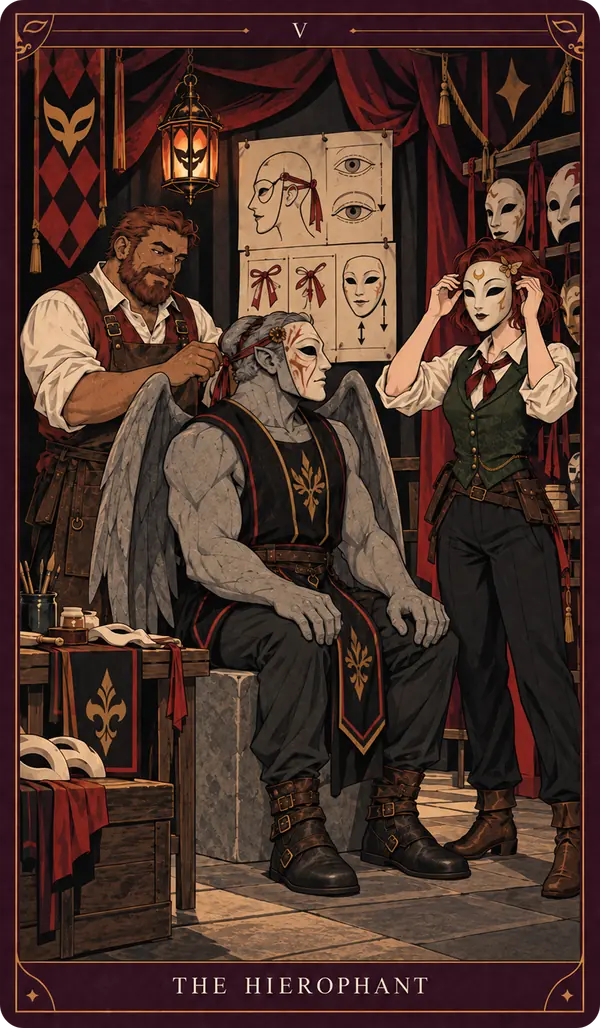 Velvet MasqueradeThe HierophantLearning a practice that helps its wearer.
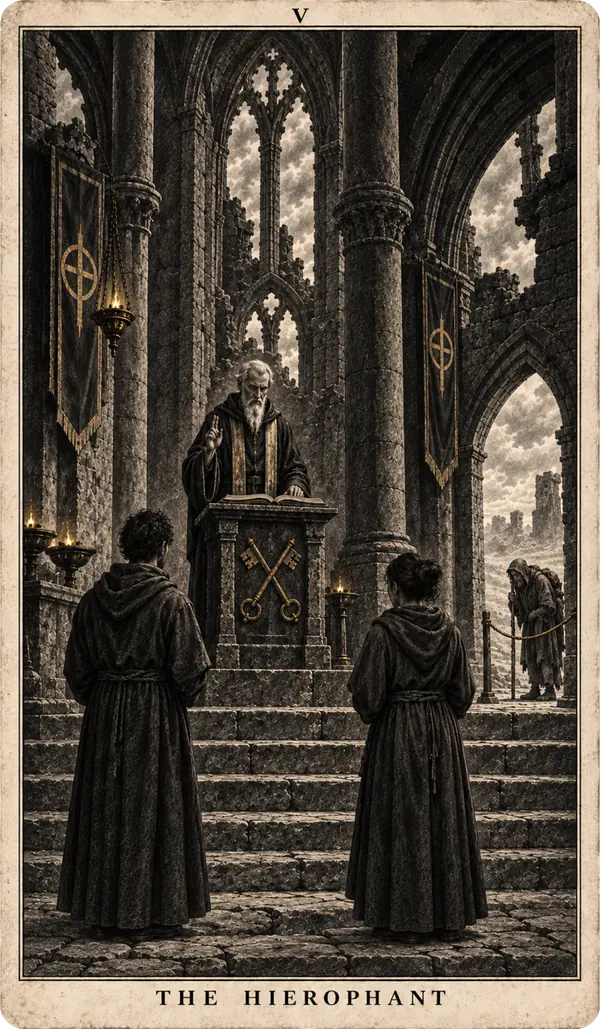 Four HorsemenThe HierophantLearn from a tested practice and make an ethical commitment within a community.
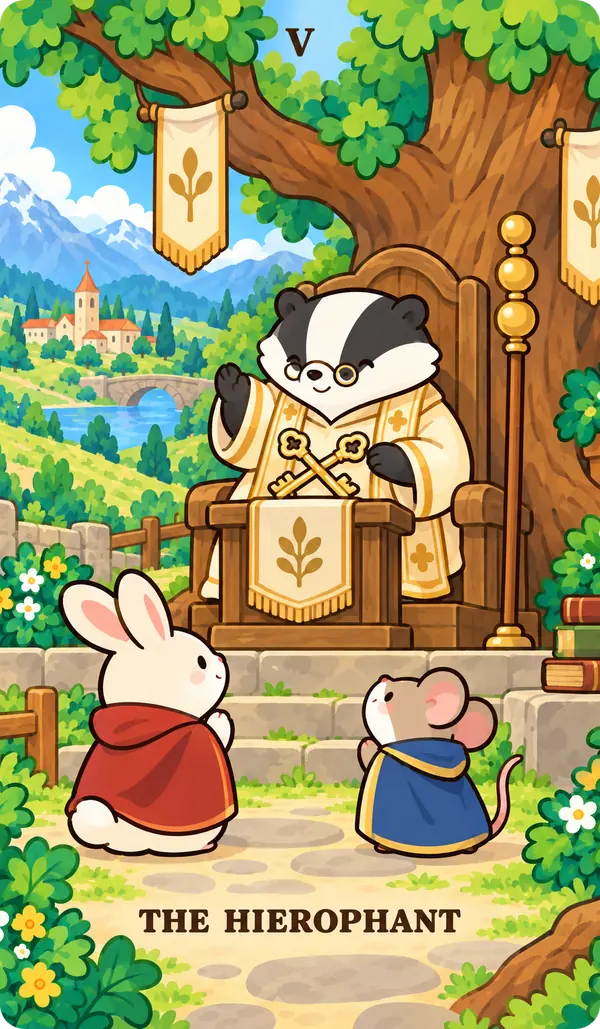 Four TrailsThe HierophantTeaching, shared tradition, belonging.
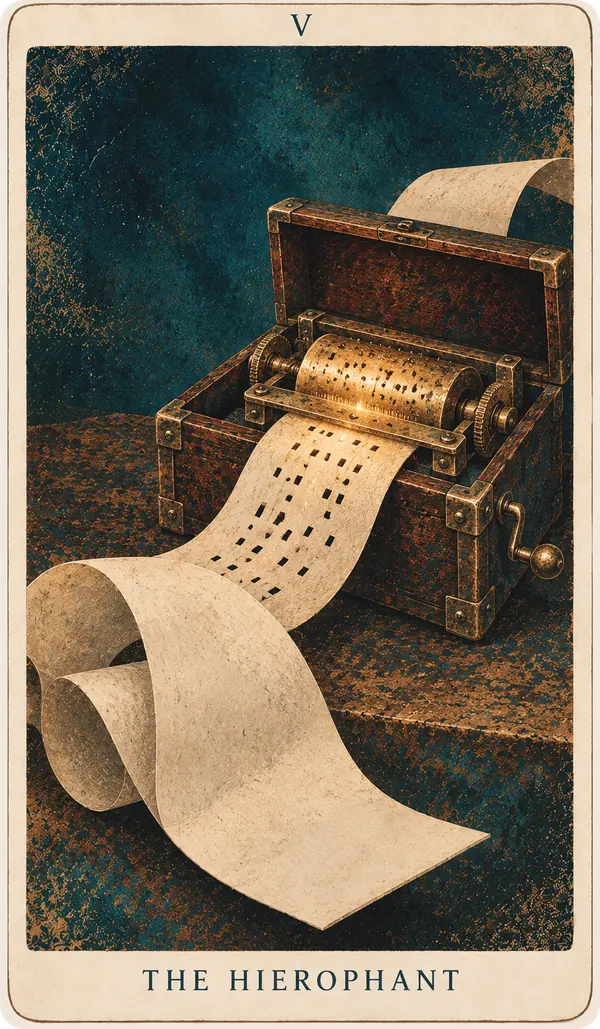 Living ThresholdThe HierophantA music box plays a handed-down tune and leaves room for a new note.
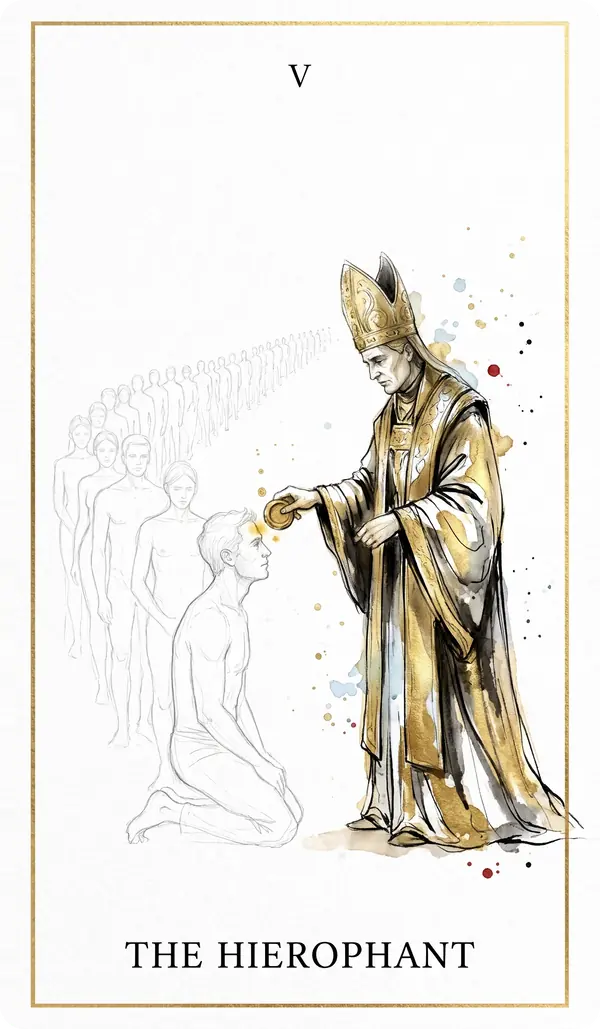 Colour of PowerThe HierophantThe seal opens doors talent cannot; stand in line if you must.
 BoundThe HierophantA knot tied in the old way, with generations holding the other end.
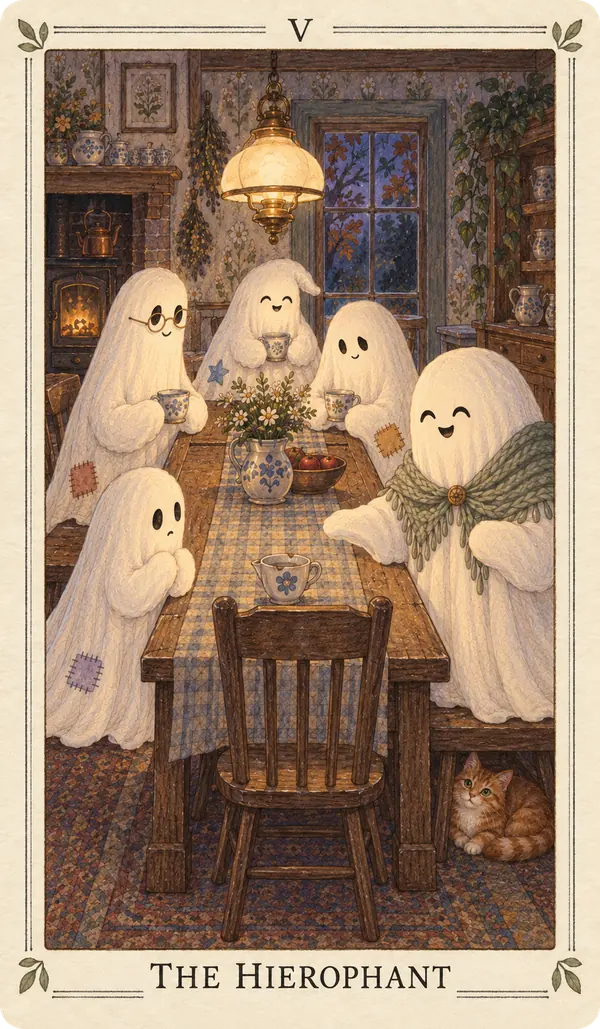 Cozy HauntThe HierophantReceive a shared practice that carries care.
 Celestial Night SkyThe HierophantLearning how to check.
Where it appears
Questions about this card
Is The Hierophant a yes or no card in Carnal?
The Hierophant leans yes upright if you understand what you follow, since the path is sound and open to examination. Reversed, the answer is mixed: tradition is followed blindly or refused wholesale. Look for one part of the old way worth keeping and one worth dropping.
What does The Hierophant mean in love?
In a love reading, The Hierophant upright points to shared values or an inherited tradition shaping the bond, set out like a diagram both of you can examine. Reversed, an old rule about love is recited without question, or every tradition is thrown out at once. Talk through one expectation you each inherited.
What does The Hierophant mean reversed in Carnal?
Turned over, The Hierophant describes habit passing for wisdom. A rule is obeyed because it always was, even when it harms, or the whole inheritance is dropped without sorting what served. Name one belief you learned early, whether about love, work or family, and ask if it is actually yours.