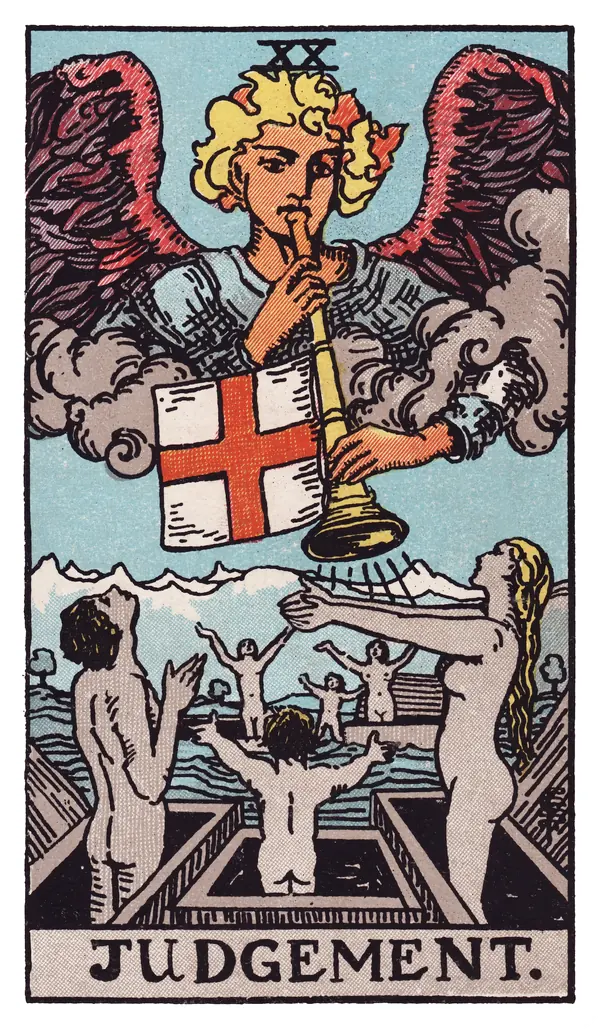
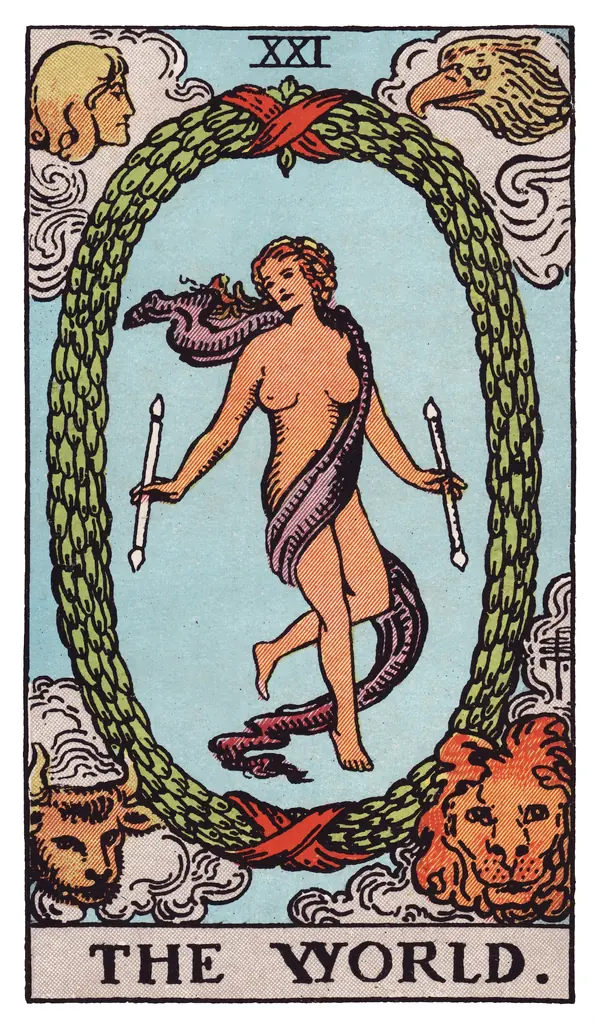
The Hierophant
Major Arcana · V
In short
A traditional method, mentor, or shared set of values has something genuinely useful to offer you right now.
Reversed
A rule, tradition, or piece of advice may be followed out of habit, or dismissed out of impatience, without real thought either way.
- Major Arcana
- 5
- Taurus
- The Teacher
- learning from an established method
- shared values
- guidance worth following
Upright
The Hierophant favors learning from an established path instead of building everything from scratch: a mentor, a community, a training, or a set of values with structure already behind it. It’s less about blind conformity and more about recognizing when a tested method saves you time and error.
This card often appears when it’s worth asking someone with more experience, or committing to a process you didn’t invent.
A question to sit with
“Whose guidance or which established method could help you here, if you let it?”
One step
Ask one person with more experience in this area for their honest opinion this week.
Reversed
Reversed, the Hierophant can mean holding onto a method, belief, or authority past the point it still serves you, following convention because it’s familiar, not because it works. It can equally mean rejecting good guidance out of stubbornness or impatience.
The useful move is rarely all-or-nothing: separate which parts of the tradition still hold value from the ones you’re keeping out of habit.
A question to sit with
“Are you keeping this rule because it still works, or just because it’s familiar?”
One step
Identify one piece of advice or tradition you’ve never questioned, and question it.
How this deck reads reversed cards
Turned over, the scene keeps its energy and changes how it flows: blocked, turned inward, exaggerated or handled carelessly. A reversed card has its own meaning, never the flat opposite.
In love
Shared values and traditions with a partner or family matter more here than they might seem to.
- Supports
- Honest conversation about what values you both hold.
- Watch for
- Don’t assume shared background means shared agreement.
- One step
- Ask directly about a value you’ve assumed but never confirmed.
A tradition, expectation, or family rule may be shaping this relationship more than it should.
- Supports
- Two people who did not write the rule they are following.
- Watch for
- Don’t follow a relationship script that doesn’t fit you both.
- One step
- Talk openly about one expectation neither of you chose.
At work
Learning from a mentor or established process will move this forward faster than improvising.
- Supports
- Willingness to be a student again, even briefly.
- Watch for
- Don’t skip asking for guidance out of pride.
- One step
- Reach out to one experienced person for direct advice.
An outdated process or rule at work may be slowing you down more than helping.
- Supports
- Your standing to propose a better, updated approach.
- Watch for
- Don’t keep following a process just because it’s official.
- One step
- Propose one specific change to an outdated procedure.
An established, tested approach may serve this choice better than inventing a new one.
- Supports
- Respect for a method that already has a track record.
- Watch for
- Don’t dismiss the traditional option just because it’s less exciting.
- One step
- Research how others have handled this choice before.
The ‘proper’ or expected option may not be the right one here.
- Supports
- Your willingness to consider an unconventional path.
- Watch for
- Don’t choose the expected option purely to avoid judgment.
- One step
- Seriously consider the option you’d normally dismiss.
You’re growing through structured learning, a course, a mentor, a proven method.
- Supports
- Discipline to follow a process instead of only your own instinct.
- Watch for
- Don’t skip the fundamentals because they feel too basic.
- One step
- Commit to one structured learning step this week.
Growth needs you to question one belief you’ve never examined.
- Supports
- Curiosity about where a long-held belief came from.
- Watch for
- Don’t reject all structure just to feel independent.
- One step
- Write down one belief you’ve inherited and question it honestly.
Family traditions or an elder’s advice may hold something useful for what you face at home.
- Supports
- Rituals that bring the generations to one table.
- Watch for
- Dismissing an older relative’s way before hearing why it worked.
- One step
- Ask an elder in your family how they handled something similar.
Old customs in the household may be carried on out of habit, or thrown out without a second thought.
- Supports
- Room to keep what matters and adapt the rest.
- Watch for
- Keeping a tradition only because nobody dares to question it.
- One step
- Choose one family habit and talk with the household about whether it still serves everyone.
Yes or no
YesMixedSomeone has already walked this and left a method behind, so asking costs far less than inventing.
Supports
- Someone with real experience in this area is available to ask.
- An established method exists that could save real trial and error.
Limits
- The situation has been handled entirely alone so far.
- Advice or help hasn’t been requested yet.
One step
Ask one specific question to someone more experienced and see what they say.
Holding a rule past its use and rejecting good guidance out of impatience point different ways, and only one applies.
Supports
- You can name the exact rule or advice that feels outdated.
- Testing a different approach here carries low real risk.
Limits
- The rule has been followed mainly because it’s familiar.
- No one has questioned whether it still applies.
One step
Try one small deviation from the usual method and compare the result honestly.
What is in the picture
A robed figure sits between two pillars wearing a triple crown, one hand raised in blessing, holding a triple staff. Two kneeling figures face him, and crossed keys rest at his feet. The setting is formal and deliberately ceremonial.
The formal, symmetrical arrangement with kneeling figures below places emphasis on hierarchy, ritual, and shared structure.
- triple crown
- triple staff
- raised blessing hand
- crossed keys
- two kneeling figures
- pillars
This card in other decks
 FamiliaThe HierophantA real acceptance into the line: the newcomer is admitted, and the tradition passes on unbroken.
 City of WindowsThe HierophantValues named honestly, the support of a community, a union with clear rules.
 CarnalThe HierophantLearning within a tradition, including the duty to question it.
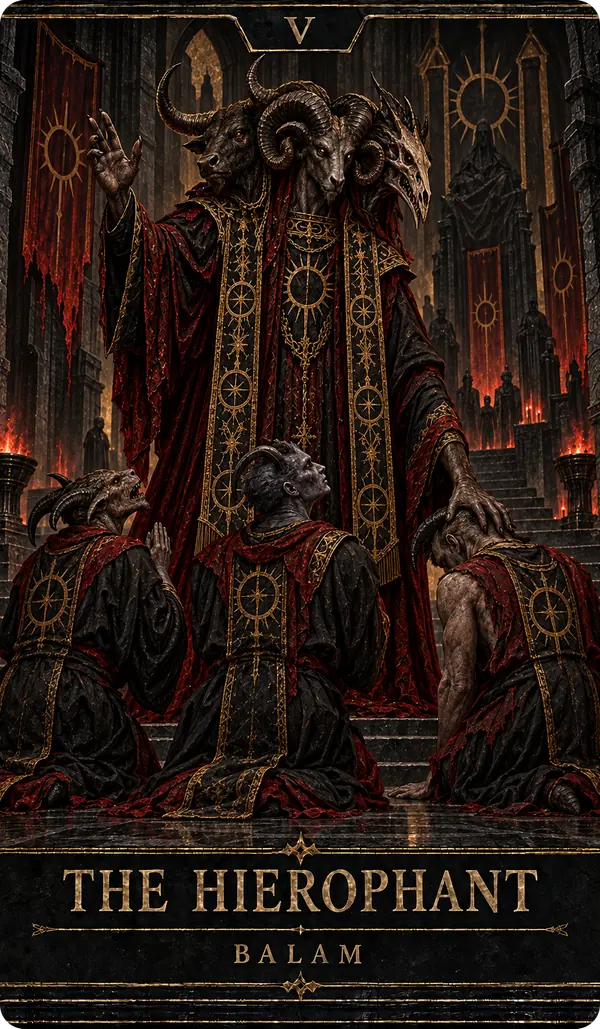 Crimson InfernoThe HierophantExamine inherited teachings, shared practices and the responsibilities of belonging.
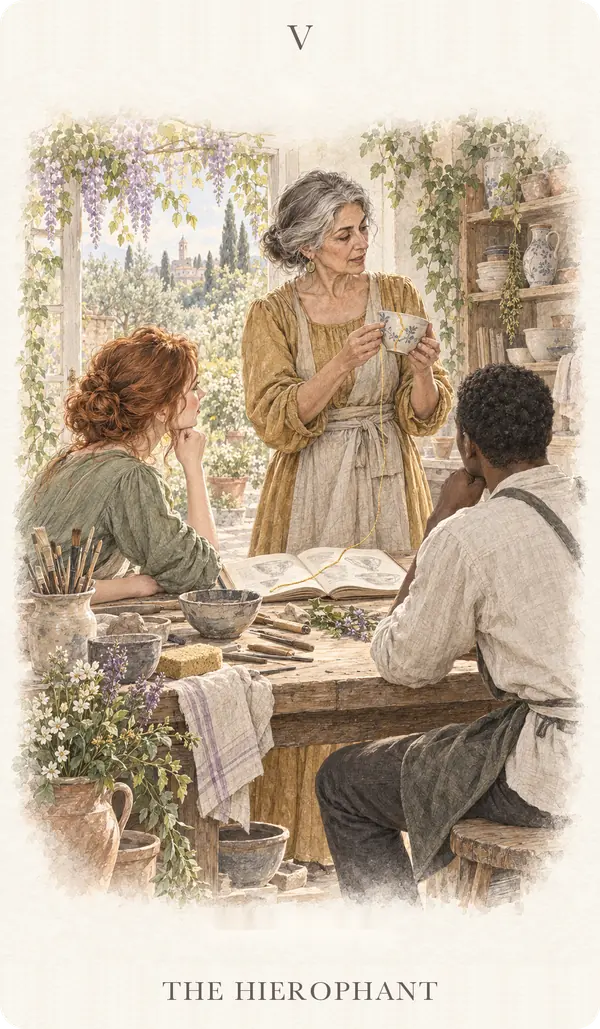 Everyday WondersThe HierophantTradition, shared knowledge, a common language and teaching.
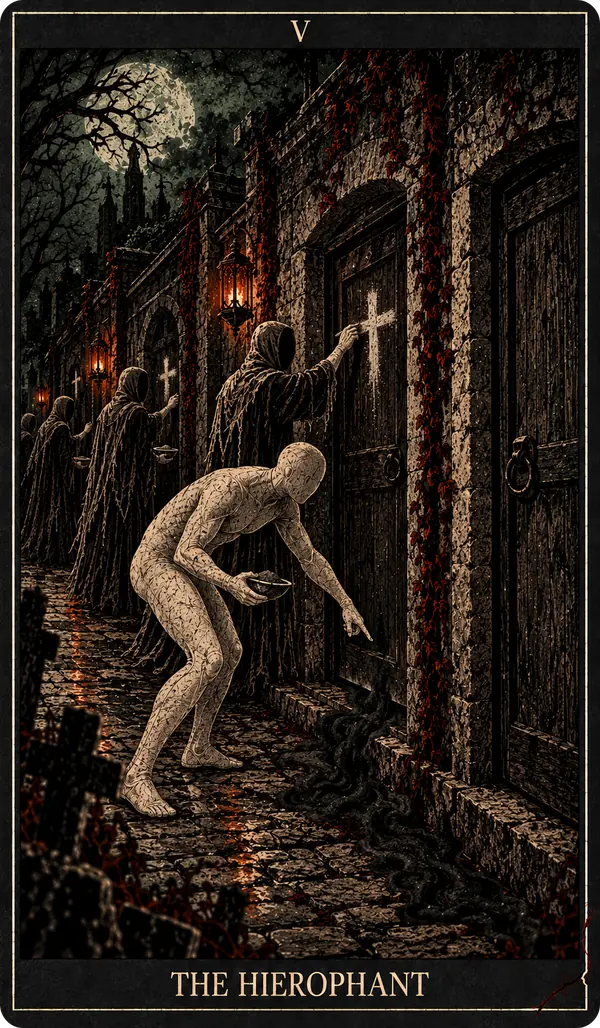 Mirror NightThe HierophantKeep only a rite that survives observation.
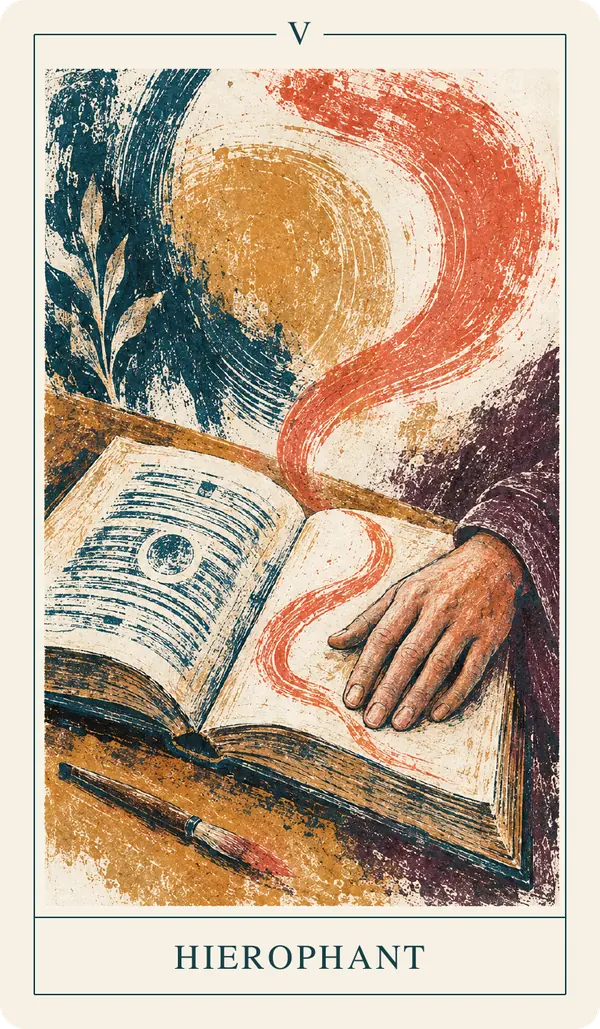 Self ContactThe HierophantLearn from a practice or teacher, then understand the reasons behind what you inherit.
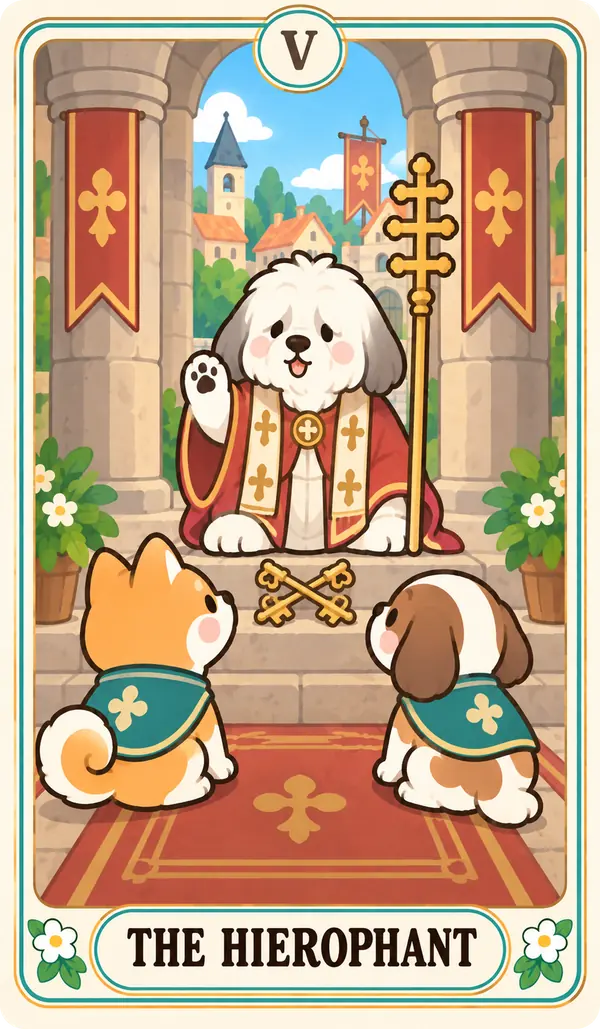 Shiba TownThe HierophantTradition; shared practice; learning from a teacher.
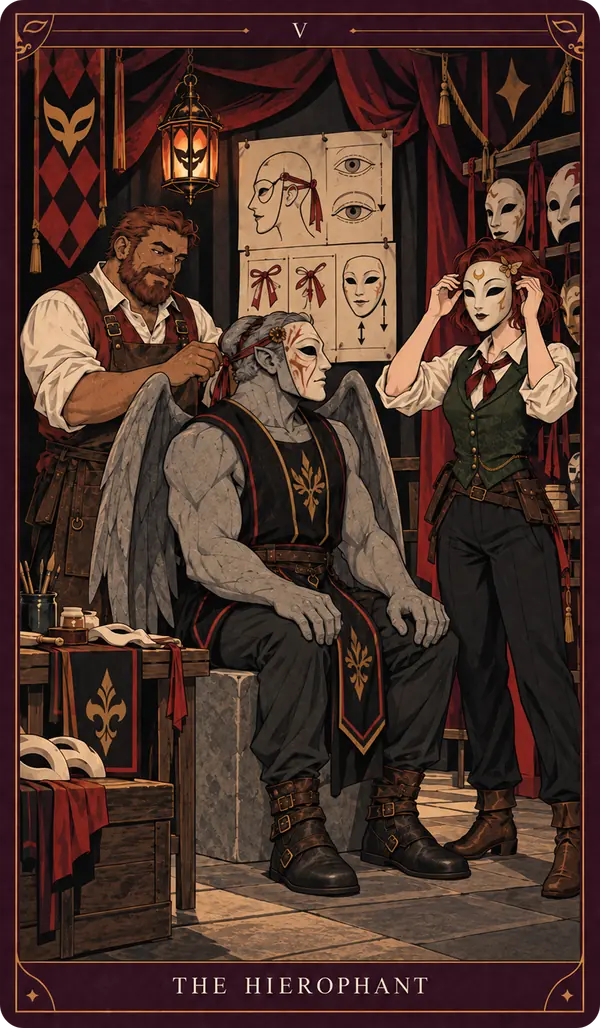 Velvet MasqueradeThe HierophantLearning a practice that helps its wearer.
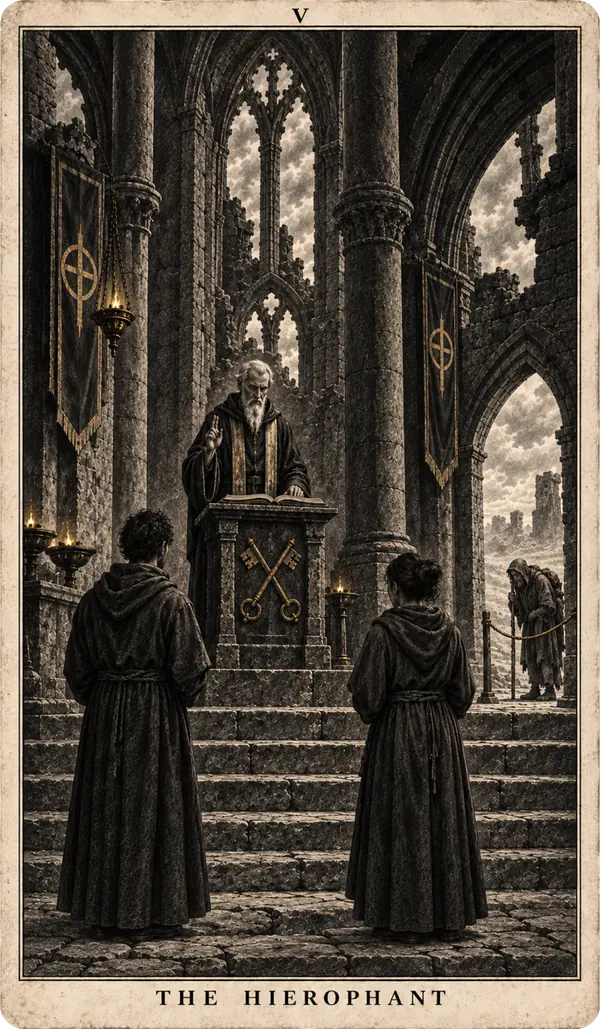 Four HorsemenThe HierophantLearn from a tested practice and make an ethical commitment within a community.
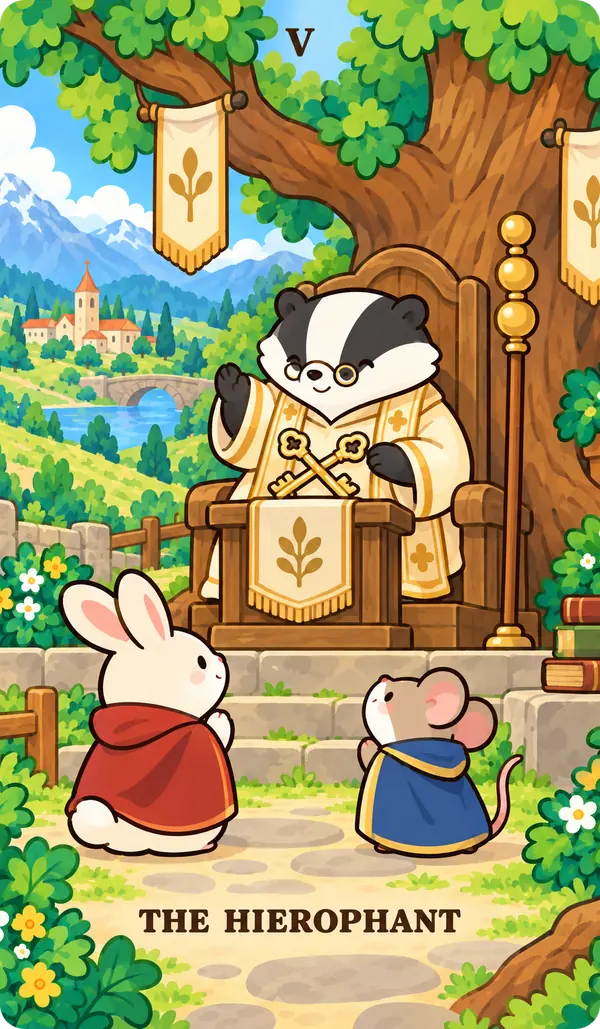 Four TrailsThe HierophantTeaching, shared tradition, belonging.
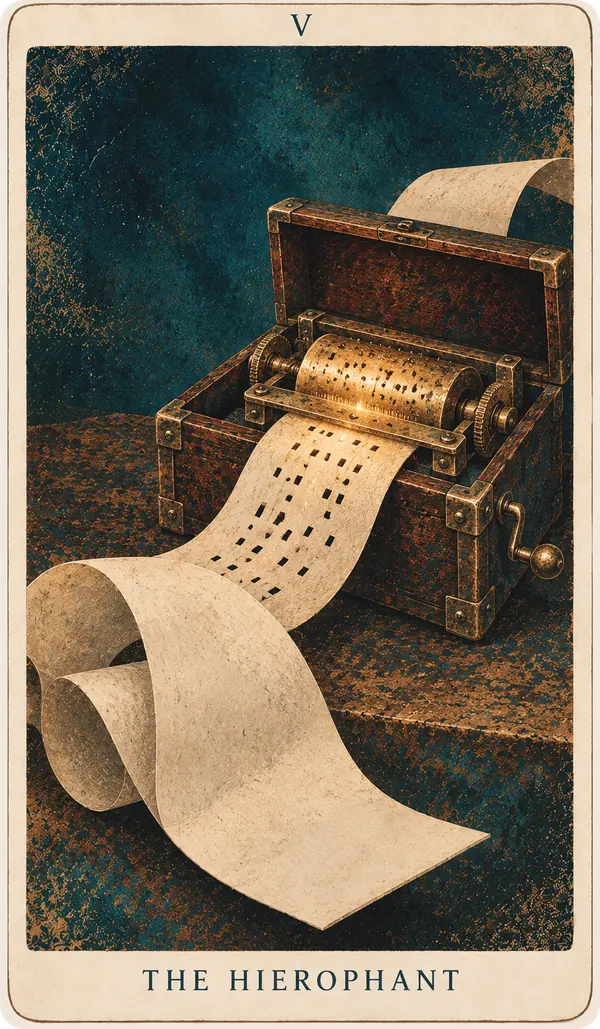 Living ThresholdThe HierophantA music box plays a handed-down tune and leaves room for a new note.
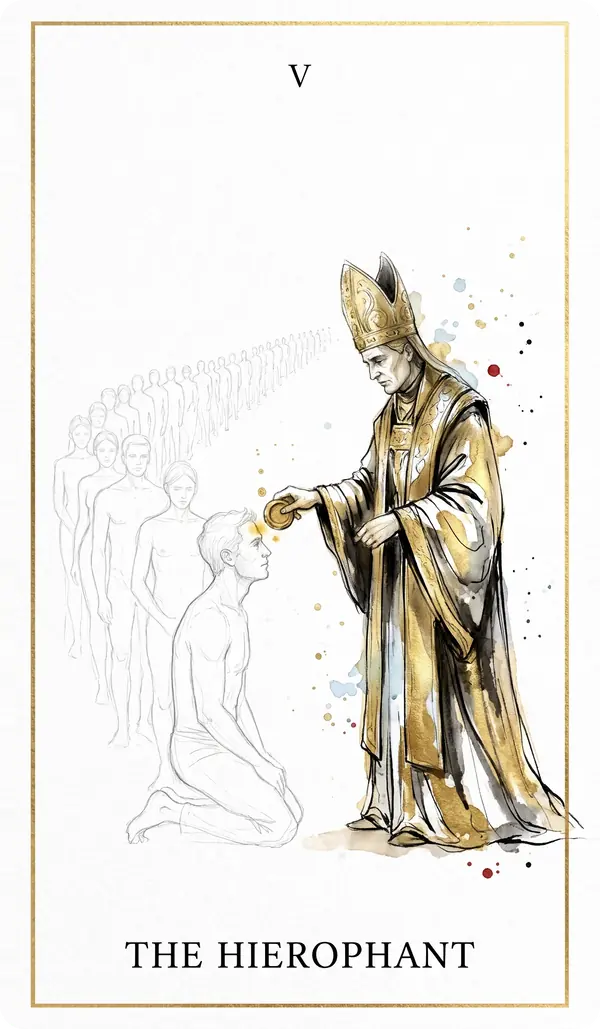 Colour of PowerThe HierophantThe seal opens doors talent cannot; stand in line if you must.
 BoundThe HierophantA knot tied in the old way, with generations holding the other end.
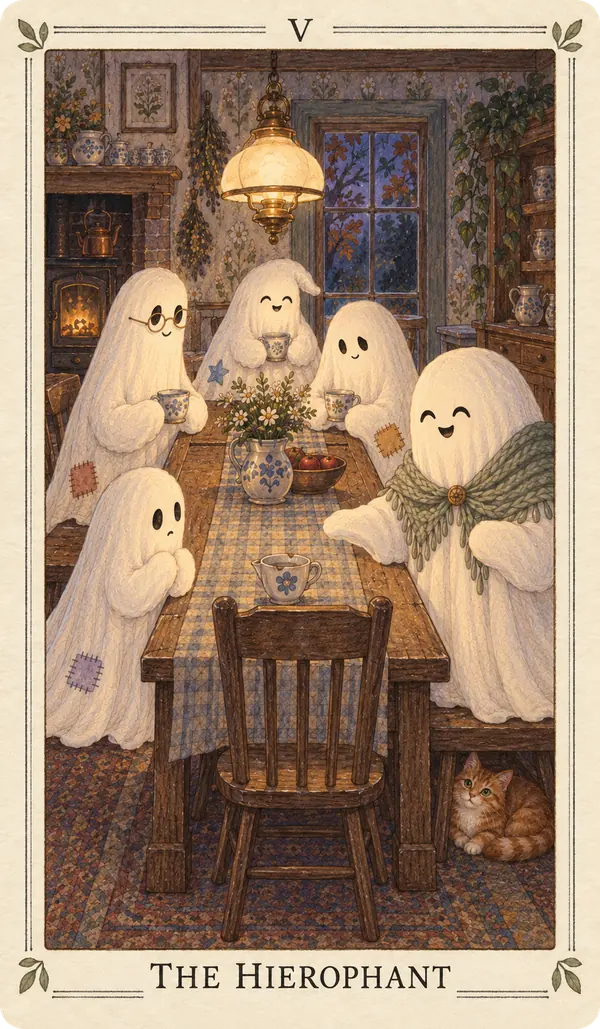 Cozy HauntThe HierophantReceive a shared practice that carries care.
 Celestial Night SkyThe HierophantLearning how to check.
Where it appears
Questions about this card
Is The Hierophant a yes or no card?
Upright, The Hierophant leans yes. Someone has already walked this path and left a method behind, so asking costs far less than inventing from scratch. Reversed, the lean is mixed: holding onto a rule past its use and rejecting good advice out of impatience point in different directions, and only one of them applies to you.
What does The Hierophant mean in love?
For love questions, The Hierophant upright says shared values and traditions, with a partner or with family, matter more here than they may seem. It also notes that a shared background is not the same as shared agreement. Reversed, it suggests a tradition, expectation or family rule may be shaping the relationship more than it should.
Does The Hierophant mean marriage?
Yes, it can. The Hierophant is the card of tradition and shared institutions, and marriage is the tradition it is most often linked with. In this deck the focus is the values and expectations around a relationship, and whether the two of you actually share the ones you assume you share. If marriage is on your mind, talking it through with your partner is how you find out where you both stand.