Three of Death
Three of Swords in Four Horsemen · Minor Arcana
LossIn short
Let the loss be named and witnessed.
Reversed
Building a life around reopening the same wound.
- Death
- Three
- Air
- The Kneeling Widower
- naming the loss
- grief that is witnessed
- accepting practical help
Upright
Let the loss be named and witnessed. The door he walked through every day now carries a wrapped body, and his hand is still on its carving.
Someone else brings a window frame from the house for the pyre, because the practical work of a funeral goes on beside grief. A violet cloth marks who has died, so that everyone passing knows.
He kneels in the open, where others can see him and help with what has to be done.
A question to sit with
“What familiar thing has changed its meaning forever?”
One step
If a loss is on your mind, tell one person who knew about it what it meant to you, or write it somewhere you can return to.
Reversed
Building a life around reopening the same wound. The hand can stay on the carved door long after the pyre has been lit and the ash has cooled.
Every day the familiar surface is touched again, and every day it means the same thing. Keeping someone in memory is a duty the living take on; living inside the moment of losing them is something else.
The helpers go on carrying frames, and the widower may stop seeing them.
A question to sit with
“Which door do I keep touching only to feel the loss again?”
One step
Notice one place or object you return to only to feel the loss again, then choose another way to remember, such as a name said aloud, and try it once.
How this deck reads reversed cards
Reversed, the act on the card turns inward, meets an obstacle, grows harsher or shows its price. On this road a reversal is not automatically the opposite, and not automatically something worse.
In love
A loss may be sitting between two people, asking to be spoken about.
- Supports
- Letting your partner see your grief.
- Watch for
- Grieving in separate rooms.
- One step
- Tell your partner one thing you miss, and listen to what they miss.
Grief may keep a relationship circling the same wound, so that every conversation returns there.
- Supports
- Remembering together in a way that also lets you rest.
- Watch for
- Using the loss to reopen old hurts between you.
- One step
- Agree on one way to remember that does not reopen the pain each time.
At work
At work there may be a loss to mark, a colleague or a way of working, that everyone keeps stepping around.
- Supports
- Colleagues who say the name aloud.
- Watch for
- Carrying on as if the empty desk were not there.
- One step
- Suggest a few quiet minutes with colleagues to remember what is gone.
An old loss may be brought back again and again at work, shaping every new plan.
- Supports
- Honouring what is gone without making it the measure of everything.
- Watch for
- Comparing every new person to the one who left.
- One step
- Name one current plan you have been measuring against the past, and look at it on its own terms.
A decision may need to wait until a loss has been named and witnessed.
- Supports
- Grieving first, deciding second.
- Watch for
- Deciding quickly so you do not have to feel.
- One step
- Hold back one decision that can wait until the loss has been spoken of.
Choices may keep circling back to the moment of loss.
- Supports
- Letting the loss inform the choice without ruling it.
- Watch for
- Choosing whatever keeps the wound open.
- One step
- Ask of one choice whether you would make it if you were not guarding this wound.
You may be learning to grieve where others can see.
- Supports
- Accepting practical help without apology.
- Watch for
- Hiding grief to spare others.
- One step
- Take up one offer of help before the week is out, even a small one.
Growth here may mean letting a wound close enough to carry.
- Supports
- Remembering without reopening.
- Watch for
- Treating pain as the only proof of love.
- One step
- Try one new way to remember this week and see how it sits with you.
A family may be gathering around a loss, each person with a hand on something familiar.
- Supports
- Rituals the family already shares.
- Watch for
- One person doing all the practical work alone.
- One step
- Divide one practical task among relatives so no one carries it all.
A family may keep returning to the same loss until other members feel unseen.
- Supports
- Making room for those who grieve differently.
- Watch for
- A household arranged around one absence.
- One step
- Check in with one family member who may feel overlooked.
Yes or no
YesNoNaming a loss with others present is possible and it helps, so the answer leans yes, toward being witnessed; nothing here undoes the loss.
Supports
- Grief is allowed to be seen here.
- Practical help is close at hand.
Limits
- What was lost cannot come back.
- A familiar thing may never look the same.
One step
Think of who could stand beside you while the loss is named.
A life arranged around the same wound leaves little room for anything else, so the answer leans no for now.
Supports
- The wound can be tended instead of reopened.
- Helpers are still nearby.
Limits
- Returning to the same pain may be taking up whole days.
- The people helping may be going unseen.
One step
Notice whether going back to the loss is a way of remembering, or a way of staying inside it.
What is in the picture
A widower kneels beside the carved door of his home. It now supports a wrapped body on an unlit funeral pyre. Another person carries a window frame from the ruined house. A violet cloth marks the dead; the widower’s hand remains on the familiar carving.
Practical help arrives while grief remains fixed on a familiar surface.
- carved house door laid as a bier
- wrapped body
- violet cloth
- unlit pyre of house timber
- kneeling widower
- helper carrying a window frame
- roofless stone house
This card in other decks
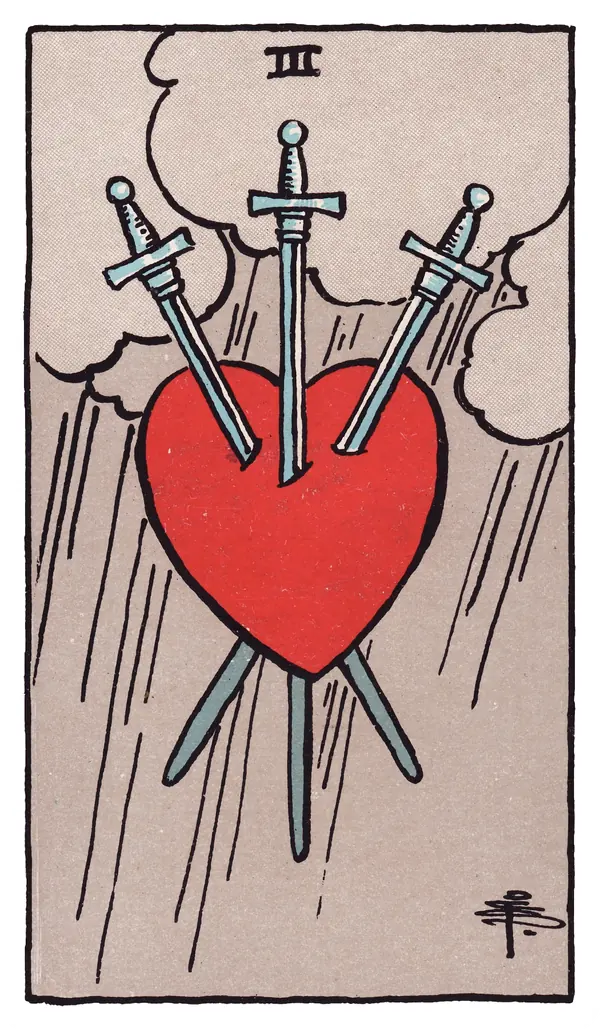 Rider–Waite–SmithThree of SwordsReal heartbreak or a painful truth deserves to be felt honestly, without minimizing how sharp it is.
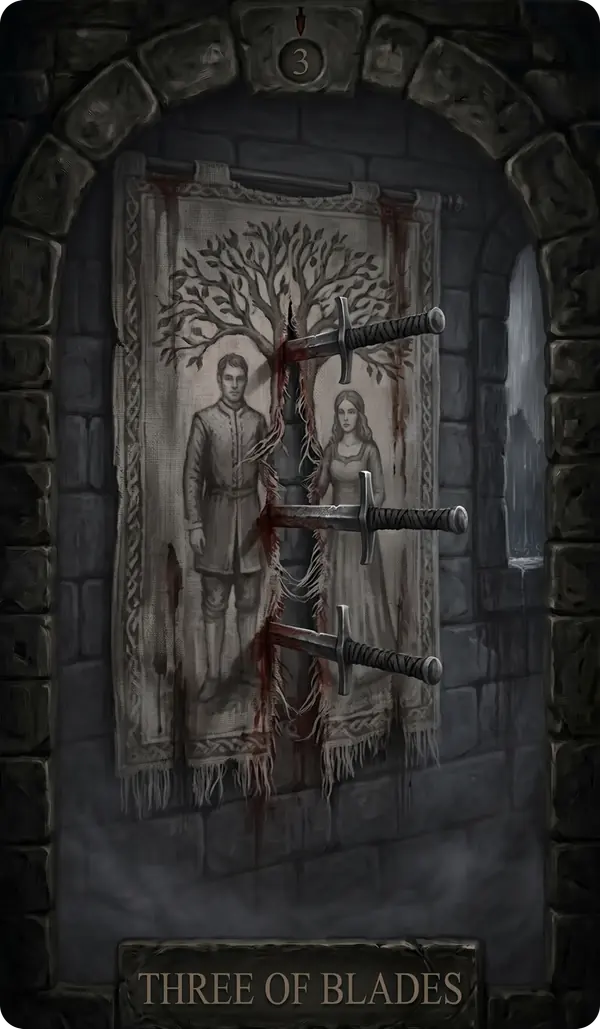 FamiliaThree of BladesA rift inside the family that is named and grieved openly, which is why it can start to close.
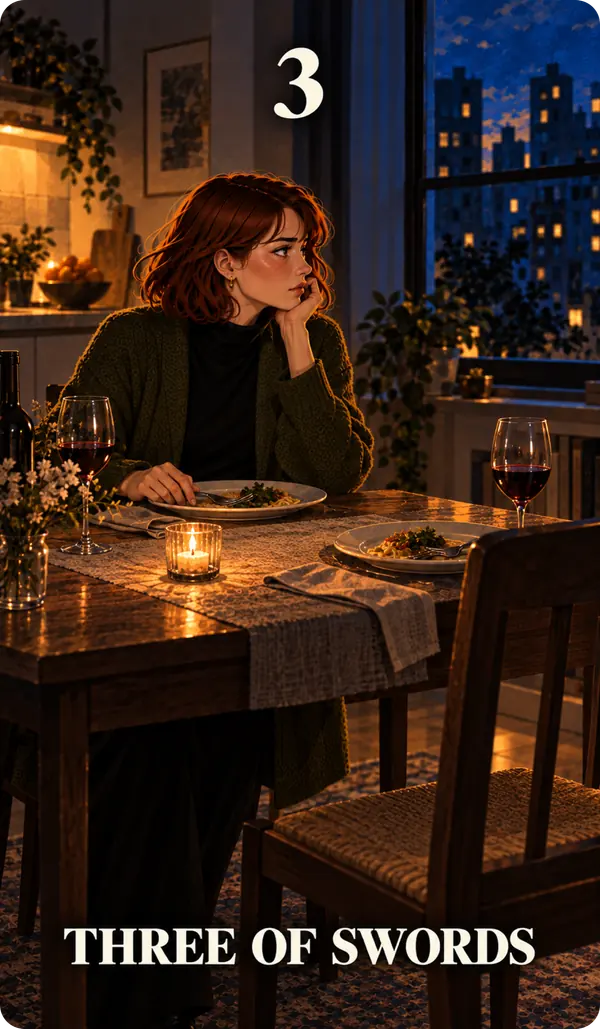 City of WindowsThree of SwordsAcknowledging the hurt without instantly turning it into a whole story about the other person.
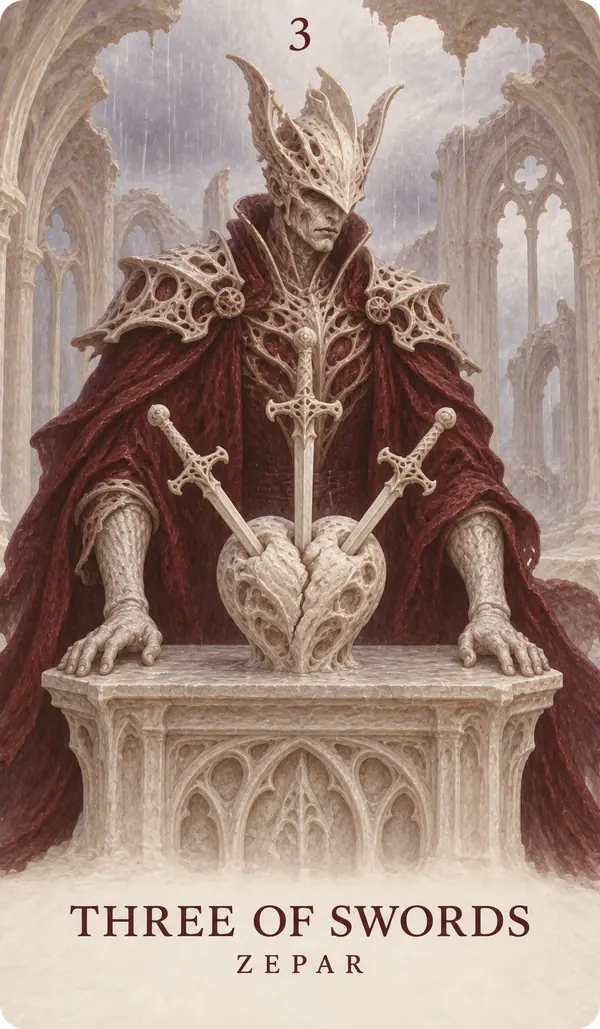 CarnalThree of SwordsPain makes a divided bond visible.
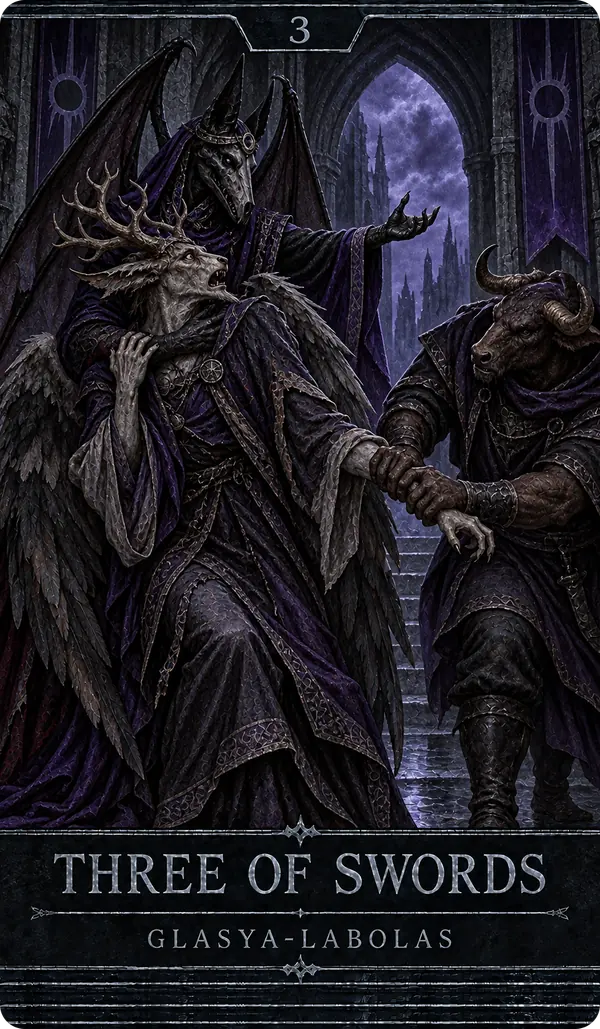 Crimson InfernoThree of SwordsName a painful truth without making it your whole identity.
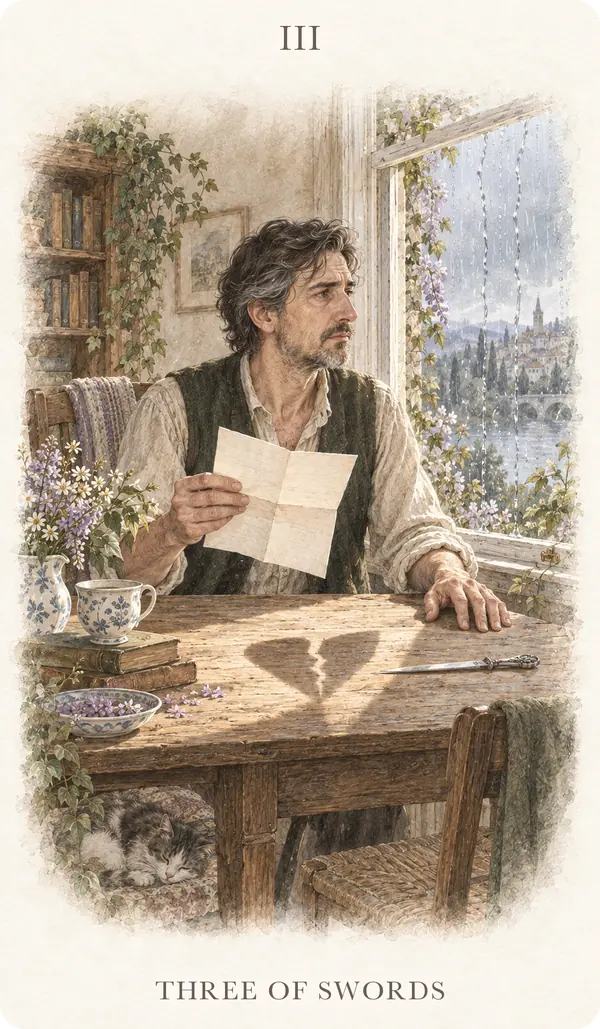 Everyday WondersThree of SwordsThe pain of seeing a hard truth clearly.
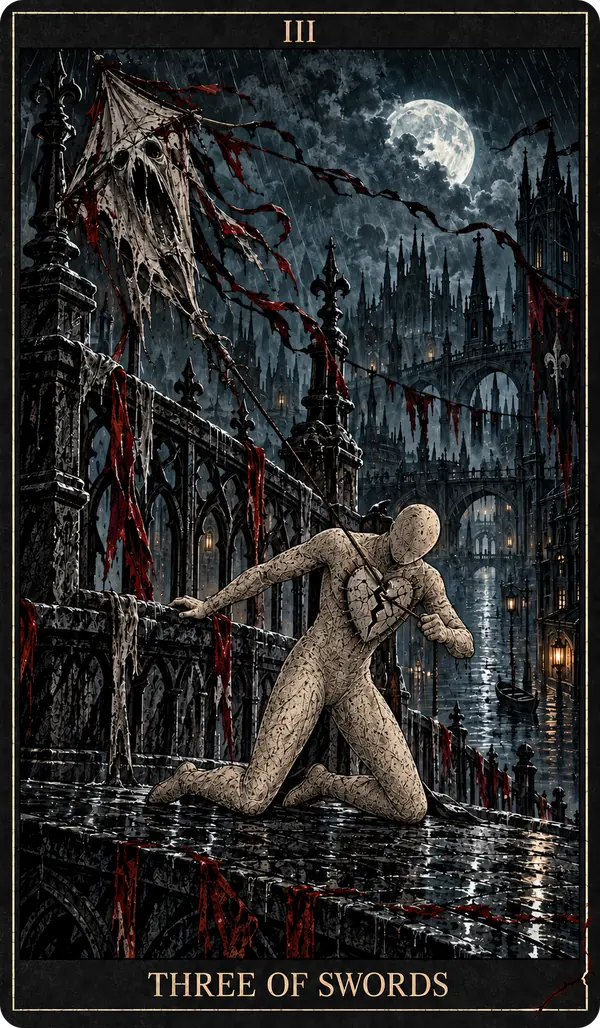 Mirror NightThree of SwordsName outside harm and personal repetition separately.
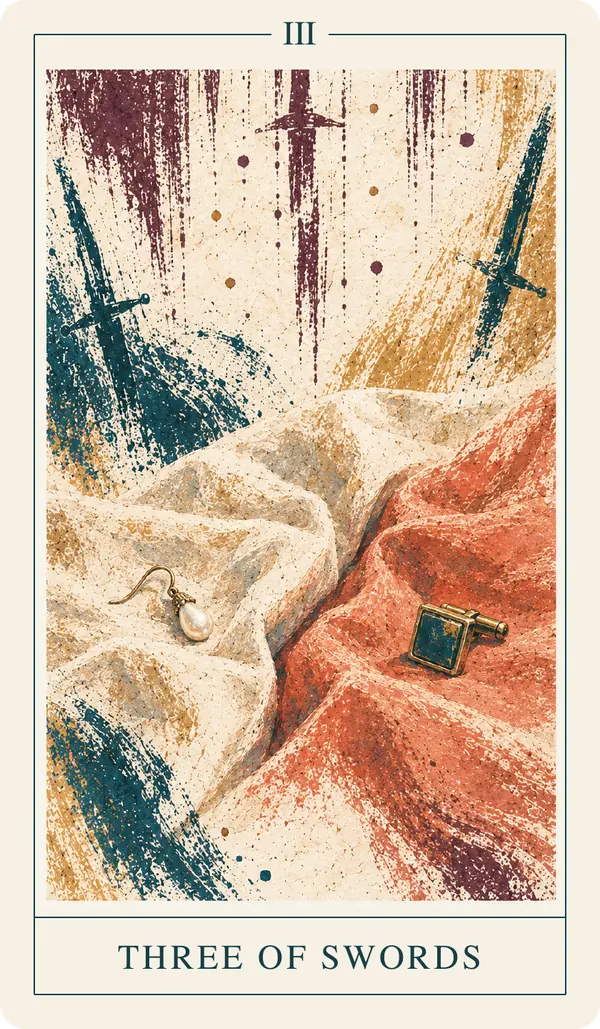 Self ContactThree of SwordsNaming a painful truth allows grief and clarity to coexist.
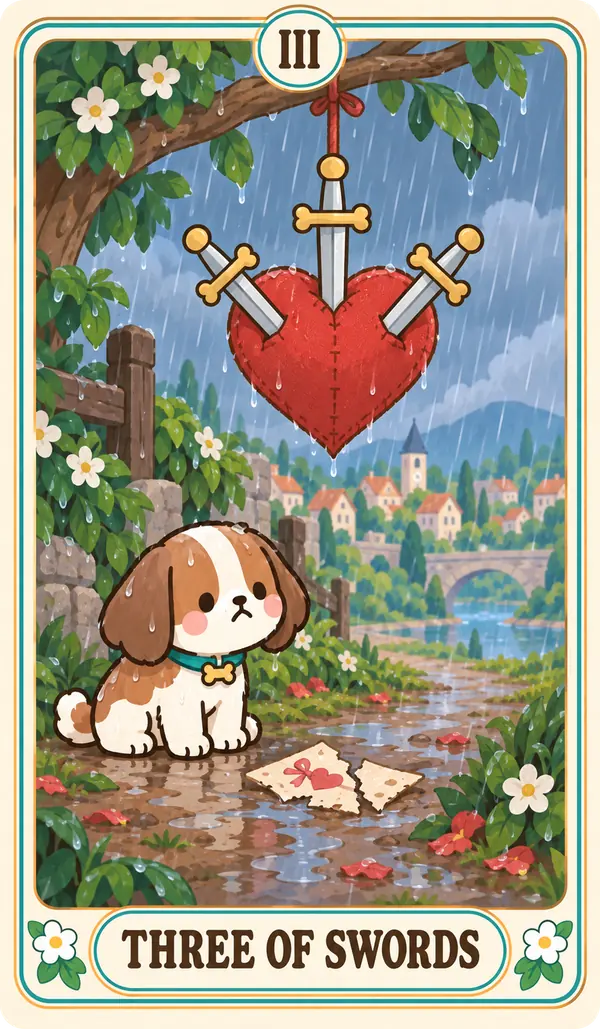 Shiba TownThree of SwordsHeartache; painful truth; a rupture that needs acknowledgment.
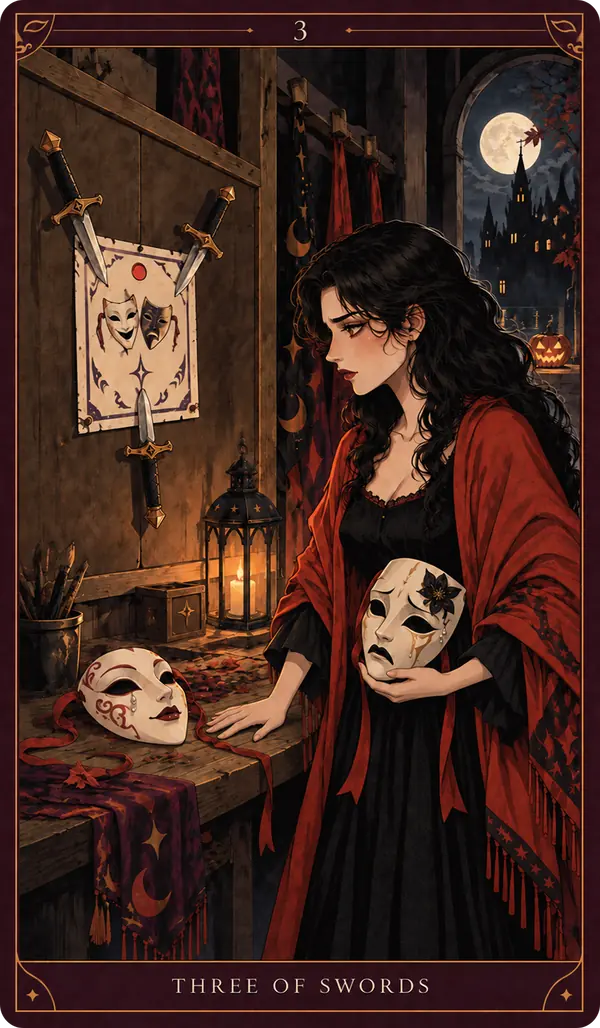 Velvet MasqueradeThree of SwordsHeartbreak around a changed agreement.
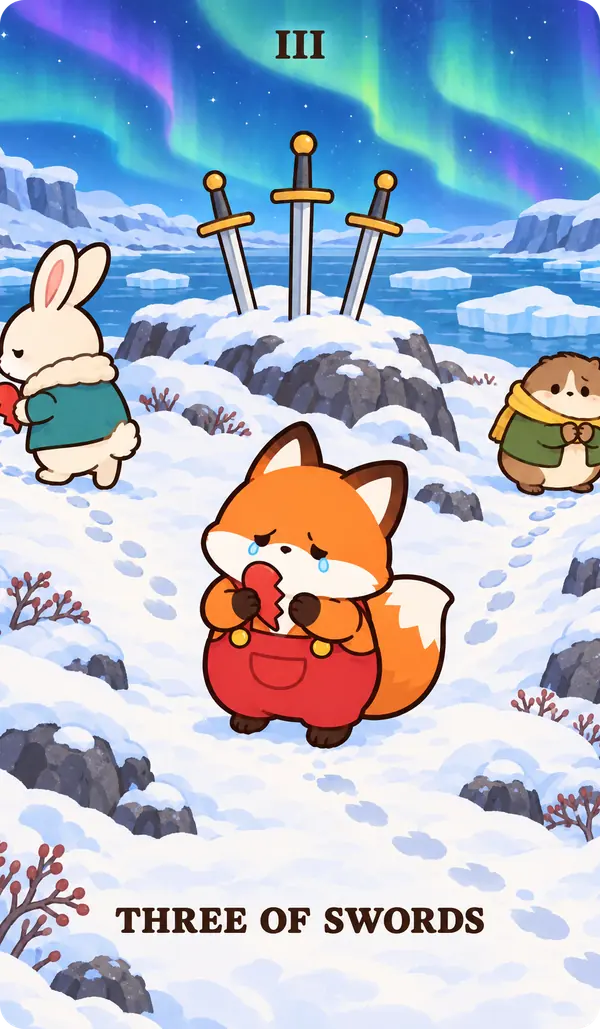 Four TrailsThree of SwordsHeartbreak, painful truth, separation.
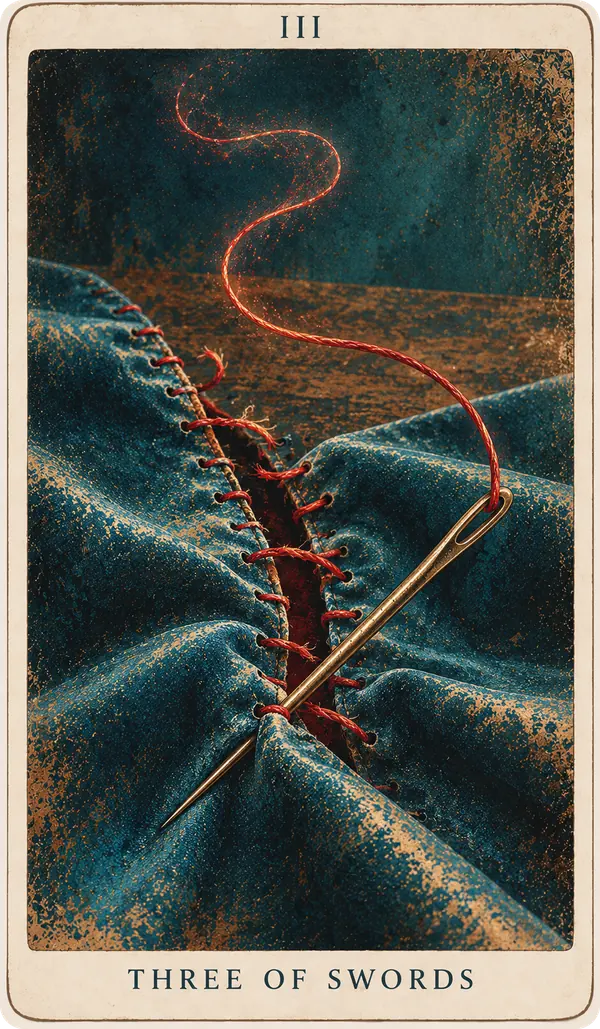 Living ThresholdThree of SwordsA strained seam comes apart, showing pain and the cloth still sound.
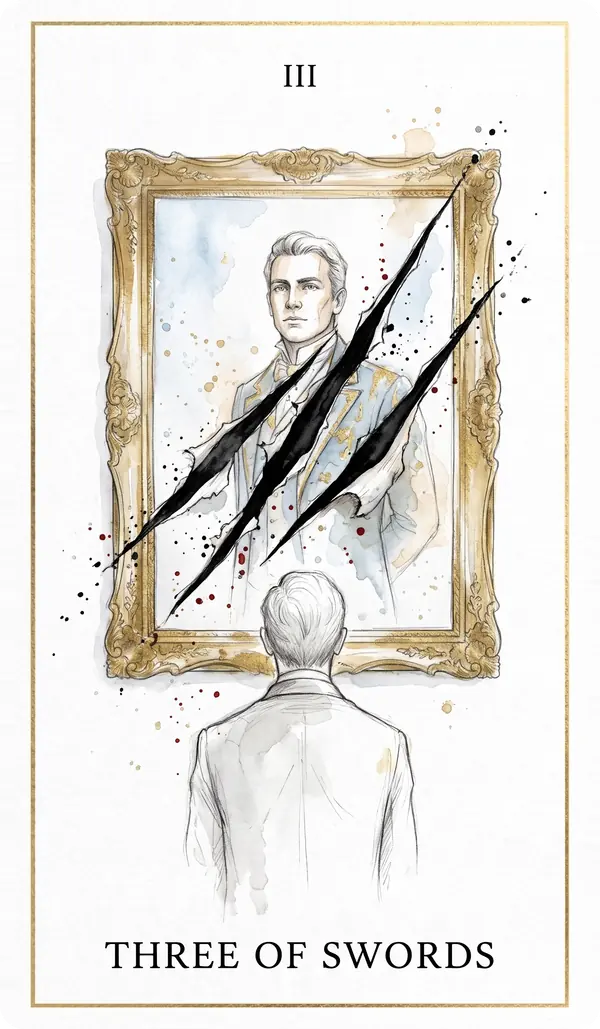 Colour of PowerThree of SwordsA truth has cut the image, not the man.
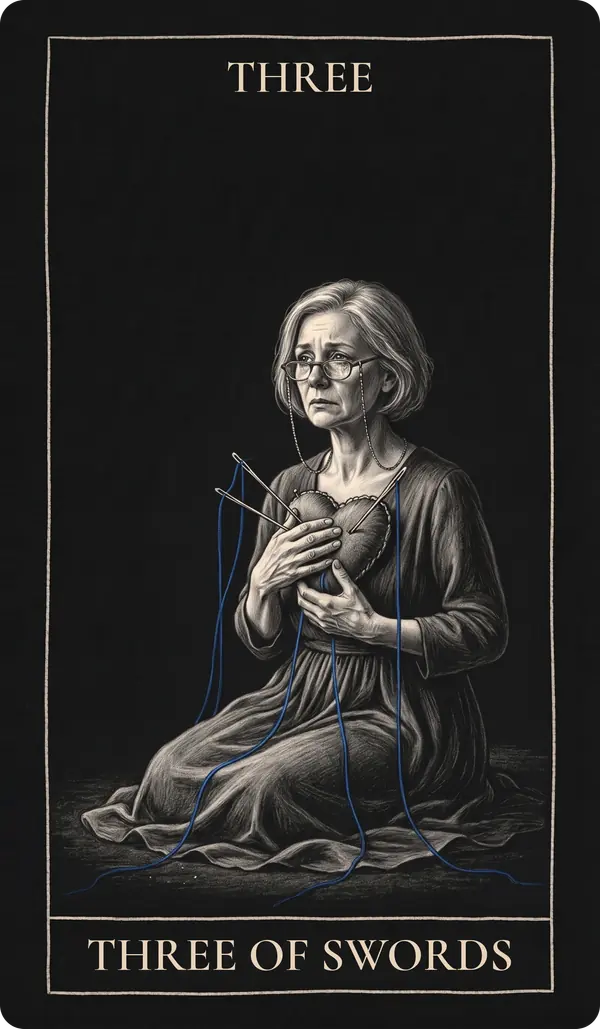 BoundThree of SwordsPain from words: a truth that wounded, a phrase you cannot forget.
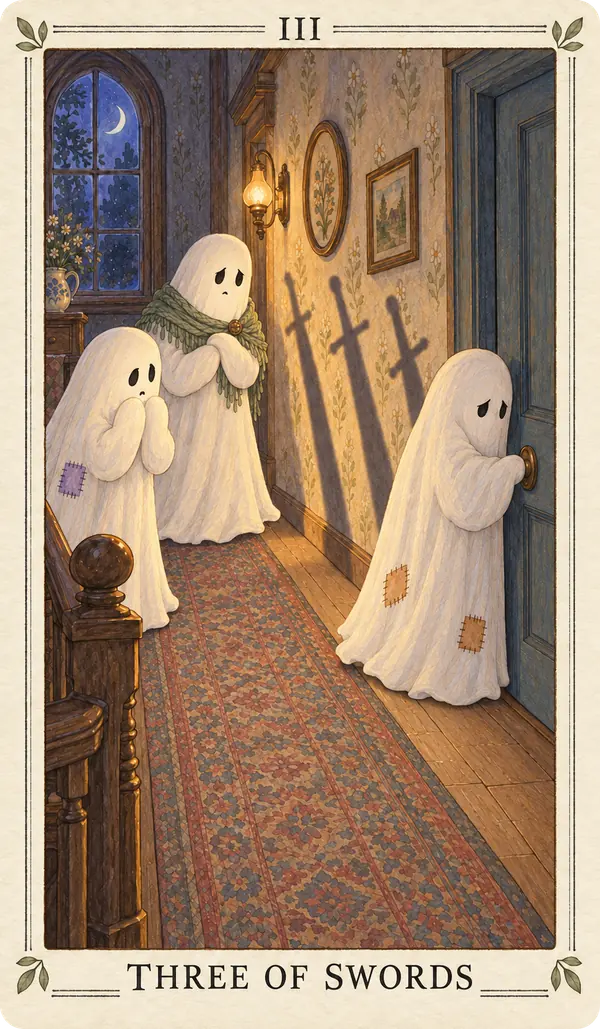 Cozy HauntThree of SwordsAcknowledge pain and its cause.
 Celestial Night SkyThree of SwordsTruth about a trusted person’s mistake.
Where it appears
Questions about this card
Is Three of Swords a yes or no card in Four Horsemen?
Three of Swords leans yes upright toward being witnessed: naming a loss with others present is possible and helps, though nothing here undoes the loss. Reversed, it leans no for now, because a life arranged around the same wound leaves little room for anything else. Think of who could stand beside you while the loss is named.
What does Three of Swords mean in love?
Pulled for love, Three of Swords may point to a loss sitting between two people, asking to be spoken about. Reversed, grief may keep a relationship circling the same wound. Tell your partner one thing you miss and listen to what they miss, and agree on one way to remember that does not reopen the pain each time.
What does Three of Swords mean reversed in Four Horsemen?
Read reversed, Three of Swords describes building a life around reopening the same wound. Notice whether going back to the loss is a way of remembering or a way of staying inside it. If it is the second, tell one trusted person, and ask what remembering without reopening could look like.