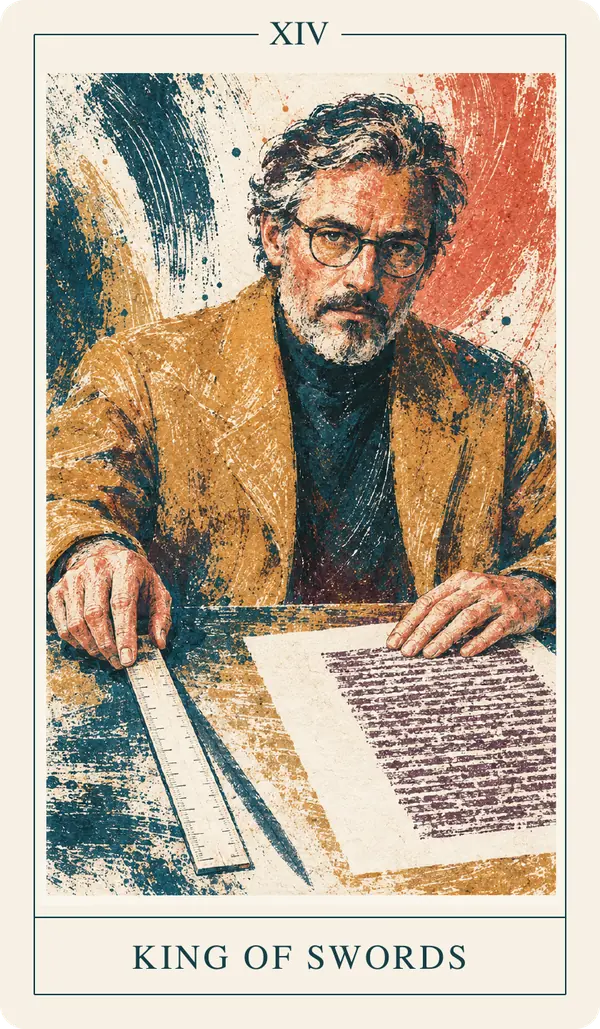
Three of Swords
Three of Swords in Self Contact · Minor Arcana
GrowthIn short
Naming a painful truth allows grief and clarity to coexist.
Reversed
Pain may be repeated through harsh retellings of what happened, or sorrow may be denied.
- Swords
- Three
- Air
- The One Who Names
- the tear can be named
- naming a painful truth
- grief and clarity together
Upright
Naming a painful truth allows grief and clarity to coexist.
In the image the earring and the cufflink lie on their own cloths, and the fold between them stays open.
A question to sit with
“What hurts, before I add a judgement about what it means?”
One step
Write what hurts in one plain sentence, without adding what it means about you.
Reversed
Pain can come back each time the hurt is retold in harsh words, or sorrow can be pushed away as if nothing tore. Turned over, the three traces stop simply crossing the fold and cut into it again, or the earring and the cufflink get tucked out of sight.
Say what hurt in plain words, without a verdict attached.
A question to sit with
“Is it the pain that keeps cutting, or the story I keep telling about it?”
One step
Notice one harsh story you tell about the hurt, and write a plainer version beside it.
How this deck reads reversed cards
Reversed, the same brushstroke meets resistance. The hand on the cloth may hold too tightly, pull away or keep its feeling to itself, and the quality of the card turns into a blockage, an excess or a quiet inward process. It is not the opposite of the upright card and not a worse fate, only the same gesture under strain.
In love
A hurt in love may be ready to be named plainly, earring and cufflink each on its own cloth, before any judgement is added.
- Supports
- Naming the hurt in plain words.
- Watch for
- Adding blame before the hurt itself is felt.
- One step
- Write what hurts in one sentence, with no judgement about what it means.
Pain in love may be repeating through harsh stories you tell yourself, or sorrow could be denied and folded away.
- Supports
- Kinder words for your own hurt.
- Watch for
- Replaying a painful moment in a crueller voice each time.
- One step
- Catch one harsh sentence you repeat about a hurt, and write a gentler true one beside it.
At work
A painful truth at work may need saying, and saying it cleanly could bring sorrow and clarity together.
- Supports
- Clear words for a hard disappointment.
- Watch for
- Hiding a hurt behind professionalism.
- One step
- Say one work disappointment to yourself plainly before deciding what to do about it.
A work hurt may be repeated through a harsh story, or its sorrow brushed aside as if it did not matter.
- Supports
- Separating the event from the verdict on yourself.
- Watch for
- Turning a setback into proof you are not good enough.
- One step
- Set the event down as plain facts, then cross out every judgement you added.
Either option may carry some pain, and naming it honestly could clear the choice, three fine lines drawn across the fold.
- Supports
- Admitting that a choice can hurt and still be right.
- Watch for
- Looking for the option that costs nothing.
- One step
- For each option, note plainly the sorrow it might bring.
A story built around old pain may be driving the choice, or an effort to deny the sadness it holds.
- Supports
- Feeling the hurt before deciding.
- Watch for
- Choosing to avoid any reminder of pain.
- One step
- Before choosing, sit for five minutes with whatever sadness comes up.
Grief and clarity sitting together, the hurt named without a story layered on top, may be how you grow now.
- Supports
- Sorrow that is allowed to be clear.
- Watch for
- Explaining pain away before feeling it.
- One step
- Give yourself ten quiet minutes today to feel one hurt without fixing it.
Neither denying sorrow nor sharpening it, letting the three fine traces fade on their own, may be the narrow way through.
- Supports
- Telling the story less often and more truly.
- Watch for
- Pretending nothing hurts.
- One step
- Retell one painful memory once, gently, and then put it away for the day.
Named simply and without blame, a painful family truth may become easier to carry.
- Supports
- Gentle honesty about a family hurt.
- Watch for
- Turning a hurt into an accusation.
- One step
- If there is a family hurt, tell one trusted person about it in a sentence.
Old family pain may be kept alive by a harsh story, or sorrow at home could be denied so everyone can carry on.
- Supports
- Room for sadness in the family.
- Watch for
- Retelling the family wound the same harsh way.
- One step
- Make room at home for one family sadness to be mentioned without anyone fixing it.
Yes or no
MixedNoTruth and hurt seem to arrive together, so the answer is mixed.
Supports
- Naming the hurt may bring some clarity.
- Grief and understanding can sit together.
Limits
- The pain is real and asks for time.
- Clarity may not ease everything at once.
One step
Ask whether you can say what hurts before deciding what it means.
The hurt seems caught in a loop right now, so this leans no.
Supports
- The feeling is still there to be met.
- A plainer story is possible.
Limits
- Harsh self-talk may be deepening the hurt.
- Sorrow pushed aside tends to come back.
One step
Try telling the story once without blame, even just to yourself.
What is in the picture
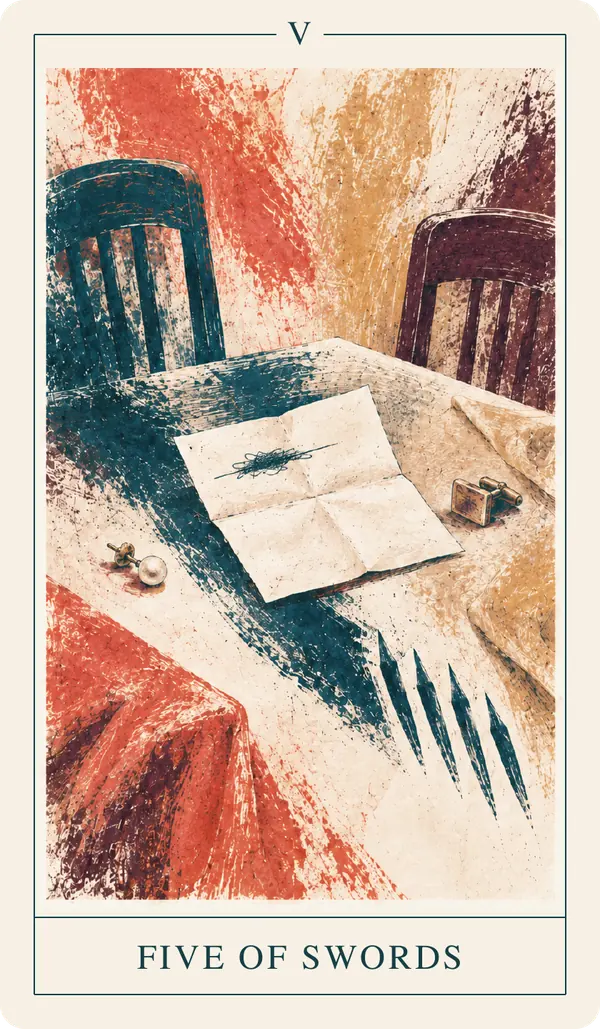
A pearl earring and a cufflink lie on separate pieces of cloth.
A fold opens between them, crossed by three fine blade-like traces. FIVE OF CUPS gives loss room to be felt. QUEEN OF SWORDS asks what boundary becomes necessary after the hurt.
- a pearl earring on pale cloth
- a square cufflink on coral cloth
- a fold opening between the two cloths
- three fine blade-like traces above
- small drops of plum and ochre
This card in other decks
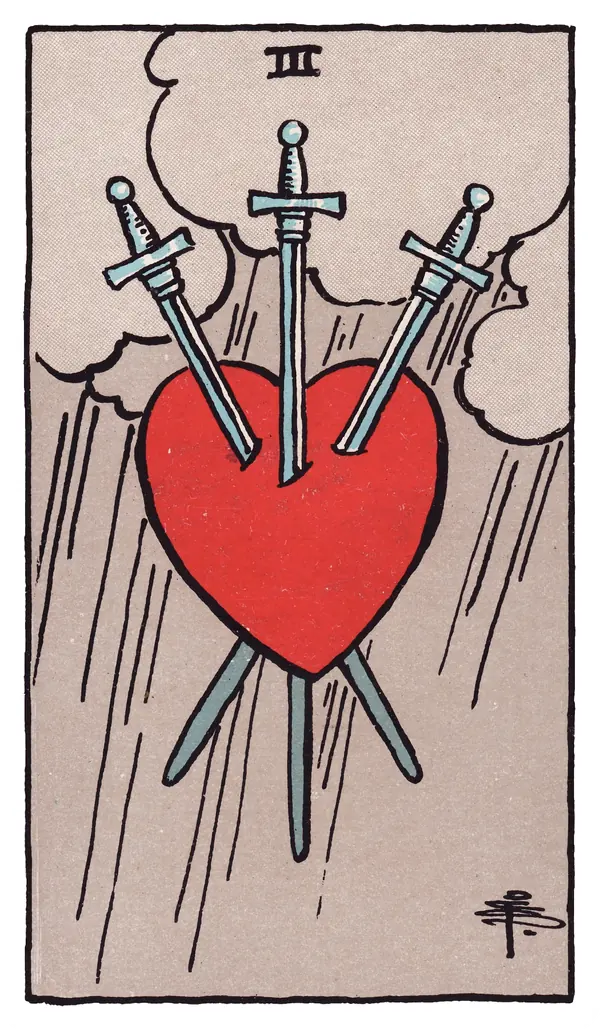 Rider–Waite–SmithThree of SwordsReal heartbreak or a painful truth deserves to be felt honestly, without minimizing how sharp it is.
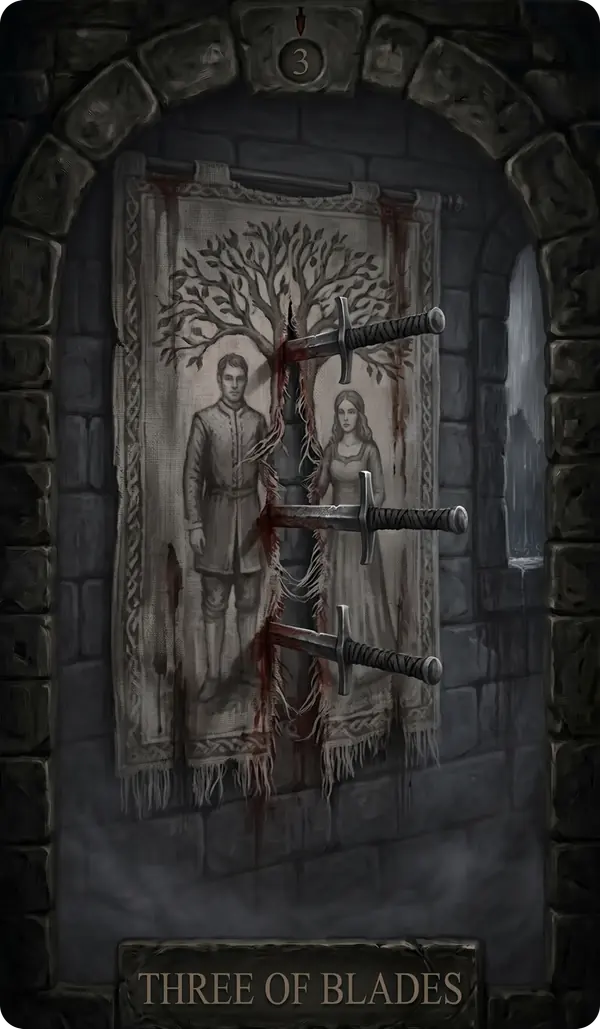 FamiliaThree of BladesA rift inside the family that is named and grieved openly, which is why it can start to close.
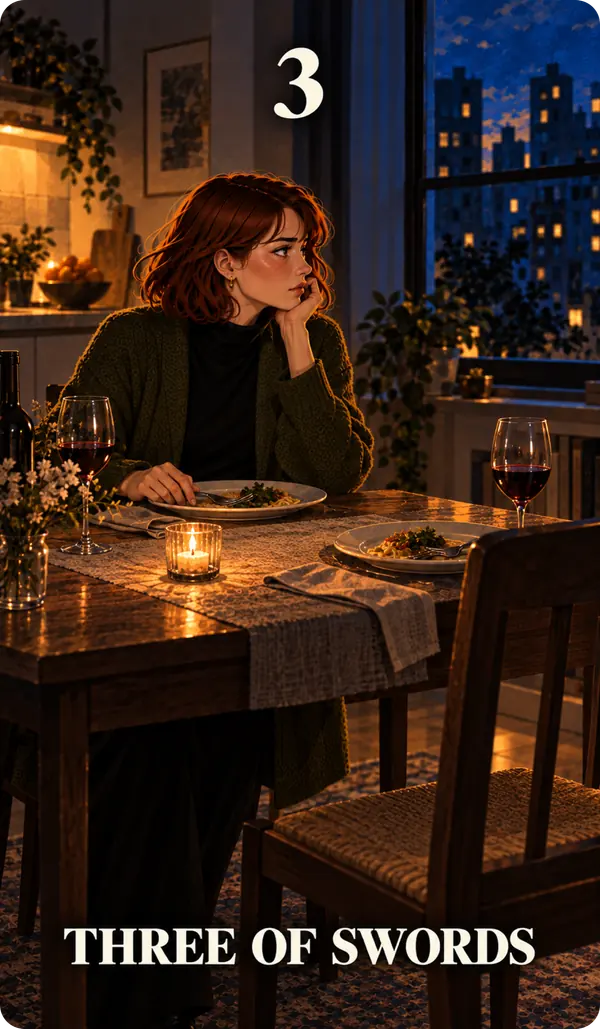 City of WindowsThree of SwordsAcknowledging the hurt without instantly turning it into a whole story about the other person.
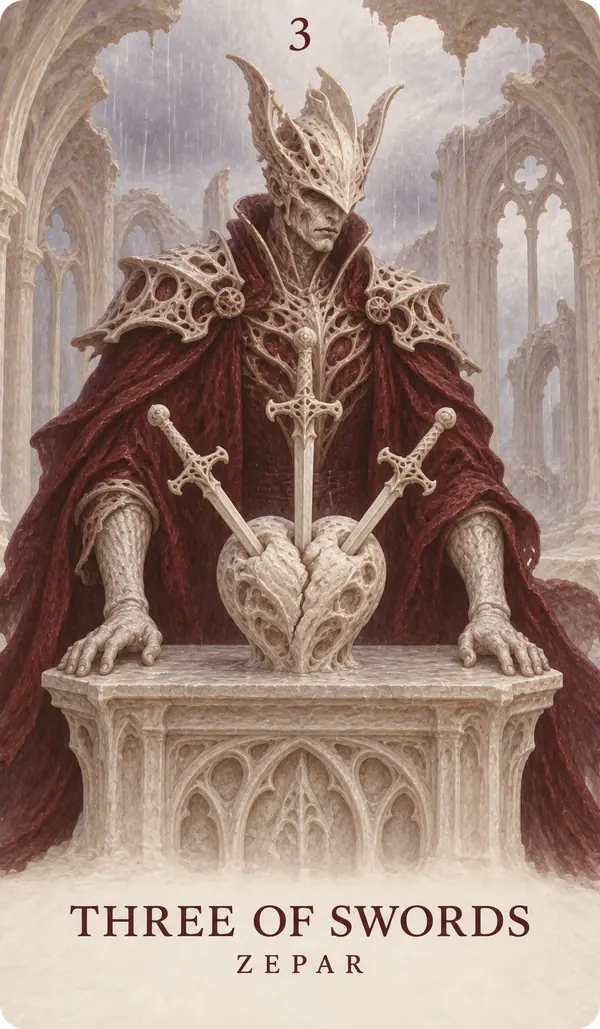 CarnalThree of SwordsPain makes a divided bond visible.
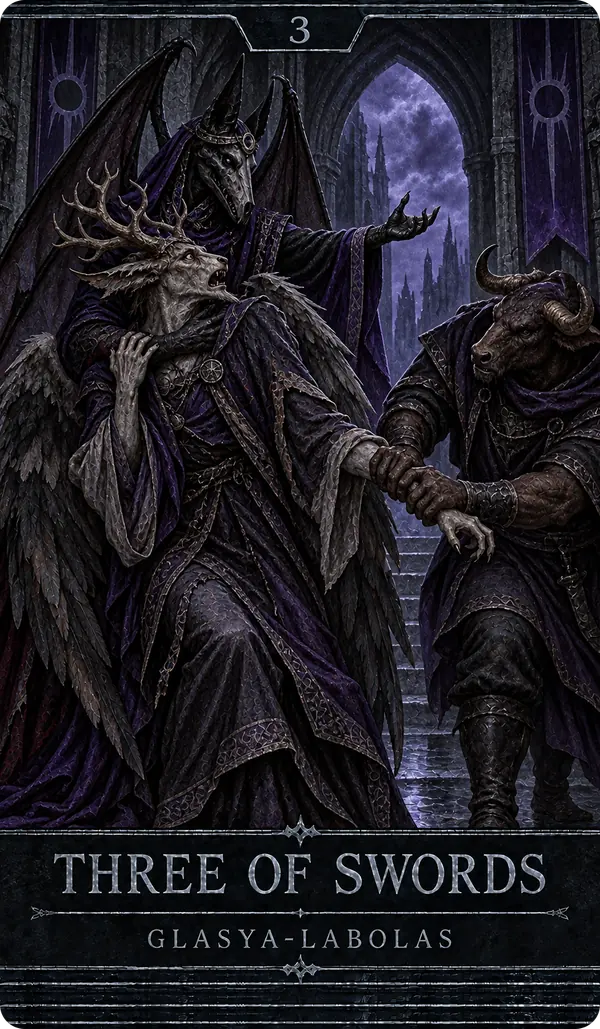 Crimson InfernoThree of SwordsName a painful truth without making it your whole identity.
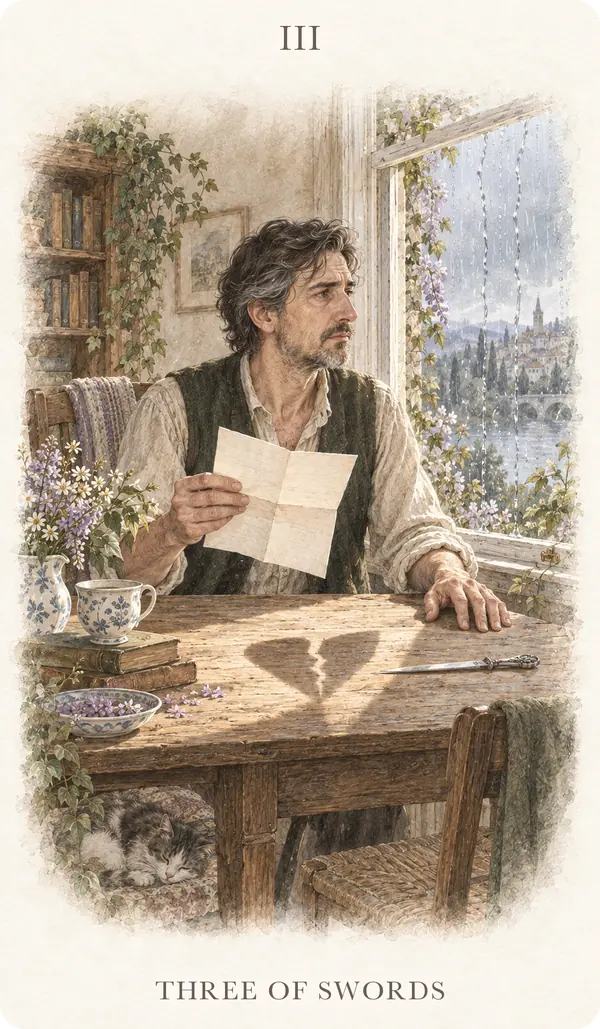 Everyday WondersThree of SwordsThe pain of seeing a hard truth clearly.
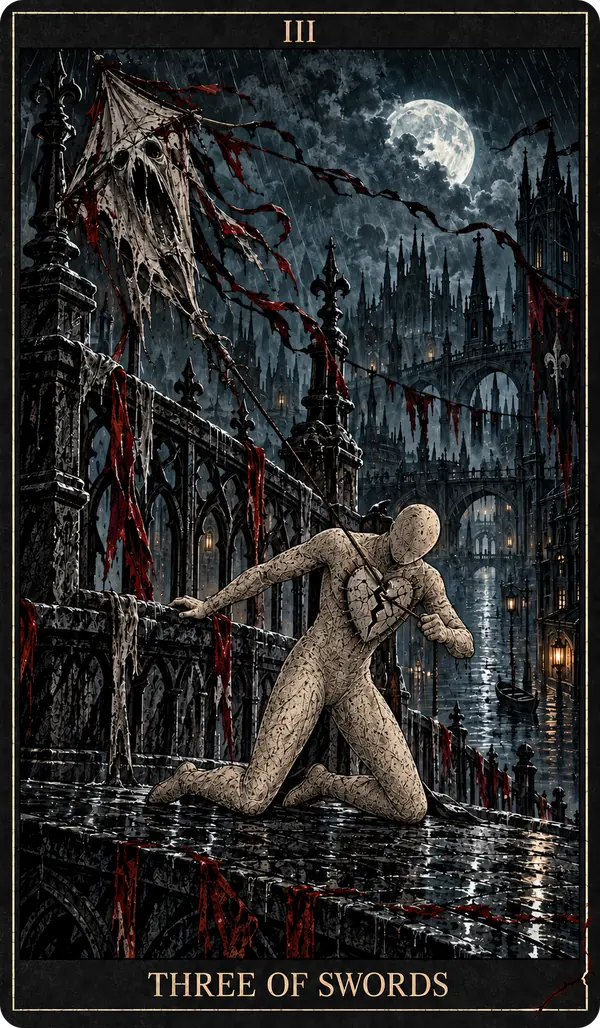 Mirror NightThree of SwordsName outside harm and personal repetition separately.
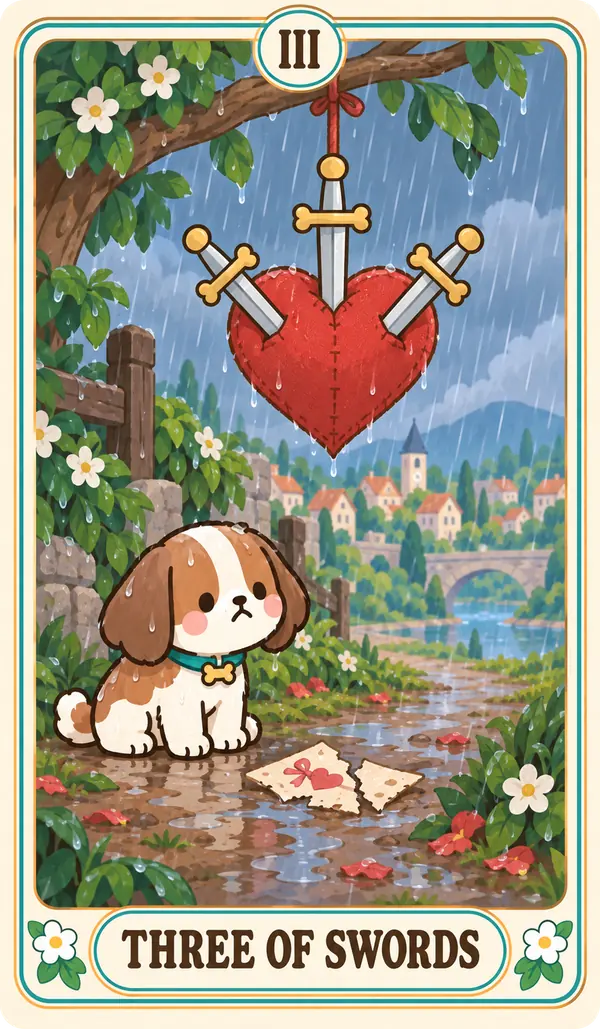 Shiba TownThree of SwordsHeartache; painful truth; a rupture that needs acknowledgment.
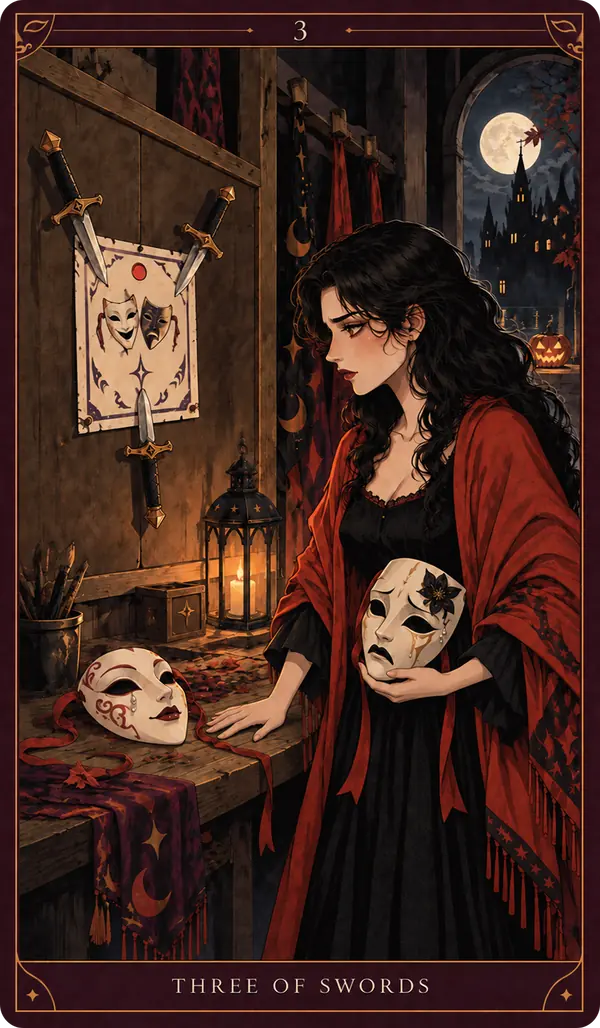 Velvet MasqueradeThree of SwordsHeartbreak around a changed agreement.
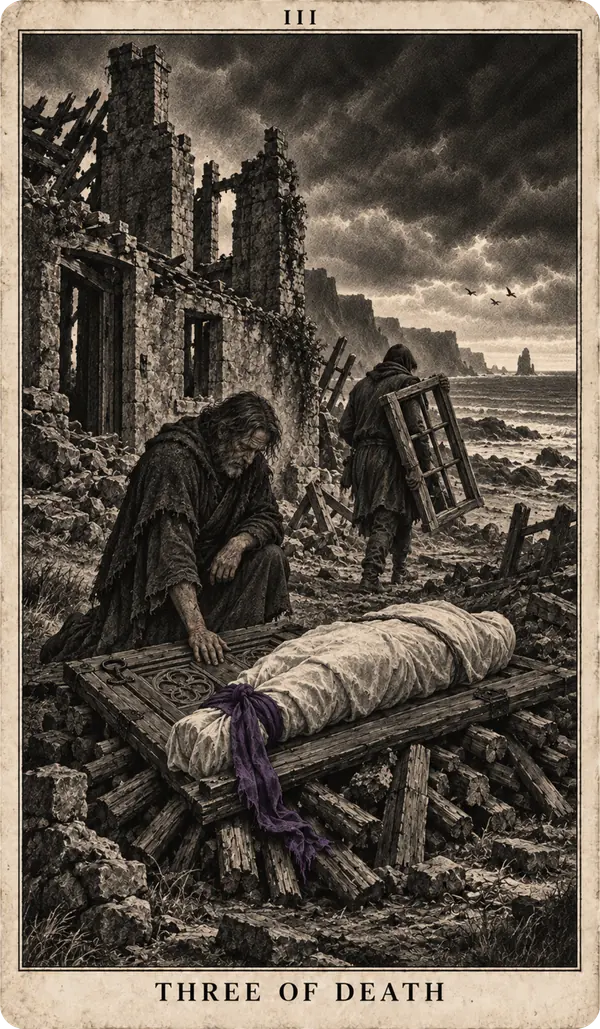 Four HorsemenThree of DeathLet the loss be named and witnessed.
 Four TrailsThree of SwordsHeartbreak, painful truth, separation.
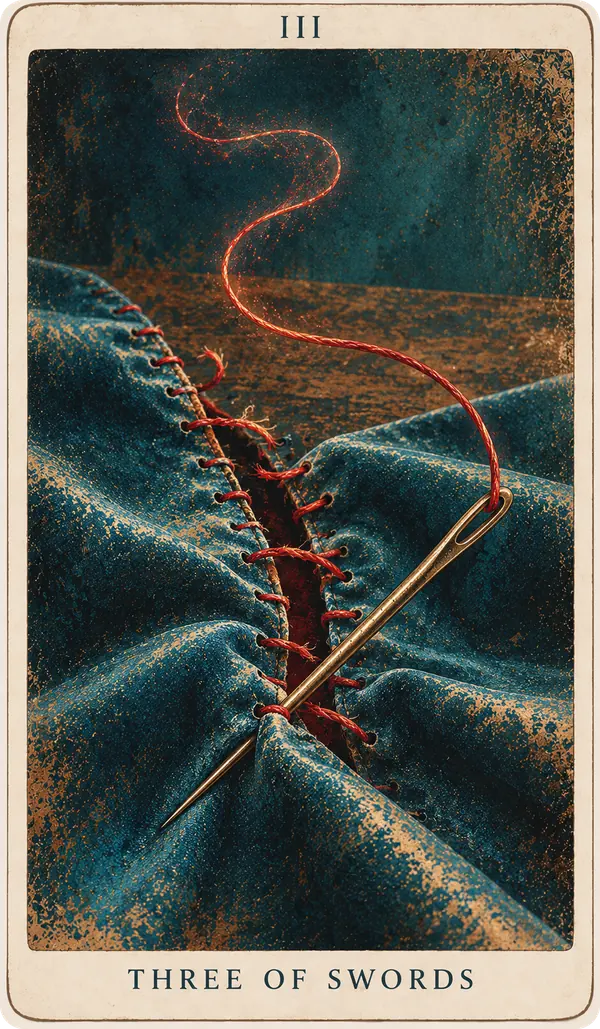 Living ThresholdThree of SwordsA strained seam comes apart, showing pain and the cloth still sound.
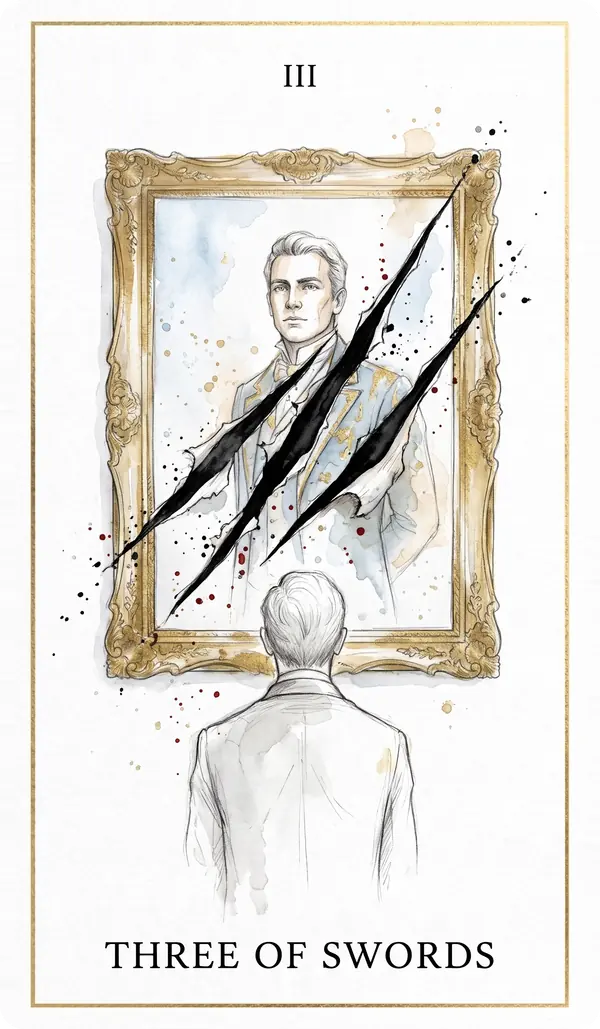 Colour of PowerThree of SwordsA truth has cut the image, not the man.
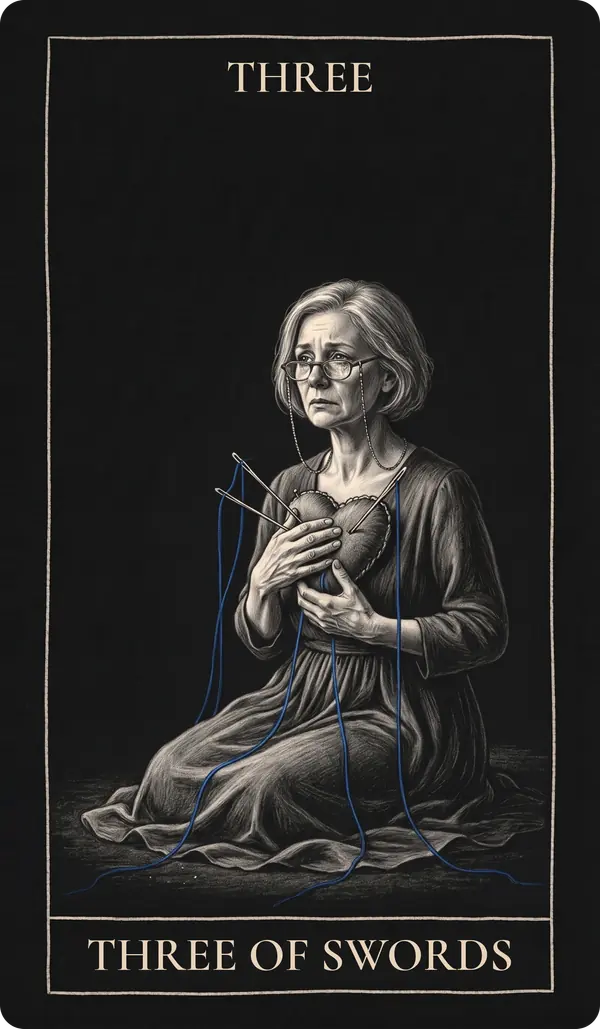 BoundThree of SwordsPain from words: a truth that wounded, a phrase you cannot forget.
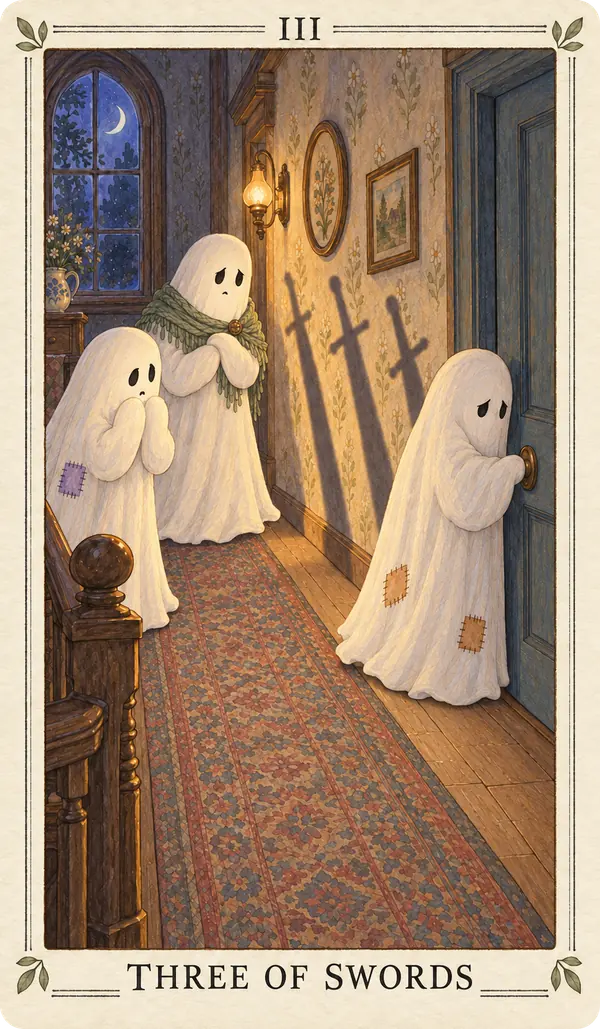 Cozy HauntThree of SwordsAcknowledge pain and its cause.
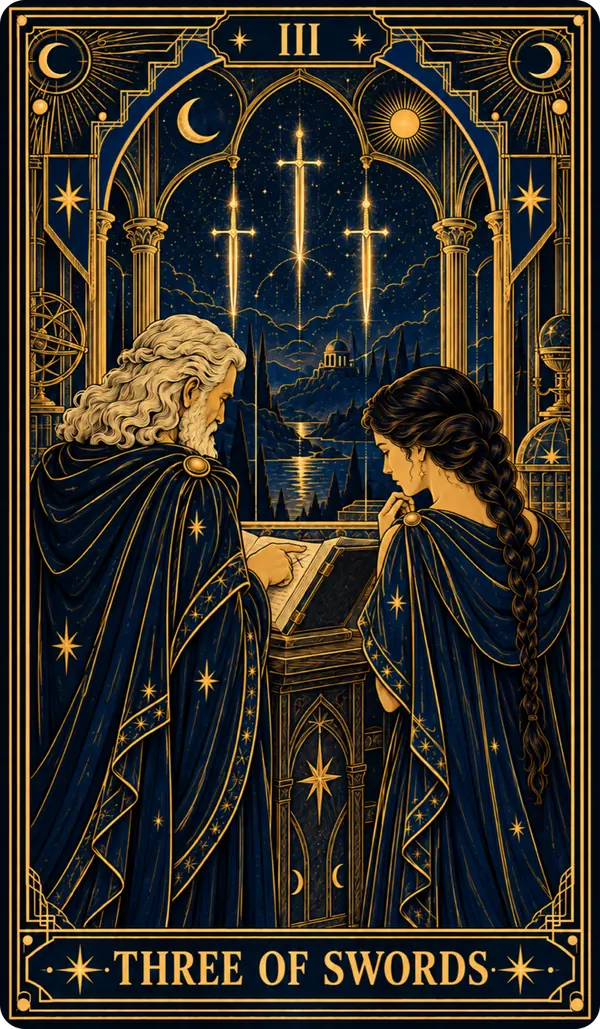 Celestial Night SkyThree of SwordsTruth about a trusted person’s mistake.
Where it appears
Questions about this card
Is Three of Swords a yes or no card in Self Contact?
Truth and hurt arrive together, so the Three of Swords upright is mixed. Reversed, it leans no, as the hurt seems caught in a loop right now. Ask whether you can say what hurts before deciding what it means, and tell the story once without blame.
What does Three of Swords mean in love?
A hurt in love may be ready to be named plainly, earring and cufflink each on its own cloth, before any judgment is added. Naming the hurt in plain words comes first. Write what hurts in one sentence, with no verdict about what it means.
What does Three of Swords mean reversed in Self Contact?
Turned over, the Three of Swords can mean pain repeated through harsh stories, or sorrow denied and folded away. Catch one harsh sentence you repeat about a hurt, and write a gentler true one beside it. The cloths stay separate until you do.