Three of Swords
Three of Swords in City of Windows · Minor Arcana
RelationshipsIn short
Acknowledging the hurt without instantly turning it into a whole story about the other person.
Reversed
Hiding the hurt under explanations you make on the other person’s behalf, or returning to the wound as the only answer.
- Swords
- Three
- Air
- The One Who Waited
- the sharp pain of a gap between what was expected and what was done
Upright
Acknowledging the hurt without instantly turning it into a whole story about the other person. Name which act wounded you and what you need now. Sara made dinner for two after Lev promised to come and answer her calmly.
He canceled too late for the evening to be saved. Sara sits alone in front of her plate; the second portion stays untouched.
The cancellation hurts, but on its own it still doesn’t say where he was or why he didn’t come.
A question to sit with
“What happened, how did it touch me, and what do I not know yet?”
One step
Name which act wounded you and what you need now.
Reversed
Hiding the hurt under explanations you make on the other person’s behalf, or returning to the wound as the only answer.
A question to sit with
“What support would help you live through the pain without putting yourself down?”
One step
Tell one person you trust how this really felt.
How this deck reads reversed cards
Reversed, a window may show a delay, an imbalance, a defensive reaction or the first step out of one; the neighboring cards help tell which. A reversal does not mean “a bad person”, and one card proves no one’s motive.
In love
A cancelled evening may hurt, the second plate untouched beside the empty chair, and naming that one act may matter more than building a theory around it.
- Supports
- Saying which act hurt you and what you need now.
- Watch for
- Turning one hurt into a whole story about who they are.
- One step
- Tell them which specific thing hurt you, and what you would need next time.
The hurt may be hidden under excuses you make on their behalf, or the wound may be reopened again and again as the only answer.
- Supports
- Support that helps you live through the pain.
- Watch for
- Explaining away their absence before they have explained it.
- One step
- Talk to one trusted friend about the hurt, without defending anyone.
At work
A late cancellation or a broken promise at work may sting, and it may help to name it plainly without guessing at motives.
- Supports
- Describing the act, not the person’s character.
- Watch for
- Filling the gap in facts with the worst explanation.
- One step
- Write to the person involved what happened and what you would need, in two sentences.
A work disappointment may be smoothed over with excuses, or replayed so often that it blocks any repair.
- Supports
- Letting a setback be named, then set down.
- Watch for
- Making excuses for someone who did not keep a promise.
- One step
- Name the work disappointment once, clearly, and agree on the next step.
Hurt may be pressing on the choice, and it may help to separate the pain of one evening from the decision about what comes next.
- Supports
- Letting the hurt be real without letting it decide alone.
- Watch for
- Choosing in the first hour after the wound.
- One step
- Wait until after a meal and some sleep before you make the choice.
Old hurt may be steering the choice, either by being denied or by being the only thing you see.
- Supports
- Separating the wound from the current options.
- Watch for
- Choosing to avoid any chance of being hurt again.
- One step
- List the options without mentioning the hurt, then read them again.
Sitting with a hurt without explaining it away or building a case may be the hard skill to grow now, alone at the table by the night window.
- Supports
- Naming pain in plain words.
- Watch for
- Putting yourself down for being hurt.
- One step
- Write one sentence about what hurt you, and one about what would comfort you tonight.
Healing may mean letting yourself feel hurt without self-blame, and without circling back to the same wound every night.
- Supports
- Gentleness toward yourself while it still aches.
- Watch for
- Reliving one painful evening as if it were happening again.
- One step
- Do one kind thing for yourself today, such as a meal you enjoy, and let it count.
An empty seat at a family meal may hurt, and naming that hurt calmly may help more than guessing why it was empty.
- Supports
- Speaking about a family disappointment without blame.
- Watch for
- Assuming the worst about an absent relative.
- One step
- Tell the relative who was missing that you missed them, and ask how they are.
In the family, a hurt may be covered with explanations so no one has to talk about it, or brought up at every gathering.
- Supports
- Acknowledging a family hurt once, honestly.
- Watch for
- Defending a relative’s behaviour before anyone has asked them.
- One step
- Let a family member say how something hurt them without explaining the other side.
Yes or no
NoMixedA promise that fell through may weigh against a yes here, though one missed evening may not tell the whole story.
Supports
- Naming the act that hurt keeps the pain tied to what happened.
- Knowing what you need now can guide the next conversation.
Limits
- A broken promise may have left a real wound.
- What you don’t know yet could get filled in by the hurt.
One step
Say what happened and what you need, and hold back from deciding why the other person did it.
The hurt may be hidden under excuses or kept open, so the answer stays mixed until it has some support.
Supports
- Support from others can help you carry the pain.
- Letting yourself feel hurt, without putting yourself down, may clear the way.
Limits
- Explaining the other person’s actions for them could hide the hurt.
- Going back to the wound again and again may crowd out other answers.
One step
Tell one person how this felt, someone who will not make you defend your reaction.
What is in the picture
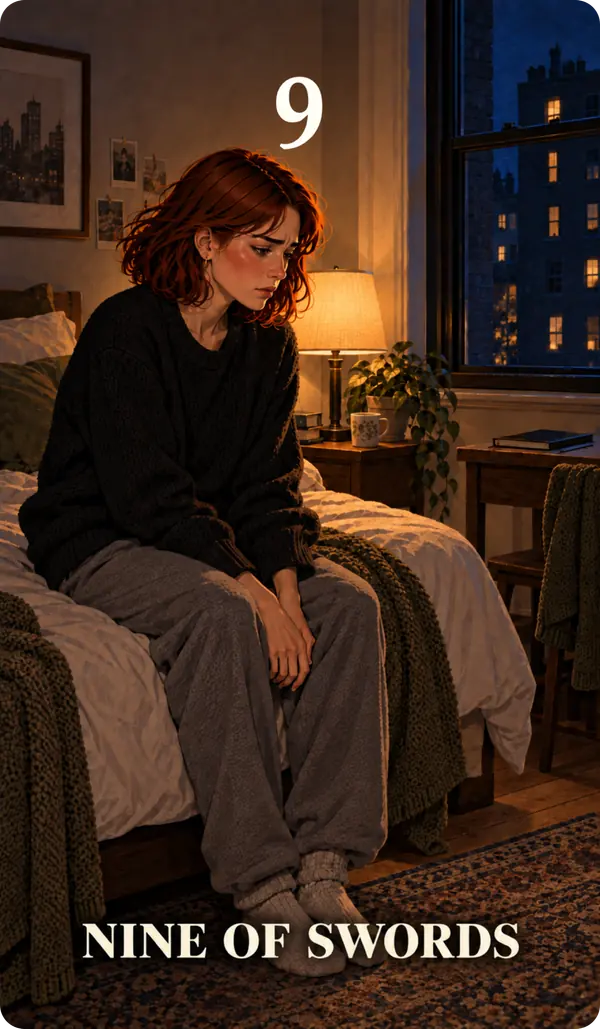
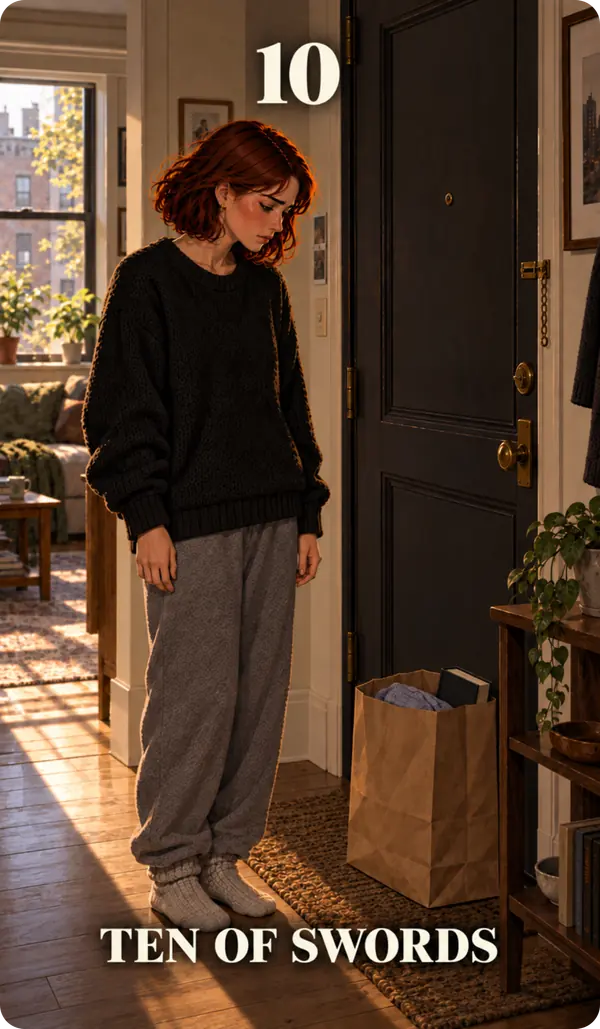
A dining table by the window of Sara’s apartment; two ordinary plates of food, one left untouched. Sara, in olive, with her recognizable reddish bob, sits to one side, visibly upset. The edge of an empty chair shows on the right.
The cancellation hurts, but on its own it still doesn’t say where he was or why he didn’t come.
- dinner table for two
- untouched second plate
- empty chair
- small candle
- two wine glasses
- night window
This card in other decks
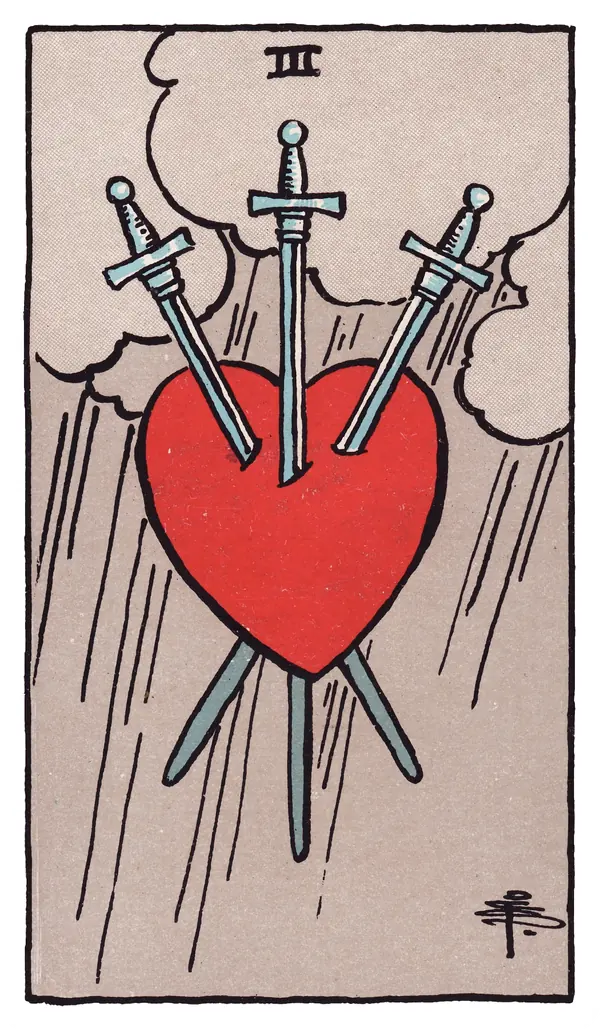 Rider–Waite–SmithThree of SwordsReal heartbreak or a painful truth deserves to be felt honestly, without minimizing how sharp it is.
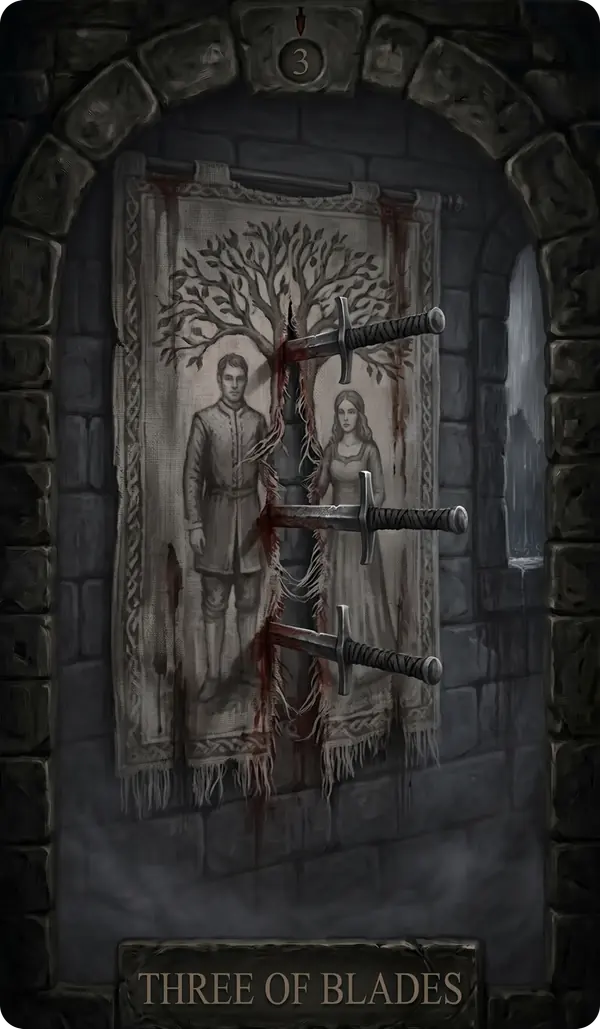 FamiliaThree of BladesA rift inside the family that is named and grieved openly, which is why it can start to close.
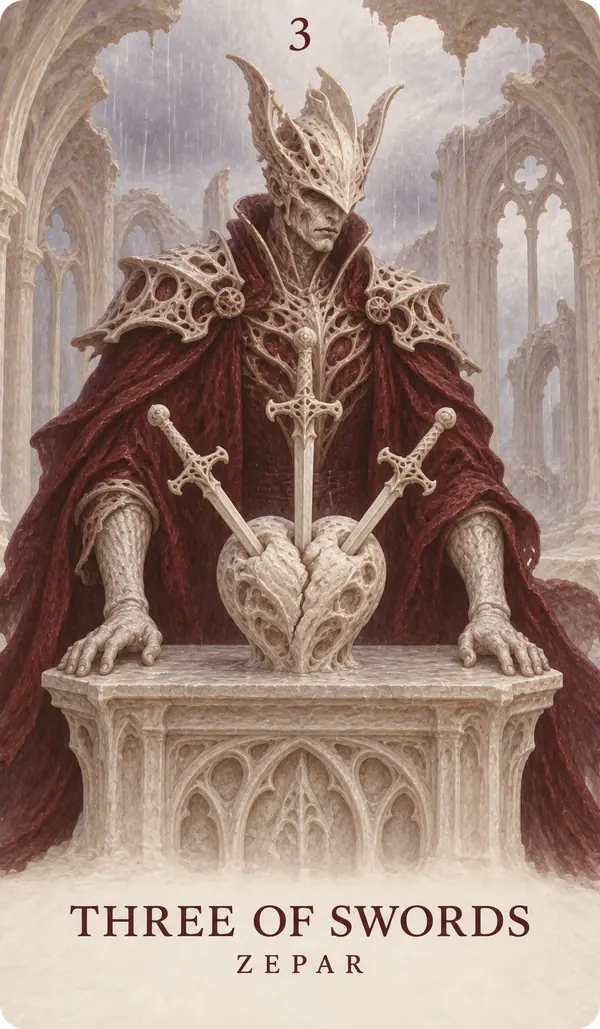 CarnalThree of SwordsPain makes a divided bond visible.
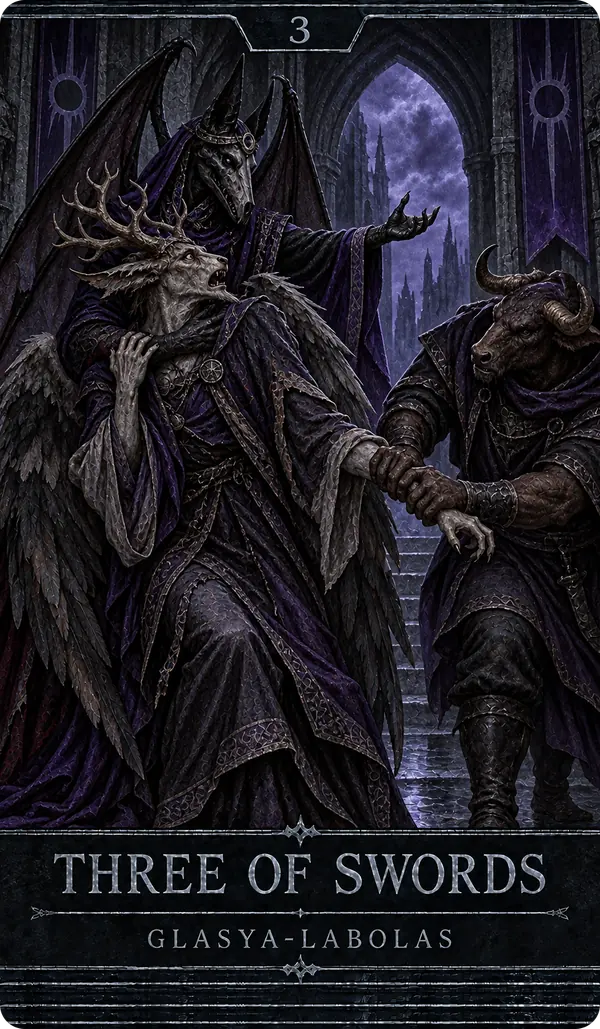 Crimson InfernoThree of SwordsName a painful truth without making it your whole identity.
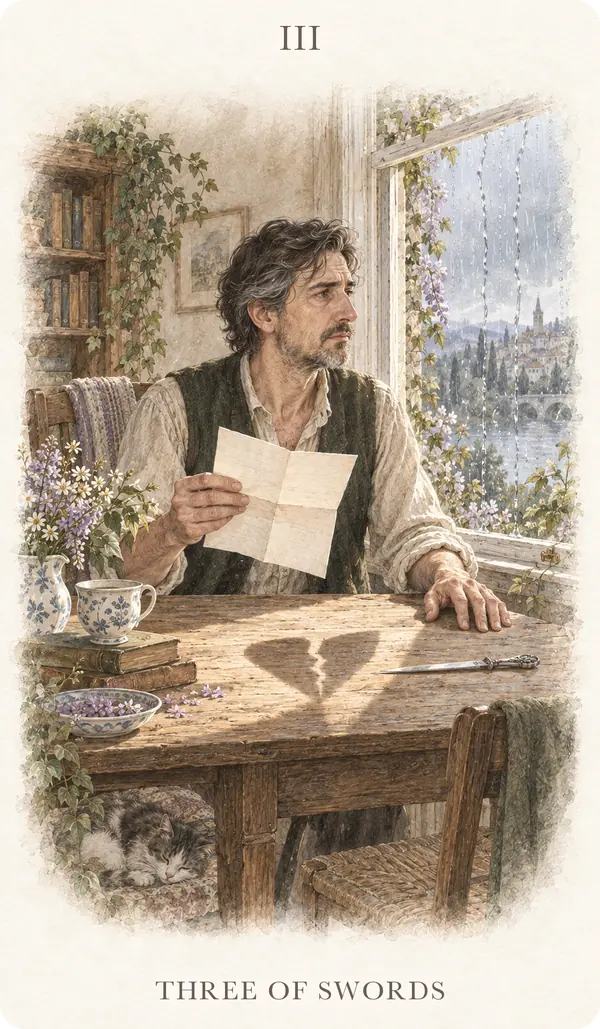 Everyday WondersThree of SwordsThe pain of seeing a hard truth clearly.
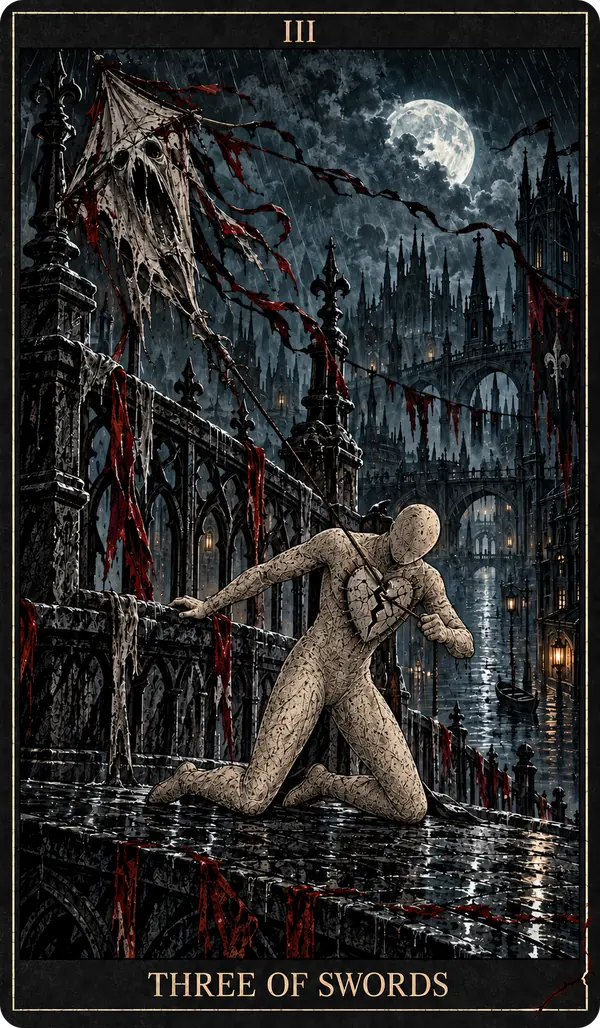 Mirror NightThree of SwordsName outside harm and personal repetition separately.
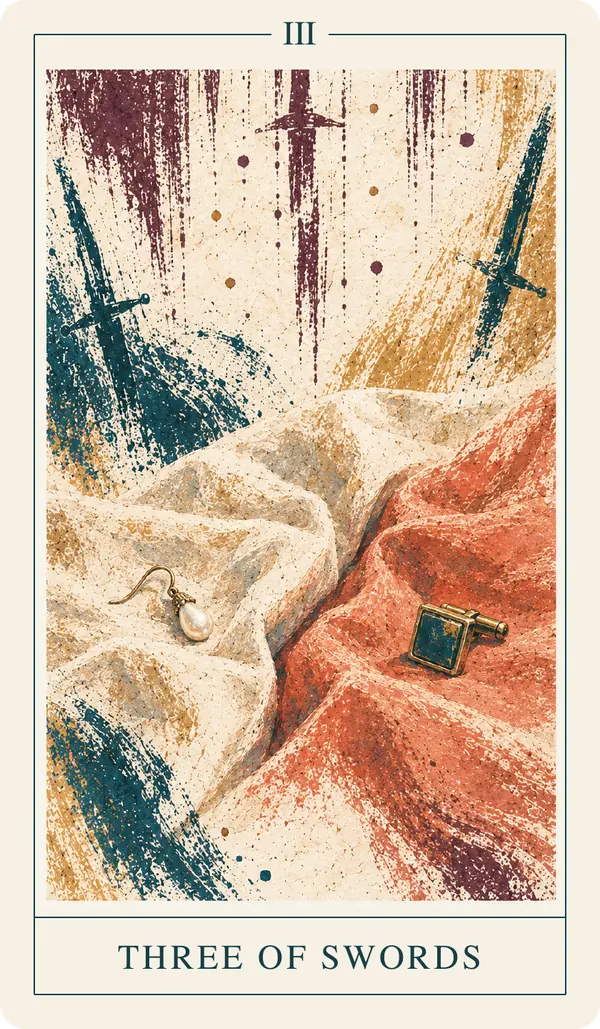 Self ContactThree of SwordsNaming a painful truth allows grief and clarity to coexist.
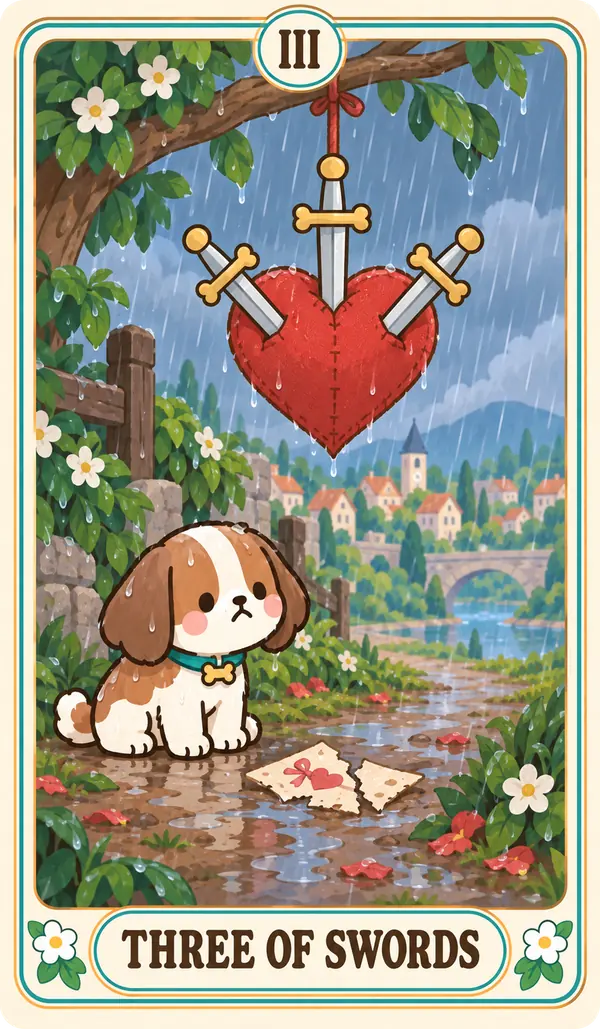 Shiba TownThree of SwordsHeartache; painful truth; a rupture that needs acknowledgment.
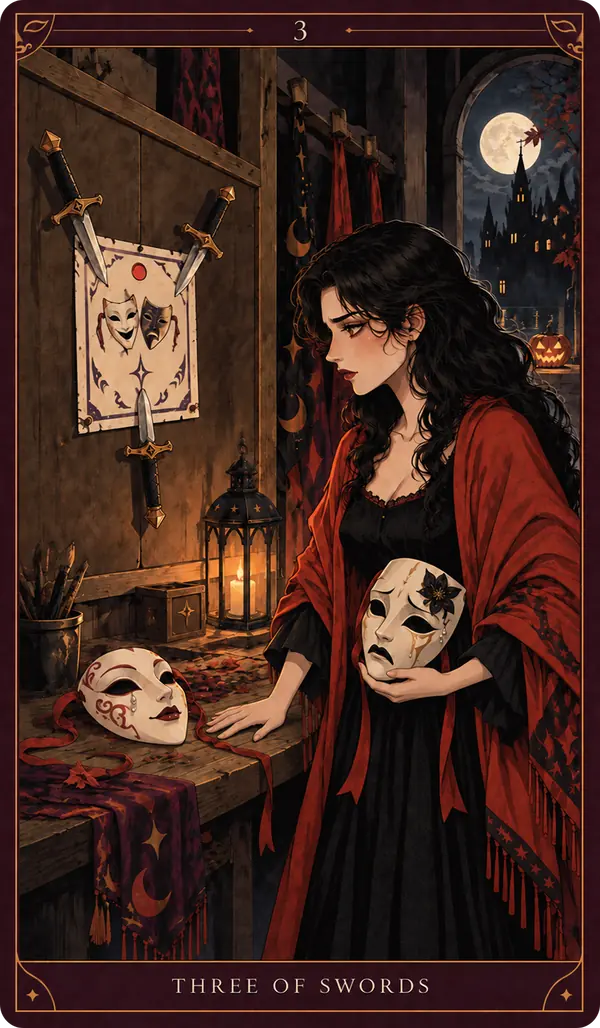 Velvet MasqueradeThree of SwordsHeartbreak around a changed agreement.
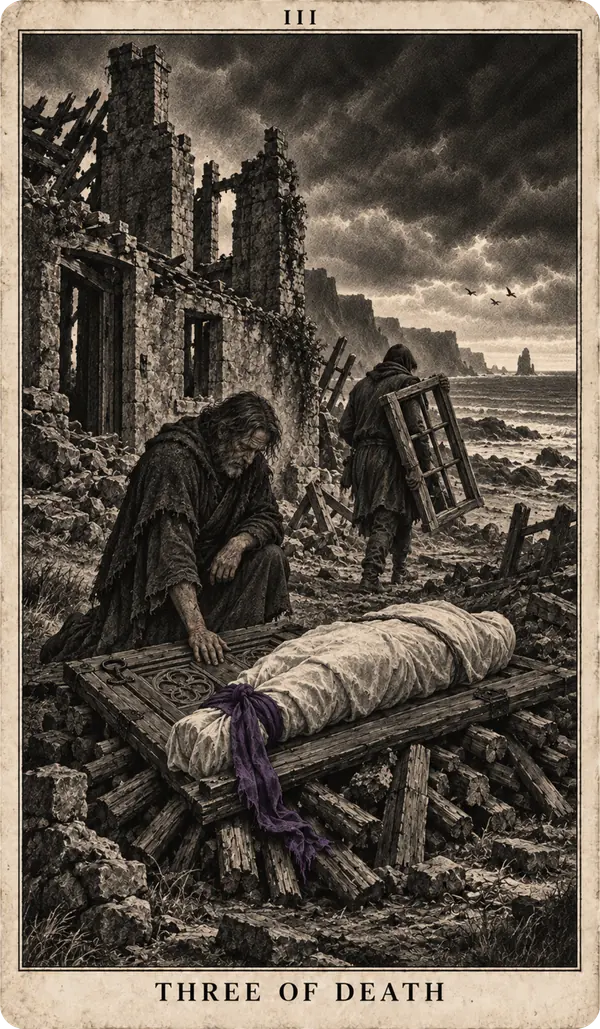 Four HorsemenThree of DeathLet the loss be named and witnessed.
 Four TrailsThree of SwordsHeartbreak, painful truth, separation.
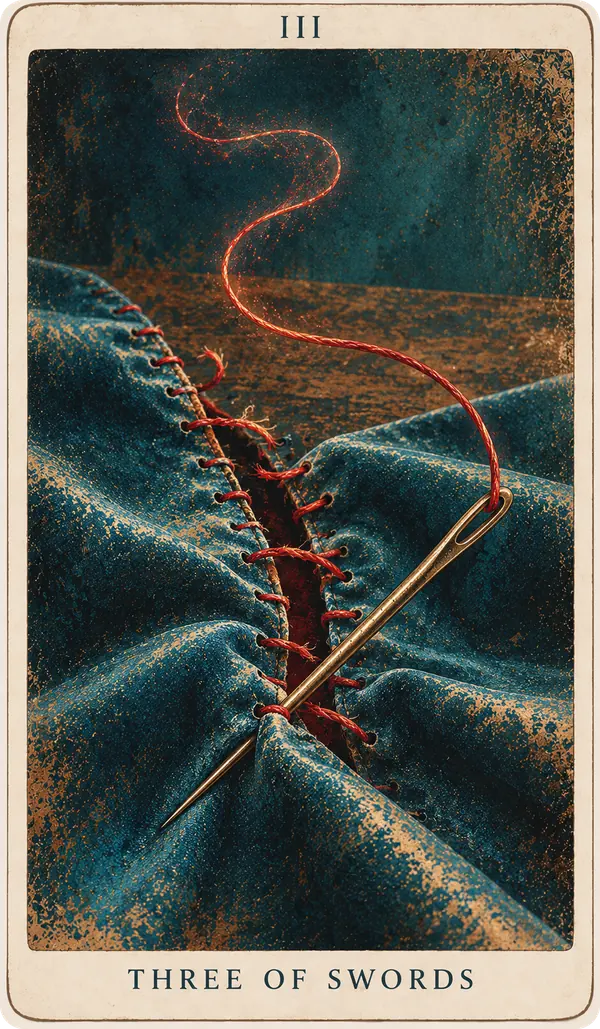 Living ThresholdThree of SwordsA strained seam comes apart, showing pain and the cloth still sound.
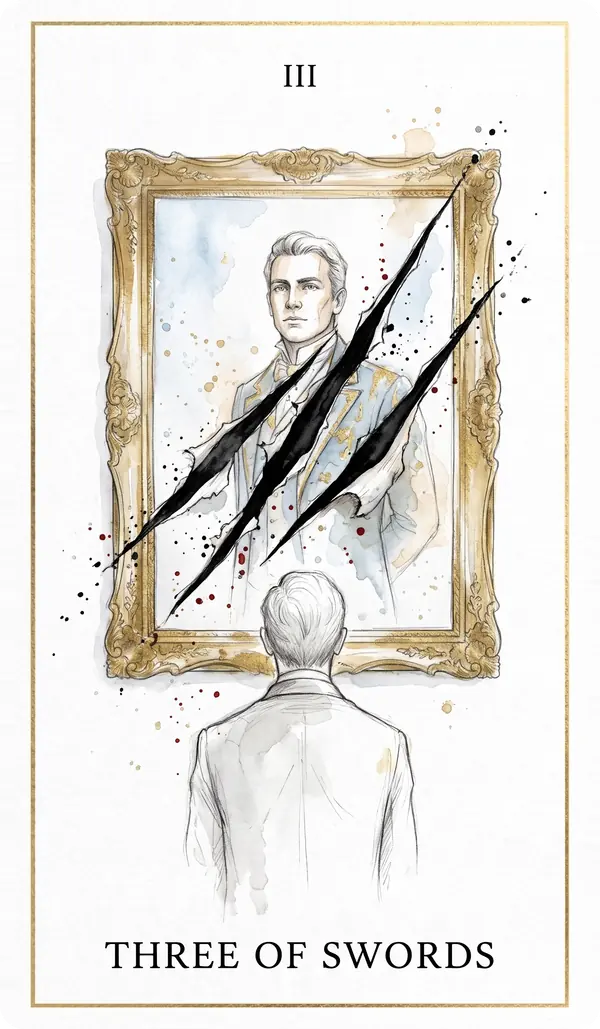 Colour of PowerThree of SwordsA truth has cut the image, not the man.
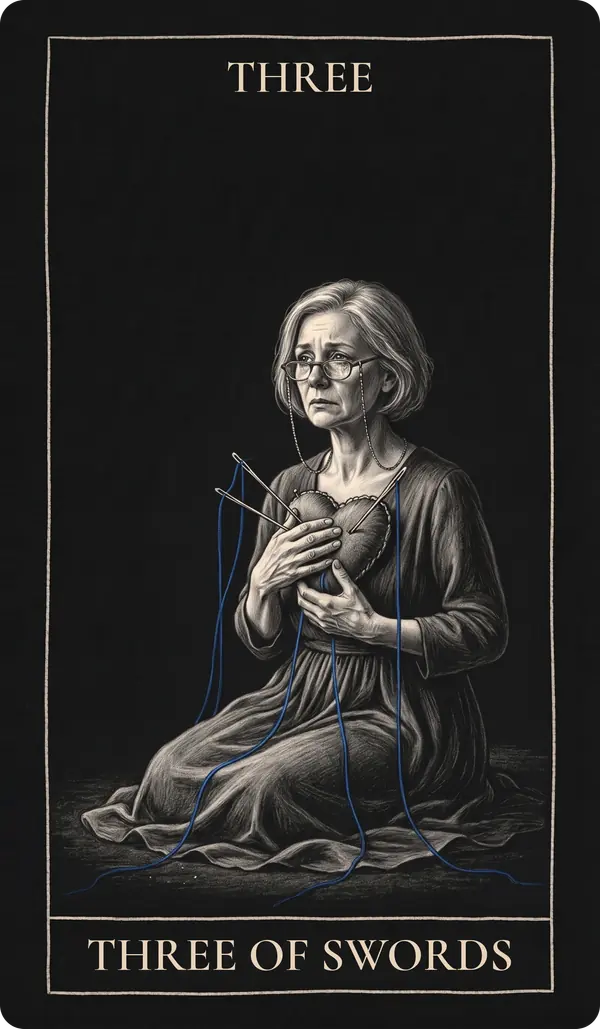 BoundThree of SwordsPain from words: a truth that wounded, a phrase you cannot forget.
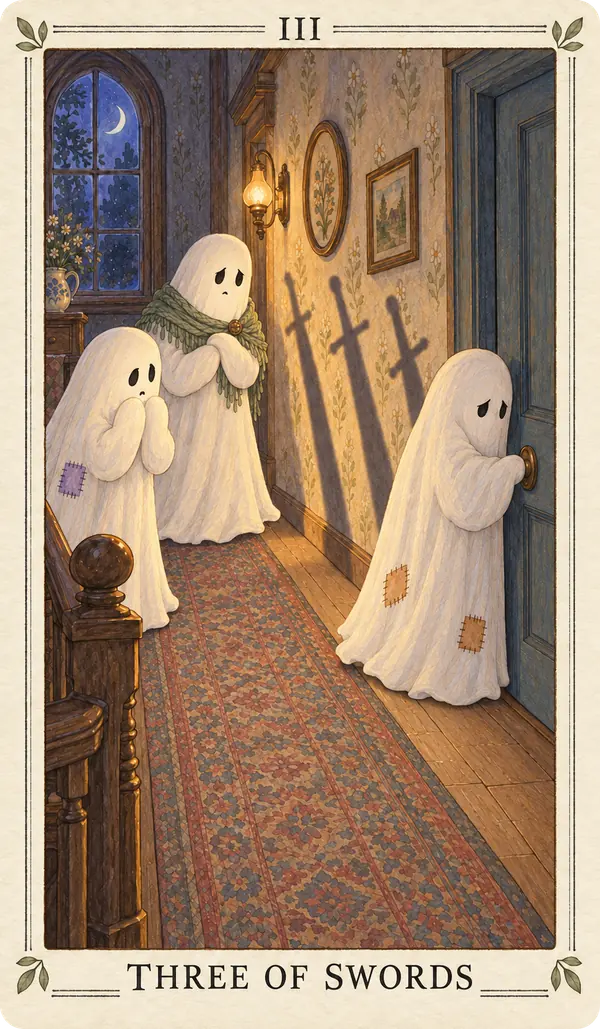 Cozy HauntThree of SwordsAcknowledge pain and its cause.
 Celestial Night SkyThree of SwordsTruth about a trusted person’s mistake.
Where it appears
Questions about this card
Is the Three of Swords a yes or no card in City of Windows?
Upright, the Three of Swords leans no. A promise that fell through weighs against a yes, though one missed evening may not tell the whole story. Reversed, the answer is mixed. The hurt may be hidden under excuses you make for the other person, or kept open as the only reply, and the lean stays mixed until the pain has some support around it.
Does the Three of Swords mean a breakup?
The Three of Swords can point to heartbreak, and it often turns up around a split. In City of Windows its wound is more exact. Lev cancels a dinner too late to save the evening, and Sara sits alone with a second plate nobody touches. The card names the hurt of a broken promise. Whether the relationship itself is ending is something an honest conversation about that evening can show.
What does the Three of Swords mean reversed?
Reversed, the Three of Swords shows hurt with nowhere to go. You may keep explaining the other person’s behaviour on their behalf, so the pain never gets a name. Or the wound becomes the only thing you return to. Either way, you may be blaming yourself for being hurt. Letting one trusted friend hear the whole story, start to finish, is the card’s practical step.