Eight of Death
Eight of Swords in Four Horsemen · Minor Arcana
LossIn short
Recognise a bond that can be released without denying love.
Reversed
Treating leaving the place as betraying the one you lost.
- Death
- Eight
- Air
- The Roped Mourner
- a bond that can be loosened without denying love
- the knot held in one’s own hands
- passage offered without force
Upright
Recognise a bond that can be released without denying love. The rope runs from a gravestone to the woman’s waist, and the knot sits in her own hands.
A boat waits beside her in the flooded cemetery, and its keeper does not pull at her. Mourning cloth trails into the water.
Loosening the knot would mean leaving a place, and the love for the one buried there can go with her.
A question to sit with
“What do I believe I must lose if I let go?”
One step
If there is a place or a habit you keep for someone gone, write down what it gives you and what it costs. The knot can stay as it is while you look.
Reversed
Treating leaving the place as betraying the one you lost. The water has covered most of the graves, and still the rope holds her to one stone.
She may believe that walking to the boat would be a second loss, and a worse one. The keeper waits, and the knot stays within her reach.
Staying can come to feel like the only proof of love she has left.
A question to sit with
“Would leaving this place feel like betraying the one I lost, and is that belief true?”
One step
Write one sentence about what leaving a place would take from you, and one about what you would still carry. Read both before deciding anything.
How this deck reads reversed cards
Reversed, the act on the card turns inward, meets an obstacle, grows harsher or shows its price. On this road a reversal is not automatically the opposite, and not automatically something worse.
In love
A bond may be tied to a place or a memory, and loosening the rope need not mean loving less.
- Supports
- A partner who waits by the boat without pulling.
- Watch for
- Mistaking the rope for the love itself.
- One step
- Talk about one place that holds you both, and what it would mean to visit it less often.
A relationship may be held in place by the fear that moving on would dishonour someone.
- Supports
- Naming the fear out loud together.
- Watch for
- Calling confinement loyalty.
- One step
- Share one memory you want to keep, whatever happens to the place.
At work
At work, loyalty to a team, a founder or the way things were may be holding you in rising water.
- Supports
- Knowing that the knot is in your own hands.
- Watch for
- Staying on only because leaving feels disloyal.
- One step
- Write down what keeps you in the role, and mark which reasons belong to the present.
Leaving a post may feel like abandoning the people who built it, so you may stay on while the water rises.
- Supports
- Remembering that their work can be honoured from elsewhere.
- Watch for
- Guilt making the decision for you.
- One step
- Write one way you could honour that work that does not depend on staying.
The question may be whether a bond can travel with you if you leave a place.
- Supports
- An offer of passage that nobody is forcing.
- Watch for
- Treating love and staying as the same decision.
- One step
- List what goes with you if you go and what stays with the place.
You may be choosing to stay because going feels like disloyalty.
- Supports
- Separating the place from the person.
- Watch for
- A choice made only to avoid guilt.
- One step
- Ask yourself what the person you feel loyal to might have wanted for you.
Growth may mean learning that love for someone gone does not require standing in the water.
- Supports
- Seeing that the knot is yours to loosen.
- Watch for
- Untying in a hurry before the grief has been felt.
- One step
- Loosen one small ritual of staying, and keep one ritual of remembering.
Growing here may mean seeing how fear has tied itself to love.
- Supports
- Patience with a knot that took years to tighten.
- Watch for
- Believing that staying longer proves anything.
- One step
- Write the belief down in your own words and read it back aloud once.
In a family, one member may feel tied to a home or a grave that the others are ready to leave.
- Supports
- A relative who keeps the boat waiting.
- Watch for
- Pressing someone to let go before they can.
- One step
- Ask the one who stays what the place holds for them, and just listen.
Staying close to a family grave or home may be treated as the only way to stay faithful.
- Supports
- Other ways of remembering, kept together.
- Watch for
- Shaming anyone who wants to leave.
- One step
- Suggest one family ritual of remembering that can happen anywhere.
Yes or no
MixedNoRelease is possible and nobody forces it, but the rope still holds, so the answer is mixed.
Supports
- The knot is within your own hands.
- Passage is offered without force.
Limits
- Fear may be tied up with love.
- The water is still rising around the stone.
One step
Consider what you believe you would lose by loosening one turn of the rope.
While leaving feels like abandoning someone, the rope keeps its hold, so the answer leans no.
Supports
- The boat is still waiting.
- Love can be carried somewhere else.
Limits
- Leaving may feel like disloyalty.
- Staying may be serving as proof of love.
One step
Notice whether the reason for staying is love or the fear of guilt.
What is in the picture
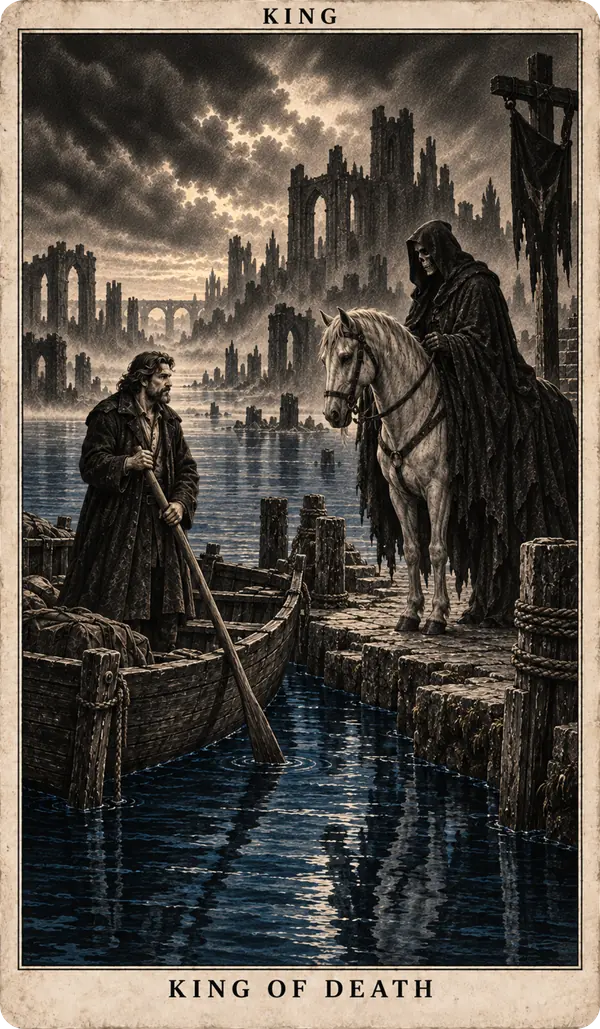
A woman stands in the flooded cemetery with a rope around her waist and a gravestone. The accessible knot rests in her own hands. A boat waits beside her, its keeper watching. Mourning cloth trails into the water; she cannot yet separate leaving the place from leaving the dead.
The boat keeper offers passage without forcing the grieving woman to take it.
- flooded cemetery
- rope from a gravestone to her waist
- knot held in her own hands
- violet mourning cloth trailing into the water
- rowing boat and its keeper
- gravestones and crosses standing in the flood
- broken arches on the shore
This card in other decks
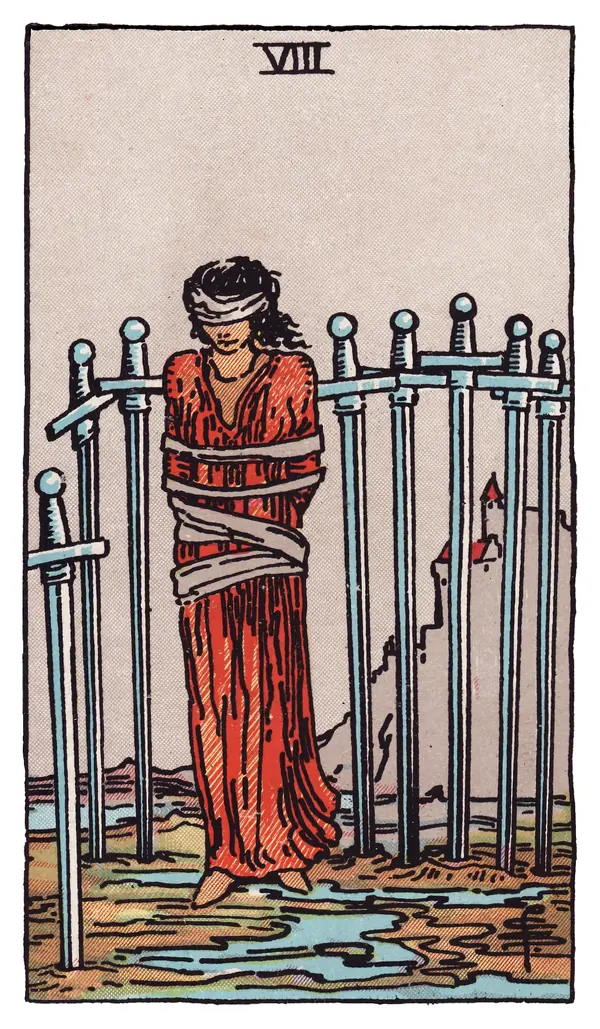 Rider–Waite–SmithEight of SwordsFeeling trapped right now may be more about limited perspective than an actual lack of options.
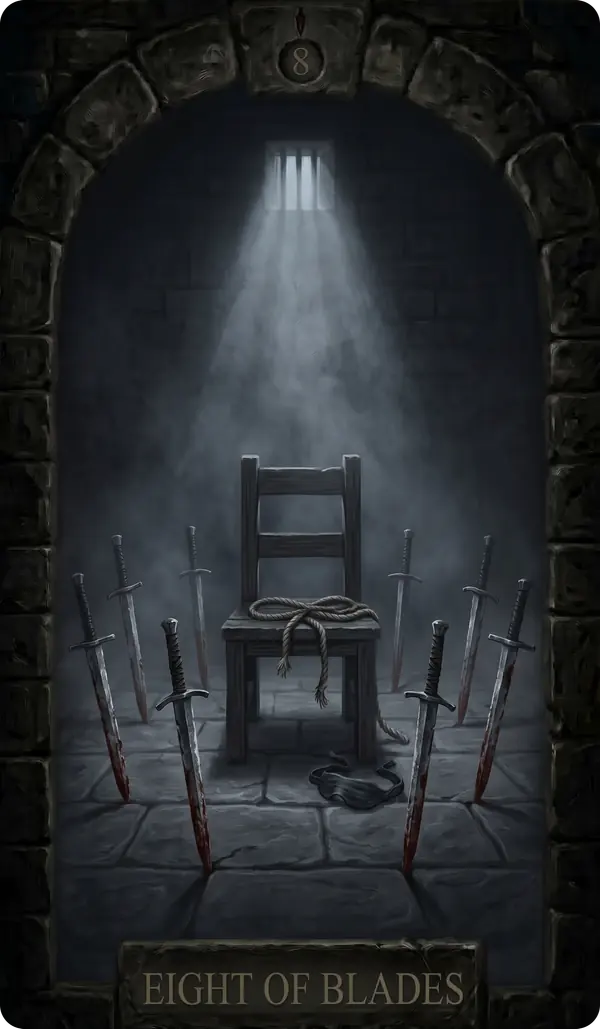 FamiliaEight of BladesA cage made of one’s own fears: the way out is visible, yet passing between the blades seems impossible.
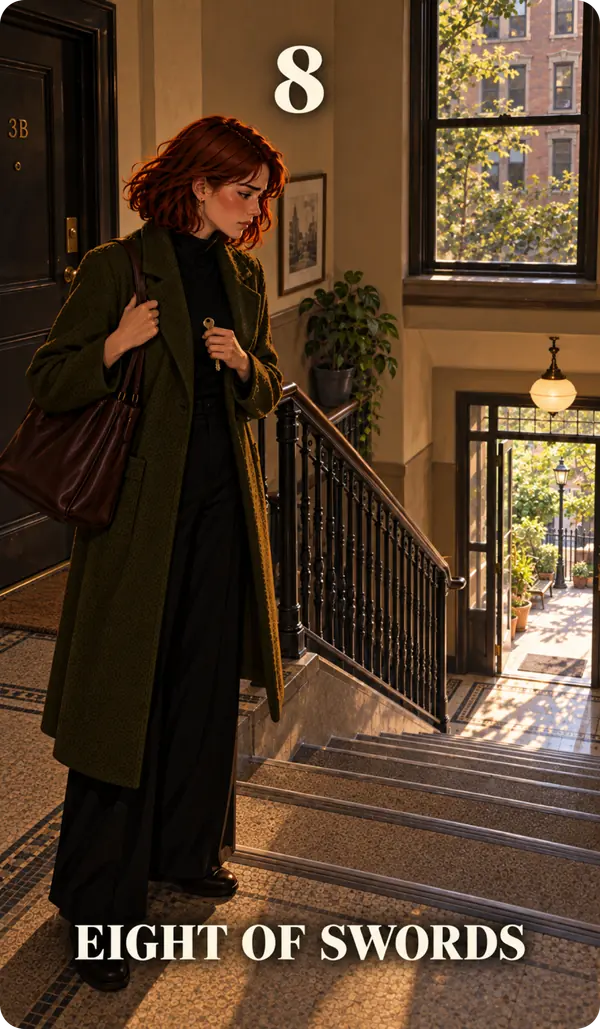 City of WindowsEight of SwordsSeeing where fear narrows your choices.
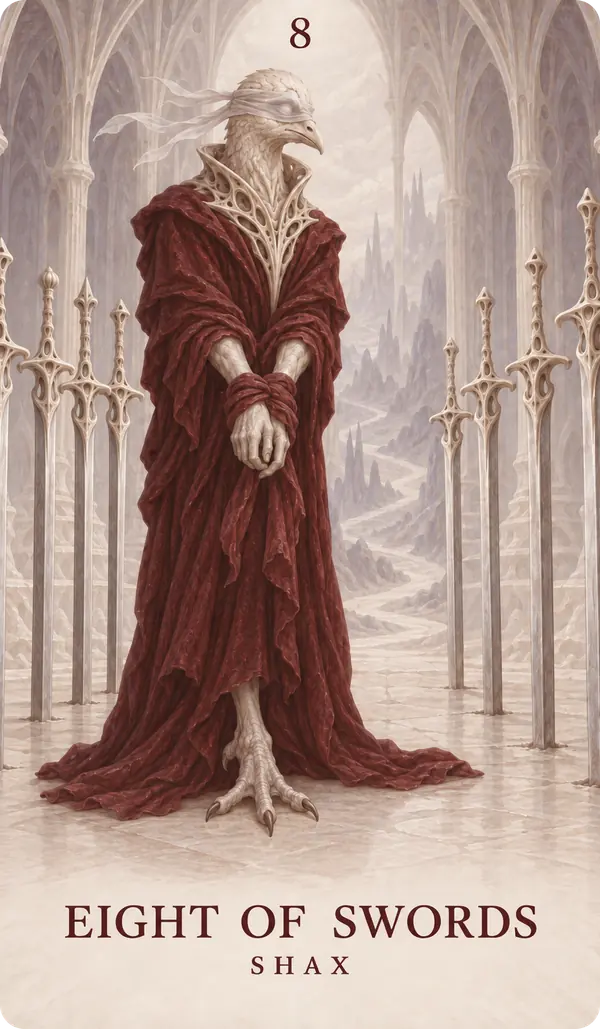 CarnalEight of SwordsA restriction is strengthened by the account made of it.
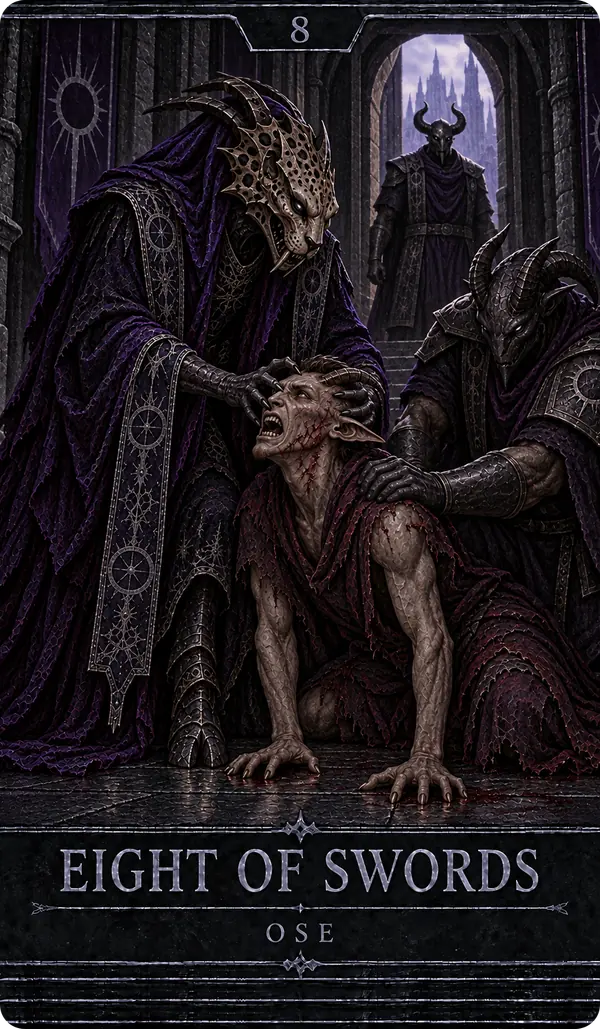 Crimson InfernoEight of SwordsIdentify actual constraints and learned fear separately.
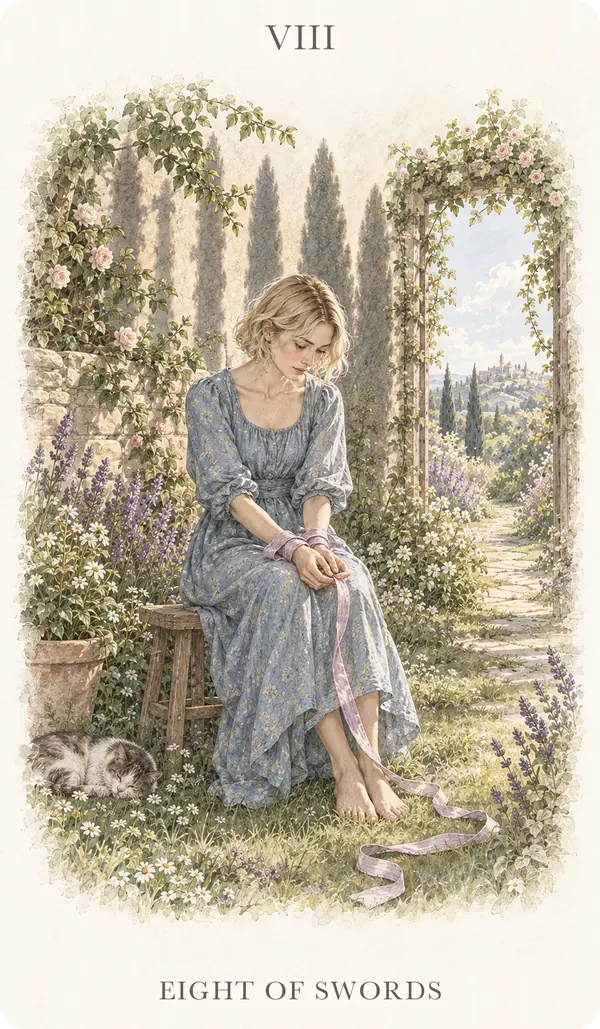 Everyday WondersEight of SwordsFeeling trapped when a way out may still be open.
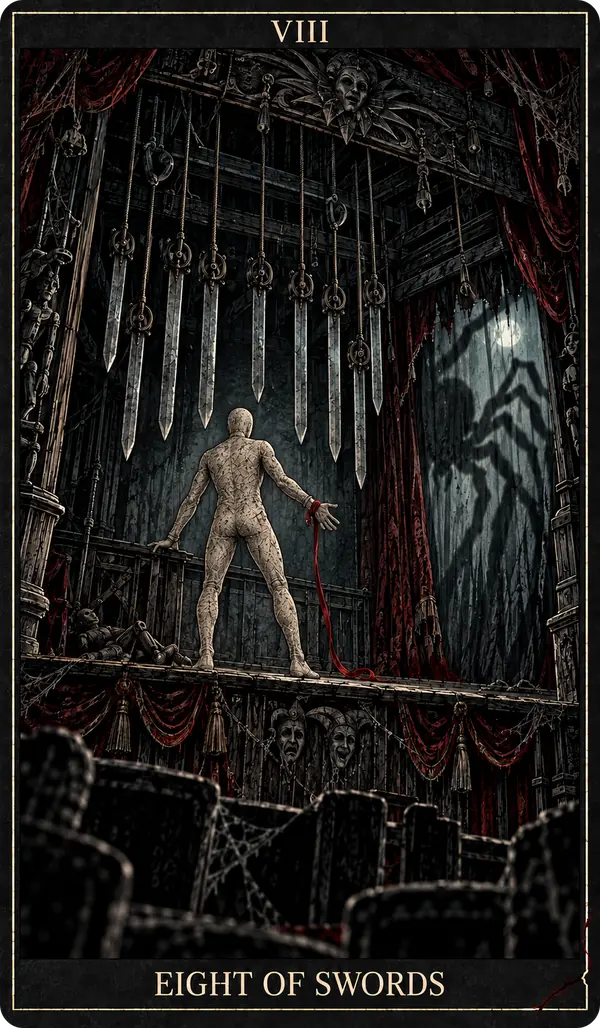 Mirror NightEight of SwordsFind the available movement inside fear.
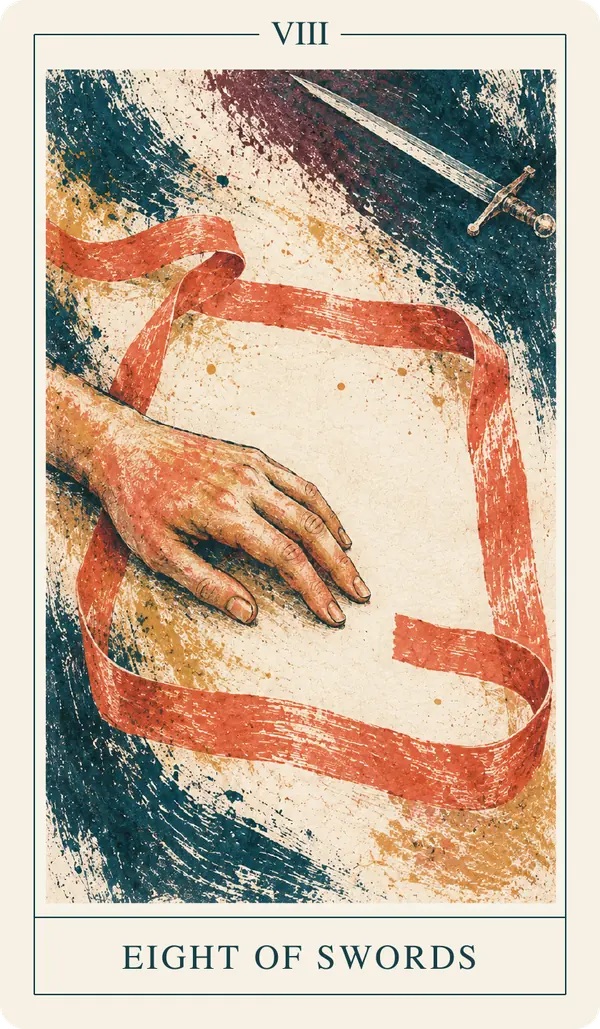 Self ContactEight of SwordsExamine the assumptions that make your available movement feel impossible.
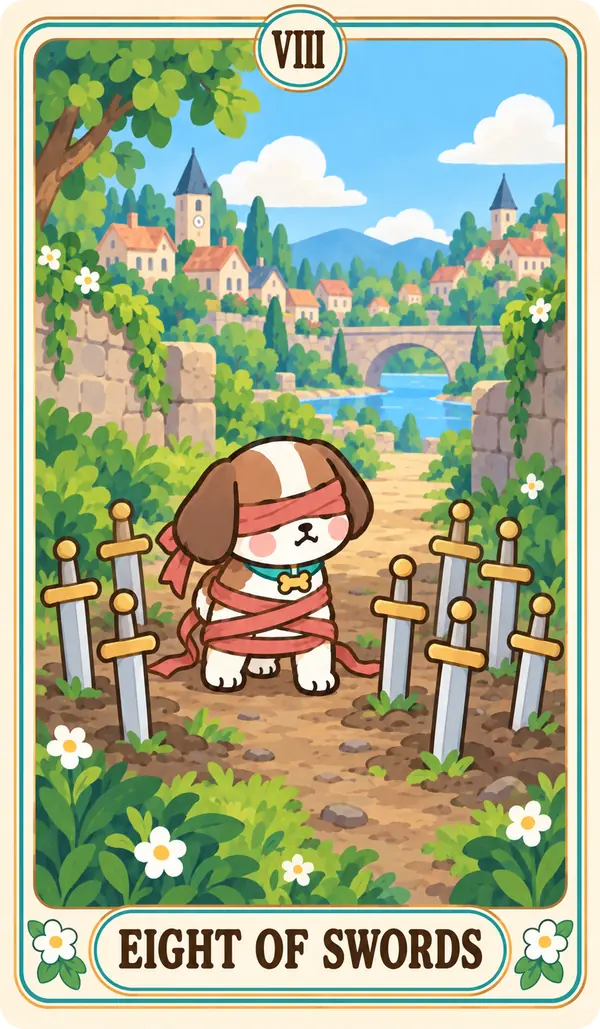 Shiba TownEight of SwordsFeeling trapped; limiting beliefs; room to act not yet seen.
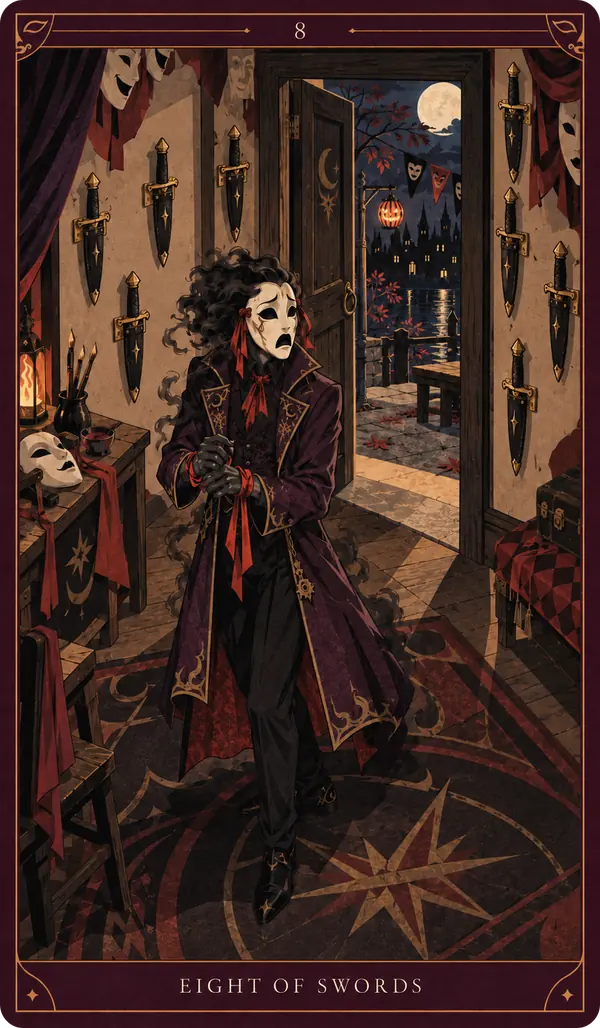 Velvet MasqueradeEight of SwordsA restriction felt through a narrowed view.
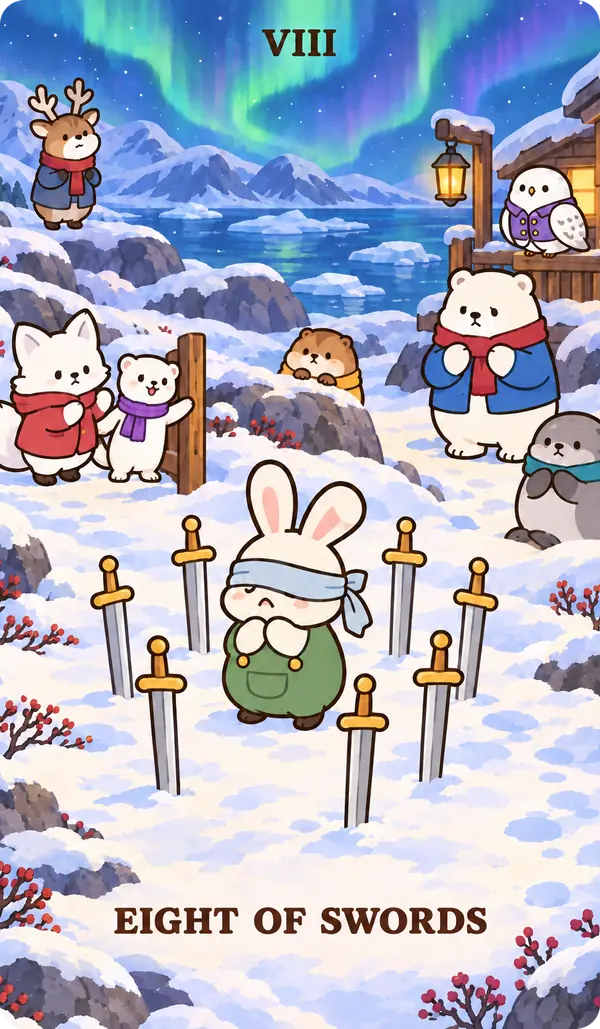 Four TrailsEight of SwordsFeeling trapped, narrow perspective.
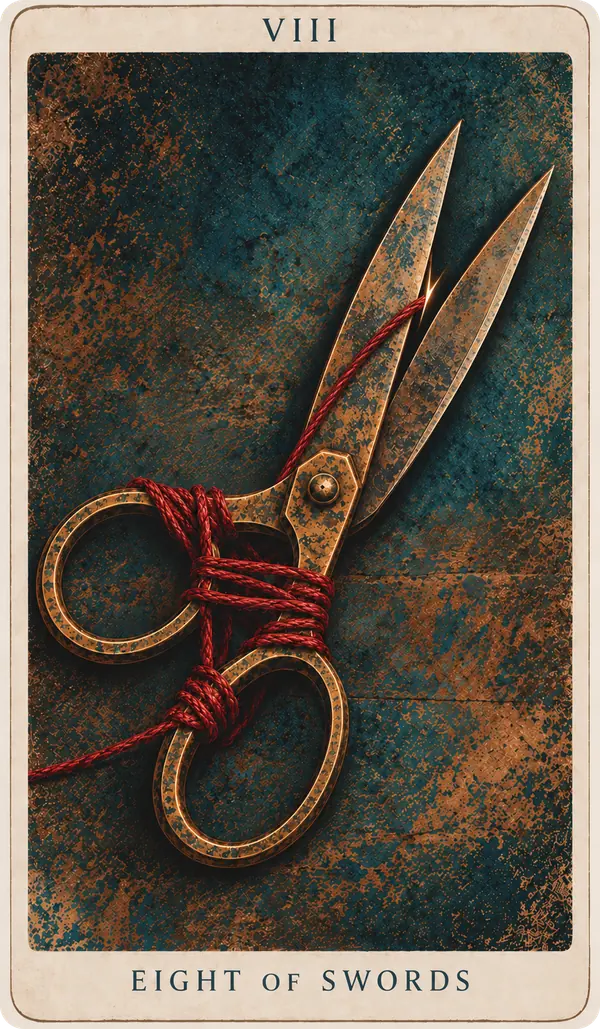 Living ThresholdEight of SwordsA small opening remains inside the thread that binds the shears.
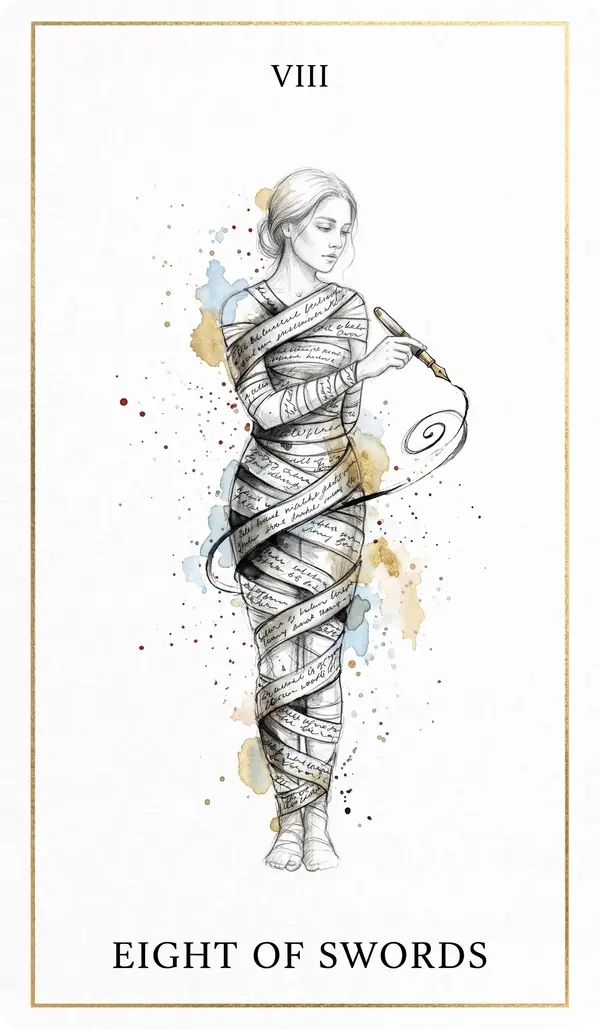 Colour of PowerEight of SwordsYou hold yourself by the line you keep writing.
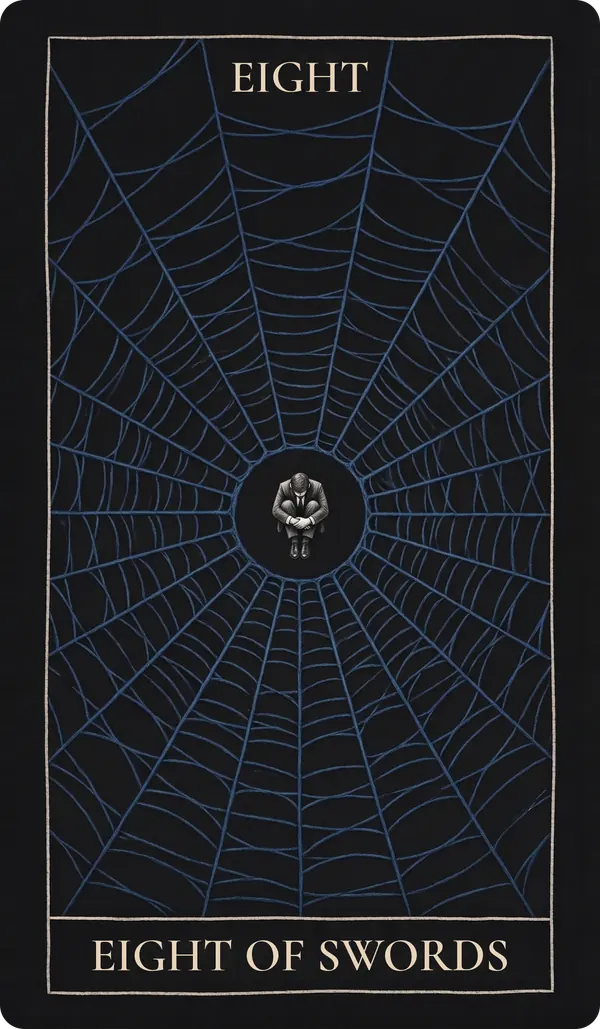 BoundEight of SwordsYou feel caught, but no thread touches you; the exit is open.
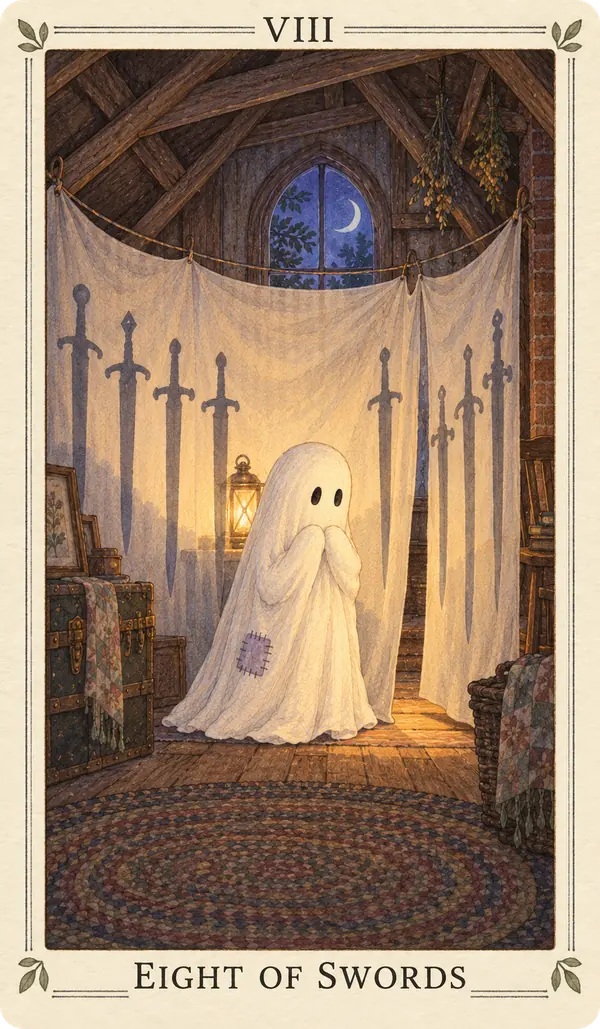 Cozy HauntEight of SwordsNotice the room your fear has hidden.
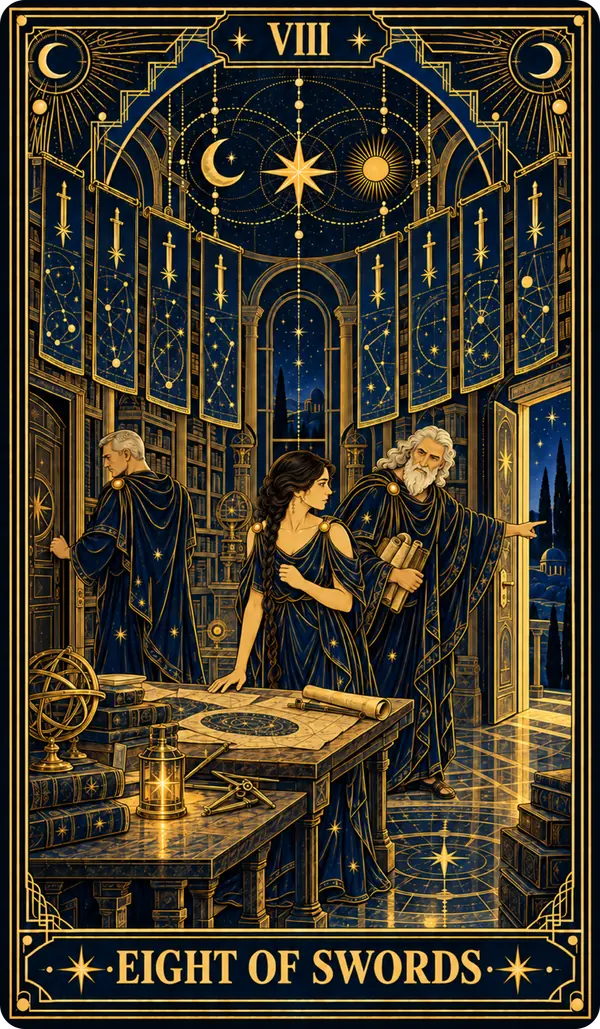 Celestial Night SkyEight of SwordsHelp toward another way.
Where it appears
Questions about this card
Is Eight of Swords a yes or no card in Four Horsemen?
Upright, Eight of Swords is mixed: release is possible and nobody forces it, but the rope still holds. Reversed, it leans no, because while leaving feels like abandoning someone the rope keeps its hold. Consider what you believe you would lose by loosening one turn of the rope.
What does Eight of Swords mean in love?
For a relationship, Eight of Swords may point to a bond tied to a place or a memory, where loosening the rope need not mean loving less. Reversed, a relationship may be held in place by the fear that moving on would dishonour someone. Talk about one place that holds you both and what it would mean to visit it less often.
What does Eight of Swords mean reversed in Four Horsemen?
Eight of Swords reversed describes treating leaving the place as betraying those who died. The knot in the picture rests in the woman’s own hands. Notice whether the reason for staying is love or the fear of guilt, and share one memory you want to keep whatever happens to the place.