Three of Swords
Three of Swords in Crimson Inferno · Minor Arcana
ConflictIn short
Name a painful truth without making it your whole identity.
Reversed
Pain kept open through repetition, or refusal to acknowledge betrayal.
- Swords
- Three
- Air
- The Familiar Hand
- heartbreak
- betrayal
- painful recognition
Upright
Glasya-Labolas holds an old ally close with one arm and beckons the enforcer through the arch with the other, and the ally sees it happen. Name the painful truth, and do not let it become all you are.
Grief can start once the hiding ends and the betrayal can no longer be denied.
A question to sit with
“What truth hurts because I can no longer unknow it?”
One step
Say the painful thing once, in plain words, to someone safe, and then do one ordinary thing that is yours.
Reversed
Glasya-Labolas is caught in the act, his arm still locked around the ally as the guard takes hold. Reversed, the betrayal gets denied anyway, or the wound stays open because the story is told again and again.
The first loosening of that pain can also show here.
A question to sit with
“Do I keep reopening the wound by retelling it, or refuse to call the betrayal by its name?”
One step
Write the thing you have been refusing to call by its name, then fold the page and put it away.
How this deck reads reversed cards
Reversed, a card may show excess, blockage, a hidden price or a hard release, and it is rarely a simple opposite. In the basalt city an upright card can already show a power through its misuse, and turning it over softens nothing in the picture. A mark may loosen or bite deeper, and the city does not promise which.
In love
In love, a closeness that felt safe may show itself as a hold, the warm arm and the grip in the same moment.
- Supports
- Letting the truth hurt without letting it become all of you.
- Watch for
- Explaining away what you saw because the arm around you still feels warm.
- One step
- Write down what you saw, dated, in your own words.
The ally twists back toward Glasya-Labolas, still clutching his sleeve. In love, hurt from a past bond may be kept raw by holding on, or may be starting to loosen.
- Supports
- Small signs that you can think of something else for an hour.
- Watch for
- Replaying the scene until it becomes who you are.
- One step
- Spend one evening without going over it, and notice how that feels.
At work
With his free hand, the trusted companion waves the enforcer through the arch. At work, an ally may be trading someone’s safety, possibly yours, for their own standing.
- Supports
- Keeping your own record of what was said and when.
- Watch for
- Trusting a friendly arm more than the facts.
- One step
- Check one agreement you rely on against what is written down.
A workplace wound may reopen every time the story is told again.
- Supports
- Grieving the loss of trust as a real loss.
- Watch for
- Refusing to see a pattern because naming it would hurt.
- One step
- Tell the story once to someone outside work, then leave it with them for the week.
A choice may be sharpened by a painful recognition about someone you relied on.
- Supports
- Choosing with what you now know rather than what you hoped.
- Watch for
- Letting the shock choose for you.
- One step
- Rewrite the options with the new fact included.
Stuck on a hurt that keeps reopening, the choice may not move.
- Supports
- The first small wish to move on.
- Watch for
- Deciding only to punish, or only to avoid the pain.
- One step
- Ask which option you would choose if the hurt were a year old.
Growth may begin where concealment ends, with a truth you can no longer unknow.
- Supports
- Grief allowed to be grief.
- Watch for
- Making the wound your whole identity.
- One step
- Name one part of you the hurt did not touch.
Pain may be kept alive through repetition, or the first release may be stirring.
- Supports
- Noticing the moment the story loses a little of its grip.
- Watch for
- Denying the hurt to look recovered.
- One step
- Write the story in five lines instead of fifty.
Even as the guard grips the ally’s wrist, Glasya-Labolas keeps his arm locked. In the family, someone trusted may be holding another close only to hand them over.
- Supports
- Recognizing a pattern even when it wears a familiar face.
- Watch for
- Loyalty that asks you to stop seeing.
- One step
- Talk it through with one person outside the family whom you trust.
Glasya-Labolas beckons the guard with his own free hand; if he kept denying that gesture, the betrayal would stay nameless. An old family hurt may be retold at every gathering, or never named.
- Supports
- One person willing to say what it was.
- Watch for
- The same wound reopened as a way of keeping score.
- One step
- Choose one gathering where you do not bring it up, and see what changes.
Yes or no
NoMixedA trusted closeness turning into a trap points toward no, even though seeing it clearly is where recovery can start.
Supports
- The truth is in the open and harder to deny.
- Grief can begin once the hiding stops.
Limits
- Someone trusted may be handing another over to save themselves.
- The pain of knowing cannot be taken back.
One step
Ask whether you are asking to know, or asking not to have to.
The hurt may be loosening or may be held open, so the answer is mixed until you see which one you are feeding.
Supports
- A first movement toward letting the hurt go may be here.
- Repetition can wear itself out.
Limits
- The wound may be kept open by retelling.
- What was done may still be refused a name.
One step
Ask how many times you have told the story this week, and what each telling gave you.
What is in the picture
Glasya-Labolas holds an old ally close with one forearm locked across the upper chest. His free hand beckons an enforcer through the arch. The arriving guard grips the ally’s wrist; the ally twists back toward Glasya-Labolas, mouth open in recognition and horror, one hand still clutching the trusted companion’s sleeve. The betrayer maintains the restraining embrace.
The friendly closeness and the arrest happen in the same readable moment. The trusted companion has exchanged another person’s safety for their own standing. The betrayal is discovered before it can be denied.
- black dog-like skull
- rigid bat wings
- forearm locked across the chest
- beckoning hand
- enforcer gripping the wrist
- hand clutching a sleeve
- arch onto the city
This card in other decks
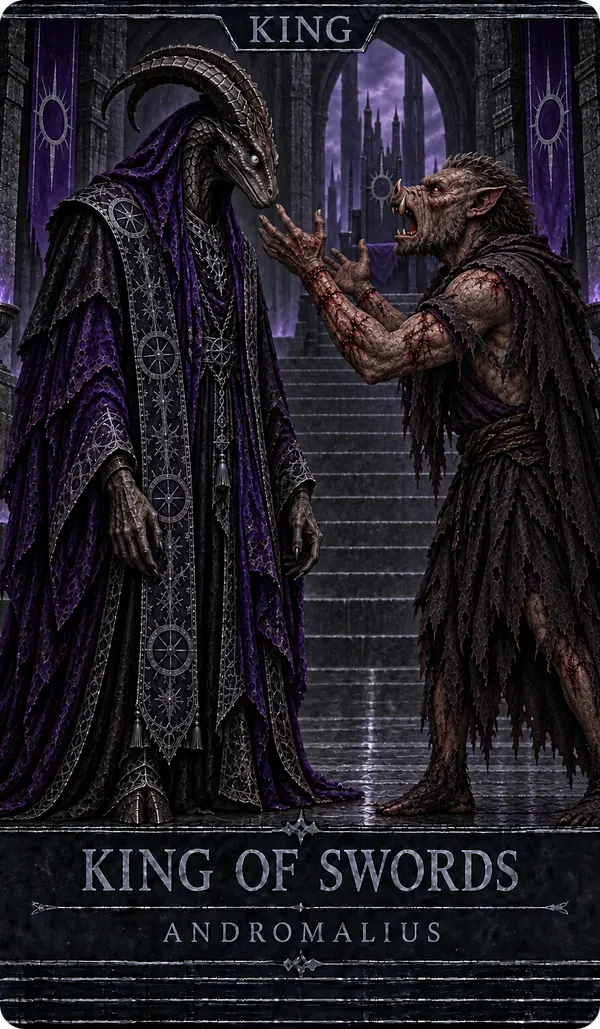
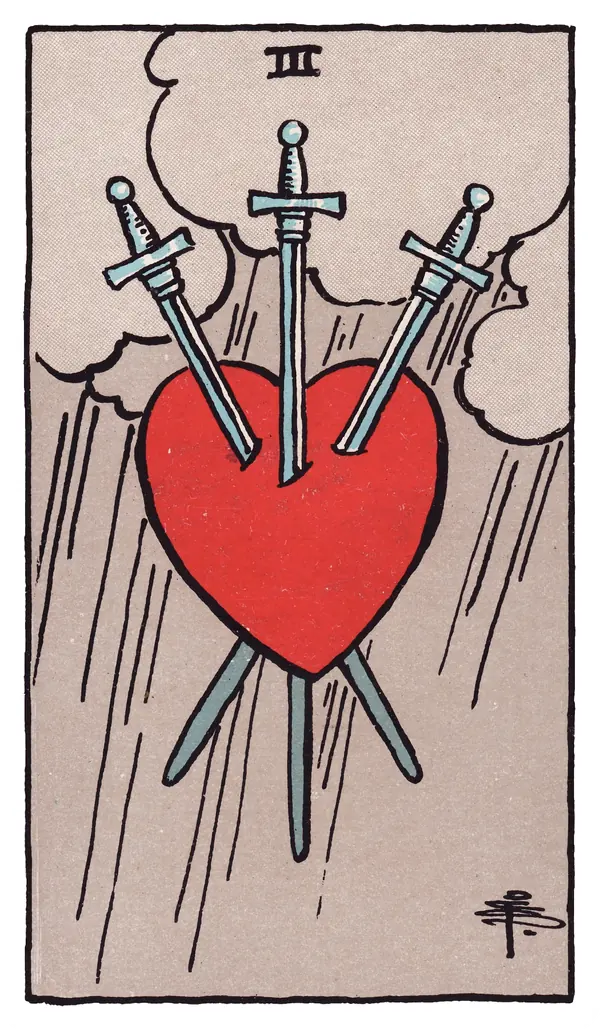 Rider–Waite–SmithThree of SwordsReal heartbreak or a painful truth deserves to be felt honestly, without minimizing how sharp it is.
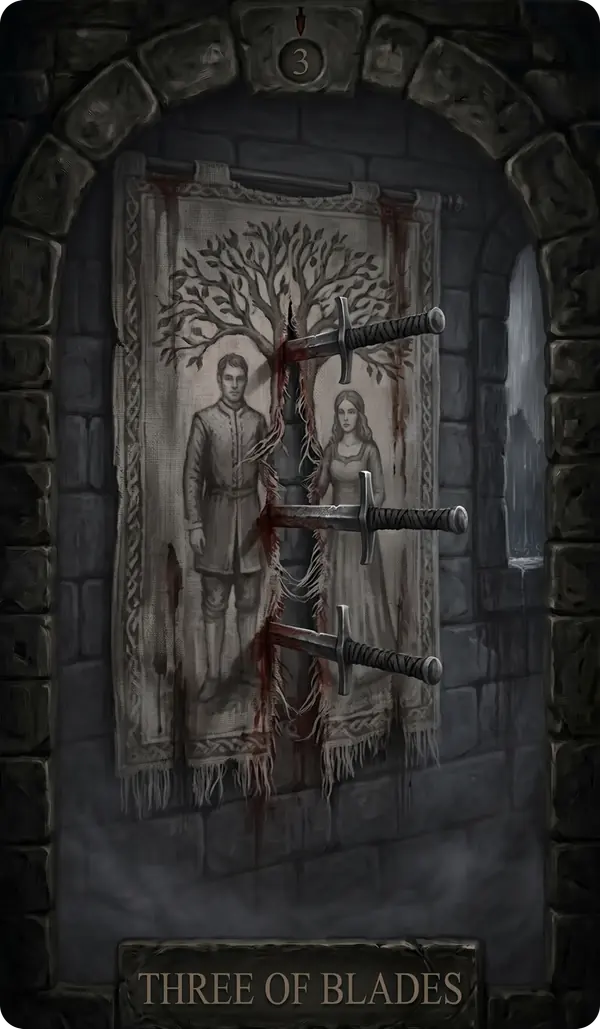 FamiliaThree of BladesA rift inside the family that is named and grieved openly, which is why it can start to close.
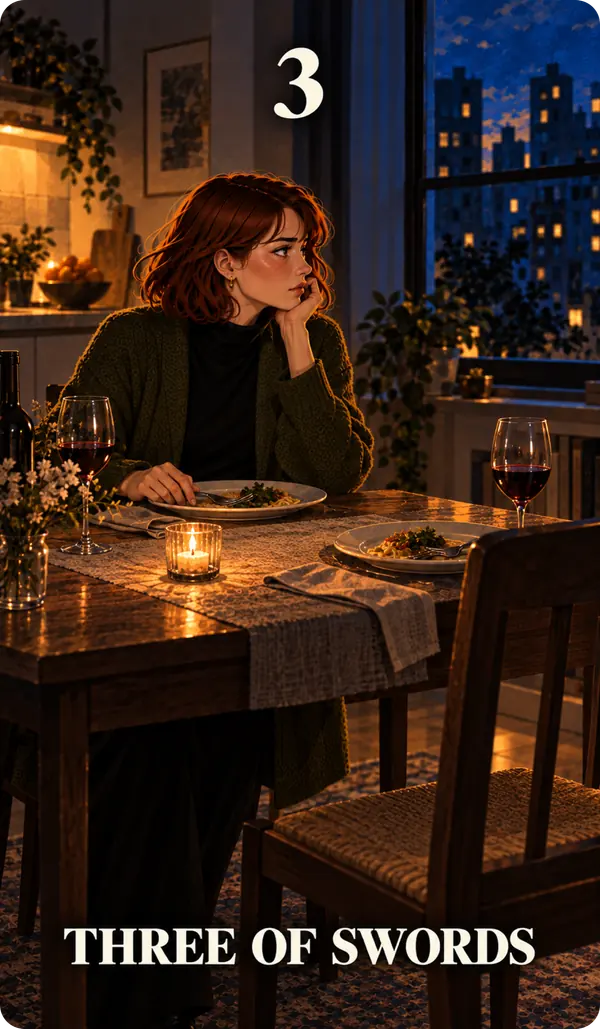 City of WindowsThree of SwordsAcknowledging the hurt without instantly turning it into a whole story about the other person.
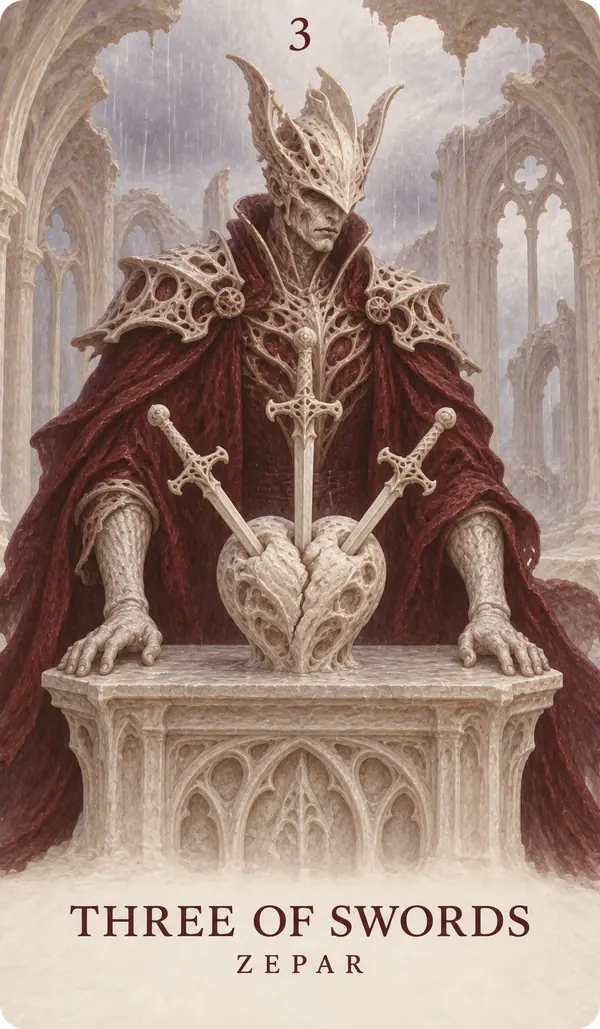 CarnalThree of SwordsPain makes a divided bond visible.
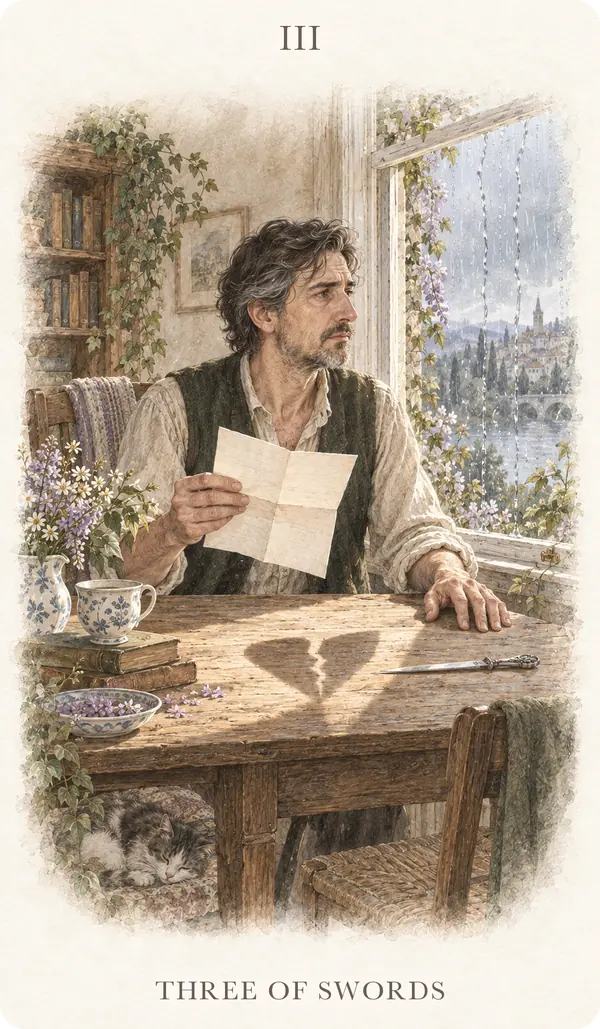 Everyday WondersThree of SwordsThe pain of seeing a hard truth clearly.
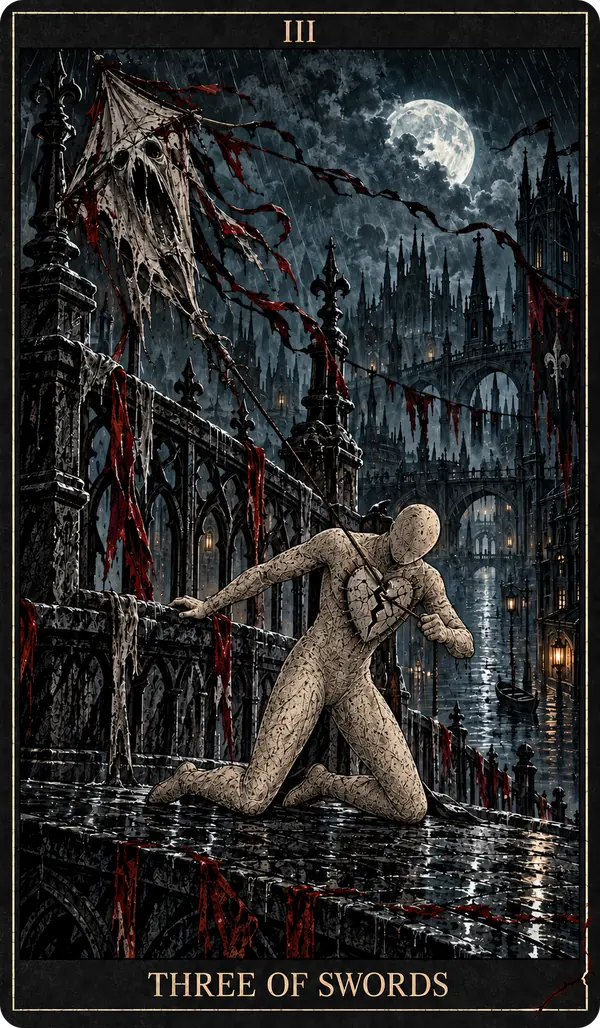 Mirror NightThree of SwordsName outside harm and personal repetition separately.
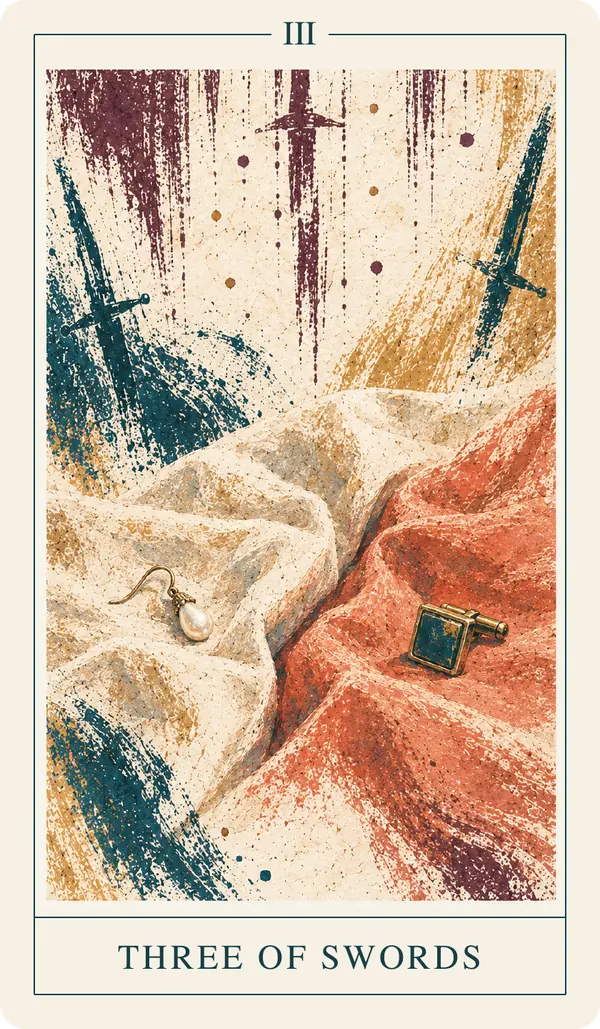 Self ContactThree of SwordsNaming a painful truth allows grief and clarity to coexist.
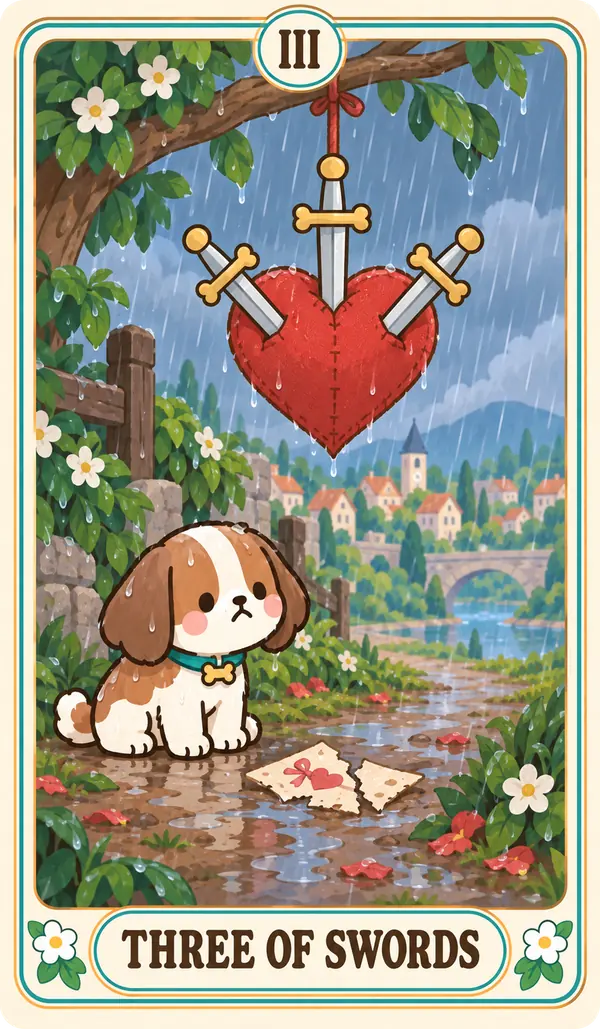 Shiba TownThree of SwordsHeartache; painful truth; a rupture that needs acknowledgment.
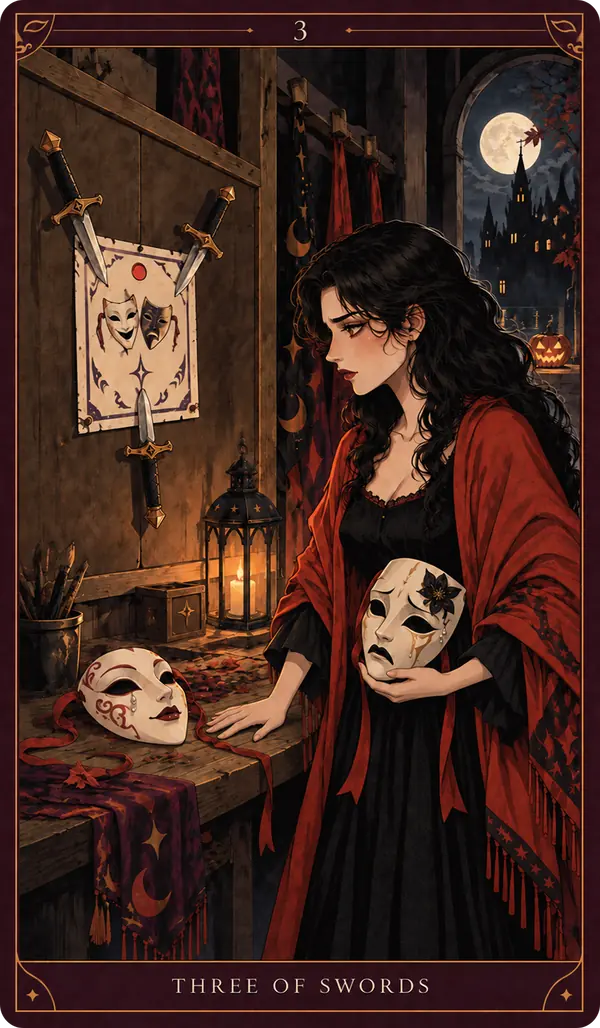 Velvet MasqueradeThree of SwordsHeartbreak around a changed agreement.
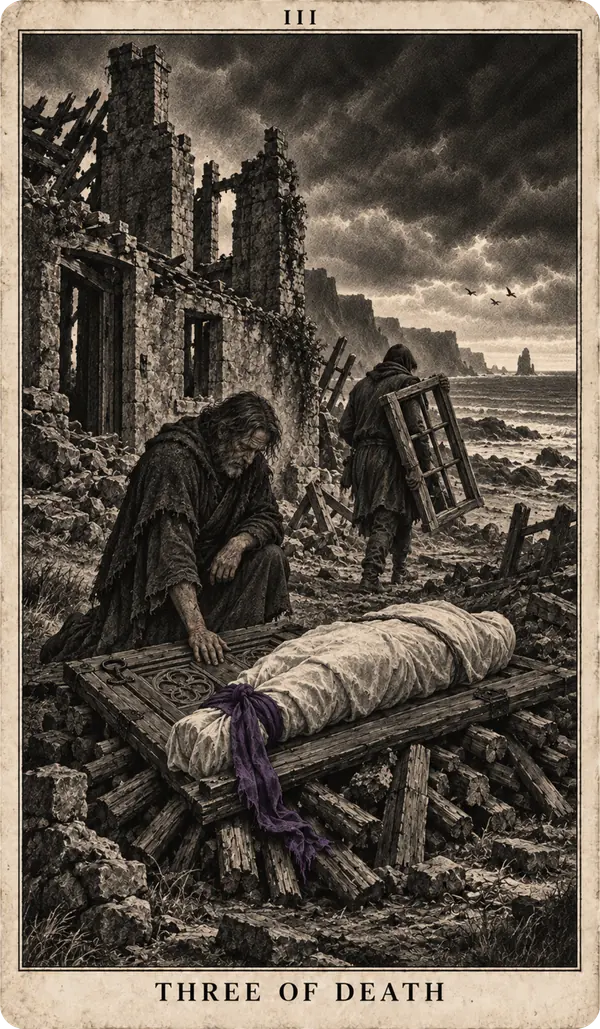 Four HorsemenThree of DeathLet the loss be named and witnessed.
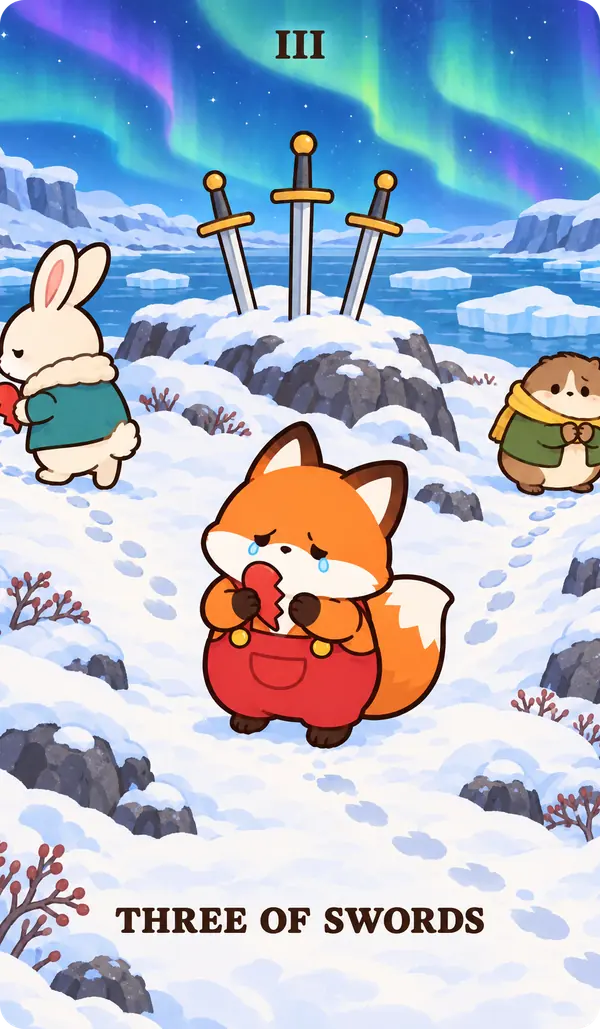 Four TrailsThree of SwordsHeartbreak, painful truth, separation.
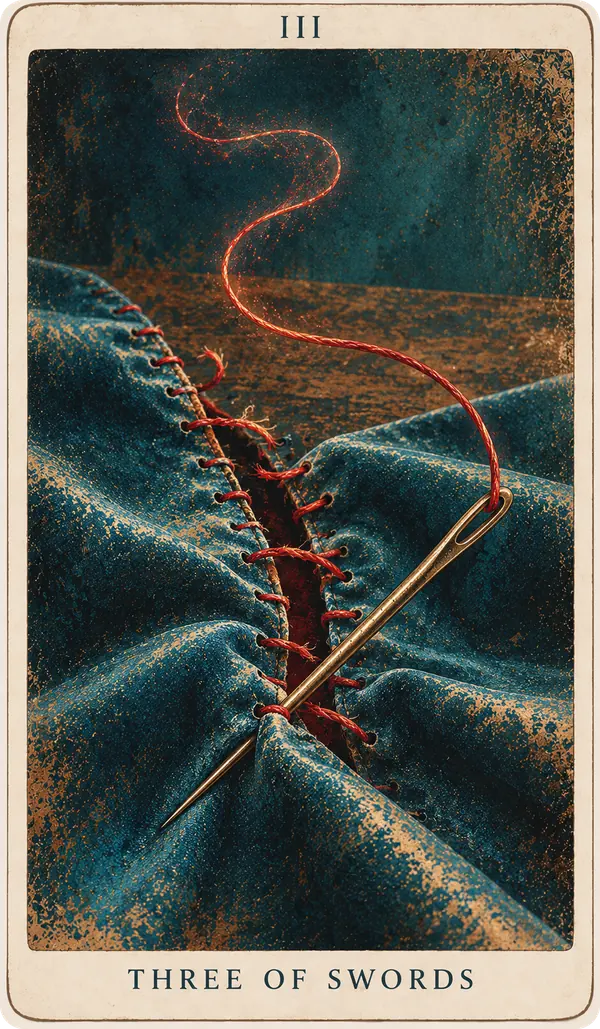 Living ThresholdThree of SwordsA strained seam comes apart, showing pain and the cloth still sound.
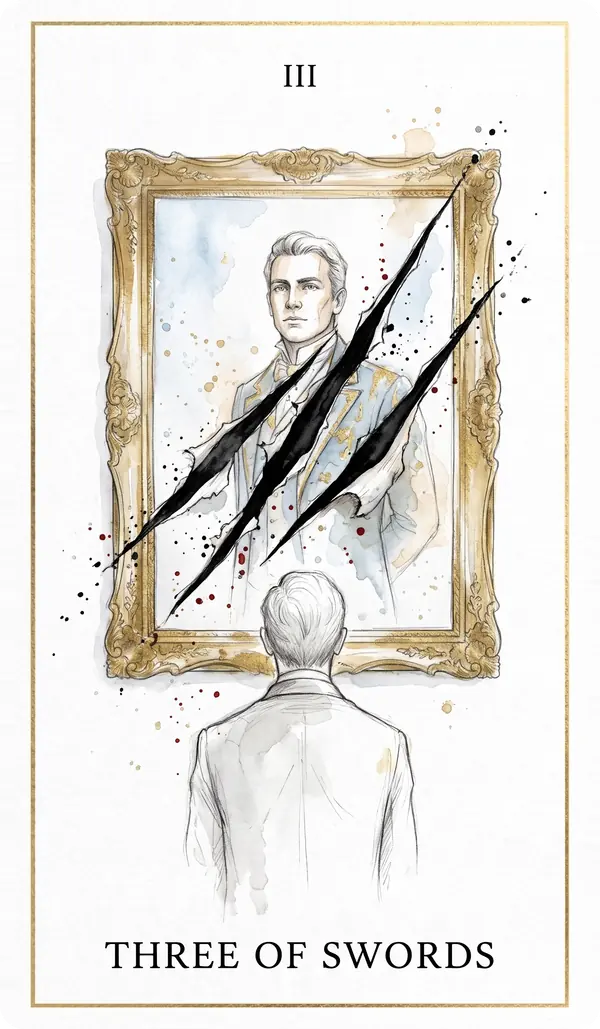 Colour of PowerThree of SwordsA truth has cut the image, not the man.
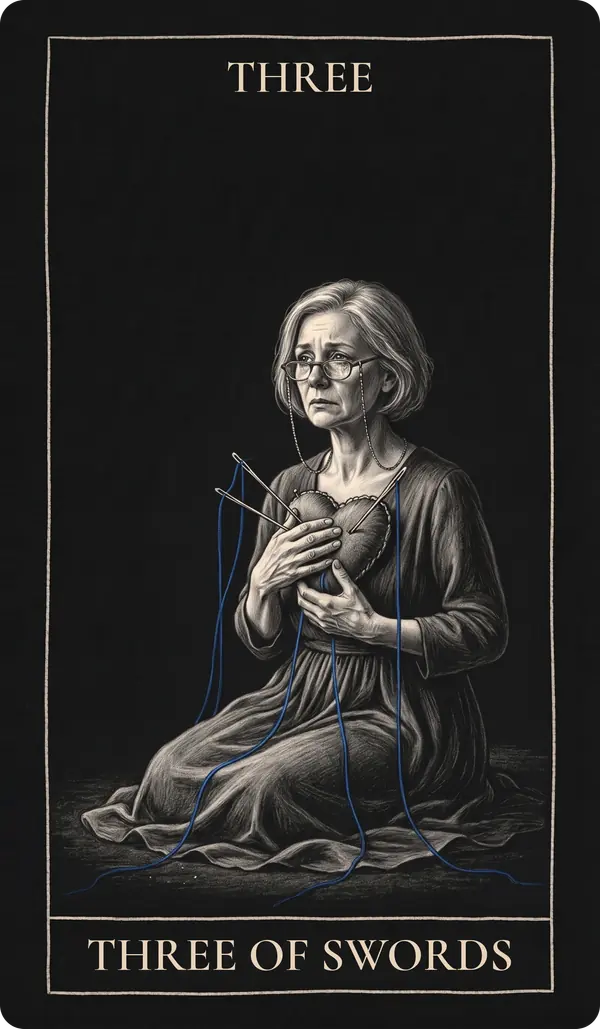 BoundThree of SwordsPain from words: a truth that wounded, a phrase you cannot forget.
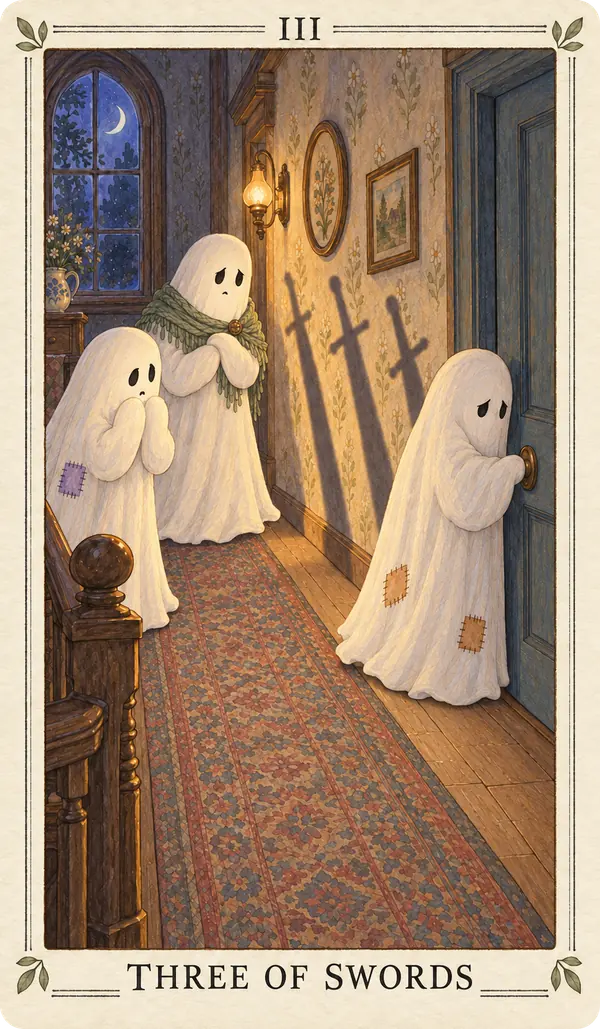 Cozy HauntThree of SwordsAcknowledge pain and its cause.
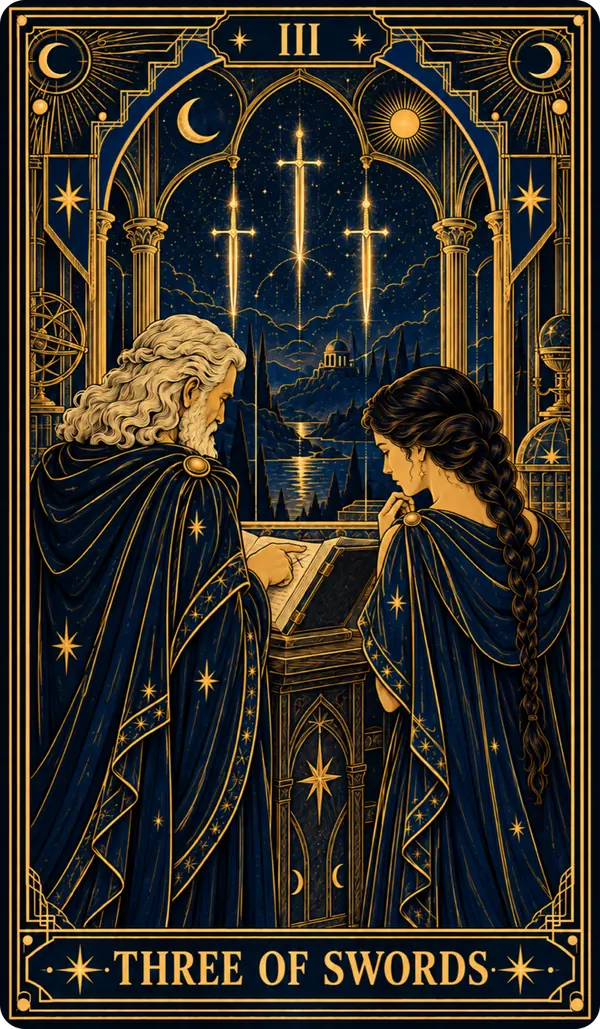 Celestial Night SkyThree of SwordsTruth about a trusted person’s mistake.
Where it appears
Questions about this card
Is Three of Swords a yes or no card in Crimson Inferno?
Upright, Three of Swords leans no in Crimson Inferno: a trusted closeness turning into a trap points that way, though seeing it clearly is where recovery can start. Reversed, it is mixed, since the hurt may be loosening or held open. Ask whether you are asking to know, or asking not to have to.
What does Three of Swords mean in love?
For a relationship, Three of Swords upright may show a closeness that felt safe revealing itself as a hold, the warm arm and the grip in the same moment. Reversed, hurt from a past bond may be kept raw through rehearsal. Write down what you saw, dated, in your own words.
What does Three of Swords mean reversed in Crimson Inferno?
Three of Swords reversed means pain kept open through repetition, or a refusal to acknowledge a broken trust. Replaying the scene until it becomes who you are is the pattern. Spend one evening without going over it, and notice how that feels.