The Hierophant
The Hierophant in Four Horsemen · Major Arcana V
LossIn short
Learn from a tested practice and make an ethical commitment within a community.
Reversed
Confusing custom with truth, outsourcing conscience, or rejecting useful guidance merely because it has authority.
- Major Arcana
- V
- The Refuge Teacher
- learning from a tested practice
- making an ethical commitment within a community
Upright
Learn from a tested practice and make an ethical commitment within a community. Rules read aloud under a roofless chapel teach newcomers how the refuge works and how to belong to it.
A practice others have tested with their lives has real worth.
The traveller behind the rope is part of the picture too, and a commitment made here includes the question of who stays outside.
A question to sit with
“Which rule protects life, and which survives because nobody questions it?”
One step
Learn one practice from someone who has kept it working, and ask them where it stops working.
Reversed
Confusing custom with truth, outsourcing conscience, or rejecting useful guidance merely because it has authority. A rule can outlive its reason, and nobody has written the rule for when waiting becomes the danger.
The opposite failure is here too: throwing away hard-won guidance only because someone in authority holds it.
A question to sit with
“Do I follow this custom because it is true, or because questioning it would cost me?”
One step
Pick one rule you follow without thinking, and find out what it was written to protect.
How this deck reads reversed cards
Reversed, the act on the card turns inward, meets an obstacle, grows harsher or shows its price. On this road a reversal is not automatically the opposite, and not automatically something worse.
In love
A relationship may be shaped by shared customs, commitments made within a community.
- Supports
- Tradition that holds you up.
- Watch for
- Following a script instead of each other.
- One step
- Talk about which customs each of you wants to keep.
A relationship may follow rules nobody chose, or reject all guidance on principle.
- Supports
- Your own conscience.
- Watch for
- Doing what is expected rather than what is right.
- One step
- Name one expectation you follow without having agreed to it.
At work
Work may call for learning a tested practice and the rules of an institution.
- Supports
- Mentors and proven methods.
- Watch for
- Blind obedience.
- One step
- Ask someone experienced how they learned the job, and what they would change.
Procedure may be protecting itself rather than people, or useful guidance may be dismissed.
- Supports
- Asking why a rule exists.
- Watch for
- Hiding behind policy.
- One step
- Find out the reason for one rule you are asked to enforce.
The choice may be helped by tradition, by what others have tested before you.
- Supports
- Guidance from those who kept a practice working.
- Watch for
- Handing the choice over entirely.
- One step
- Ask for advice, and then make the decision yourself.
A choice may be made by custom rather than conscience.
- Supports
- Your own judgement.
- Watch for
- Rejecting good advice because it comes from authority.
- One step
- Weigh one piece of guidance on its merits, not its source.
Growth may come through a teacher, or a community that keeps a practice alive.
- Supports
- Belonging and structure.
- Watch for
- Losing yourself in the group.
- One step
- Learn one thing from a practice older than you.
Growth may be stalled by rules outlived, or by rejecting all teaching.
- Supports
- Questions you are willing to ask out loud.
- Watch for
- Obedience that has replaced thinking.
- One step
- Question one rule and keep one teaching.
A family may be held together by rules and rituals everyone shares, and by teaching them.
- Supports
- Passing on what works.
- Watch for
- Rules that leave someone outside.
- One step
- Ask whether a family custom still serves everyone it touches.
A family custom may be excluding someone, or continuing only because nobody questions it.
- Supports
- A willingness to revisit old rules.
- Watch for
- Conscience handed to tradition.
- One step
- Raise one custom for discussion at home.
Yes or no
MixedNoTradition helps but does not decide for you, so the answer is mixed: learn from it, then choose.
Supports
- A tested practice can guide you.
- A community can hold your commitment.
Limits
- The rules may leave someone outside.
- Custom has limits it does not name.
One step
Ask which rule here protects life, and which is kept only by habit.
The decision is being handed to custom or rejected on reflex, so the answer leans no until you weigh it yourself.
Supports
- A rule can be questioned without rejecting all guidance.
- Your conscience is still yours.
Limits
- Custom may be taken for truth.
- Someone else may be deciding in your place.
One step
Ask whether you would choose this if the rule did not exist.
What is in the picture
A teacher reads the refuge’s rules to two attendants. Through the side doorway, a tired traveller waits beyond the admission rope.
The refuge teaches people how to belong, and the traveller waiting outside shows where that belonging stops.
- lectern with crossed keys
- book of rules
- two attendants
- admission rope
- waiting traveller
- banners
- candles
This card in other decks
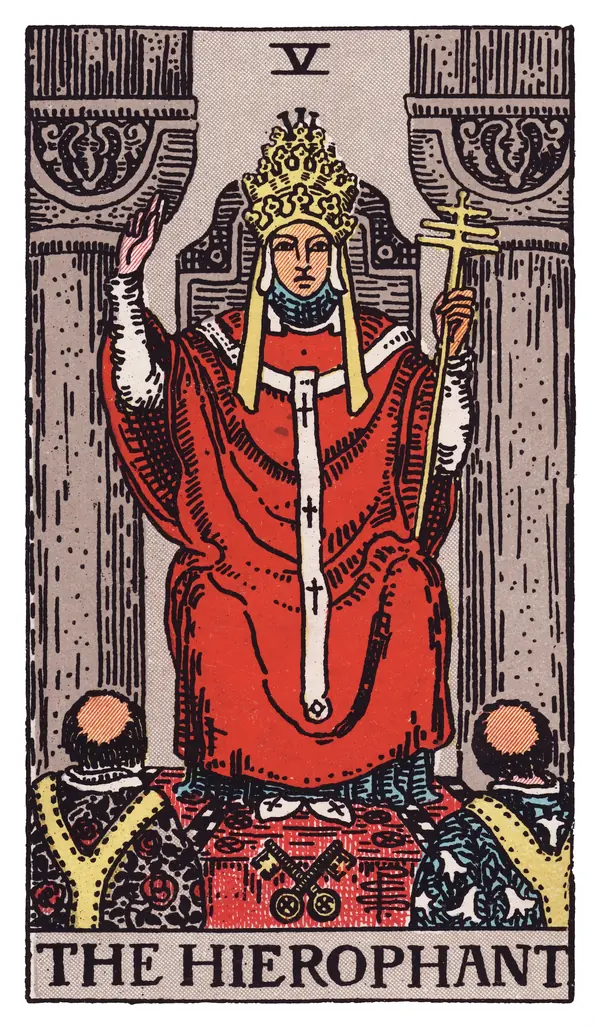 Rider–Waite–SmithThe HierophantA traditional method, mentor, or shared set of values has something genuinely useful to offer you right now.
 FamiliaThe HierophantA real acceptance into the line: the newcomer is admitted, and the tradition passes on unbroken.
 City of WindowsThe HierophantValues named honestly, the support of a community, a union with clear rules.
 CarnalThe HierophantLearning within a tradition, including the duty to question it.
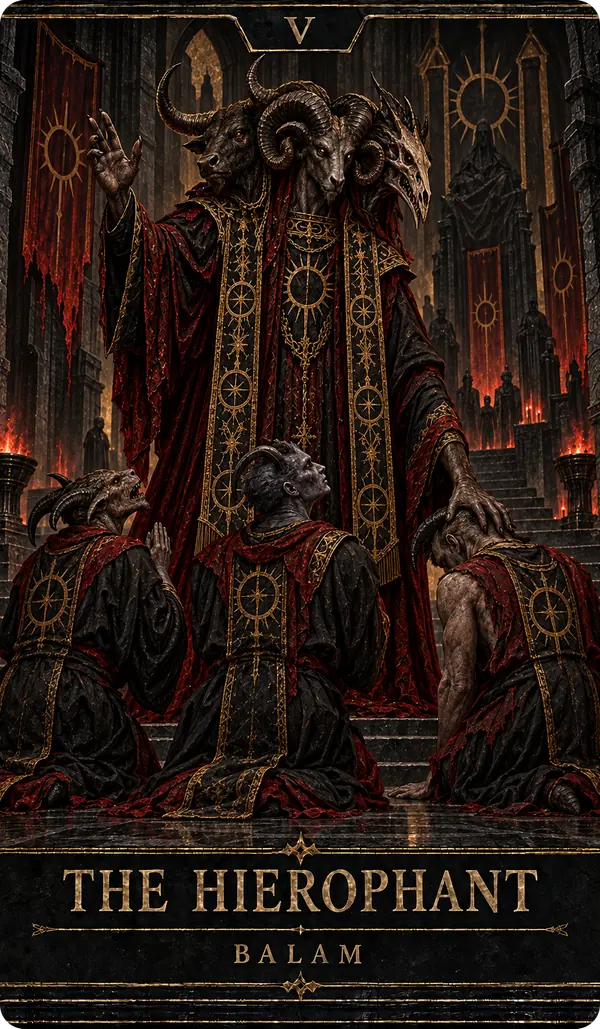 Crimson InfernoThe HierophantExamine inherited teachings, shared practices and the responsibilities of belonging.
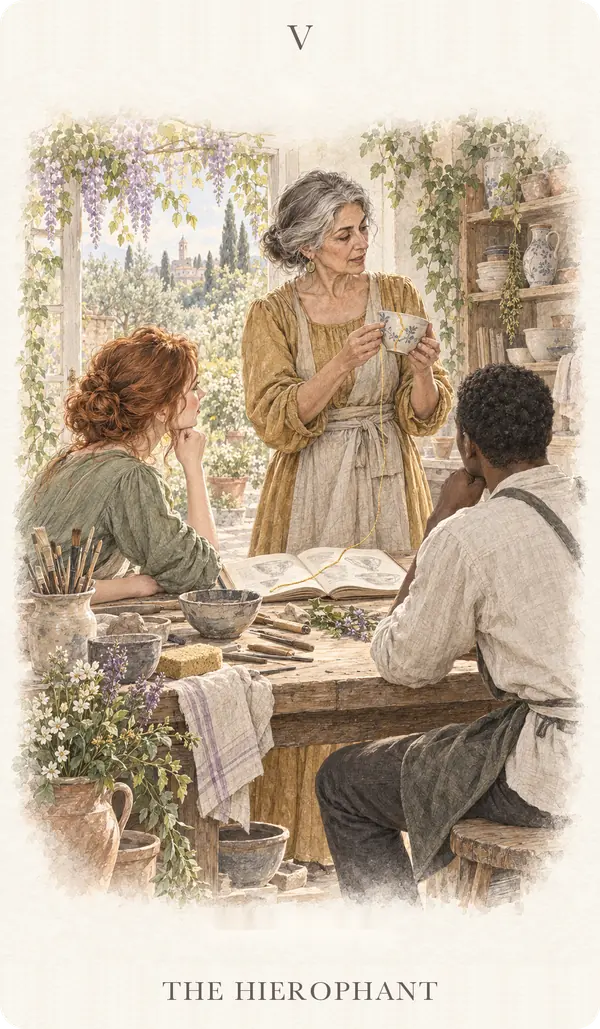 Everyday WondersThe HierophantTradition, shared knowledge, a common language and teaching.
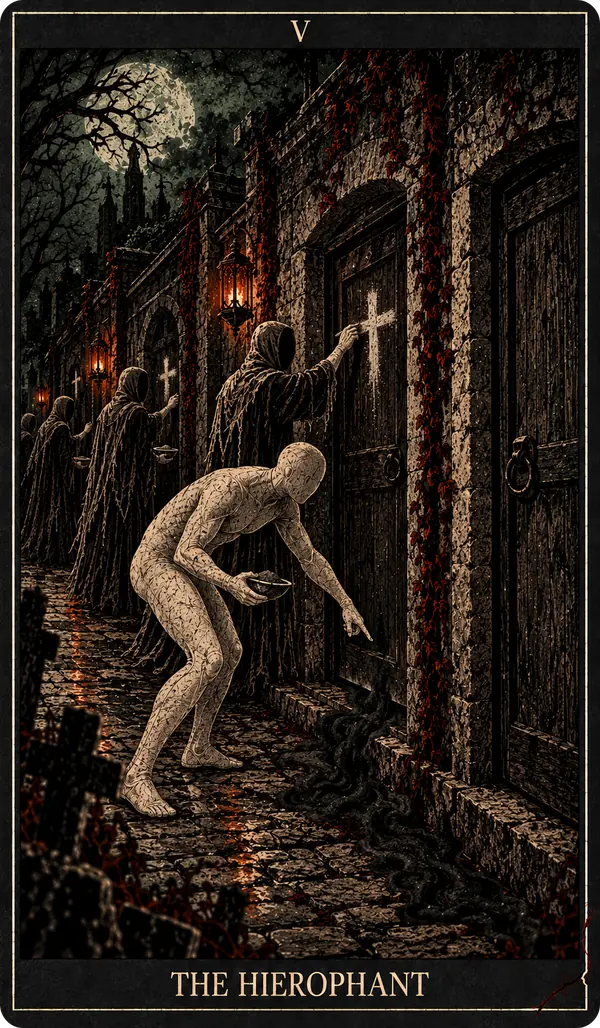 Mirror NightThe HierophantKeep only a rite that survives observation.
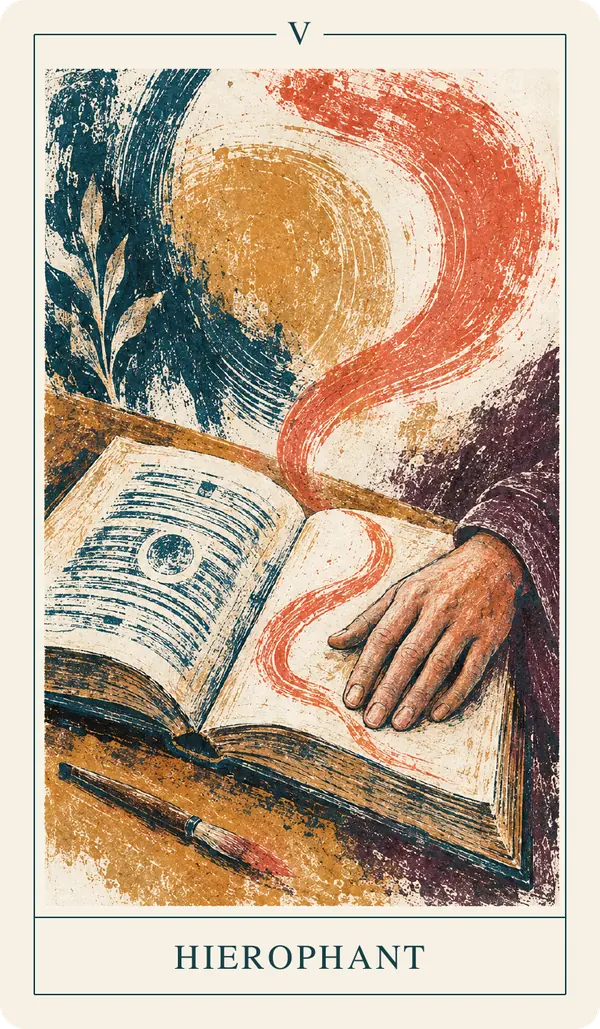 Self ContactThe HierophantLearn from a practice or teacher, then understand the reasons behind what you inherit.
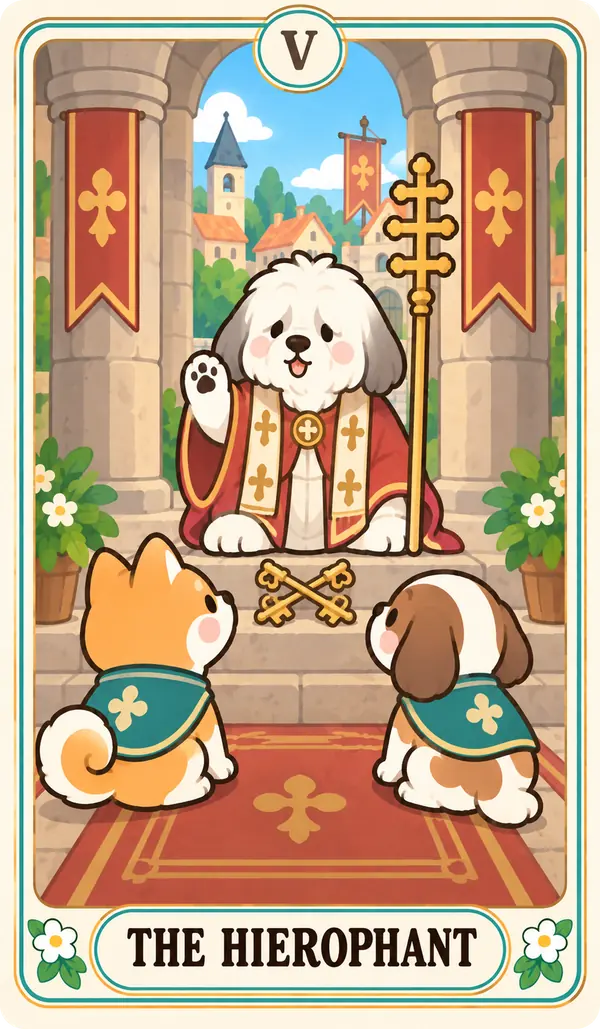 Shiba TownThe HierophantTradition; shared practice; learning from a teacher.
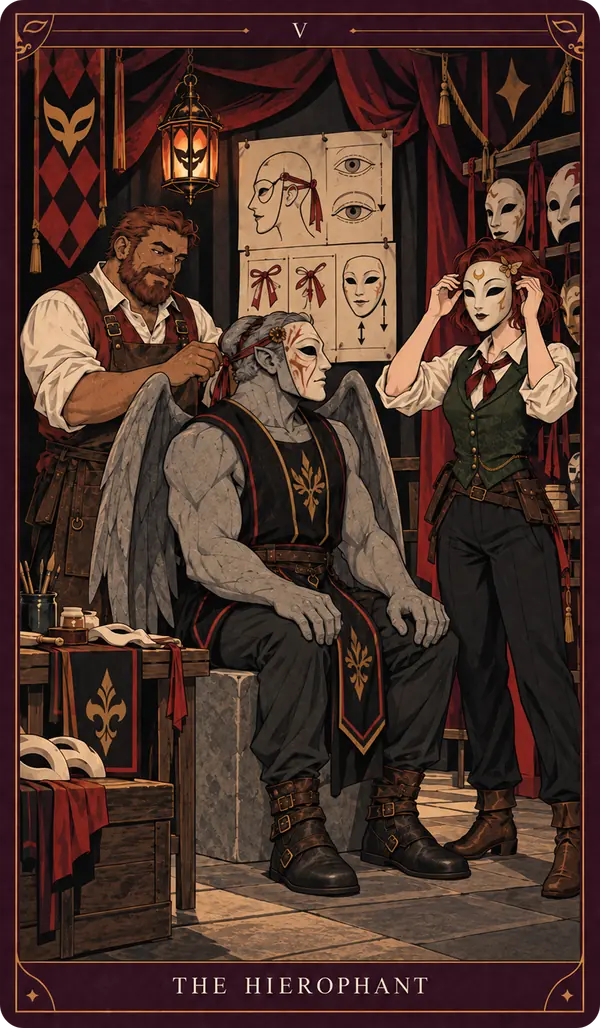 Velvet MasqueradeThe HierophantLearning a practice that helps its wearer.
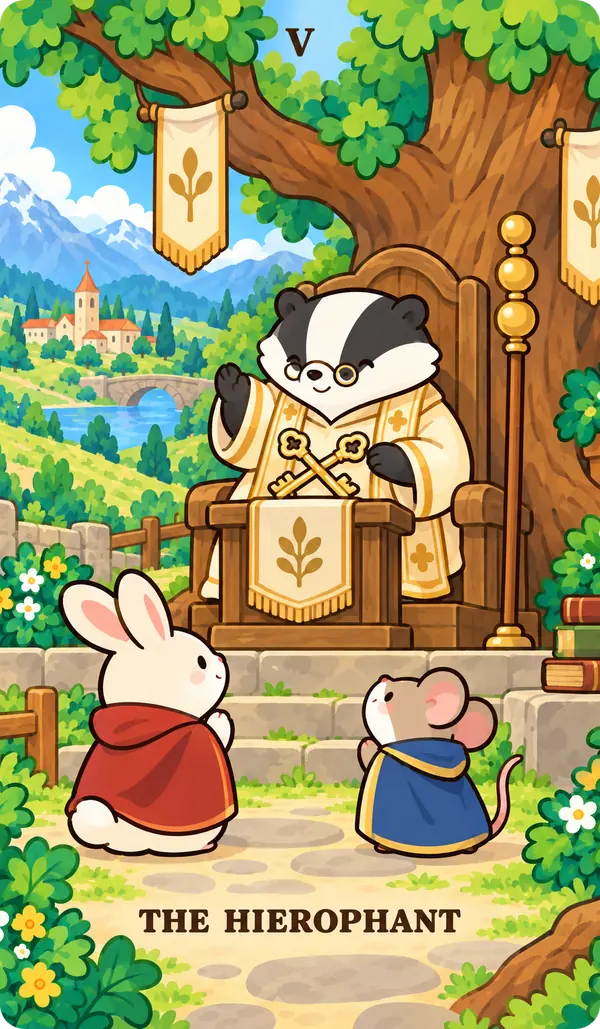 Four TrailsThe HierophantTeaching, shared tradition, belonging.
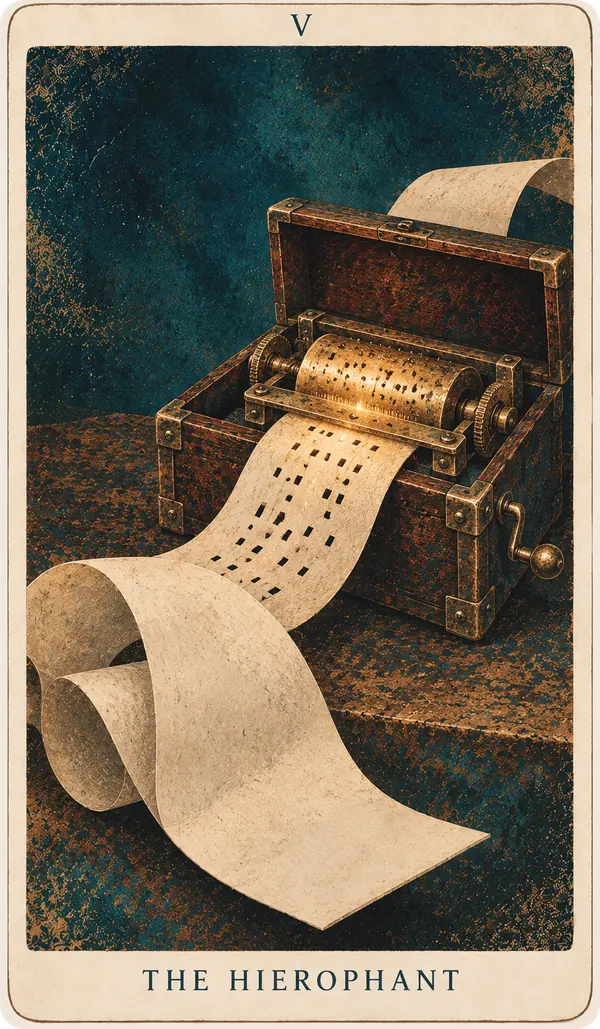 Living ThresholdThe HierophantA music box plays a handed-down tune and leaves room for a new note.
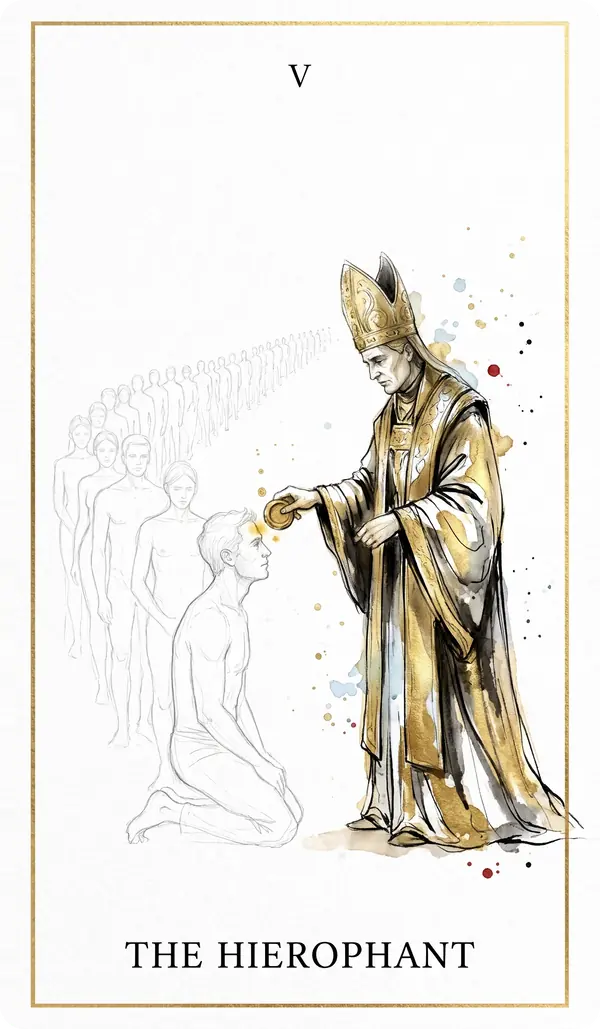 Colour of PowerThe HierophantThe seal opens doors talent cannot; stand in line if you must.
 BoundThe HierophantA knot tied in the old way, with generations holding the other end.
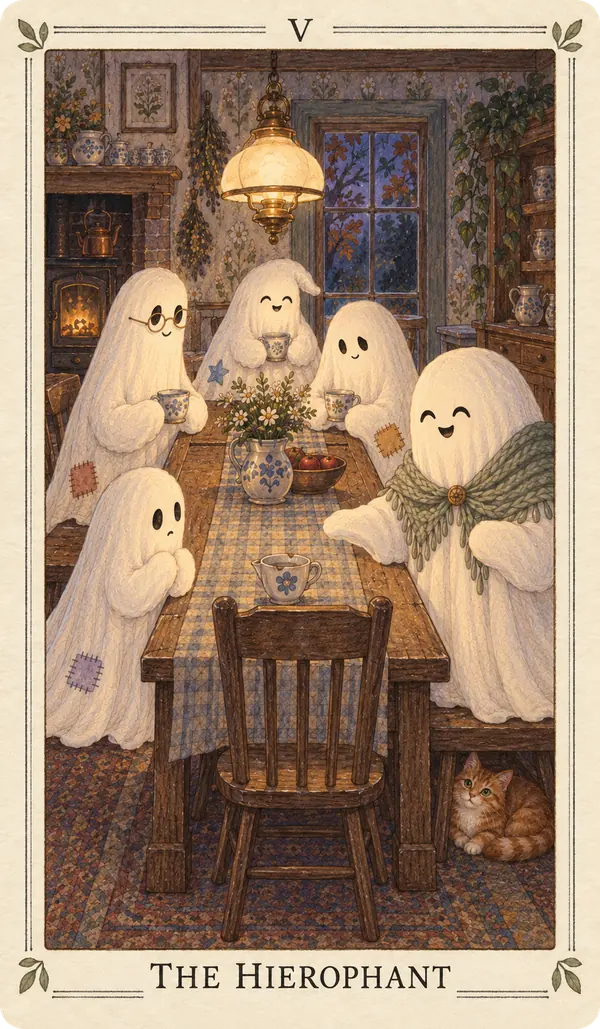 Cozy HauntThe HierophantReceive a shared practice that carries care.
 Celestial Night SkyThe HierophantLearning how to check.
Where it appears
Questions about this card
Is The Hierophant a yes or no card in Four Horsemen?
Upright, The Hierophant leans mixed: tradition helps but does not decide for you, so learn from it and then choose. Reversed, it leans no, because the decision is handed to custom or rejected on reflex. Ask which rule here protects life and which is kept only by habit, and whether you would choose this without the rule.
What does The Hierophant mean in love?
On the subject of love, The Hierophant may point to a relationship shaped by shared customs and commitments made within a community. Reversed, it can follow rules nobody chose, or reject all guidance on principle. Talk about which customs each of you wants to keep, and name one expectation you follow without having agreed to it.
What does The Hierophant mean reversed in Four Horsemen?
The reversed Hierophant describes confusing custom with truth, outsourcing conscience, or rejecting useful guidance only because it has authority. The rope at the doorway is the picture: a rule can shelter people or hold them out. Ask whether you would choose this if the rule did not exist, and weigh the answer yourself.