Ten of Swords
Ten of Swords in Everyday Wonders · Minor Arcana
ChoiceIn short
A definite ending that more effort alone will not repair.
Reversed
Repeating the collapse in thought or insisting that the old arrangement still works.
- Swords
- Ten
- Air
- The Exhausted Weaver
- a definitive ending
- acknowledging what is finished
- a next action that can differ
Upright
Acknowledge an ending so the next action can be different. A woman sits exhausted beside a failed loom. Its cloth has fallen slack and the work cannot continue in its present form.
The collapse is already visible; another effort alone will not repair the arrangement. Recognizing an ending changes the next task.
Attention can turn toward recovery, help and rebuilding once the failed structure is acknowledged.
A question to sit with
“What is finished, even if I did not choose its ending?”
One step
Acknowledge an ending so the next action can be different.
Reversed
Repeating the collapse in thought or insisting that the old arrangement still works. The slack cloth is lifted again and again in the mind, and it falls the same way each time.
Or the shuttle keeps going on a frame that can no longer hold the thread, as if one more row would set it right.
A question to sit with
“Am I replaying the fall, or adding rows to a frame that can’t hold the thread anymore?”
One step
If something has stopped working, write it down in one line and name one small thing you would do differently tomorrow.
How this deck reads reversed cards
Reversed, the wonder stalls or goes too far. The linen road may refuse to unroll, the small weather in a cup may spill over, a familiar habit may hide the step that is still open, or a settled pattern may be just beginning to change. It is not the opposite of the upright card and not a worse one, only the same day seen where it catches.
In love
An old way of loving may have gone slack like cloth off a broken loom, and seeing that may let the next way of relating be different.
- Supports
- Rest and help after a hard stretch.
- Watch for
- Weaving the same pattern harder.
- One step
- Name one pattern in love you would like to stop repeating, and tell a friend.
An old pattern in love may be lifted again and again in the mind like slack cloth, or kept on the loom as if one more row would set it right.
- Supports
- Letting go of the hope that the same effort brings a different result.
- Watch for
- Replaying what went wrong night after night.
- One step
- Give yourself one evening off from thinking about the relationship, with a book or a walk.
At work
A project or method at work may not be able to continue in its present form, and admitting that may free your attention for recovery and help.
- Supports
- Saying honestly whether the loom can still hold this plan.
- Watch for
- One more late night on a frame that has already tipped.
- One step
- Find one person to help you think through what to rebuild first.
The shuttle may keep moving on a frame that can no longer hold the thread, or the collapse may be replayed until it fills every thought.
- Supports
- Recognizing when effort has stopped working.
- Watch for
- Longer hours on a plan that has already tipped.
- One step
- Pause one task that is not working, and note what you learn from stopping.
One option may be finished in all but name, and the real choice may be about what you build next.
- Supports
- Letting a failed plan count as information.
- Watch for
- Choosing to keep repairing what cannot hold.
- One step
- Cross off the option that cannot work, and look at what remains.
You may be choosing to repair the old arrangement one more time, or circling the collapse instead of looking past it.
- Supports
- Asking what a new start would need.
- Watch for
- Insisting that the old way still works.
- One step
- Write one sentence about what a different next step would look like.
Sitting in the doorway with your hands in your lap may be the first step, letting an ending be an ending before anything new begins.
- Supports
- Recovery before rebuilding.
- Watch for
- Blaming yourself for the collapse.
- One step
- Do one restful thing today and leave the rebuilding until tomorrow.
Rethreading the broken loom in your mind may be the habit to put down, turning instead toward rest, help and rebuilding.
- Supports
- Turning from the wreckage to recovery.
- Watch for
- Reliving the ending as a habit.
- One step
- When the old collapse replays today, stand up and do one small practical task.
The way the household is arranged may not hold any longer in its present form, and saying so gently may let everyone look for help and a new shape.
- Supports
- Asking for practical help at home.
- Watch for
- One person holding the whole loom up.
- One step
- Ask the family to share one task that has rested on you alone.
A household may keep running an arrangement that no longer holds, or keep retelling how it fell apart.
- Supports
- Agreeing together that something needs rebuilding.
- Watch for
- Pretending the old routine still holds the cloth.
- One step
- Propose one small new arrangement at home, and agree to review it together in a week.
Yes or no
NoNoFor keeping things as they were, an arrangement that cannot continue leans toward no.
Supports
- Acknowledging what’s finished frees attention.
- A different next action becomes possible.
Limits
- The old arrangement may not carry on in its present form.
- More effort alone may not repair it.
One step
Ask whether you’re hoping to rescue the old way or to begin a new one.
Replaying an ending or denying it leans toward no.
Supports
- Rebuilding can start once the ending is seen.
- Help is possible after the collapse is named.
Limits
- Replaying the collapse may keep it going.
- Insisting the old way works may delay recovery.
One step
Notice whether this question hopes the old arrangement still works.
What is in the picture
A woman sits exhausted beside a failed loom. Its cloth has fallen slack and the work cannot continue in its present form. The collapse is already visible; another effort alone will not repair the arrangement.
Recognizing an ending changes the next task. Attention can turn toward recovery, help and rebuilding once the failed structure is acknowledged.
- woman sitting exhausted in a stone doorway
- broken loom with its frame tipped over
- woven cloth fallen slack
- lilac shawl
- hands resting in her lap
- white flowers over the doorway
- dim workshop shelves behind her
- stone path along the wall
- cypresses
- hill town at sunset
This card in other decks
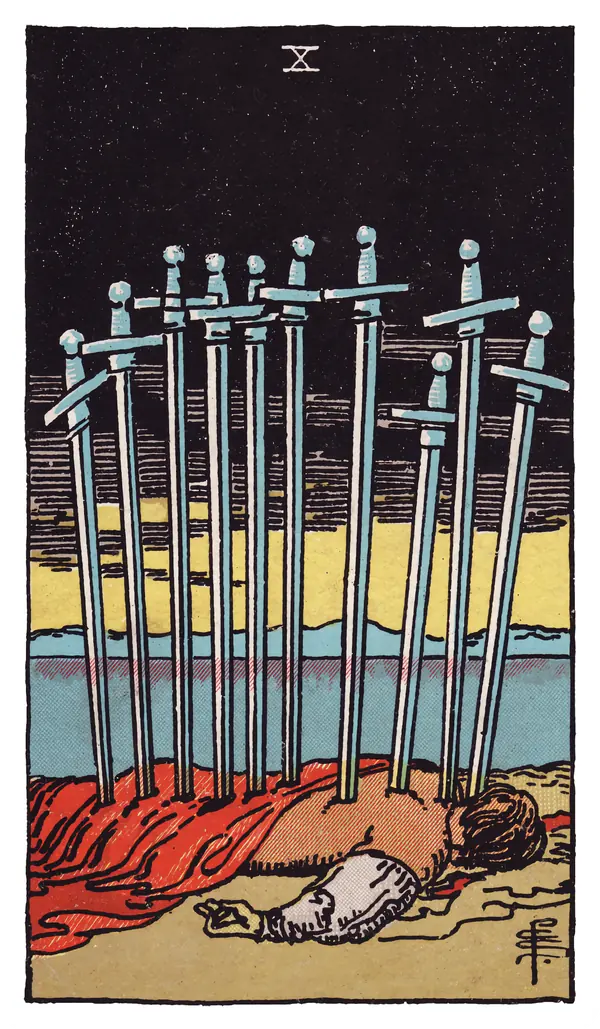 Rider–Waite–SmithTen of SwordsA painful ending may feel like rock bottom, though the dawn on the horizon shows the night is not the whole scene.
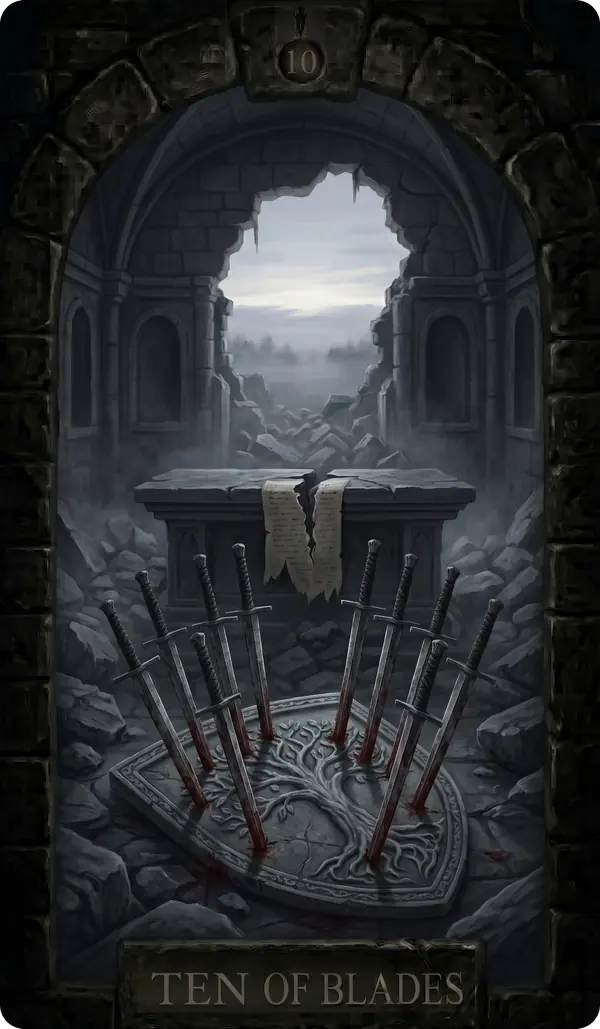 FamiliaTen of BladesThe old order has fallen completely, and there is relief in that: nothing is left to hold, and a new law can begin.
 City of WindowsTen of SwordsAcknowledging the end of an old form of the relationship and following through on your own decision.
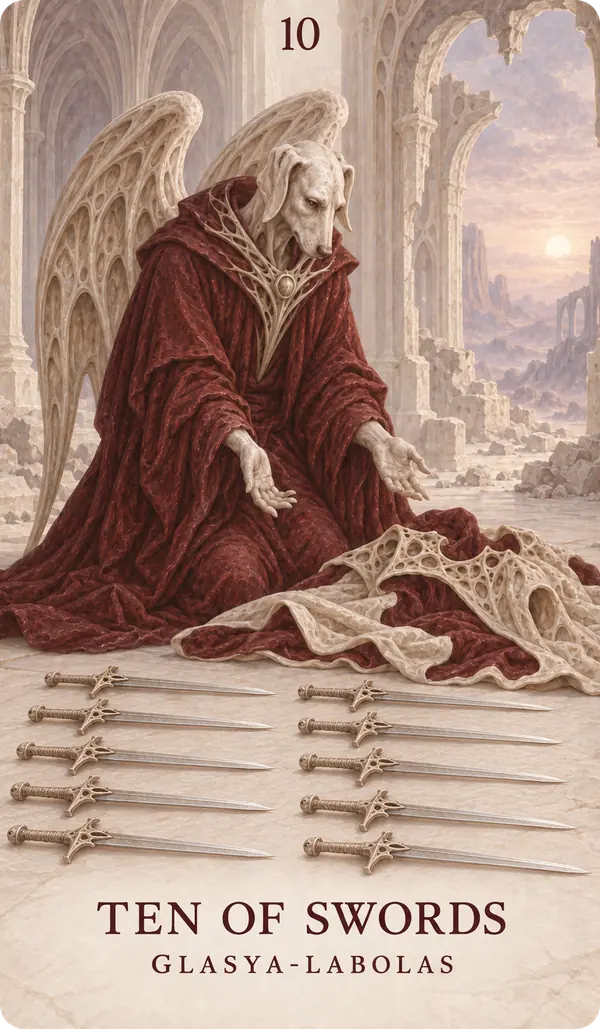 CarnalTen of SwordsA damaging pattern reaches its limit.
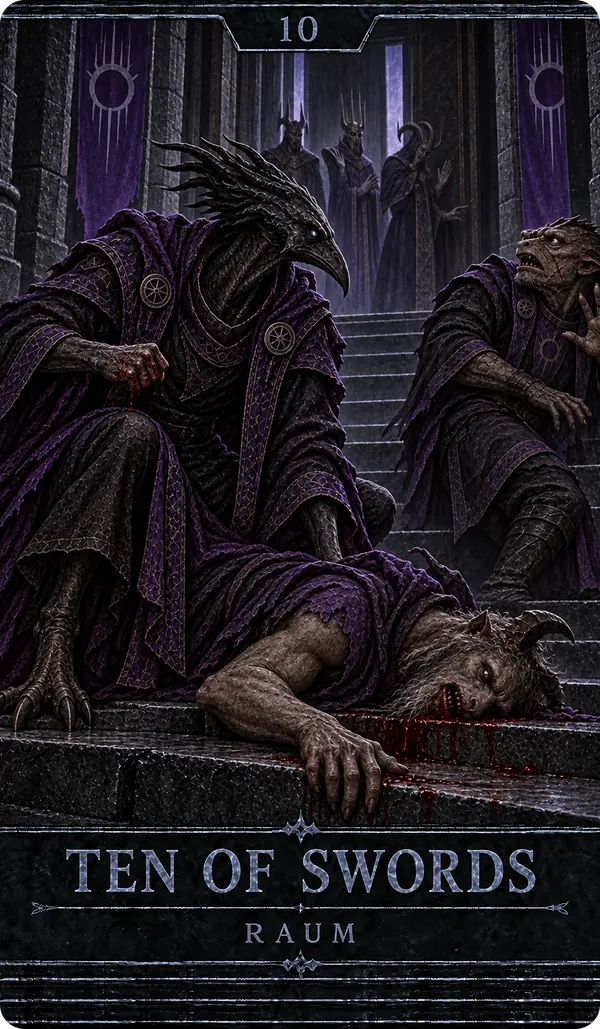 Crimson InfernoTen of SwordsAcknowledge the ending instead of spending more strength defending what has failed.
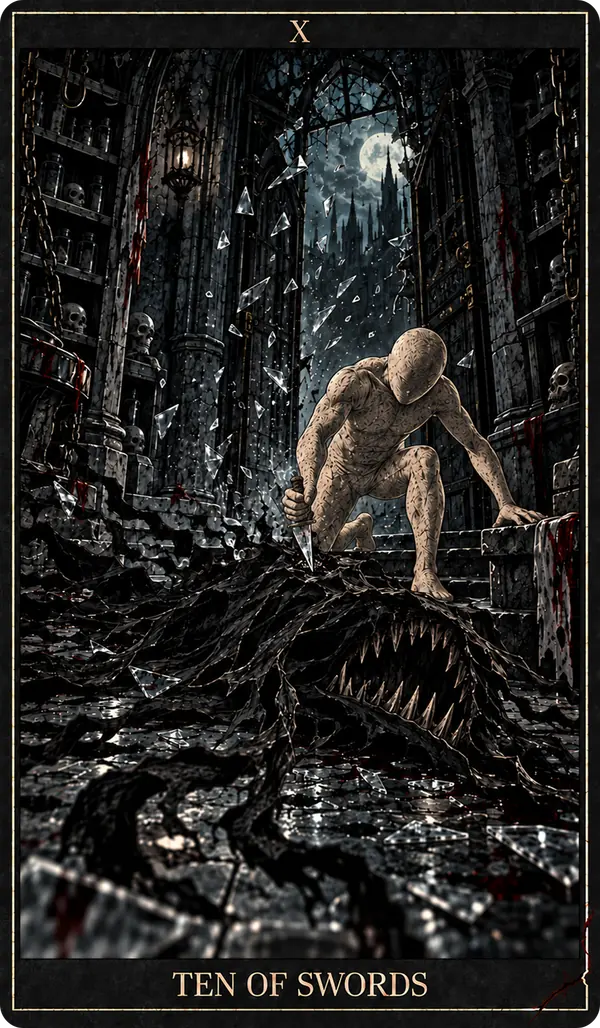 Mirror NightTen of SwordsFinish without denying the cost.
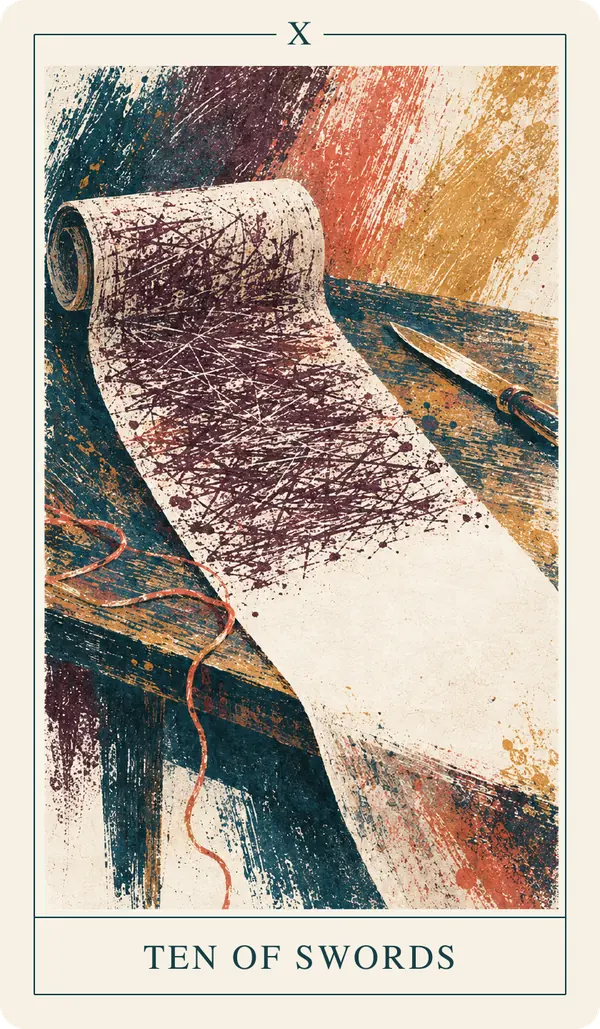 Self ContactTen of SwordsAn exhausted pattern may have reached its end; acknowledge completion.
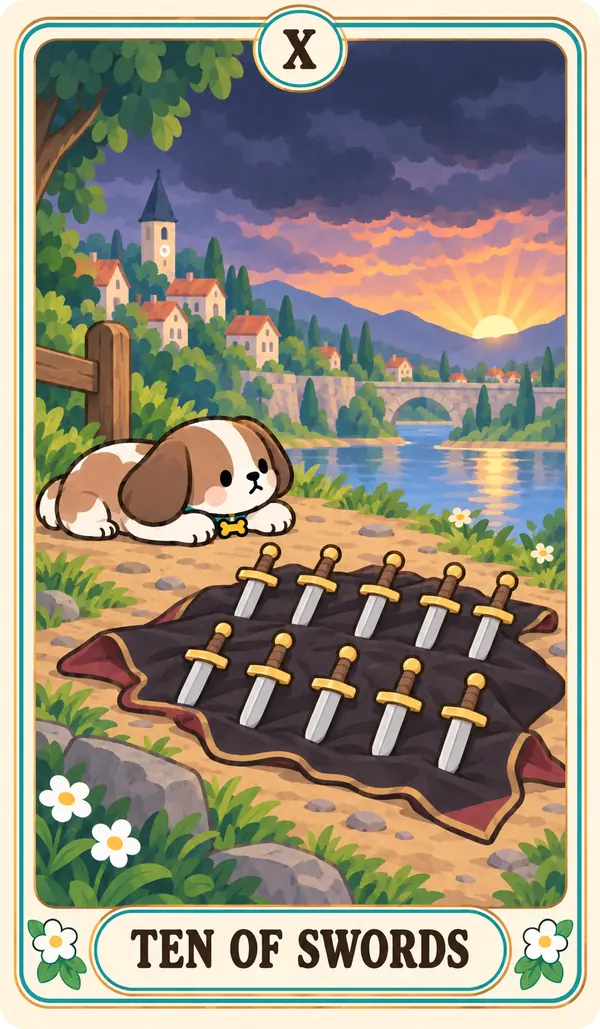 Shiba TownTen of SwordsA painful ending; the limit reached; no need to continue the struggle.
 Velvet MasqueradeTen of SwordsA painful ending at the limit of a role.
 Four HorsemenTen of DeathStop asking the ended world to resume; take the next real step.
 Four TrailsTen of SwordsPainful ending, exhaustion, lowest point.
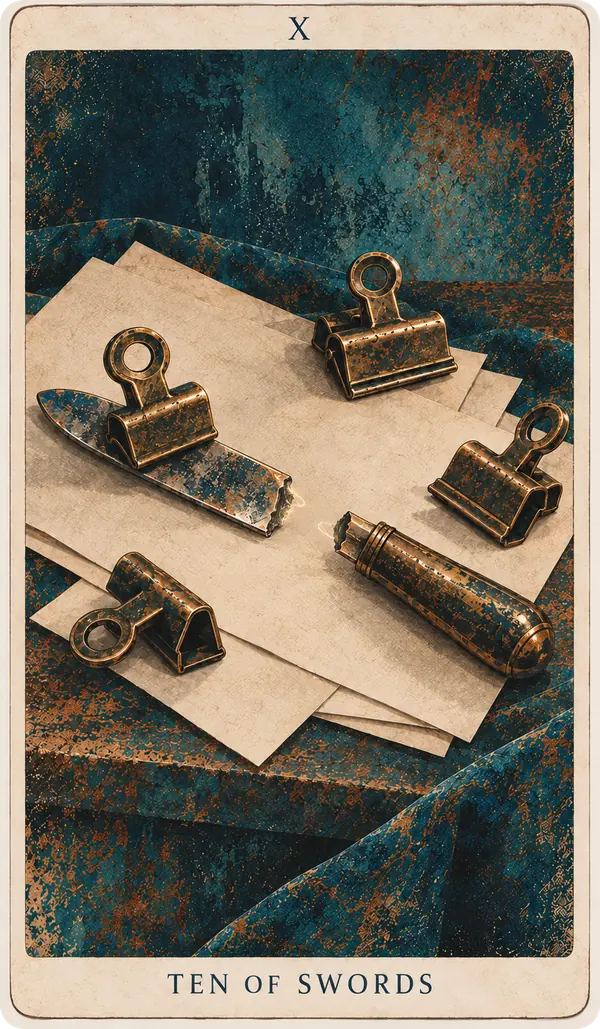 Living ThresholdTen of SwordsA broken method reaches its limit while useful material remains.
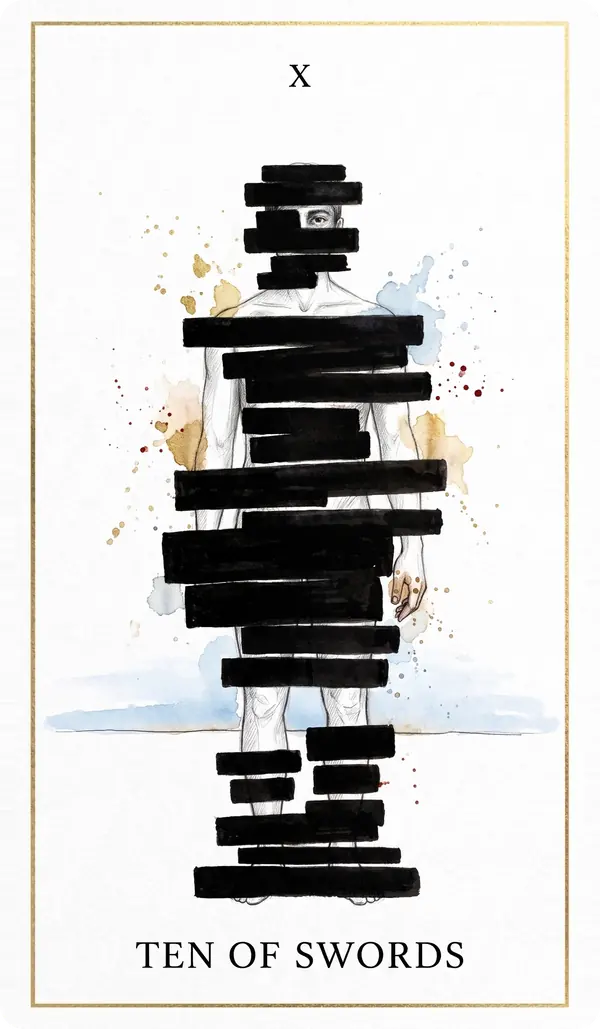 Colour of PowerTen of SwordsThe story is finished: you have been crossed out, and only up remains.
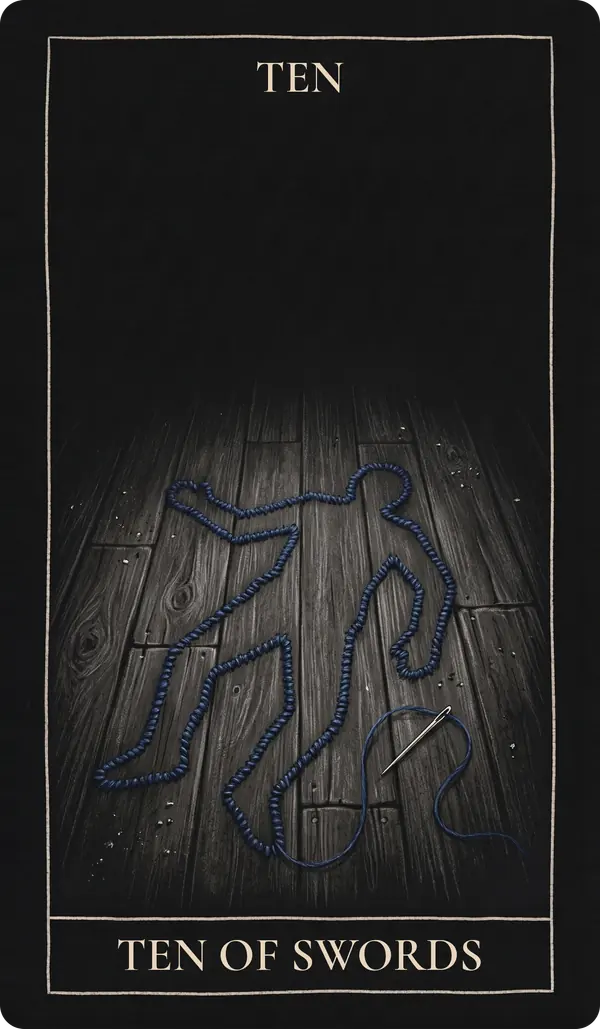 BoundTen of SwordsThe last word has been spoken; the body is gone, only the seam remains.
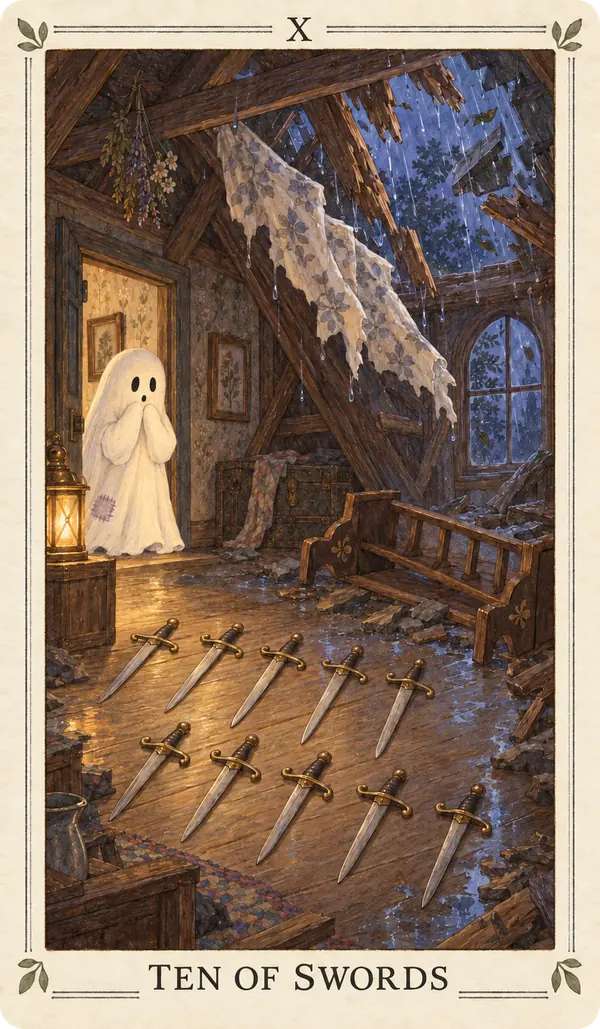 Cozy HauntTen of SwordsAdmit an ending and make the next place safer.
 Celestial Night SkyTen of SwordsThe end of a wrong account.
Where it appears
Questions about this card
Is Ten of Swords a yes or no card in Everyday Wonders?
The Ten of Swords leans no both ways, for keeping things as they were. Upright, an arrangement that cannot continue is already visible. Reversed, replaying an ending or denying it leaves you in the same place. Ask what you would do next if the old form were really finished, and begin with rest.
What does Ten of Swords mean in love?
Where love is concerned, the Ten of Swords upright says an old way of loving may have gone slack like cloth off a broken loom, and seeing that may let the next way of relating differ. Reversed, an old pattern is lifted again and again in the mind. Name one pattern you would like to stop repeating, and tell a friend.
What does Ten of Swords mean reversed in Everyday Wonders?
The collapse is replayed in thought when the Ten of Swords is reversed, or the old arrangement is insisted on as if one more row would set it right. The loom is the same either way. Give yourself one evening off from thinking about it, with a book or a walk.