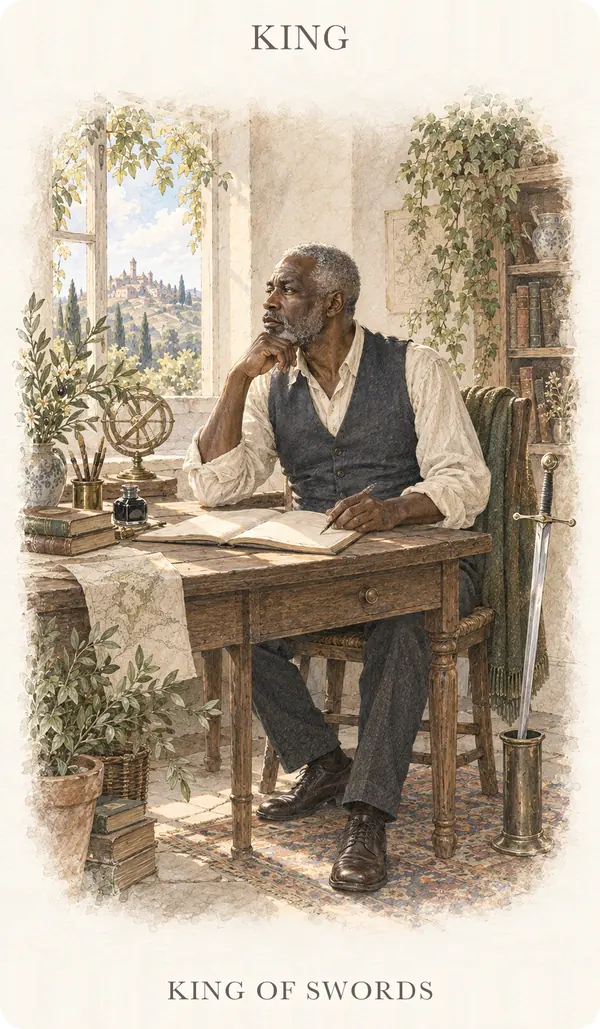
Ace of Swords
Ace of Swords in Everyday Wonders · Minor Arcana
ChoiceIn short
Clarity, and a decision you can explain.
Reversed
Using a sharp argument without checking its premise.
- Swords
- Ace
- Air
- The Letter Reader
- clarity and decision
- naming the issue precisely
- a decision you can explain
Upright
Name the issue precisely and make a decision you can explain. A reader has opened a letter. Its loosened ribbon lies nearby, and a clear band of sunlight enters the scene.
Something that was enclosed can now be examined. Clarity begins when the subject can be named and inspected.
An opened letter offers information; it still needs an attentive reader.
A question to sit with
“What needs to be stated plainly?”
One step
Name the issue precisely and make a decision you can explain.
Reversed
Using a sharp argument without checking its premise. The letter is skimmed, and its first sharp line is taken for the whole message.
An argument can cut cleanly and still rest on a premise nobody opened.
A question to sit with
“Before I use that sharp line, have I checked what it rests on?”
One step
Before you press your point, write down the premise under it and check one fact that holds it up.
How this deck reads reversed cards
Reversed, the wonder stalls or goes too far. The linen road may refuse to unroll, the small weather in a cup may spill over, a familiar habit may hide the step that is still open, or a settled pattern may be just beginning to change. It is not the opposite of the upright card and not a worse one, only the same day seen where it catches.
In love
A truth in love may be ready to read like an opened letter, its ribbon loosened, lying in a band of clear light.
- Supports
- Saying in one sentence what you feel and want.
- Watch for
- Using a clear point to cut someone.
- One step
- Write the one sentence you most want to say about this bond, and read it back in daylight.
A sharp conclusion in love may rest on a first line skimmed, the rest of the letter unread.
- Supports
- Reading the whole message before you answer.
- Watch for
- Arguments built on a guess about the other person.
- One step
- Ask one question about something you assumed, and let the answer stand.
At work
Something sealed at work may now be open to inspection, and naming the problem precisely may make the decision one you can explain.
- Supports
- A problem stated in plain words.
- Watch for
- Deciding before the issue has a name.
- One step
- Put the work problem in one sentence and show it to one colleague.
A strong argument at work may cut cleanly and still rest on a premise nobody opened.
- Supports
- Facts checked before debate.
- Watch for
- Winning a meeting on sharpness alone.
- One step
- Check the one fact your strongest point depends on before the next meeting.
Once the choice is named as precisely as a line in a letter, the answer may be easier to see in the band of sunlight.
- Supports
- Rewriting the choice as one clear question.
- Watch for
- Choosing between the wrong two options.
- One step
- Rewrite the choice as a single question and read it aloud.
The case for one option may be sharper than its facts, like a letter judged by its opening line.
- Supports
- Testing the premise under each option.
- Watch for
- A clever case mistaken for a true one.
- One step
- List the assumptions behind your favorite option and check one of them today.
Clarity may be the growth now: untying the ribbon on something you have only hinted at and reading it through.
- Supports
- Honest naming, read to the end.
- Watch for
- Keeping a matter vague to stay comfortable.
- One step
- Name one thing about yourself you usually describe only in hints.
Harsh self-judgments may be standing in for clear sight, quick cuts made without reading the whole page.
- Supports
- Accuracy that stays kind.
- Watch for
- Hard verdicts on yourself with no evidence.
- One step
- Reread one harsh thing you believe about yourself, slowly, and look for the missing line.
An issue at home may be ready to be opened and read calmly, the problem named without naming a culprit.
- Supports
- Naming the problem on the page, and leaving the person out of it.
- Watch for
- Opening every old envelope at once.
- One step
- Describe one household issue on paper first, then raise it at a calm moment.
Family arguments may be running on premises nobody has unsealed, each side quoting a different first line.
- Supports
- A question asked before any letter is thrown on the table.
- Watch for
- Scoring points at the table.
- One step
- Check one assumption about a family member by asking them directly and kindly.
Yes or no
YesNoA clearly named issue and a decision you can explain lean toward yes.
Supports
- The issue can be named plainly.
- A decision you can explain is within reach.
Limits
- Clarity may bring news you’d rather not read.
- Naming the issue doesn’t settle everyone’s view of it.
One step
Say the question in one sentence and see if the answer is already plain.
A sharp argument built on an unchecked premise leans toward no for now.
Supports
- The premise can still be checked.
- A calmer argument is still available.
Limits
- A sharp point may rest on a guess.
- Winning the argument may be mistaken for being right.
One step
Find the premise under your reasoning and check one fact behind it.
What is in the picture
A reader has opened a letter. Its loosened ribbon lies nearby, and a clear band of sunlight enters the scene. Something that was enclosed can now be examined.
Clarity begins when the subject can be named and inspected. An opened letter offers information; it still needs an attentive reader.
- young man reading an opened letter
- loosened lavender ribbon on the table
- band of sunlight through the window
- bookshelf with a small globe
- ivy climbing the wall
- white flowers in a jug on the sill
- wooden table and rush chair
- green knitted throw over the chair
- cat asleep by the shelf
- hill town beyond the window
This card in other decks
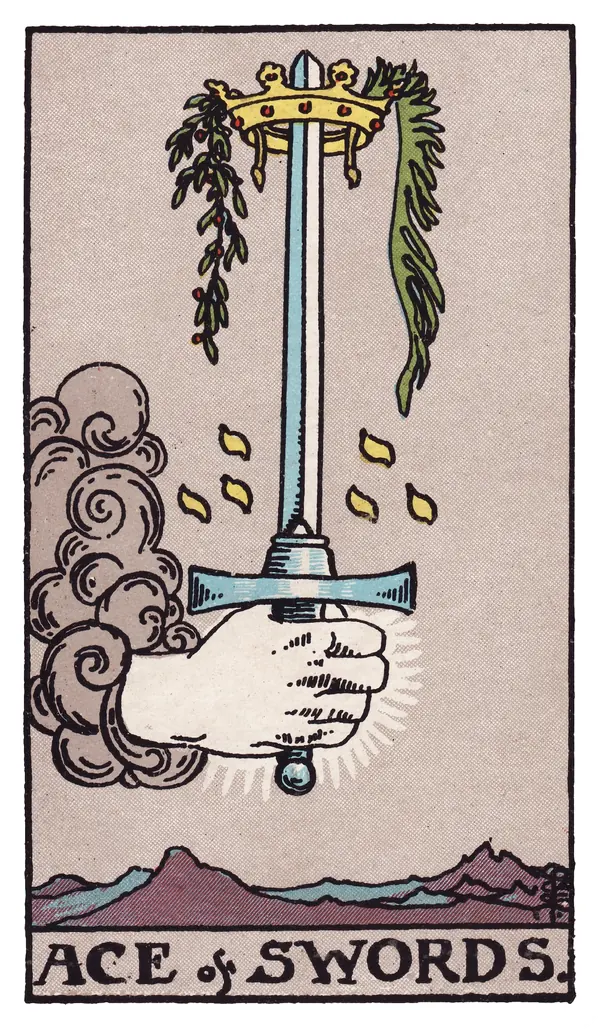 Rider–Waite–SmithAce of SwordsA genuine moment of mental clarity is available, cutting cleanly through confusion that’s clouded things until now.
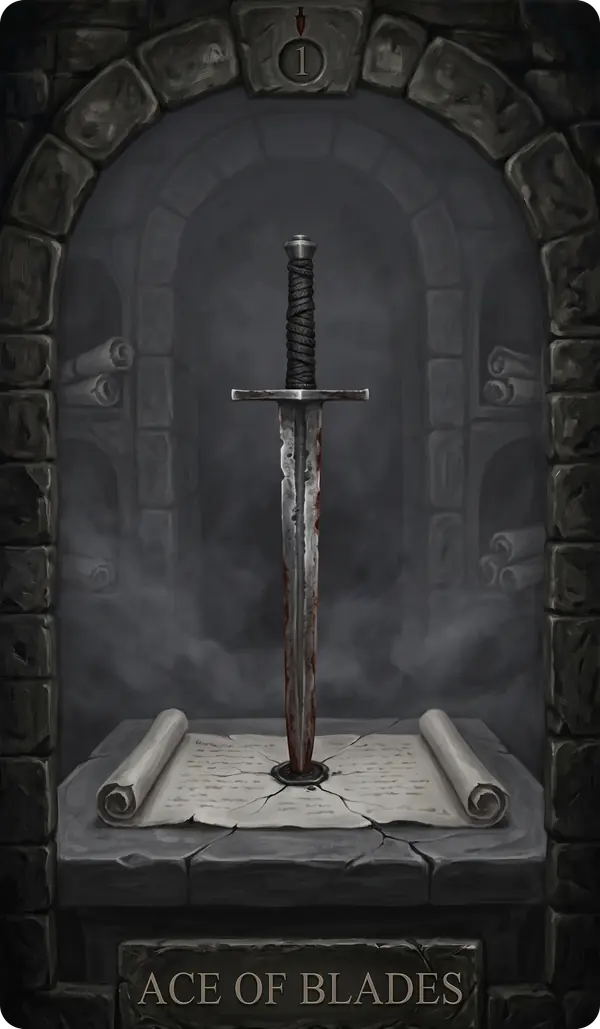 FamiliaAce of BladesA rule has been worded and accepted, and the time for arguing about it gives way to the time for living by it.
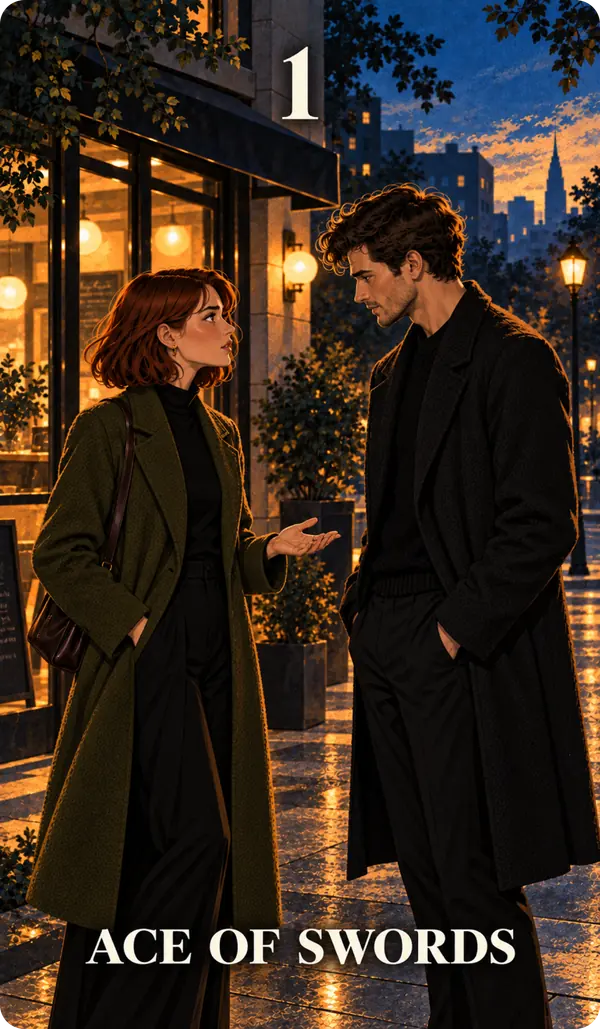 City of WindowsAce of SwordsNaming the question you need answered.
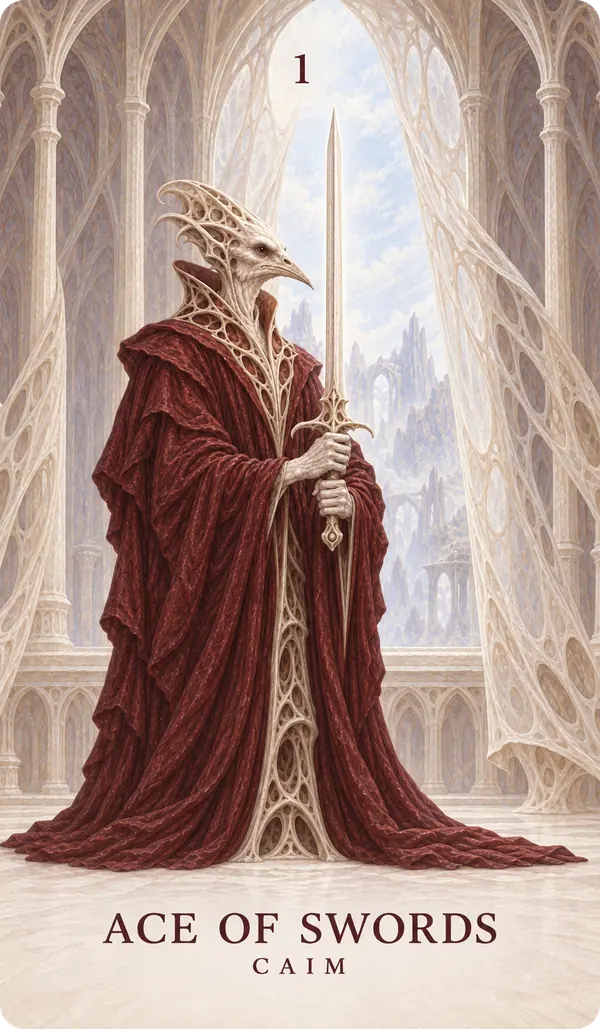 CarnalAce of SwordsA clear distinction cuts through confusion.
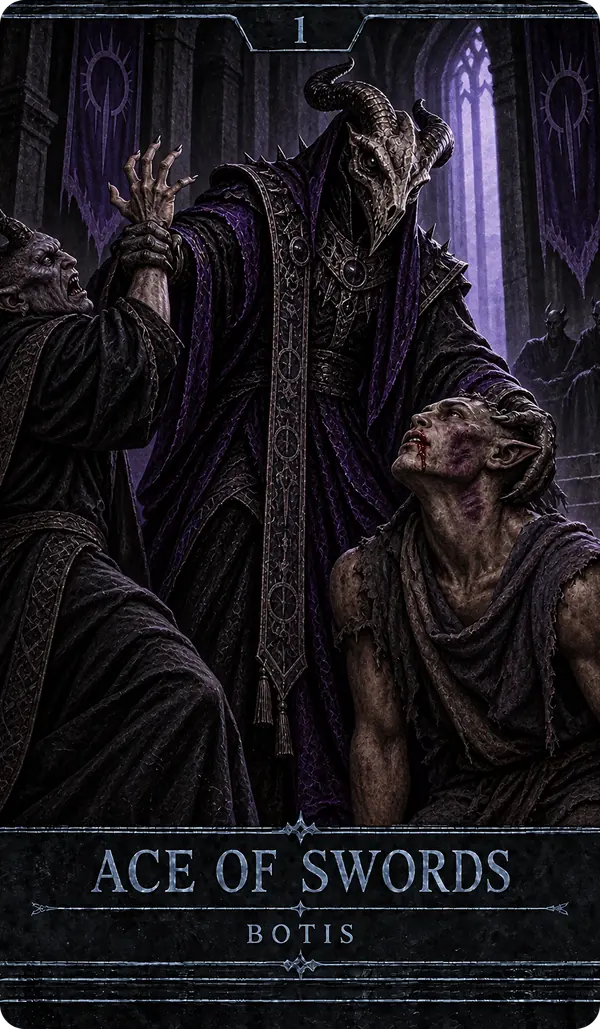 Crimson InfernoAce of SwordsState the important difference clearly.
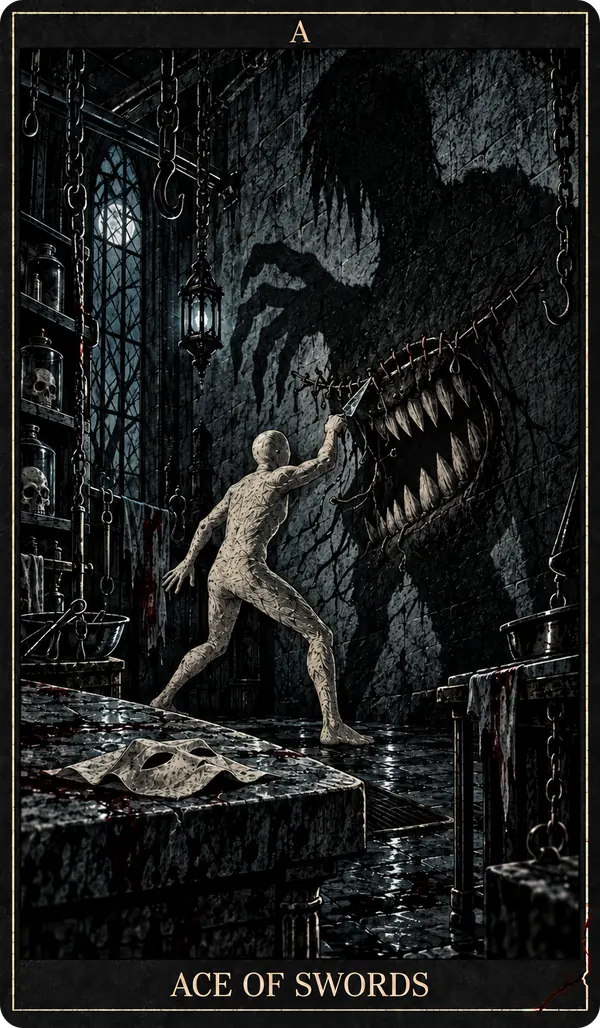 Mirror NightAce of SwordsDistinguish precisely before acting.
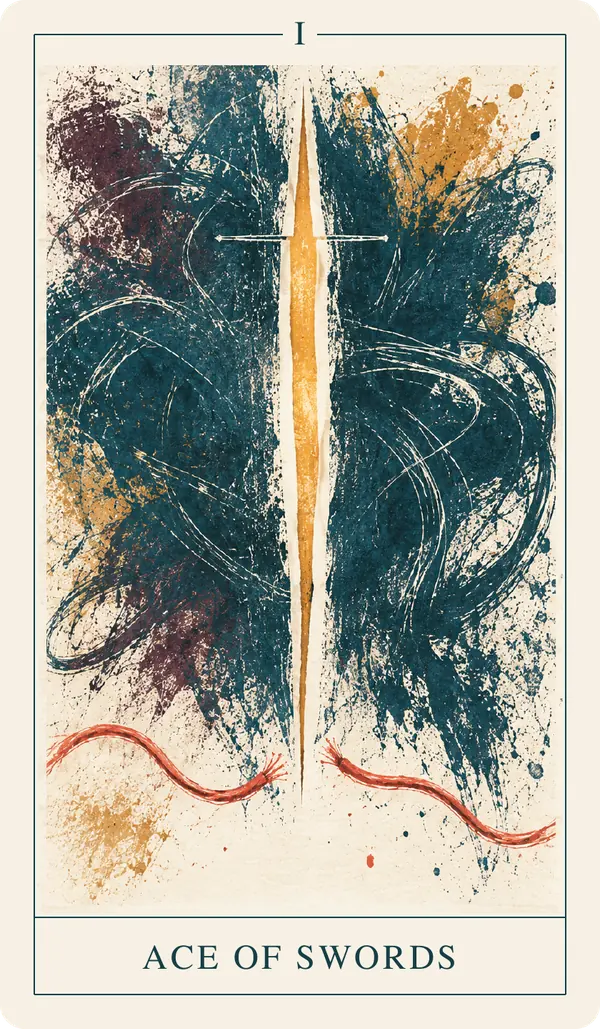 Self ContactAce of SwordsA clear distinction or truth gives thought an edge it can use.
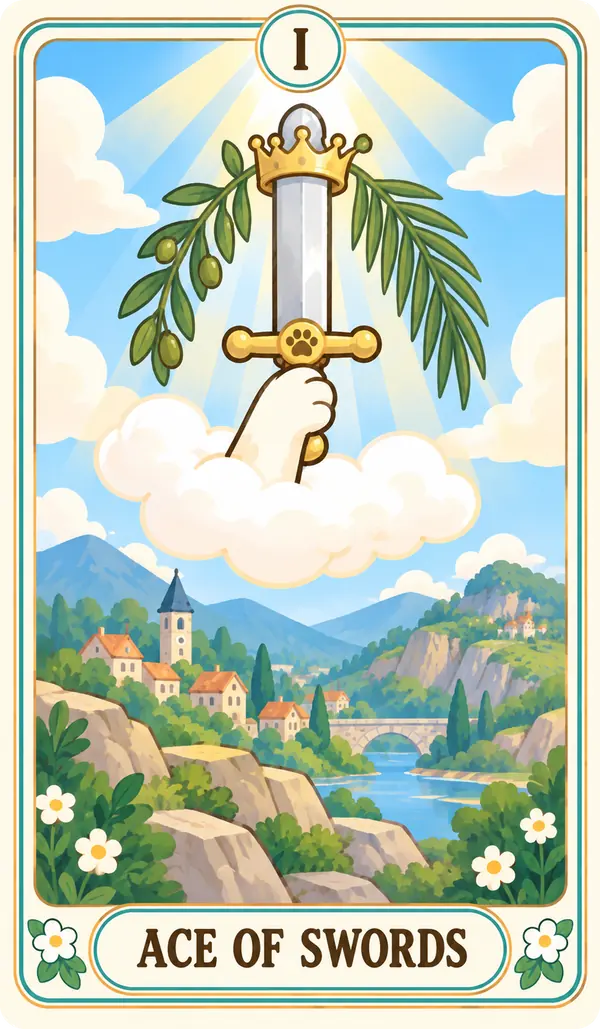 Shiba TownAce of SwordsClarity; a decisive insight; truth stated plainly.
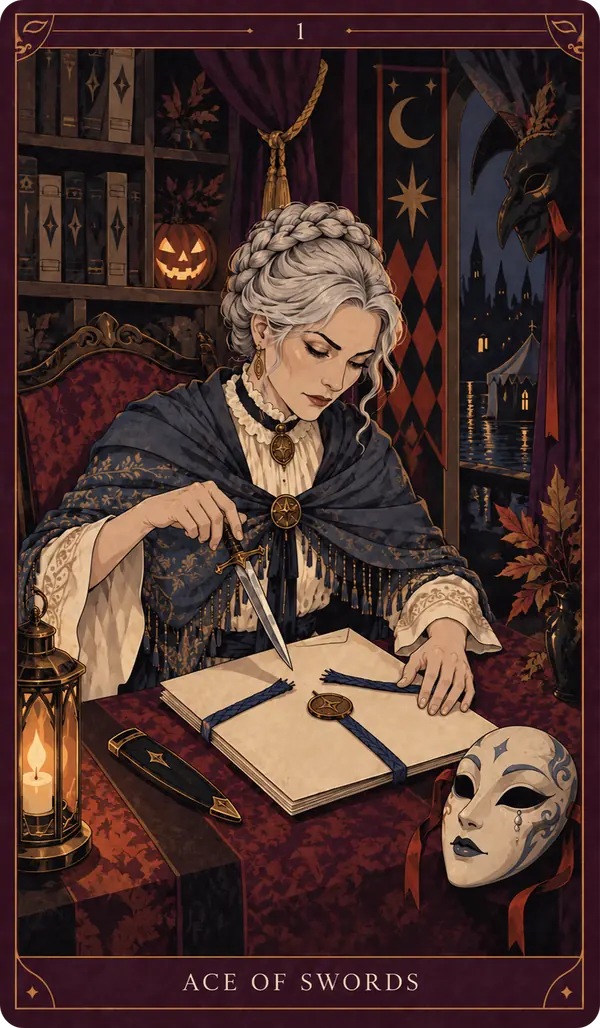 Velvet MasqueradeAce of SwordsClarity that begins with a precise distinction.
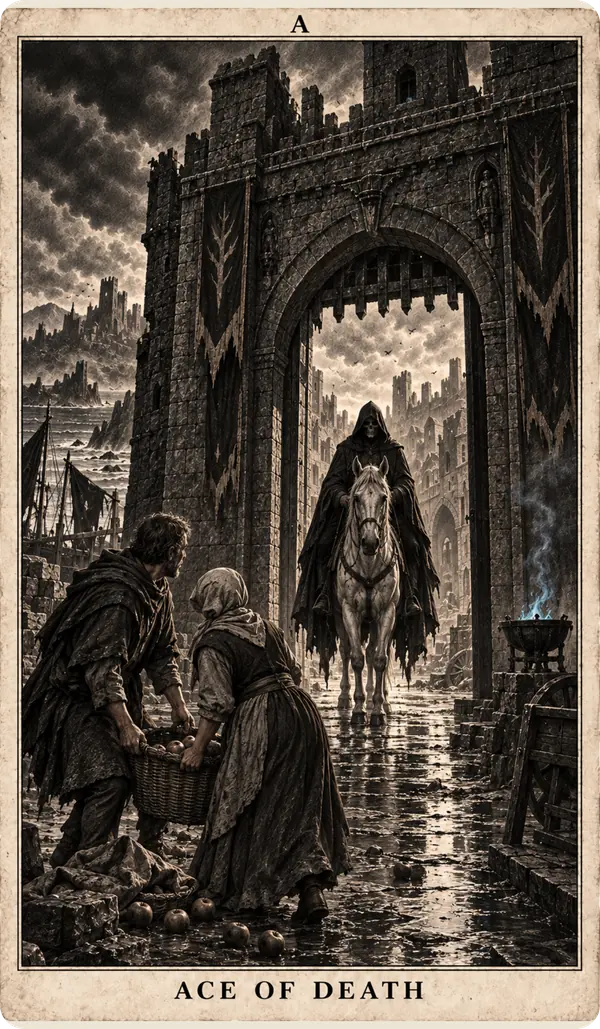 Four HorsemenAce of DeathRecognise what has ended while a choice of response remains.
 Four TrailsAce of SwordsClarity, truth, decisive thought.
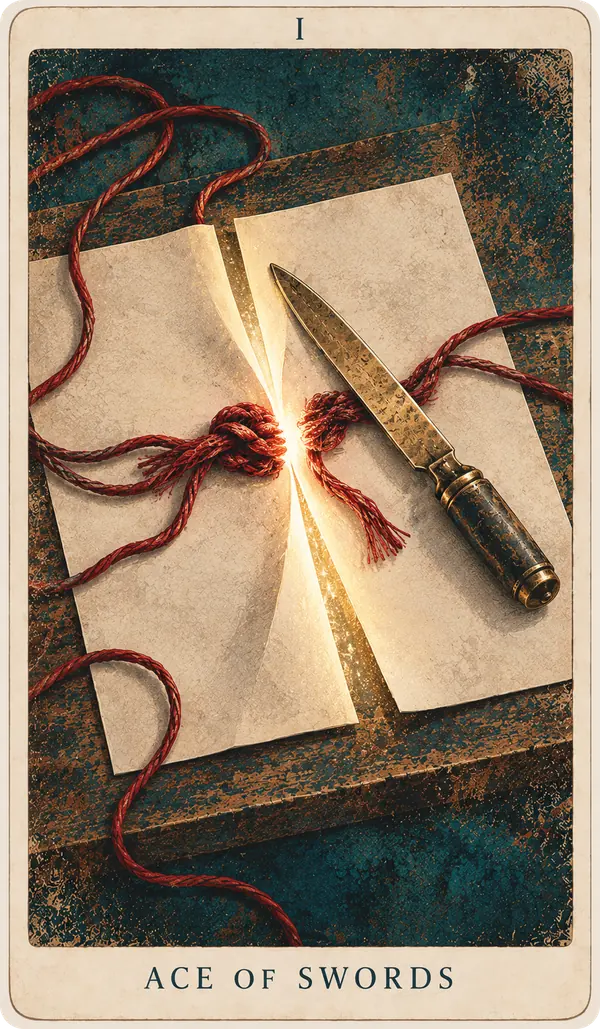 Living ThresholdAce of SwordsA precise cut frees the knot while keeping sound lengths intact.
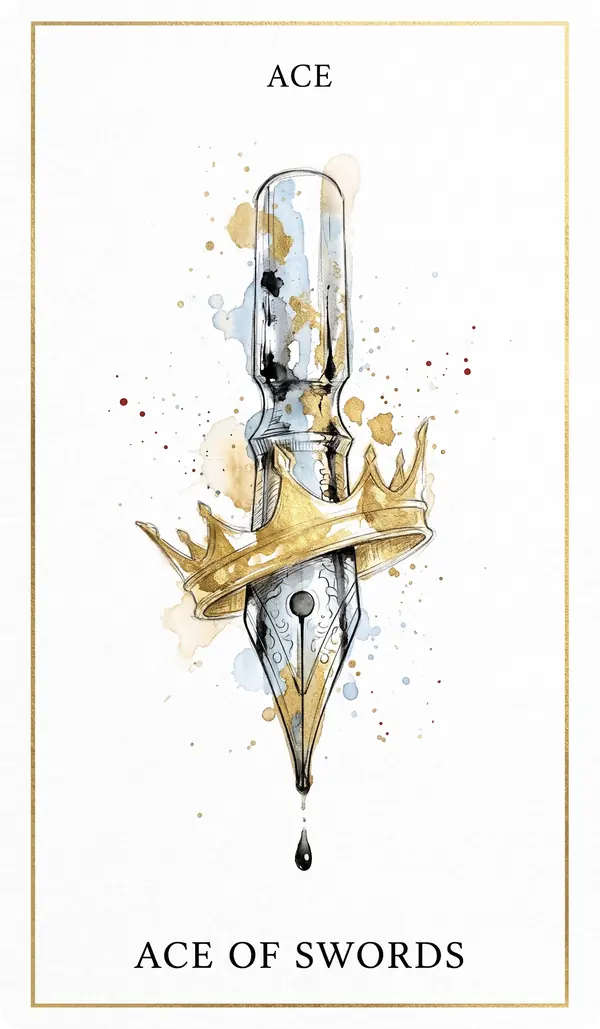 Colour of PowerAce of SwordsOne written truth can pierce a crown and change the balance.
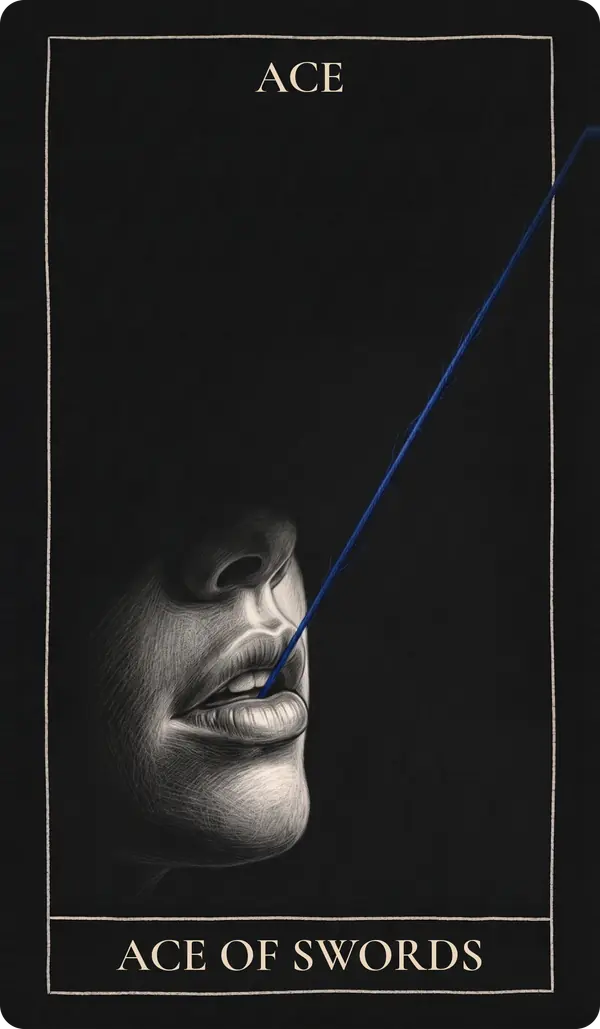 BoundAce of SwordsA spoken truth that leaves your mouth and binds you both.
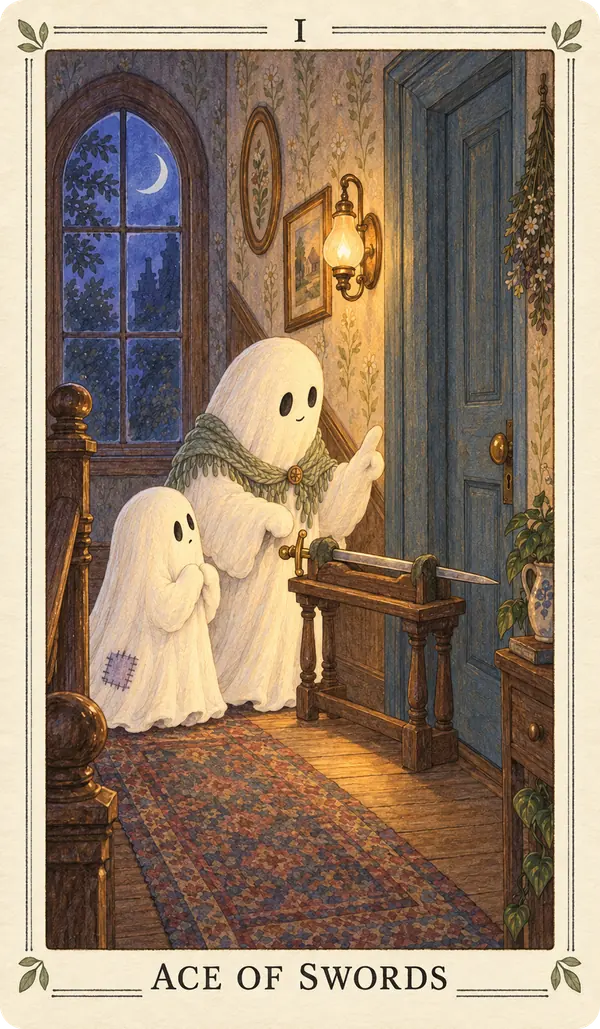 Cozy HauntAce of SwordsName a clear principle.
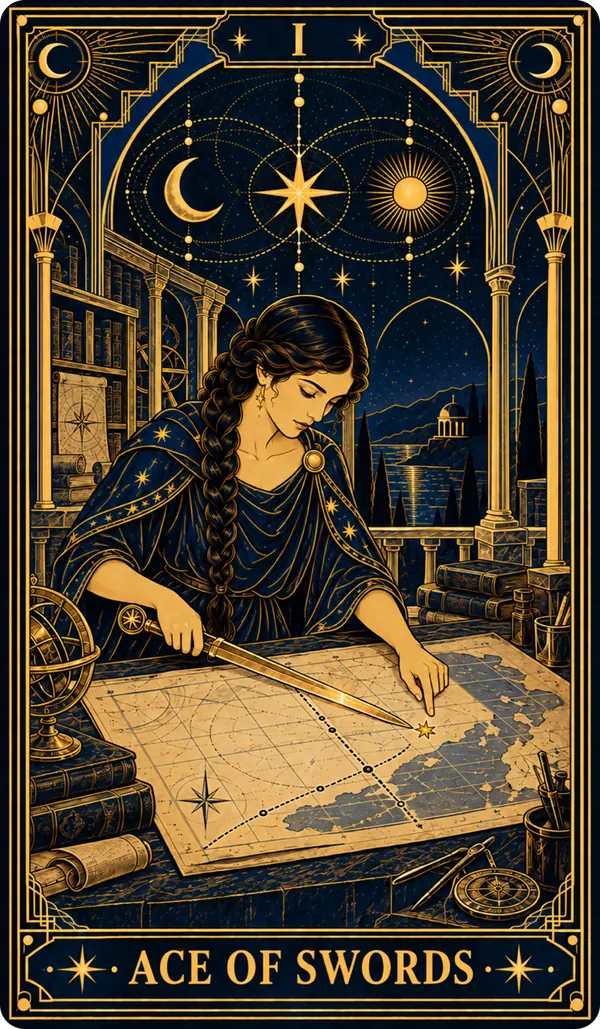 Celestial Night SkyAce of SwordsOne clear thing to name.
Where it appears
Questions about this card
Is Ace of Swords a yes or no card in Everyday Wonders?
The Ace of Swords leans yes upright when the issue is clearly named and you can explain the decision. Reversed, it leans no for now, because a sharp argument built on an unchecked premise falls apart on the first question. Check the one fact your whole case rests on before you press it.
What does Ace of Swords mean in love?
For love, the Ace of Swords upright says a truth may be ready to read like an opened letter, its ribbon loosened, lying in a band of clear light. Reversed, a sharp conclusion rests on a first line skimmed and the rest unread. Write the one sentence you most want to say about this bond, and read it back in daylight.
What does Ace of Swords mean reversed in Everyday Wonders?
Flipped, the Ace of Swords shows a clever argument whose starting point nobody checked. The letter is open and half of it is unread. Ask one question about something you assumed, and let the answer stand even if it spoils the point.