Ten of Swords
Ten of Swords in Carnal · Minor Arcana
ChoiceIn short
A damaging pattern reaches its limit.
Reversed
Recovery may be starting, or the ending may be repeatedly restaged.
- Swords
- Ten
- Air
- The Empty Armour
- a damaging pattern at its limit
- an exhausted pattern beyond rescue
- a painful point to begin from
Upright
Glasya-Labolas belongs to bloodshed, yet here he only kneels with open palms over an empty suit of armour, the ten swords laid flat: the fight is already over. Recognize that an exhausted pattern cannot be saved by one more repetition.
The limit hurts, but a different response can begin from it.
A question to sit with
“What is over, even if I have not stopped explaining it?”
One step
Write down the pattern that keeps repeating, and one response you have not tried yet.
Reversed
Reversed, Glasya-Labolas may rise from the empty armour and turn toward the dawn in the broken arch, or he may keep laying the swords out again, staging the same ending. Recovery can start here.
A setback does not mean every future is already ruined.
A question to sit with
“Is recovery starting, or am I restaging the ending for another audience?”
One step
Mark one small sign of recovery today, and notice when you start to retell the fall.
How this deck reads reversed cards
Reversed, the gesture turns back on itself: the hand that should let go holds on, the cup overflows, the bargain slips out of sight, or a weight is finally set down. It can mean an obstacle, an excess, a process gone inward or a release, and it is not always the worse outcome. The price is still there, only paid differently.
In love
A pattern in love may lie spent on the floor like the empty bone armour, worn through by the same hurt until it cannot take one more round.
- Supports
- Seeing plainly what the pattern has cost.
- Watch for
- One more attempt at the same thing, expecting a different end.
- One step
- Write the pattern you keep repeating in love in one sentence, without deciding anything yet.
Recovery after a painful pattern in love may be starting under the broken arch, or the same ending may be staged again and again.
- Supports
- Letting healing be slow and uneven.
- Watch for
- Replaying the collapse until it becomes the whole story.
- One step
- Notice one moment today when you are outside the old story.
At work
Glasya-Labolas kneels over an empty shell with open hands, asking nothing more of it. Work may have reached the limit of a damaging pattern that one more push cannot refill.
- Supports
- Admitting the limit of the current approach.
- Watch for
- Pouring effort into a pattern that is spent.
- One step
- List what has been repeated at work without result, and pick one to stop repeating this week.
The spirit leaves the ten swords lying flat and does not raise them. A setback at work may be turning toward recovery, or be retold as a total collapse each time plans are made.
- Supports
- Planning from where you stand now.
- Watch for
- Treating every new plan as doomed.
- One step
- Make one small plan for next week without mentioning the setback.
Glasya-Labolas puts nothing back into the empty armour. The real choice may be what to stop repeating, since the old way has nothing left to raise.
- Supports
- Honesty about what cannot be rescued.
- Watch for
- Choosing the same thing again to avoid admitting the loss.
- One step
- Beside each option, write whether it repeats the old pattern.
A choice after a hard fall may be possible, as long as the fall is not allowed to cross out every option.
- Supports
- Looking at options with the fall set to one side.
- Watch for
- Letting one defeat decide every future.
- One step
- Write two options that start from where you stand now.
Growth may start at the bottom, where Glasya-Labolas bends over the shell a damaging pattern has left behind, palms open.
- Supports
- Grieving what is spent without trying to revive it.
- Watch for
- Making the wreckage a place to live.
- One step
- Write what the old pattern cost you, and one response you have not tried.
Recovery may be starting, slow and uneven as dawn through a broken arch, while the old ending still tries to repeat.
- Supports
- Counting small returns of strength.
- Watch for
- Restaging the fall to feel sure of it.
- One step
- Choose one small thing you can still do, and do it today.
A harmful family pattern may be reaching its limit, wreckage, cruelty or exhaustion laid out on the floor in pairs like the swords.
- Supports
- Calling the old harm by its true name.
- Watch for
- Rescuing the old pattern one more time for the sake of peace.
- One step
- Name to yourself one family pattern that keeps hurting, without acting on it yet.
A family may be starting to recover from a hard pattern, or reenacting the collapse at every gathering under the broken towers.
- Supports
- Letting new habits form quietly.
- Watch for
- Retelling the worst family chapter as the only one.
- One step
- Choose one small new habit at home that the old pattern did not allow.
Yes or no
NoMixedThe armour lies empty and the swords are down, so the answer leans no to saving the old pattern.
Supports
- The limit of the pattern may be in sight.
- Dawn comes in through the broken arch.
Limits
- What was built may be spent and empty.
- One more repetition may not rescue an exhausted pattern.
One step
Name the pattern you keep repeating and ask whether another round could change it.
Recovery may be starting while the ending keeps being replayed, so the answer is mixed.
Supports
- Recovery may be starting.
- A setback need not ruin every future.
Limits
- The ending may be restaged again and again.
- Retelling the ruin may keep it alive.
One step
Notice whether you are recovering or reliving the loss.
What is in the picture
Glasya-Labolas kneels before an empty suit of bone armour and a fallen robe. Ten swords lie flat in five pairs on the floor.
The winged, dog-headed figure holds both palms open above the abandoned shell, while dawn enters through a broken arch.
- empty shell of bone armour
- fallen robe
- ten swords laid flat in five pairs
- open palms above the shell
- folded pale wings
- dog-like head
- broken arch with dawn beyond
- ruined towers on the horizon
This card in other decks
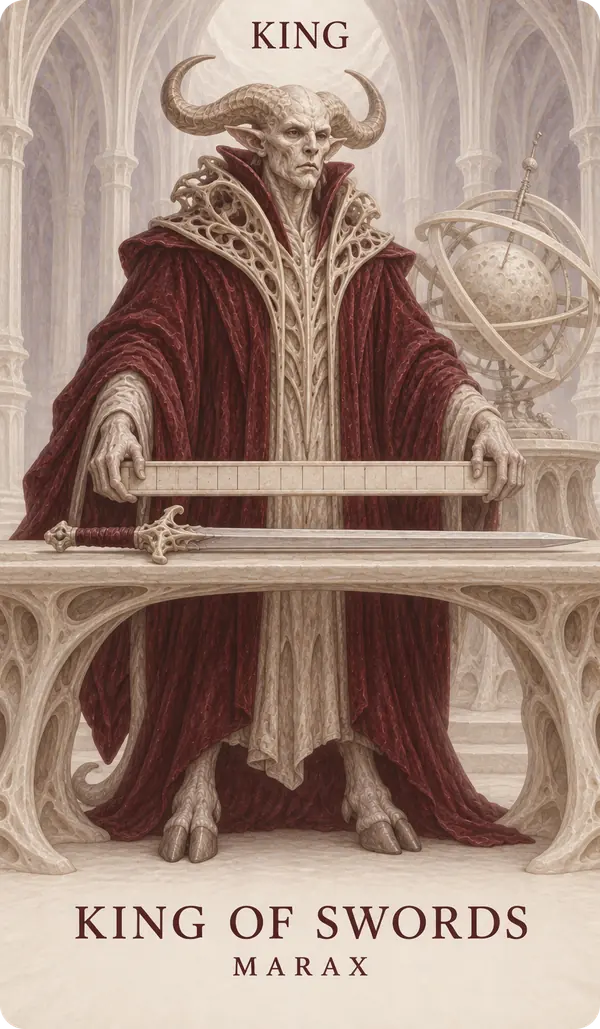
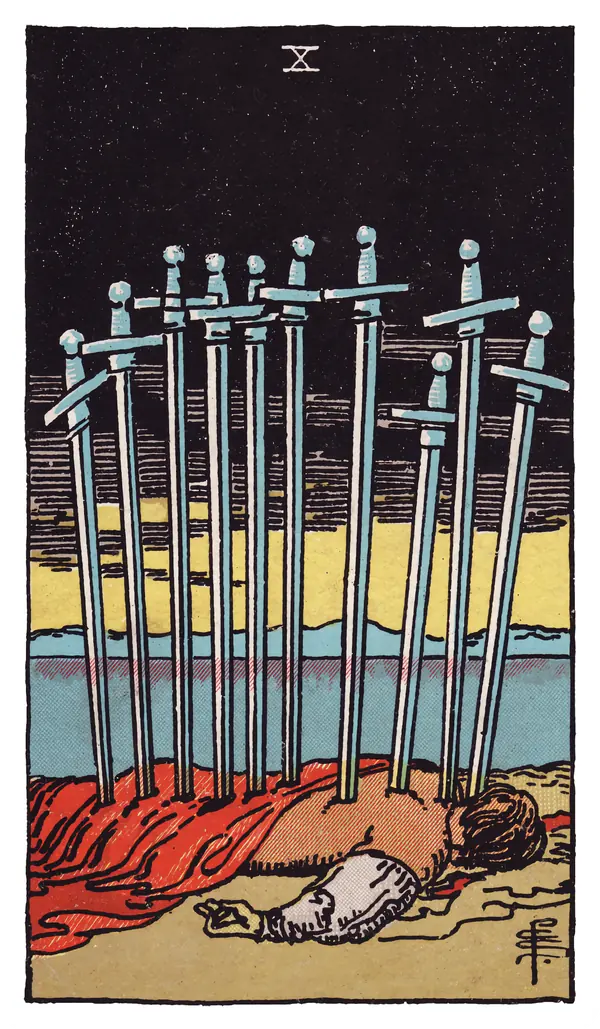 Rider–Waite–SmithTen of SwordsA painful ending may feel like rock bottom, though the dawn on the horizon shows the night is not the whole scene.
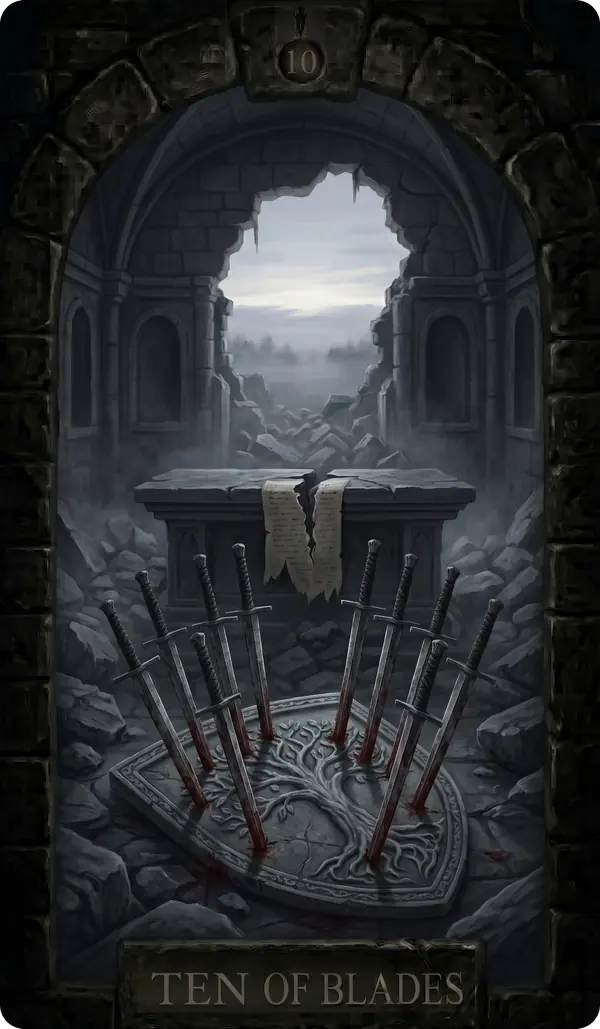 FamiliaTen of BladesThe old order has fallen completely, and there is relief in that: nothing is left to hold, and a new law can begin.
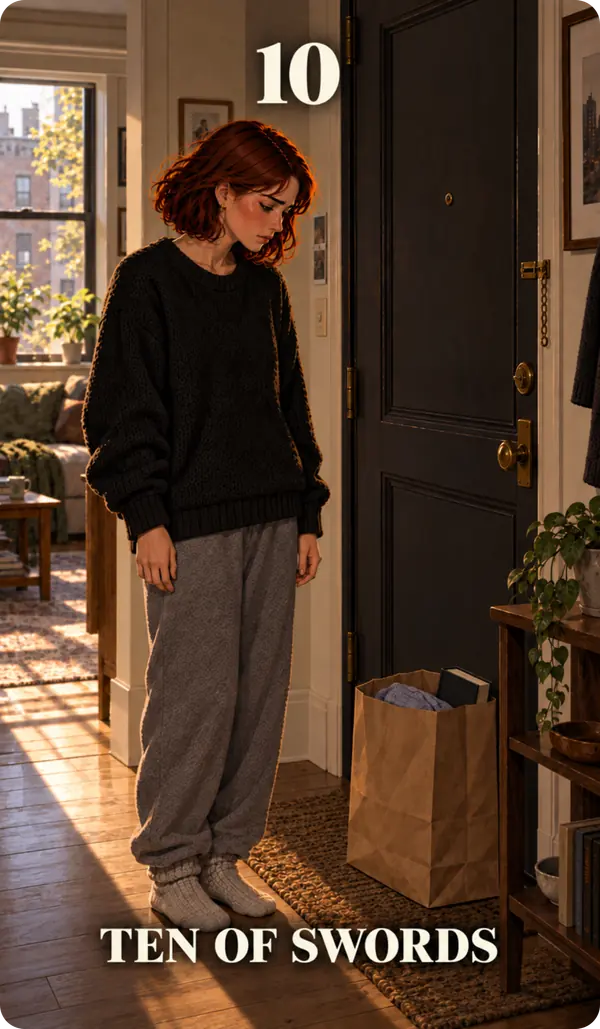 City of WindowsTen of SwordsAcknowledging the end of an old form of the relationship and following through on your own decision.
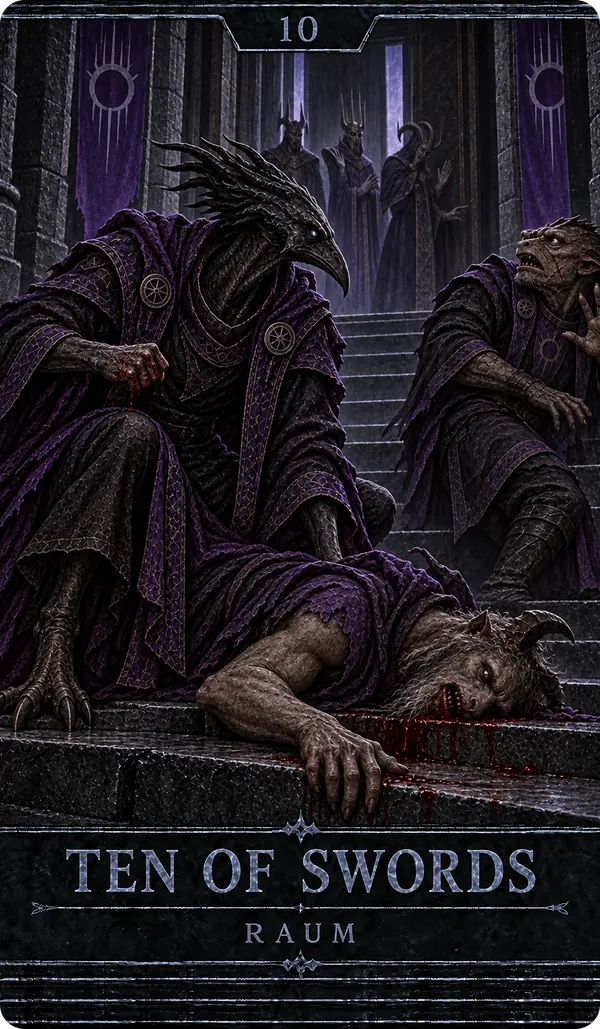 Crimson InfernoTen of SwordsAcknowledge the ending instead of spending more strength defending what has failed.
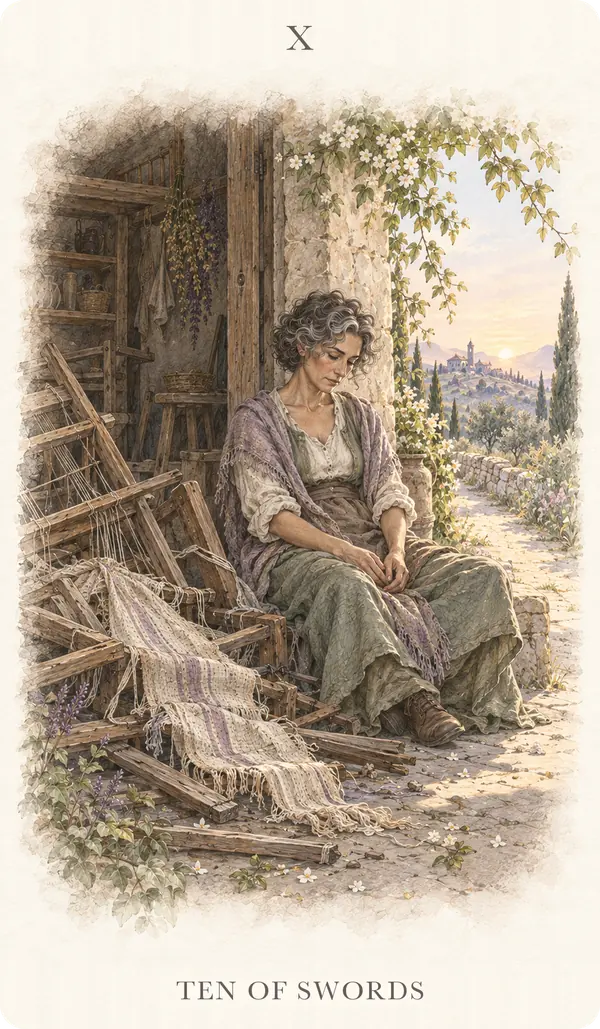 Everyday WondersTen of SwordsA definite ending that more effort alone will not repair.
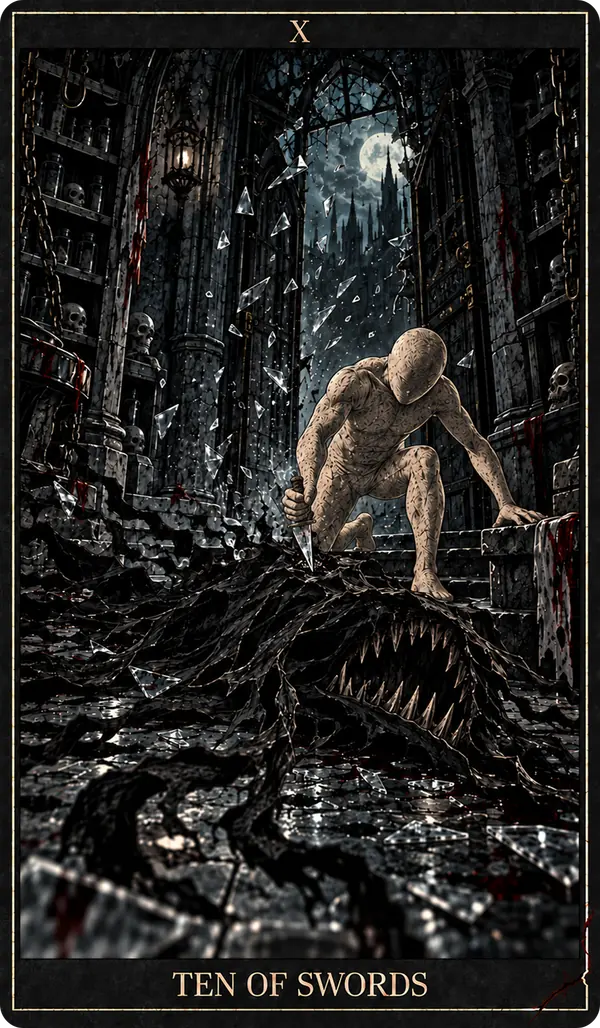 Mirror NightTen of SwordsFinish without denying the cost.
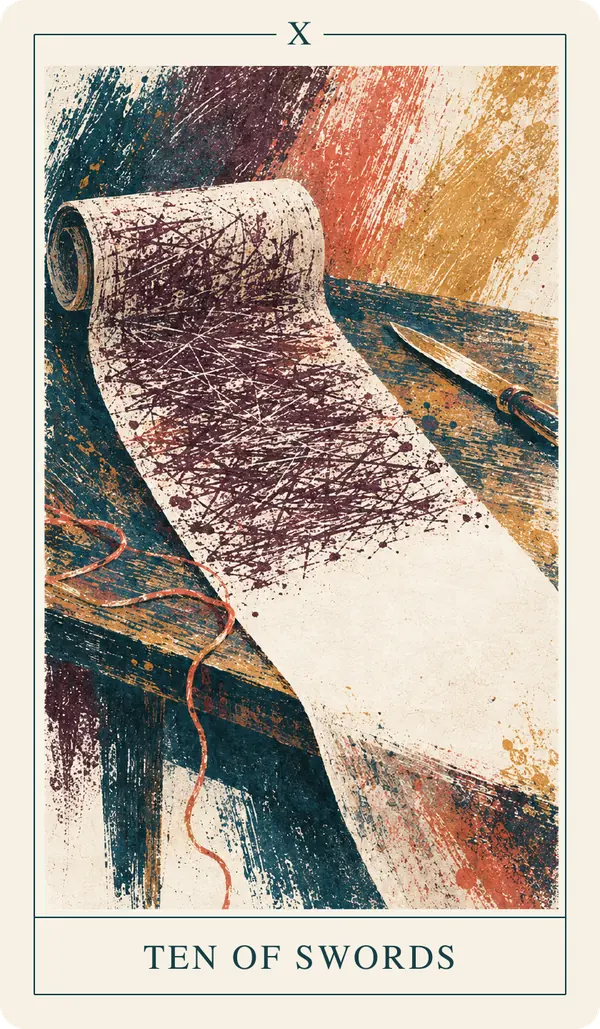 Self ContactTen of SwordsAn exhausted pattern may have reached its end; acknowledge completion.
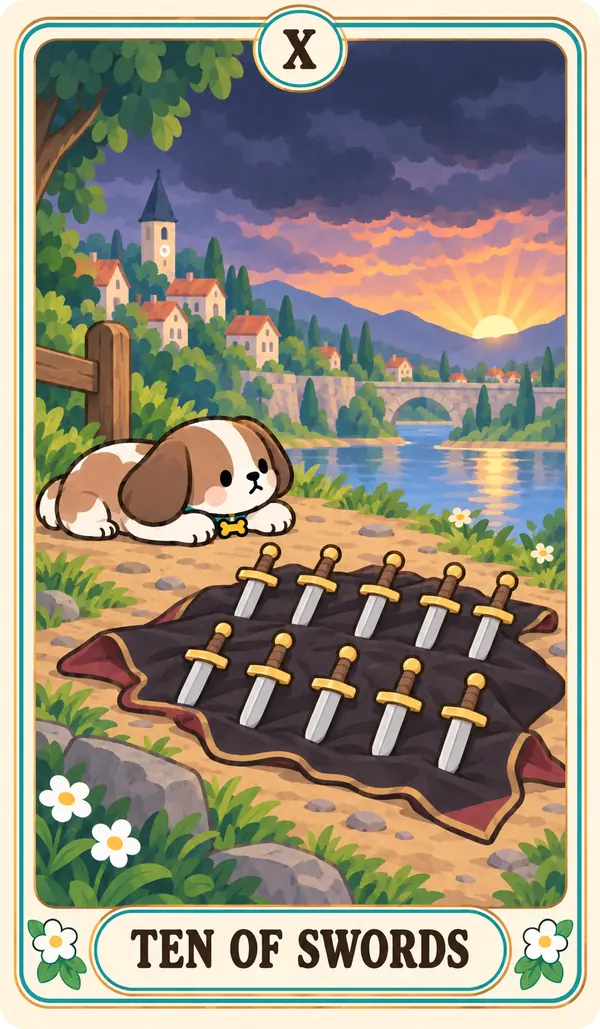 Shiba TownTen of SwordsA painful ending; the limit reached; no need to continue the struggle.
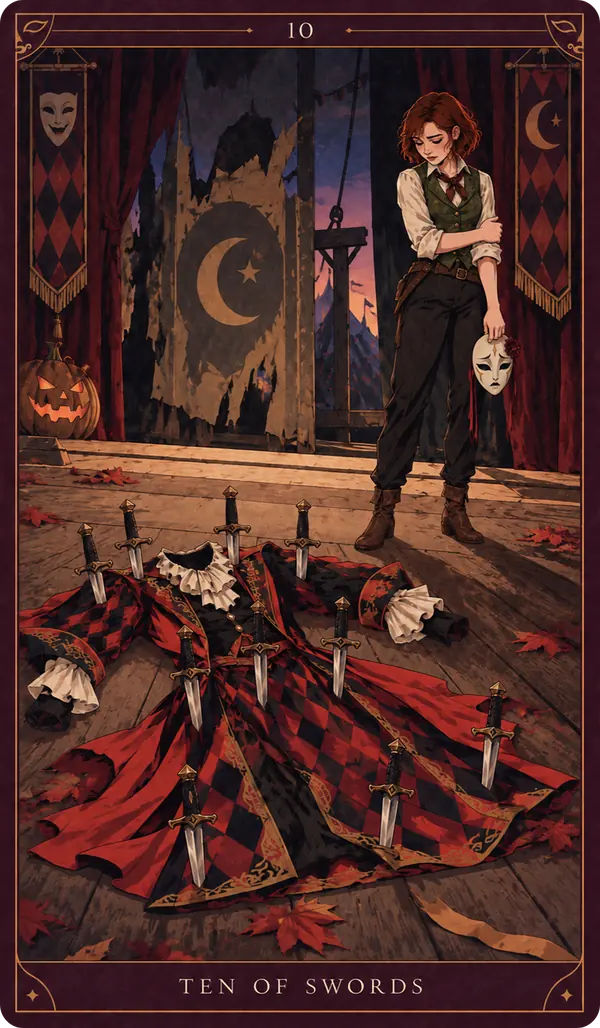 Velvet MasqueradeTen of SwordsA painful ending at the limit of a role.
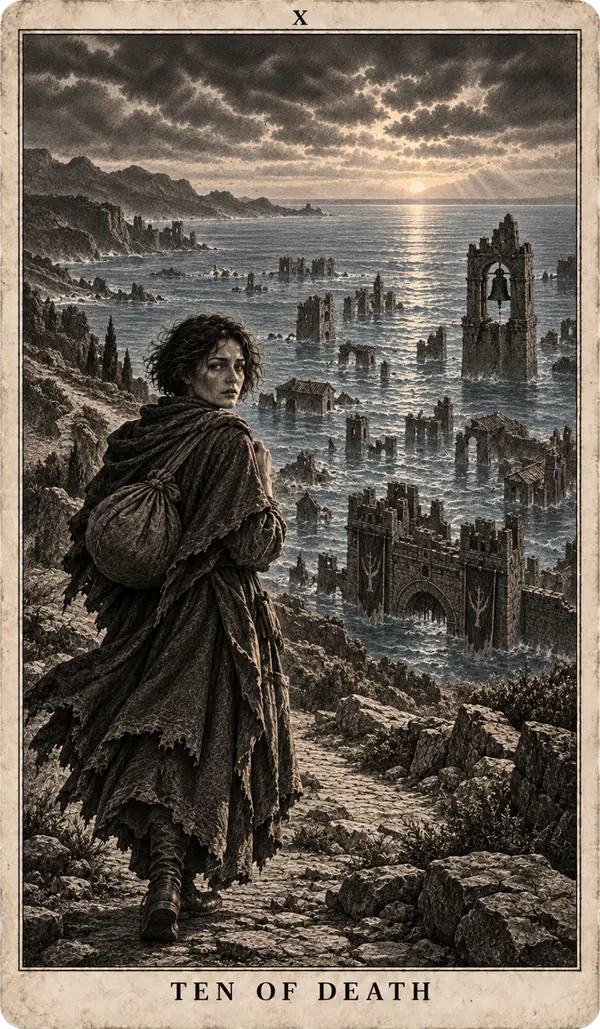 Four HorsemenTen of DeathStop asking the ended world to resume; take the next real step.
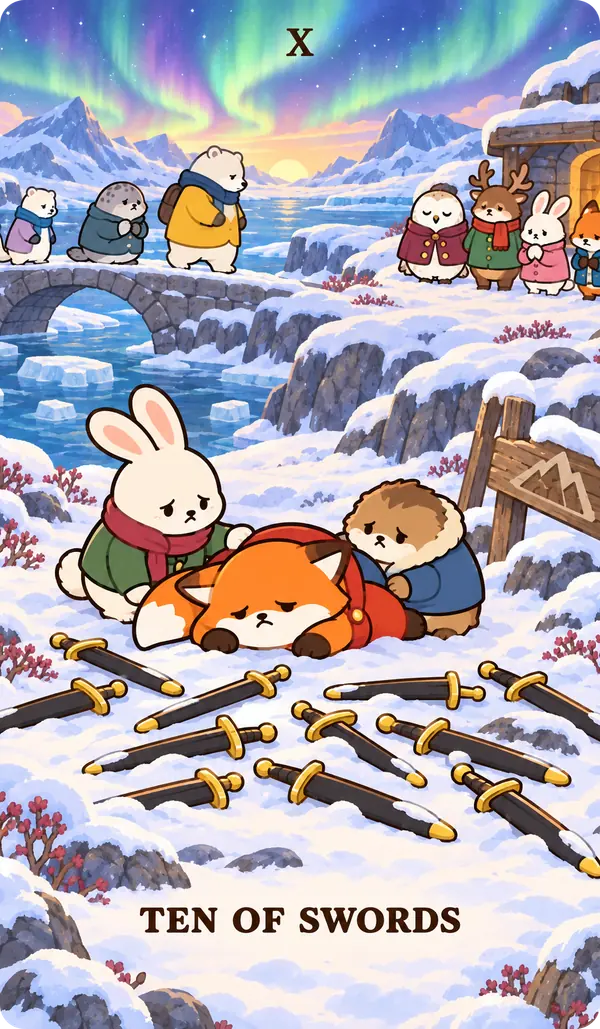 Four TrailsTen of SwordsPainful ending, exhaustion, lowest point.
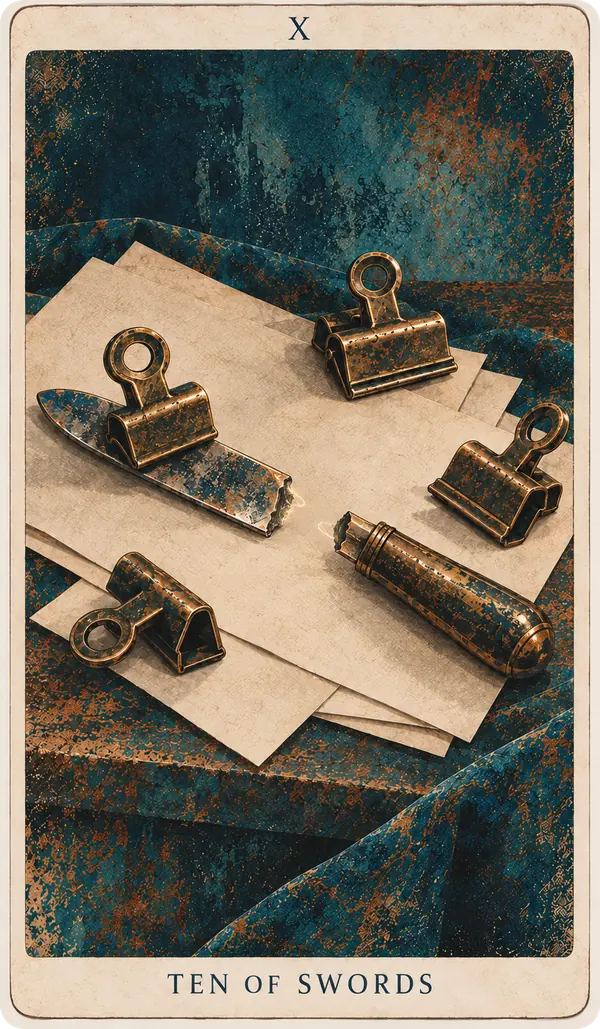 Living ThresholdTen of SwordsA broken method reaches its limit while useful material remains.
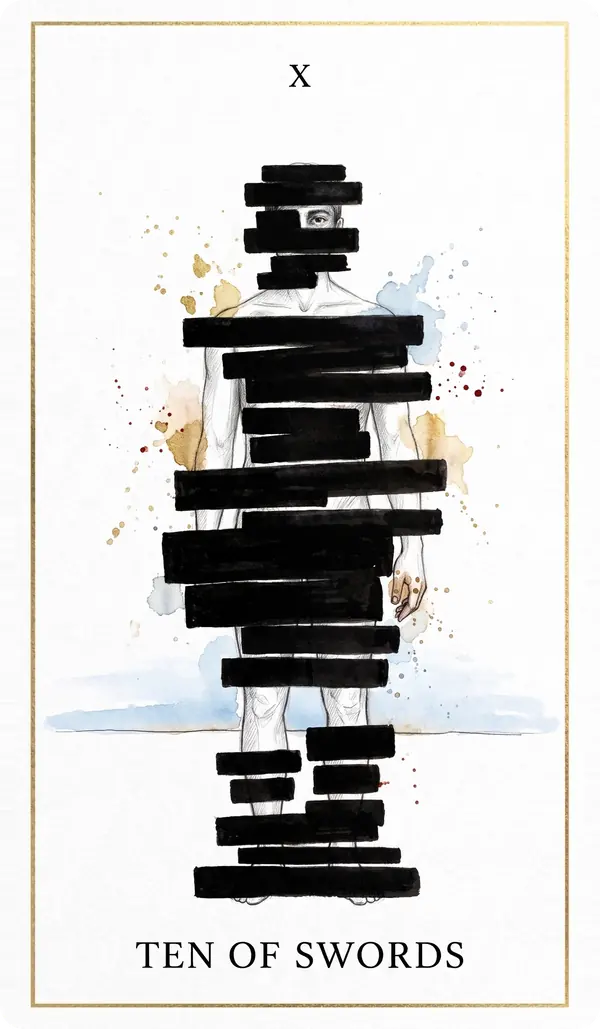 Colour of PowerTen of SwordsThe story is finished: you have been crossed out, and only up remains.
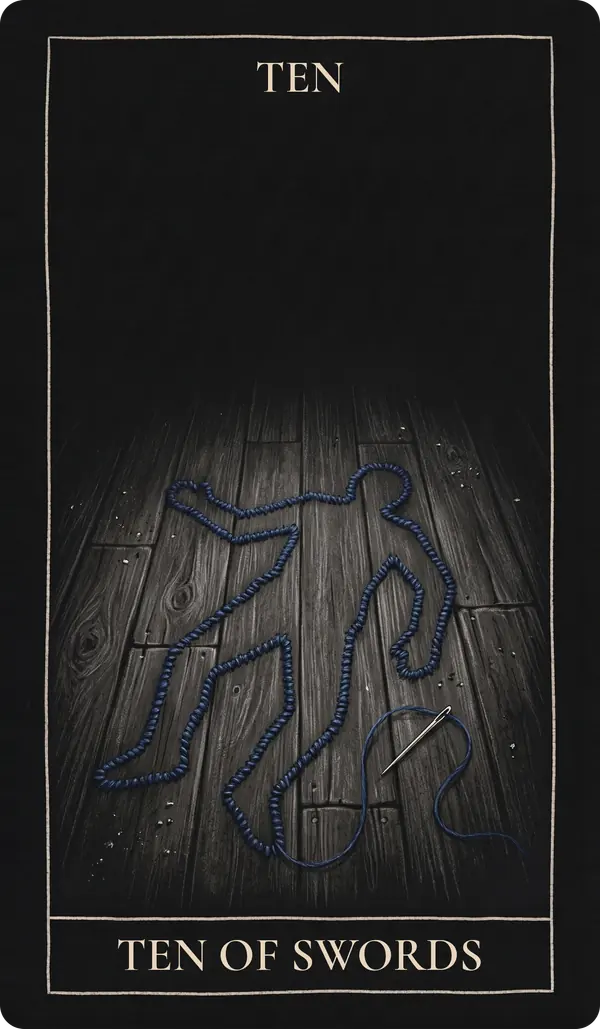 BoundTen of SwordsThe last word has been spoken; the body is gone, only the seam remains.
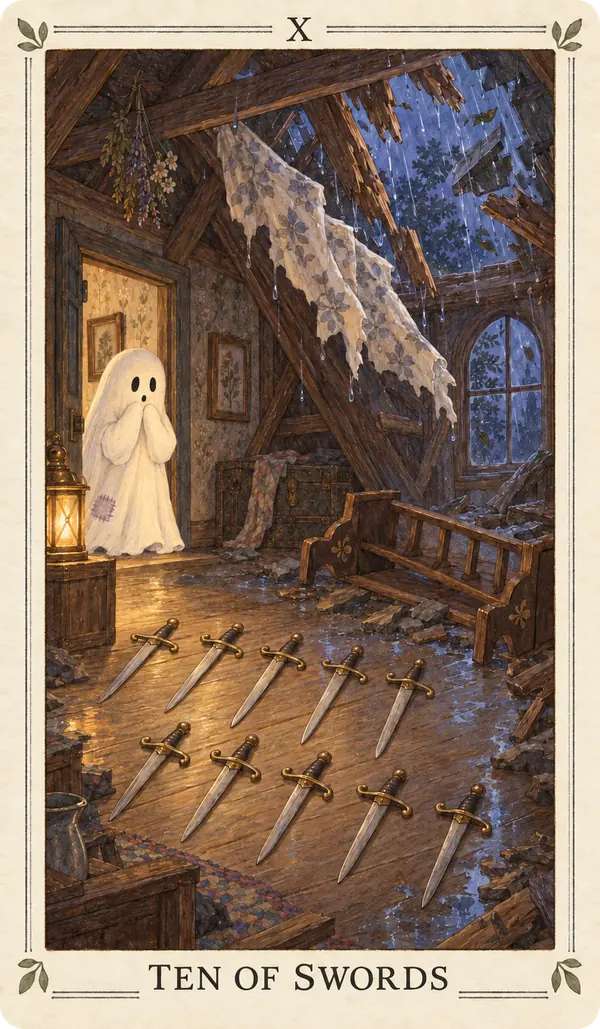 Cozy HauntTen of SwordsAdmit an ending and make the next place safer.
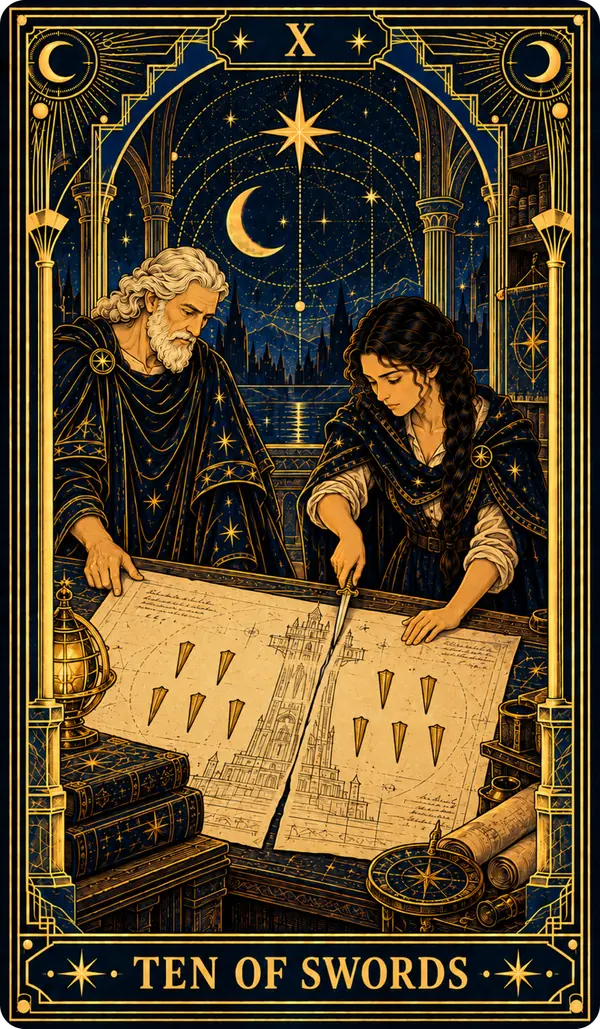 Celestial Night SkyTen of SwordsThe end of a wrong account.
Where it appears
Questions about this card
Is the Ten of Swords a yes or no card in Carnal?
The Ten of Swords leans no upright to saving the old pattern, since the armor lies empty and the swords are down. Reversed, the answer is mixed: recovery may be starting while the ending keeps being replayed. Write the pattern in one sentence, without deciding anything yet.
What does the Ten of Swords mean in love?
Reading love, the Ten of Swords upright may show a pattern lying spent on the floor like the empty armor, worn through by the same hurt until it cannot take one more round. Reversed, recovery starts under the broken arch, or the same ending is staged again. Notice one moment today when you are outside the old story.
What does the Ten of Swords mean reversed in Carnal?
Turned over, the Ten of Swords is a recovery that may or may not take. The collapse can be left behind, or replayed until it becomes the whole story. One more attempt at the same thing, hoping for a different end, is the sign. Write the pattern you keep repeating in love, then set it down.