Nine of Swords
Nine of Swords in Everyday Wonders · Minor Arcana
ChoiceIn short
Anxiety and thoughts going in circles that can keep you awake.
Reversed
Treating repeated thoughts as evidence or concealing distress behind composure.
- Swords
- Nine
- Air
- The Sleepless Watcher
- anxiety and rumination
- naming the worry
- a concrete way to share or examine it
Upright
Name the worry and seek a concrete way to share or examine it. An older man sits awake with his hands at his temples. The house is still, and the first light of dawn is arriving.
His worry continues while the world around him begins another day. Repeated thought can feel like new evidence even when it adds nothing.
Naming the particular concern makes it easier to examine or share.
A question to sit with
“What does this worry need besides another hour of thinking?”
One step
Name the worry and seek a concrete way to share or examine it.
Reversed
Treating repeated thoughts as evidence or concealing distress behind composure. The same thought comes round again before dawn, and each pass feels like proof though it brings nothing new.
Or the hands come down from his temples by breakfast, and the worry is folded away behind a calm face.
A question to sit with
“Does a thought feel truer each time it comes round, or do I fold it away behind a calm face?”
One step
Write the worry down in one sentence, then tell it to someone you trust or set a daylight hour to look at it.
How this deck reads reversed cards
Reversed, the wonder stalls or goes too far. The linen road may refuse to unroll, the small weather in a cup may spill over, a familiar habit may hide the step that is still open, or a settled pattern may be just beginning to change. It is not the opposite of the upright card and not a worse one, only the same day seen where it catches.
In love
A worry about love may keep you awake before the house wakes, and naming it plainly at dawn may make it easier to share.
- Supports
- Saying the worry out loud to someone you trust.
- Watch for
- Turning a night thought into a verdict.
- One step
- Write the worry down in one line before breakfast, and read it again at noon.
The same thought about love may come round again before dawn, each pass feeling like proof though it adds nothing new.
- Supports
- Checking the worry against what you actually know.
- Watch for
- Replaying an imagined conversation.
- One step
- Talk the worry over with one trusted friend instead of turning it alone again.
At work
A work worry may circle at dawn, and putting it into precise words may turn it into something you can examine.
- Supports
- A worry list with one action beside each item.
- Watch for
- Rehearsing tomorrow’s problems at night.
- One step
- Before bed, write tomorrow’s main work worry and one first step for it.
Fear about work may be replayed until it feels like evidence, or hidden behind a calm face by the time the day begins.
- Supports
- Admitting stress to one colleague you trust.
- Watch for
- Composure that hides how much you are carrying.
- One step
- Tell one trusted person at work, briefly, what is weighing on you.
Anxiety may be making the choice look darker than daylight would, the tree’s shadow on the wall larger than the tree.
- Supports
- Deciding in daylight hours.
- Watch for
- Choosing only to quiet the fear.
- One step
- Wait for morning light to make the choice, and note how it looks then.
Night thoughts may be making the choice, or worry may be folded away so neatly that it never gets examined.
- Supports
- Examining the fear in daylight.
- Watch for
- A choice made to stop the night thoughts.
- One step
- Write the fear behind each option on paper, then read the page after breakfast.
Naming the particular fear, as first light reaches the window, may help more than feeling the whole cloud of it.
- Supports
- Precise words for a vague dread.
- Watch for
- Mistaking a repeated thought for new evidence.
- One step
- Put the exact worry in one sentence, then list what you actually know about it.
Growth may ask you to stop treating every repeated thought as news, and to let the hands come down from your temples for a while.
- Supports
- Kind distraction after an honest look.
- Watch for
- Calm on the outside, a storm behind it.
- One step
- When a worry repeats today, tell it you have heard it already and turn to a small task.
Someone at home may be lying awake with a worry, and a plain question over breakfast may let it be shared.
- Supports
- An open door for worries at home.
- Watch for
- Carrying a household fear alone.
- One step
- Share one household worry with someone at home over breakfast.
Distress at home may be hidden behind composure by breakfast, or one worry may circle the household until it feels like fact.
- Supports
- Checking in on someone who seems fine.
- Watch for
- Pretending all is well for the family’s sake.
- One step
- Check in with someone at home who seems calm, gently and without pressing.
Yes or no
MixedNoA named worry can be examined, but the answer is clouded by rumination, so it’s mixed.
Supports
- The worry can be named and looked at.
- Morning light makes some fears smaller.
Limits
- Rumination may be louder than the facts.
- The question may be asked from a sleepless place.
One step
Ask the question again after you’ve written the worry down and slept on it.
Treating repeated thoughts as proof, or hiding distress, leans toward no.
Supports
- Distress can still be shared.
- A repeated thought is not new evidence.
Limits
- Going round the same fear may make it look bigger.
- Hiding the strain may leave you carrying it alone.
One step
Check whether anything new has been learned, or only thought again.
What is in the picture
An older man sits awake with his hands at his temples. The house is still, and the first light of dawn is arriving. His worry continues while the world around him begins another day.
Repeated thought can feel like new evidence even when it adds nothing. Naming the particular concern makes it easier to examine or share.
- older man sitting on the edge of the bed
- hands pressed to his temples
- tree shadow across the wall
- first dawn light at the window
- ivy around the window frame
- patchwork quilt
- jug and cup on the bedside table
- dried herbs hanging on the wall
- slippers on a woven rug
- hill town in the dawn haze
This card in other decks
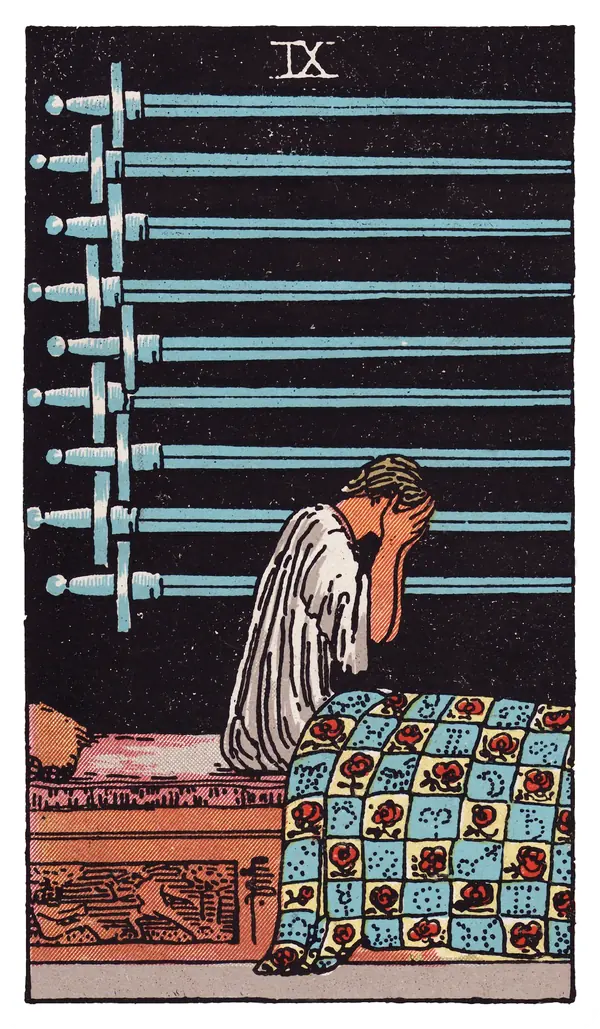 Rider–Waite–SmithNine of SwordsReal anxiety is present, and it’s worth checking whether the fear matches the actual facts of the situation.
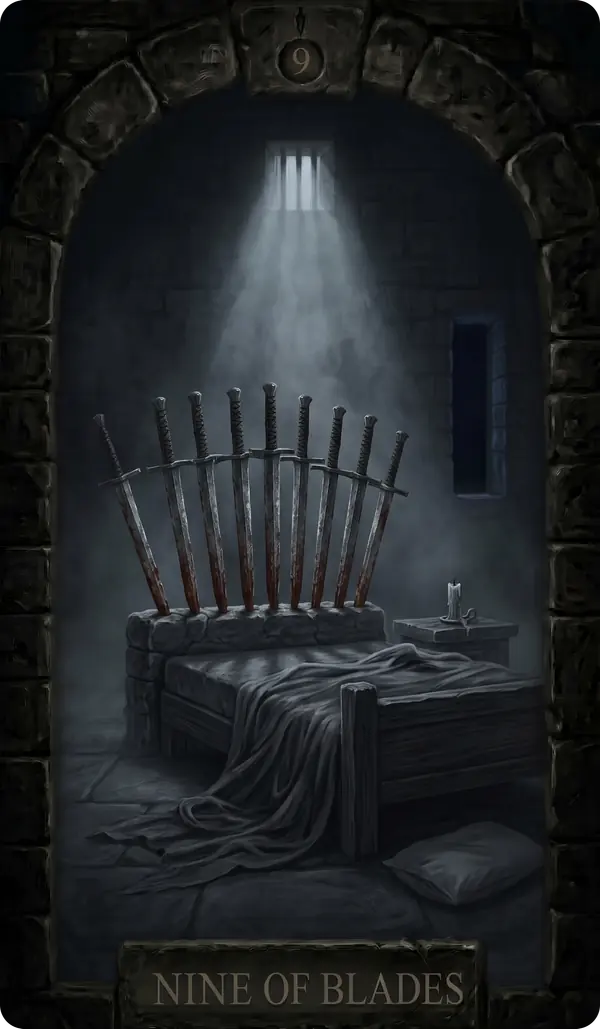 FamiliaNine of BladesA night without sleep over a fear that lives in the headboard and nowhere in the world outside the window.
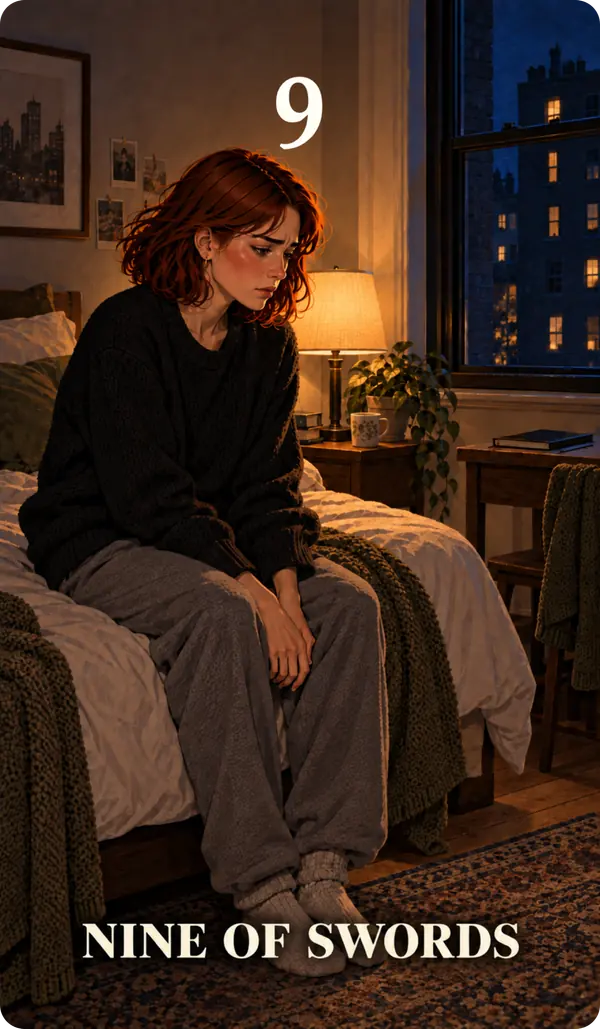 City of WindowsNine of SwordsAcknowledging the anxiety that follows a blow to trust, and looking for ways to care for yourself.
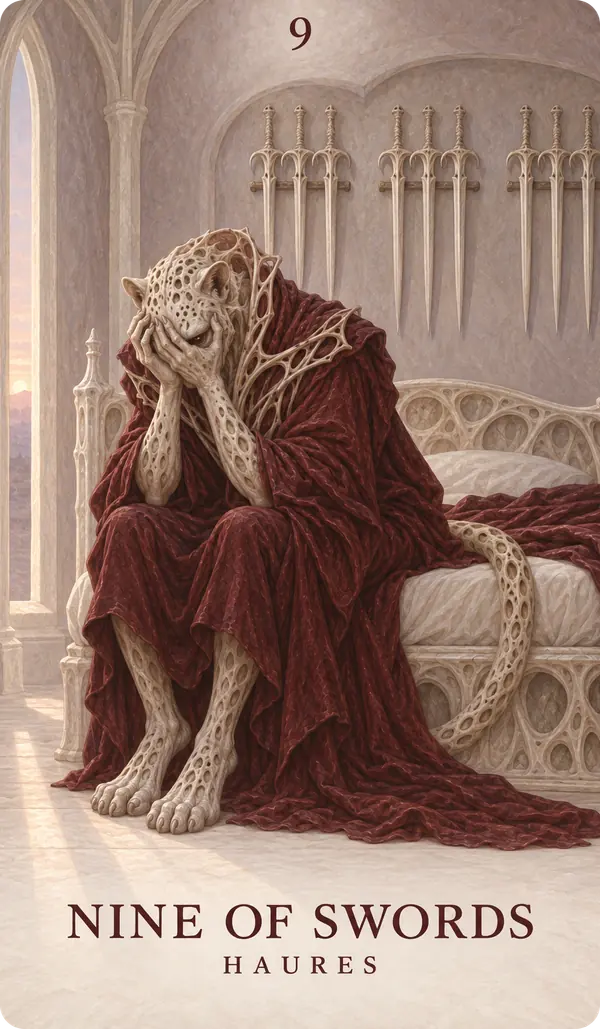 CarnalNine of SwordsAnticipated harm fills the space of rest.
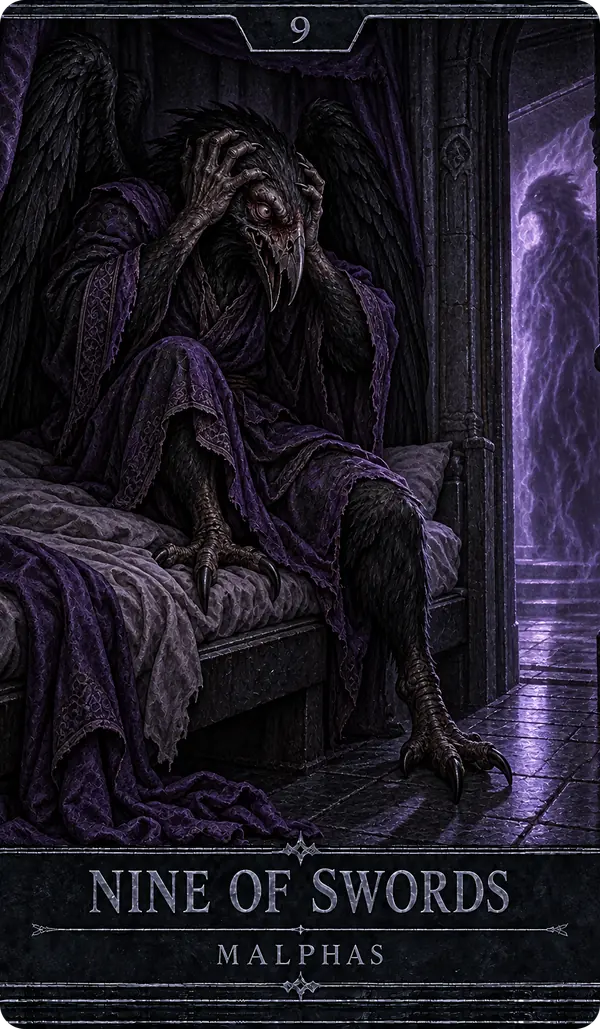 Crimson InfernoNine of SwordsTake distress seriously without treating every feared outcome as fact.
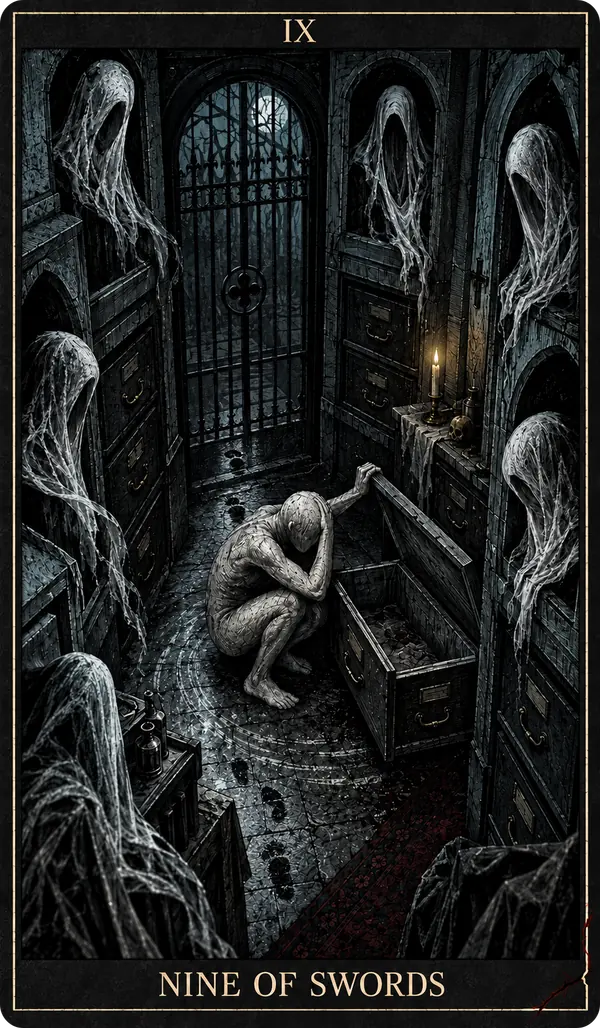 Mirror NightNine of SwordsUntangle what happened from dread and pause the loop.
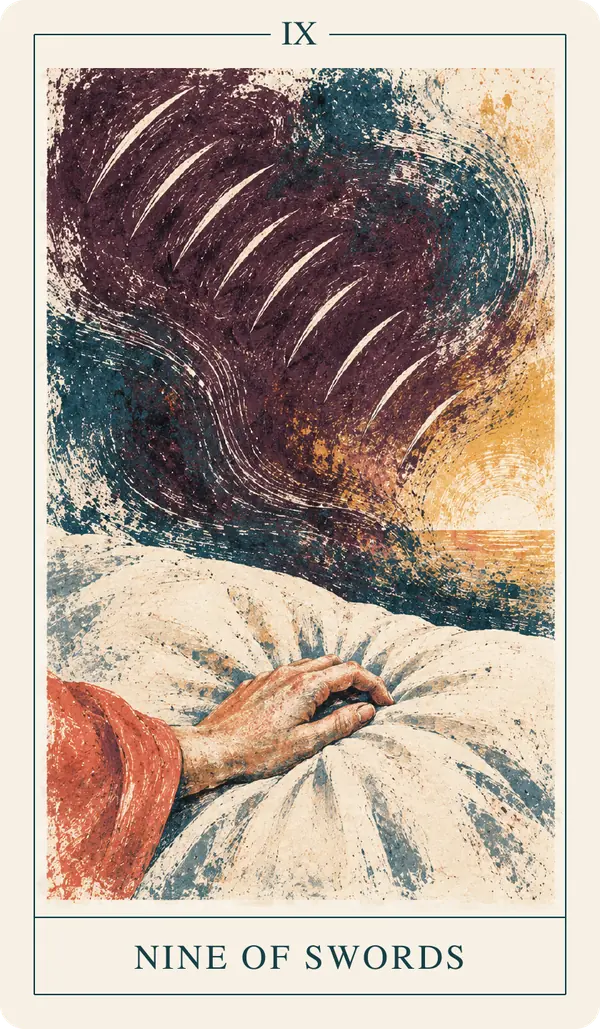 Self ContactNine of SwordsBring worry into daylight and distinguish thought from present evidence.
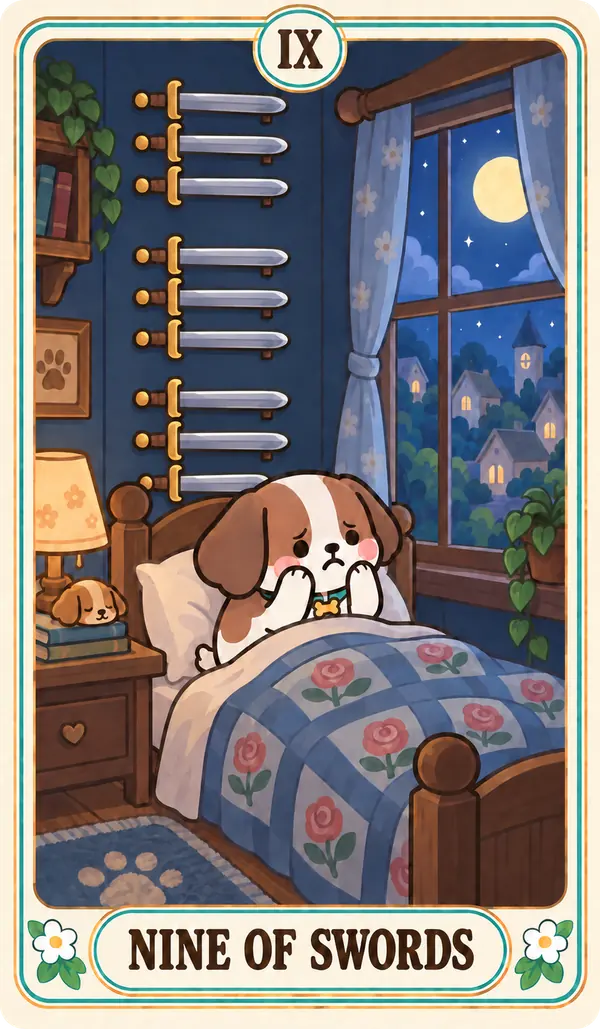 Shiba TownNine of SwordsAnxiety; rumination; worry magnified in solitude.
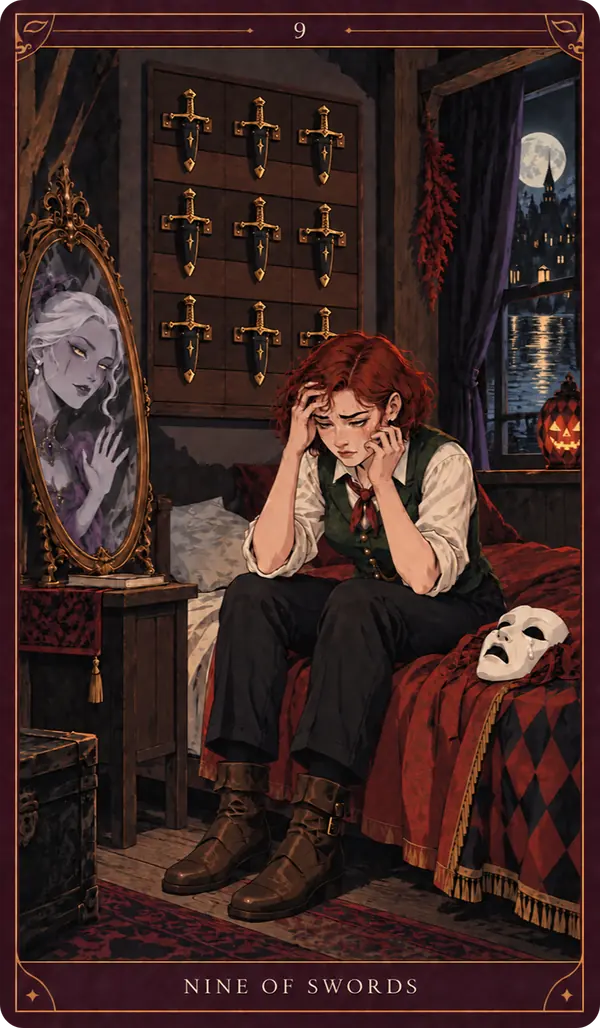 Velvet MasqueradeNine of SwordsFear growing louder in a sleepless room.
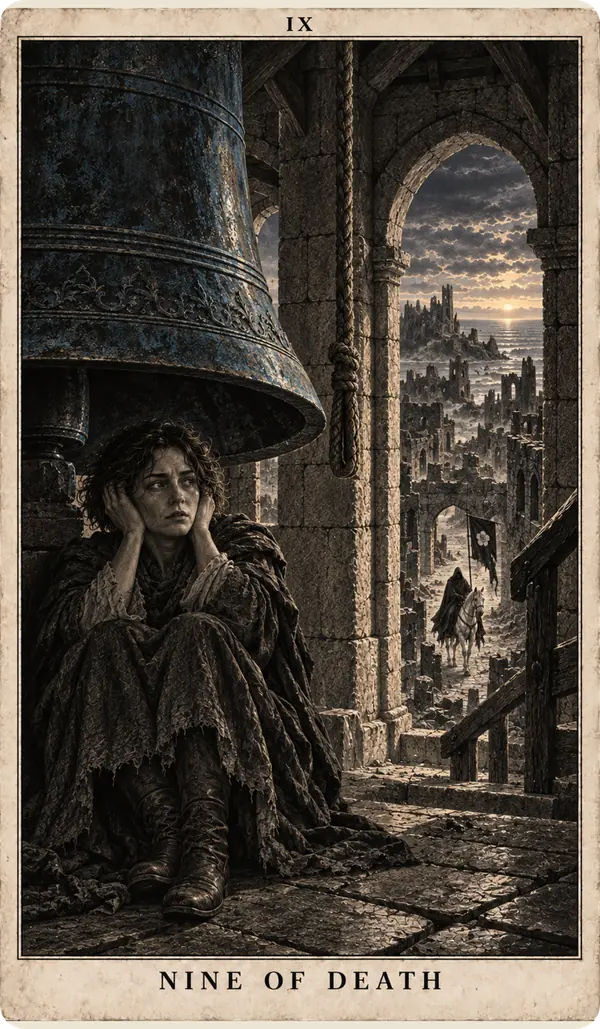 Four HorsemenNine of DeathDistinguish the fact before you from the terror that multiplies it.
 Four TrailsNine of SwordsAnxiety, sleepless worry, rumination.
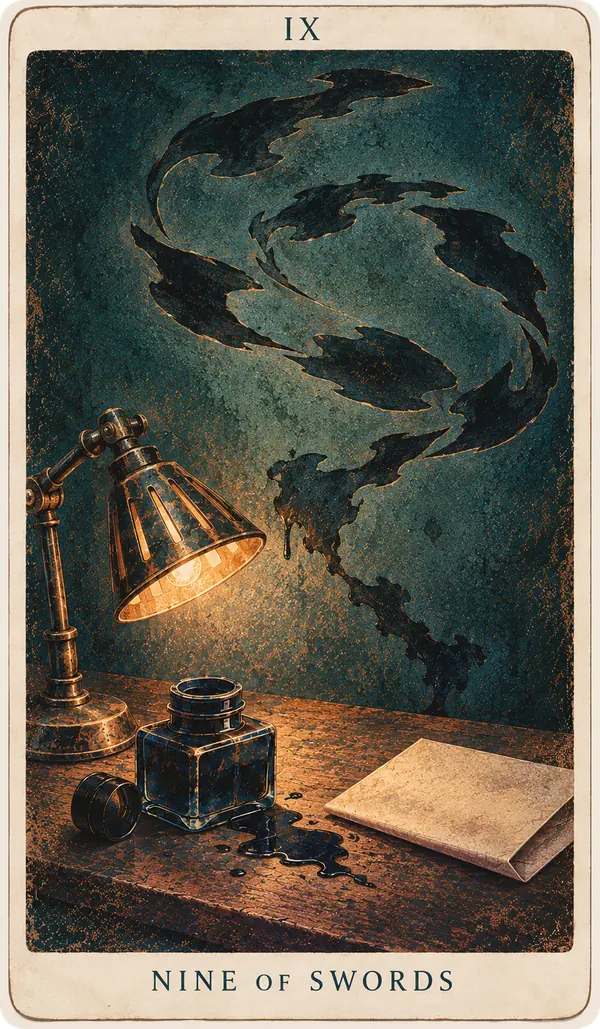 Living ThresholdNine of SwordsNight enlarges a worry beyond the small spill that needs care.
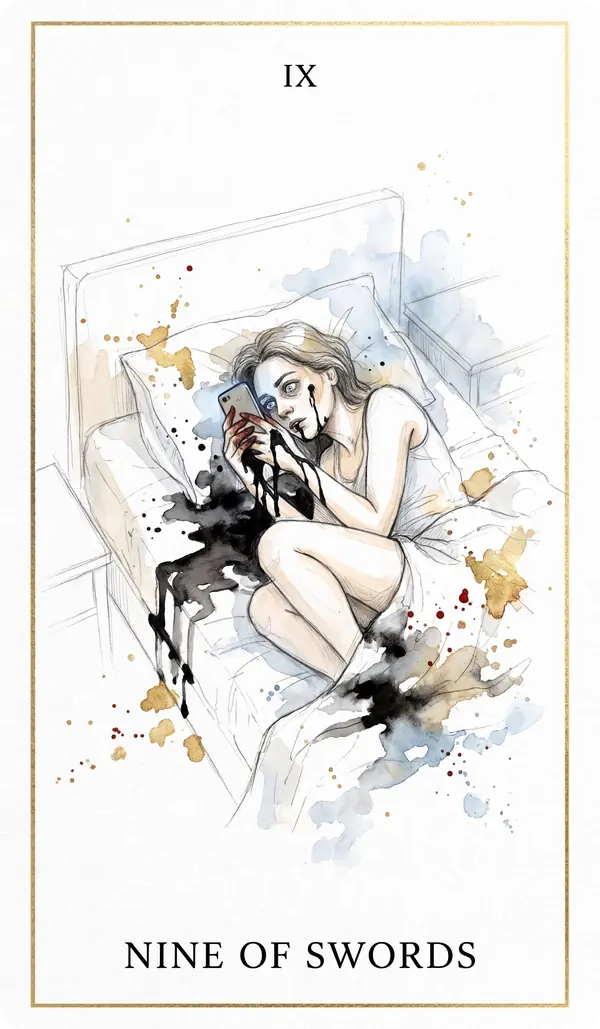 Colour of PowerNine of SwordsYou read what keeps you awake, and the ink comes to you.
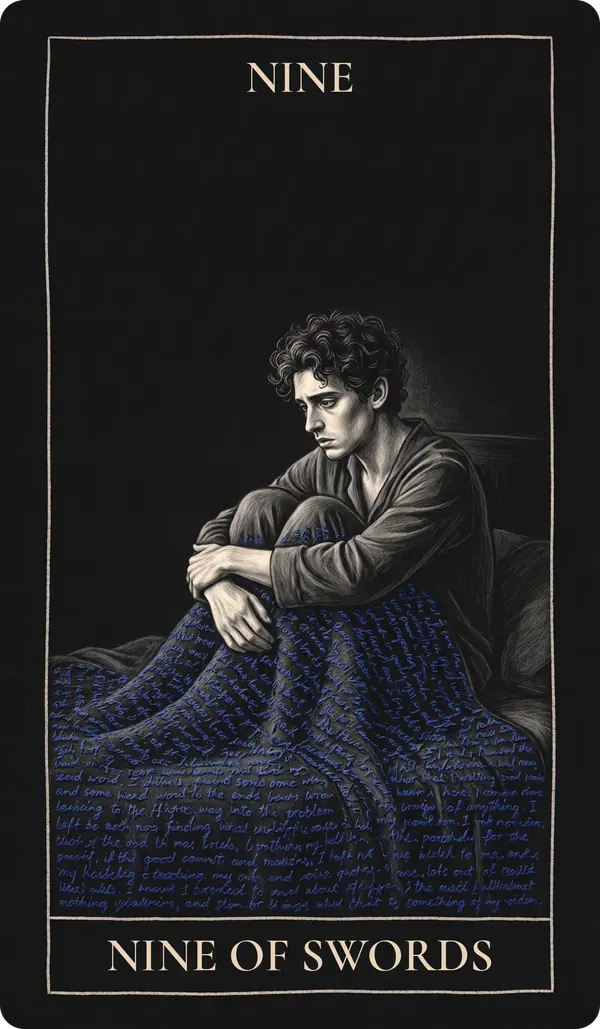 BoundNine of SwordsWords said to you become a blanket you cannot sleep under.
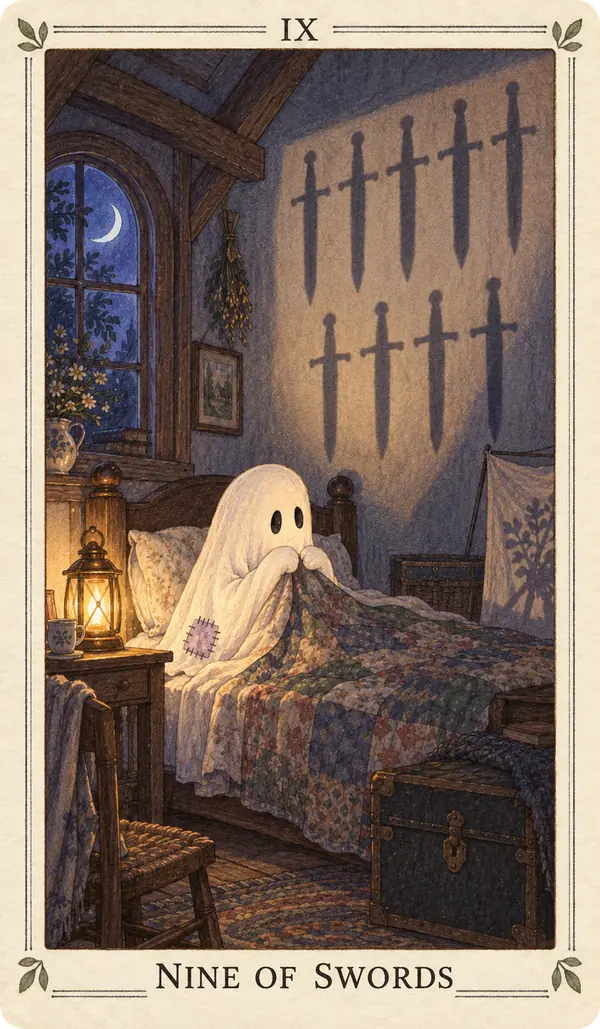 Cozy HauntNine of SwordsName a fear without treating it as proof.
 Celestial Night SkyNine of SwordsA worry that can be checked.
Where it appears
Questions about this card
Is Nine of Swords a yes or no card in Everyday Wonders?
The Nine of Swords is mixed upright: a named worry can be examined, but rumination clouds the answer. Reversed, it leans no, because repeated thoughts treated as proof, or distress hidden behind composure, make a poor basis. Write the worry in one line and look at it again at noon.
What does Nine of Swords mean in love?
For a relationship question, the Nine of Swords upright suggests a worry about love may keep you awake before the house wakes, and naming it plainly at dawn may make it easier to share. Reversed, the same thought comes round again before dawn, each pass feeling like proof. Talk the worry over with one trusted friend instead of turning it alone again.
What does Nine of Swords mean reversed in Everyday Wonders?
With the Nine of Swords reversed, the same thought is treated as evidence because it keeps returning, or distress is hidden behind a calm face. Repetition is not proof. Check the worry against what you actually know, and say it out loud to one person you trust.