The Hierophant
The Hierophant in Crimson Inferno · Major Arcana V
ConflictIn short
Examine inherited teachings, shared practices and the responsibilities of belonging.
Reversed
Dogma protecting power, or forced conformity.
- Major Arcana
- V
- The Doctrine Keeper
- institution
- doctrine
- collective obedience
Upright
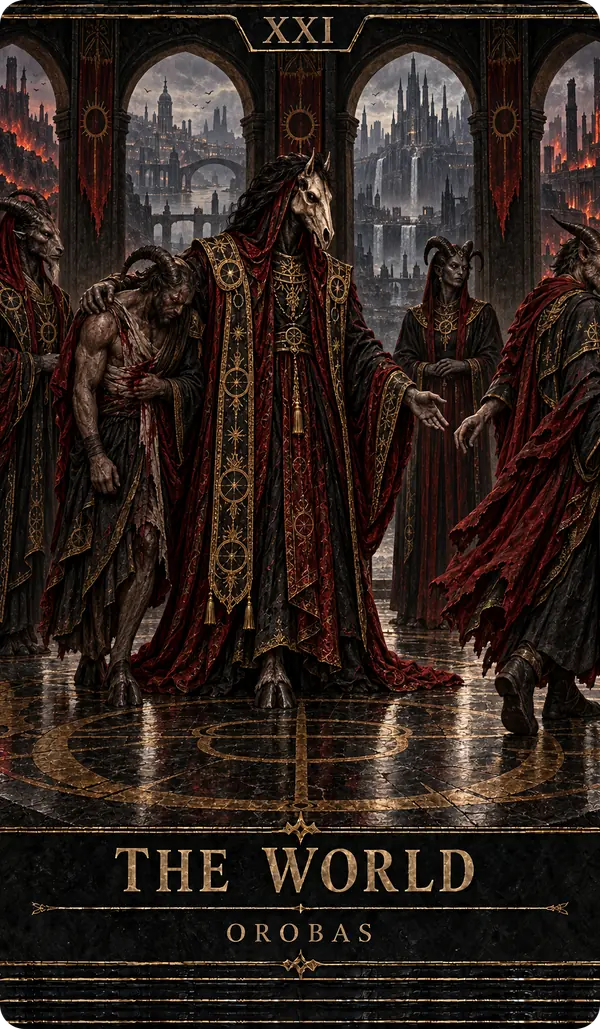
Balam blesses kneeling initiates with one open hand while the other presses a silent dissenter’s head toward the floor. Look hard at what you were taught in order to belong.
A teaching worth keeping can take questions; one that needs a forced bow is guarding something other than wisdom.
A question to sit with
“What does my community require me to repeat without examining?”
One step
Take one rule you were taught, ask someone who keeps it why, and see whether the answer holds up to a second question.
Reversed
Balam’s court teaches that suffering proves disloyalty, so the dissenter’s closed mouth becomes evidence against them. That is doctrine protecting power and forcing everyone into one voice.
The other failure is the rebel who throws out every source of wisdom at once, the useful along with the cruel.
A question to sit with
“Whose power do I protect by bowing, and what wisdom have I thrown away just to stop bowing?”
One step
Name one thing you repeat because refusing would cost you, and one teaching you may have dropped too fast; look at each once more.
How this deck reads reversed cards
Reversed, a card may show excess, blockage, a hidden price or a hard release, and it is rarely a simple opposite. In the basalt city an upright card can already show a power through its misuse, and turning it over softens nothing in the picture. A mark may loosen or bite deeper, and the city does not promise which.
In love
Balam’s blessing falls on three who kneel shoulder to shoulder. In love, a shared tradition may be shaping the bond, worth keeping where it still answers your questions.
- Supports
- Beliefs you can both question and still hold.
- Watch for
- Following a script about how love should look.
- One step
- Talk about one expectation each of you learned at home.
The blessing Balam gives and the bow Balam forces come from one body. In love, warmth and pressure to conform may arrive together, or every shared value may be thrown out at once.
- Supports
- Your own conscience.
- Watch for
- Being told your doubt proves you do not love enough.
- One step
- Name one belief about love you hold only because you were told to.
At work
Under Balam’s blessing, one initiate keeps glancing toward the ruler’s unseen dais. At work, an institution and its rituals may be central now, and so may the question of whom they really answer to.
- Supports
- Learning from people who can answer questions.
- Watch for
- Repeating the company line without testing it.
- One step
- Ask a mentor why one rule exists.
Dogma may be protecting those in power.
- Supports
- Colleagues who will say the quiet thing.
- Watch for
- Silence treated as disloyalty.
- One step
- Write down one rule you would change and why, and keep it for when it can be heard.
The traditional option may be sound if it survives questions.
- Supports
- Advice from people who have walked the path.
- Watch for
- Choosing to belong at the cost of your judgment.
- One step
- Put one hard question to the conventional choice.
One initiate recites word for word; the dissenter keeps silent and pays for it. One option may be pure conformity, the other pure rebellion, and neither may be your own answer.
- Supports
- Keeping what is wise from both.
- Watch for
- Throwing out every teaching to prove a point.
- One step
- List one thing worth keeping from the path you reject.
Learning inside a tradition may be the way forward.
- Supports
- A teacher who welcomes doubt.
- Watch for
- Obedience mistaken for wisdom.
- One step
- Pick one teaching and study where it comes from.
Forced agreement, or wholesale rejection, may be stalling you.
- Supports
- Questions asked out loud.
- Watch for
- Believing suffering proves someone was wrong.
- One step
- Read one view from outside your own tradition.
One initiate under Balam’s hand studies the dissenter who will not recite. At home, family customs may be asking to be examined, starting with the ones nobody questions aloud.
- Supports
- Rituals that still bring people together.
- Watch for
- The relative punished for not repeating what everyone else says.
- One step
- Ask an elder why one family custom began.
The family may punish dissent, or someone may reject every custom at once.
- Supports
- Room for a closed mouth.
- Watch for
- Pain read as proof of disloyalty.
- One step
- Tell one family member one belief of yours, calmly, once.
Yes or no
MixedNoTradition can guide you if it survives your questions, so the answer is mixed until you have asked them.
Supports
- There is a teaching here worth learning.
- Shared practice can hold people together.
Limits
- What you are asked to repeat may not have been examined.
- Belonging may come with a bowed head.
One step
Ask one hard question of the rule in play and see if the answer holds.
Dogma is protecting power here, or rebellion is throwing everything out, so the answer leans no.
Supports
- Refusing to recite what you doubt keeps your judgment alive.
- Not every teaching has to go out with the dogma.
Limits
- Conformity may be enforced, not chosen.
- Suffering may be read as proof of guilt.
One step
Separate what you believe from what you say to stay safe, and decide from the first.
What is in the picture
Balam stands above three adult initiates kneeling shoulder to shoulder. One face recites, one watches Paimon’s unseen dais, and one studies a dissenter whose mouth remains closed. Balam’s lower hand presses that dissenter’s forehead toward the floor while the other hand opens in a blessing.
The cruelty lies in the contrast between the gentle palm and the forced bow. The court teaches that suffering proves disloyalty. Refusal to repeat the doctrine becomes evidence against the dissenter.
- three heads: bull, ram and bone-faced predator
- hand raised in blessing
- hand pressing a head down
- kneeling initiates
- closed mouth of the dissenter
- stairs to an unseen dais
- sun emblems on the vestments
This card in other decks
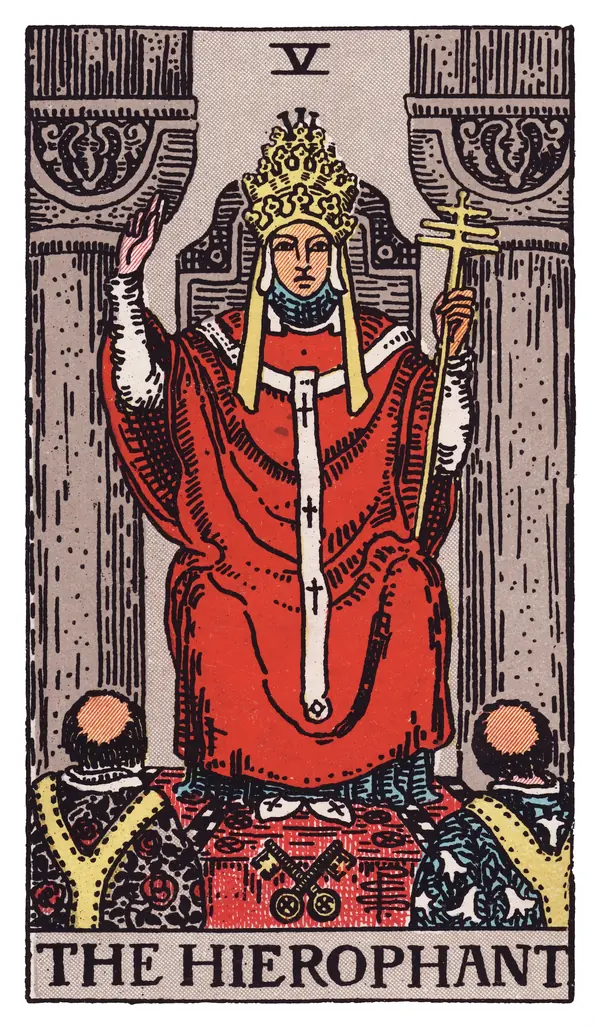 Rider–Waite–SmithThe HierophantA traditional method, mentor, or shared set of values has something genuinely useful to offer you right now.
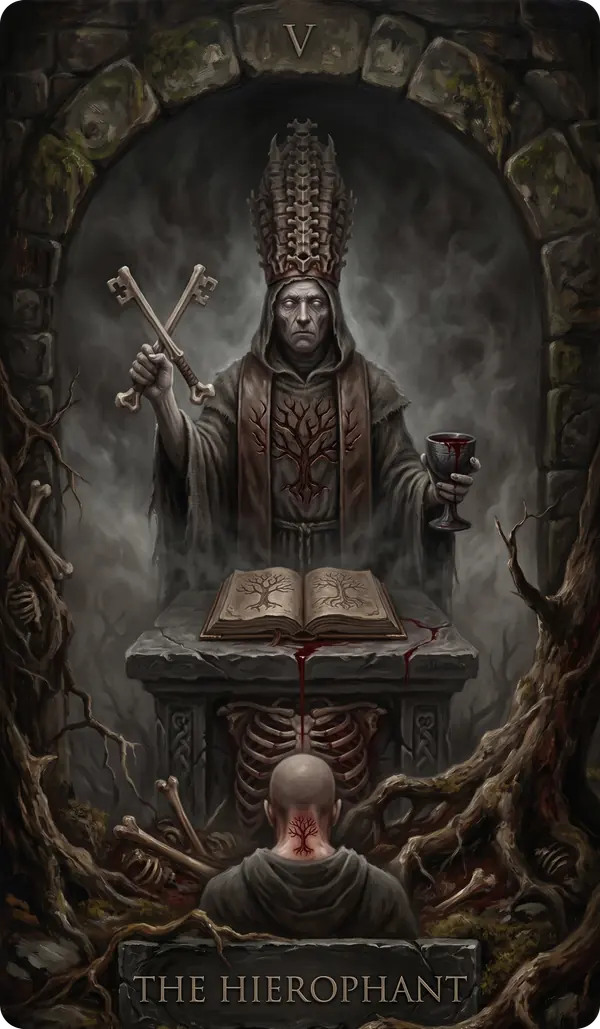 FamiliaThe HierophantA real acceptance into the line: the newcomer is admitted, and the tradition passes on unbroken.
 City of WindowsThe HierophantValues named honestly, the support of a community, a union with clear rules.
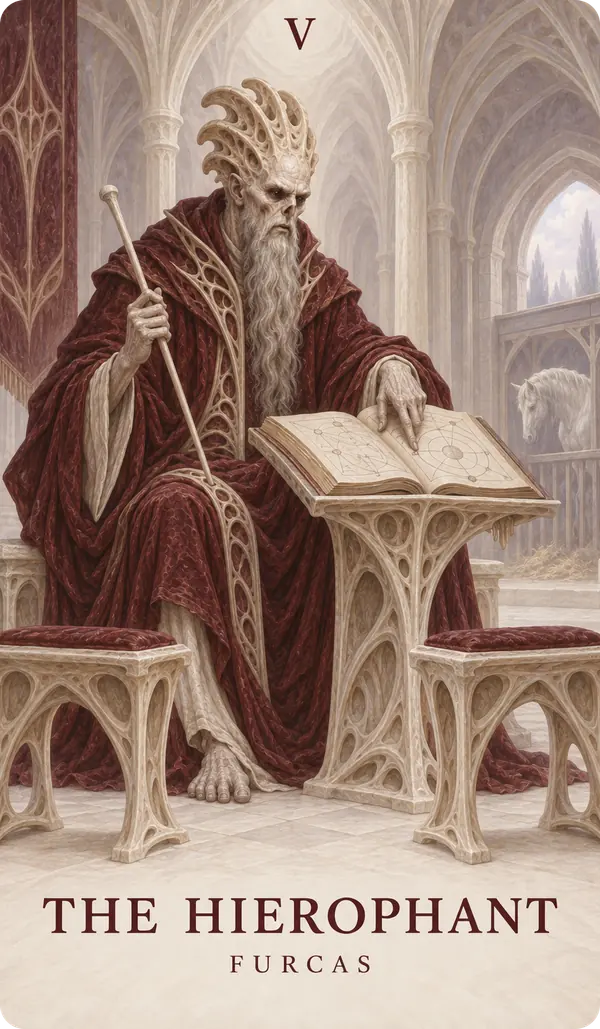 CarnalThe HierophantLearning within a tradition, including the duty to question it.
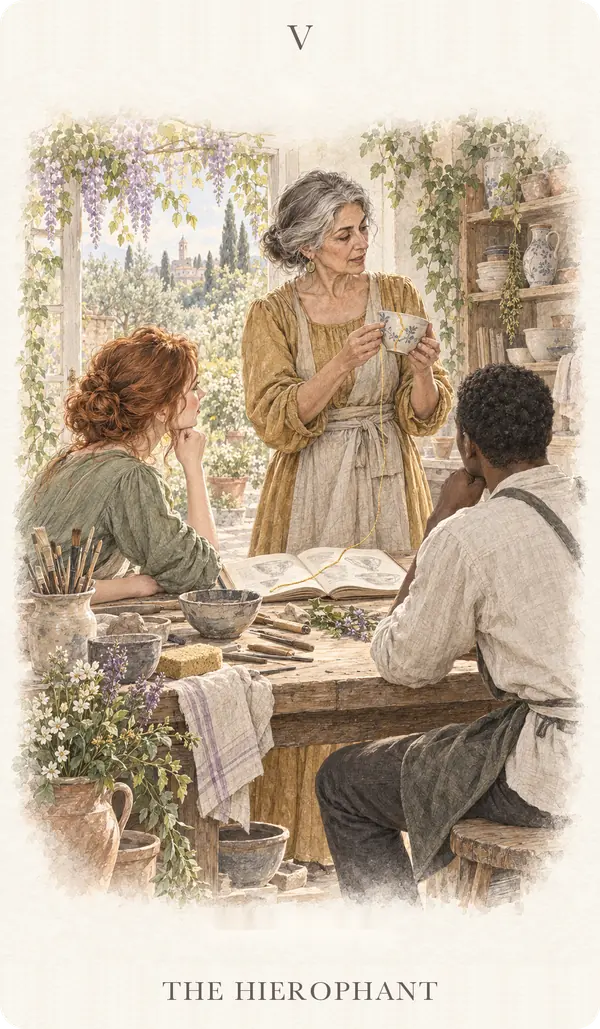 Everyday WondersThe HierophantTradition, shared knowledge, a common language and teaching.
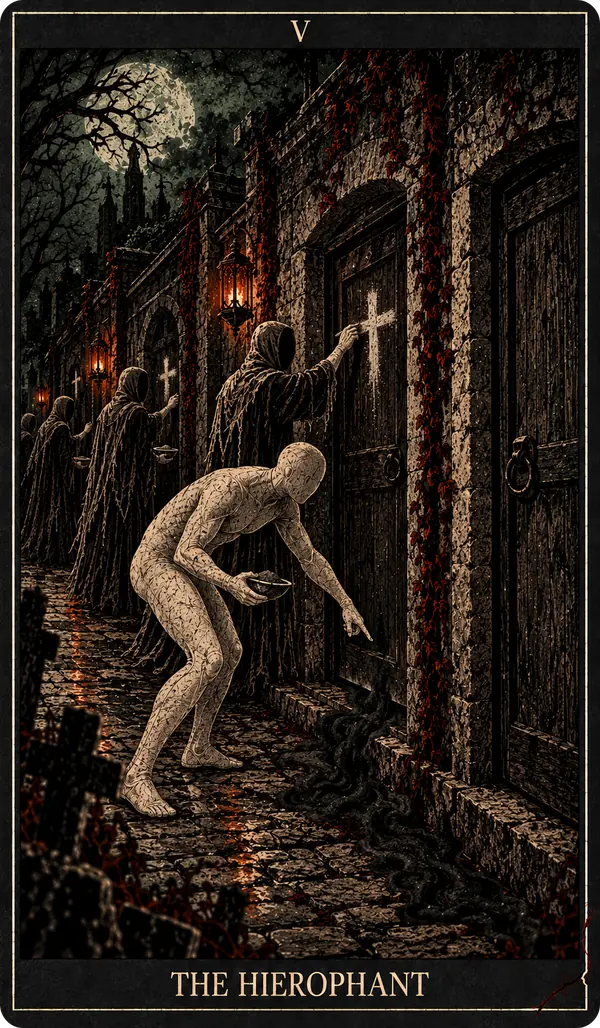 Mirror NightThe HierophantKeep only a rite that survives observation.
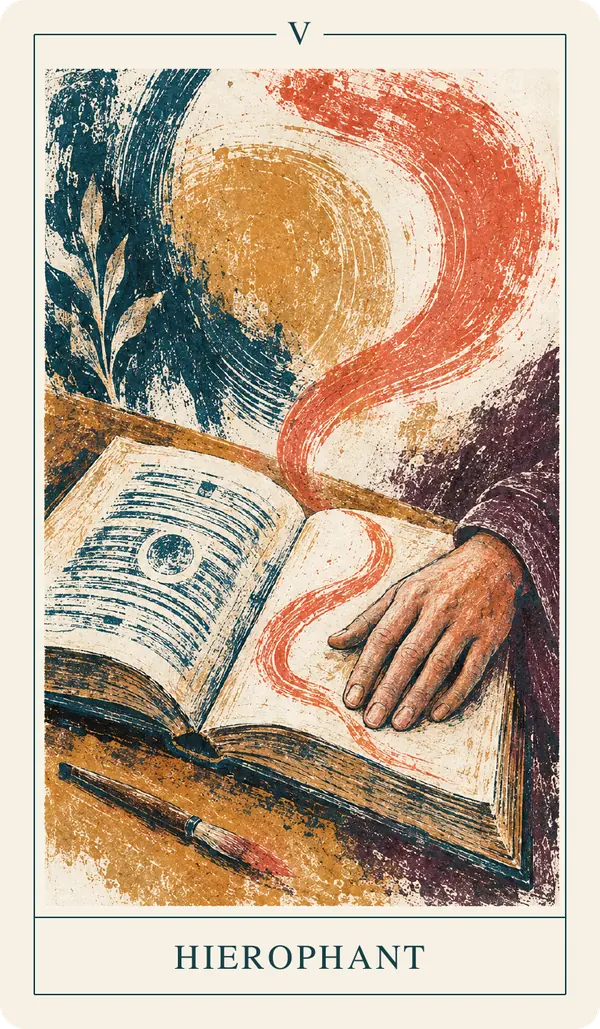 Self ContactThe HierophantLearn from a practice or teacher, then understand the reasons behind what you inherit.
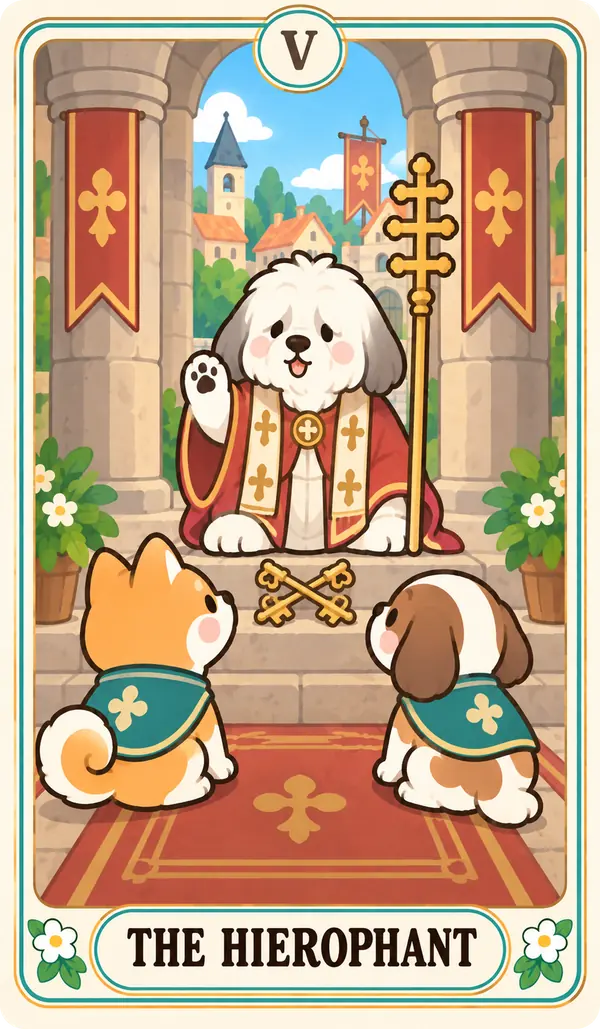 Shiba TownThe HierophantTradition; shared practice; learning from a teacher.
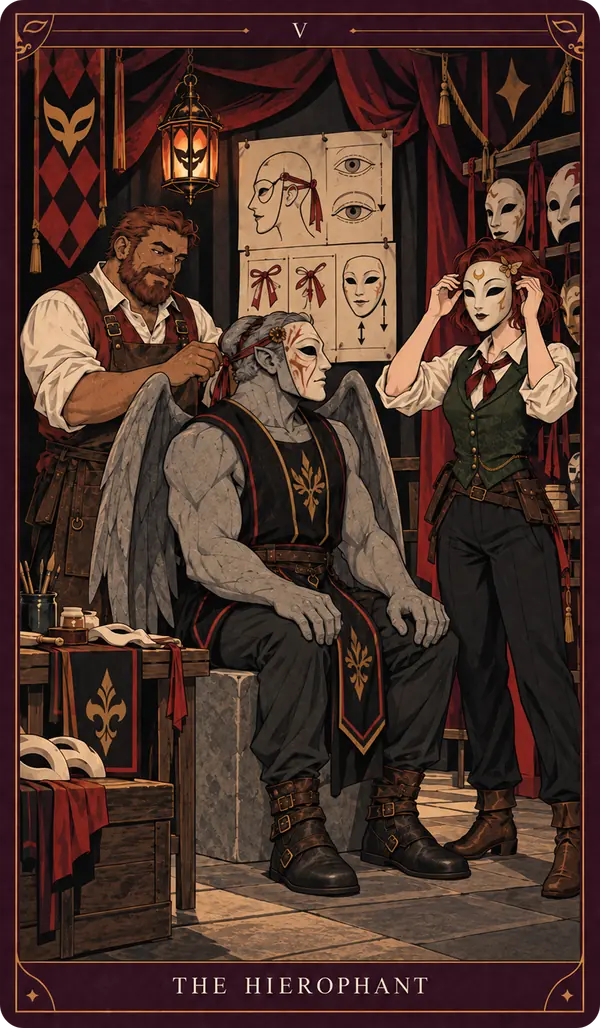 Velvet MasqueradeThe HierophantLearning a practice that helps its wearer.
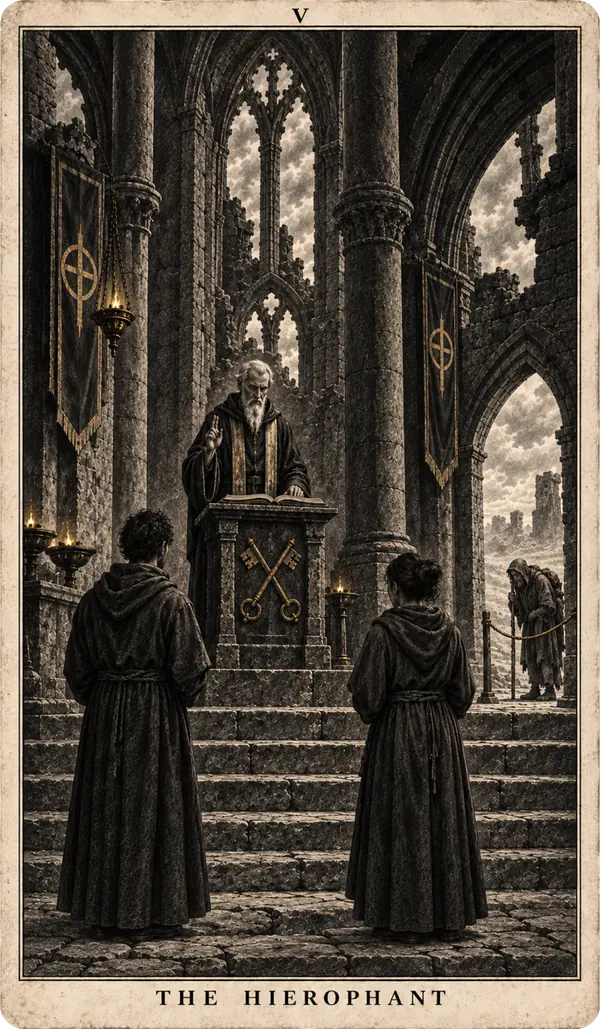 Four HorsemenThe HierophantLearn from a tested practice and make an ethical commitment within a community.
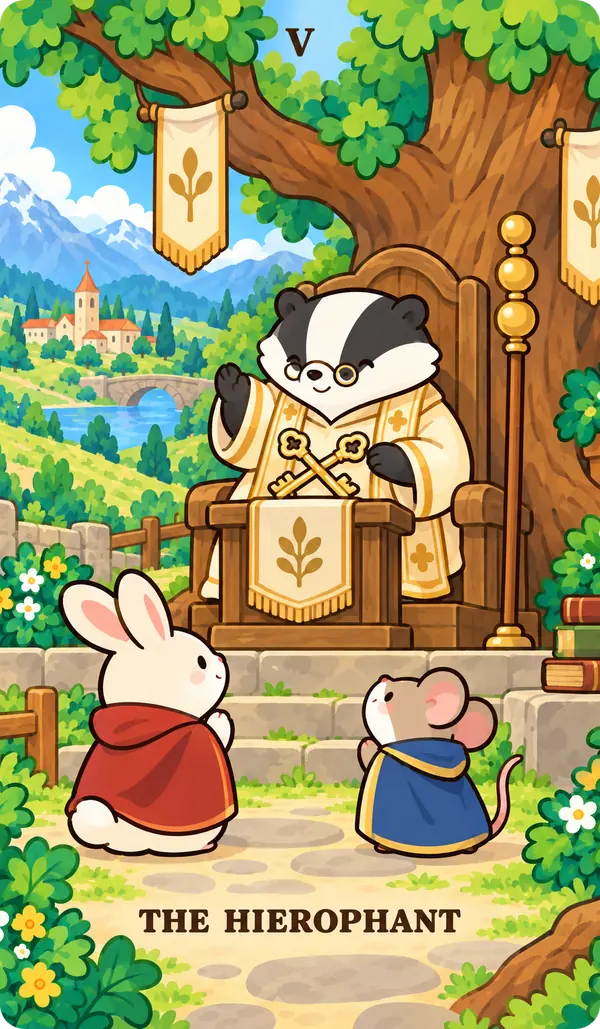 Four TrailsThe HierophantTeaching, shared tradition, belonging.
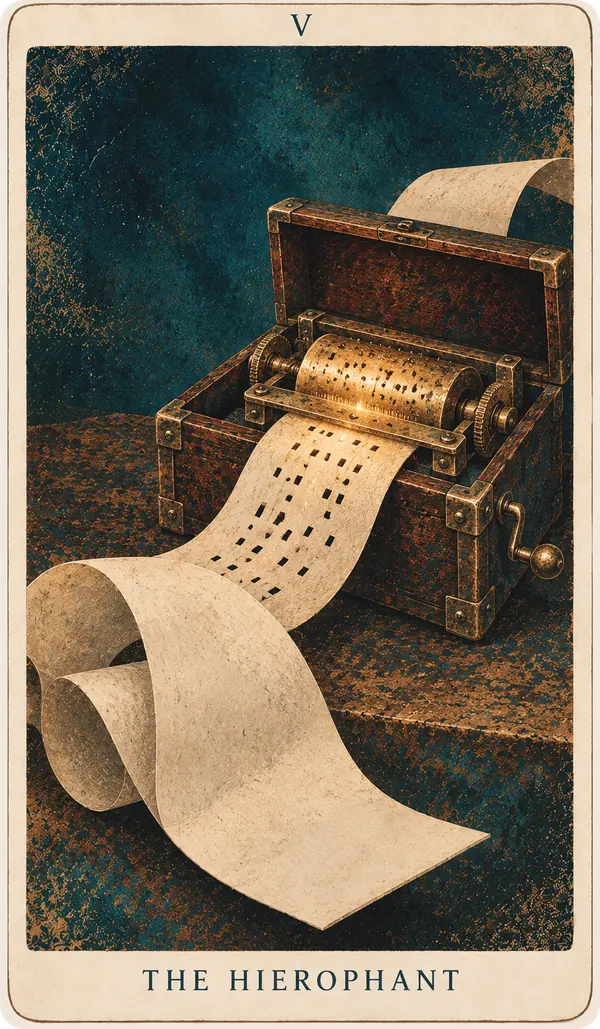 Living ThresholdThe HierophantA music box plays a handed-down tune and leaves room for a new note.
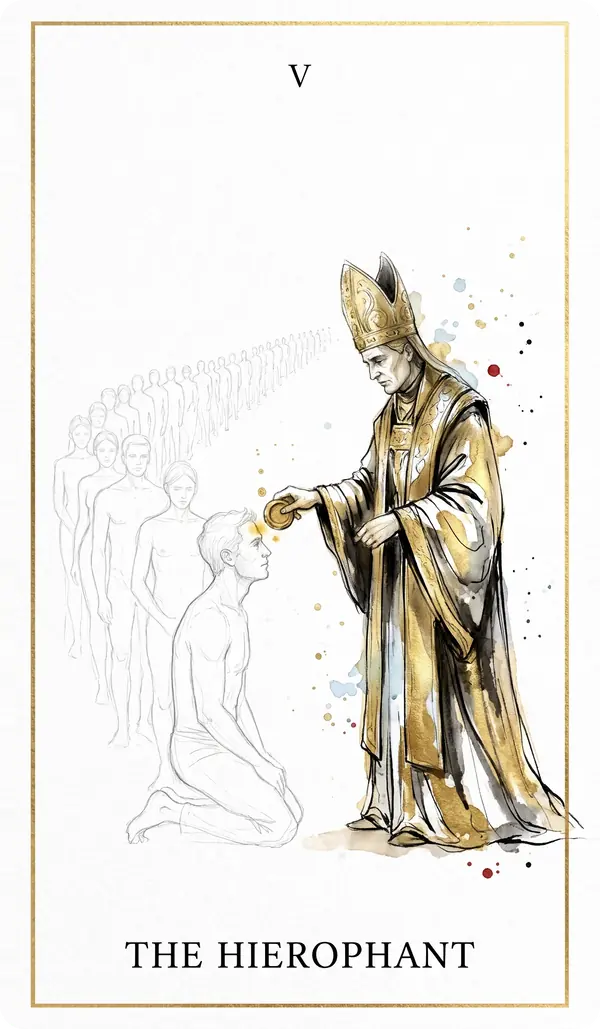 Colour of PowerThe HierophantThe seal opens doors talent cannot; stand in line if you must.
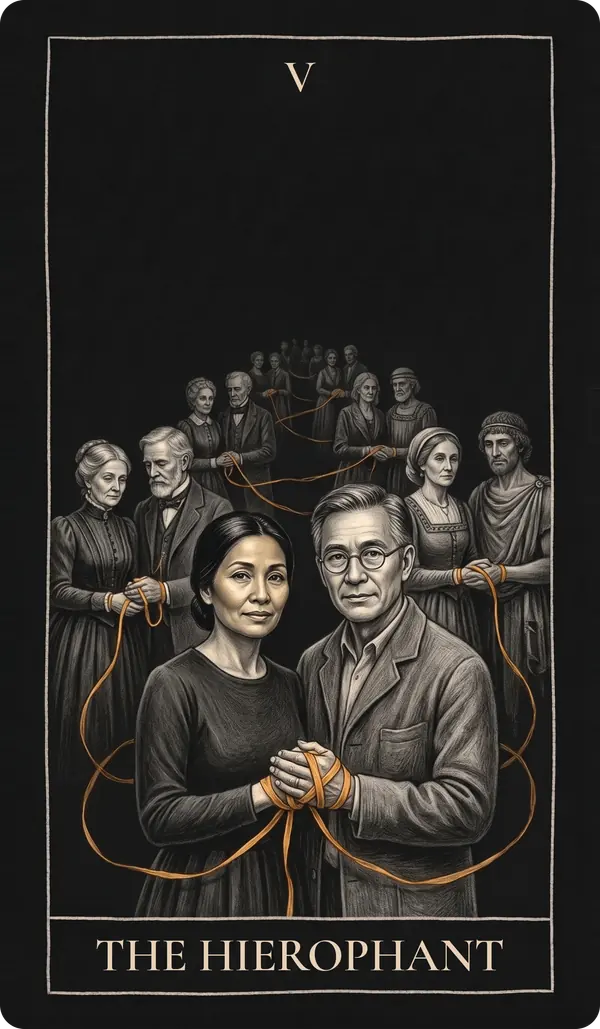 BoundThe HierophantA knot tied in the old way, with generations holding the other end.
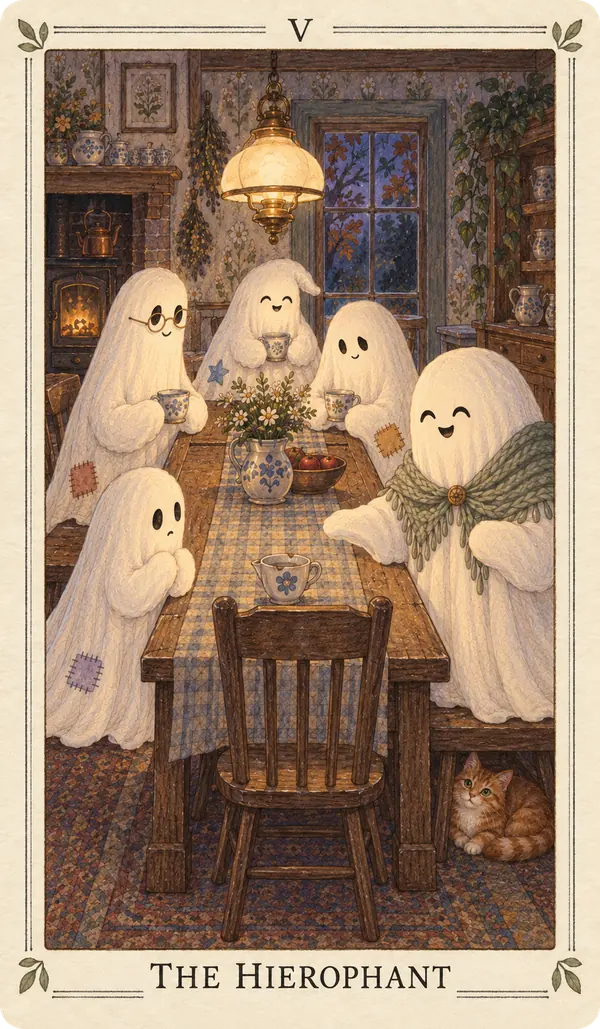 Cozy HauntThe HierophantReceive a shared practice that carries care.
 Celestial Night SkyThe HierophantLearning how to check.
Where it appears
Questions about this card
Is The Hierophant a yes or no card in Crimson Inferno?
Both orientations of The Hierophant lean away from a clean yes. Upright it is mixed: a tradition can guide you if it survives your questions. Reversed it leans no, because dogma is protecting power or rebellion is throwing everything out. Ask one hard question of the rule in play and see whether the answer holds.
What does The Hierophant mean in love?
In a love reading, The Hierophant upright may show shared values or a tradition shaping the bond. Reversed, conformity may be forced on it, or every shared value thrown out at once. Talk about one expectation each of you learned at home, and name one belief about love you hold only because you were told to.
What does The Hierophant mean reversed in Crimson Inferno?
The Hierophant reversed shows dogma protecting power, or conformity that is imposed. Being told your doubt proves you do not care enough is the sign to watch for. Crimson Inferno asks you to separate what you believe from what you say to stay safe, and to act from the first.