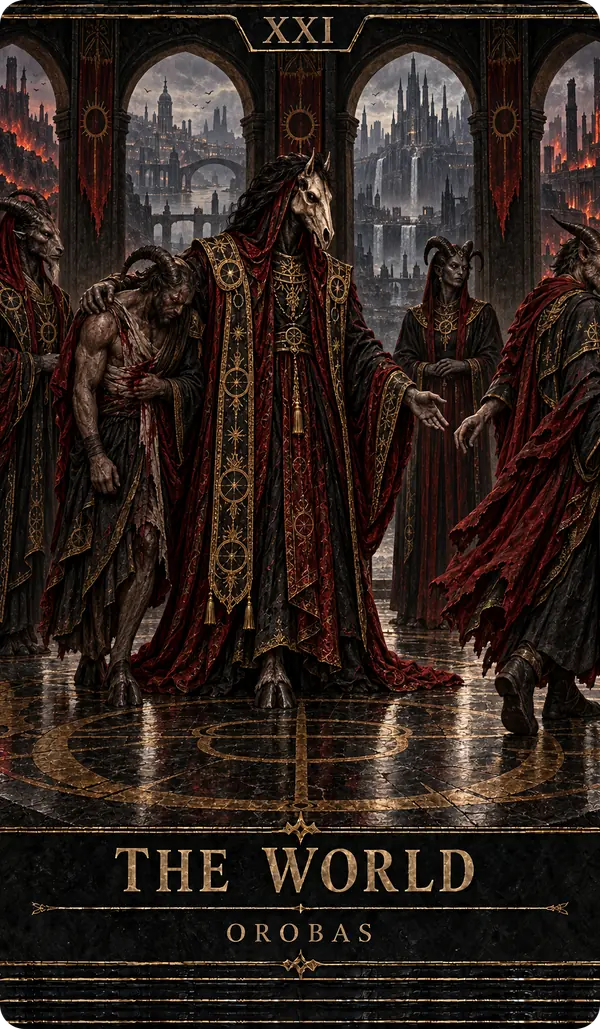
The Emperor
The Emperor in Crimson Inferno · Major Arcana IV
ConflictIn short
Take responsibility, establish workable boundaries and recognize where authority sits.
Reversed
Tyranny, brittle control and humiliation used to obtain compliance.
- Major Arcana
- IV
- The Hoofed Sovereign
- authority
- structure
- the coercive shadow of order
Upright
Paimon plants a hoof on a defeated lord’s head and turns the defeat into a public lesson that authority can reach the body. This is the shadow order casts.
Ask who holds power here, and own the rules you set yourself.
A limit should hold things in place, not grind someone into the stone.
A question to sit with
“Am I creating order, or merely making resistance painful?”
One step
Write down the one rule you are responsible for keeping, and say plainly whom it protects.
Reversed
Paimon needs blood under the captive’s mouth to make the lesson stick, and order that rests on that is brittle. Watch for tyranny and control kept through shame.
Or for the opposite failure: authority so weak that nobody is protected at all.
A question to sit with
“Who does my authority actually protect, and who is it keeping on their knees?”
One step
Look at one rule you enforce or live under and ask what happens to the person who breaks it; if the answer is humiliation, name it to yourself.
How this deck reads reversed cards
Reversed, a card may show excess, blockage, a hidden price or a hard release, and it is rarely a simple opposite. In the basalt city an upright card can already show a power through its misuse, and turning it over softens nothing in the picture. A mark may loosen or bite deeper, and the city does not promise which.
In love
The captive grips the corners of the block while Paimon’s hoof presses down. In love, it may be time to see who holds the power, and to set roles that both of you can stand.
- Supports
- Responsibility named and shared.
- Watch for
- One partner’s word becoming law.
- One step
- Agree on one boundary together, in plain words.
Paimon keeps the captive’s face pressed to the stone with a single hoof. In love, control may be held through humiliation, or nobody may be willing to set any limit at all.
- Supports
- Naming domination plainly.
- Watch for
- Contempt passed off as care.
- One step
- Notice one moment where disagreement costs too much, and talk about it once things are calm.
At work
Paimon looks down at the captive with contempt that is meant to be seen. At work, authority may be the issue, yours or someone’s over you, and how openly it is shown.
- Supports
- Workable structure and clear responsibility.
- Watch for
- Rules that exist to humiliate.
- One step
- Write down what you are responsible for, and what you are not.
Paimon stares down at the bleeding captive with deliberate contempt. At work, leadership may be tyrannical, or so weak beneath the show of force that nobody is protected.
- Supports
- Clear records and allies.
- Watch for
- Complying just to avoid being made an example.
- One step
- Keep a private note of how the rules are actually applied.
The steadier option may be the one that sets a clear boundary.
- Supports
- Knowing where authority sits.
- Watch for
- Choosing control because it feels safe.
- One step
- Ask whom each option protects and whom it presses down.
The marcher lord refused to submit, and Paimon answers with blood on the block. Among the options may be one that keeps order only by making resistance painful.
- Supports
- Seeing the cost to others.
- Watch for
- Picking the side with the heavier hand.
- One step
- Ask which option you could defend to the person who pays for it.
Growth may mean taking responsibility for your own rules.
- Supports
- Self-discipline that serves you.
- Watch for
- Treating yourself with contempt and calling it discipline.
- One step
- Set one rule for yourself this week that you would set for someone you care about.
Rigid self-control, or none at all, may be in the way.
- Supports
- Limits you set with some mercy.
- Watch for
- Punishing yourself into line.
- One step
- Swap one harsh rule you keep for yourself for a fair one, for a week.
The rules at home may be set firmly by one person.
- Supports
- Order that protects the youngest and weakest.
- Watch for
- Obedience won through shame.
- One step
- Say one household rule aloud and ask whether it still serves everyone.
Authority at home may be crushing, or absent when protection is needed.
- Supports
- Someone willing to call fear by its name.
- Watch for
- Humiliation used to keep people in line.
- One step
- Name one family rule that runs on fear, even if only to yourself.
Yes or no
YesNoResponsibility taken and boundaries set are favored, so the answer leans yes, as long as the order does not need someone pressed to the stone.
Supports
- Clear authority can protect people as well as rule them.
- Boundaries that are named can be kept.
Limits
- Order can slide into domination.
- Someone may be carrying the cost of this structure.
One step
Ask whether your order would still hold if nobody were afraid.
Force or collapse is doing the work of authority, so the answer leans no.
Supports
- Tyranny is easier to refuse once it is named.
- Weak authority can still be rebuilt with real limits.
Limits
- Control may be held through humiliation.
- Nobody may be protected by the rules in place.
One step
Look at who pays when someone disagrees, and decide with that in view.
What is in the picture
Paimon plants one hoof on the captive’s head, forcing the face onto the low stone block. The captive grips the block’s corners; blood runs beneath the mouth. Paimon looks downward with deliberate contempt.
The marcher lord resisted compulsory submission. Paimon turns defeat into a public lesson that authority can reach the body.
- hoof on the captive’s head
- low stone block
- gripping hands
- fallen crown
- chain from ruler to captive
- ram horns and black bone face
- tall staff
- cracked golden disc
This card in other decks
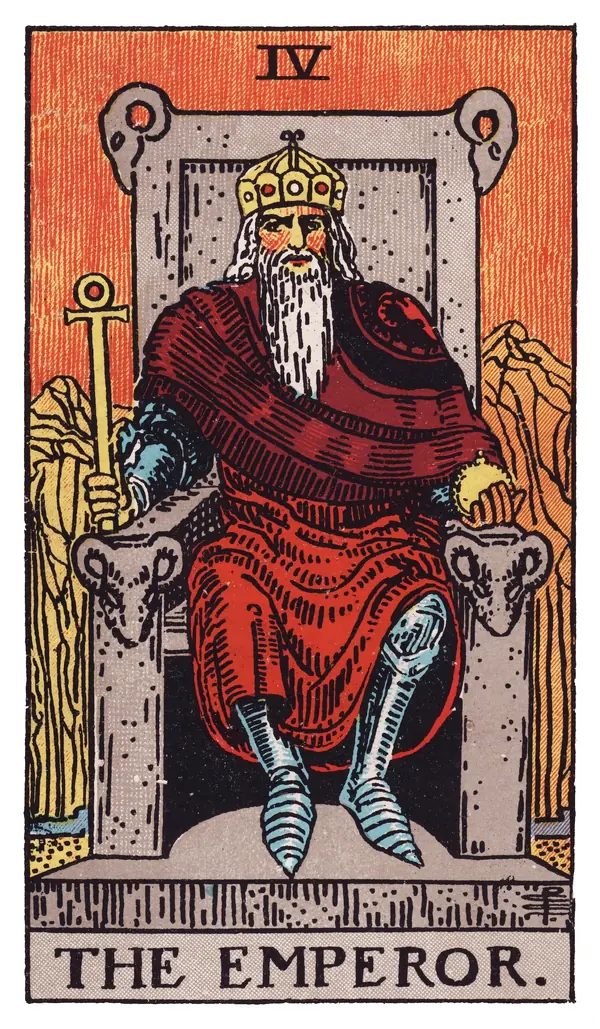 Rider–Waite–SmithThe EmperorA situation needs clear structure and a decision you’re willing to stand behind, not another round of open options.
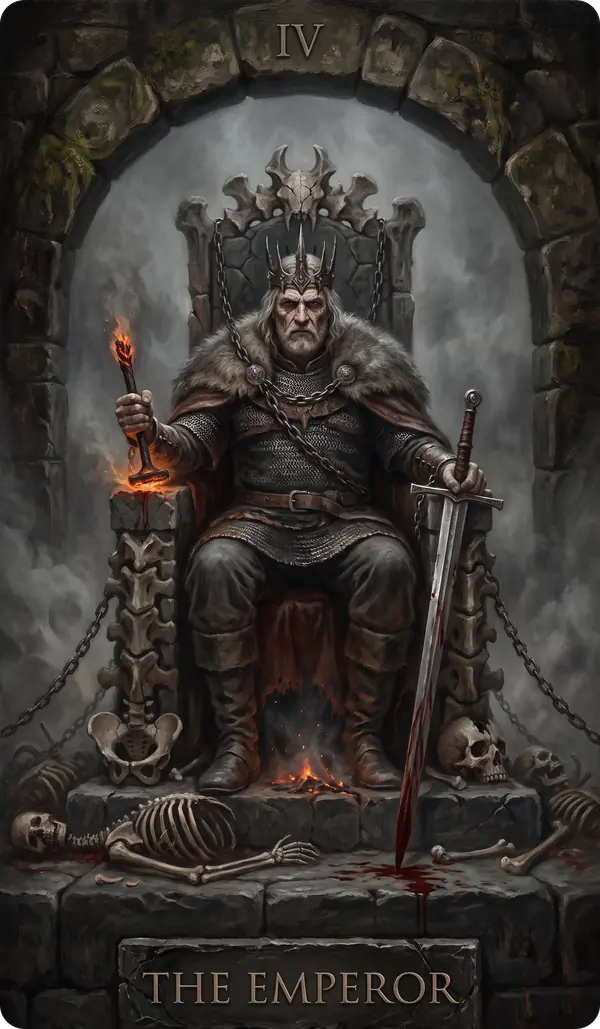 FamiliaThe EmperorThe law of the line holds: clear rules, defended borders and order in what is passed down.
 City of WindowsThe EmperorA clear boundary that can be spoken and respected without breaking the connection.
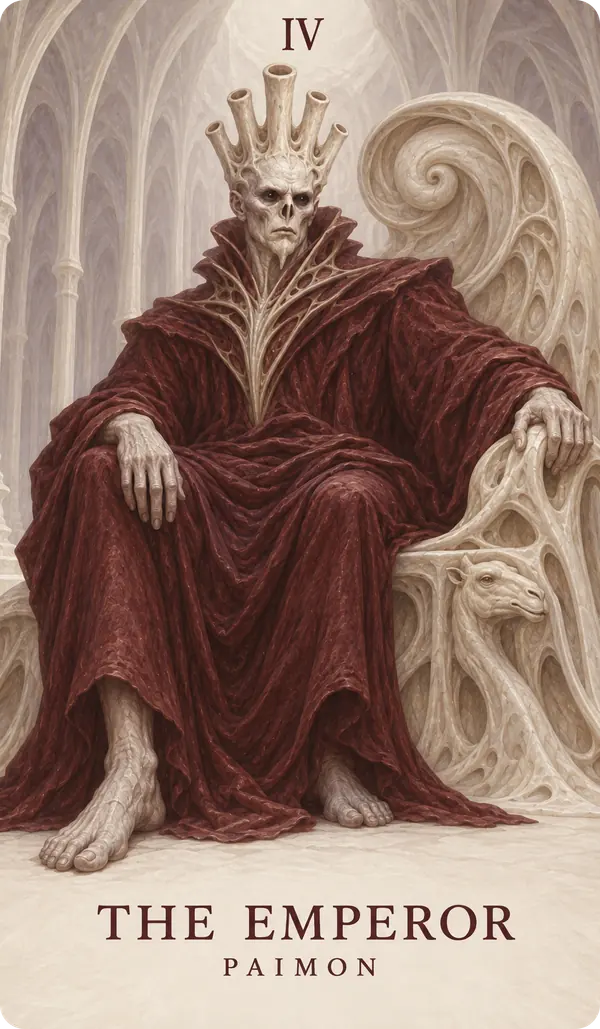 CarnalThe EmperorAuthority made durable through structure and responsibility.
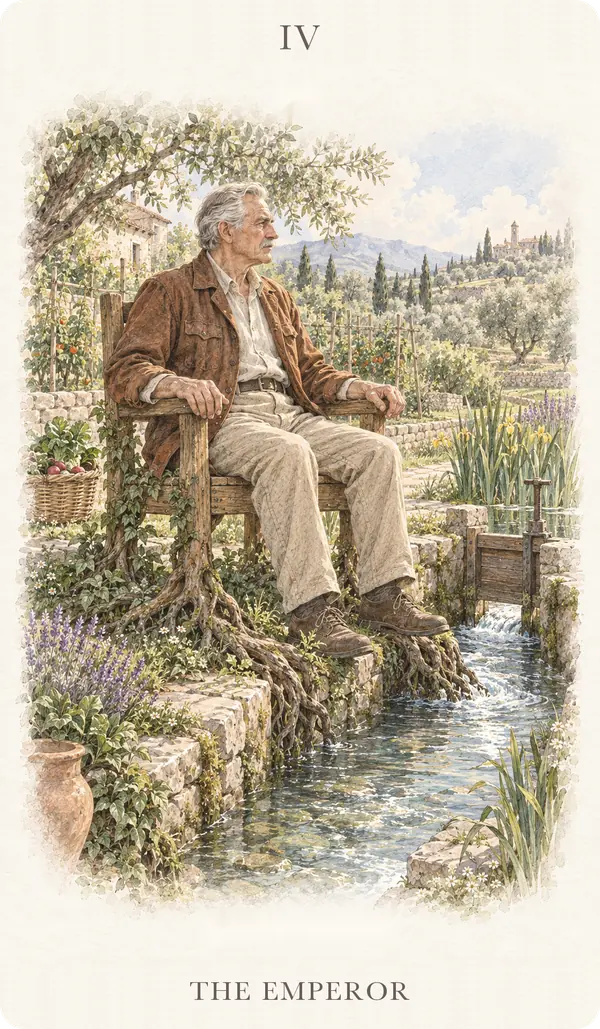 Everyday WondersThe EmperorStructure, responsibility, boundaries and dependable support.
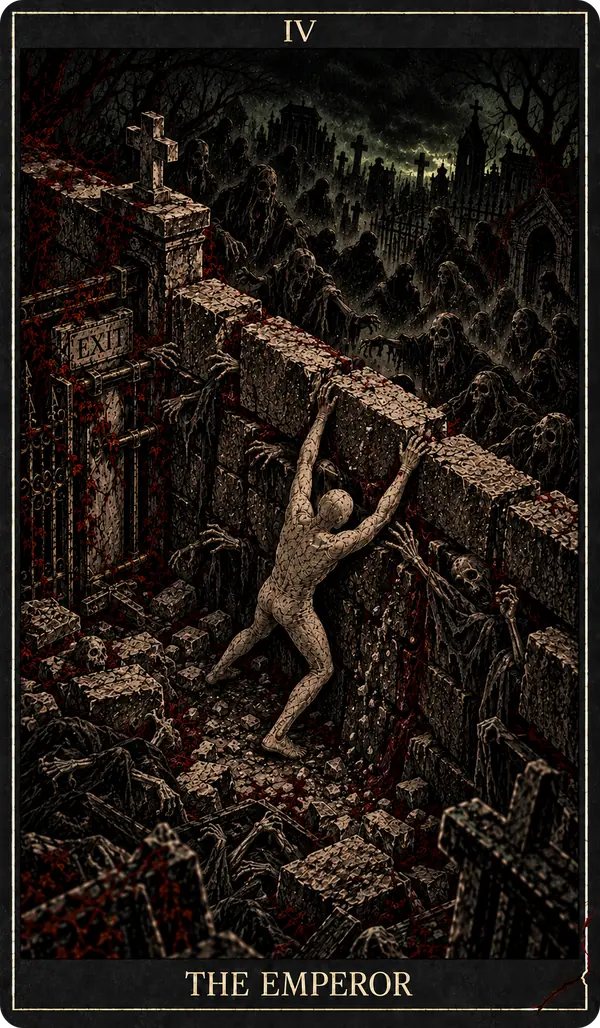 Mirror NightThe EmperorTake responsibility for the design and reopen an exit.
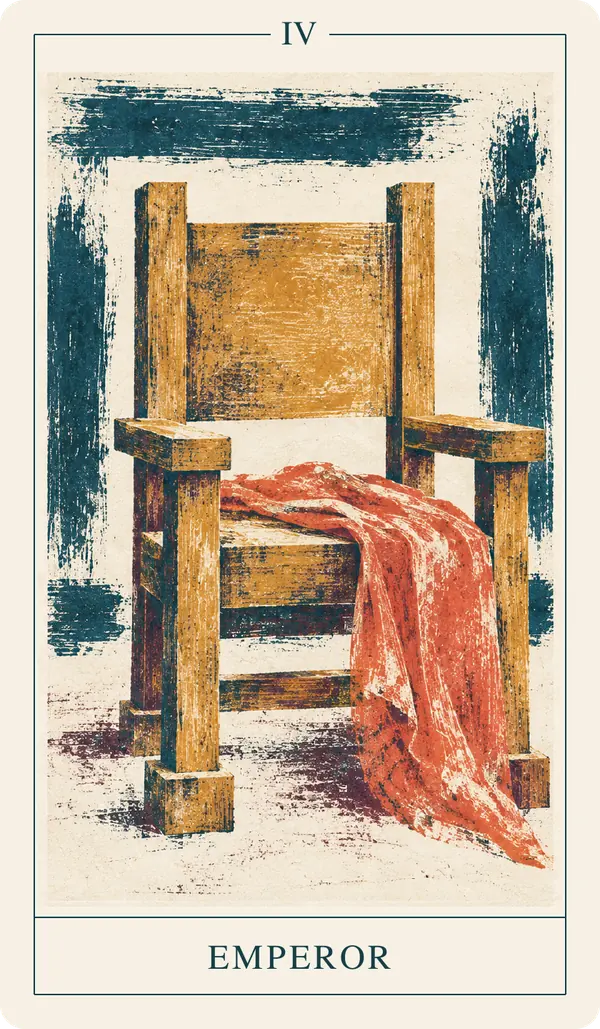 Self ContactThe EmperorA clear boundary or dependable routine can protect what matters.
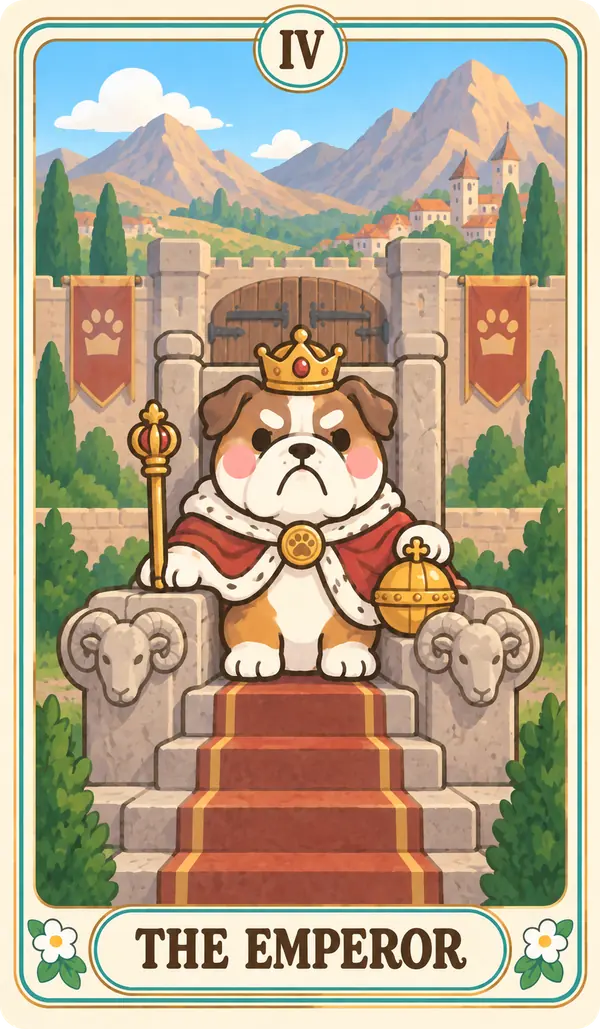 Shiba TownThe EmperorStability; responsibility; useful boundaries.
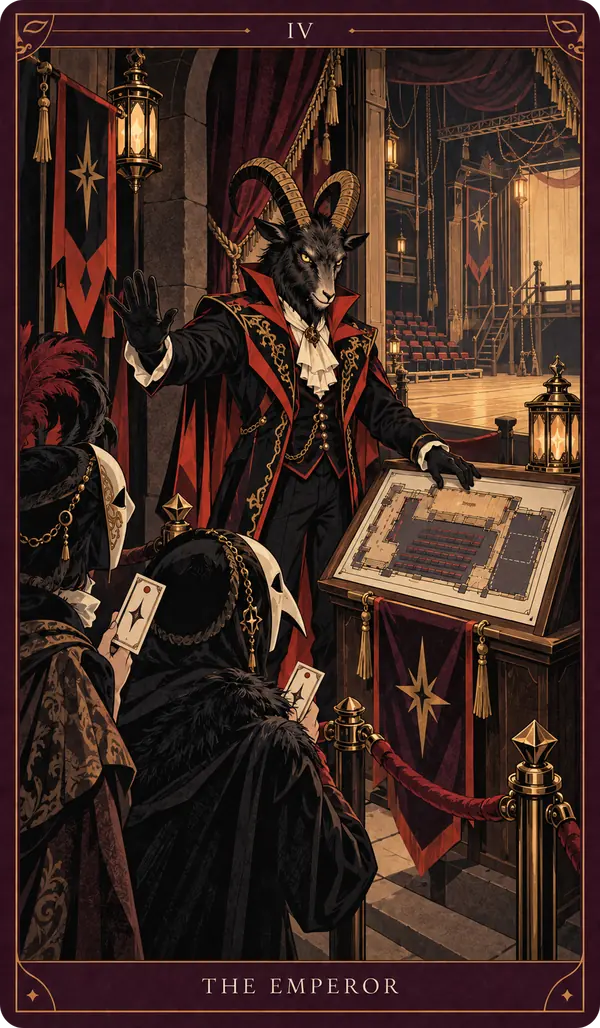 Velvet MasqueradeThe EmperorResponsibility held within a clear boundary.
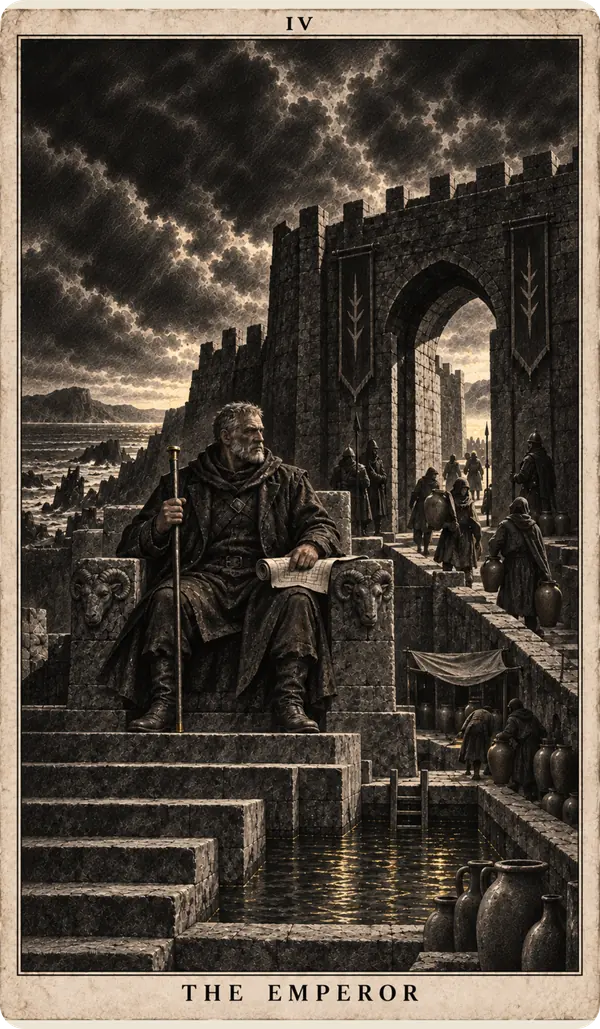 Four HorsemenThe EmperorBuild a dependable structure, state a boundary and accept responsibility for those affected.
 Four TrailsThe EmperorStructure, responsibility, boundaries.
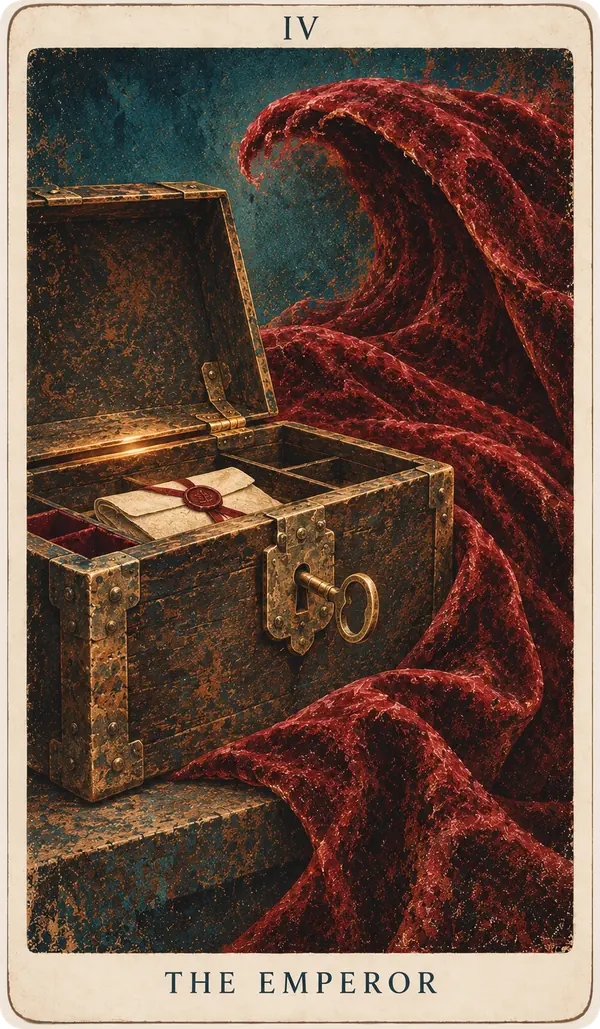 Living ThresholdThe EmperorStrong walls keep a chosen opening usable under pressure.
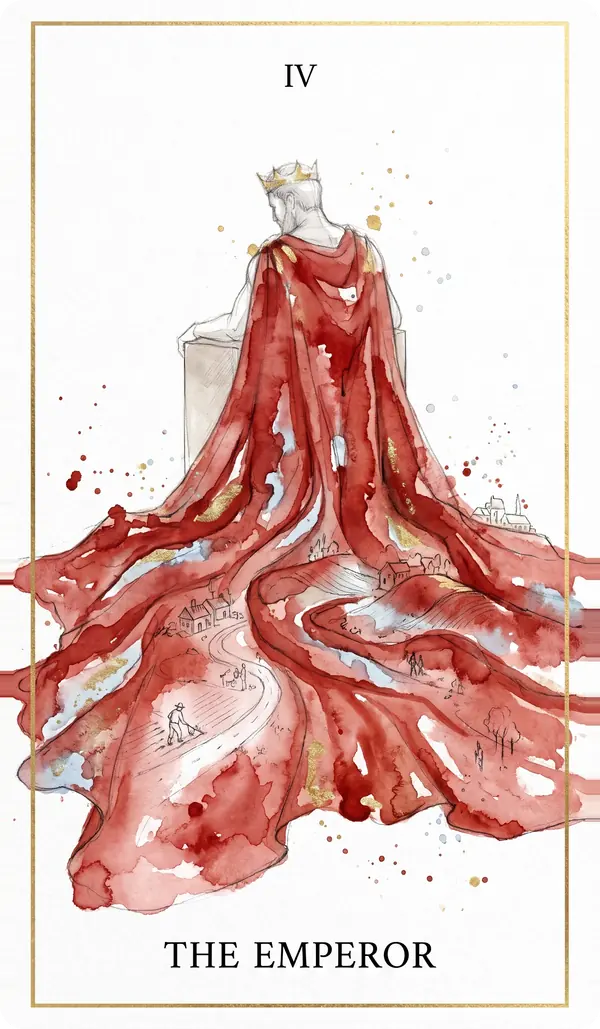 Colour of PowerThe EmperorPower you can build on, if you know whose ground it is.
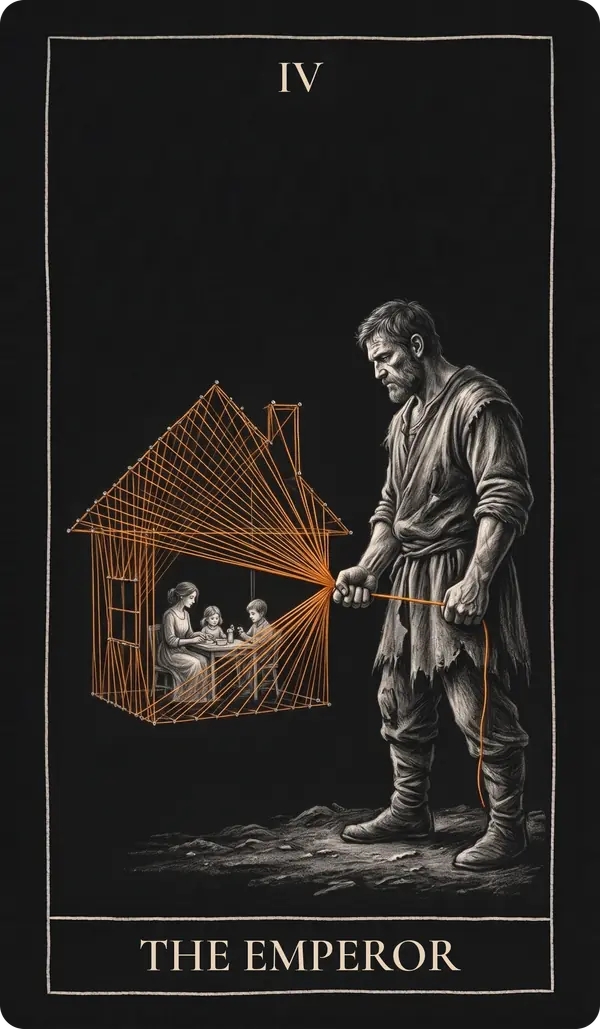 BoundThe EmperorThe house stands because one hand outside holds every thread.
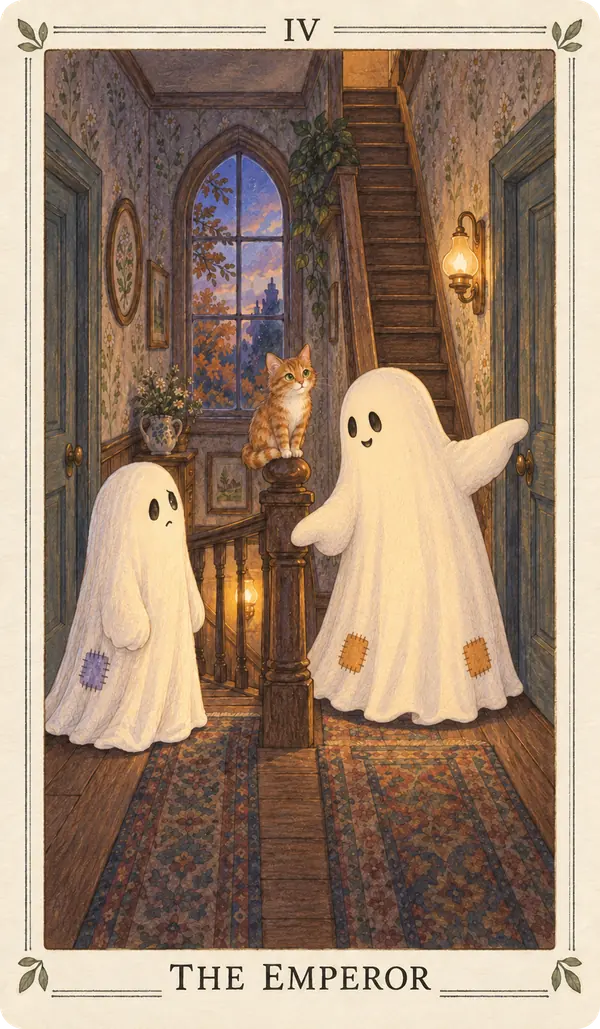 Cozy HauntThe EmperorStructure that makes care reliable.
 Celestial Night SkyThe EmperorA steady hand and footing.
Where it appears
Questions about this card
Is The Emperor a yes or no card in Crimson Inferno?
In the Crimson Inferno deck, The Emperor leans yes upright when responsibility is taken and boundaries are set without anyone being pressed down. Reversed, it leans no, since force or collapse is doing the work of authority. Ask whether your order would still hold if nobody were afraid.
What does The Emperor mean in love?
With The Emperor upright, a love reading may call for clear roles and boundaries, and for a look at who holds the power. Reversed, control may be held through humiliation, or no one may be willing to set a limit. Agree on one boundary together, in plain words.
What does The Emperor mean reversed in Crimson Inferno?
The Emperor reversed means tyranny, brittle control, and humiliation used to get compliance. Crimson Inferno names that plainly and does not call it order. Look at who pays when someone disagrees. If a moment of disagreement costs too much, raise it once things are calm and the stakes are low.