Six of Swords
Six of Swords in City of Windows · Minor Arcana
RelationshipsIn short
Physically leaving the argument and getting to support.
Reversed
Going back into the same conflict without a breather, or treating the trip as a decision that hasn’t been made yet.
- Swords
- Six
- Air
- The Tram Passenger
- moving from a heavy situation toward calmer ground
Upright
Physically leaving the argument and getting to support. Where can you be safe for a while, and who can you talk to without being pressed to settle everything right now? After the argument Sara doesn’t follow Lev or go looking for new clues.
She takes an ordinary city tram to meet a friend she messaged earlier to say she needed to talk. The café district falls behind the window; ahead is a place where she can recover and hear herself think.
The card doesn’t ask for a final decision.
A question to sit with
“Where can I go now to get back clarity and support?”
One step
Find a place, even for one evening, where you feel safe, and talk to someone who doesn’t press you to settle everything now.
Reversed
Going back into the same conflict without a breather, or treating the trip as a decision that hasn’t been made yet.
A question to sit with
“What next step after leaving would really strengthen your footing?”
One step
Choose one small step after leaving that makes your footing steadier.
How this deck reads reversed cards
Reversed, a window may show a delay, an imbalance, a defensive reaction or the first step out of one; the neighboring cards help tell which. A reversal does not mean “a bad person”, and one card proves no one’s motive.
In love
Leaving an argument physically for a while may help, a tram ride to a friend, without having to settle everything about love right now.
- Supports
- Getting to a safe place and someone to talk to.
- Watch for
- Feeling you must decide everything before you can rest.
- One step
- Arrange to see a friend this week and tell them you just need to talk, not to decide.
You may be riding straight back into the same conflict without a breather, or treating a step away as a decision not yet made.
- Supports
- A real rest between rounds of the same argument.
- Watch for
- Returning to the fight before you have recovered.
- One step
- Give yourself one full day before you raise the subject with them again.
At work
Stepping away from a heated work situation for an afternoon may let you think more clearly than staying in the room.
- Supports
- A change of scene before a reply.
- Watch for
- Answering in the heat of the argument.
- One step
- Take a short walk or ride after a tense meeting before you write anything.
A move away from a tense work situation may be followed by walking straight back in, or a short break may get mistaken for a resignation.
- Supports
- Knowing whether a step back is a pause or a decision.
- Watch for
- Rejoining a conflict at work before anything has changed.
- One step
- Write what would need to change before you re-enter a difficult work discussion.
A choice may not need making yet; getting to steadier ground first, a folded map in your hand, may come before any decision.
- Supports
- Safety and support before resolution.
- Watch for
- Treating a trip away as a decision already taken.
- One step
- Spend an evening somewhere calm before you return to the choice.
The choice may be blurred between leaving for a while and leaving for good, and naming which it is may steady you.
- Supports
- Calling a pause a pause.
- Watch for
- Letting a temporary move harden into a verdict nobody chose.
- One step
- Write whether your step back is for a day, a week or longer, and why.
Sitting straight by the tram window while the city slides past may be where growth begins, tired, moving, and not yet deciding.
- Supports
- Recovering your footing one stop at a time.
- Watch for
- Chasing new clues instead of resting.
- One step
- Ride, walk or travel somewhere quiet this week and let your thoughts settle.
Strengthening your footing after leaving an argument may be the real step, rather than turning back or rushing ahead.
- Supports
- Building support before the next conversation.
- Watch for
- Going round in the same circle of conflict.
- One step
- Name one person or place that helps you feel steady, and visit them this week.
Some distance from a family quarrel, a visit to a friend or a quiet ride, may help everyone hear themselves think.
- Supports
- Calmer ground away from the family argument.
- Watch for
- Expecting the family to resolve everything in one sitting.
- One step
- If home feels tense, spend an evening with a friend and let the family know what time to expect you.
The family may keep pulling everyone back into the same quarrel, or a short absence may be read as a final break.
- Supports
- Clear words about how long a family pause will last.
- Watch for
- Hauling someone back into a fight they just left.
- One step
- Let a relative who stepped away have their pause, and say when you would like to talk.
Yes or no
YesMixedMoving toward calmer ground and support looks like a sound move, so the answer leans toward yes, without asking for a final decision.
Supports
- Stepping away from the argument can give you room to think.
- Support may be close, from a friend who doesn’t press you.
Limits
- The main question may stay open while you recover.
- Distance alone could leave the conversation unfinished.
One step
Choose a place where you can feel steady this week, and one person you would talk to there.
You may be heading back into the same conflict, or calling a pause a decision, so the answer stays mixed.
Supports
- Noticing that you keep returning to the same fight is useful.
- A step after leaving can be small and still strengthen your footing.
Limits
- Going back into the conflict without a breather may wear you down.
- Treating a trip as a decision could blur a pause into an ending.
One step
Test this step against your footing: take it if it makes you steadier, hold off if it only puts you back where you were.
What is in the picture
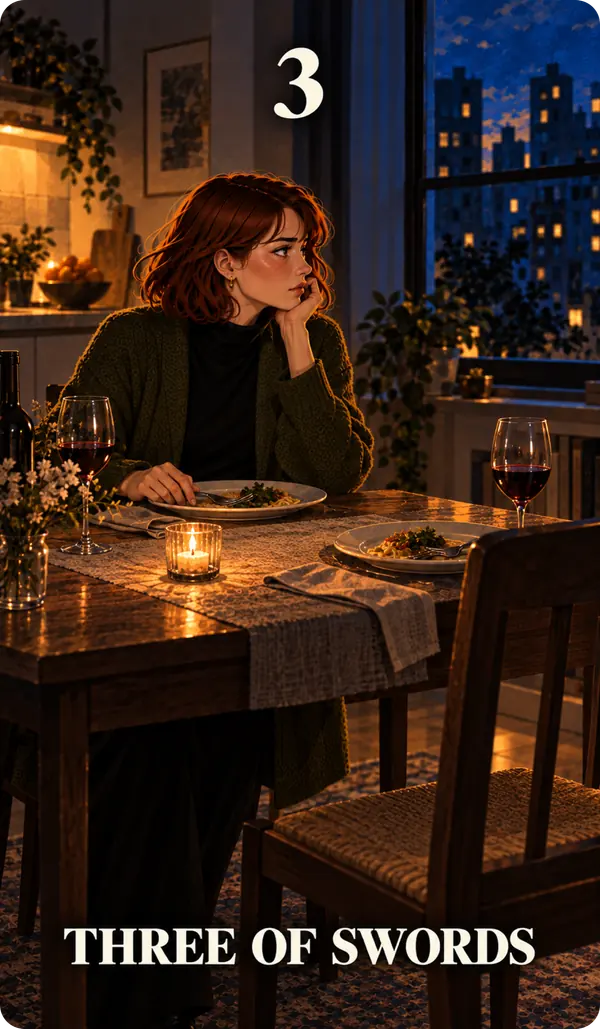
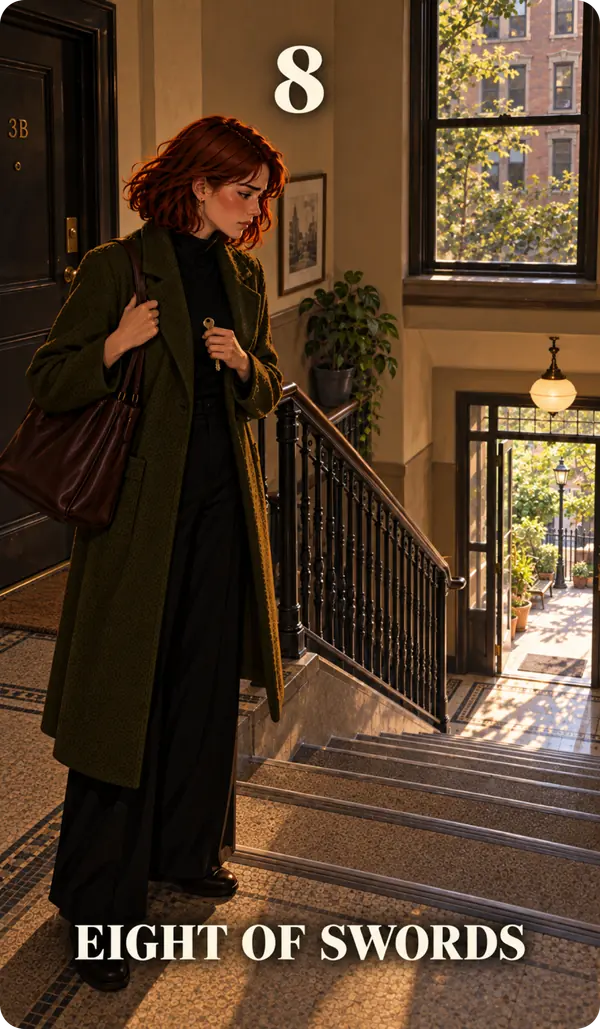
Sara in her olive coat sits by a tram window, holding a folded paper route map. Through the glass the city slides away; Sara is tired, but she sits upright.
She is heading towards support and a place to hear herself think, not following Lev or hunting for new clues; no final decision is asked of her here.
- tram window
- folded paper route map
- tram seats
- city sliding past
- tram rails
- evening skyline
This card in other decks
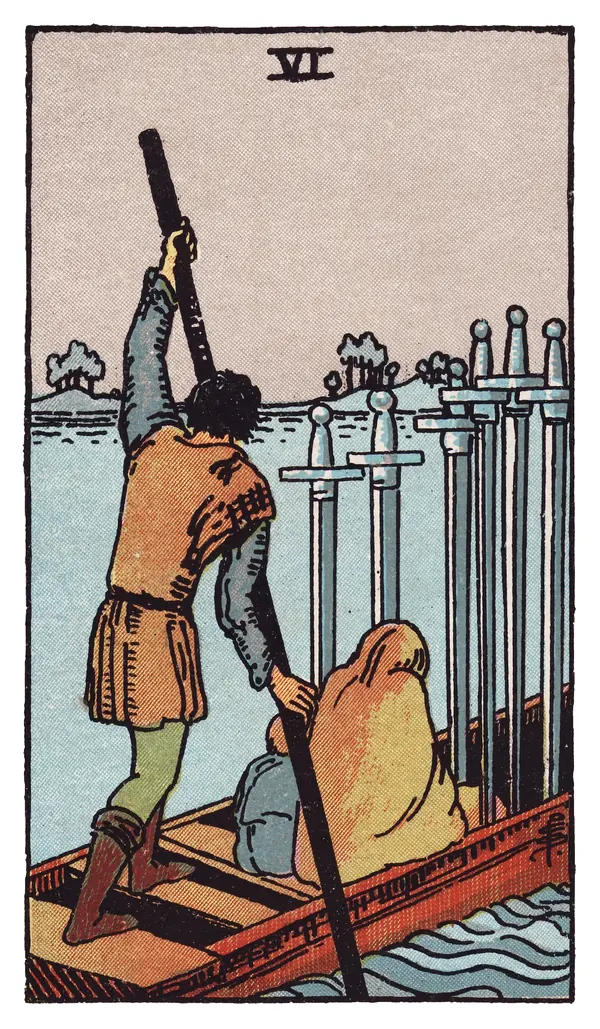 Rider–Waite–SmithSix of SwordsYou’re moving, even if slowly, toward calmer circumstances after a genuinely difficult stretch.
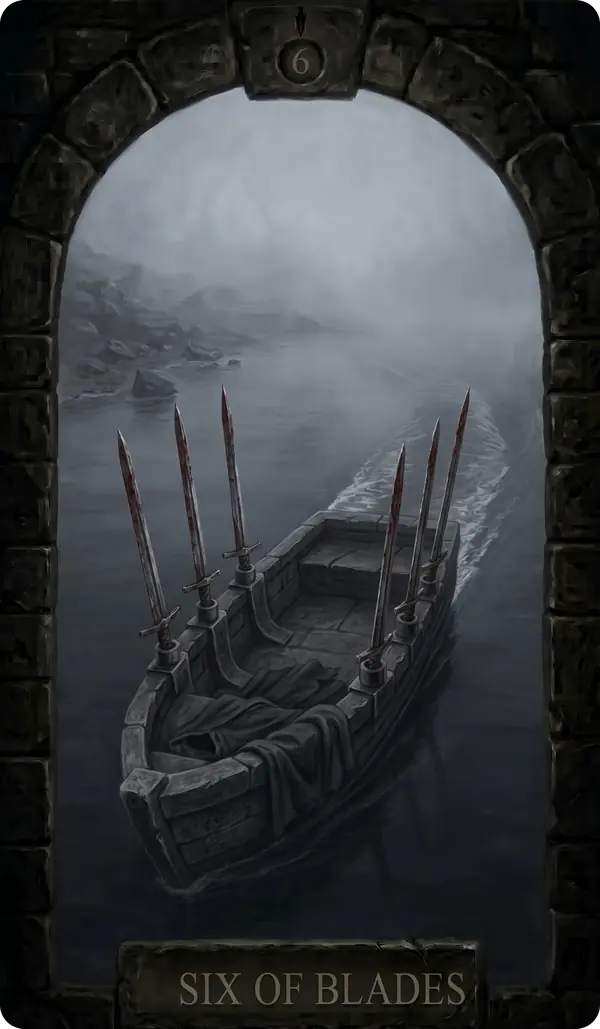 FamiliaSix of BladesA departure from a place where things were settled badly, taking the memory along and no longer fighting.
 CarnalSix of SwordsA difficult transition carries unresolved knowledge with it.
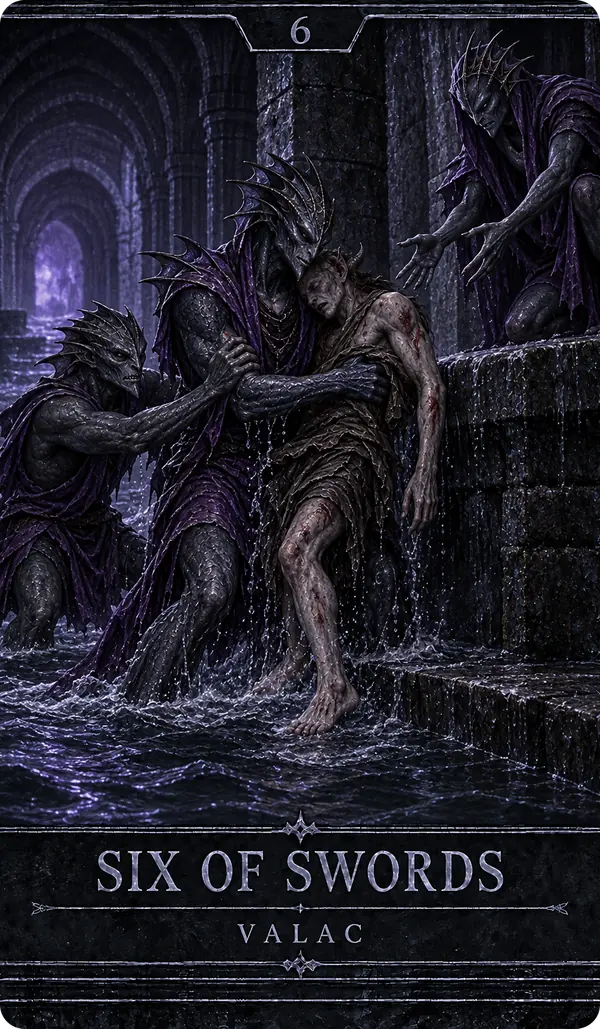 Crimson InfernoSix of SwordsAccept a necessary transition and the help it requires.
 Everyday WondersSix of SwordsMoving toward calmer times, with help along the way.
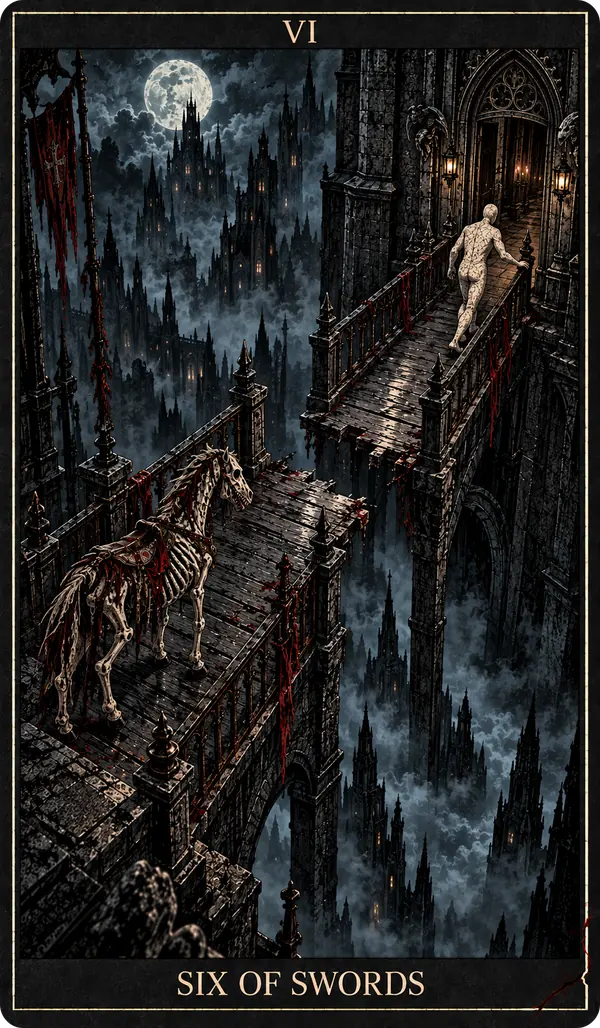 Mirror NightSix of SwordsMove through a difficult transition.
 Self ContactSix of SwordsA careful transition can carry experience into calmer conditions.
 Shiba TownSix of SwordsTransition; leaving trouble; accepting help on the way.
 Velvet MasqueradeSix of SwordsA supported crossing toward a real landing.
 Four HorsemenSix of DeathMove toward safer ground with what you cannot yet resolve.
 Four TrailsSix of SwordsTransition, leaving trouble, cautious hope.
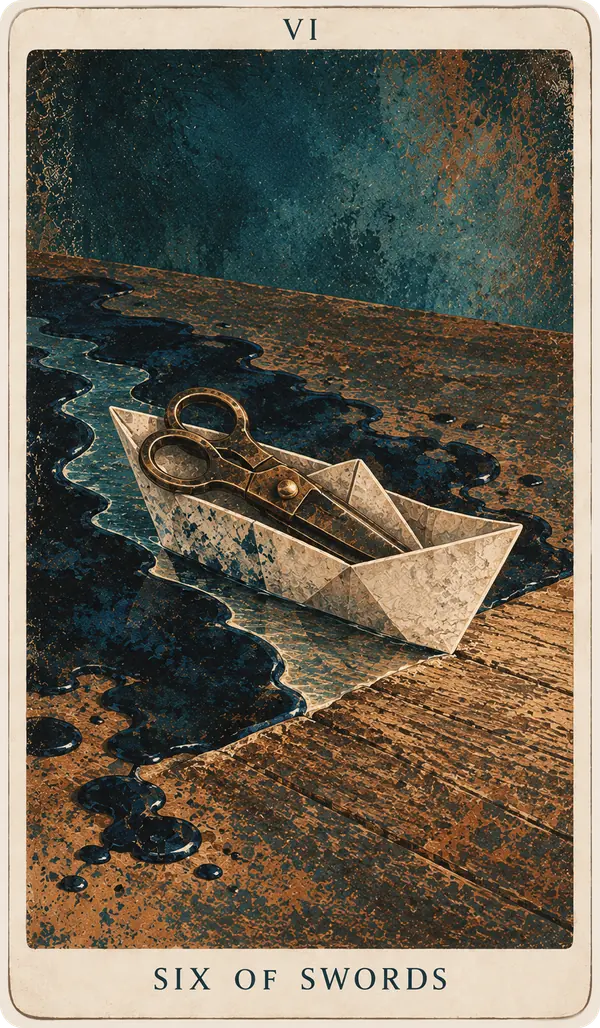 Living ThresholdSix of SwordsA paper boat carries useful shears through ink toward dry support.
 Colour of PowerSix of SwordsWhat you know carries you across; sail, do not look back.
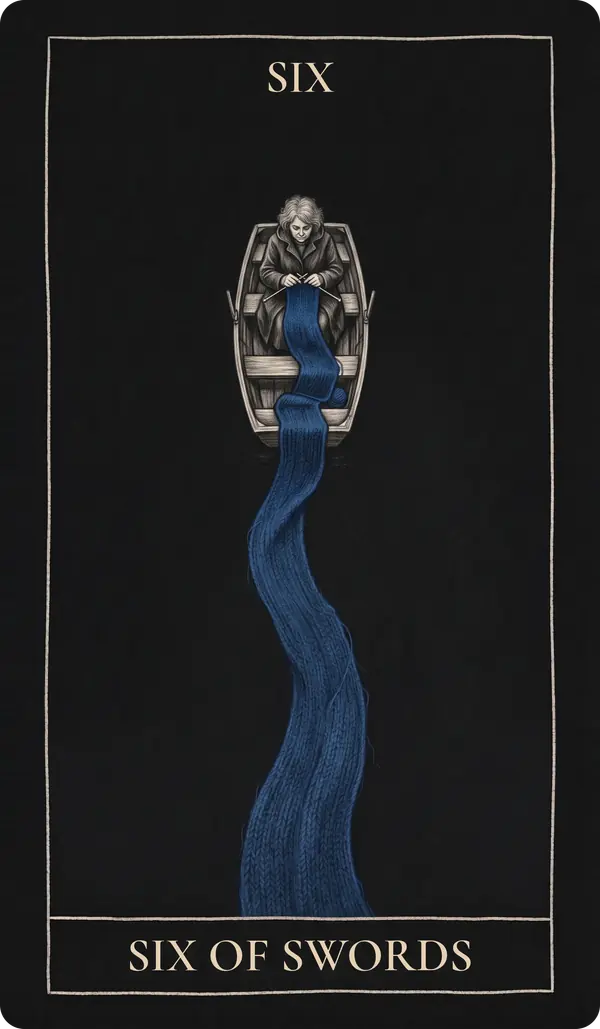 BoundSix of SwordsThe boat moves because she knits: the old shore becomes road.
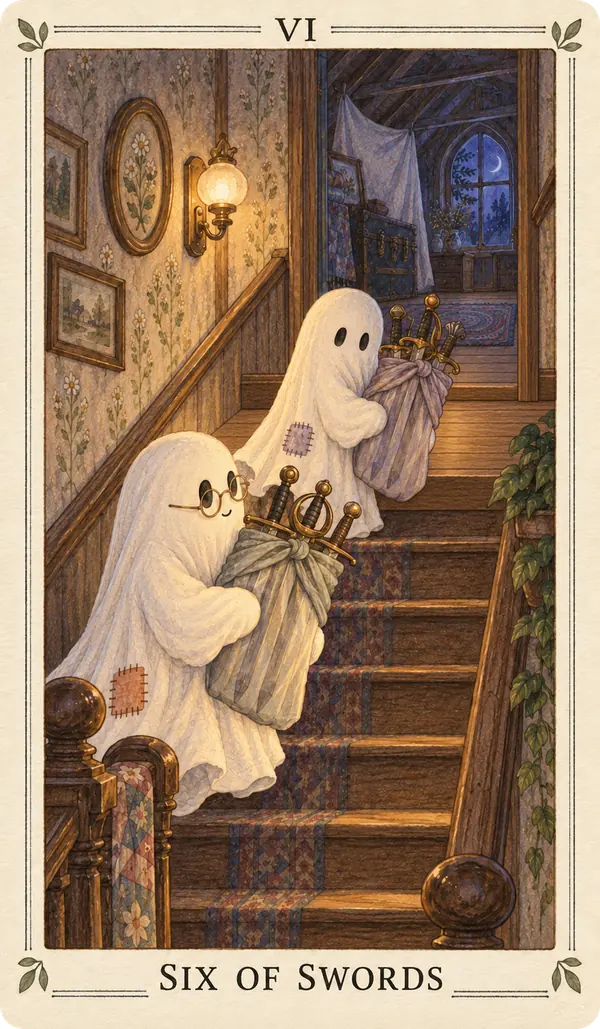 Cozy HauntSix of SwordsMove toward a safer arrangement.
 Celestial Night SkySix of SwordsA new view with the past acknowledged.
Where it appears
Questions about this card
Is the Six of Swords a yes or no card in City of Windows?
Upright, the Six of Swords leans yes. Moving toward calmer ground and toward support looks sound, and it asks for no final decision yet. Reversed, the answer is mixed. You may be heading back into the same conflict without a breather, or treating a break as though it were already a decision, so the lean stays open until that is clear.
What does the Six of Swords mean in love?
In love, the Six of Swords points to getting some distance from a heavy argument so you can hear yourself think. After the fight, Sara doesn’t follow Lev or go looking for more clues. She takes an ordinary tram across the city to a friend she messaged earlier. The card doesn’t ask you to decide the relationship’s future. It asks where you can be safe for a while, and who can simply listen.
Does the Six of Swords mean leaving a relationship?
It can. The Six of Swords is a card of moving on, and it can point to leaving, at least for a while. In City of Windows the move is smaller and more exact: a tram ride away from an argument, toward someone who listens. Upright, it favours distance without a verdict. Reversed, it warns against mixing up a pause and an ending. Saying plainly to yourself which one this is comes first.