Ace of Swords
Ace of Swords in City of Windows · Minor Arcana
RelationshipsIn short
Naming the question you need answered.
Reversed
A vague question, sharpness used to win, or fear of hearing the answer.
- Swords
- Ace
- Air
- The Direct Questioner
- a clear thought
- a direct question
- the start of a conversation that changes where things stand
Upright
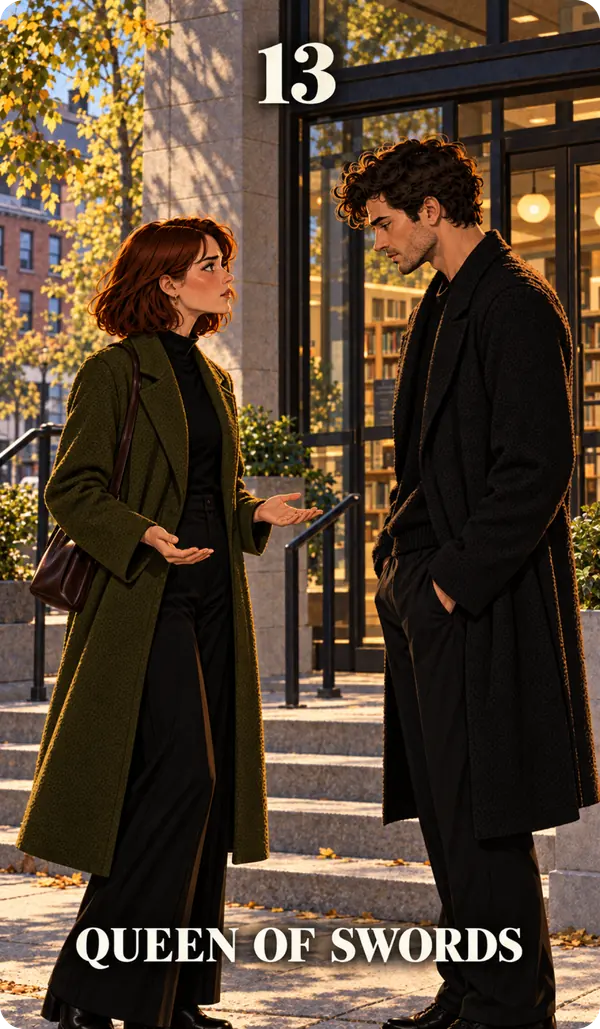
Naming the question you need answered. Ask plainly, and give the other person the chance to answer in words and in what they do afterward. At dusk outside the corner café, Sara stops Lev after they have met.
She asks whether his previous relationship is over and whether he is free for a new one. Lev turns toward her; the answer hasn’t come yet. The card is about the moment Sara chooses a precise question over more hints.
She asks where he stands, and she accuses no one.
A question to sit with
“What do I really want to know, and how can I ask it without letting a guess stand in for a fact?”
One step
Ask plainly, and give the other person the chance to answer in words and in what they do afterward.
Reversed
A vague question, sharpness used to win, or fear of hearing the answer.
A question to sit with
“Which single question is worth separating from all the suspicions that may have piled up?”
One step
Pick the one question that matters most, and put the other suspicions aside for now.
How this deck reads reversed cards
Reversed, a window may show a delay, an imbalance, a defensive reaction or the first step out of one; the neighboring cards help tell which. A reversal does not mean “a bad person”, and one card proves no one’s motive.
In love
One precise question may be worth more than a dozen hints, asked face to face at the café door, with room for the answer in words and in what follows.
- Supports
- Asking where they stand, without accusing anyone.
- Watch for
- Hinting and hoping they guess what you need to know.
- One step
- Write the one question about your relationship you most need answered, in plain words.
A question may be getting lost in vagueness, sharpened into a weapon, or held back for fear of the answer.
- Supports
- Separating one question from the suspicions piled around it.
- Watch for
- Asking in a way meant to corner rather than learn.
- One step
- Strip your question down to one sentence with no accusation in it.
At work
At work, a clear question may cut through weeks of guessing, about a role, a deadline or who decides.
- Supports
- Asking a manager or colleague the exact thing you need to know.
- Watch for
- Reading meaning into silence instead of asking.
- One step
- Send one short, direct question about the work that has been unclear to you.
Communication at work may be blurred, questions half-asked or barbed, so that nobody learns what they actually need.
- Supports
- Clean questions with no hidden charge.
- Watch for
- Winning an exchange instead of getting information.
- One step
- Rewrite one tense work message so it asks only what you need to know.
Before choosing, one question may need asking out loud, so that the decision rests on an answer and not on suspicion.
- Supports
- Sorting the single question from the pile of doubts.
- Watch for
- Deciding on guesses you could have checked.
- One step
- Underline the one fact you would need to know before choosing, and plan how to ask for it.
Fear of the answer may be keeping the choice frozen, or a question may be framed so that only one reply is possible.
- Supports
- Being willing to hear an answer you do not want.
- Watch for
- Rigging the question so the choice makes itself.
- One step
- Write down the answer you fear, then ask yourself what you would do if it came.
Sara’s open palm under the street lamp may show the skill to grow: asking plainly and then letting the other person answer.
- Supports
- Courage to ask, and patience to wait.
- Watch for
- Sharpening a question so that it wins rather than asks.
- One step
- Practise one direct question aloud until it sounds calm, not like a charge.
Noticing how you ask may be the lesson now: vague when afraid, sharp when hurt, quiet when unsure.
- Supports
- Catching your own tone before the words go out.
- Watch for
- Mistaking sharpness for honesty.
- One step
- Read your last difficult message back and soften one word without changing the question.
At home, a family worry may untangle once someone asks a clear question kindly, instead of everyone guessing at each other.
- Supports
- Plain questions asked at a calm moment.
- Watch for
- Family talk that circles a subject without naming it.
- One step
- Ask one relative a simple, direct question you have been avoiding, and hear the answer.
Someone in the family may be asking questions that sound like accusations, or avoiding asking at all.
- Supports
- A calm tone for hard family questions.
- Watch for
- Piling old suspicions onto one new question.
- One step
- If you ask a relative something difficult, ask only one thing and leave out the history.
Yes or no
YesMixedClarity looks within reach through a direct question, so the answer leans toward yes, as long as the reply is weighed against what happens next.
Supports
- A plain question gives the other person a real chance to answer.
- You can weigh both the words and what follows them.
Limits
- The answer may not come in the first conversation.
- Asking may bring an answer you would rather not hear.
One step
Write what you need to know in one sentence, and strike out any accusation in it.
The question may still be tangled with suspicion or with a wish to win, so the answer stays mixed until one clear question is asked.
Supports
- Sorting one real question out of many suspicions is possible.
- Catching the urge to win can slow a sharp exchange.
Limits
- A vague question may get an equally vague answer.
- Fear of the reply could keep the real question unasked.
One step
Write down the one question you would ask if the reply did not frighten you. You do not have to send it yet.
What is in the picture
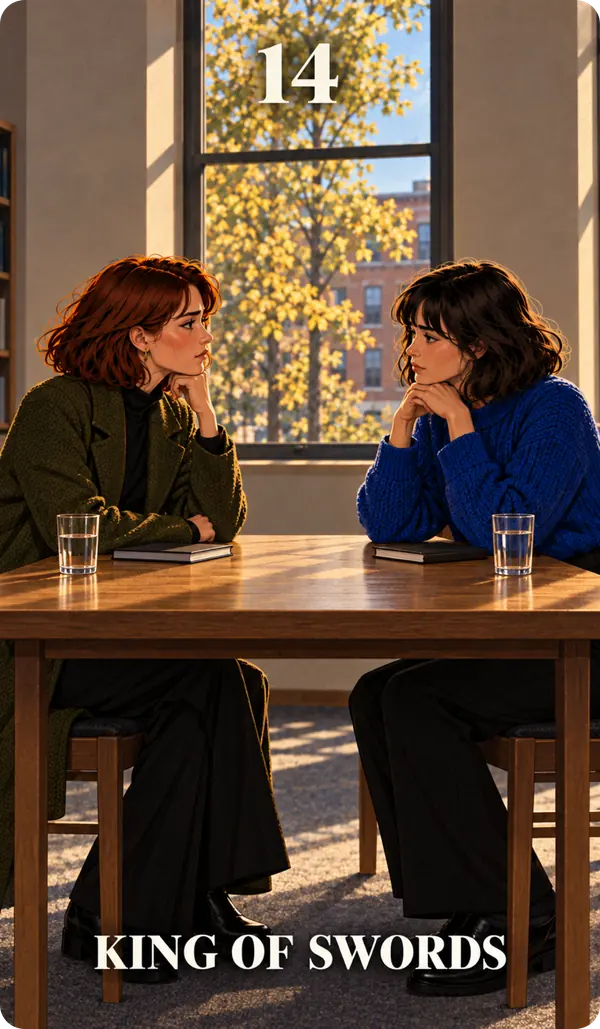
Sara in her olive coat and Lev with his dark curls stand facing each other at the entrance of a corner café. Sara’s open palm and her direct, unguarded gaze carry the question; Lev is listening.
A precise question takes the place of hints: Sara asks where Lev stands and accuses no one, and his answer has not come yet.
- corner café entrance
- open palm mid-question
- lit café windows
- street lamp
- wet pavement
- evening skyline
This card in other decks
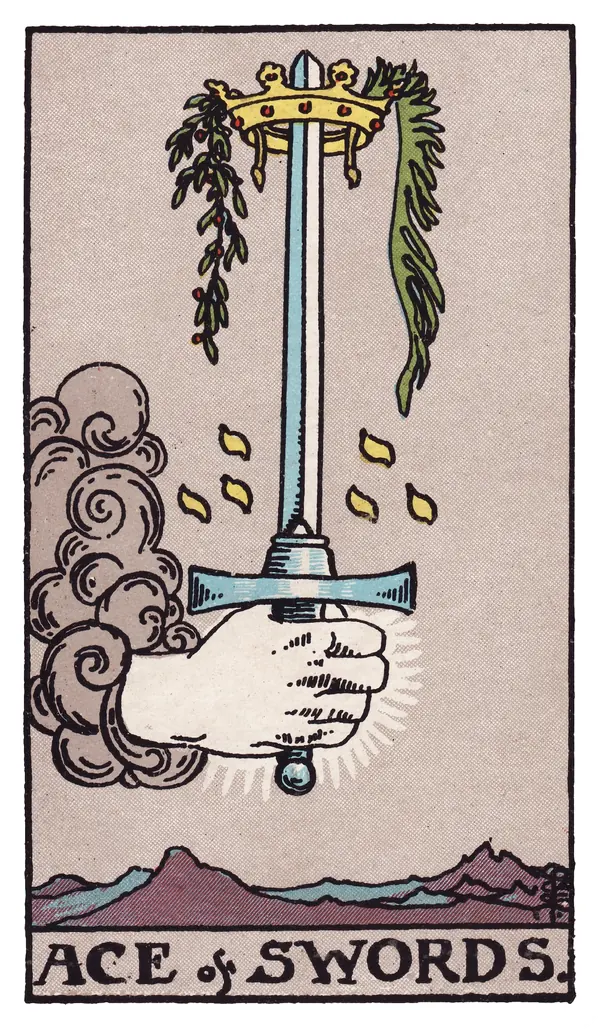 Rider–Waite–SmithAce of SwordsA genuine moment of mental clarity is available, cutting cleanly through confusion that’s clouded things until now.
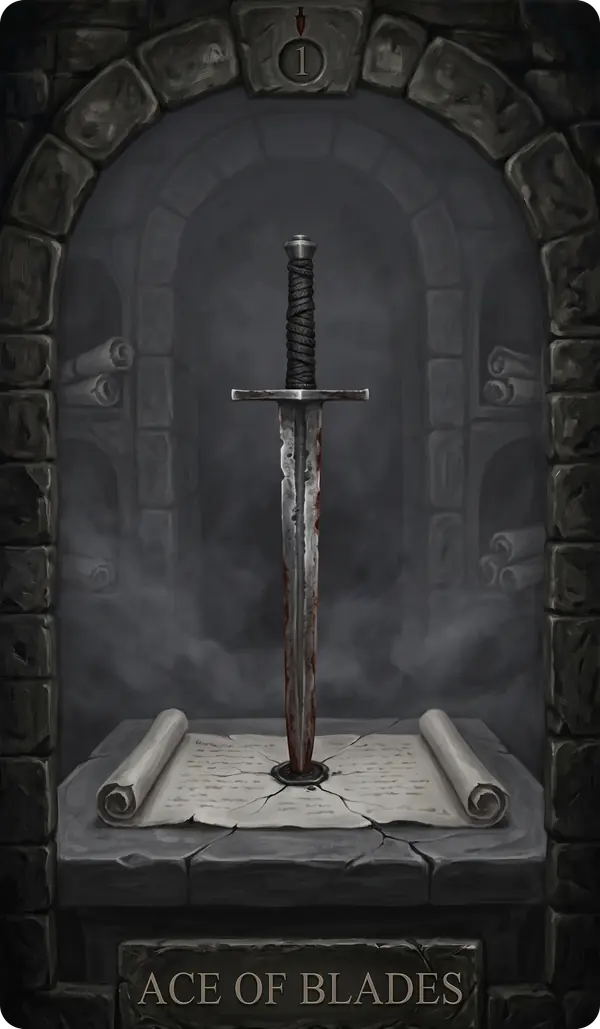 FamiliaAce of BladesA rule has been worded and accepted, and the time for arguing about it gives way to the time for living by it.
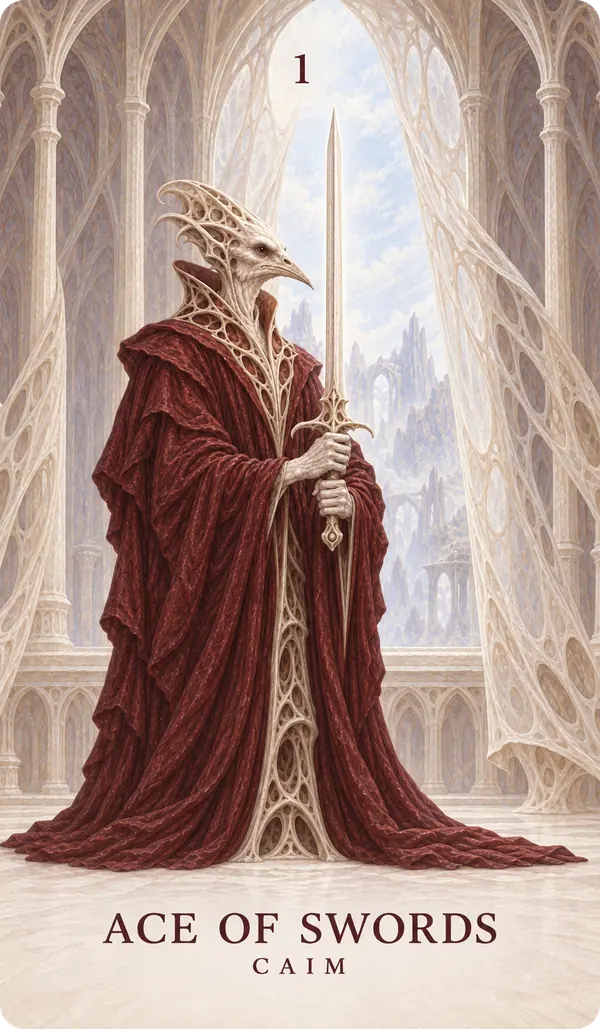 CarnalAce of SwordsA clear distinction cuts through confusion.
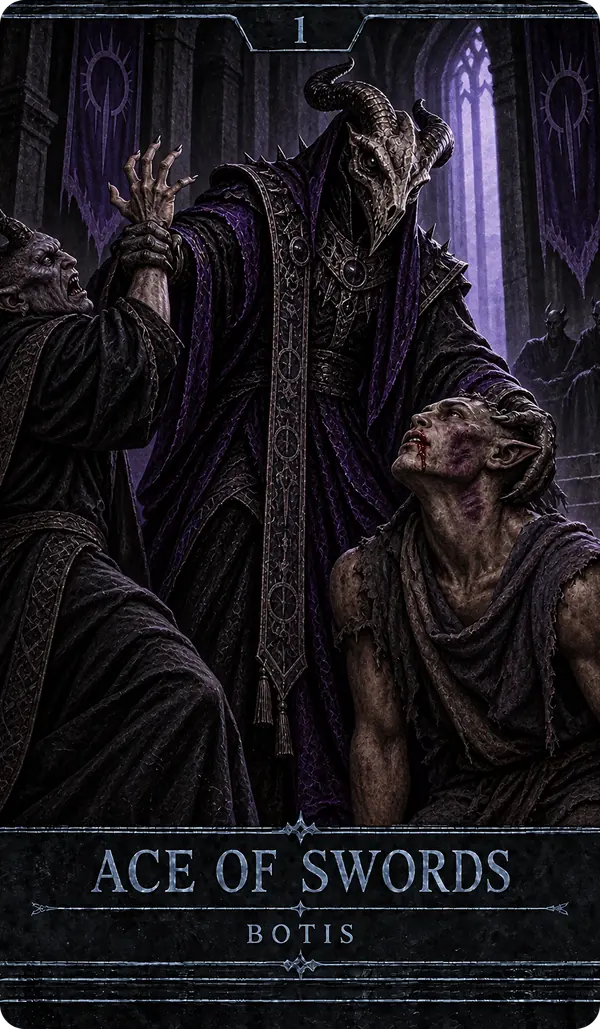 Crimson InfernoAce of SwordsState the important difference clearly.
 Everyday WondersAce of SwordsClarity, and a decision you can explain.
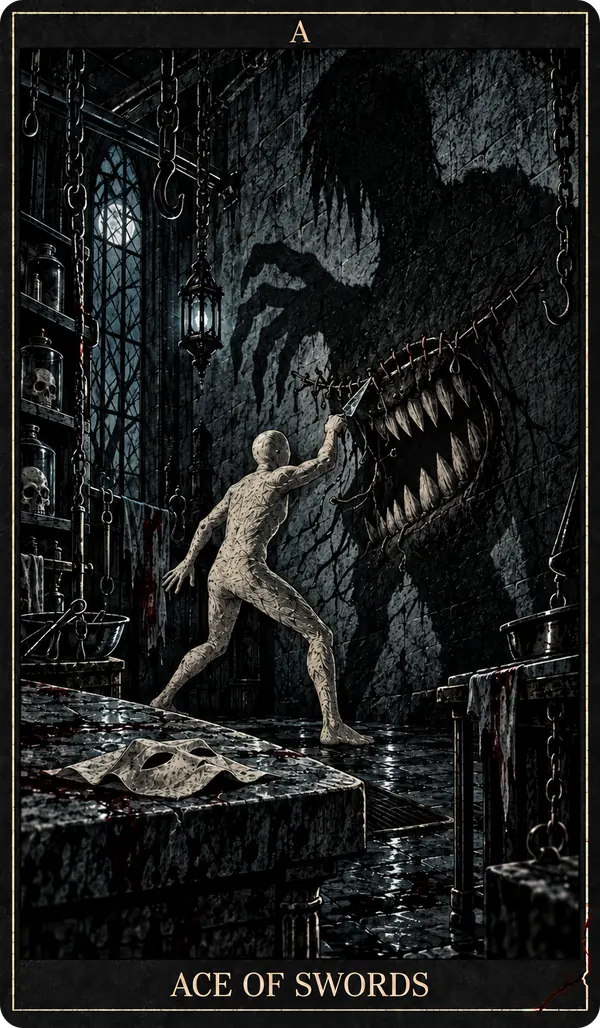 Mirror NightAce of SwordsDistinguish precisely before acting.
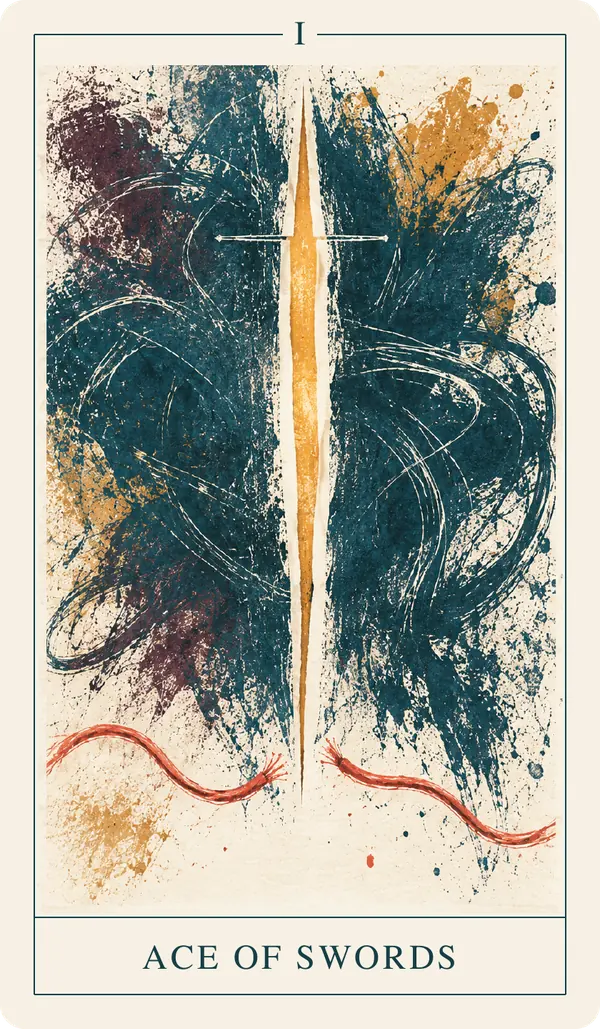 Self ContactAce of SwordsA clear distinction or truth gives thought an edge it can use.
 Shiba TownAce of SwordsClarity; a decisive insight; truth stated plainly.
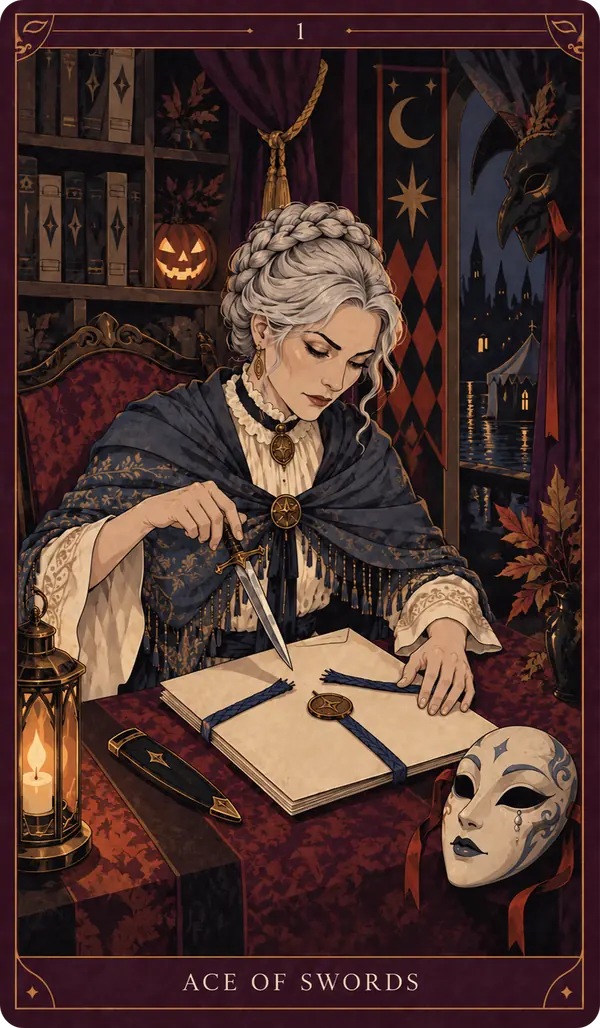 Velvet MasqueradeAce of SwordsClarity that begins with a precise distinction.
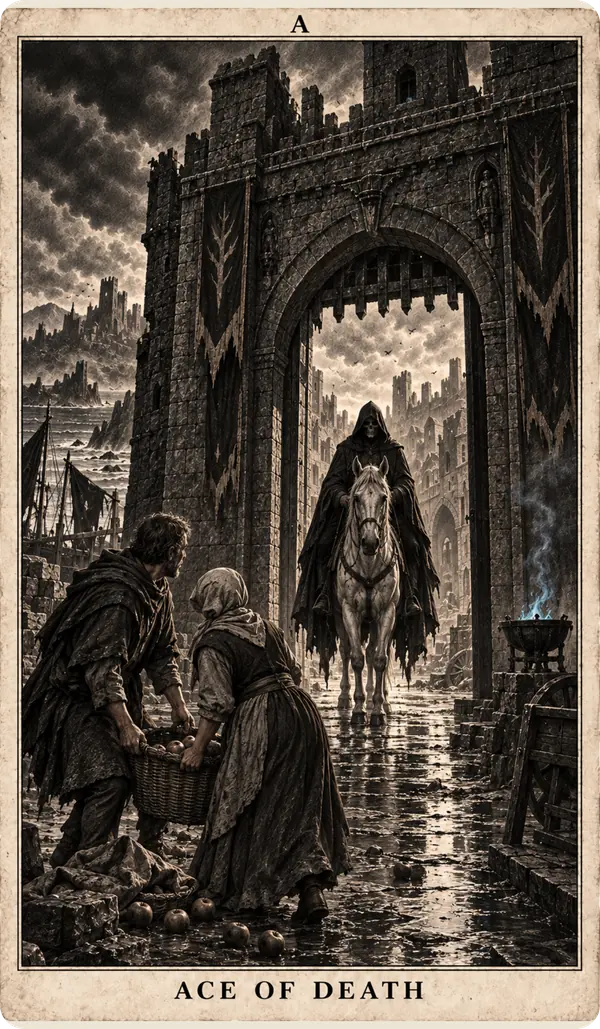 Four HorsemenAce of DeathRecognise what has ended while a choice of response remains.
 Four TrailsAce of SwordsClarity, truth, decisive thought.
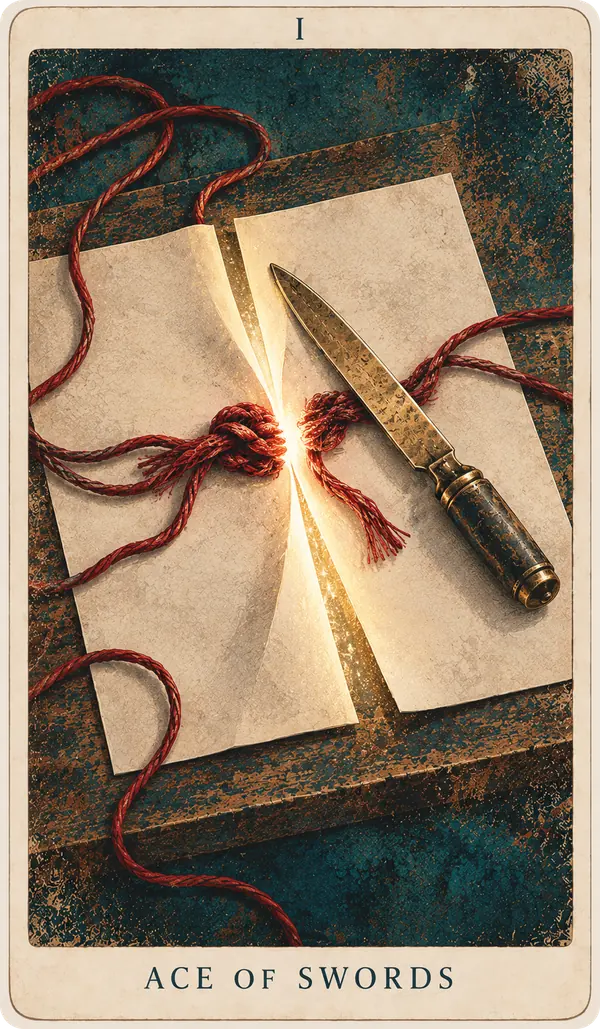 Living ThresholdAce of SwordsA precise cut frees the knot while keeping sound lengths intact.
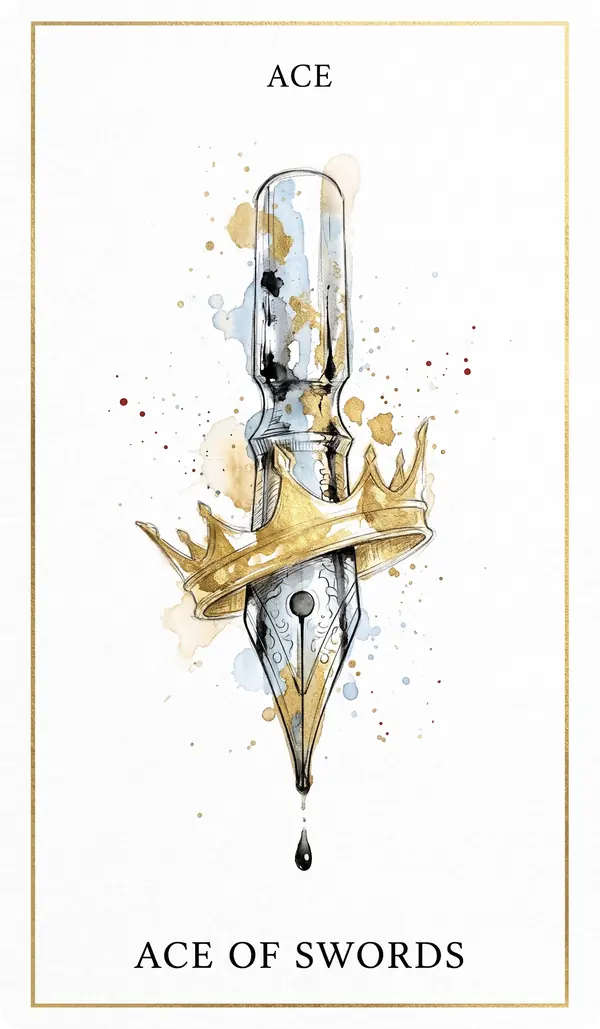 Colour of PowerAce of SwordsOne written truth can pierce a crown and change the balance.
 BoundAce of SwordsA spoken truth that leaves your mouth and binds you both.
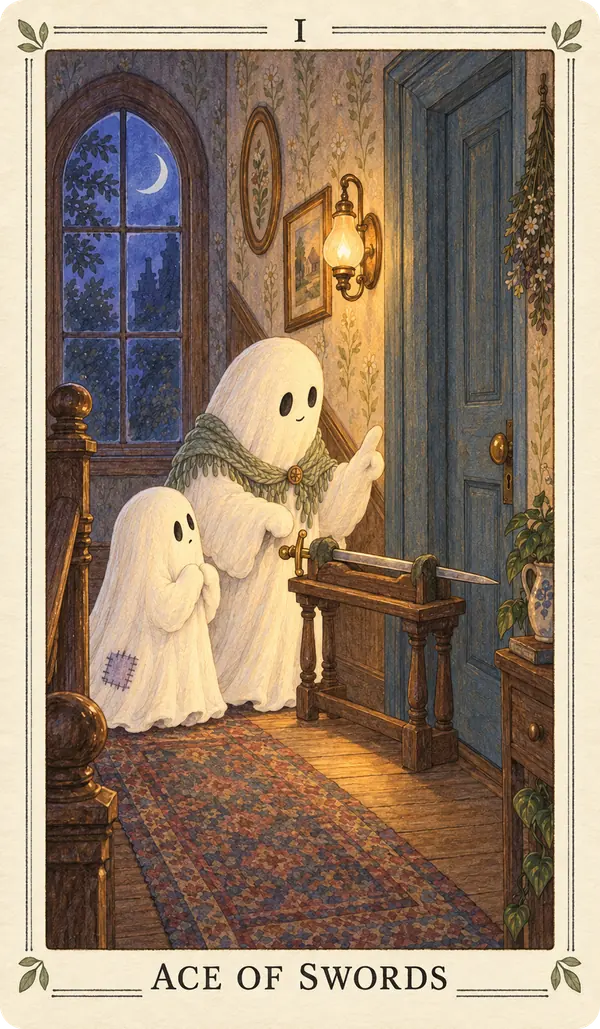 Cozy HauntAce of SwordsName a clear principle.
 Celestial Night SkyAce of SwordsOne clear thing to name.
Where it appears
Questions about this card
Is the Ace of Swords a yes or no card in City of Windows?
Upright, the Ace of Swords leans yes. Clarity looks close, and it comes through one plain question about where the two of you stand. Weigh the reply against what the other person does next, not only what they say. Reversed, the answer is mixed. The question may still be buried under suspicion, or asked sharply to win, so the lean stays open until one clear question is put into words.
What does the Ace of Swords mean in love?
In love, the Ace of Swords points to the moment you stop hinting and ask. In City of Windows, Sara stops Lev outside a corner café and asks whether his previous relationship is finished and whether he is free for something new. She accuses no one. The card favours that kind of question: one sentence long, with room left for an answer in words and in what the person does afterwards.
What does the Ace of Swords mean reversed?
Reversed, the Ace of Swords shows a question gone wrong. It is too vague to answer, sharp enough to wound, or never asked at all because the answer might hurt. Suspicions pile up in its place. Pull one real question out of that pile, the one that matters most, and ask it in order to know rather than to win.