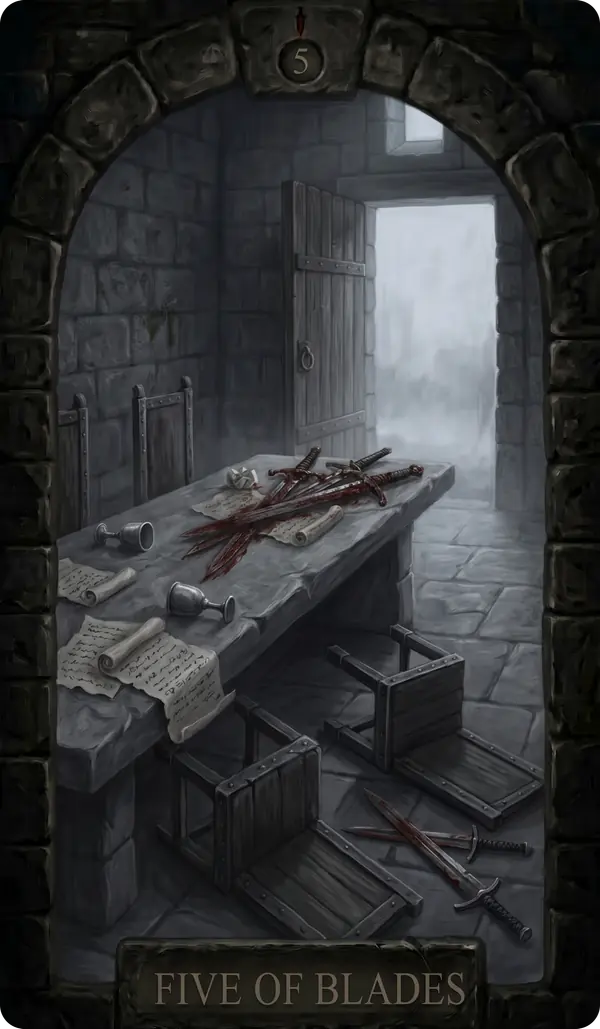
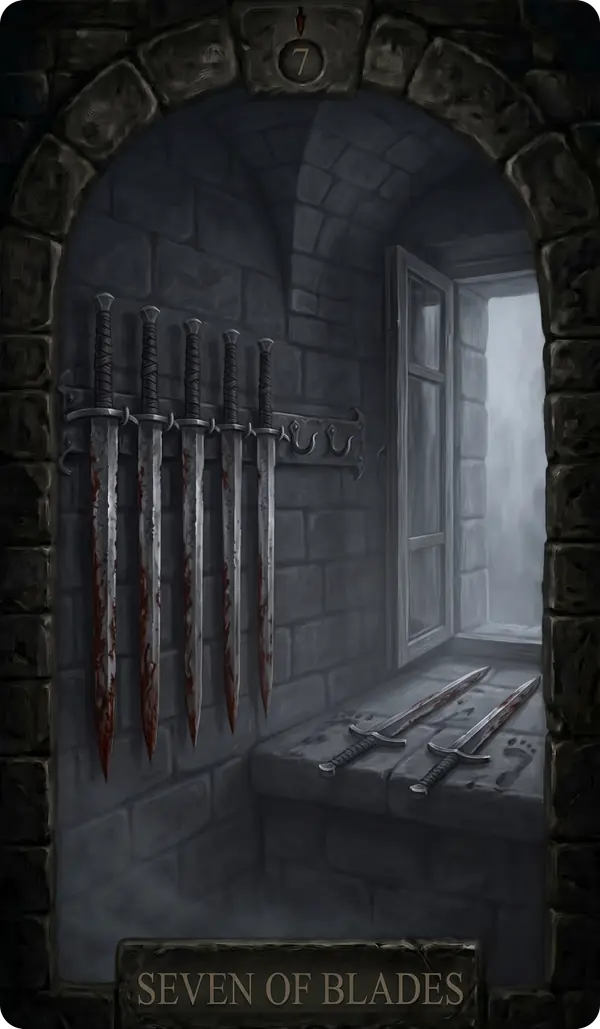
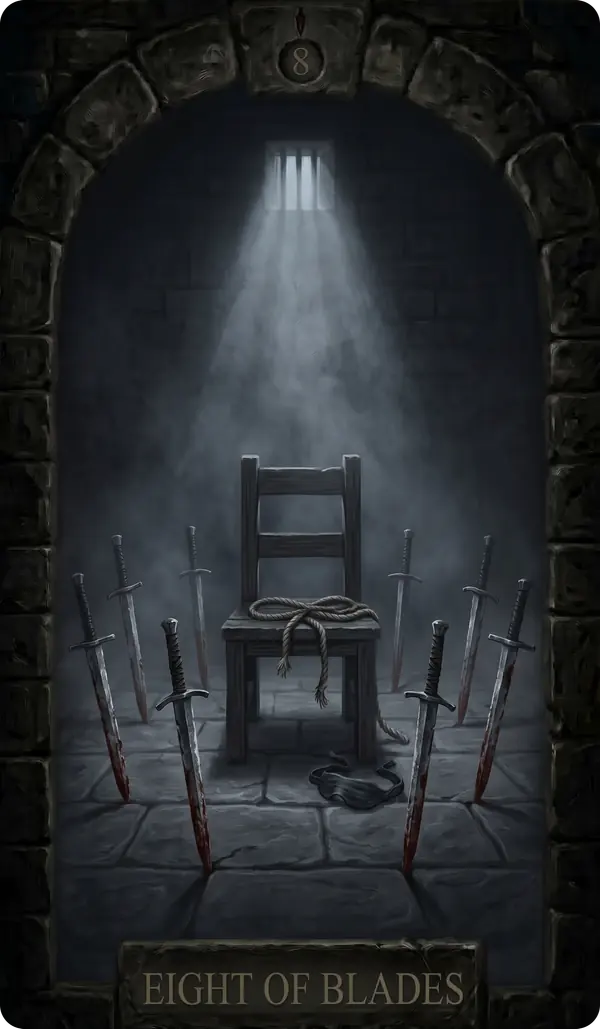
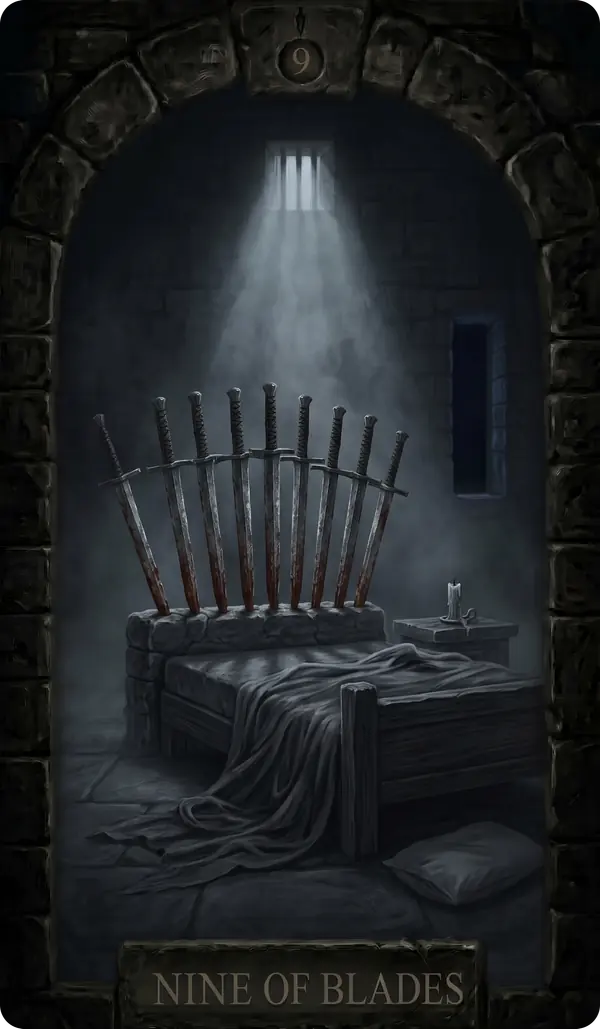
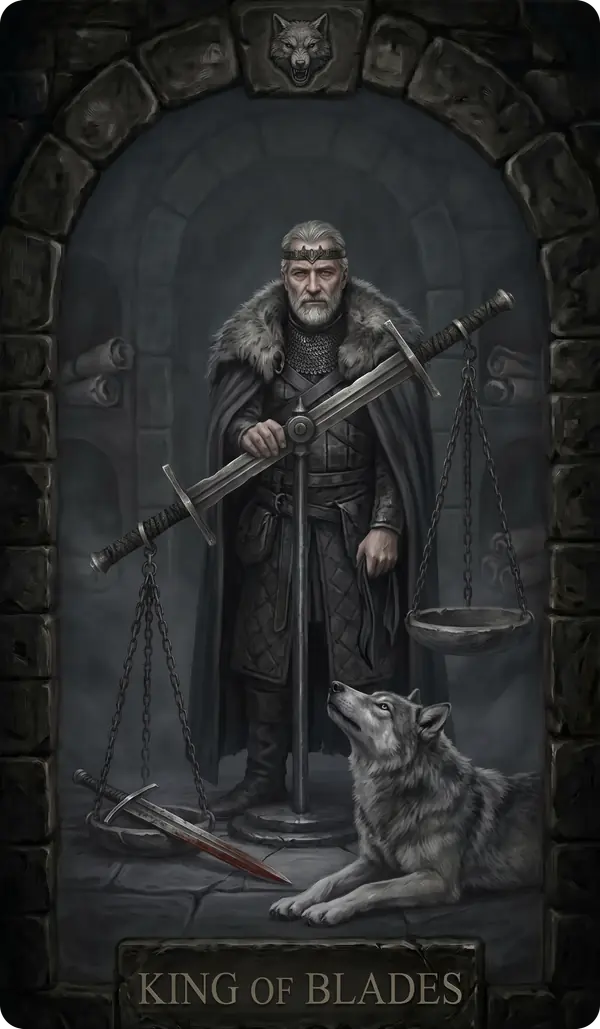
Six of Blades
Six of Swords in Familia · Minor Arcana
Family lineIn short
A departure from a place where things were settled badly, taking the memory along and no longer fighting.
Reversed
The shore has changed but the cargo has not, and the old conflict is carried whole into the new place.
- Blades
- Six
- Air
- The Funeral Boat
- a departure that heals
- memory without war
- a change of shore
Upright
The Six of Blades is the crossing of dark water. After an empty victory the boat casts off with six blades standing in its sides as cargo, no longer as weapons.
Upright it is a departure that heals: a move, a change of work, a way out of a family conflict. It is quieter ahead than behind.
The past travels with the person but no longer wounds, and the card does not read this leaving as flight.
A question to sit with
“What are you taking with you, and what are you no longer fighting?”
One step
Write two lists: what you are carrying across, and what you are setting down.
Reversed
Reversed, the Six of Blades is a crossing with the same cargo. The shore changes, yet everything that was fled is in the boat, and on the other side it starts again.
The person carries the old war into a new city, a new marriage or a new venture: the same grievances, the same rules, the same dispute in another setting. The card does not forbid the move.
It points at what was packed.
A question to sit with
“Which old dispute has followed you into a place that was supposed to be new?”
One step
Name one grievance you brought from the old place, and write where it started.
How this deck reads reversed cards
Reversed, the card is not weaker. The same strength runs the other way: blocked, sealed, or drained downward into old patterns instead of reaching the living. The red thread does not break; it carries the strength somewhere else.
In love
A move together, or away from an old pattern, may let the bond cross dark water quietly, the memory aboard and the fighting left on shore.
- Supports
- Bringing the past along without its quarrels.
- Watch for
- Old fights restarted on the new shore.
- One step
- Name one old argument you both agree to leave on the far bank.
The shore may be new while the cargo is the same, old grievances carried whole into a new home or a new bond.
- Supports
- Unpacking old grievances before they settle in.
- Watch for
- Expecting a new place to fix old patterns.
- One step
- Jot down one old grievance you notice resurfacing, and look at where it began.
At work
A change of job or place may be a departure that heals, the old blades carried as cargo and no longer drawn.
- Supports
- Leaving a bad workplace quietly and in good order.
- Watch for
- Old resentment carried into a new post.
- One step
- Write down one lesson from your last post and one grudge you are not packing.
A new job or venture may be carrying the same old dispute in its hold, the rules and grudges of the last place rowed across.
- Supports
- Checking which habits you brought from before.
- Watch for
- The old conflict recreated with new colleagues.
- One step
- Notice one moment this week when you react to a new colleague as you did to an old one.
Crossing to quieter water may be the right option, as long as the war stays behind and only the memory travels.
- Supports
- A move chosen for peace.
- Watch for
- Flight that changes nothing but the view.
- One step
- For each option, list what you would carry across and what you would leave.
Changing shores may leave the cargo as it was, and one option may only move the war to another place.
- Supports
- Asking what would truly be different.
- Watch for
- A new address chosen to escape an old pattern.
- One step
- Write the old problem at the top of the page and check each option against it.
Growth may look like a quiet crossing: the cloak folded in the bottom of the boat, the blades standing still, the fog ahead calmer than the shore.
- Supports
- Letting the past travel without wounding.
- Watch for
- Looking back at the shore the whole way.
- One step
- Fold away one object from a hard time and keep it out of sight for a while.
You may be rowing the same quarrel from shore to shore, the blades still standing in their sockets wherever the boat lands.
- Supports
- Setting down old weapons before the next crossing.
- Watch for
- Hoping distance alone does the inner work.
- One step
- Say aloud, once, one grudge you have carried through several changes of life.
A household may be leaving a place where things were settled badly, carrying the family memory across without the old dispute.
- Supports
- Family moves that leave old quarrels behind.
- Watch for
- Packing the feud with the furniture.
- One step
- Agree with one relative on one old dispute that stays out of the new chapter.
Moving house, country or marriage may still bring the family’s whole old conflict along, starting again on the new shore.
- Supports
- Family talk about what to leave behind.
- Watch for
- Old family rules unpacked first in every new home.
- One step
- Ask a relative which old family habit they would leave behind if they could.
Yes or no
YesNoMoving toward quieter ground looks supported, and the answer is shaped by carrying the memory of home without the old fight. Distance is not cutting anyone off.
Supports
- Moving on from a quarrel at home is within reach.
- The family past can come along without the fight.
Limits
- Leaving the familiar shore and its people can hurt.
- The other side is not visible yet.
One step
Write what you would carry from home and what you would leave, and see if the list feels right.
A change of place seems to be carrying the old family dispute with it, and that repetition weighs against expecting the move alone to settle it.
Supports
- You can spot the family script repeating.
- The cargo can still be sorted before crossing.
Limits
- The same conflict from home is packed along.
- A new place may not change an inherited pattern.
One step
Compare the new situation with the old household and mark what repeats.
What is in the picture
A narrow boat of dark stone and iron pulls away from a rocky shore across still dark water into fog, six blades standing point up in sockets along its sides and a folded cloak lying in its bottom.
Seen from behind, the boat is already leaving: the shore stays in sight while the far side is lost in fog. The blades stand in the sides as cargo, with no hand on them.
- narrow stone and iron boat
- six upright blades in sockets
- folded dark cloak
- still dark water
- wake behind the stern
- rocky shore
- fog ahead
This card in other decks
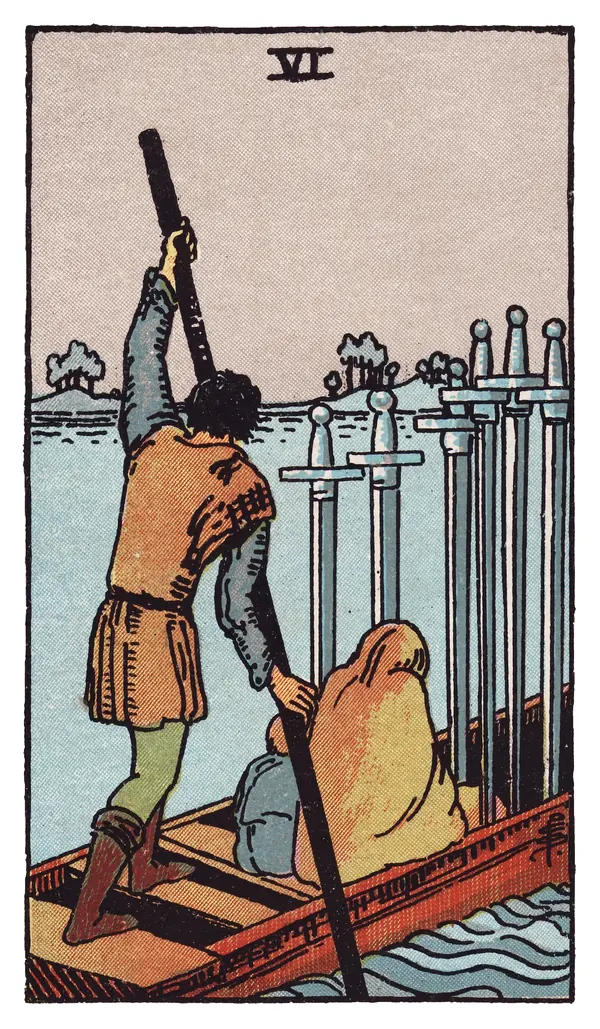 Rider–Waite–SmithSix of SwordsYou’re moving, even if slowly, toward calmer circumstances after a genuinely difficult stretch.
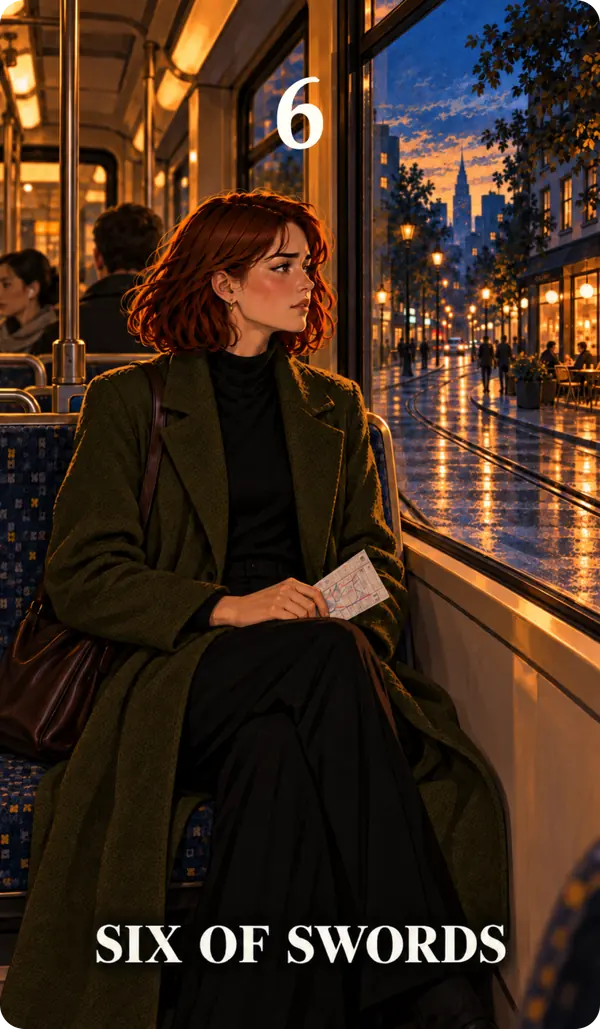 City of WindowsSix of SwordsPhysically leaving the argument and getting to support.
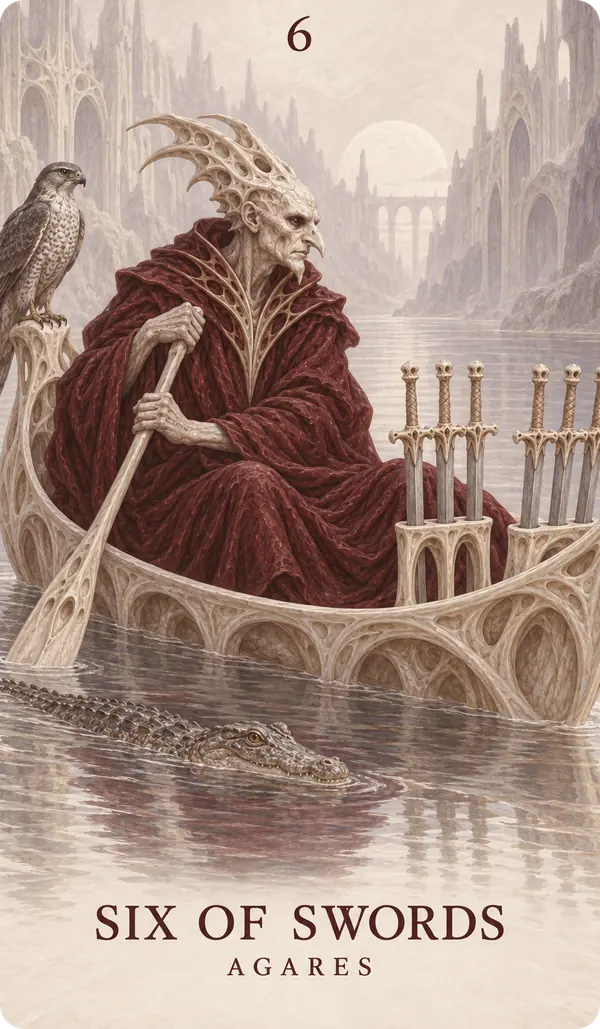 CarnalSix of SwordsA difficult transition carries unresolved knowledge with it.
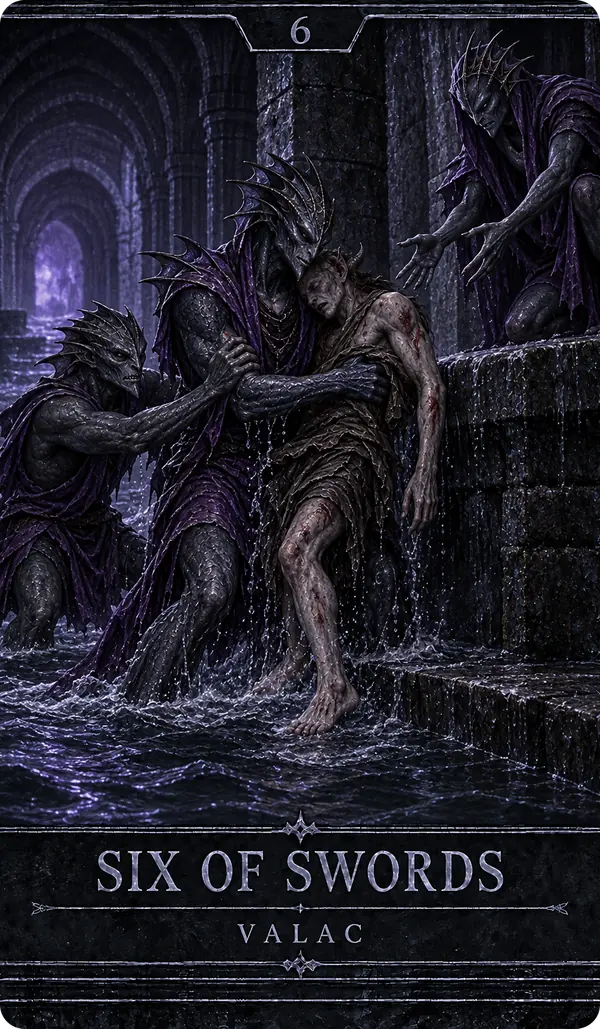 Crimson InfernoSix of SwordsAccept a necessary transition and the help it requires.
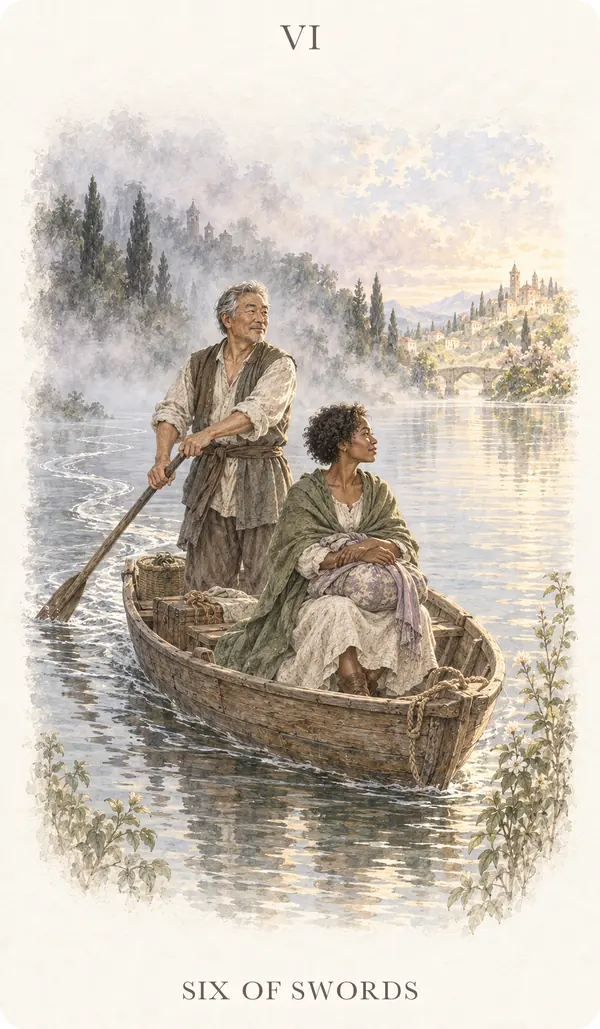 Everyday WondersSix of SwordsMoving toward calmer times, with help along the way.
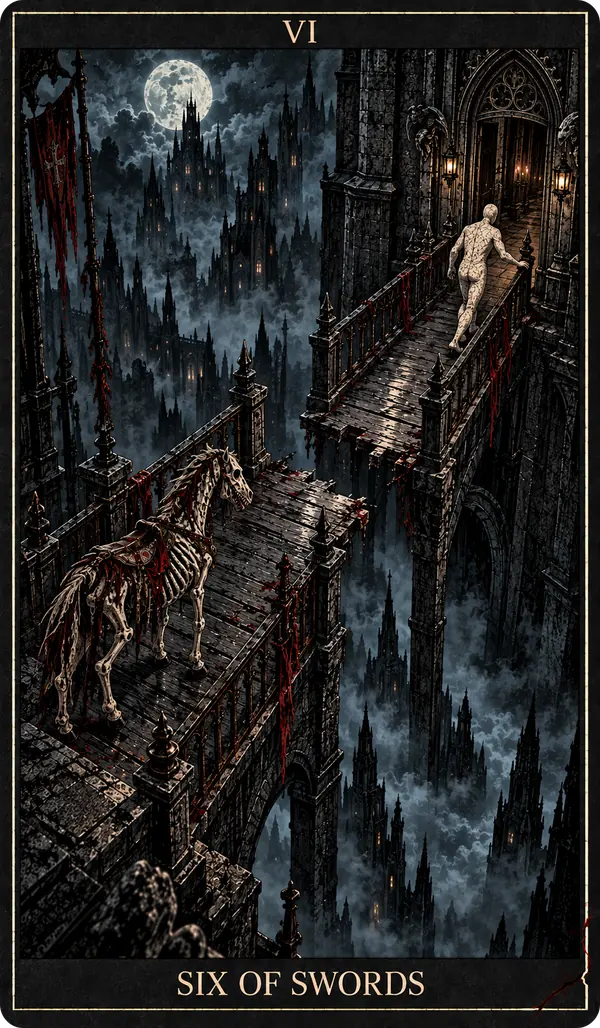 Mirror NightSix of SwordsMove through a difficult transition.
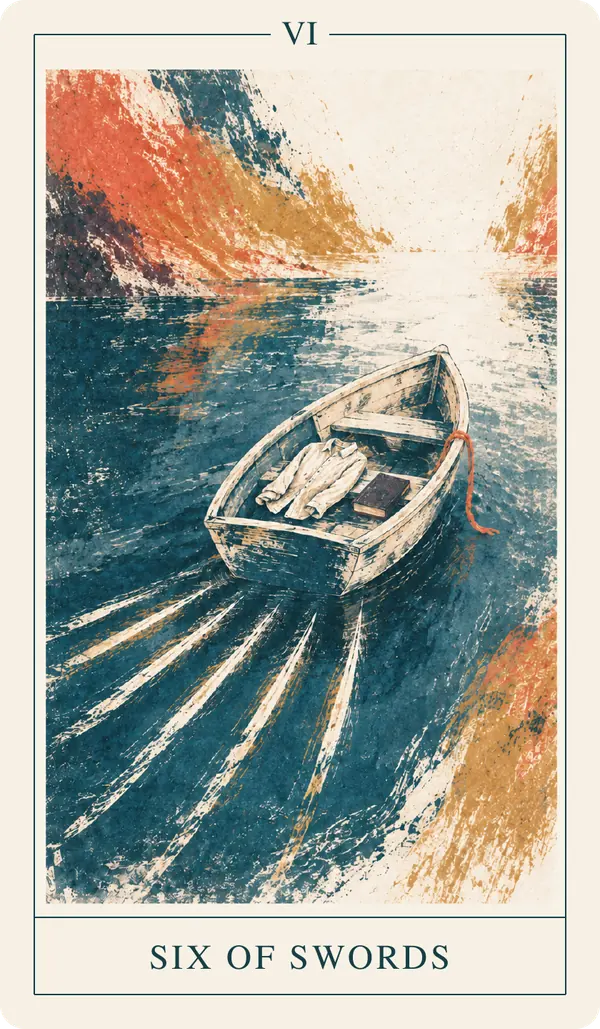 Self ContactSix of SwordsA careful transition can carry experience into calmer conditions.
 Shiba TownSix of SwordsTransition; leaving trouble; accepting help on the way.
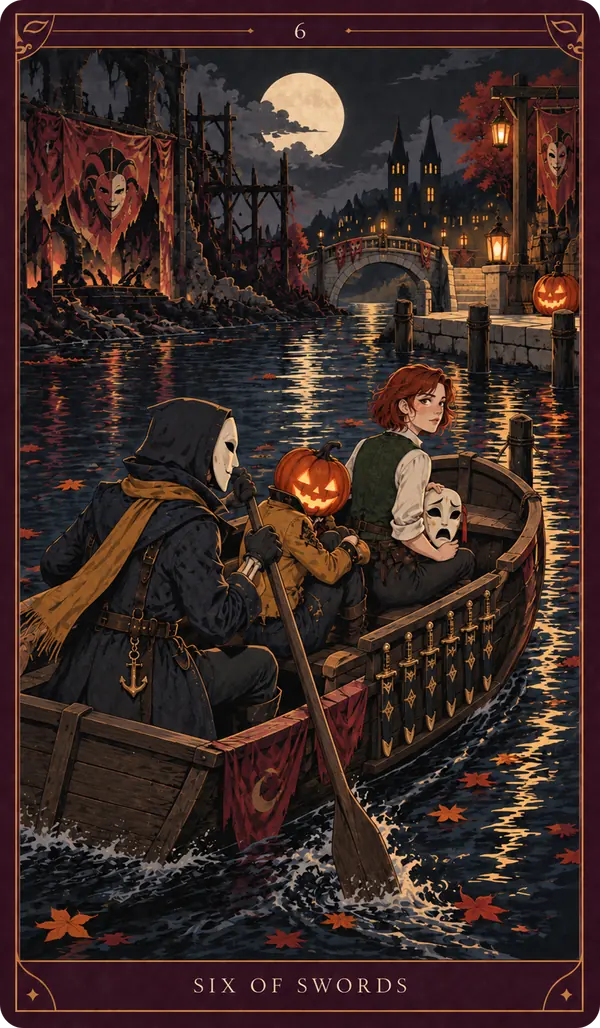 Velvet MasqueradeSix of SwordsA supported crossing toward a real landing.
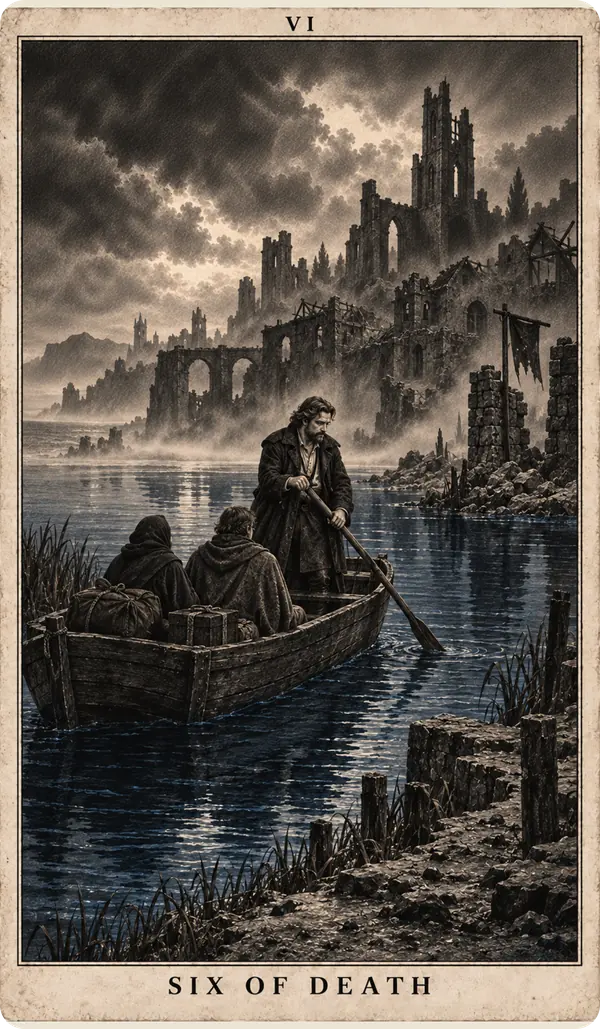 Four HorsemenSix of DeathMove toward safer ground with what you cannot yet resolve.
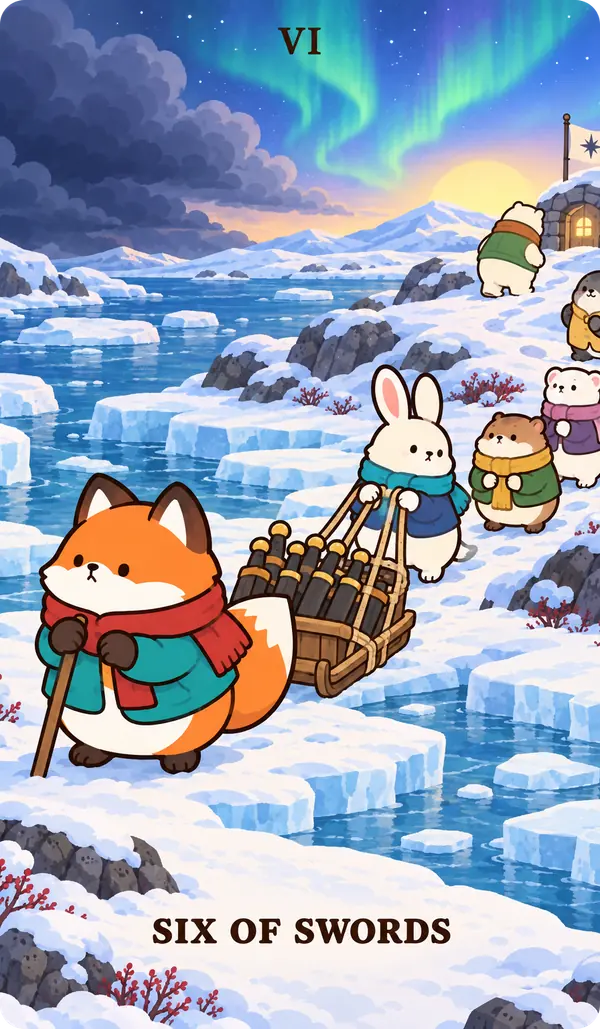 Four TrailsSix of SwordsTransition, leaving trouble, cautious hope.
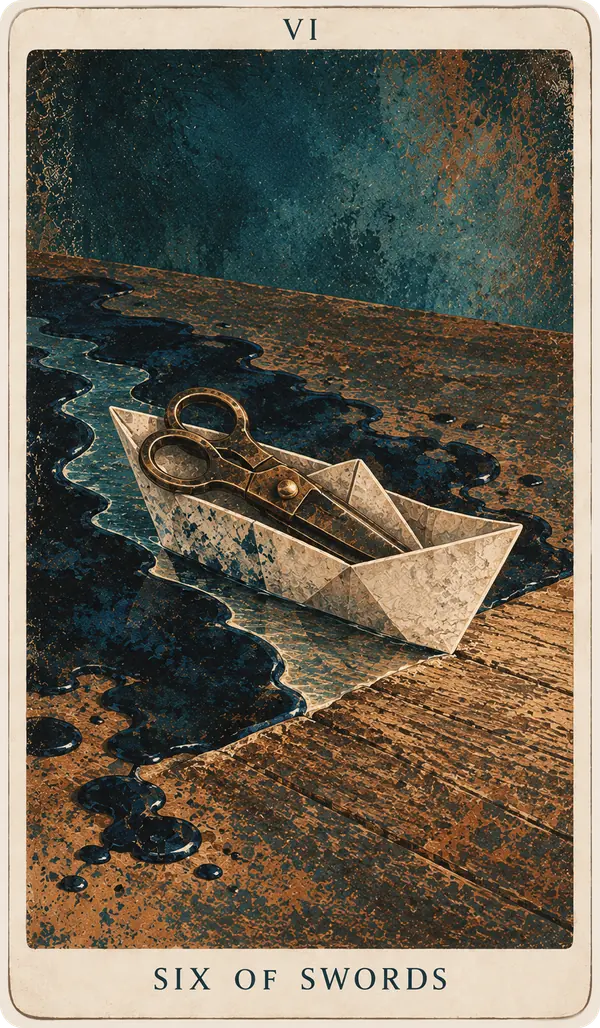 Living ThresholdSix of SwordsA paper boat carries useful shears through ink toward dry support.
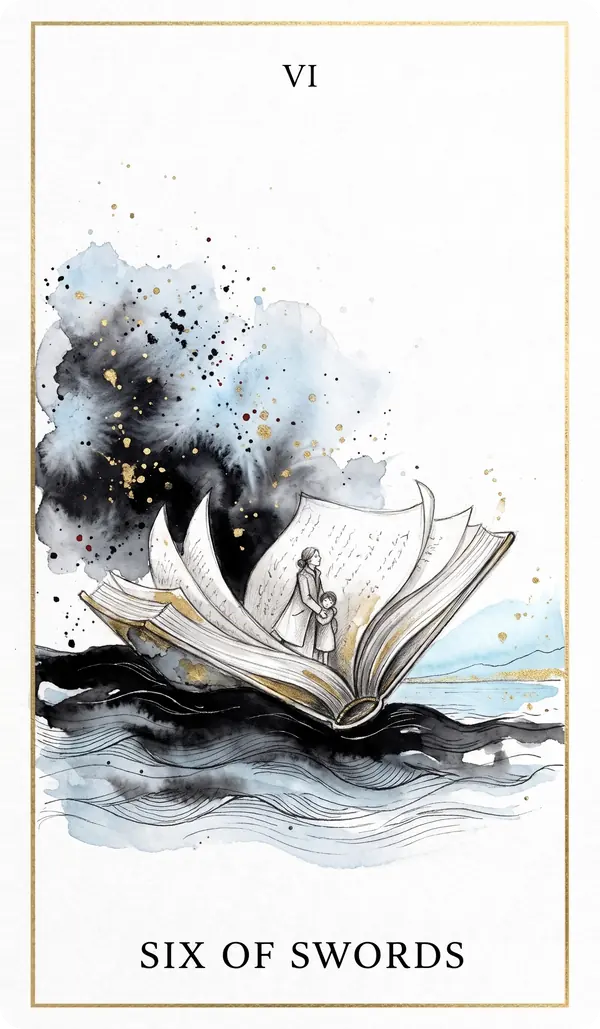 Colour of PowerSix of SwordsWhat you know carries you across; sail, do not look back.
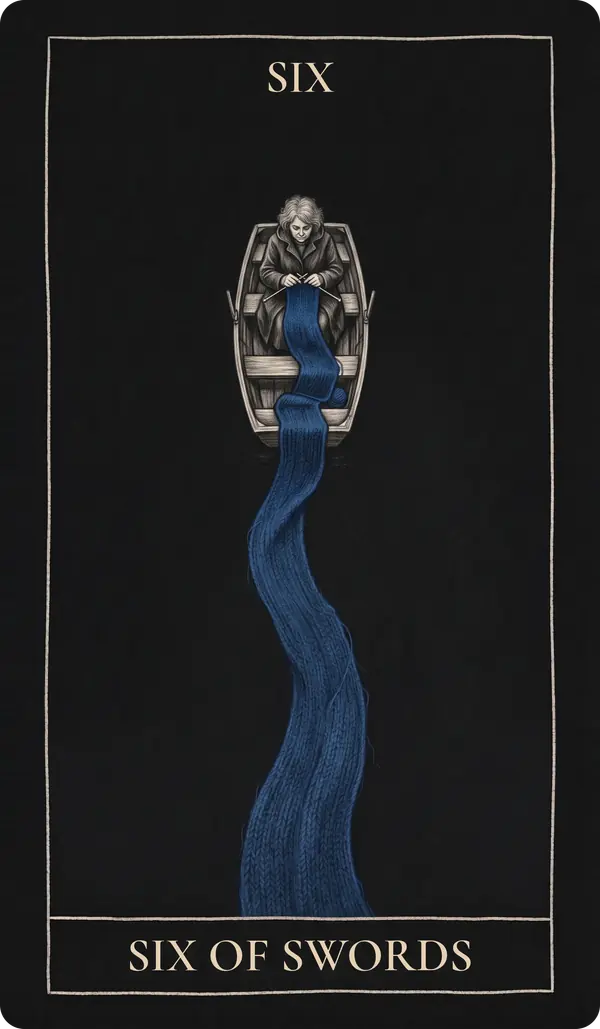 BoundSix of SwordsThe boat moves because she knits: the old shore becomes road.
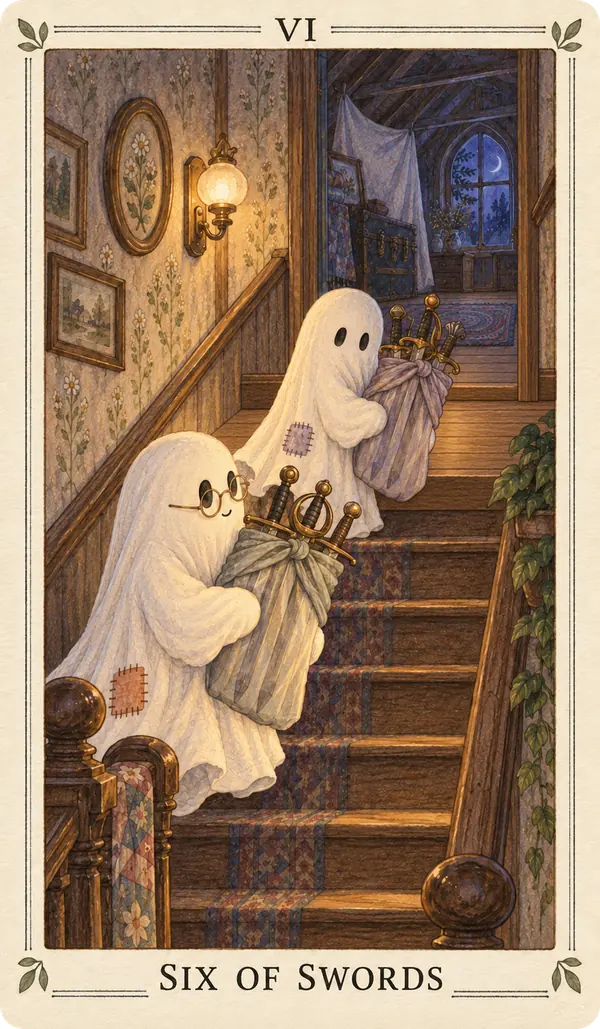 Cozy HauntSix of SwordsMove toward a safer arrangement.
 Celestial Night SkySix of SwordsA new view with the past acknowledged.
Where it appears
Questions about this card
Is the Six of Swords a yes or no card in Familia?
The Six of Swords leans yes upright. Moving toward quieter ground is supported, carrying the memory of home without the old fight, and distance is not cutting anyone off. Reversed, it leans no: the change of place carries the old family dispute along whole, and the move alone does not settle it.
What does the Six of Swords mean for family?
For the family line, the Six of Swords upright shows stepping away from a family conflict to find quiet, taking the memory along but no longer fighting. Distance is not the same as cutting anyone off or passing a verdict on the family. Reversed, an old family dispute follows you into every new home. The shore changes but the cargo does not, and the old war gets rebuilt elsewhere.
What does the Six of Swords mean in love in Familia?
In love, the Six of Swords upright shows moving on from a painful chapter toward quieter ground, leaving old quarrels from home on the far bank. The old fight does not belong in a new closeness. Reversed, a new relationship repeats the script of an old conflict, perhaps one first seen between parents. Old hurt is not something a new partner erases alone.