Six of Swords
Six of Swords in Velvet Masquerade · Minor Arcana
RelationshipsIn short
A supported crossing toward a real landing.
Reversed
A crossing refused, or distance mistaken for relief.
- Swords
- Six
- Air
- The Local Ferryman
- Transition
- supported passage
- carrying experience forward
Upright
Transition, supported passage and carrying experience forward. Accept support for a necessary transition.
Identify the real means of crossing and what you must carry, release or discuss after arrival.
Morrow’s boat gives fear somewhere to sit while a real oar carries the passengers toward shore.
A question to sit with
“What support can carry me to the next place?”
One step
Ask a trusted person to accompany you through one small change, such as visiting a new place.
Reversed
Avoiding a transition or expecting distance to remove every burden. Distance can be expected to resolve what still needs attention.
Refusing a passage can also preserve familiar distress; look closely at what awaits you at each landing.
The boat carries its sheathed tools along, just as a change of place may leave something still to discuss.
A question to sit with
“How much can I ask of a crossing before I have even reached the new shore?”
One step
Choose one concern to talk over before changing your plans. Keep the first move small enough to undo.
How this deck reads reversed cards
Reversed, the scene holds back, goes too far, hides or begins to change. A frightening face can still help either way up. Sometimes a reversal opens a clasp or lets a feeling move; sometimes a pause turns into a hiding place, or a welcome starts asking too much. What changes is the act, not the face.
In love
The boat may suggest accompanying each other through a change while allowing fear a seat.
- Supports
- Help limited to a crossing you both understand.
- Watch for
- Expecting one person to row away every worry.
- One step
- Ask your companion what would make one small change easier, and offer only what you can do.
The far landing may be carrying a hope that distance will settle what still needs to be said between you.
- Supports
- Talking about what comes aboard.
- Watch for
- Treating a new setting as an answer to every strain.
- One step
- Name one conversation that would still matter even if your surroundings changed.
At work
A local ferryman may point to someone who can help with the next stretch of unfamiliar work.
- Supports
- A real introduction or guided first visit.
- Watch for
- Mistaking one helpful crossing for a promise of a whole career.
- One step
- Before trying an unfamiliar part of the work, ask a colleague to walk you through it.
An offer to carry you into a new role may need a clearer landing and a more modest promise.
- Supports
- A helper who names the limits of their support.
- Watch for
- Expecting a move to erase every unresolved difficulty.
- One step
- Ask what help is available during the first few days and who you can speak to afterward.
The visible landing may make an option easier to trust than a beautiful offer with no solid means of passage.
- Supports
- A destination and a way to reach it.
- Watch for
- Assuming fear must disappear before you can try the boat.
- One step
- Name the first small visit or conversation that would let you learn about the new place.
A boat refused through fear may resemble an option you have never allowed yourself to examine closely.
- Supports
- A small trial before a larger commitment.
- Watch for
- Waiting for a passage without uncertainty.
- One step
- Try one reversible part of the option, such as asking for a visit, before deciding the rest.
The frightened passengers may show that movement can happen while courage is still incomplete.
- Supports
- Company during an unfamiliar passage.
- Watch for
- Judging yourself for bringing memories into the boat.
- One step
- Tell a trusted person which part of a small change you would like company for.
The six carried sheaths may show why changing place can leave an old fear still asking for attention.
- Supports
- Patience with what travels beside you.
- Watch for
- Calling a difficult crossing a personal failure.
- One step
- Write which concern needs company and which only needs a little more time.
A shared crossing may need everyone to say what they can carry and where help ends.
- Supports
- A seat for the person who is frightened.
- Watch for
- Asking the same family member to row every journey.
- One step
- Offer to accompany someone on one ordinary errand and say how much time you have.
The wish to keep everyone in the familiar boat may be disguising fear of a family change.
- Supports
- A conversation about the load each person carries.
- Watch for
- Calling reluctance disloyalty to the old shore.
- One step
- Invite one relative to say what feels difficult about the proposed change, without answering for them.
Yes or no
YesMixedThe boat offers a supported crossing to a visible shore, so the answer leans yes to help whose limits you understand.
Supports
- A real oar and landing make the passage more than a pleasing image.
- The passengers can receive help while still afraid.
Limits
- The boat can bear only a limited load.
- Some questions will travel with the six secured sheaths.
One step
Ask the helper where the first small step ends and what to bring along.
The boat may be held back by fear or overloaded with hopes, so the answer is mixed until the crossing has a modest, clear destination.
Supports
- The available passage can be tried in a small way.
- The far shore can be approached without promising total relief.
Limits
- Refusal may be protecting familiar distress.
- An appealing rescue may promise more than one boat can carry.
One step
Name one change you can try briefly and one concern that would still need a conversation afterward.
What is in the picture
Morrow rows Nell and the frightened pumpkin porter away from the damaged theatre toward a real canal landing. Six sheathed daggers are secured in the boat rack. His human elder mask covers his skull while the two passengers trust an ordinary boat and a visible shore.
The oar works beside the six secured sheaths. Frightened passengers travel from the damaged theatre toward a landing they can see.
- six sheathed daggers secured along the boat
- oar reaching into cold canal water
- human elder mask over the ferryman’s face
- red-haired passenger with a sorrow mask
- frightened pumpkin porter
- damaged theatre behind and stone landing ahead
This card in other decks
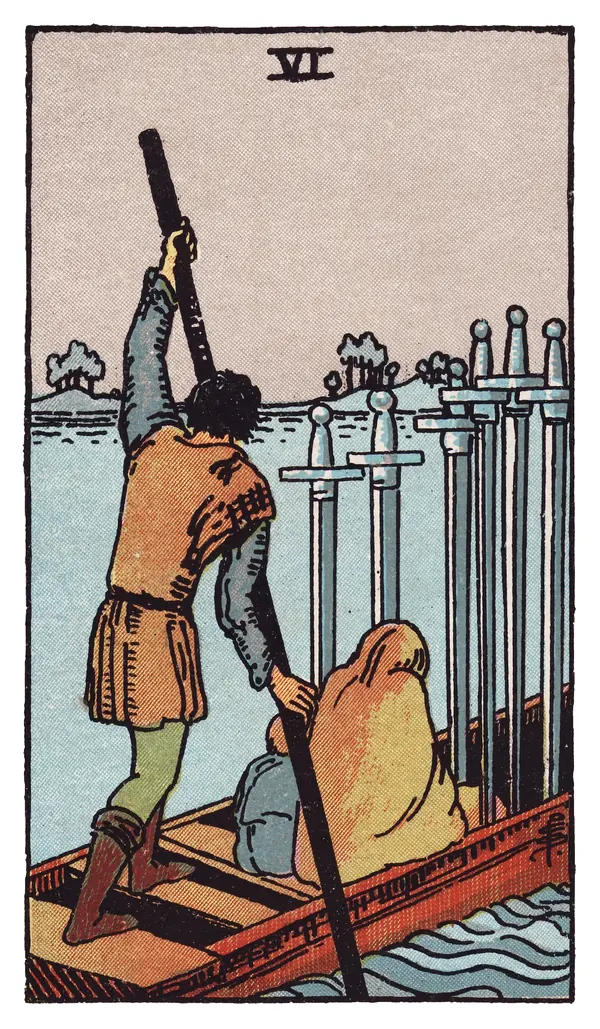 Rider–Waite–SmithSix of SwordsYou’re moving, even if slowly, toward calmer circumstances after a genuinely difficult stretch.
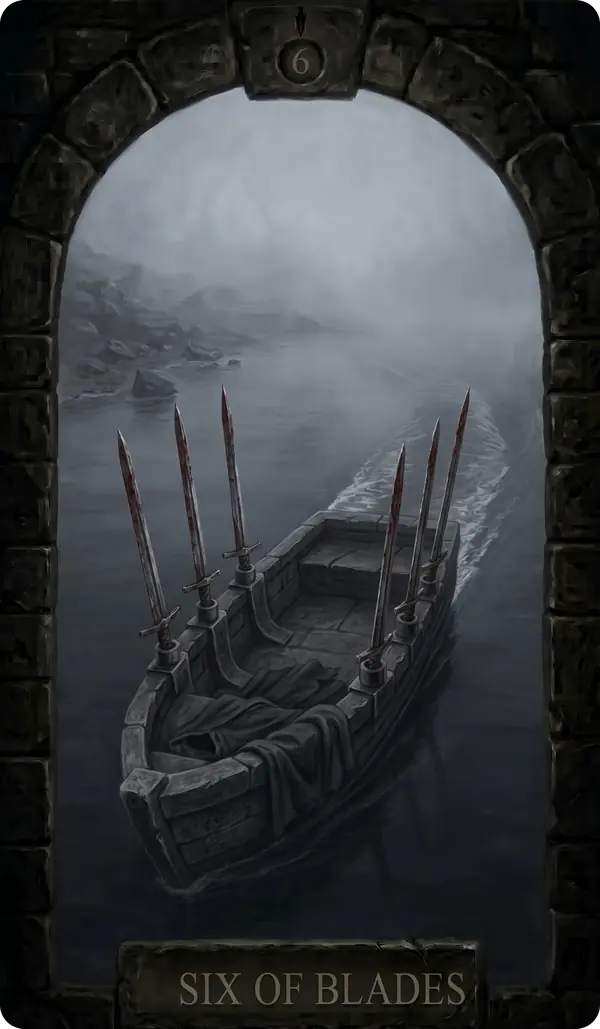 FamiliaSix of BladesA departure from a place where things were settled badly, taking the memory along and no longer fighting.
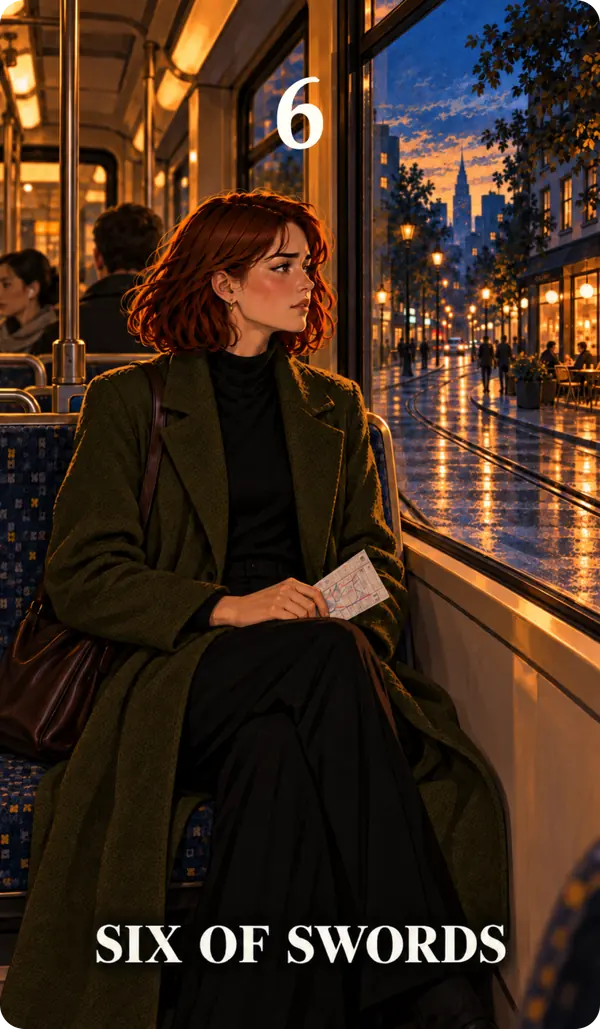 City of WindowsSix of SwordsPhysically leaving the argument and getting to support.
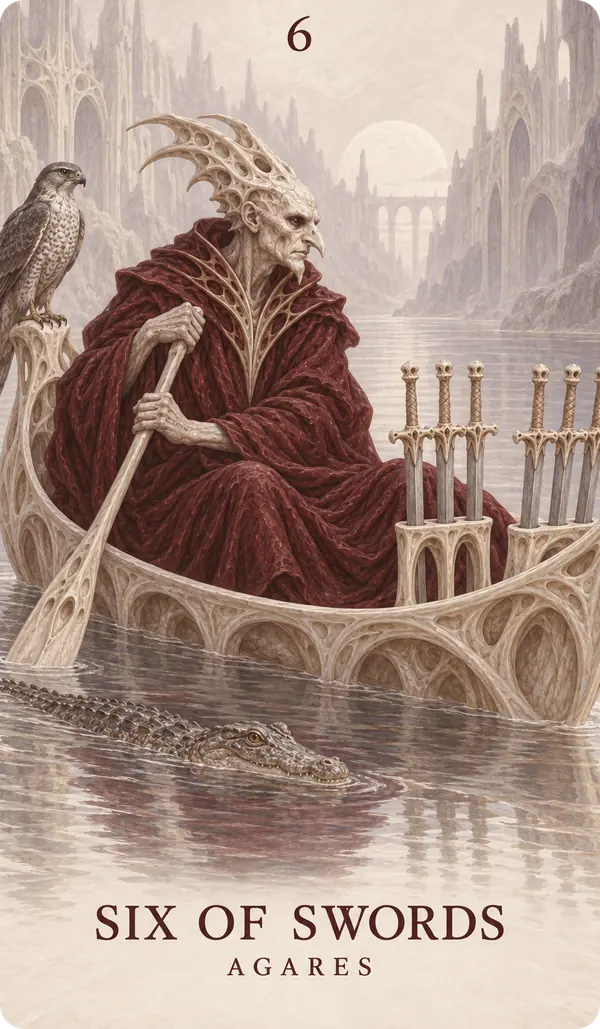 CarnalSix of SwordsA difficult transition carries unresolved knowledge with it.
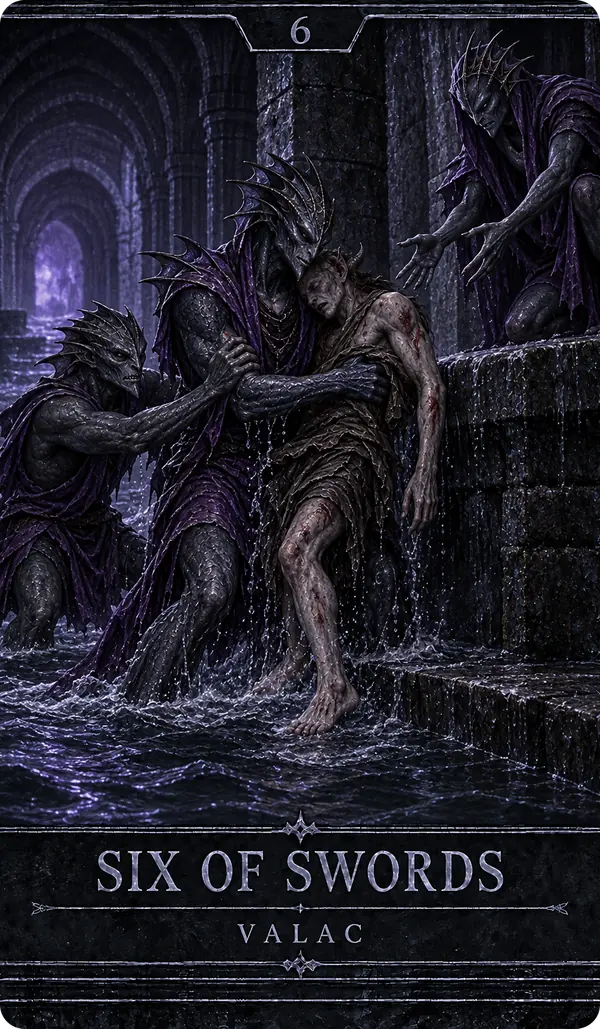 Crimson InfernoSix of SwordsAccept a necessary transition and the help it requires.
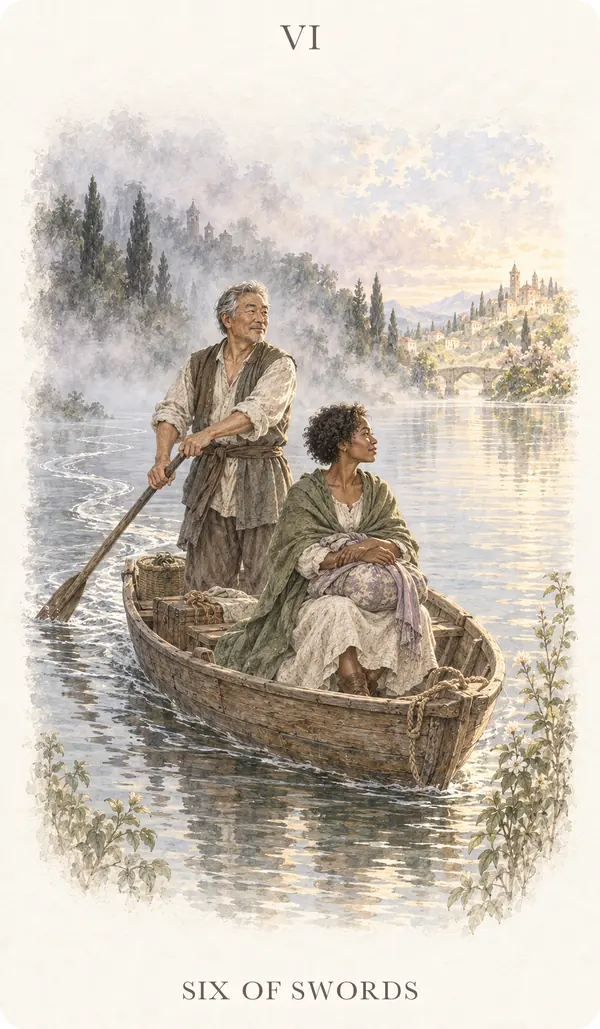 Everyday WondersSix of SwordsMoving toward calmer times, with help along the way.
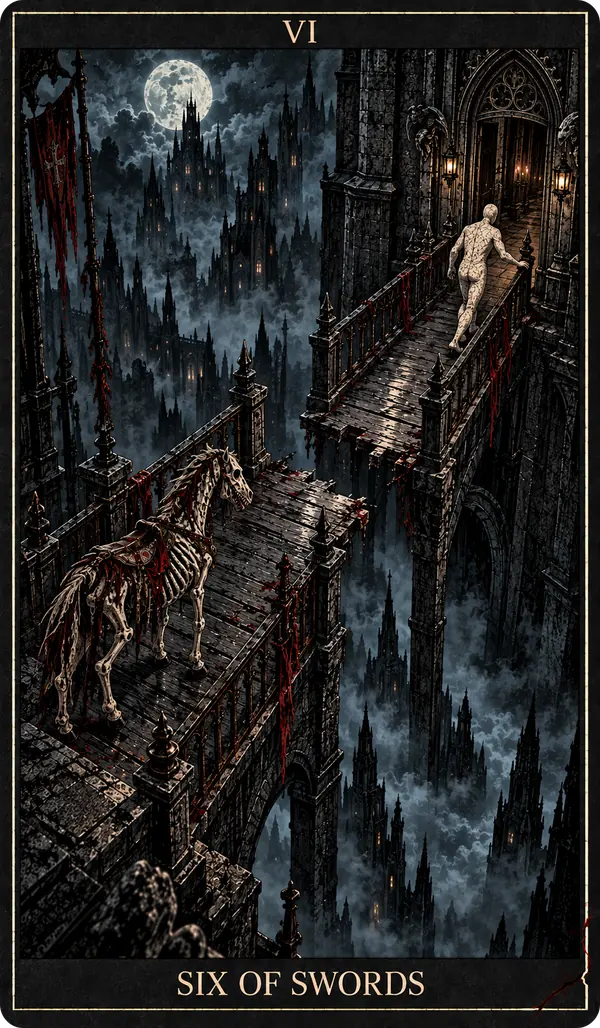 Mirror NightSix of SwordsMove through a difficult transition.
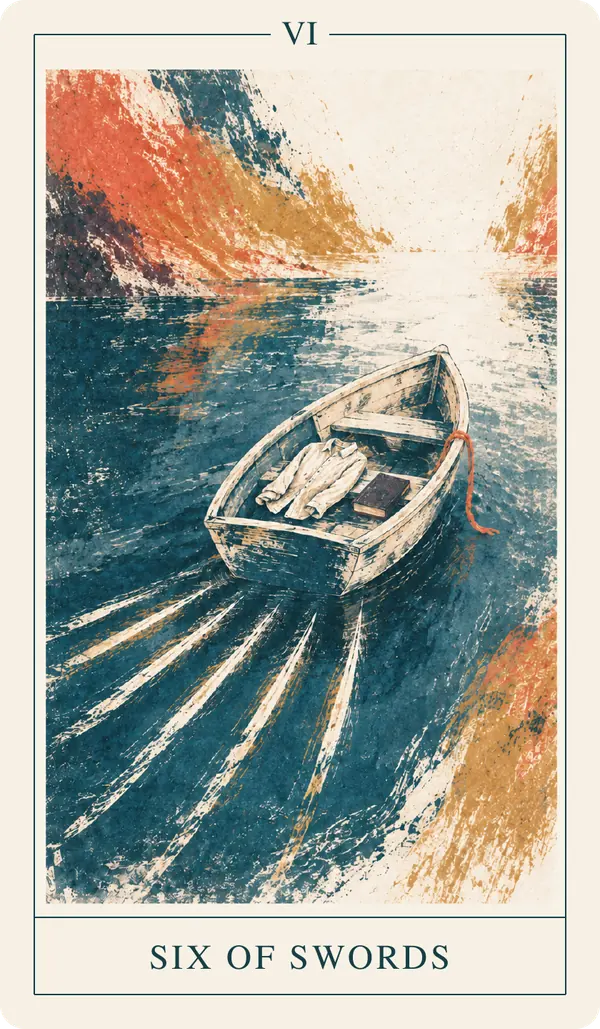 Self ContactSix of SwordsA careful transition can carry experience into calmer conditions.
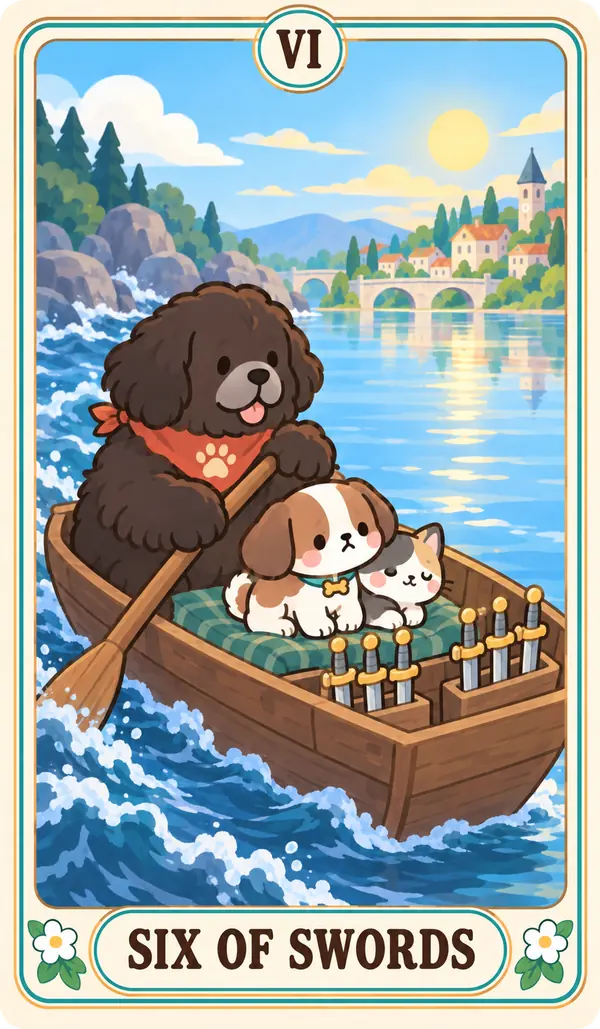 Shiba TownSix of SwordsTransition; leaving trouble; accepting help on the way.
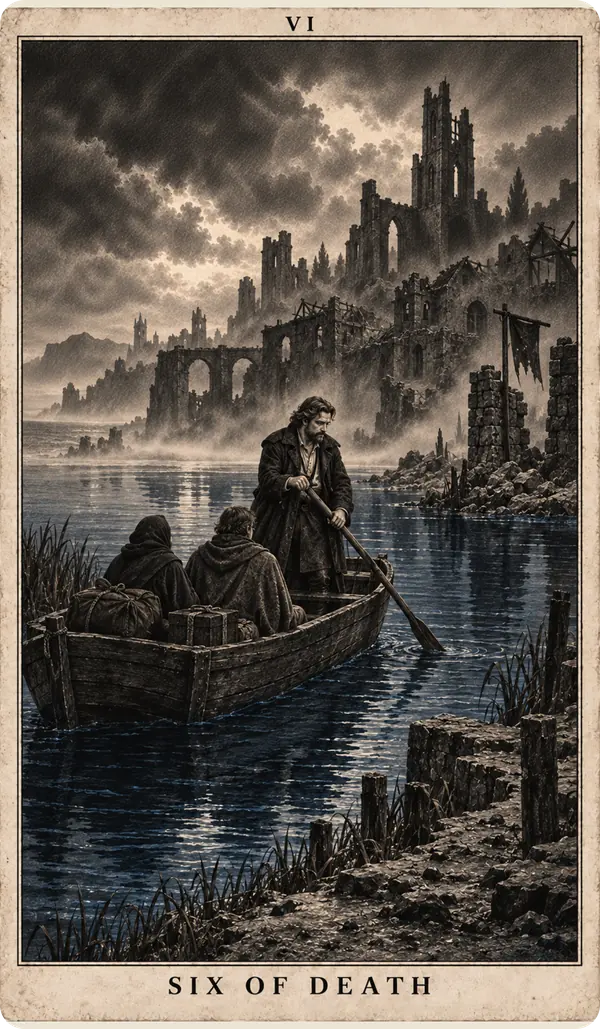 Four HorsemenSix of DeathMove toward safer ground with what you cannot yet resolve.
 Four TrailsSix of SwordsTransition, leaving trouble, cautious hope.
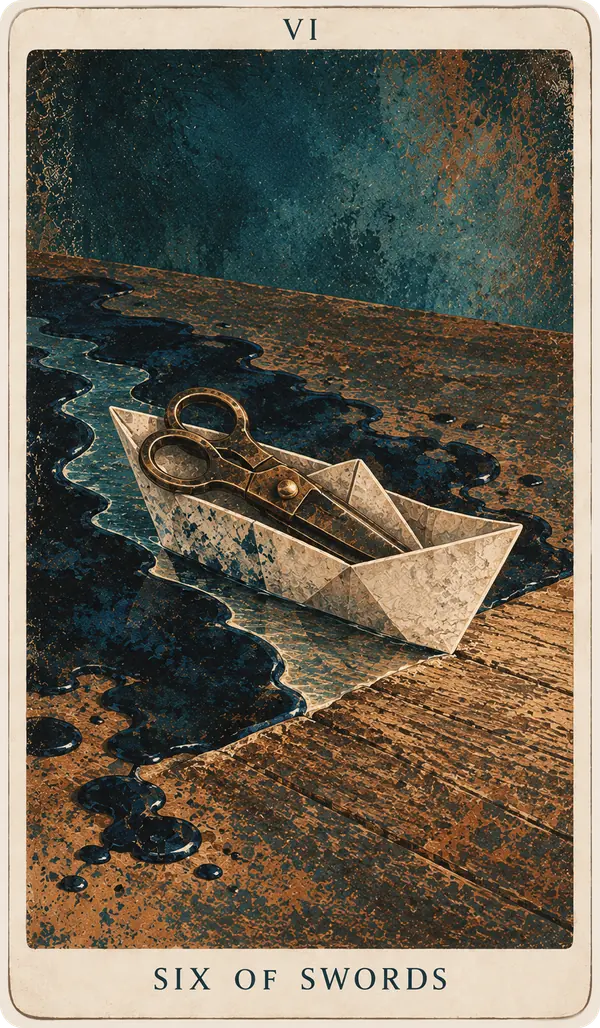 Living ThresholdSix of SwordsA paper boat carries useful shears through ink toward dry support.
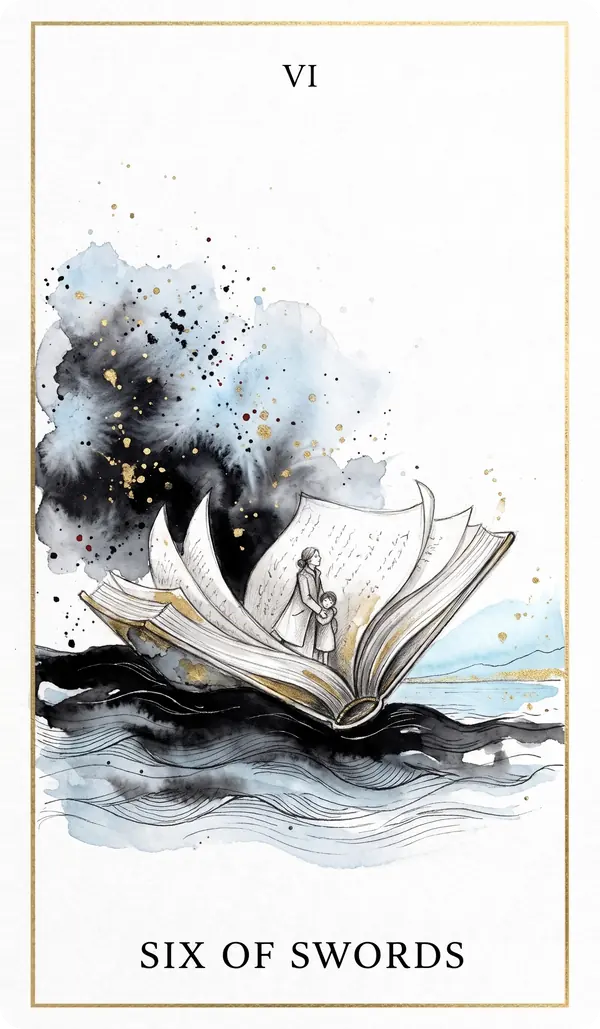 Colour of PowerSix of SwordsWhat you know carries you across; sail, do not look back.
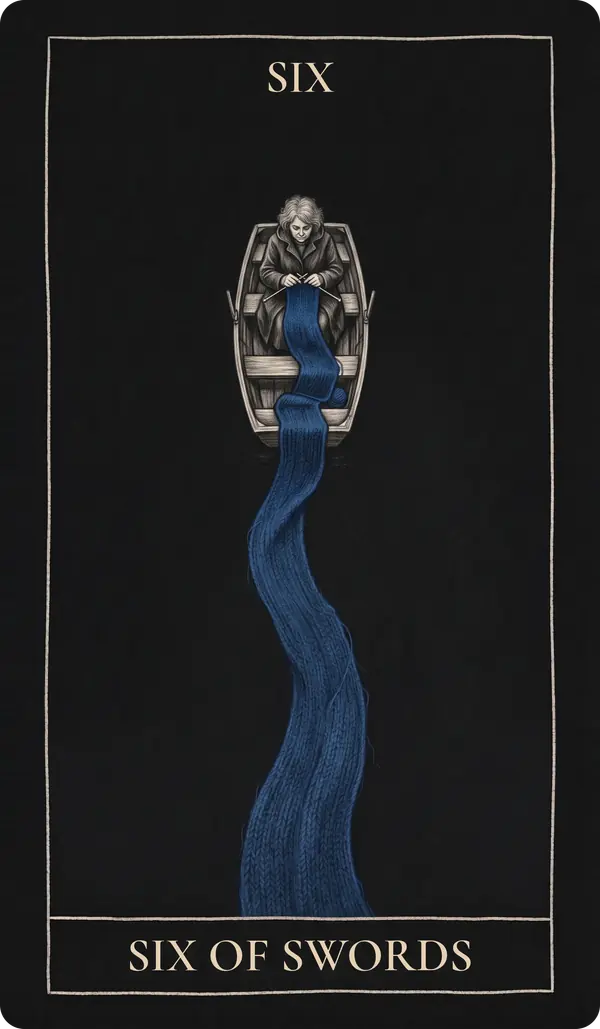 BoundSix of SwordsThe boat moves because she knits: the old shore becomes road.
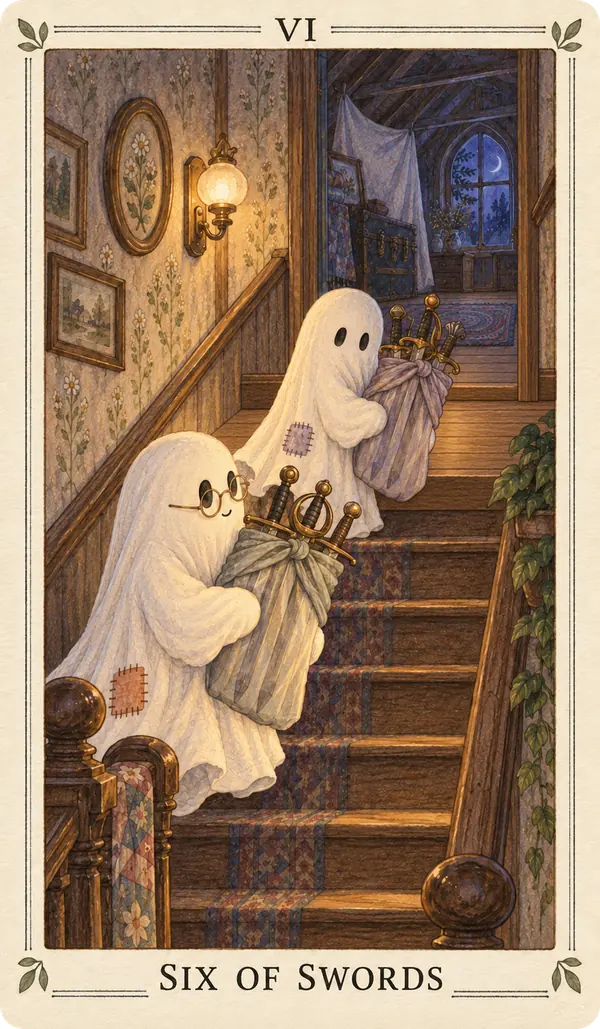 Cozy HauntSix of SwordsMove toward a safer arrangement.
 Celestial Night SkySix of SwordsA new view with the past acknowledged.
Where it appears
Questions about this card
Is Six of Swords a yes or no card in Velvet Masquerade?
Six of Swords leans yes upright to help with a clear destination and understood limits. The ordinary boat carries its passengers toward a visible landing. Reversed, the answer is mixed if fear prevents the crossing or distance is asked to settle everything. Ask what the first short visit would involve before promising a permanent move.
What does Six of Swords reveal about fear and masks?
A strange-faced boatman offers an oar, a boat and a real shore. Six of Swords may reveal fear of receiving help from someone unfamiliar or a beautiful departure that conceals how you would arrive. Look at the means of passage. Ask a trusted person to help you explore one small part of the alternative.
What does Six of Swords mean reversed in Velvet Masquerade?
At the canal, the reversed Six of Swords may describe a crossing refused through fear, or hopes that distance alone will untangle an unfinished matter. The boat still needs a modest destination. Name the first conversation or short visit you want help with and leave the larger journey open for now.