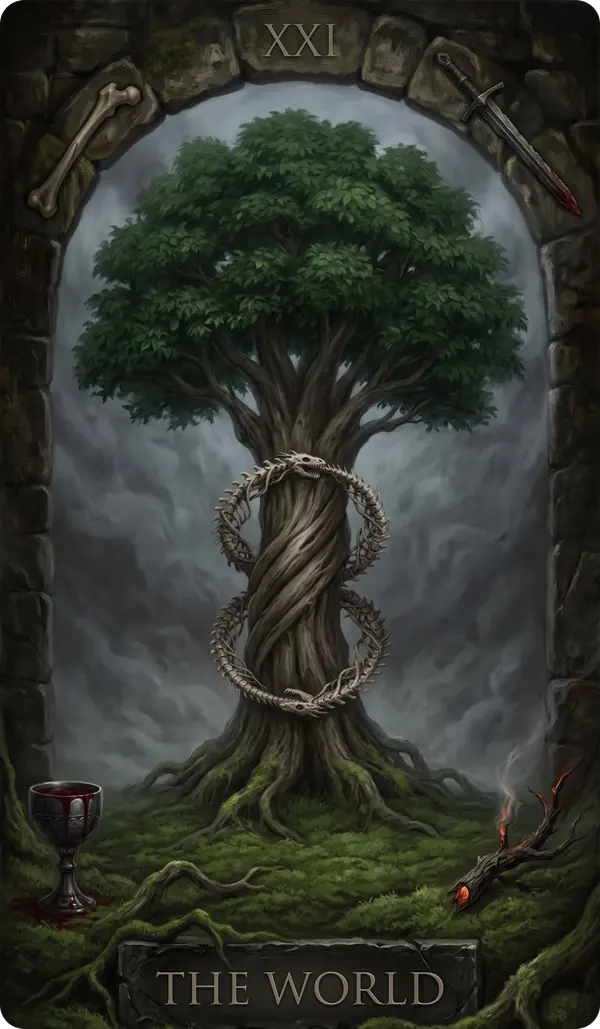
The Hierophant
The Hierophant in Familia · Major Arcana V
Family lineIn short
A real acceptance into the line: the newcomer is admitted, and the tradition passes on unbroken.
Reversed
The forms are kept, the acceptance never comes, and the newcomer stays a stranger inside the family.
- Major Arcana
- 5
- The Priest of the Ancestors
- initiation
- succession without a break
- acceptance into the line
Upright
The Hierophant is the Priest of the Ancestors, keeper of covenants and of initiation. Upright the rite is recognised.
A newcomer is lawfully admitted into the line and gains access to its knowledge and protection. It is succession without a break, a living tradition with nothing of the museum about it.
A daughter-in-law, a son-in-law, an apprentice or a partner goes through a real acknowledgement, and after it what the line has gathered is open to them too.
A question to sit with
“What would it take for you to feel fully received where you are joining?”
One step
Choose one family custom you would want to pass on to a newcomer, and say why.
Reversed
Reversed, the Hierophant is the empty rite. The ritual has decayed into formality, was forced, or was performed by someone with no right to perform it.
The chain of transmission breaks, and the newcomer carries the crest with nothing behind it. It happens with a wedding, an adoption, a place in a business or an apprenticeship: every formality is observed and the acceptance never comes.
The newcomer stays a stranger, and dogma smothers any living contact.
A question to sit with
“Where have you been admitted on paper but not yet accepted?”
One step
Name one formality in your family that no longer means anything to anyone.
How this deck reads reversed cards
Reversed, the card is not weaker. The same strength runs the other way: blocked, sealed, or drained downward into old patterns instead of reaching the living. The red thread does not break; it carries the strength somewhere else.
In love
A partner may be truly received into your circle, the crest pressed into them as welcome and not as a formality.
- Supports
- Rites and promises that carry real welcome.
- Watch for
- Keeping the form of the vow and forgetting its warmth.
- One step
- Share one family custom with your partner and tell them what it means to you.
Rings and words may be in place while one partner is still kept a stranger, the form of a union without its acceptance.
- Supports
- Seeing the gap between ceremony and real welcome.
- Watch for
- Following the family’s script for love and losing the living contact.
- One step
- Pick one family custom you keep in this bond only from habit, and talk about it together.
At work
At work, an apprenticeship or partnership may pass on what matters, keys handed across the altar along with the knowledge behind them.
- Supports
- Learning from someone who holds both the keys and the book.
- Watch for
- Collecting titles without the knowledge they once stood for.
- One step
- Ask a senior colleague for one thing they learned the hard way, and keep the note.
A role may be granted on paper while the knowledge stays locked, the keys handed over and the book left closed.
- Supports
- Asking for the substance behind the title.
- Watch for
- Staying a stranger in your own new post.
- One step
- Ask plainly for one thing no one has yet shown you in your role.
The option with a living tradition behind it may be stronger, a path where the rite still carries blood along its groove.
- Supports
- Choosing a way that comes with teachers and with roots.
- Watch for
- Picking a tradition for its crest alone.
- One step
- Find out who has walked each option before you, and what they could teach.
One option may be an empty crest, every right form observed and nothing passing along the groove into the living.
- Supports
- Checking whether a path carries meaning or only procedure.
- Watch for
- Choosing the respectable rite over the one that feeds you.
- One step
- List what each option offers apart from its name, and compare the two lists.
Kneeling for a time may be how you grow now, taking a teaching from those who carry the line’s knowledge.
- Supports
- Humility toward knowledge older than your own.
- Watch for
- Bowing so low you stop asking what the rite is for.
- One step
- Try one practice from your elders this week with full attention.
Dogma may be smothering your growth, rules kept long after their reason was forgotten, an initiate marked but never taught.
- Supports
- Questioning a rule without throwing away the teacher.
- Watch for
- Keeping the shape of a belief after its meaning has drained away.
- One step
- Beside one rule you follow, write the reason for it, if you still know it.
A newcomer may be lawfully welcomed into the line, an in-law, an adopted child or an heir to the trade, and admitted to all it holds.
- Supports
- An acknowledgement that goes beyond paperwork.
- Watch for
- Treating a welcome as finished once the papers are signed.
- One step
- Tell a newer member of the family one story that belongs to the house.
A newcomer may stay outside the family circle after every formality, the rite performed and the acceptance never quite arriving.
- Supports
- Noticing who in the family was signed in but never let in.
- Watch for
- Dogma at home smothering every attempt at warmth.
- One step
- Invite a newer family member into one small tradition, without ceremony.
Yes or no
YesMixedWhere the rite is recognised and the elders are willing, entry comes with access to what they hold, provided the proper form is followed.
Supports
- A recognised way in is available.
- People who hold the tradition are willing to teach.
Limits
- Joining means taking on the group’s forms.
- Acceptance may take time to be spoken aloud.
One step
Ask one person who holds the tradition what the proper step would be.
A formal yes may be available while the acceptance behind it is not, and the answer depends on which of the two the question is about.
Supports
- You can tell a form from an acceptance.
- What is missing can be named.
Limits
- The welcome may be withheld behind correct forms.
- An inherited tradition may be kept without its meaning.
One step
Write what would show you that you are accepted, and check whether it has happened.
What is in the picture
A blind priest in a mitre of fused vertebrae holds crossed bone blade-keys and a cup of blood that runs along the altar into a bare ribcage. A service book shows the crest of the Ancestral Tree, and a faceless initiate kneels with the same crest fresh on the back of his head.
The thread of blood runs from the priest’s cup through the altar into the ribcage, a line of transmission drawn across the frame. The initiate kneels low with his back turned, showing the crest instead of a face.
- mitre of vertebrae
- crossed bone blade-keys
- cup of blood
- groove in the altar
- bare ribcage
- open service book
- Ancestral Tree crest
- kneeling initiate
This card in other decks
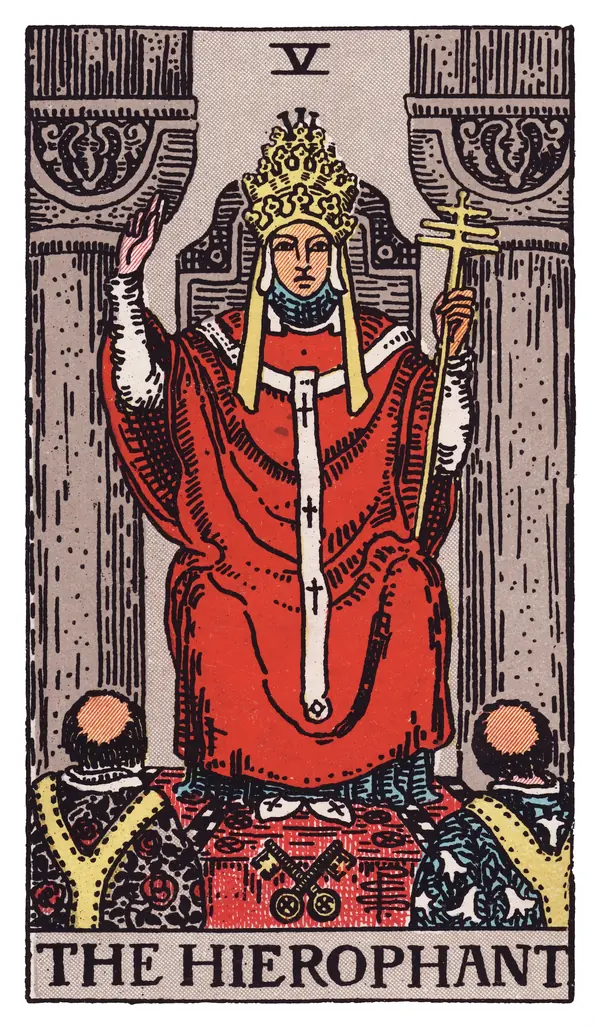 Rider–Waite–SmithThe HierophantA traditional method, mentor, or shared set of values has something genuinely useful to offer you right now.
 City of WindowsThe HierophantValues named honestly, the support of a community, a union with clear rules.
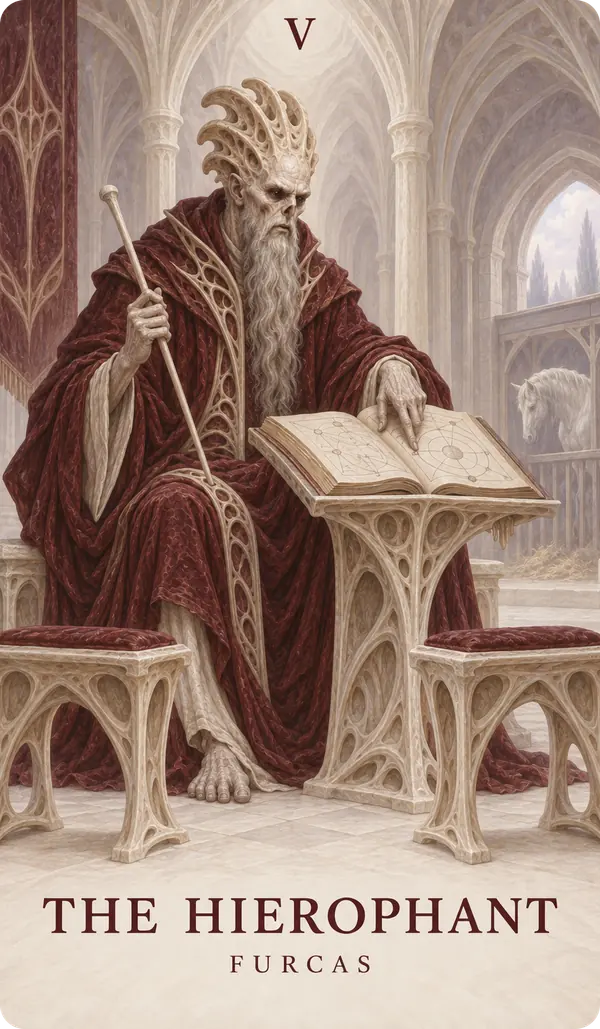 CarnalThe HierophantLearning within a tradition, including the duty to question it.
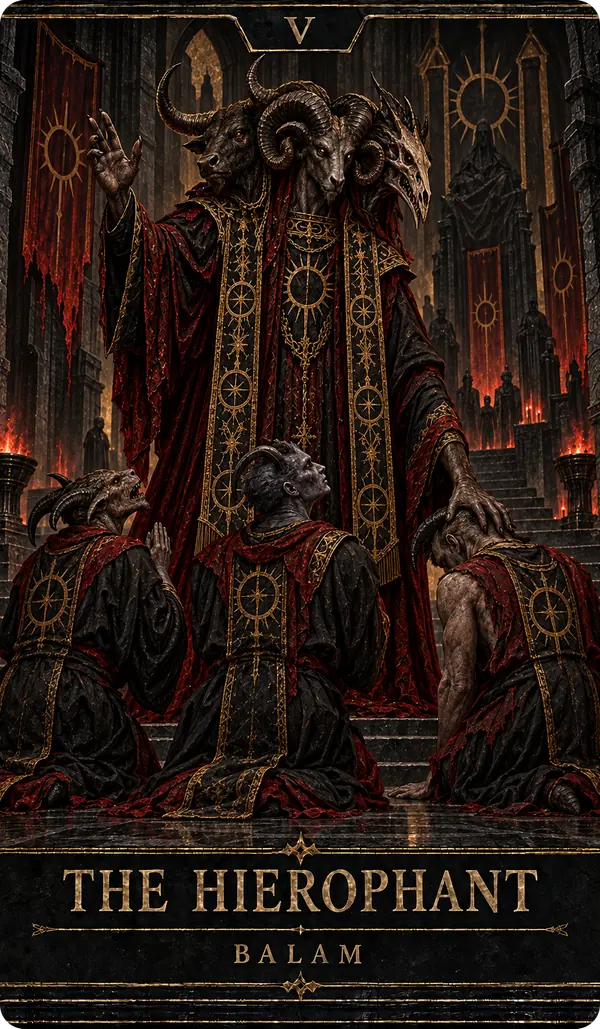 Crimson InfernoThe HierophantExamine inherited teachings, shared practices and the responsibilities of belonging.
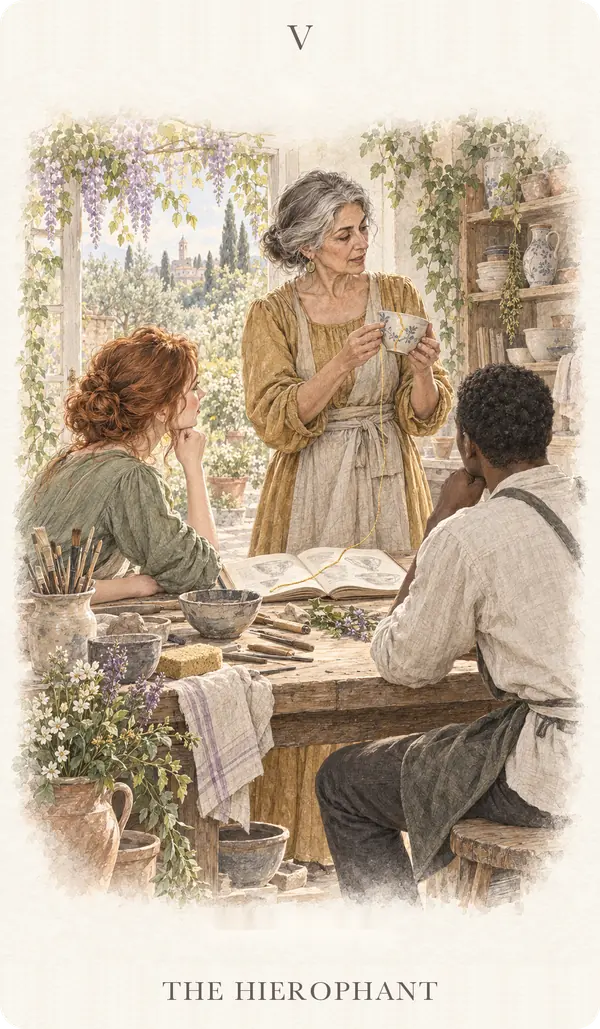 Everyday WondersThe HierophantTradition, shared knowledge, a common language and teaching.
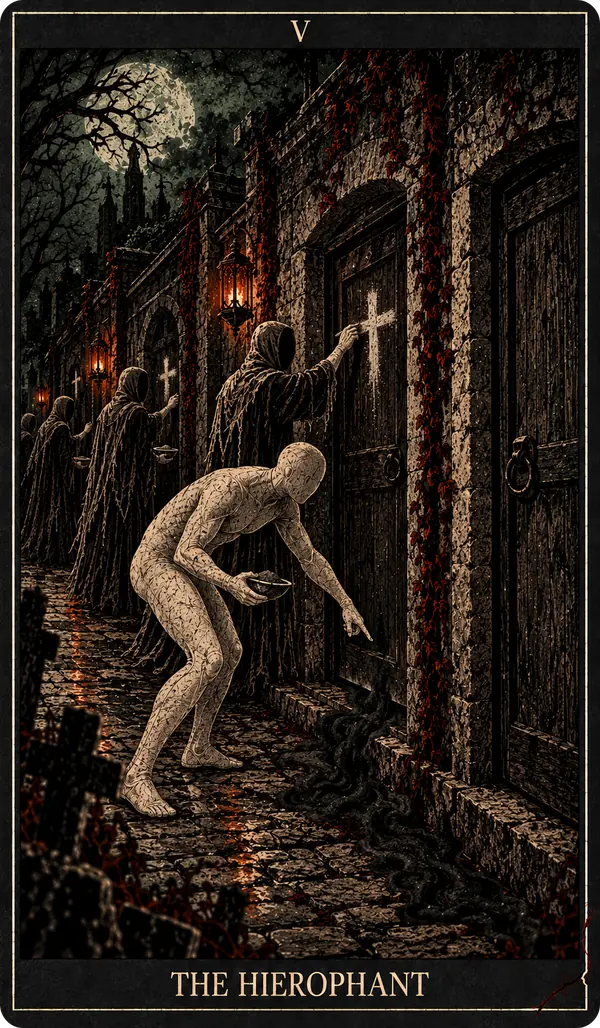 Mirror NightThe HierophantKeep only a rite that survives observation.
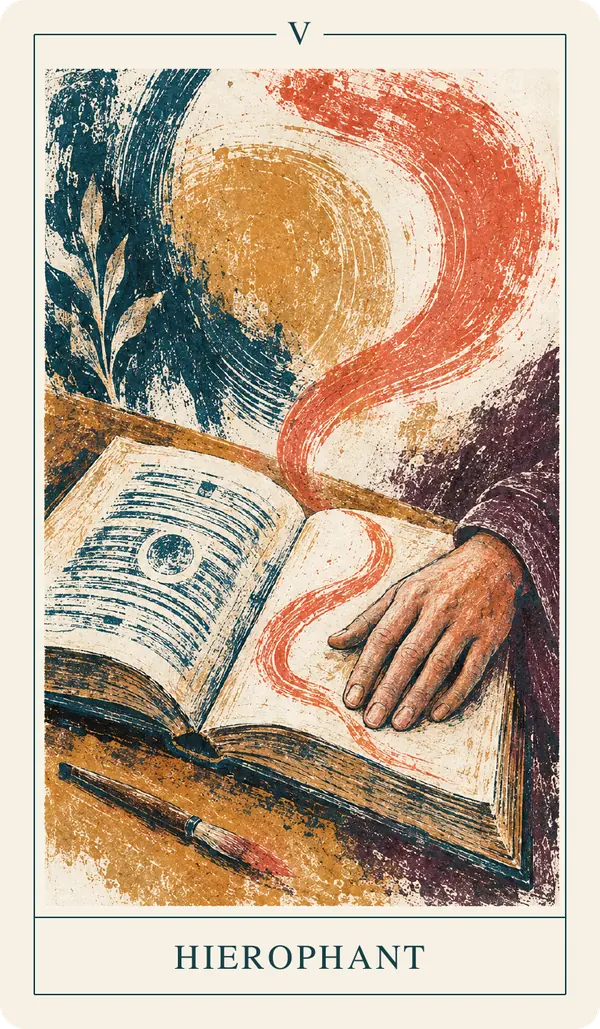 Self ContactThe HierophantLearn from a practice or teacher, then understand the reasons behind what you inherit.
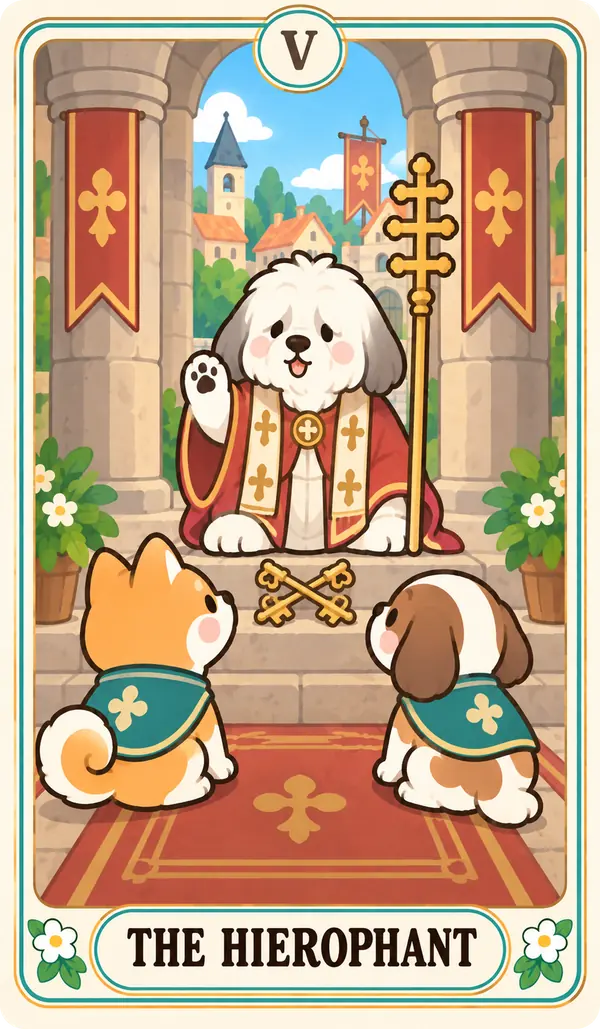 Shiba TownThe HierophantTradition; shared practice; learning from a teacher.
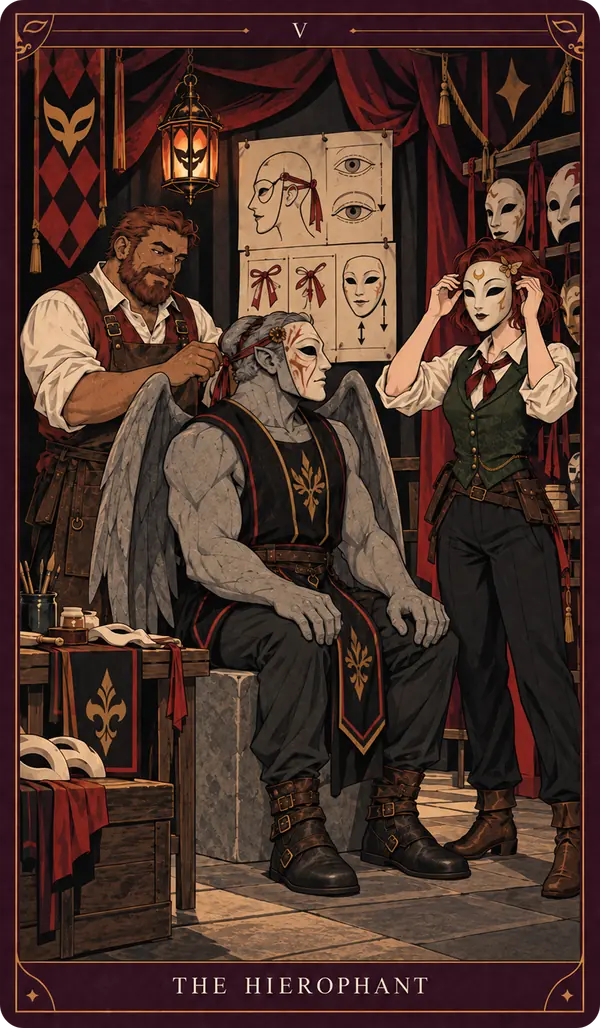 Velvet MasqueradeThe HierophantLearning a practice that helps its wearer.
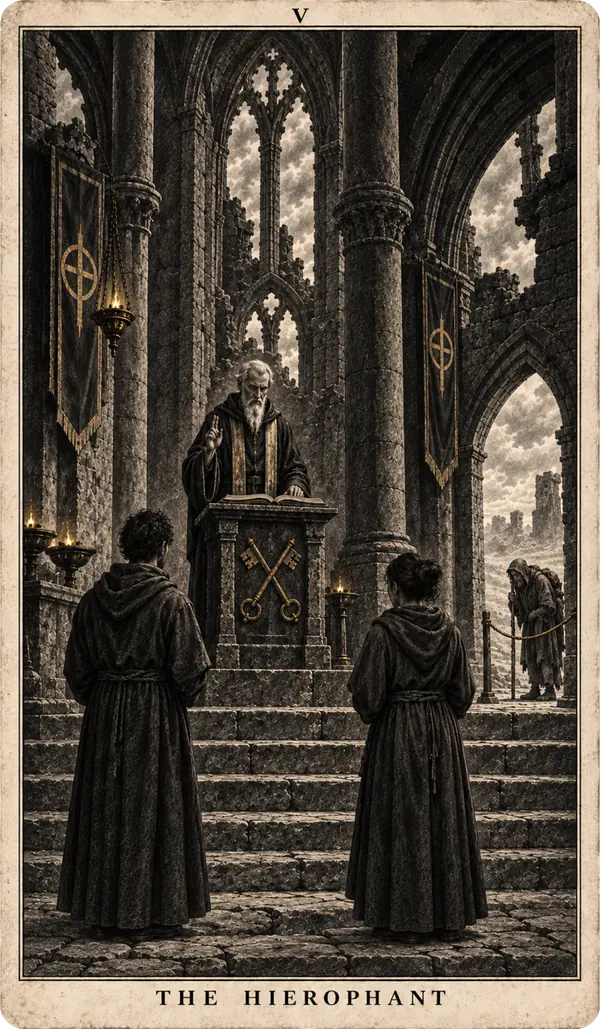 Four HorsemenThe HierophantLearn from a tested practice and make an ethical commitment within a community.
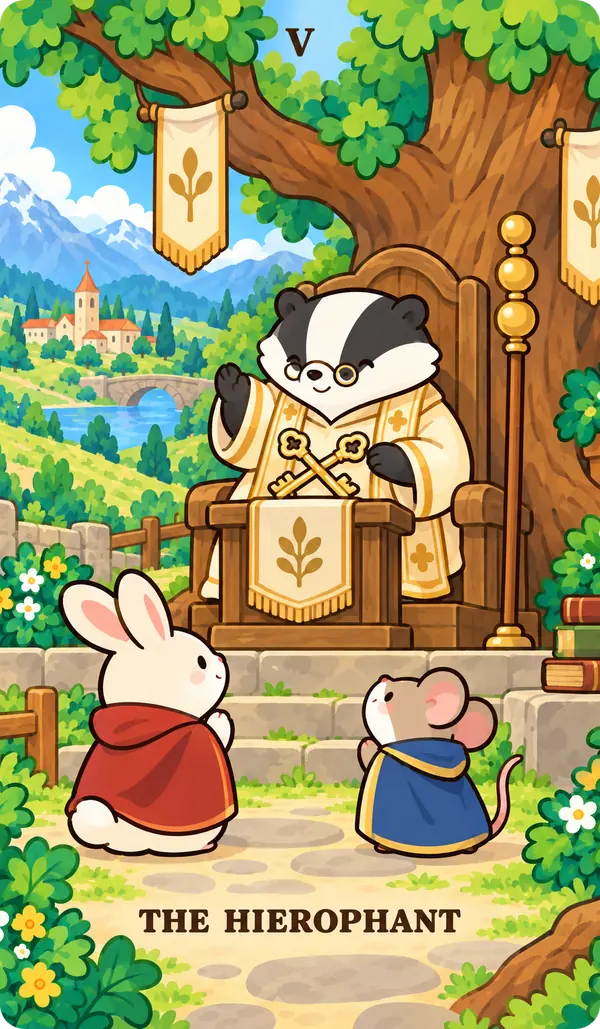 Four TrailsThe HierophantTeaching, shared tradition, belonging.
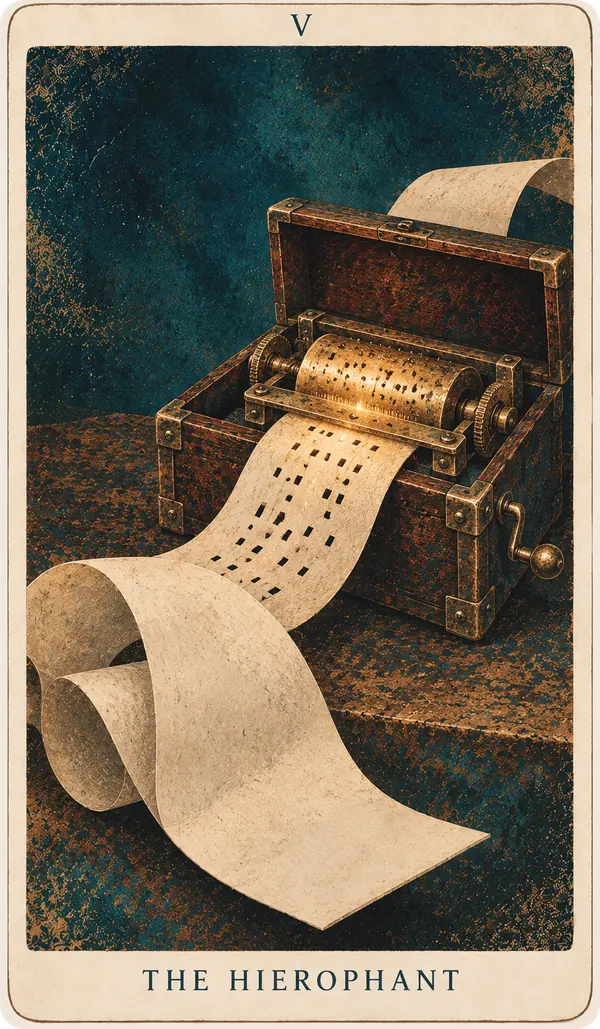 Living ThresholdThe HierophantA music box plays a handed-down tune and leaves room for a new note.
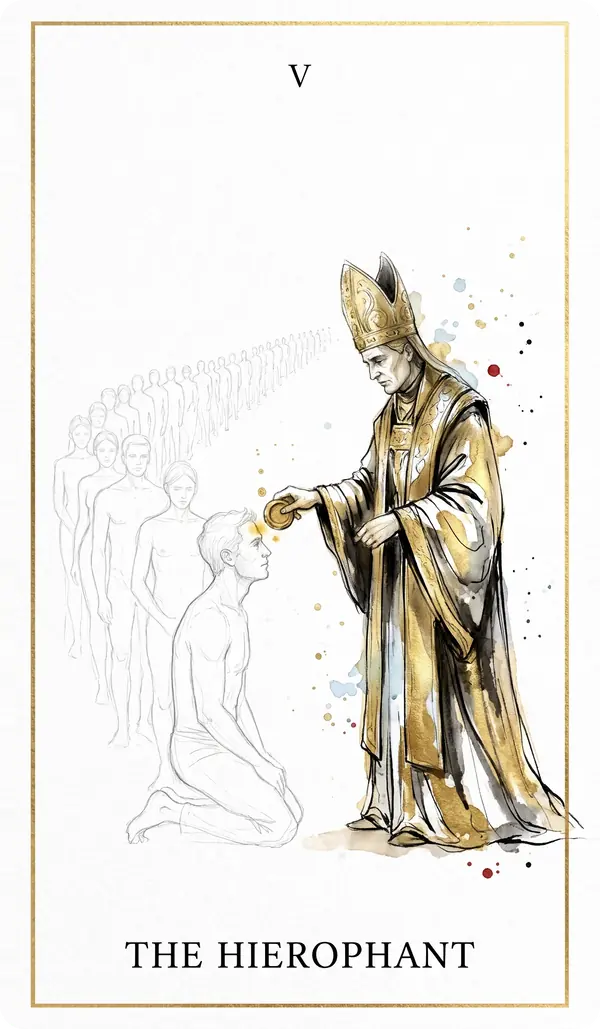 Colour of PowerThe HierophantThe seal opens doors talent cannot; stand in line if you must.
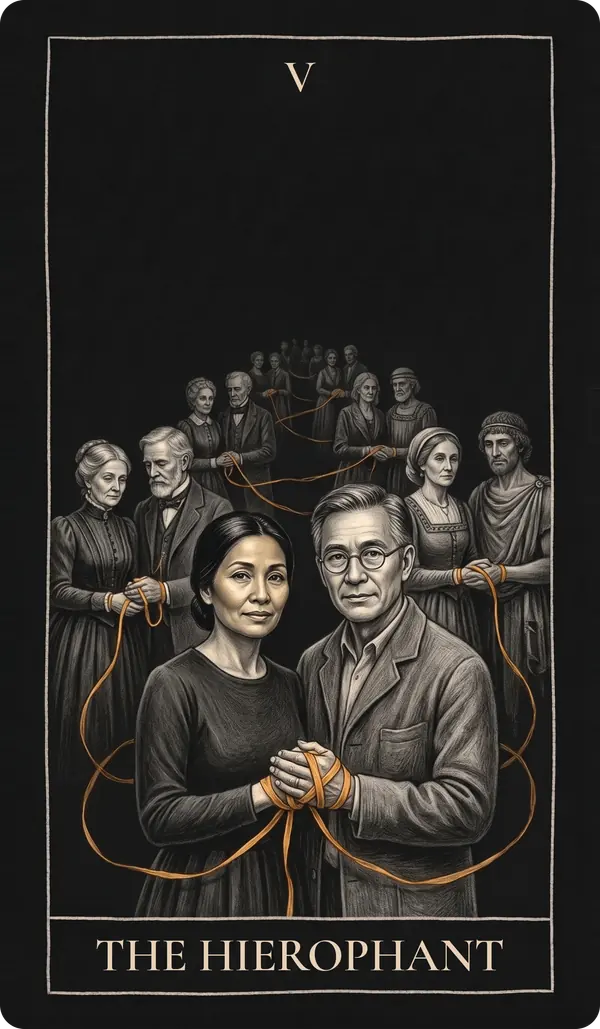 BoundThe HierophantA knot tied in the old way, with generations holding the other end.
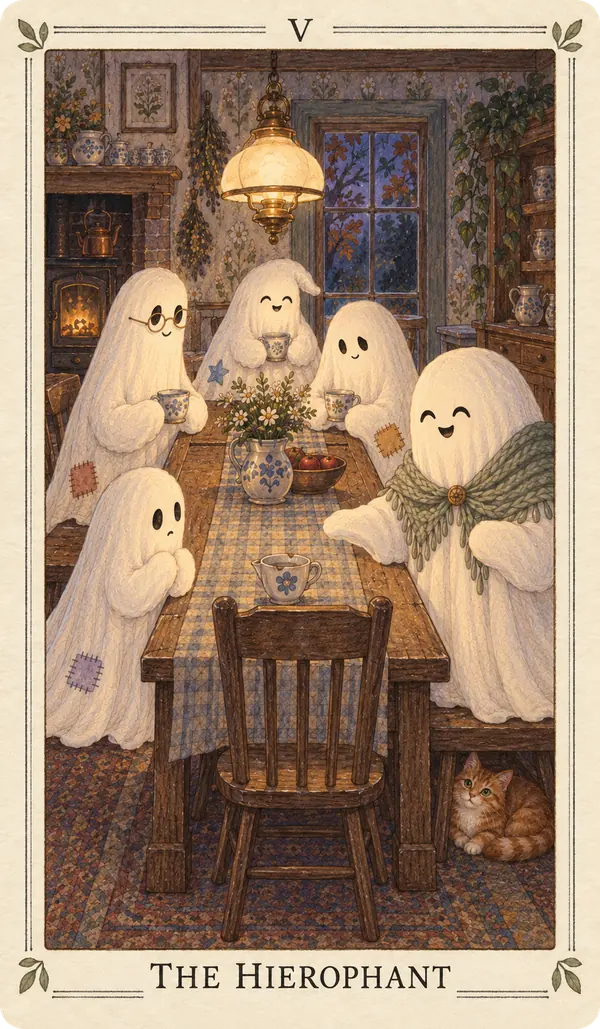 Cozy HauntThe HierophantReceive a shared practice that carries care.
 Celestial Night SkyThe HierophantLearning how to check.
Where it appears
Questions about this card
Is The Hierophant a yes or no card in Familia?
Taken upright, The Hierophant leans yes. Where the rite is recognised and the elders are willing, entry comes with access to what they hold, provided the proper form is followed. Reversed, it gives a mixed answer. A formal yes may be on offer while real acceptance behind it is not, so it depends on which of the two your question is really about.
What does The Hierophant mean for family?
In family terms, The Hierophant upright means the traditions are passing on intact and newcomers are truly received into the line. No custom is safe if only one person keeps it. Reversed, the traditions have become formality: the rites are observed, the acceptance never comes, and a newcomer stays a stranger inside the family. The fault then lies with the welcome, not with the one who was not welcomed.
What does The Hierophant mean in love in Familia?
Where love is concerned, The Hierophant upright shows a partner accepted by the family in full, beyond the formal step. The introductions that matter to the older generation are worth doing properly. Reversed, the partner is accepted on paper but not in spirit, polite at the table and kept at arm’s length. The family’s coolness says more about the family than about the person you chose.