King of Swords
King of Swords in Living Threshold · Minor Arcana
ProtectionIn short
A visible rule makes the reach of a protective boundary clear.
Reversed
A hidden bias in where the ruler is set, or a rigid line that misses a real difference.
- Swords
- King
- Air
- The Visible Line Keeper
- a visible shared rule
- responsibility for the whole cut
Upright
Give reasons that can be stated and checked. Say what the rule is and how far it reaches, then apply it consistently while taking the surrounding story into account. For protection, clear words help people know what a boundary permits and prevents. The luminous plane rising from the ruler’s line can symbolise an intention made legible.
Decide who is to keep the boundary and when to look at it again. A rule becomes dependable through open use and a willingness to recognise its effects. The paper knife follows the ruler, and useful paper remains visible on both sides.
You may be able to keep a shared threshold steadier when everyone can see where the line lies.
A question to sit with
“Could this standard be stated clearly and applied consistently to both sides?”
One step
Write one house boundary in a sentence that leaves a clear way to ask for an exception.
Reversed
A rule may disguise bias, or cold consistency may ignore a difference that matters. You might use an impressive explanation whose starting point cannot be questioned. Expose the working line. Ask which rule is being applied, and whether it would remain acceptable in another person’s position.
Change its reach where needed and acknowledge the cost of the decision. Authority earns practical trust when its reasons can be questioned. The light rises beside the ruler.
A ward may need its words made plain before another layer of protection is added.
A question to sit with
“Would this line still feel fair if I stood on the other side of it?”
One step
Read one boundary aloud and replace any word that hides who may enter or when the door opens.
How this deck reads reversed cards
Reversed, the living things work against the grain. An opening jams, a ward is pulled too tight, a lining has worn thin from long service, or a capacity that went quiet starts to come back. What changes is how the boundary does its work: a shelter may need loosening, a channel a gentler flow.
In love
The line lit along the ruler may help a bond trust its doorway when welcome and refusal are plain to both sides.
- Supports
- A shared boundary whose reason can be asked about.
- Watch for
- Fine words that hide where the actual door opens.
- One step
- Say one boundary you need and ask how the same line would feel from the other side.
A clear-looking rule may conceal whose side it serves, or keep a difference between you out of the light.
- Supports
- A question that brings the ruler’s line into shared view.
- Watch for
- Using the same sentence to avoid hearing different needs.
- One step
- Ask which part of a shared boundary feels unclear and listen before restating it.
At work
Guiding the cut with a shared rule in full view may make work steadier.
- Supports
- Clarity about who may ask for what.
- Watch for
- A hidden starting point for the ruler beneath an impressive explanation.
- One step
- Write one shared work limit in plain words and invite a question about it.
A rule at work may stay rigid where two sides of the sheet need different room.
- Supports
- An explanation that can be questioned without penalty.
- Watch for
- Hiding a particular preference behind official-sounding words.
- One step
- Write the reason for one rule in ordinary language and ask whether it fits the present task.
The visible ruler line may make an option easier to trust when both sides of the paper remain in view.
- Supports
- A reason that can be spoken without hiding its reach.
- Watch for
- Calling a rule fair before seeing what happens on each side.
- One step
- Write why you prefer one option and what it would ask of someone affected by it.
A hidden starting point may guide your choice while both sides of the sheet need to be heard.
- Supports
- Room to ask where the ruler was first placed.
- Watch for
- Calling the straight line enough without seeing what it takes.
- One step
- Describe one option from the other side and give that view a sentence of its own.
A protective practice may grow steadier when its line can be named and questioned.
- Supports
- Keeping the ward’s intention visible in ordinary words.
- Watch for
- Adding more layers before the first line is clear.
- One step
- Write what one protective habit keeps safe and read the sentence aloud.
A ward may need plainer words before another layer is built along its ruler.
- Supports
- A boundary that allows a fair question.
- Watch for
- Making a practice look certain by leaving its reasons sealed.
- One step
- Say why you keep one limit and leave a pause for a question about it.
A house rule may hold better when every person using the threshold can understand it.
- Supports
- A clear route for asking about the rule.
- Watch for
- Leaving the doorway’s keeper unnamed.
- One step
- Tell your household when you need quiet and how they can ask for your attention.
An apparently shared household rule may leave one side less room than another.
- Supports
- The line lit along the ruler made speakable to everyone using the door.
- Watch for
- Expecting a rigid line to fit every person’s day.
- One step
- Invite one household member to suggest a small change to a shared rule.
Yes or no
YesMixedThe guide and both sides stay visible, so a clear rule kept with care leans yes.
Supports
- The line lit along the ruler may let everyone see where a shared ward begins.
- Paper on both sides may keep the effect of a rule open to question.
Limits
- A boundary needs someone willing to keep its spoken line.
- A difference between the two sides may need to be heard before the same rule is used.
One step
Say one shared boundary plainly and invite a question about where it applies.
A guide is present, but its reasons or reach may be obscured, so the answer leans mixed.
Supports
- The visible ruler may offer a place to question a hidden starting point.
- Useful paper on both sides may help a ward become fairer.
Limits
- A rule may conceal whose comfort it chiefly protects.
- Applying the same line coldly may ignore unequal room on either side.
One step
Rewrite a house rule from the other person’s side and read both sentences aloud.
What is in the picture
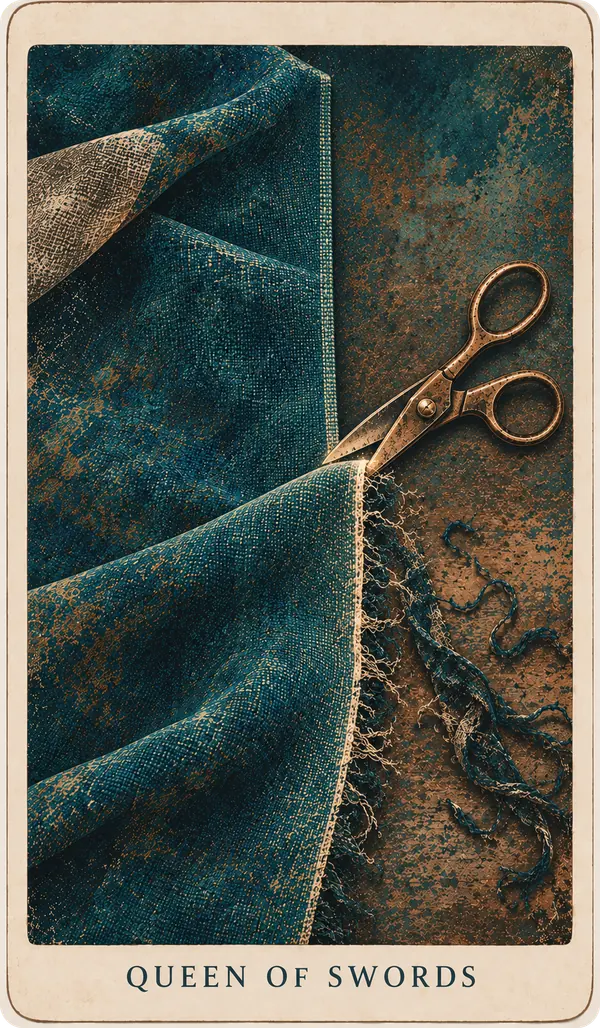
A ruler holds a working line across a blank sheet. That line rises into a clear plane of light, guiding a paper knife along its defined extent. The useful paper remains visible on both sides.
The ruler conceals neither the route nor the result. Anyone looking at the work can see where it was guided. A clear line becomes a visible guide for a cut with a chosen reach. Its whole length remains open to view.
- copper ruler across blank paper
- clear plane of light
- paper knife beside the guide
- usable sheet on both sides
- blue cloth at the table edge
This card in other decks
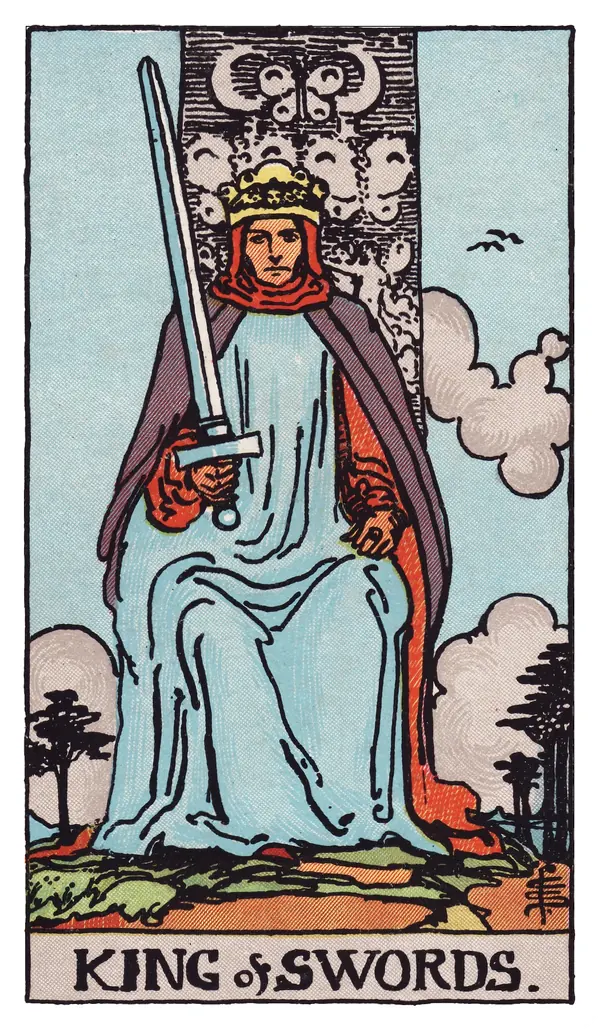 Rider–Waite–SmithKing of SwordsClear, rational judgment and fair authority are available right now, worth applying with real discipline.
 FamiliaKing of BladesThe scales are tipped by someone ready to answer for the tipping, and that is why the judgment finally ends.
 City of WindowsKing of SwordsApplying one measure to yourself and to others, telling testimony apart from guesswork, and answering for your words.
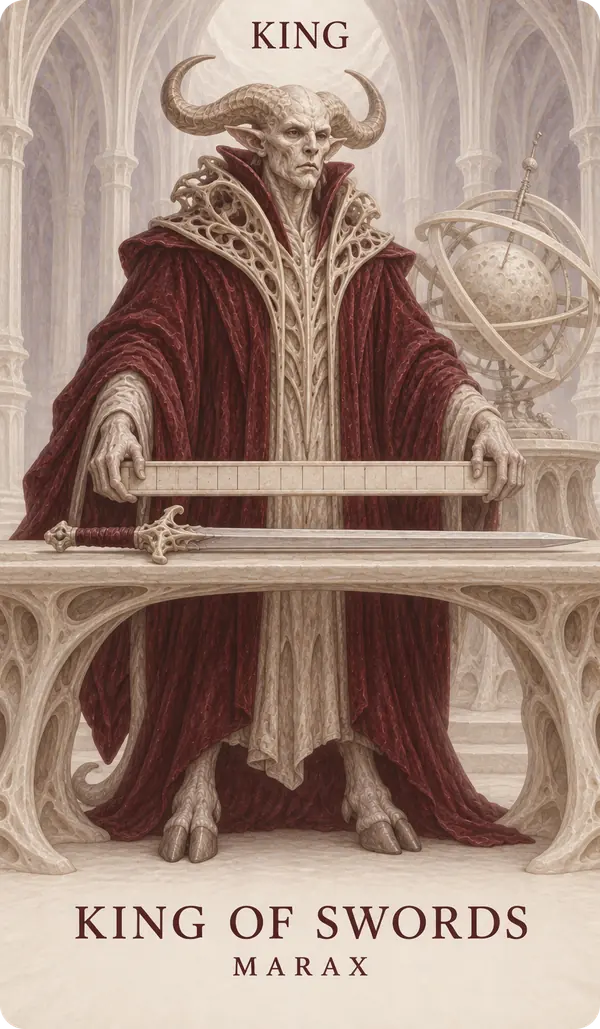 CarnalKing of SwordsJudgment organized into a consistent standard.
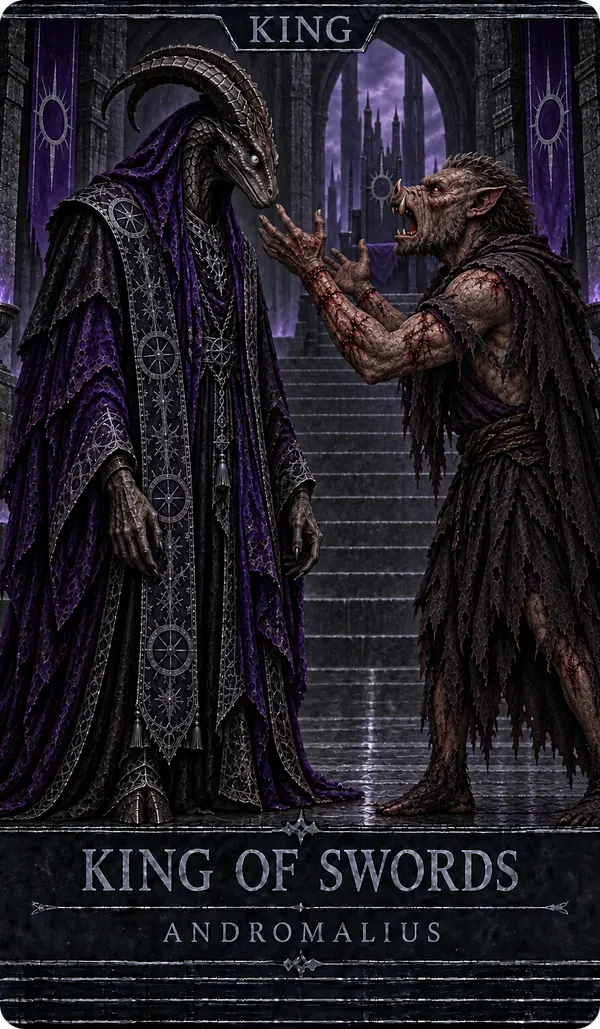 Crimson InfernoKing of SwordsUse reason with accountability.
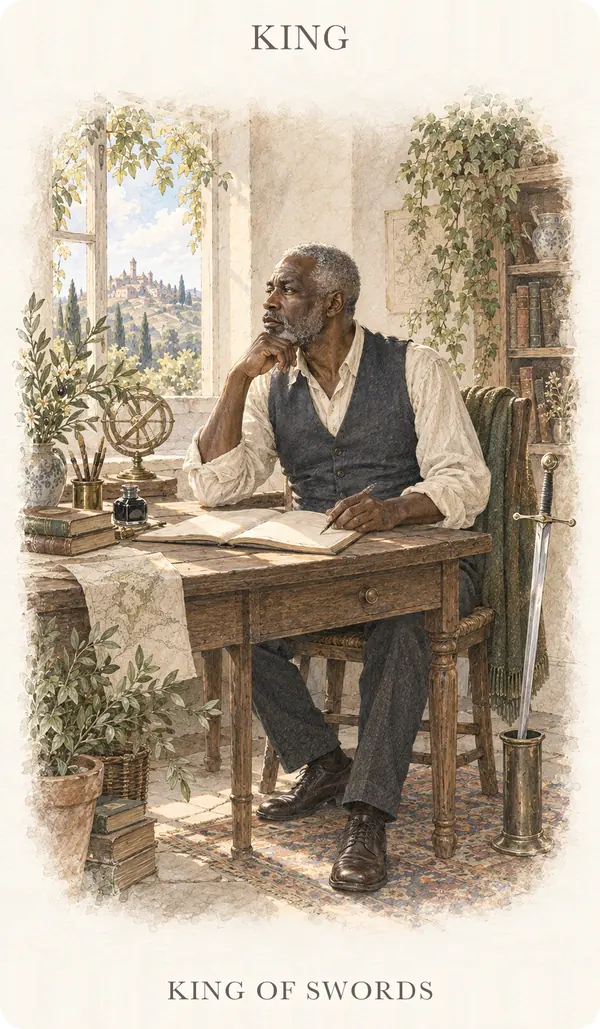 Everyday WondersKing of SwordsTaking responsibility for your judgments and welcoming questions.
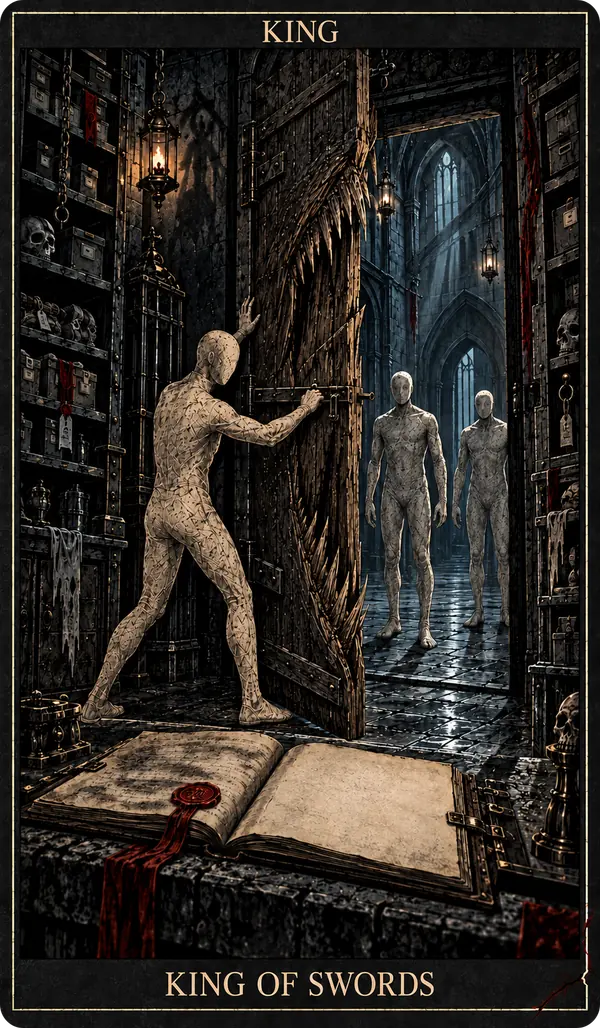 Mirror NightKing of SwordsLet others examine what is known and what remains uncertain.
 Self ContactKing of SwordsApply reason consistently, including to your own preferred explanation.
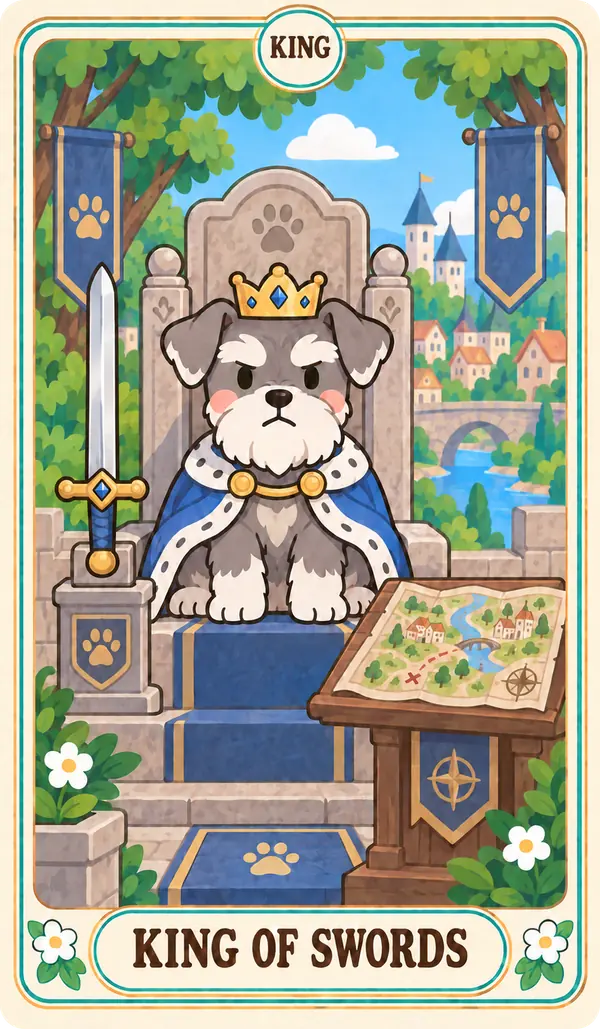 Shiba TownKing of SwordsReason; ethical judgment; clear standards.
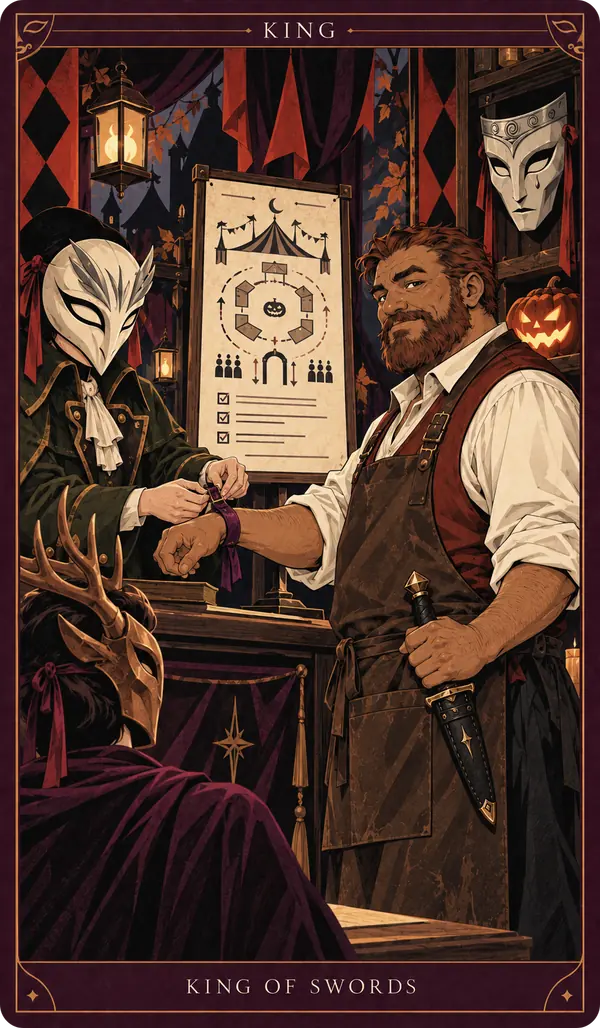 Velvet MasqueradeKing of SwordsA shared standard that includes its keeper.
 Four HorsemenKing of DeathMeet an unavoidable truth without abandoning your duty.
 Four TrailsKing of SwordsClear judgment, reason, accountability.
 Colour of PowerKing of SwordsYou decide what the world will know and what goes with you.
 BoundKing of SwordsA mind that tells the truth and keeps its own wrist bound.
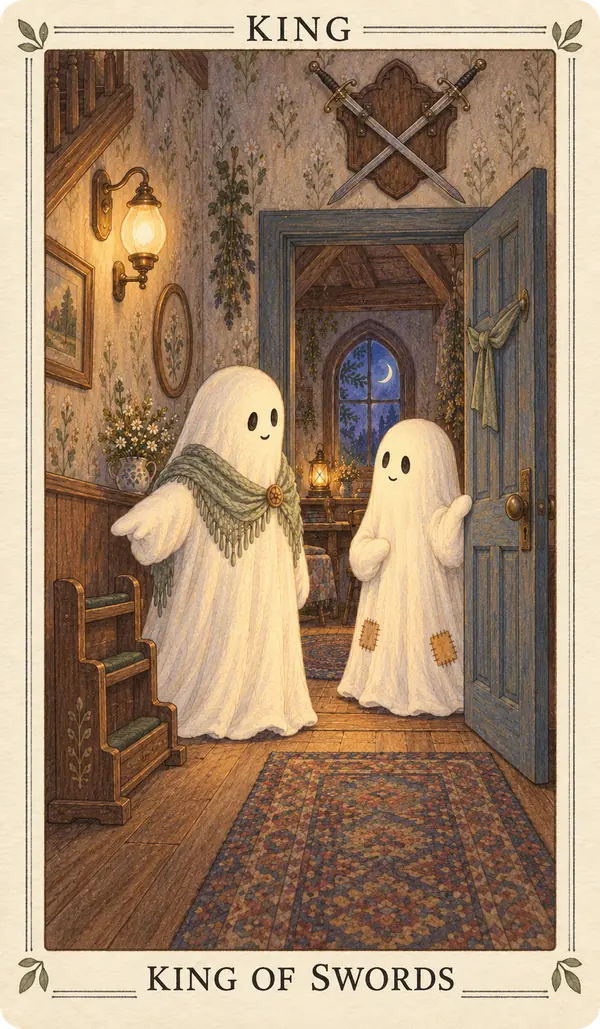 Cozy HauntKing of SwordsApply reason with consent and consistency.
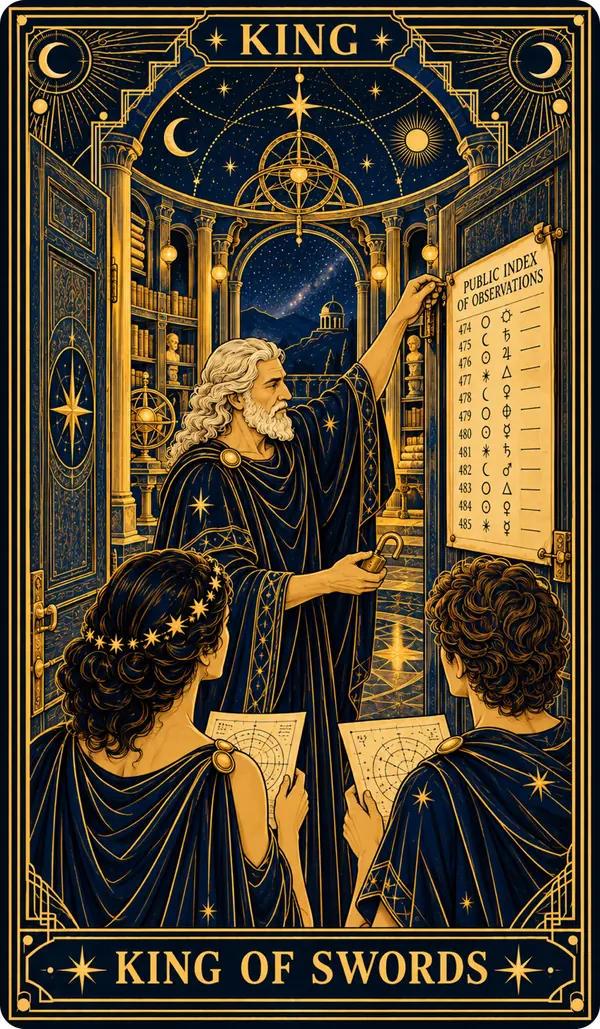 Celestial Night SkyKing of SwordsAn open way to question.
Where it appears
Questions about this card
Is King of Swords a yes or no card in The Living Threshold Tarot?
King of Swords leans yes upright to a clear rule whose reach both sides can see. The guide leaves useful paper visible on either side. Reversed, the answer is mixed when its reasons or reach are obscured. Say one shared boundary plainly and invite a question about where it applies before adding another rule.
What does King of Swords mean for protection and boundaries?
The visible working line may point to a ward made easier to trust through plain words. Light shows where the boundary runs, with room on both sides of the paper. Let a shared threshold have an understandable welcome. Say when a space is private and invite others to ask how that limit fits their needs.
What does King of Swords mean reversed in The Living Threshold Tarot?
A clear looking rule may hide an uneven reach when King of Swords is reversed. One difference can remain outside its light, or the starting words may feel impossible to question. Bring the line into a shared conversation. Write the rule from each side, read both sentences aloud, and ask where its welcome needs mending.