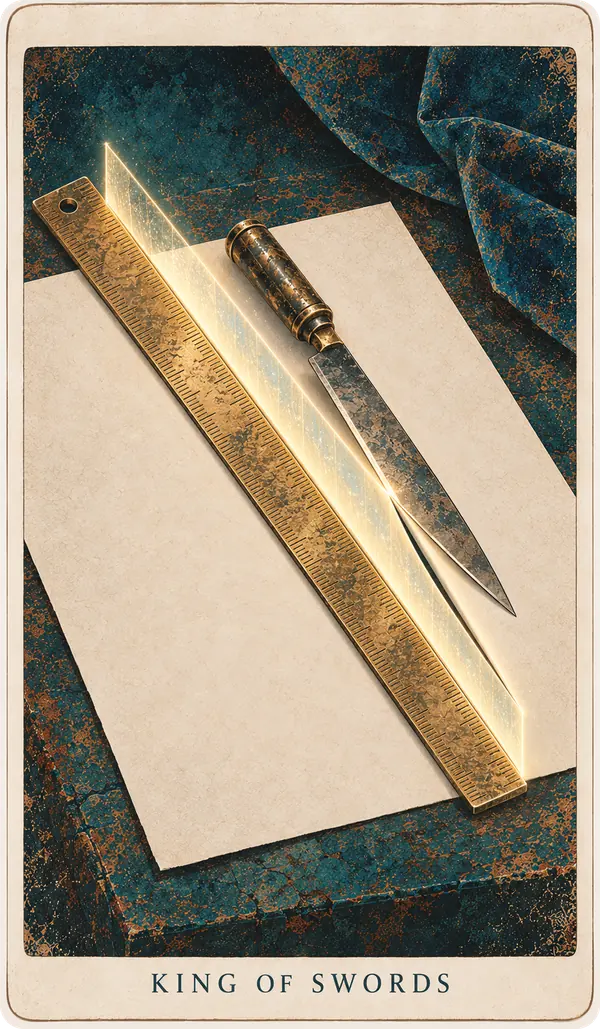
Seven of Swords
Seven of Swords in Living Threshold · Minor Arcana
ProtectionIn short
The real key slips out the back while a paper copy shines at the front.
Reversed
A hidden route becomes visible, is abandoned, or prompts suspicion.
- Swords
- Seven
- Air
- The Hidden Key
- a quiet strategy
- privacy and concealment
- changed access
Upright
Consider what a quiet strategy is achieving. Discretion may preserve privacy, while concealment may keep another person from information they need. In protective reading, look at the actual route before guessing why it was chosen. The paper copy of the key at the window can show an appearance kept in place after something important has moved.
Consider who knows about the change and who relies on the old opening. Judge the method through its setting, permission and effects, allowing secrecy to be part of a fuller picture. The paper copy shines like brass, yet its lifted corner shows a thin paper edge.
Your ward may need to follow where access truly goes while leaving private things free from accusation.
A question to sit with
“What does the paper copy at the window hide about where the real key goes?”
One step
Ask one plain question about who may use an opening you share, keeping private motives out of it.
Reversed
A concealed strategy may become visible, or a quiet approach may be abandoned. Suspicion can also take the place of looking closely, turning every intact seal into a reason for accusation. Look for the specific difference between appearance and action. Name what has moved and what you can actually see.
Make access clear where information has been withheld. A useful response needs more precision than assuming that a hidden route must be harmful. The wax seal on the letter stays whole, yet the real key has slipped out at its side.
You can mend one unclear opening without naming a culprit or turning every closed door into a threat.
A question to sit with
“Does suspicion of a hidden motive go beyond the changed opening I can see?”
One step
Place your own key in its chosen spot and write the access you want clarified before asking about it.
How this deck reads reversed cards
Reversed, the living things work against the grain. An opening jams, a ward is pulled too tight, a lining has worn thin from long service, or a capacity that went quiet starts to come back. What changes is how the boundary does its work: a shelter may need loosening, a channel a gentler flow.
In love
A paper copy of the key may shine at the front while the real key takes a private route behind it, asking for clear words about access between you.
- Supports
- Privacy with a named shared opening.
- Watch for
- Guessing a motive from the sealed fold.
- One step
- Ask one plain question about a plan you share and leave private reasons for the other person to name.
An unclear opening may be ready to be named, or suspicion may give the paper copy of the key a hidden story it cannot carry.
- Supports
- Clarifying contact without naming a culprit.
- Watch for
- Giving a private fold a harmful story.
- One step
- Ask which part of one shared plan has changed and listen before answering.
At work
A familiar front may hide a changed working route, like the real key slipping behind the letter while its likeness stays visible.
- Supports
- Knowing which opening is actually used.
- Watch for
- Relying only on the bright paper copy.
- One step
- Ask where one shared piece of work now goes before passing it along.
The real route may become visible while guesses about secrecy distract from making shared work easier to reach.
- Supports
- A direct question about access.
- Watch for
- Accusing before the opening is understood.
- One step
- Write the route you currently use and ask whether it has changed.
A quiet option may use the rear fold, protecting privacy while changing who can reach the real key.
- Supports
- A precise look at the route.
- Watch for
- Choosing by the front appearance alone.
- One step
- Write who needs to know about one small change before trying it.
The paper copy’s brass sheen may stir suspicion when the useful distinction is simply between a copy and a real opening that works.
- Supports
- Keeping the visible difference precise.
- Watch for
- Making a hidden motive decide the choice.
- One step
- Name the missing detail about access before weighing the option further.
The lifted corner of the paper copy may teach your ward to follow real access while giving private things their own sealed place.
- Supports
- Noticing a difference without accusation.
- Watch for
- Calling every hidden fold harmful.
- One step
- Put your key in its chosen place and write one opening you want to understand more clearly.
A ward may become strained when every intact seal is made to carry a feared hidden cause.
- Supports
- Protection with room for the unknown.
- Watch for
- Searching every closed fold for blame.
- One step
- Write one thing you can see and one question it leaves unanswered on separate lines.
An unchanged-looking family welcome may hide a route of access that has moved behind a private fold.
- Supports
- Clear words about a shared door.
- Watch for
- Using the old appearance as an answer.
- One step
- Ask how one shared invitation works now without demanding a private story.
A private family fold may be read as proof of harm when the changed opening needs an ordinary spoken answer.
- Supports
- Leaving private reasons private.
- Watch for
- Turning silence into a named accusation.
- One step
- Ask one concrete question about a shared welcome and leave guessed motives out of it.
Yes or no
MixedMixedThe real key moves while a paper copy holds the front, so the answer is mixed until the quiet route and its effects are understood.
Supports
- A private route may preserve useful discretion.
- The thin paper edge of the copy makes its difference from the real key visible.
Limits
- The familiar front may hide changed access.
- Someone may still rely on the paper copy.
One step
Ask how the shared opening works now before relying on its familiar appearance.
The hidden route may become clear or be wrapped in suspicion, so the answer is mixed until access is named without accusation.
Supports
- A quiet change may be coming into view.
- One precise question can make the opening clearer.
Limits
- A sealed fold may be mistaken for proof of harm.
- The motive may stay unknown even when the route is visible.
One step
Write the change you can actually see and ask about that change alone.
What is in the picture
A real brass key slips halfway through a letter’s rear flap. At the front window, a flat paper substitute catches a magical brass sheen. Its thin edge still reveals the difference.
The main wax seal remains intact. The viewer can see both the concealed route and the appearance left behind. The real key uses an unseen opening while a luminous substitute maintains the front appearance. The rear route exposes the distinction.
- real brass key partly behind the letter
- paper key in the front window
- lifted thin corner beneath a brass sheen
- intact red wax seal
- side opening visible beside the flap
This card in other decks
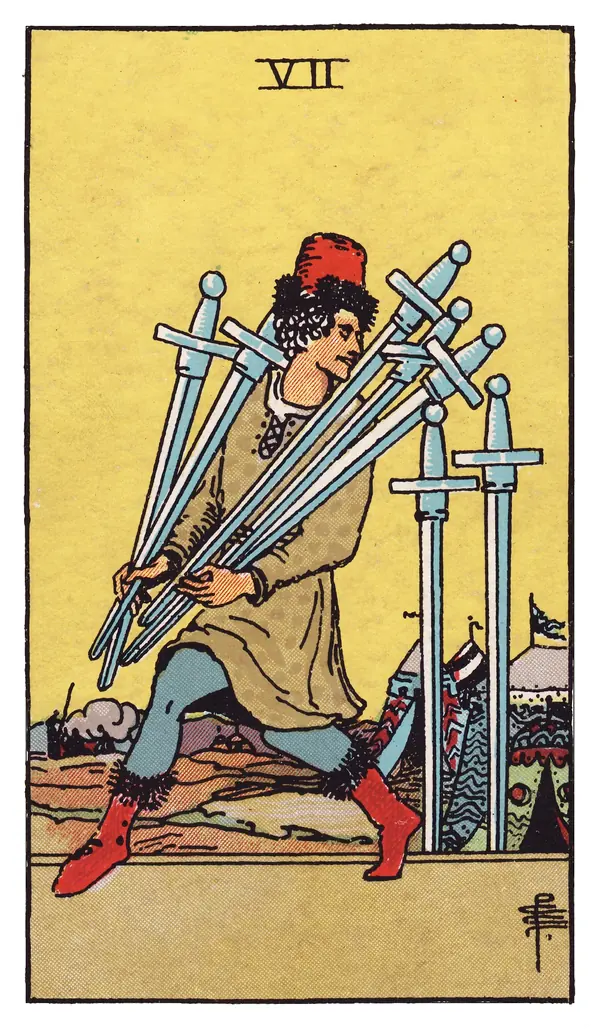 Rider–Waite–SmithSeven of SwordsA strategic, solo approach may be tempting here, but it’s worth being honest about what it avoids.
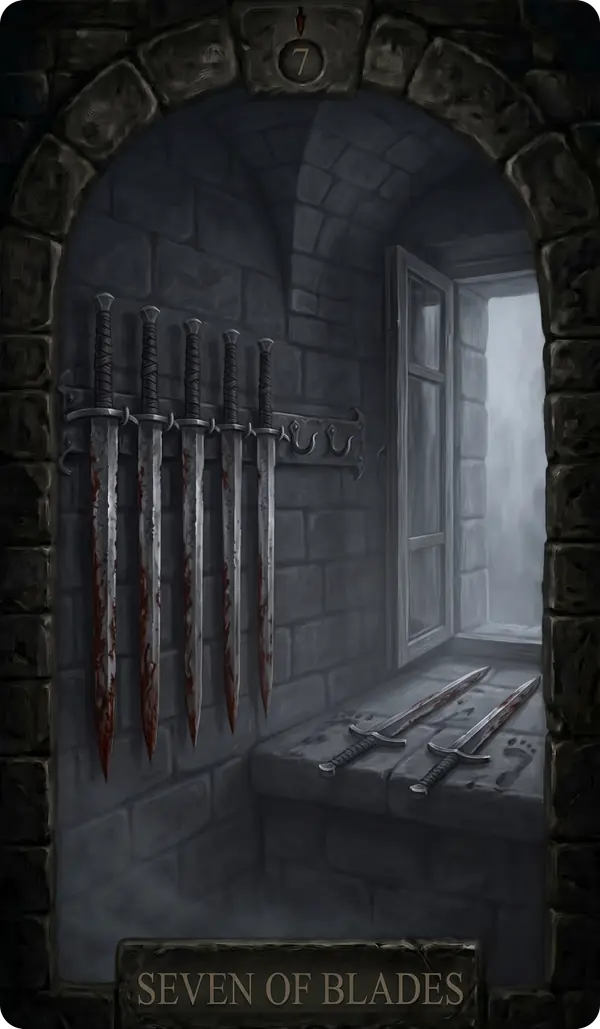 FamiliaSeven of BladesSomething taken quietly and precisely, by a route around the rules, which works until someone counts the hooks.
 City of WindowsSeven of SwordsNoticing a specific evasion and naming it.
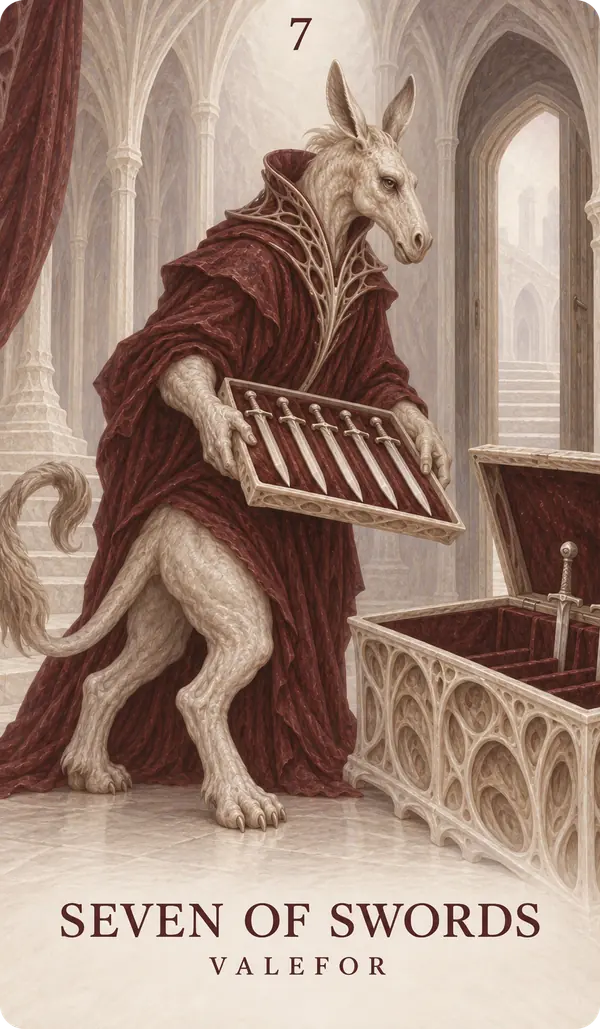 CarnalSeven of SwordsConcealment alters who can make an informed choice.
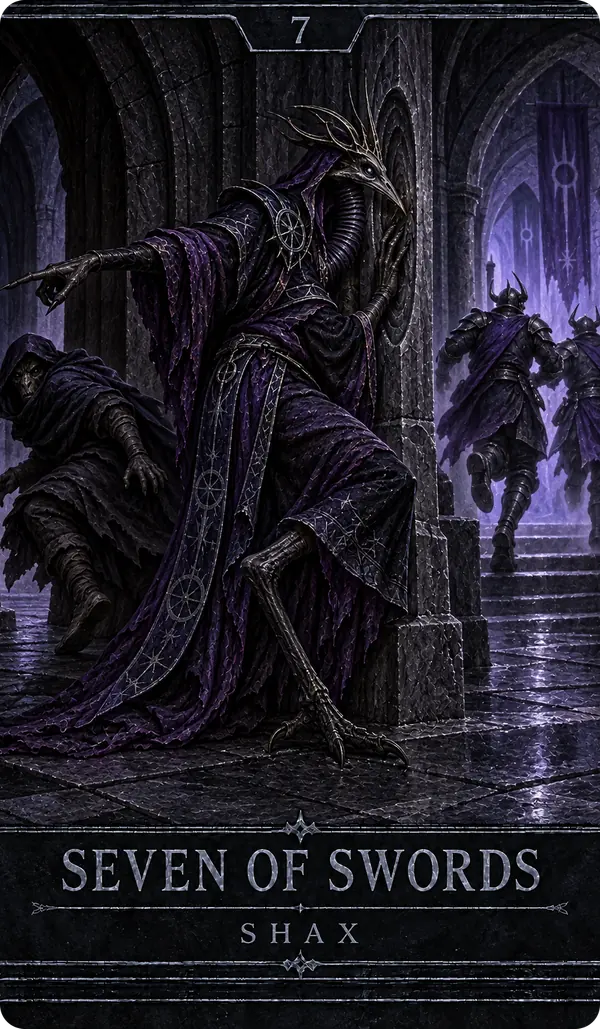 Crimson InfernoSeven of SwordsUse discretion when openness would expose someone to harm.
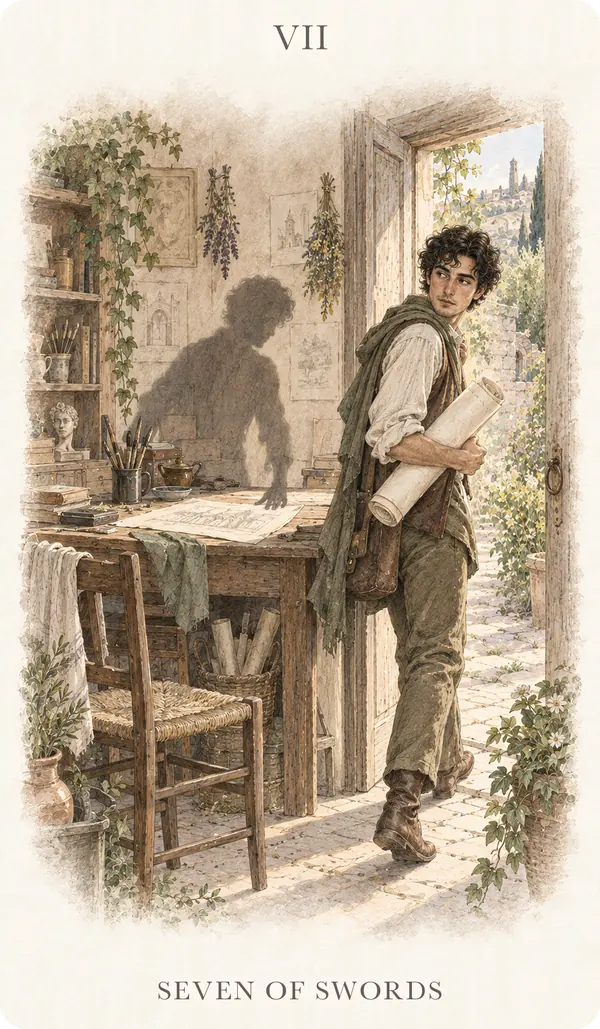 Everyday WondersSeven of SwordsStrategy and holding things back, and who carries the cost.
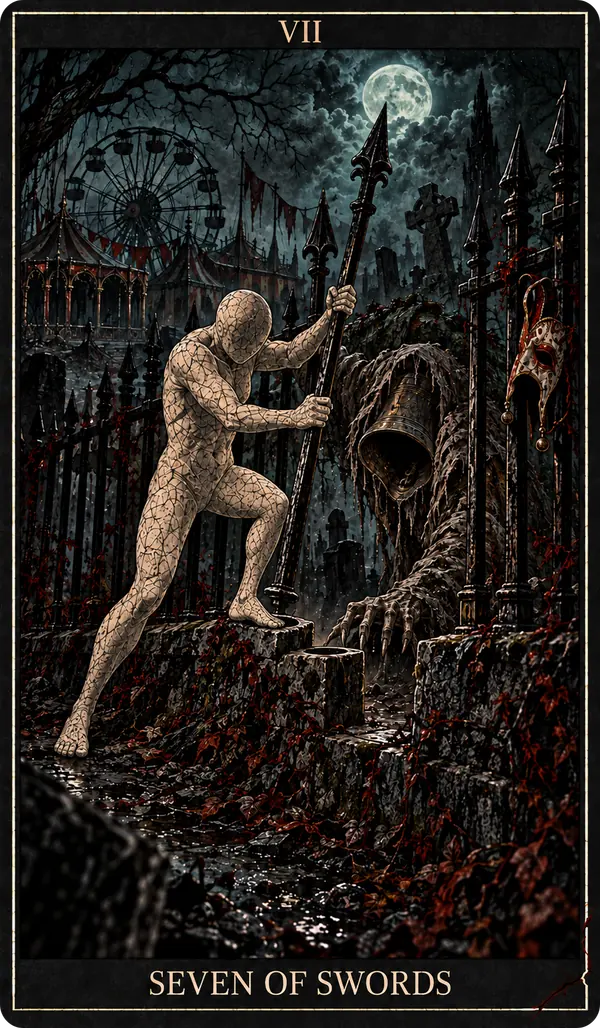 Mirror NightSeven of SwordsRecognise concealment and the cost of access.
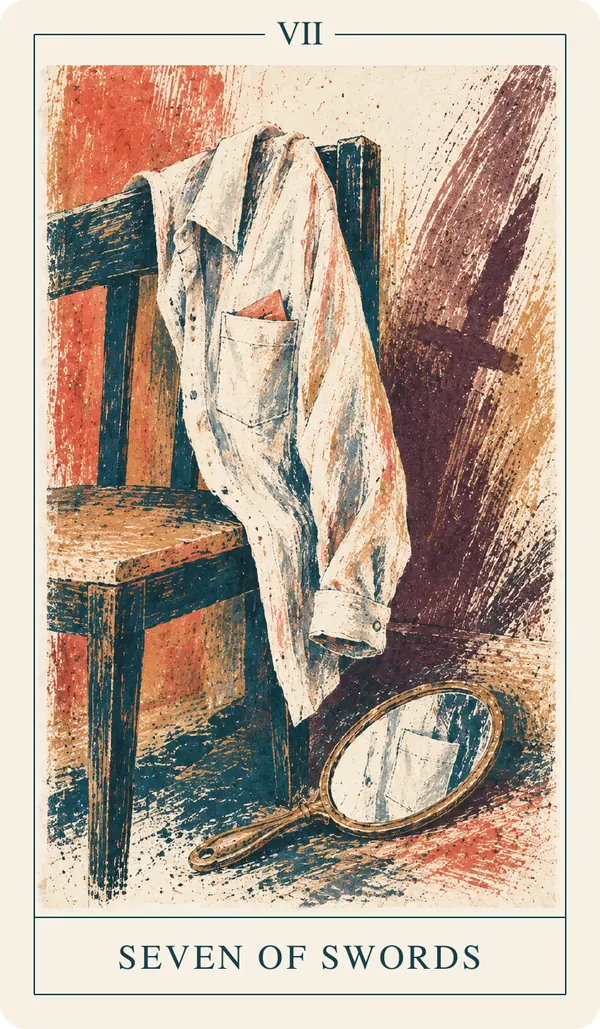 Self ContactSeven of SwordsUse discretion and strategy while examining the cost of concealment.
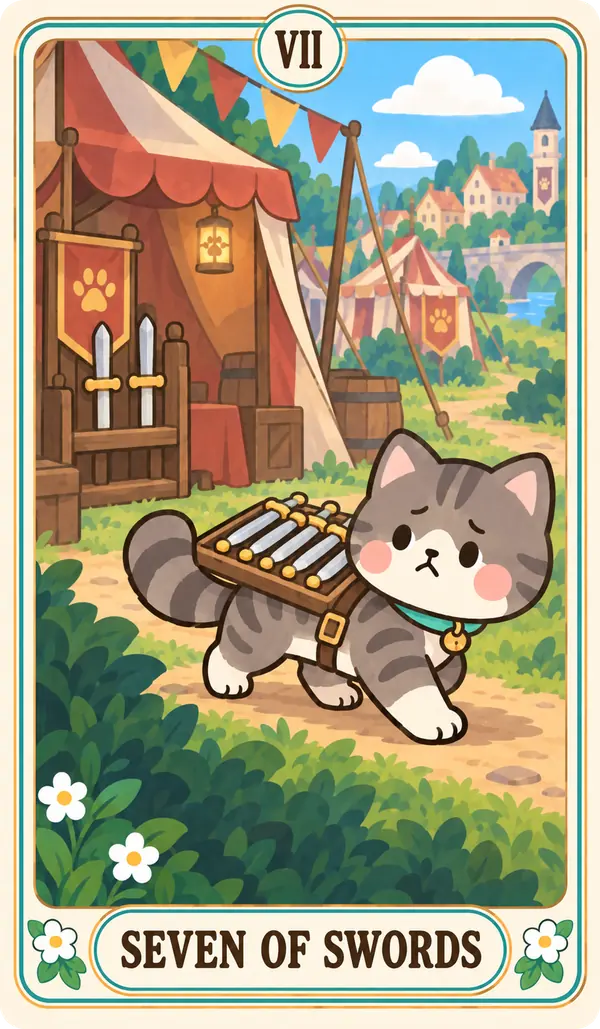 Shiba TownSeven of SwordsStrategy; secrecy; taking a shortcut at a cost.
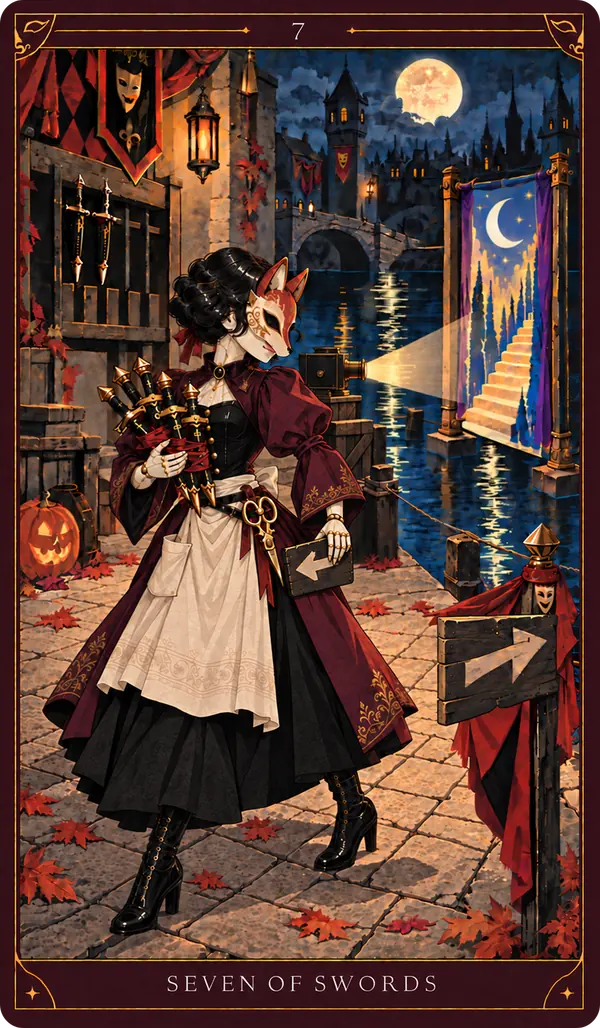 Velvet MasqueradeSeven of SwordsA concealed plan outside shared agreement.
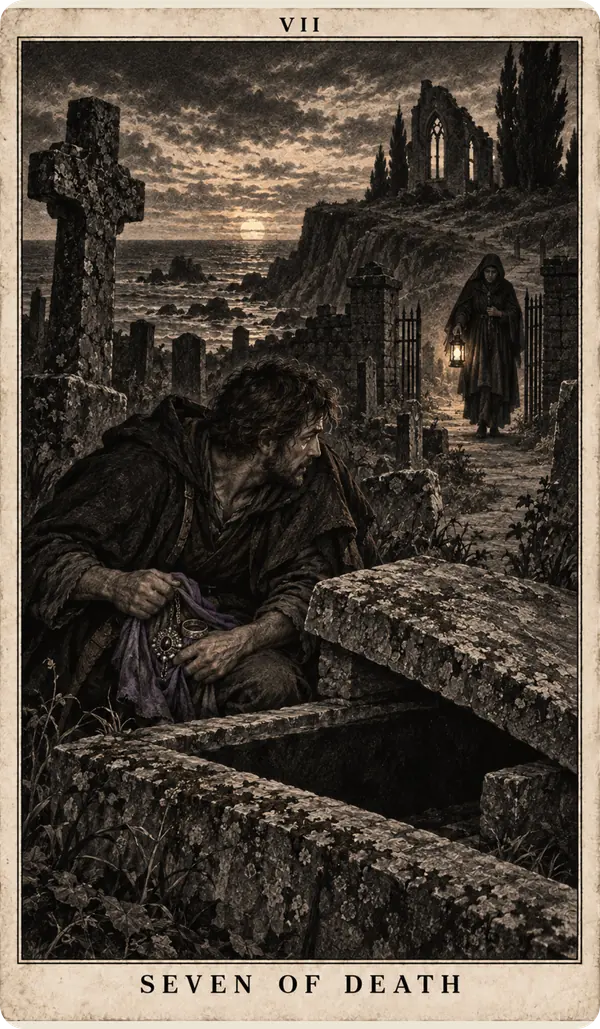 Four HorsemenSeven of DeathExamine what your escape or advantage takes from others.
 Four TrailsSeven of SwordsSecrecy, strategy, evasion.
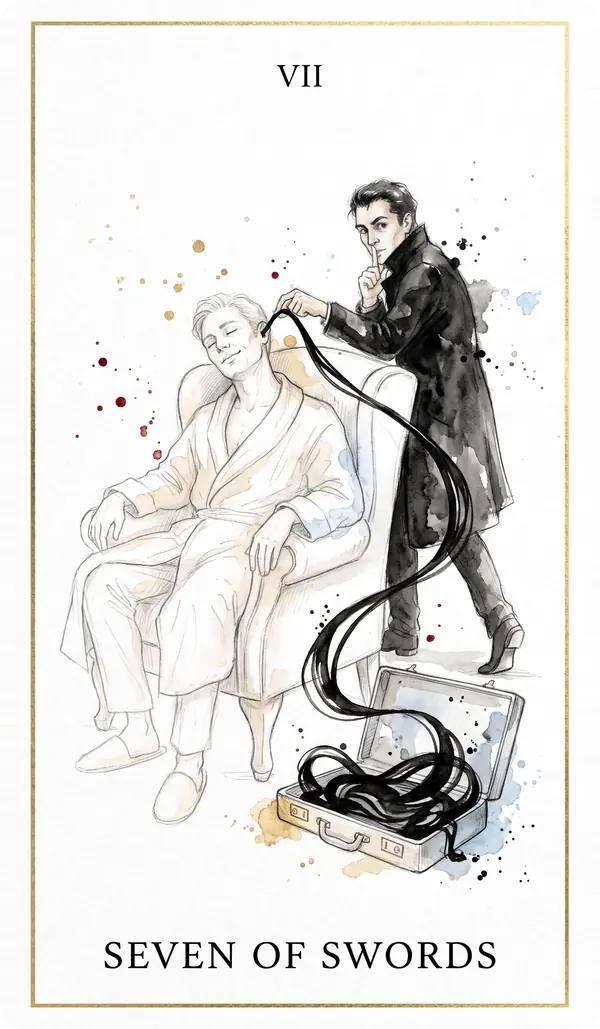 Colour of PowerSeven of SwordsSomeone is taking what is in your head while you sleep.
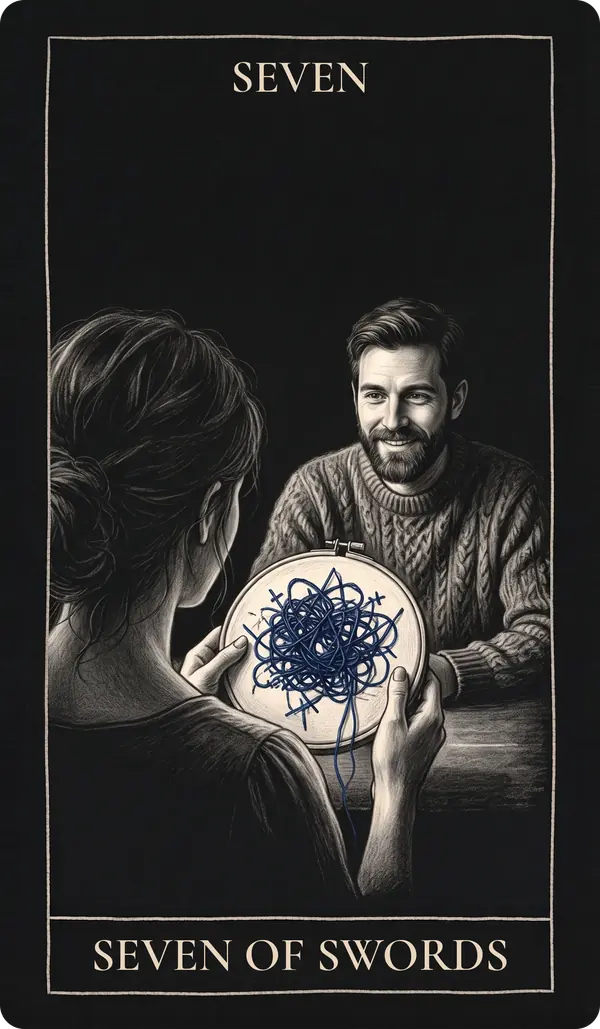 BoundSeven of SwordsWhat is shown is not what is; the knots stay behind.
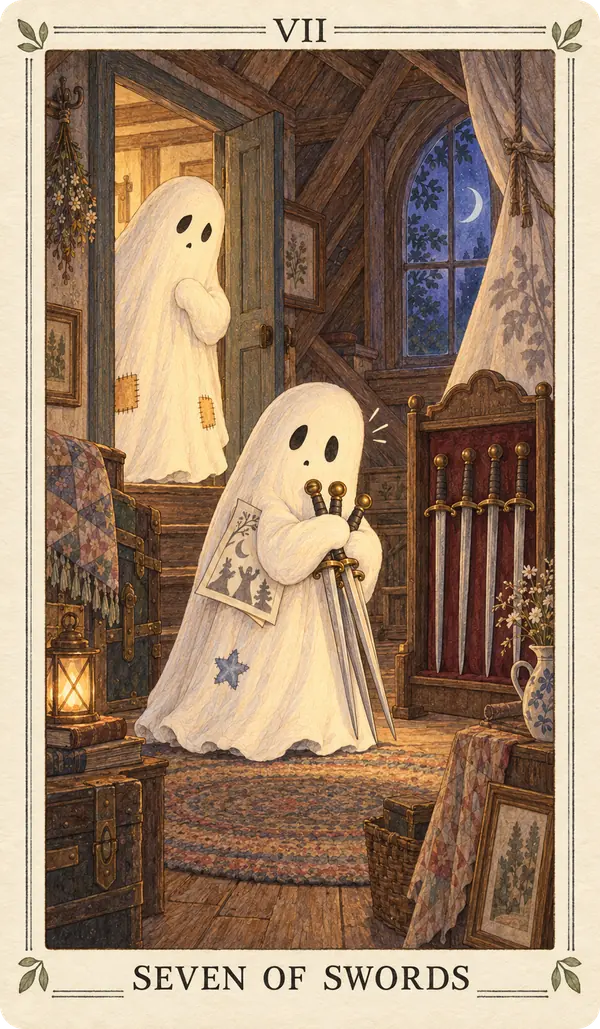 Cozy HauntSeven of SwordsExamine what secrecy protects and costs.
 Celestial Night SkySeven of SwordsAn opened source and an honest path.
Where it appears
Questions about this card
Is Seven of Swords a yes or no card in The Living Threshold Tarot?
Seven of Swords gives a mixed answer in both orientations. A real key takes a side route while a shining substitute stays at the front. Reversed, the route may become clear or be clouded by suspicion. Ask how the opening works now and name only the change you can actually see.
What does Seven of Swords mean for protection and boundaries?
The different keys may point to a ward whose familiar appearance needs a clearer account of access. A quiet route can change while the front still looks the same. Keep the inquiry close to the visible opening. Ask how a shared doorway is used now before relying on its old welcome or adding a new lock.
What does Seven of Swords mean reversed in The Living Threshold Tarot?
A concealed route may come into view when Seven of Swords is reversed. Suspicion can also build a story around an intact seal before you understand what changed. Mend one unclear opening with plain words. Write the difference you can see and ask about that difference alone, leaving the rest open for a reply.