Five of Blades
Five of Swords in Familia · Minor Arcana
Family lineIn short
The dispute is won fairly, and the price shows at once: there is no one left to sit at the table.
Reversed
The winner looks at the empty hall and asks whether the victory was worth it, while the door still stands open.
- Blades
- Five
- Air
- The Empty Council
- a victory paid for with relationships
- the price of being right
- a winner alone at the table
Upright
The Five of Blades is an empty victory. Three blades are raked to one end of the table, the chairs are overturned and everyone else has gone.
Upright the dispute was won, even fairly, and the law is on the winner’s side, yet the family is poorer by everyone who walked out the door.
It can describe a won inheritance case or being right in a family quarrel, with nothing left to say to relatives afterwards.
A question to sit with
“What did being right in this cost, and who is no longer at the table?”
One step
If a dispute was won here, write down who has stopped coming to the table since.
Reversed
Reversed, the Five of Blades is the wish to leave the dispute before it is too late. The discarded blades can still be picked up, and for the first time the winner asks whether the win was worth an empty hall.
It shows a person ready to step back from being right to keep the family together: not pressing all the way, leaving the door open for the kin who left.
The card reads this as a chance of reconciliation, not a guarantee.
A question to sit with
“What would you be willing to leave on the table to keep someone at it?”
One step
Note one point in the dispute you could let go without losing what matters.
How this deck reads reversed cards
Reversed, the card is not weaker. The same strength runs the other way: blocked, sealed, or drained downward into old patterns instead of reaching the living. The red thread does not break; it carries the strength somewhere else.
In love
Winning an argument between you may come at the price of an empty table, being right with no one left to sit with.
- Supports
- Weighing a point against the bond it costs.
- Watch for
- Pressing a quarrel to the last word.
- One step
- Let one argument go unfinished this week, on purpose.
Looking at the empty hall, you may be asking whether being right was worth it, while the door to them still stands open.
- Supports
- Stepping back from being right.
- Watch for
- Picking up an old quarrel again out of habit, after the blades were already laid down.
- One step
- Tell them one point you are willing to let them have.
At work
A dispute at work may be won fairly, and the price may show at once in the overturned chairs and the partners who stop speaking.
- Supports
- Counting the cost of a victory before claiming it.
- Watch for
- Taking the vote and losing the colleagues.
- One step
- After the next disagreement at work, have one friendly word with the person on the other side.
Stepping back from a hard-won point at work may keep a partnership alive, the door left open for those who walked out.
- Supports
- Taking less than you could take.
- Watch for
- Pressing a win all the way out of pride.
- One step
- Offer one small concession on a point you have already won.
Whichever option wins outright may leave the hall empty, so the price may be worth checking before you claim it.
- Supports
- Choosing with the relationships in view.
- Watch for
- Being right as the only measure.
- One step
- Write who would still sit at your table after each option.
The better path may be the one that leaves the door open, taking less than you could so others can return.
- Supports
- Options that keep the way back open.
- Watch for
- Taking everything just because it is yours to take.
- One step
- Mark the option that leaves the most people able to come back.
Seeing what a fair win costs may be the growth here, the scrolls crumpled and the goblets tipped around you.
- Supports
- Honesty about what winning took.
- Watch for
- Pride in a victory no one shares.
- One step
- Think of one quarrel you won, and do one kind thing for the person who lost it.
Growth may be in the question itself: whether the victory was worth the empty hall, asked while the blades can still be picked up.
- Supports
- Letting go of a need to win.
- Watch for
- Defending your past rightness at any cost.
- One step
- Write one old win you would trade for a mended tie.
A family dispute, over an inheritance or an old argument, may be won fairly while relatives walk out through the open door into the fog.
- Supports
- Remembering who you want at the table after the dispute.
- Watch for
- Wins that empty the house.
- One step
- Before the next family argument, pick one point you are willing to leave unsettled.
A relative who won a family quarrel may be ready to step back, leaving the door open for those who left.
- Supports
- Leaving room for family members to come back.
- Watch for
- Victory kept as a grudge.
- One step
- Send a short, warm message to a relative on the other side of an old dispute.
Yes or no
MixedYesYour position looks strong, and what shapes the answer is whether the cost of the win, counted in family, is a price you accept.
Supports
- Your position may be strong and defensible.
- The facts, or the will, may well be on your side.
Limits
- The win may cost ties with your kin.
- Relatives may already be leaving the table.
One step
Write what you gain by winning and which family ties you lose, side by side.
Stepping back from being right to keep a family tie looks available here, and it leans toward yes if pressing less is acceptable to you.
Supports
- You can still step back without losing face.
- The door to relatives who left is still open.
Limits
- Pride may make conceding feel like losing.
- Old family grievances can pull you back into the fight.
One step
Pick one concession, imagine offering it at the family table, and notice how that feels.
What is in the picture
A long stone council table stands empty and askew, three blades raked into a pile at one end and two thrown on the floor beside overturned chairs, goblets tipped and scrolls crumpled, a door open onto fog.
The pile of three blades at one end and the empty chairs at the other split the table between the one who kept everything and those who left. The open door carries the eye out into fog.
- long stone table
- three blades in a pile
- two blades on the floor
- overturned chairs
- overturned goblets
- crumpled scrolls
- open door
- fog
This card in other decks
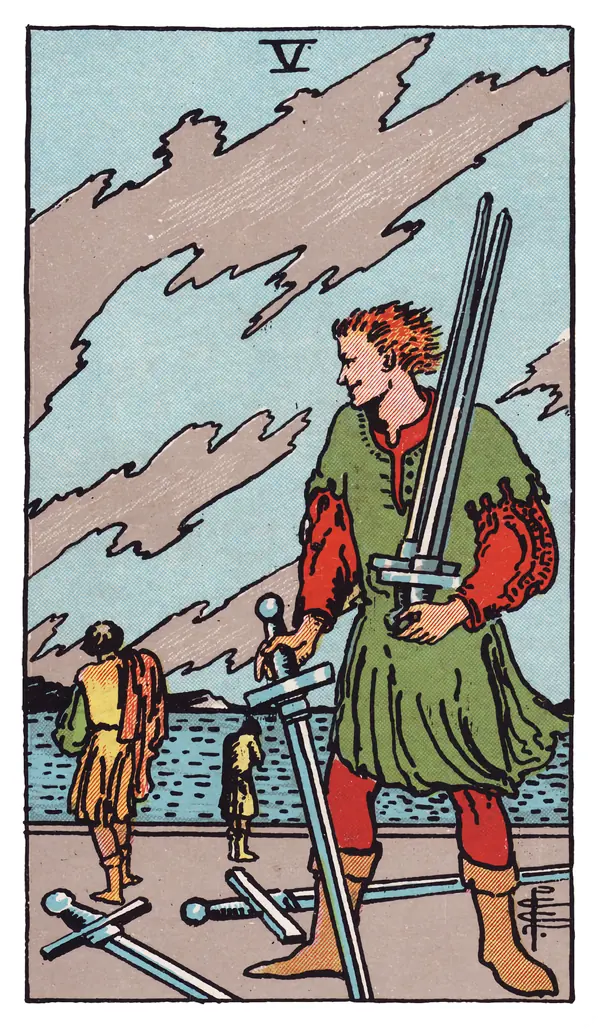 Rider–Waite–SmithFive of SwordsA win here may cost more in relationships or goodwill than it’s worth.
 City of WindowsFive of SwordsNoticing the price of winning with words, and stepping out of the contest.
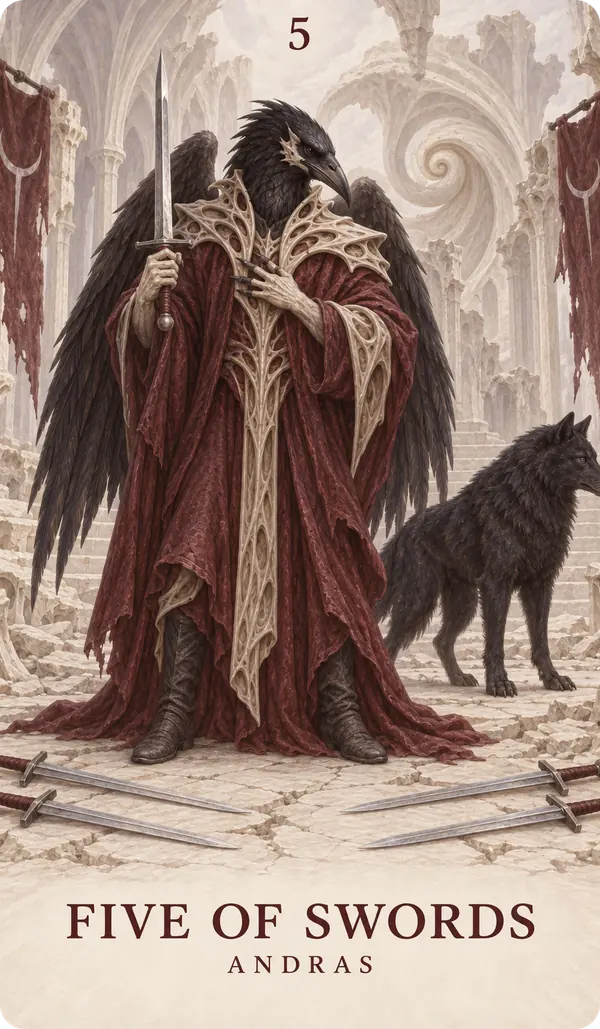 CarnalFive of SwordsWinning a conflict can leave the shared ground damaged.
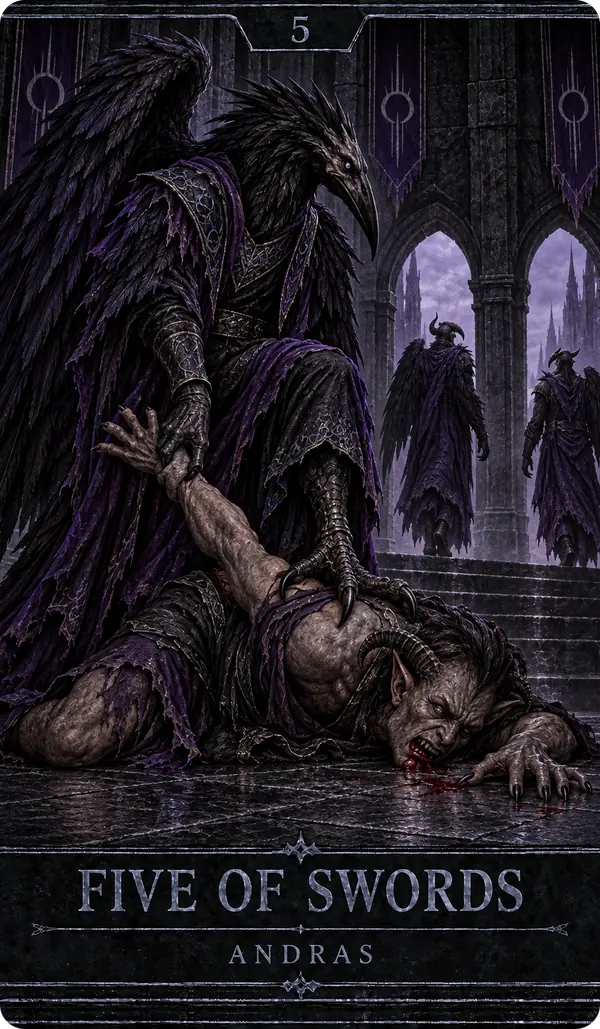 Crimson InfernoFive of SwordsAssess the cost of prevailing.
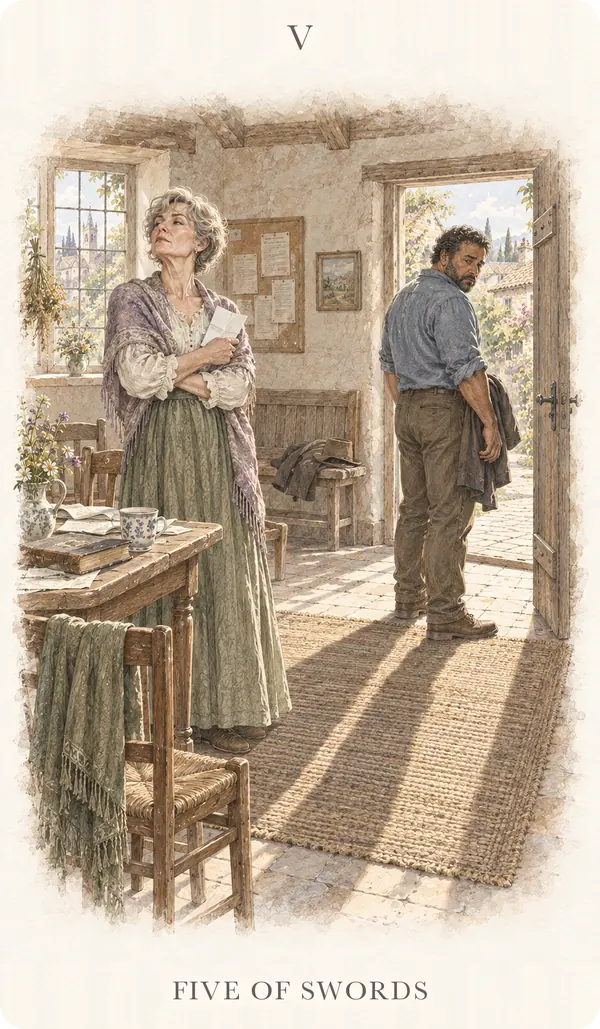 Everyday WondersFive of SwordsWinning the argument at the cost of the relationship.
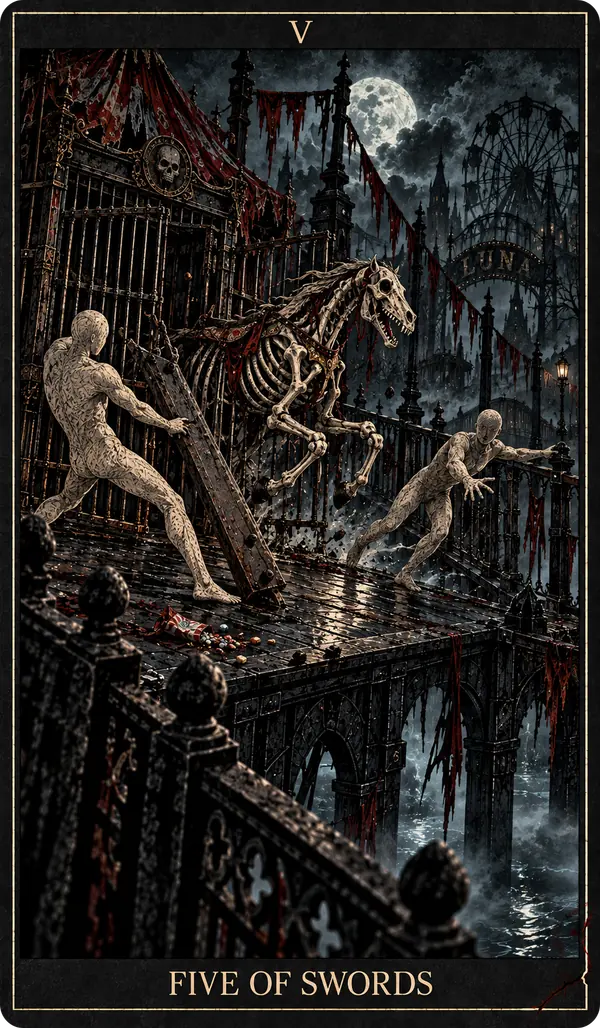 Mirror NightFive of SwordsCount the cost of a narrow victory.
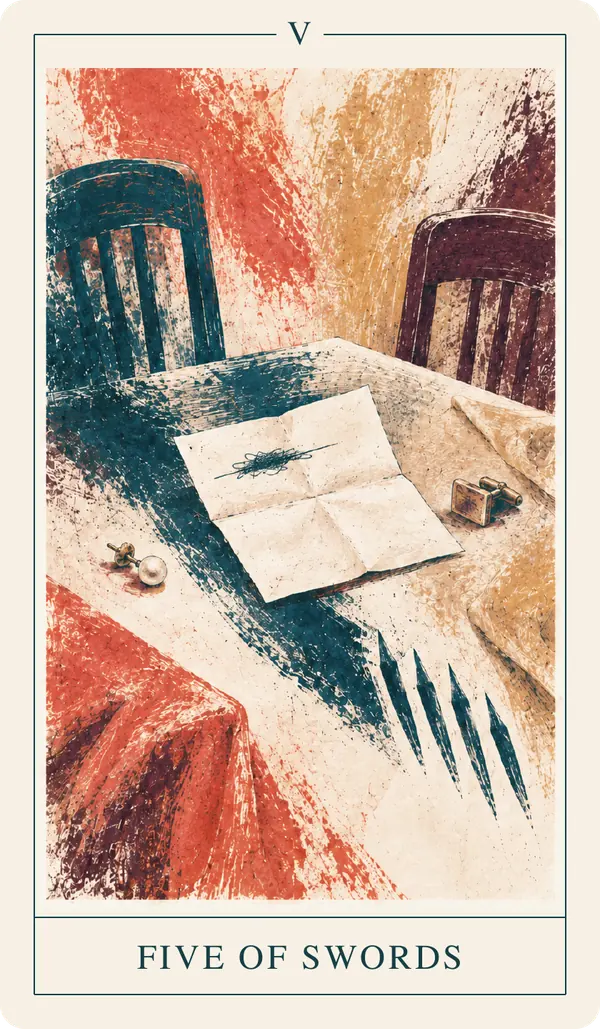 Self ContactFive of SwordsNotice the cost of winning and decide whether to disengage or repair.
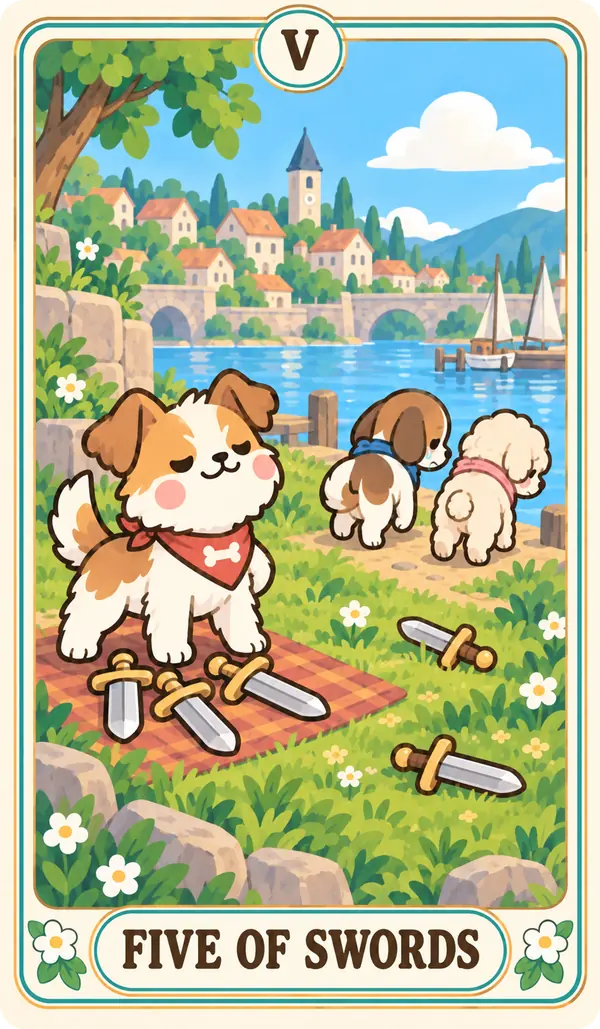 Shiba TownFive of SwordsA hollow victory; conflict; the cost of being right.
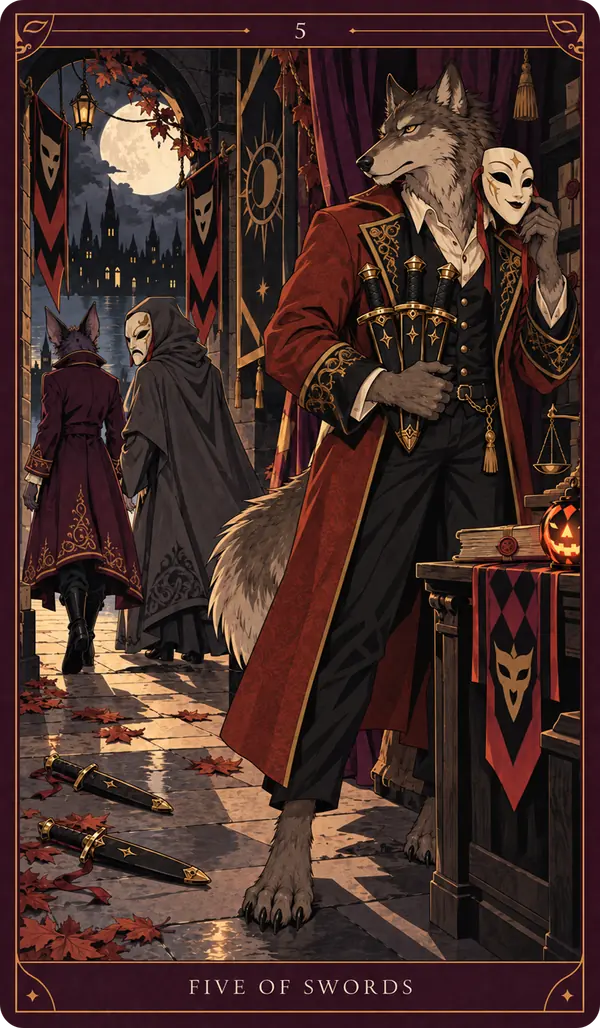 Velvet MasqueradeFive of SwordsA victory that may cost trust.
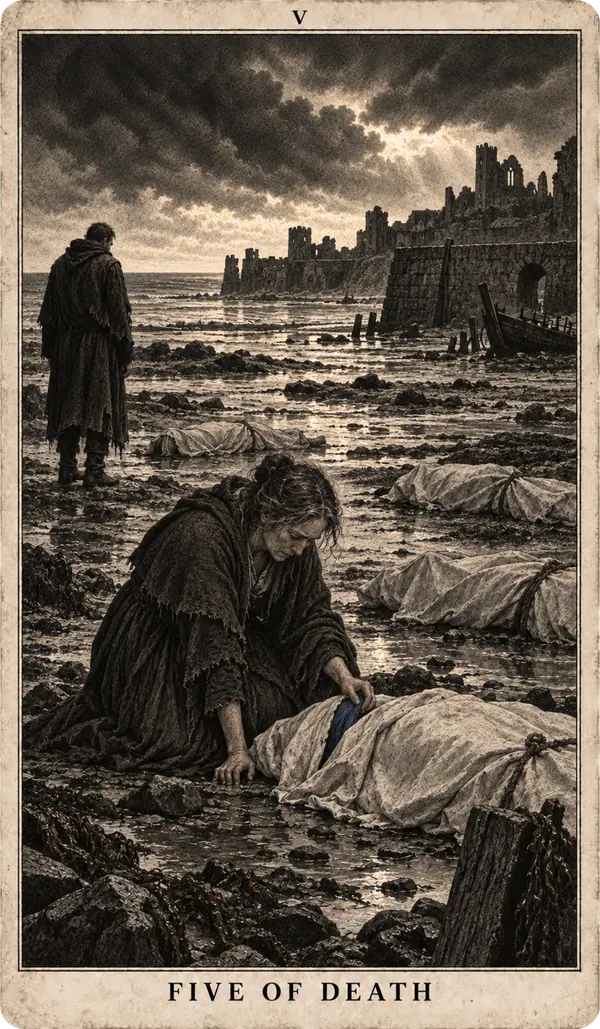 Four HorsemenFive of DeathFace the loss without abandoning the living beside it.
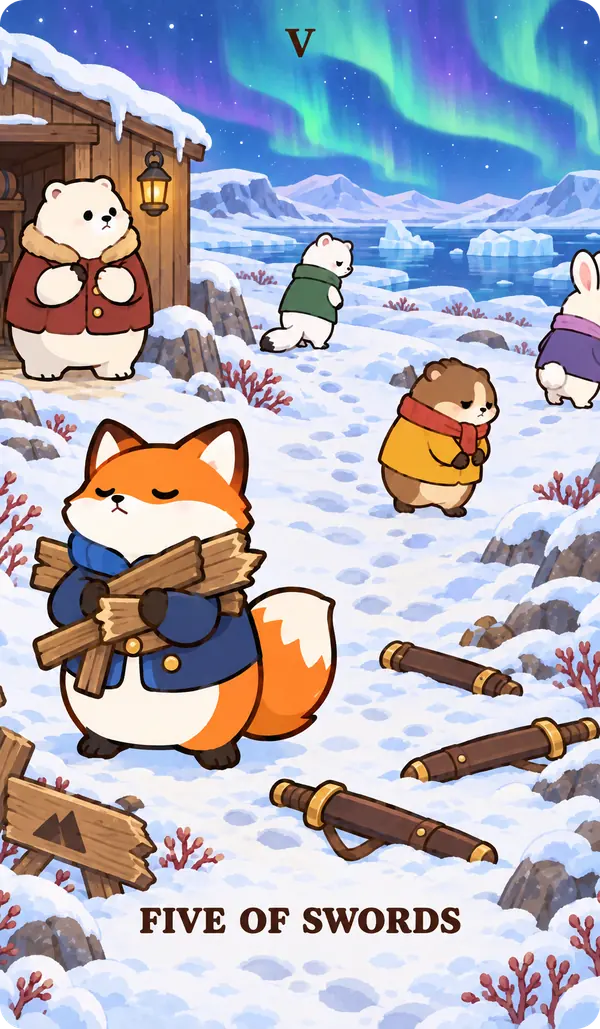 Four TrailsFive of SwordsHollow victory, conflict, damaged trust.
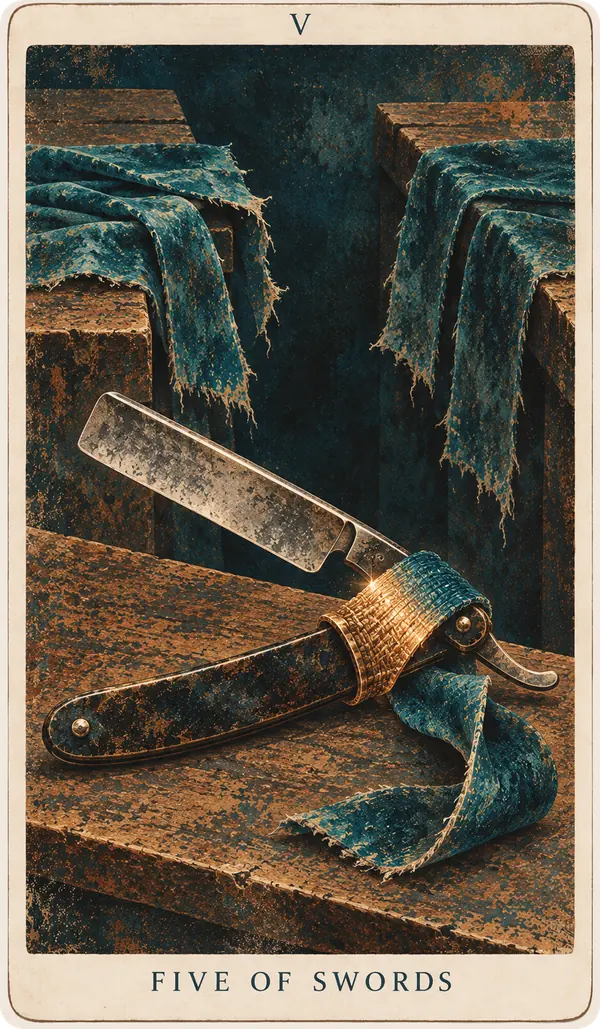 Living ThresholdFive of SwordsThe strip of cloth the razor cut and claimed shines while the shared cloth shelter falls apart.
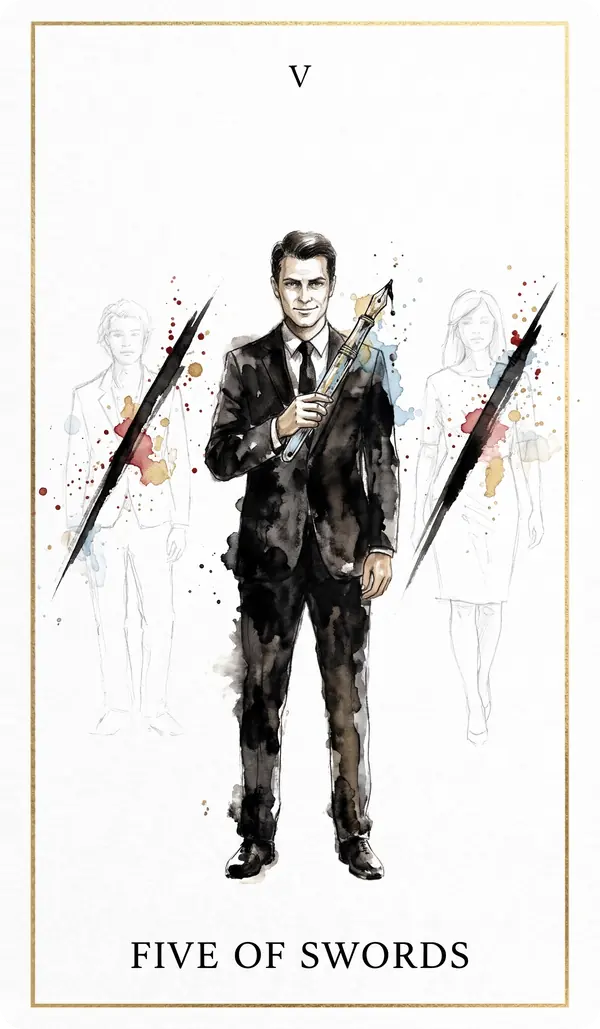 Colour of PowerFive of SwordsYou won by crossing them out; count what the win cost you.
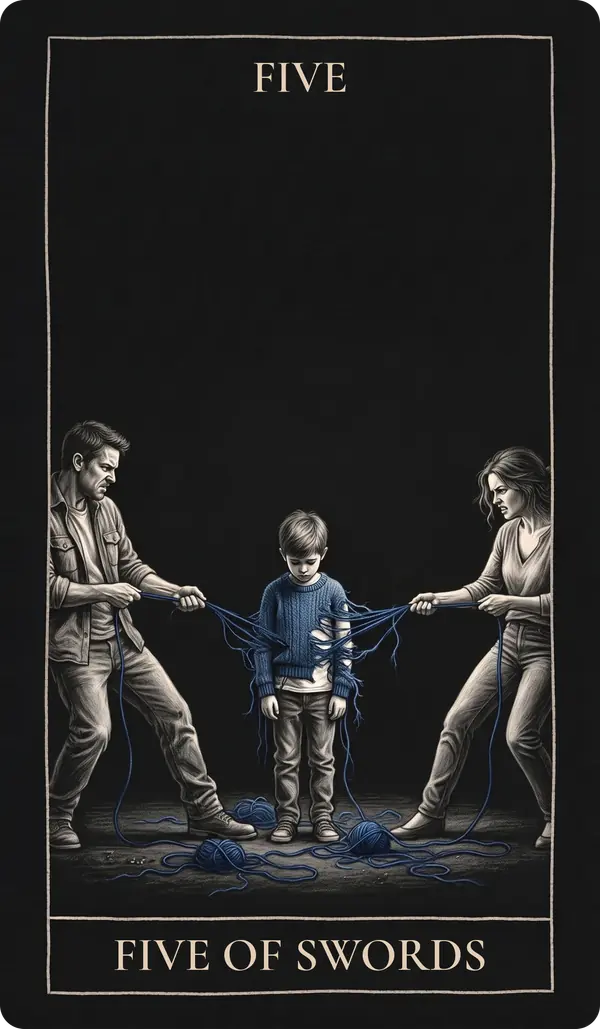 BoundFive of SwordsA quarrel won, while the one in the middle comes apart.
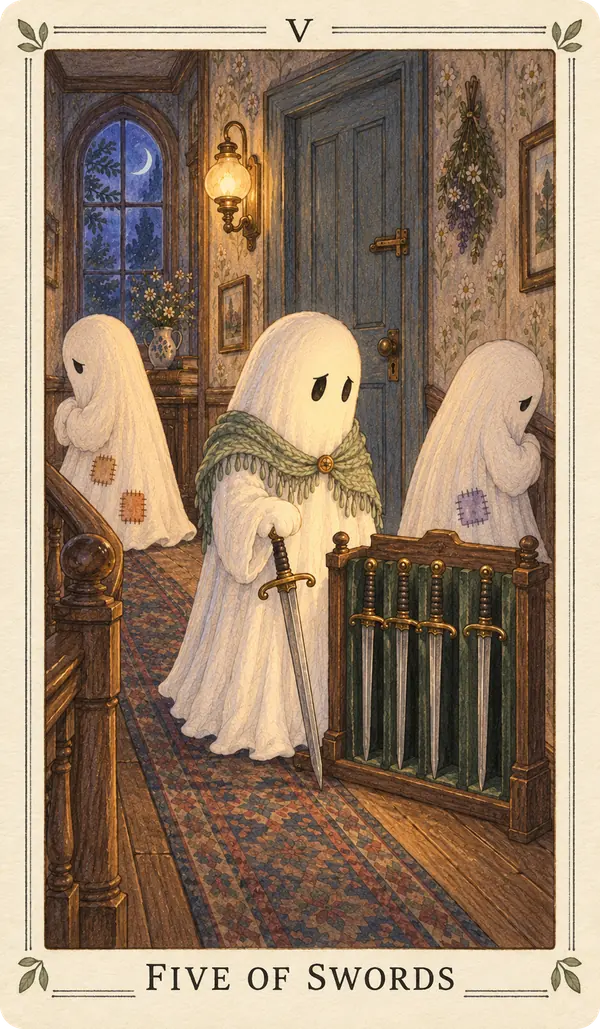 Cozy HauntFive of SwordsCount the human cost of being right.
 Celestial Night SkyFive of SwordsA fact spoken without humiliation.
Where it appears
Questions about this card
Is the Five of Swords a yes or no card in Familia?
Taken upright, the Five of Swords is mixed. Your position looks strong, and the answer depends on whether the cost of winning, counted in family, is a price you accept. Reversed, it leans yes. Stepping back from being right to keep a family tie is available, and the answer favours it if pressing less is acceptable to you.
What does the Five of Swords mean for family?
Looking at family, the Five of Swords upright shows a dispute won fairly while the family itself scatters, a winner alone at the table. It is possible to win the inheritance and lose the relatives without noticing. Reversed, the winner looks at the empty hall and asks whether it was worth it, and the door is still open. Repair can come if someone presses less, though not on one side’s terms alone.
What does the Five of Swords mean reversed in Familia?
Reversed, the Five of Swords is stepping back from a dispute and reassessing a victory while the door still stands open. It is one of the gentler reversals in Familia. In love, you can step back from a fight and keep what matters, even if fights at home always went to the end. Conceding only to reopen it later undoes the whole gain.