King of Pentacles
King of Pentacles in City of Windows · Minor Arcana
RelationshipsIn short
Creating reliable rules that can be kept and revised.
Reversed
Treating other people’s resources as your own, promising stability without taking part, or hiding behind a familiar arrangement.
- Pentacles
- King
- Earth
- The Courtyard Gardener
- responsibility for stable conditions
- clear agreements
- other people’s autonomy
Upright
Creating reliable rules that can be kept and revised. Does everyone have the right to refuse, to settle a time limit and to keep their home their own? Mira talks with Dana and Sam by the shared flower bed about ordinary help between neighbours: who could water the plants or take in a delivery when the other is away, and how to ask permission beforehand.
Mira suggests starting with occasional, specific requests, without swapping keys and without any obligation to be available always. Sam says when he is usually at home; Dana names her limit on time. In this suit the King stands for a mature way of handling resources.
He does not stand for a man’s power over the home.
A question to sit with
“Will our arrangement hold up through an ordinary week and each person’s freedom to say “no”?”
One step
Check whether everyone in the arrangement can refuse, set a time limit and keep their home their own.
Reversed
Treating other people’s resources as your own, promising stability without taking part, or hiding behind a familiar arrangement.
A question to sit with
“Which agreements have already stopped serving the people in them?”
One step
List any agreements that no longer serve the people in them.
How this deck reads reversed cards
Reversed, a window may show a delay, an imbalance, a defensive reaction or the first step out of one; the neighboring cards help tell which. A reversal does not mean “a bad person”, and one card proves no one’s motive.
In love
Mature agreements in love may be ones that can be kept, revised and refused, each person keeping their own key and their own time.
- Supports
- Rules each of you can revise or decline.
- Watch for
- Agreements that cannot be questioned later.
- One step
- Agree on one small arrangement with them, and set a date to see whether it still works.
Someone may be treating shared resources as their own, or promising stability without taking part.
- Supports
- Reviewing agreements that no longer serve you both.
- Watch for
- Hiding behind an old arrangement because it is familiar.
- One step
- Name one arrangement between you that has stopped working, and suggest a small change.
At work
Reliable arrangements at work may grow like a shared flower bed, watered in turn, with each person’s limits on time said aloud.
- Supports
- Clear rules with room for revision.
- Watch for
- Rules that only one person can change.
- One step
- Propose one small arrangement at work with a review date built in.
Work arrangements may have stopped serving the people in them, or someone may promise security while staying absent.
- Supports
- Updating rules that no longer fit.
- Watch for
- Using others’ resources as if they were your own.
- One step
- Check one long-standing arrangement at work, and ask those affected if it still suits them.
Clear, revisable rules and everyone’s right to say no may mark the steadier option.
- Supports
- Checking whether each option can be adjusted later.
- Watch for
- Locking yourself into an arrangement with no exit.
- One step
- Note how you could change or leave the arrangement under each option if you needed to.
A decision may lean on promises of stability from someone who does not take part, or on an arrangement nobody revisits.
- Supports
- Choosing arrangements you can actually see working.
- Watch for
- Trusting a promise of security with no participation behind it.
- One step
- Ask whoever promises stability in one option what they will actually do, week by week.
Answering for the consequences of your decisions, while letting others keep their own homes and limits, may be the growth here.
- Supports
- Responsible handling of shared resources.
- Watch for
- Confusing responsibility with control.
- One step
- Take responsibility for one shared task, and ask others what limits they need.
Some of your agreements may have quietly stopped serving anyone, and being willing to revise them may be the growth here.
- Supports
- Openness to changing old rules.
- Watch for
- Defending a rule because you made it.
- One step
- Revisit one rule you set for others, and ask whether it still works for them.
Neighbourly and family arrangements may hold best when they start small and specific, with permission asked beforehand and limits named.
- Supports
- Occasional, specific family requests with clear limits.
- Watch for
- Swapping keys and duties without discussing them.
- One step
- Agree with a relative on one small, specific favour, and say how often it would be.
Someone at home may treat others’ resources as their own, or lean on an arrangement nobody has checked for years.
- Supports
- Family agreements reviewed together.
- Watch for
- A relative speaking about stability while never taking part.
- One step
- Suggest a family talk about one old arrangement, and ask everyone whether it still suits them.
Yes or no
YesNoClear, revisable agreements that respect each person’s home lean toward yes.
Supports
- Rules that can be kept and revised may already be forming.
- Each person keeping the right to refuse makes an arrangement sturdier.
Limits
- An arrangement that works on paper may not survive an ordinary week.
- Someone might agree out of politeness rather than real choice.
One step
Test the arrangement through one ordinary week, and check that everyone can still say no.
While old arrangements or borrowed resources hold things together, the answer leans toward no.
Supports
- Any agreement that no longer fits can be revisited.
- Seeing who actually takes part is useful information.
Limits
- Borrowed resources may be treated as if they belonged to one person.
- Promises of stability could come from someone who does not take part.
One step
Go through your agreements and mark the ones that no longer serve the people in them.
What is in the picture
Mira, Dana and Sam stand in the courtyard by day beside one simple shared flower bed; Sam waters it from a small watering can, while Mira and Dana calmly discuss what it will need next. Behind them are an ordinary path between the buildings and their windows.
Mira suggests starting with occasional, specific requests, without swapping keys and without any obligation to be available always.
- shared flower bed
- watering can
- courtyard path
- brick buildings
- windows
This card in other decks
 Rider–Waite–SmithKing of PentaclesReal material mastery and steady leadership are available right now, worth using generously and wisely.
 FamiliaKing of BonesThe lawful last word on the family’s ground: a decision fixed once and for all that settles disputes.
 CarnalKing of PentaclesMaterial authority is measured by the stability it provides.
 Crimson InfernoKing of PentaclesCreate stable conditions and use resources responsibly.
 Everyday WondersKing of PentaclesLooking after resources so others can rely on them.
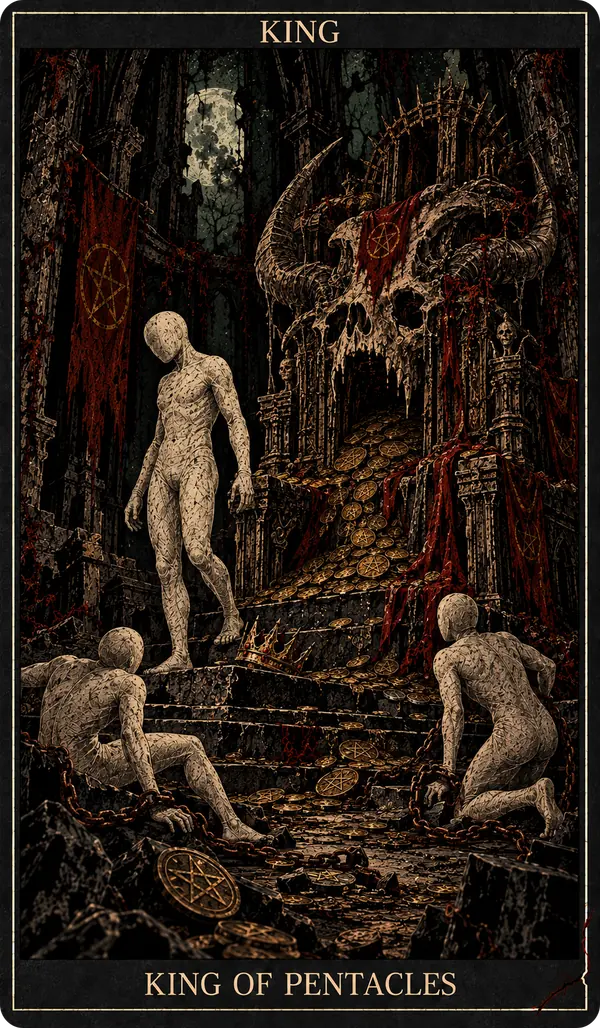 Mirror NightKing of PentaclesUse material power to end the arrangement that consumes others.
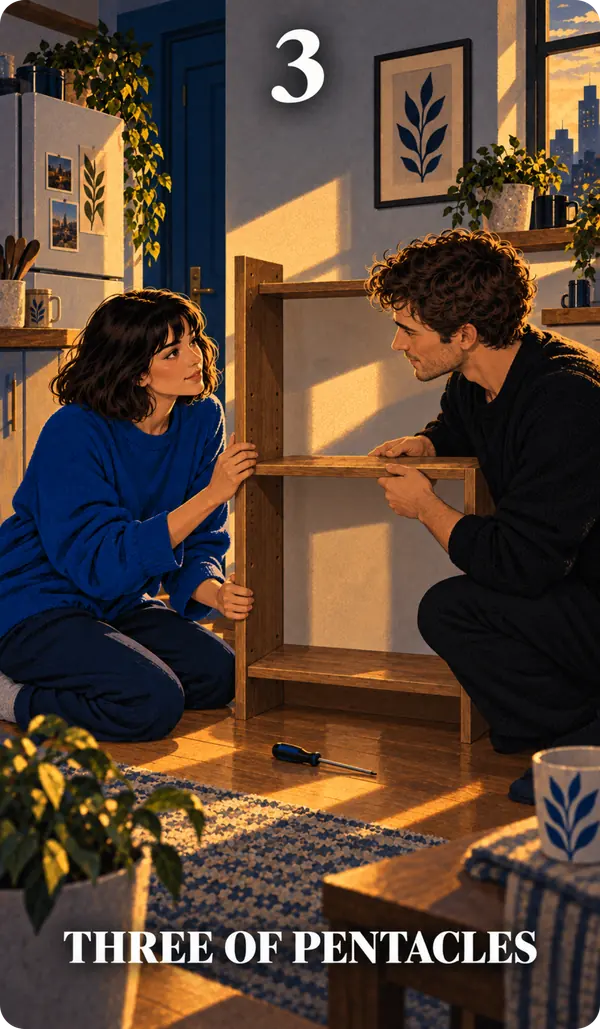
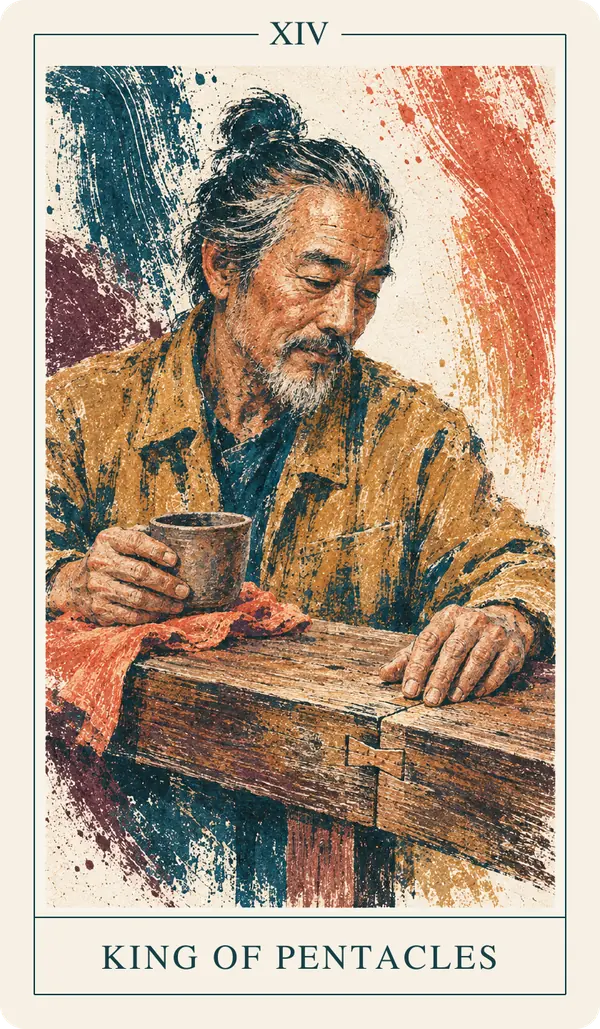 Self ContactKing of PentaclesSteward resources with competence, patience and long-term responsibility.
 Shiba TownKing of PentaclesStewardship; prosperity; responsible material leadership.
 Velvet MasqueradeKing of PentaclesStewardship that welcomes another person’s questions.
 Four HorsemenKing of FamineMake abundance accountable, accessible and resilient.
 Four TrailsKing of PentaclesStewardship, prosperity, durable success.
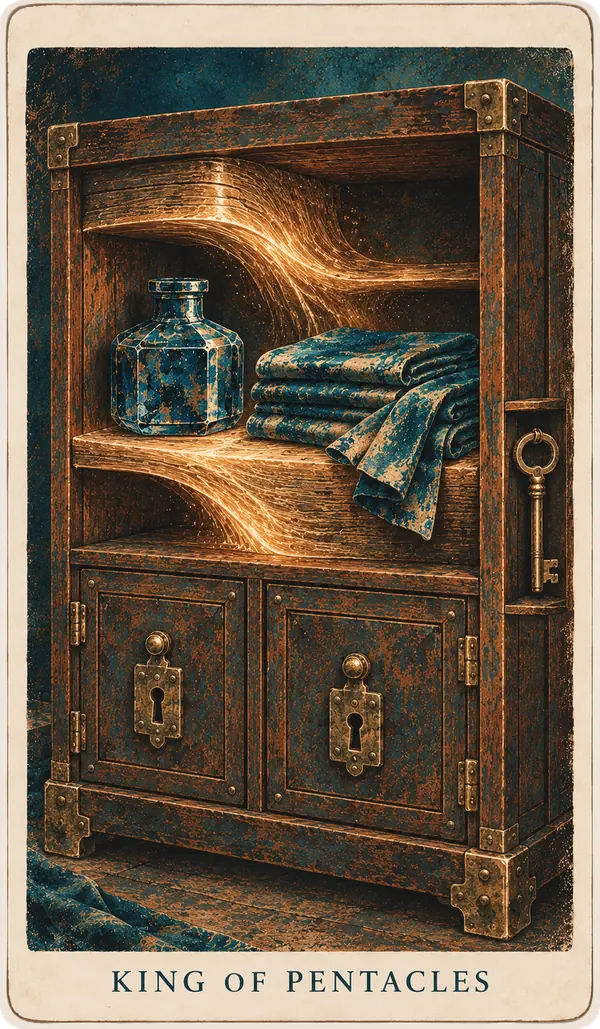 Living ThresholdKing of PentaclesFirm shelter changes inside so shared and private needs have a place.
 Colour of PowerKing of PentaclesEverything on the sheet is tied to your hand, and the thread is taut.
 BoundKing of PentaclesEveryone is warm because someone kept the yarn coming.
 Cozy HauntKing of PentaclesSteward resources for lasting common use.
 Celestial Night SkyKing of PentaclesA key others can reach.
Where it appears
Questions about this card
Is the King of Pentacles a yes or no card in City of Windows?
Upright, the King of Pentacles leans yes. Clear agreements that can be revised, and that respect each person’s home, tend to hold. Reversed, it leans no. While old arrangements, or resources borrowed without asking, are what hold things together, the lean stays no.
What does the King of Pentacles mean in love?
In love, the King of Pentacles points to an arrangement that stays steady because it can be revised and either of you can say no. In City of Windows, Mira, Dana and Sam agree on ordinary neighbourly help: watering plants, taking in a delivery, asking first. No keys change hands, and nobody promises to be always available. The King here stands for mature care of resources, not a man’s power over the home.
What does the King of Pentacles mean reversed?
Reversed, the King of Pentacles shows someone treating another person’s resources or space as their own, or promising stability while taking no part in daily life. It can also mean hiding behind an arrangement that stopped serving the people in it. Which agreements have outlived their use? Talk through one shared arrangement and who it really serves.