Five of Cups
Five of Cups in City of Windows · Minor Arcana
RelationshipsIn short
Acknowledging the loss of closeness and giving it a name.
Reversed
Getting stuck counting losses, or hastily declaring the pain over.
- Cups
- Five
- Water
- The Grieving Partner
- losing the old sense of closeness
- grieving a response that didn’t come
Upright
Acknowledging the loss of closeness and giving it a name. Separate the specific response that is missing from the conclusion that “it was all a lie.” Dana and Sam do make it to the embankment he invited her to.
The change of place hasn’t taken the pain away: sitting beside him, Dana says she still feels lonely and grieves the ease they used to have. Sam listens, without offering the walk as a ready-made solution.
Talking and being there don’t make them a happy couple in an instant.
A question to sit with
“What am I grieving in this relationship, and could the other person say it back in their own words?”
One step
Separate the specific response that is missing from the conclusion that “it was all a lie.”
Reversed
Getting stuck counting losses, or hastily declaring the pain over.
A question to sit with
“What conversation and what care are still possible, and what already calls for a boundary?”
One step
Name one conversation or act of care that is still possible, and one place that may already call for a boundary.
How this deck reads reversed cards
Reversed, a window may show a delay, an imbalance, a defensive reaction or the first step out of one; the neighboring cards help tell which. A reversal does not mean “a bad person”, and one card proves no one’s motive.
In love
Two people may sit side by side on the bench by the water and still feel lonely; naming the lost ease may matter more than any quick fix.
- Supports
- Saying plainly what closeness you miss, and listening to the answer.
- Watch for
- Concluding that because something hurts now, everything before was false.
- One step
- Name one specific thing you miss between you, without adding a verdict on the whole relationship.
You may be counting losses on the bench long after the talk ends, or declaring the hurt over before it is; either may keep closeness from returning.
- Supports
- An honest look at what care is still possible and what needs a boundary.
- Watch for
- Keeping a ledger of every past hurt between you.
- One step
- On one page, set one thing that still works between you beside one thing that needs a clear limit.
At work
A project that ended or a team that changed may need its loss acknowledged before anyone rushes on to the next plan.
- Supports
- Giving a disappointment its name before moving on.
- Watch for
- Pretending a setback did not matter to you.
- One step
- Jot down what you are sorry to have lost at work, then one thing that is still standing.
An old disappointment may still colour every new task, or a real loss at work may be getting treated as if it never touched you.
- Supports
- Letting a past setback teach without ruling the present.
- Watch for
- Bringing up an old failure in every new discussion.
- One step
- List one lesson from a past setback and one current task where it does not apply.
A choice may be clouded by grief for something that is gone, and the options may look different once the loss has been named.
- Supports
- Telling apart what is missing from what is still possible.
- Watch for
- Deciding from the low point of the sadness.
- One step
- Before choosing, write one line about what you are grieving and set it apart from the options.
A decision may be stalled by going over what went wrong, or rushed by wanting to feel done with sadness.
- Supports
- Taking the time the loss needs, and not more.
- Watch for
- Choosing quickly just to stop feeling the loss.
- One step
- Give yourself a set evening to think it over, and put the choice down until then.
Sitting with a loss instead of explaining it away may help you grow, the way Sam listens on the bench without offering the walk as a cure.
- Supports
- Letting sadness be present without solving it at once.
- Watch for
- Hurrying past pain to look recovered.
- One step
- Spend ten quiet minutes by a window or some water and let the sadness be there.
Sorrow may have turned into a habit of counting, or cheerfulness may be covering a wound that still needs care; telling which may be the next step in growing.
- Supports
- Balancing what still hurts against what has healed.
- Watch for
- Insisting you are fine because you are tired of being sad.
- One step
- Write two lines tonight: one about what still aches, one about what feels lighter.
Loneliness may sit in the middle of the family, and naming it gently may help more than reassurance.
- Supports
- Listening seriously to a relative who says they feel alone.
- Watch for
- Answering a sad relative with a list of solutions.
- One step
- Sit beside a family member who seems low and ask how they are, then just listen.
In the family, an old grievance may keep being recounted, or someone’s pain may be waved away as long finished.
- Supports
- Room for a relative to say it still hurts.
- Watch for
- Telling a family member it is time they got over it.
- One step
- Ask whether an old matter still weighs on a relative, and accept whatever they say.
Yes or no
NoMixedA real loss may be felt here, so the answer leans toward no while the grief is still open.
Supports
- Naming the loss makes it possible to be heard.
- Being listened to seriously can ease some of the loneliness.
Limits
- The old ease may not come back as it was.
- Pain can tempt you to decide it was all false.
One step
Tell the other person what you are grieving, then invite them to say it back in their own words.
Some care and some limits may both be needed, so the answer is mixed.
Supports
- Seeing where care is still possible gives you choices.
- A boundary where one is needed can protect you.
Limits
- Going over losses again can keep you stuck.
- Calling the pain finished too soon may only delay it.
One step
Name the one conversation that is still possible, and decide in advance where your limit is.
What is in the picture
An ordinary wide embankment by day, a bench along the path, and water beyond a low railing. Dana and Sam sit at the same height with a little space between them; Dana’s expression is tired and painfully honest, and Sam has turned to her and is listening seriously. Their hands are free.
Talking and being there don’t make them a happy couple in an instant.
- embankment bench
- space between two people
- water beyond a low railing
- free hands
- autumn leaves
- street lamp
This card in other decks
 Rider–Waite–SmithFive of CupsReal disappointment or loss deserves to be felt, and there’s still something standing worth eventually turning toward.
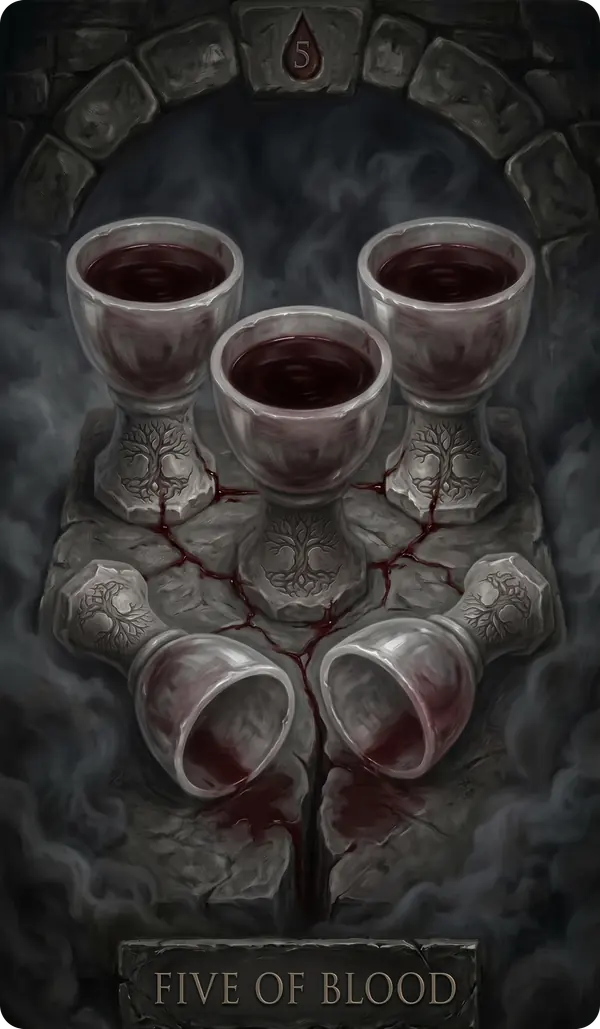 FamiliaFive of BloodA loss mourned, but not the only thing left: grief for what was spilled need not cancel what remains.
 CarnalFive of CupsLoss occupies attention while some support remains.
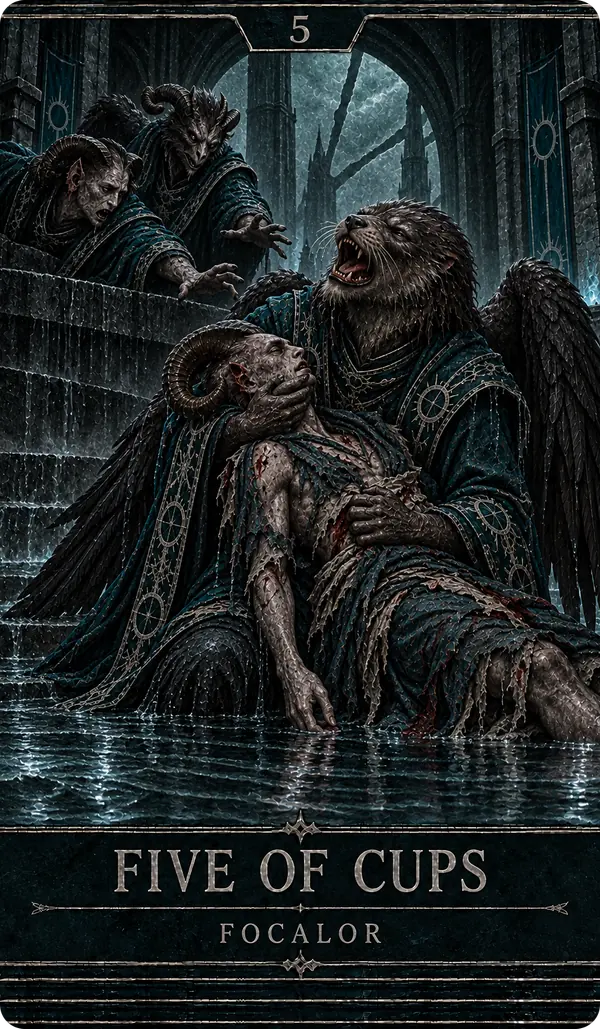 Crimson InfernoFive of CupsMourn what has actually been lost.
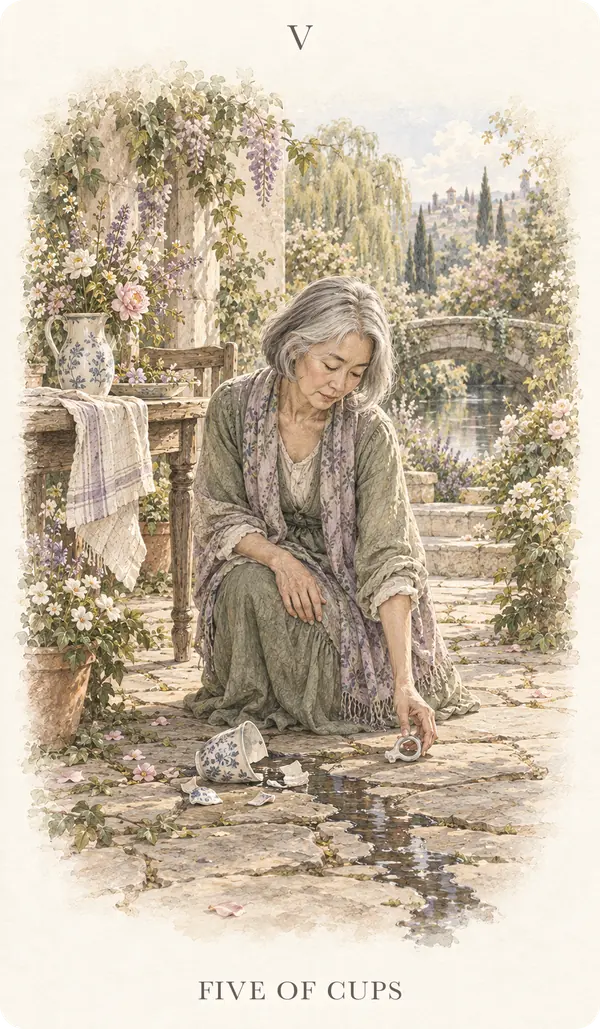 Everyday WondersFive of CupsGrief over a loss, while some support still remains.
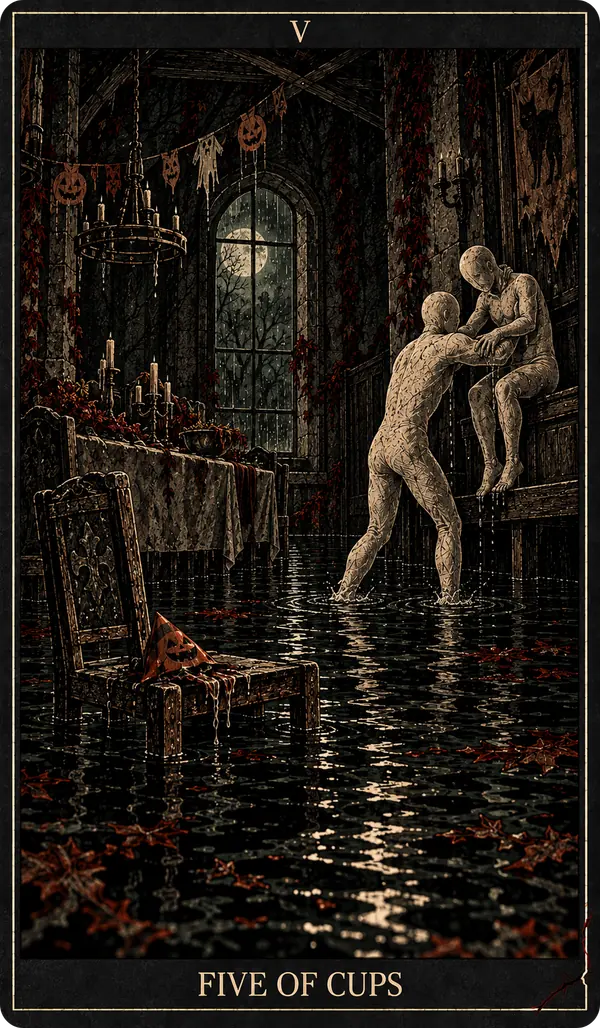 Mirror NightFive of CupsGrieve and act.
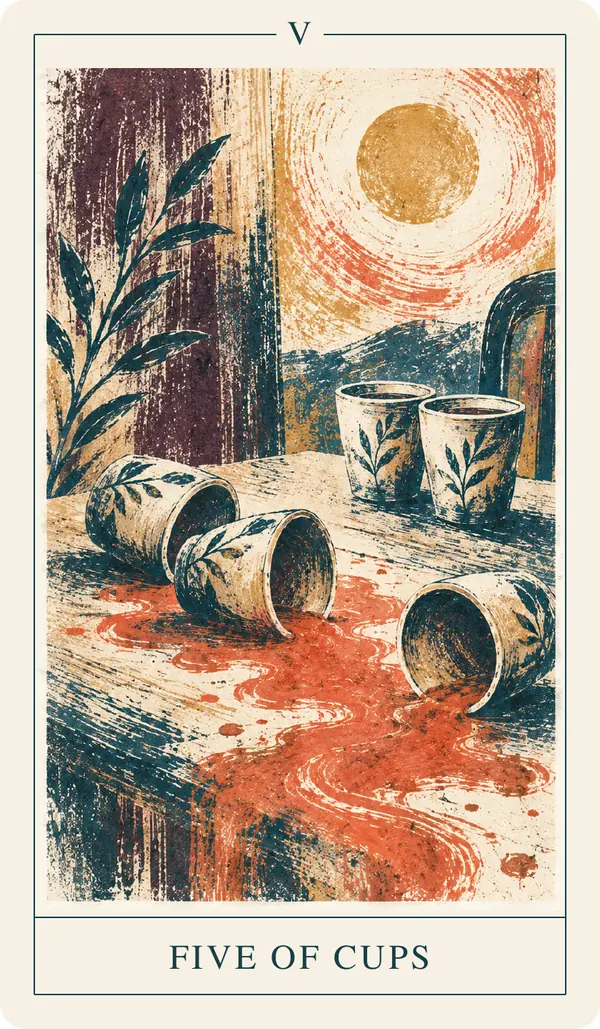 Self ContactFive of CupsGrief deserves attention while remaining support may stay available.
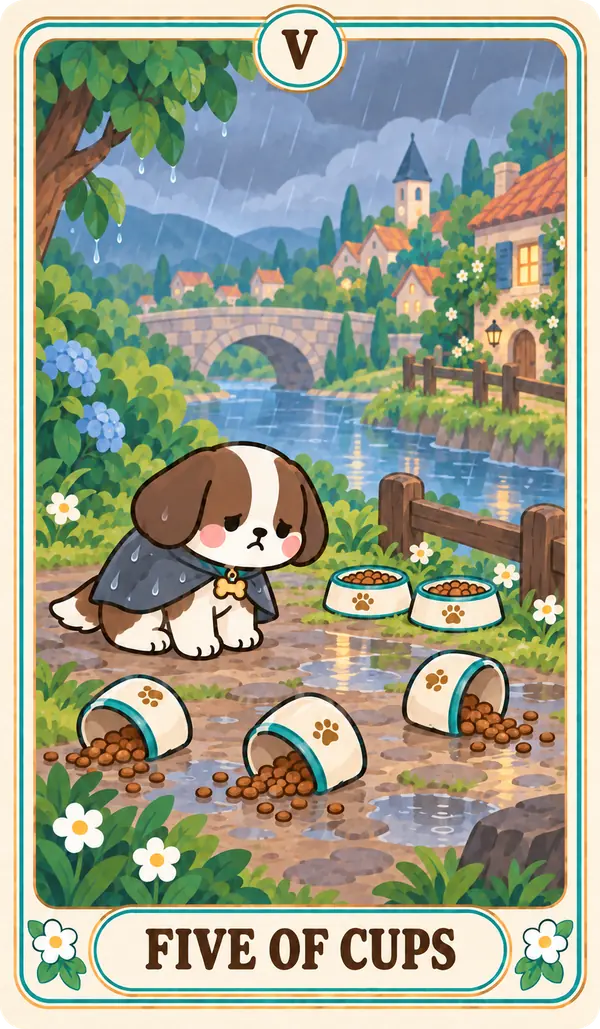 Shiba TownFive of CupsDisappointment; grief; something valuable still remains.
 Velvet MasqueradeFive of CupsGrief and what remains after loss.
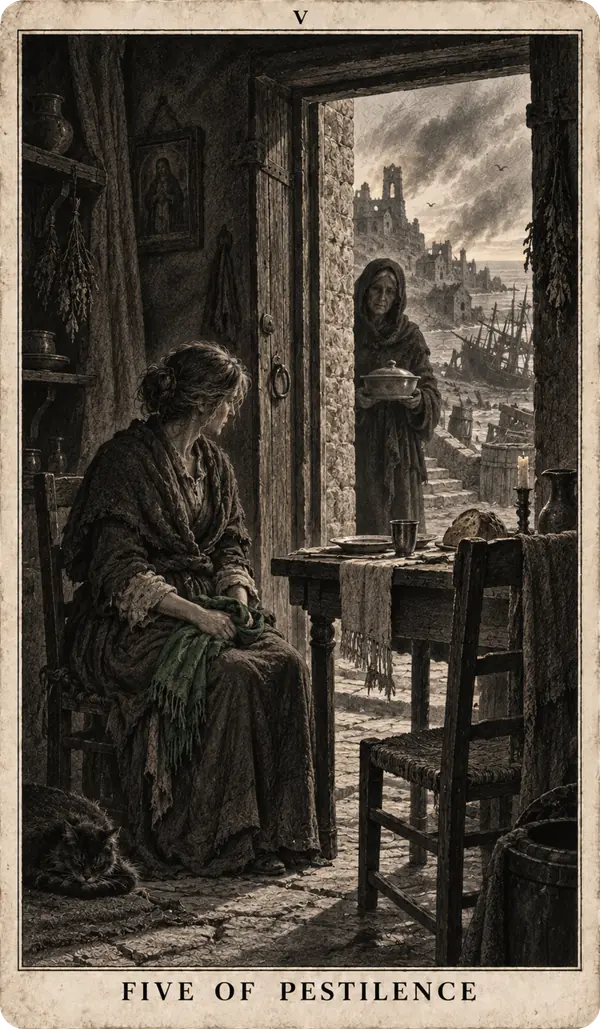 Four HorsemenFive of PestilenceName the loss while noticing who remains able to stand beside you.
 Four TrailsFive of CupsGrief, disappointment, what remains.
 Living ThresholdFive of CupsLoss draws the cloth inward while the bottle that survived the spill stays intact.
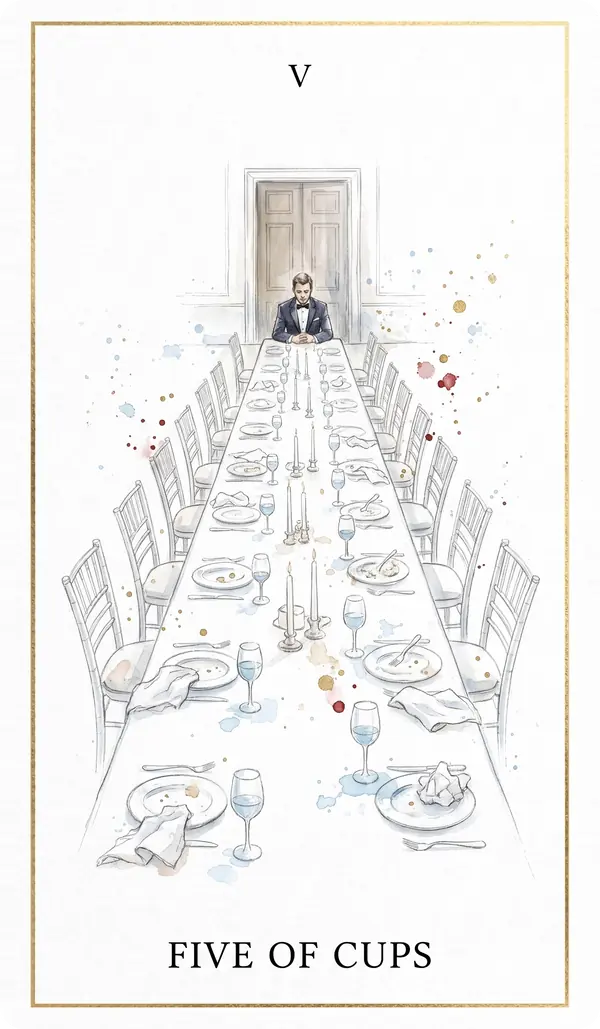 Colour of PowerFive of CupsThe table is full of empty chairs; you learn who was for you.
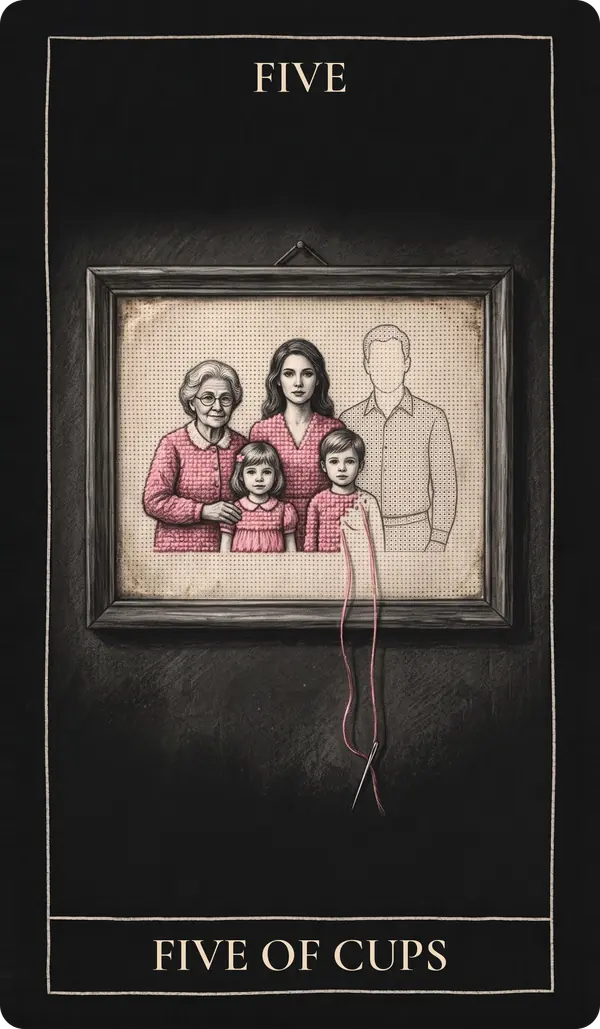 BoundFive of CupsA family portrait with one figure left unfinished; grief sits in the empty cell.
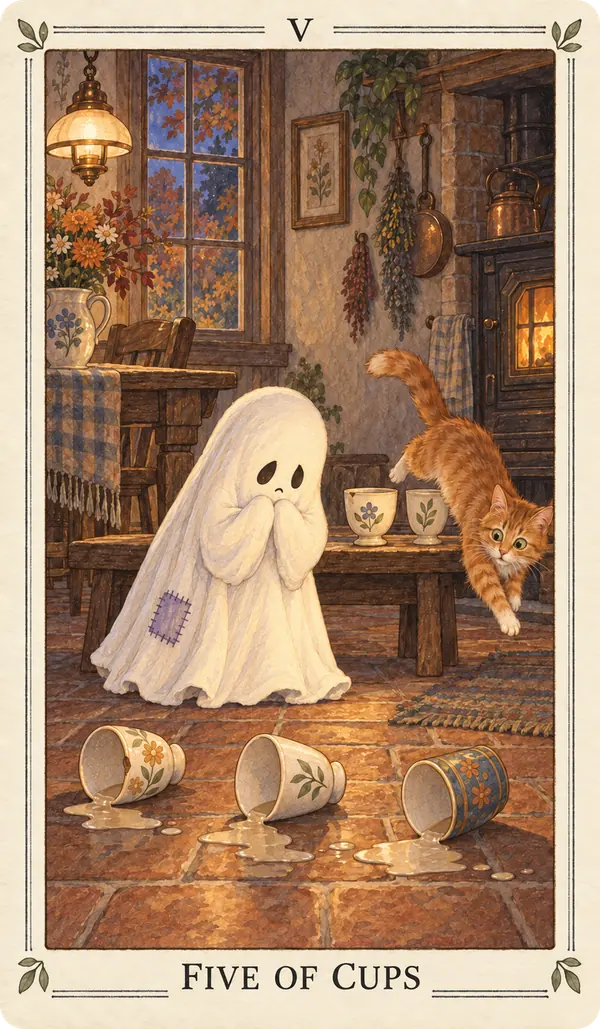 Cozy HauntFive of CupsAllow grief without erasing what remains.
 Celestial Night SkyFive of CupsLoss beside what remains.
Where it appears
Questions about this card
Is the Five of Cups a yes or no card in City of Windows?
Upright, the Five of Cups leans no while the grief is still open, because a real loss of closeness is being felt. Reversed, the answer is mixed: some care and some limits may both be needed, and part of what hurts may call for a boundary rather than another try.
What does the Five of Cups mean in a relationship?
In a relationship, the Five of Cups is the loss of closeness, felt and named. Dana sits beside Sam on the embankment and says she still feels lonely and grieves how easy things used to be; he listens without offering a fix. Loneliness can show up even side by side. Name the specific response that is missing, and keep it apart from deciding it was all a lie.
What does the Five of Cups mean reversed?
Reversed, the Five of Cups is getting stuck counting losses, or declaring the pain finished too soon. Either way, the hurt is not being looked at directly. The card asks what conversation and what care are still possible, and where something already calls for a boundary. Ignoring the place where a limit is needed is the risk this card names.