Why three cards work
One card gives you a snapshot. Three give you a sequence: something that comes first, something in the middle and something that follows from it. That is the smallest shape a story can take, and it is why three-card spreads are the ones most readers use every week.
Three cards are enough to show how one thing follows from another.
What makes each spread different is its positions. A position is the question a card answers. Put the Four of Cups in a Past position and it reads as a flat, withdrawn stretch that led here. Put the same card in an Obstacle position and it points to the thing you keep overlooking. So picking a spread is really picking the three questions you want answered. Past, present and future is the classic set, and it is a good default. It is not the only one, and for some questions it is not the best.
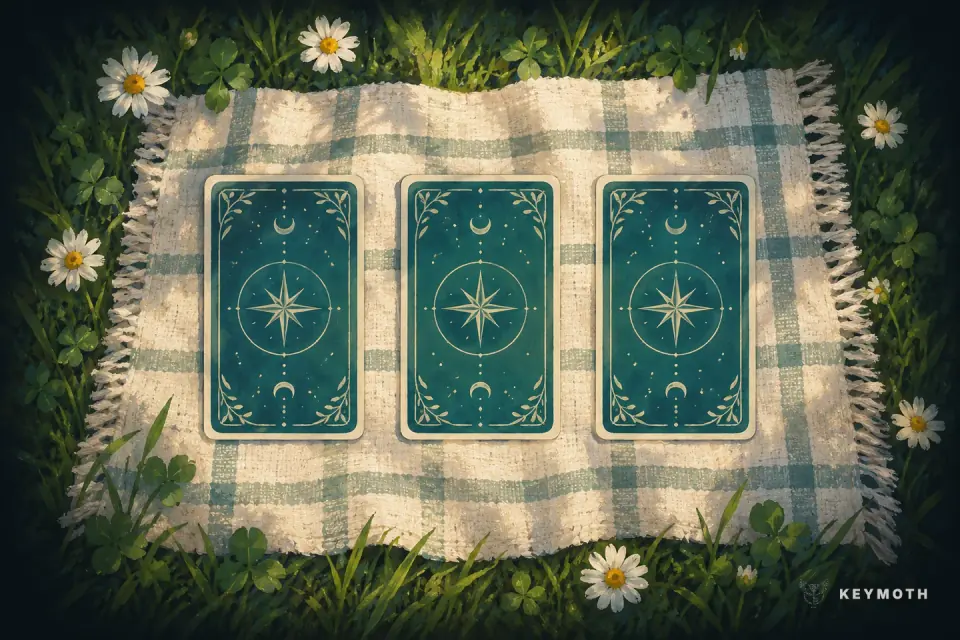
Past · Present · Future
Where this began, where it stands now, and where it is heading.
- Past
- Present
- Future
Past · Present · Future: where a situation is heading
In Past · Present · Future the first card shows what led here and still has weight. The second shows what is taking shape now. The third shows where this is heading if nothing changes. That last phrase matters. The Future card describes the direction things are moving in, the pull of the current, and a direction can be changed by what you do next.
Use it when you want to understand momentum. An example question: “Where is my plan to go back to studying heading?” The spread answers well when the situation already has a history. It is weaker when what you need is advice, because none of its three positions is a next step. If the Future card shows a direction you would rather avoid, that is the moment to switch to a spread with an advice position.
Situation · Obstacle · Next Step: when you feel stuck
Situation · Obstacle · Next Step is built for a problem you want to act on. The first card is what is taking shape now. The second is the friction or blind spot to notice. The third is a practical direction to explore. An example question: “Why do my talks with my manager about workload keep stalling, and what could I try?”
The middle card usually carries the most. People tend to know their situation and want a next step, but the obstacle is the part they have not looked at directly. Read it slowly. A Swords card there often points to a thought or a conversation, a Pentacles card to time, money or energy, a Cups card to a feeling that has not been said, and a Wands card to drive that is either missing or pointed somewhere else.
Strength · What Blocks · Advice: for working on yourself
Strength · What Blocks · Advice looks similar to the last spread, with one real difference: it starts from you instead of from the situation. The first card is what is already working in your favor, the second what gets in the way, the third a practical direction. An example question: “What helps me keep practicing guitar after the first month?”
It suits habits, skills, confidence and any goal where the main moving part is your own effort. Starting with a strength changes how the rest reads. The block becomes something you work around with what you already have, and the advice card often shows how to use the first card against the second.
You · The Other · What’s Between You: for two people
You · The Other · What’s Between You is for one relationship: a partner, a friend, a parent, a colleague. The first card is where you stand. The second is where the other person stands. The third is the dynamic the two of you share. An example question: “What is going on between me and my sister since our argument?”
The middle card describes how the other person may be standing in this: guarded, hopeful, busy, hurt. The third card is often the most useful, because the pattern between two people is the part either of them can change. Read the Other card as a picture to check, then compare it with what the person actually says and does.
Which spread for which question
- “How did this start and where is it going?” Past · Present · Future.
- “I’m stuck on this. What’s in the way and what can I do?” Situation · Obstacle · Next Step.
- “How do I keep going with this habit or goal?” Strength · What Blocks · Advice.
- “What is happening between me and this person?” You · The Other · What’s Between You.
- “Should I do this one thing, yes or no?” One card is enough, and yes or no tarot covers how to read it.
If your question fits two of these, go with the one whose positions you would most like answered. And if you are not sure what you are asking yet, it helps to shape the question first. How to ask a good tarot question has a few ways in.
How to read three cards as one story
The common mistake is reading three separate card meanings and stopping there. Three cards are one answer. A simple routine gets you from three meanings to one story:
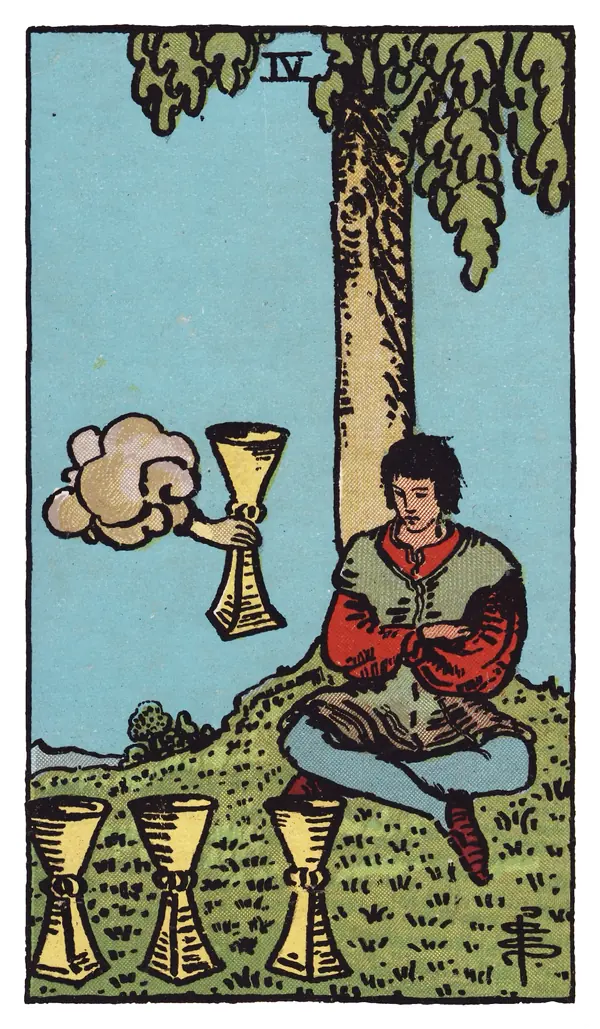
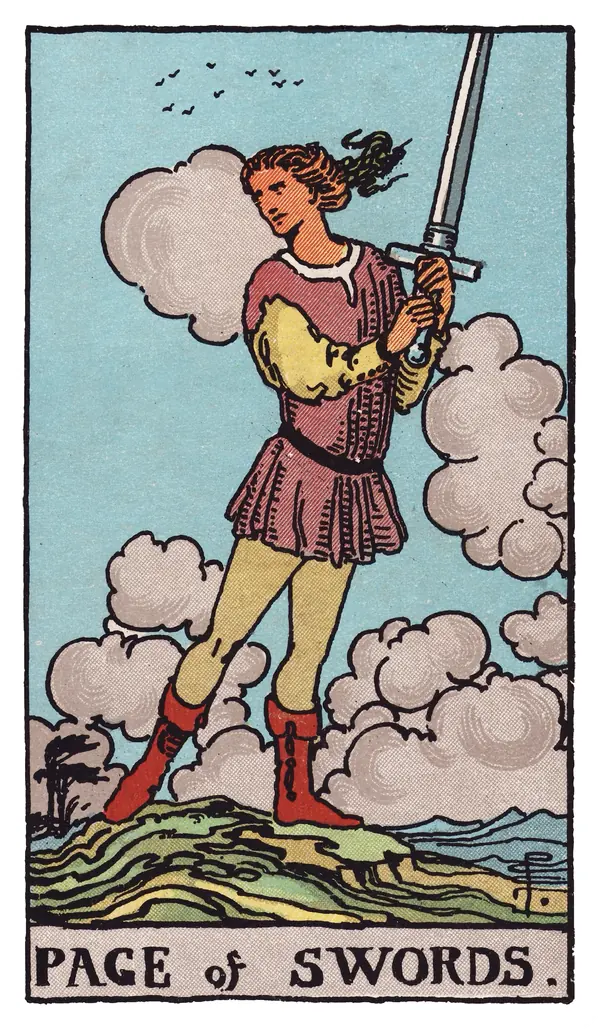
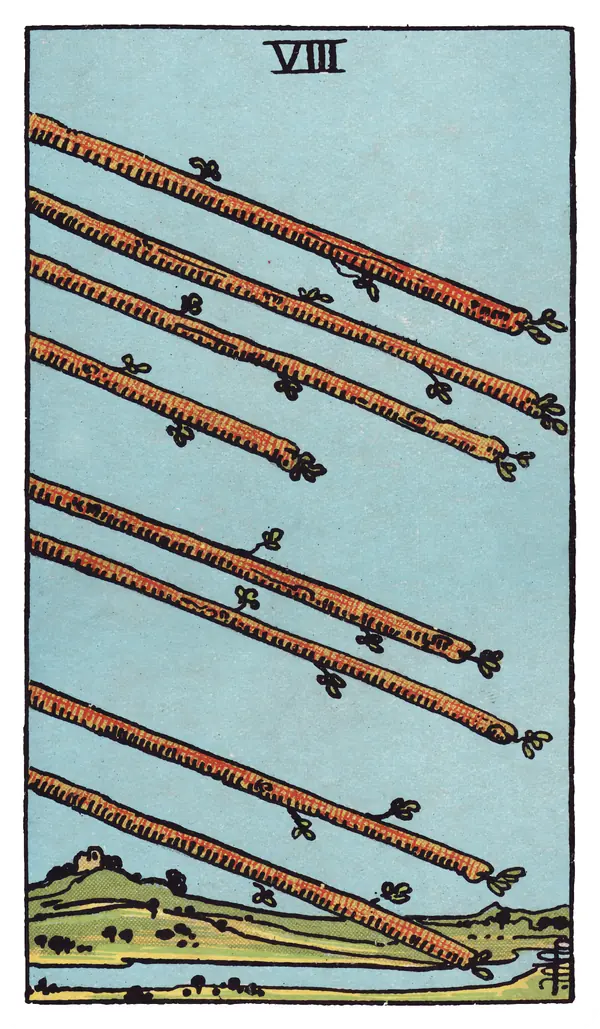
An example in Past · Present · Future. Someone asks about a side project they have been putting off, and draws the Four of Cups, the Page of Swords and the Eight of Wands. One sentence each: a flat stretch where good offers went unnoticed; now sharp curiosity and asking questions; ahead, fast movement after the wait. Joined up: the project sat idle while interest was low, it is waking up through research and questions, and if that continues, things pick up speed. The suits add a second line to the story, moving from Cups to Swords to Wands, from feeling to thinking to doing. A practical step here: ask the one question the Page points to this week, while the momentum is there.
Reversed cards fit the same routine. In our readings a reversed card keeps its theme and meets more resistance or delay, so it changes the tone of its sentence without breaking the story.
When to step up to more cards
Three cards stay clear because they leave things out. Move to a bigger spread when the question has more parts than three positions can hold. Choosing between two real options fits Two Paths, which gives each path its own gift and risk. A situation with other people pulling on it, or something at work under the surface, fits the seven-card Horseshoe. For the full picture of one important question, the Celtic Cross, position by position walks through ten cards.
A good sign that you need more cards is a three-card reading that keeps raising new questions. Write those questions down and take the clearest one to its own reading. Often a second three-card spread on the narrower question does more than one large spread on the whole tangle.
Frequently asked questions
What is the most common three-card tarot spread?
Past, present, future is the most widely used. The first card shows what led to the situation, the second what is happening now, and the third where it is heading if nothing changes. It is a strong default for questions about how something is developing. For a problem you want to act on, a spread with an obstacle and a next step usually gives more to work with.
How do you read a three-card tarot spread?
Read each card in its position first, in one plain sentence. Then look for what links them: repeated suits, a Major Arcana card, a court card. Finally, join the three sentences with words like because, so and but until they read as one story. The card that seems out of place often turns out to be the most important one.
Can I use reversed cards in a three-card spread?
Yes. A reversed card keeps its usual theme and shows it meeting more resistance, delay or excess. In a three-card spread that changes the tone of one part of the story, for example a present that is stalling rather than moving. If you draw by hand and prefer not to use reversals, read all three cards upright. Both ways work, as long as you stay consistent.
Is a three-card spread enough for a big question?
Often it is, if the question is focused. A big life question usually contains several smaller ones, and three cards answer one of them well. If your reading keeps opening new questions, split them and do a separate three-card spread for each, or move to a larger layout such as the Horseshoe or the Celtic Cross for the whole situation at once.
Written by the editorial team · Reviewed on November 9, 2026 · Method →