
What a love reading shows
A love spread is good at making one connection visible from a few angles at once. It sets your own side, the other person’s likely stance and the pattern the two of you make next to each other. Seen that way, things that are hard to notice from the inside often come into view, such as a tension that belongs to neither person alone.
The cards read where things stand between you and which way they are heading if nothing changes. That is often more useful than a forecast, because it points to the part you can do something about: a habit, a conversation, a need nobody has said out loud.
Whether to end a relationship or stay in one is your choice.
Some answers still belong to the people involved. The cards can show which way someone seems to lean, toward calling, staying or coming back, and their own words and actions are what settle it. Whether to end a relationship or stay in one is your choice. The reading gives you material for it, and talking it over with someone you trust helps you weigh it.
You · The Other · What's Between You
Your side, their side, and the dynamic the two of you share.
- You
- The other
- What's between you
Three cards: You, The Other, What’s Between You
The You · The Other · What’s Between You reading has three positions. You shows where you stand in this. The Other shows where the other person may stand. What’s between you describes the dynamic you share, the part neither of you owns alone.
Start with your own card, since that is the one side you can fully speak for. Then read The Other as a possibility and ask whether it matches what you have actually seen. The middle card usually carries the most weight. Many tensions in a relationship live in the pattern between two people rather than in either of them, and that is also where things can shift.
Three cards suit a quick look at a partner, someone you’re dating, an ex or anyone you’re close to. The positions work the same for friends, family and colleagues.
Six cards: the Relationships spread
When you want to look at strengths and strains separately, the Relationships reading adds three positions. It begins with the same pair, You and The other, then asks what holds the connection together, what supports it and what challenges it. The last card, Where it leads, offers a direction from here and a practical step.
Read support and challenge as a pair. They often describe one area from two sides; shared plans, for example, can keep two people close and also cause most of their arguments. Where it leads shows which way the connection is heading, and a card like the Three of Swords there can point toward an ending, but it does not make the decision for you. Read it after the other five, as a way into the next conversation or the next choice.
Will he come back?
This is one of the most asked love questions, and a spread has real material for it. Lay out the Relationships spread or the three-card reading and you can see where you stand now, what is still between the two of you, how The Other card suggests they are holding the break, and where things are heading if nothing changes. Cards of return, such as the Six of Cups or Judgement, can point to them reaching back out; cards of closure point the other way. If they do get in touch, their own words are what settle it.
To get the most from it, shape the question around what you can see and influence:
The Relationships spread works for a connection that has ended too. Its positions look back as easily as ahead, and Where it leads then speaks to your own direction from here. Sometimes that is about understanding what happened more than about getting it back.
How does he feel about me?
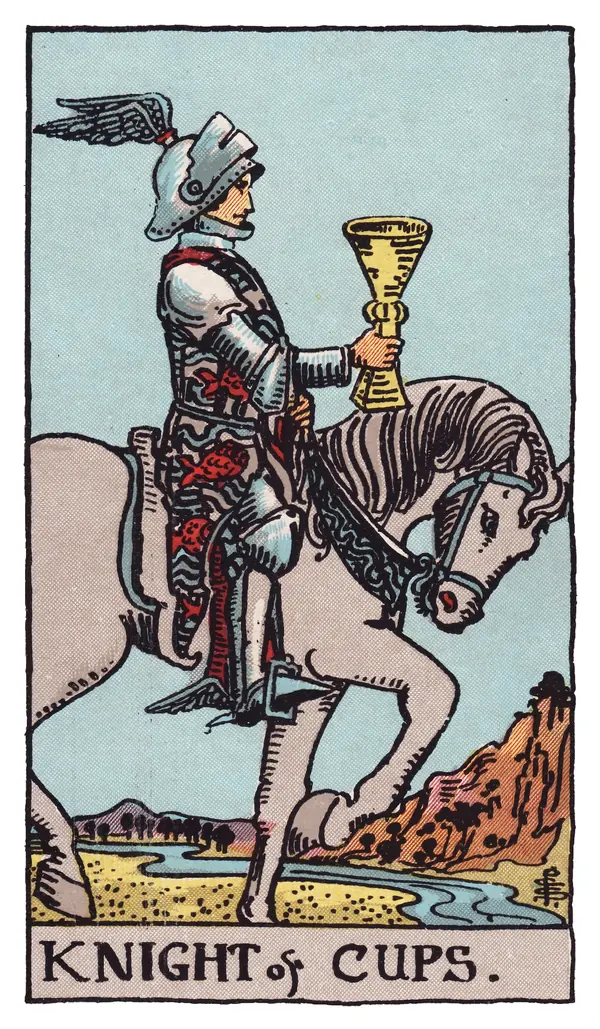
The Other card is built for this question. It shows the stance the person is likely taking toward you, a picture to test against what you have noticed. Suppose the Knight of Cups appears reversed in that position. It may point to warm gestures that run ahead of the follow-through. That is worth noticing, and it doesn’t prove bad intent. Read it next to the middle card, which shows the dynamic you share, and next to your own card, which shows what you bring. If you want to know for sure how they feel, their answer is the one that settles it.
The same goes for suspicion. If the real question is whether someone is hiding something, cards like the Seven of Swords or The Moon can point to secrecy or deception, and the reading helps you separate what you have actually seen from what you fear. Take what the card suggests as a reason to ask rather than as proof. An honest conversation is the way to find out what is really going on.
When the question is a choice
Some love questions are really decisions: whether to move in together or keep separate places, whether to agree to a second date, whether to put energy into this connection or a new one. A comparison spread fits these better than a relationship spread. This or That draws one card for each option so you can weigh them on the same terms. Two Paths goes further and shows what each path offers and what each could cost.
Both spreads describe the options. Neither makes the choice, and for a decision that is hard to undo, the cards are one input among several. If you only want a lean on a single step, our guide to yes or no tarot covers how to phrase it.
Love questions that work well
The questions that get the most from a love spread keep you in the picture and ask about the present. A few that work:
- Where do my partner and I stand after the last few months?
- What is really going on between me and the person I’m seeing?
- What supports this relationship, and what strains it?
- What am I bringing to this connection right now?
- What would help us talk about the thing we keep avoiding?
Each of these has an answer you can use whatever the other person does. For a long and tangled history, ten cards give more room; see the Celtic Cross, position by position.
Frequently asked questions
What is the best tarot spread for love?
It depends on the question. For a quick picture of where you and one other person stand, three cards (You, The Other, What’s Between You) are enough. For a fuller look at what supports the bond and what strains it, the six-card Relationships spread gives more room. For a decision inside a relationship, a comparison spread such as This or That fits better.
Can tarot tell me if my ex will come back?
Yes, a spread speaks to it. It shows where you stand now, what is still between you, how The Other card suggests they are holding the break, and where things are heading if nothing changes. Cards like the Six of Cups or Judgement can point to a return; cards of closure point the other way. If they do reach out, their words and actions are what settle it.
Can a tarot card show what someone thinks of me?
Yes, it can point to it. The Other position shows the stance the person is likely taking toward you, whether close, guarded, curious or distant, which you can compare with what you have actually seen. Read it together with the card for what runs between you, which often carries the most weight. If you want to know for sure how they feel, their answer is the one that settles it.
Can I do a love reading about someone without them knowing?
Yes, for your side of the connection, which belongs to you: where you stand, what you bring and what runs between you. The other person’s card is your working picture of their stance, not a look into their private life. If the reading brings up a worry about secrets or messages, an honest conversation is the way to find out what is really going on.
Written by the editorial team · Reviewed on November 16, 2026 · Method →