Does any tarot card mean death?
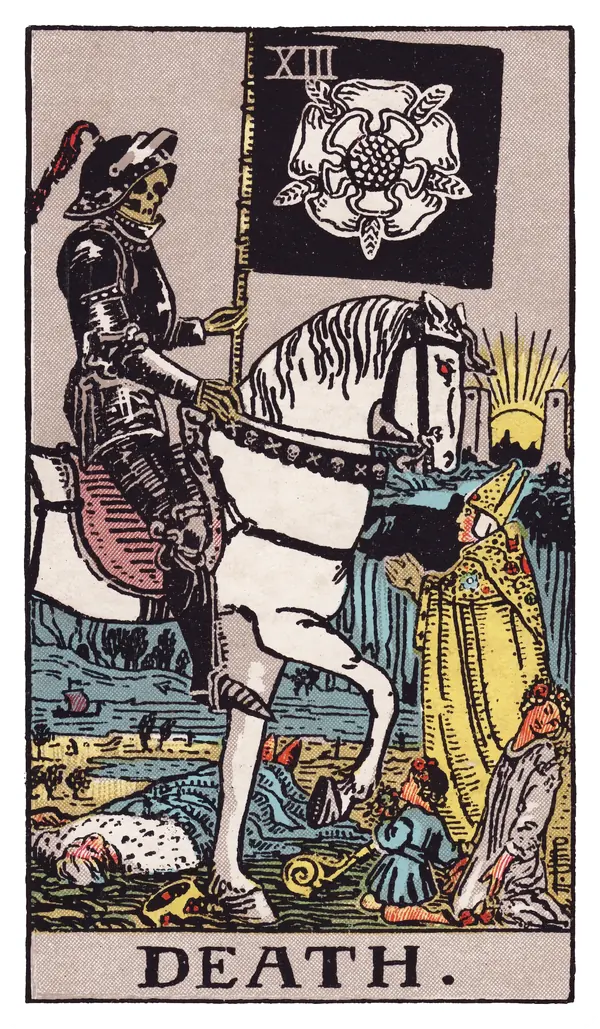
No card in tarot predicts physical death, and that includes the card called Death. In the tradition most modern readers follow, Death stands for a definite ending: a phase, a role or a way of doing things that has run its course. The skeleton on horseback looks frightening, and endings often feel that way, even the ones that are overdue. What the deck reads is situations and choices: what is ending, what is shaking, what is holding on too long.
The six cards below are the ones people most often ask about with fear. Their meanings are hard, and they are given here as they are. Each also carries a practical question, and that question is the part to take away when one of them appears in your reading.
Situation · Obstacle · Next Step
Untangle what is happening, what is in the way, and where you can move next.
- Situation
- Obstacle
- Next step
Death: an ending that is due
Upright, Death means something has run its course, and letting it end is what gives something new room to begin. That something can be a job that no longer fits, a habit, a stage of a relationship or an old picture of yourself. The card favors accepting the ending directly over dragging it out. Look at the far edge of the picture: a small sun rises between two towers behind the rider. It is also why Death upright leans yes in yes or no tarot.
Reversed, Death points to an ending that is being put off, which can keep you stuck in something that has stopped working. When it appears, ask what feels finished and what letting it end would make room for. Then name one pattern you are ready to let go of, and notice what it has been costing you. In a love question, Death can point to the end of a pattern or a stage between two people, and sometimes to the end of the relationship itself. Which of these it is comes out in an honest conversation between the two of you.
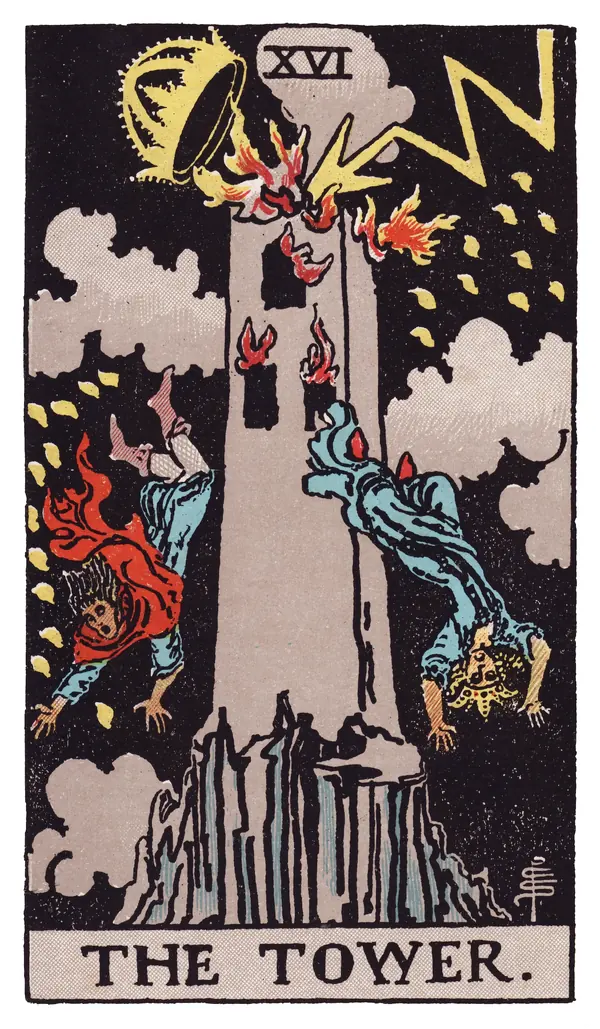
The Tower: sudden change on shaky ground
The Tower shows lightning striking a tall tower, its crown knocked loose, flames at the windows and two figures falling. Upright it means sudden, forced change: a plan, belief, structure or relationship built on unstable ground giving way all at once. It often brings into the open something that had been papered over. It is one of the hardest cards to draw, and the tradition reads what falls under it as something that was never really holding.
Stop reinforcing that one part, and let it show its real condition.
Reversed, it can mean a collapse that is overdue and being propped up, or the aftershock of one that has already happened. When the Tower shows up, ask which part of the situation was built on shaky ground. Stop reinforcing that one part, and let it show its real condition. In a work question, the Tower can point to a plan or a role that looks solid on paper and is already cracking in practice.
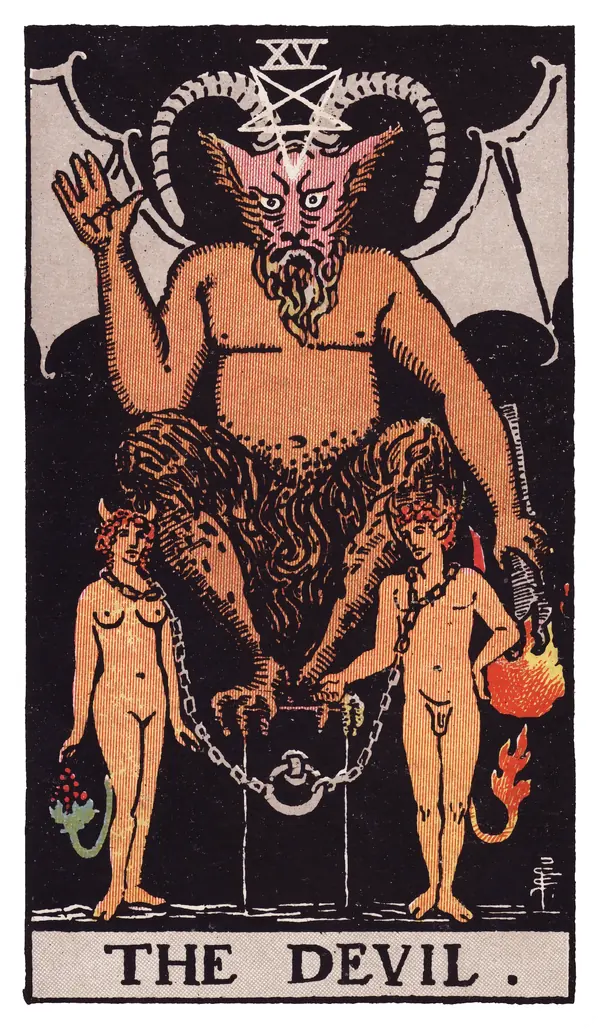
The Devil: a hold stronger than it needs to be
The Devil shows a horned figure perched above a chained man and woman. Look closely and the chains around their necks are loose enough to lift off. In a reading the card is about attachment that has become restrictive: a habit, a dependency, a fear, a relationship dynamic or a comfort that has taken on more power than it deserves. It asks how much of the hold is real and how much is assumed.
Reversed, the Devil often marks the start of breaking free: seeing a pattern clearly, sometimes with one chain loosened while another still holds. When it appears, ask what feels inescapable but may be more optional than it seems, and find one specific way to loosen your grip today. If the hold is an addiction, a counselor or a support group is the practical place to start loosening it. In a love question, it can point to a relationship held together more by habit or fear than by choice, and it asks you to look at which.
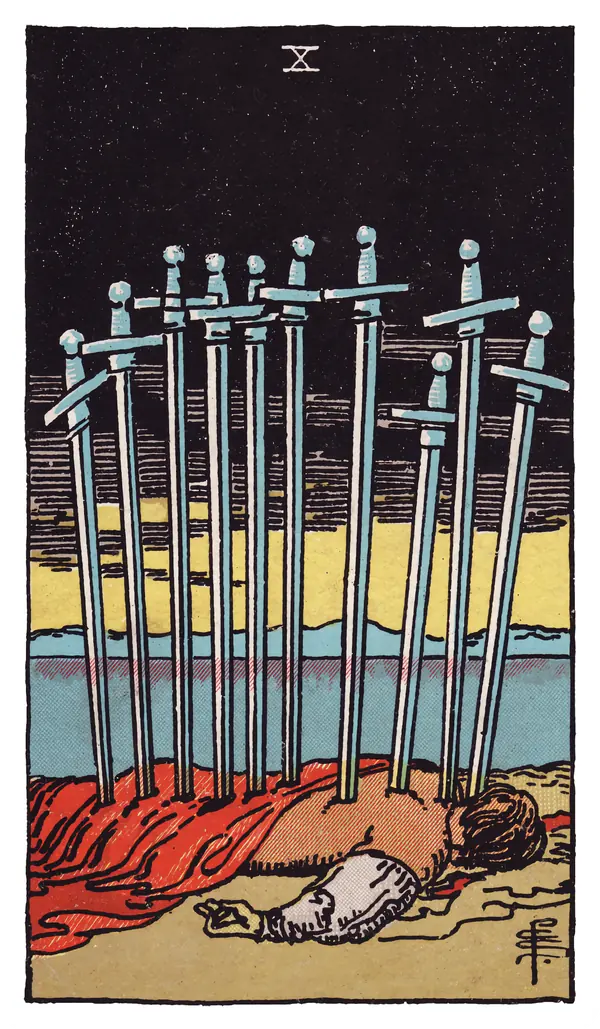
Ten of Swords: a low point, with dawn behind it
The Ten of Swords has the grimmest picture among the minor cards: a figure lying face down with ten swords in their back under a black sky. It means a painful ending, the rock-bottom point of a cycle, and the card doesn’t pretend it is less bad than it is. Yet the horizon behind the figure shows a calm dawn breaking. The low point is part of the scene, and so is the room for recovery to start.
Reversed, it can mean the slow climb back after a low point, or still fighting an ending that has already happened. When this card appears, ask what in this chapter already feels finished, and acknowledge it honestly. That acceptance is usually the first step of recovery. In a work question it can point to a project or a job reaching its end in a way that hurts.
Three of Swords: heartbreak or a painful truth
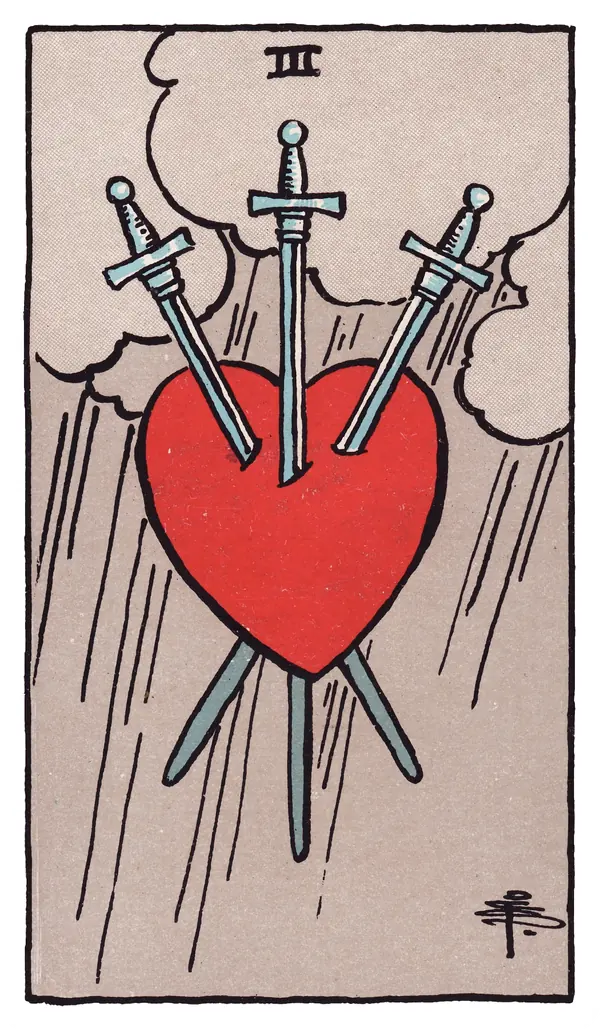
The Three of Swords is a red heart pierced by three swords in the rain, with no figure at all. It is traditionally the heartbreak card, and in love questions it can point to a breakup, a betrayal or a hard truth coming out. In our deck it means real heartbreak or a painful truth, clear and specific rather than vague sadness. The card asks you to name the pain honestly and feel it, without making it smaller or bigger than it is.
Reversed, it can mean healing after heartbreak, or an old hurt being reopened without real progress. When it appears, ask what painful truth needs to be felt clearly instead of avoided, and name its source, even if only to yourself. If the question is whether someone has been unfaithful, an honest conversation with them is the way to find out.
The Moon: fog, fear and a half-hidden path
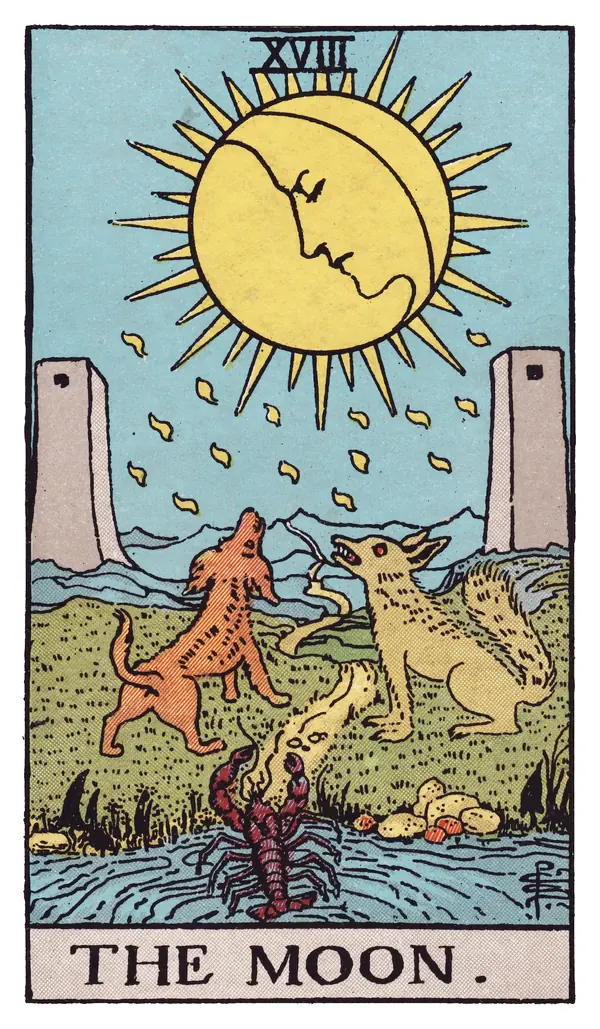
The Moon shows a path winding between two towers under a moon with a troubled face, a dog and a wolf howling on either side, and a crayfish climbing out of a pool. It means uncertainty: facts that are incomplete, feelings running high, something confusing without an explanation yet. Many readers also read it as illusion or self-deception, and it can point to a situation that isn’t what it seems. What feels unsettling under the Moon is often unclear rather than dangerous.
Reversed, it can mean the fog lifting, with a fear turning out smaller once you look at it directly. When the Moon appears, take one small, careful step forward without waiting for full clarity, and name the vague fear in plain, specific terms. If you suspect you are being misled about something, checking the facts is what settles it.
What to do when a scary card shows up
A frightening picture draws the eye away from the rest of the reading. These habits bring it back:
If a reversed card is adding to the worry, How to Read Reversed Tarot Cards explains how a reversal shifts a card’s theme without simply making it worse.
Frequently asked questions
Can tarot cards predict death?
No card in tarot predicts physical death. The Death card means a definite ending, such as a phase, a role or a way of doing things closing so something new can start. Cards like the Tower and the Ten of Swords describe upheaval and low points in a situation, and each comes with a practical question. If a worry about someone’s health is behind the question, a doctor is the one who can answer it.
What is the scariest tarot card?
The cards people most often call scary are Death, the Tower and the Ten of Swords, because their pictures are the darkest in the deck. In meaning the Tower is often the hardest: sudden change that knocks down something built on shaky ground. Death is usually easier than it looks, since it describes an ending that is already due. Each comes with a practical question, and that is the part to act on.
What does the Tower mean in love?
In love, the Tower upright can point to a sudden shake-up: an uncomfortable truth coming out fast, or a part of the relationship that was built on shaky ground giving way. It warns against rebuilding things exactly as they were. Reversed, it points to a needed confrontation being put off, when having the conversation may cost less than bracing for it. That conversation is also the way to find out where you both stand.
Is the Devil card bad?
The Devil is an uncomfortable card, and it is about attachment rather than evil. It points to a habit, a dependency or a dynamic that holds you more tightly than it needs to. The chains in the picture are loose enough to lift off, so the card asks how much of the hold is real. Reversed, it often marks the moment you start to see the pattern clearly and break free of it.
Written by the editorial team · Reviewed on November 13, 2026 · Method →