What a daily card is for
A daily card brings the day a message. It speaks in themes rather than appointments: it names the thing the day wants you to notice, such as a decision you keep postponing, a load you could share or an offer you waved away too quickly, and asks you to watch for it as the hours go on. The card doesn’t fix what happens. It tells you what to watch for, and the day shows you where.
Think of it as a signpost for the day. The same meeting, the same commute, the same kitchen look different once you know what you have been asked to look for. If the card is about steady effort, you may catch yourself rushing. If it is about rest, you may notice how rarely you stop. Many readers find the card’s theme turns up more than once before evening, as if the day had been waiting to show it to them.
That is also why a daily card suits people who are new to tarot. You learn one card at a time, in the context of an ordinary day, instead of trying to hold ten positions in your head at once.
Daily Tarot Card
Meet the energy of your day with one card and one grounded next step.
- The energy to meet
How to read it in a minute
A daily card works best when it is quick. If it takes twenty minutes, it stops being daily. Here is a short routine that fits between the kettle and the front door:
Our Daily Tarot Card reading follows the same shape. It draws one card, the energy to meet, and pairs it with one grounded next step for the day. You don’t need to know the card’s full meaning to use it. The reading gives you the part that matters for today, and the card’s own page is there when you want the rest.
One card, one ordinary day
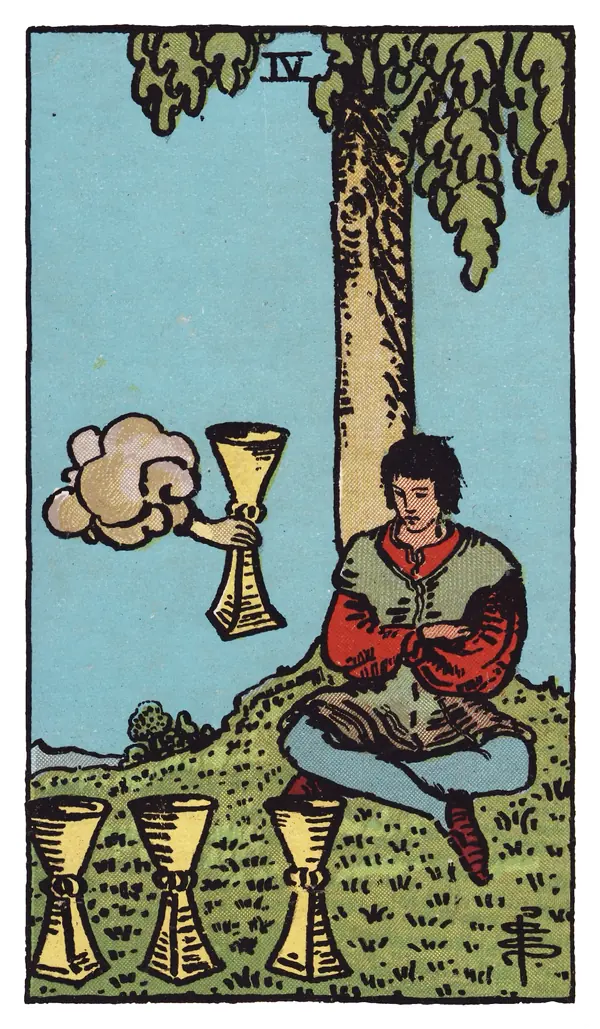
An example. Someone draws the Four of Cups upright on a weekday morning. The card shows a figure sitting under a tree, arms folded, not looking at the cup being held out to them. For a daily card, it points toward checking whether something you have been ignoring deserves a second look, and it asks you to watch for low energy quietly costing you a chance worth taking.
The small step might be to reread one invitation or offer you set aside last week, and decide on purpose instead of by default. That is all. The card points at the offer; it doesn’t promise the offer was a good one. It hands the day a question, and the day brings the answer.
It hands the day a question, and the day brings the answer.
In the evening the reader might notice that they turned down two things without thinking about either. Or they might notice nothing in particular. Both are fine results. A daily card is useful even on the days it seems to miss, because over time the misses tell you something too.
Why the card stays the same all day
On this site the daily card is drawn once per day. If you come back later and draw again, you see the same card you saw in the morning. That is on purpose. A card you can redraw until you like it stops being a lens and becomes a slot machine, and the card you were tempted to replace is often the one with something to say.
A new day means a new card. The card changes at midnight where you are, so the one you draw in the morning stays with you until the day is over, and tomorrow starts fresh.
Noticing patterns over weeks
One daily card is a small thing. Thirty of them start to show a shape. You may find that one suit keeps turning up, or that the same card appears on the days you feel most stretched. A card that keeps coming back is one of the clearest ways the deck gets your attention. Ask what it is pointing at, and whether you have been looking.
A few things are worth tracking:
- Which suits come up most. A run of Swords cards might line up with weeks full of decisions and difficult conversations. A run of Pentacles might line up with work, money or the body.
- Which cards you wanted to redraw. The ones you resist are often the most useful to reread.
- Which small steps you actually took, and which you kept postponing.
- Whether the evening question had an answer, or whether the day went past without the theme showing up.
You don’t need a system for this. A line in a notebook is enough: the date, the card, the step, and one sentence in the evening. If you want a fuller method, Keeping a Tarot Journal walks through what to write down and how to look back on it.
When the card doesn’t seem to fit
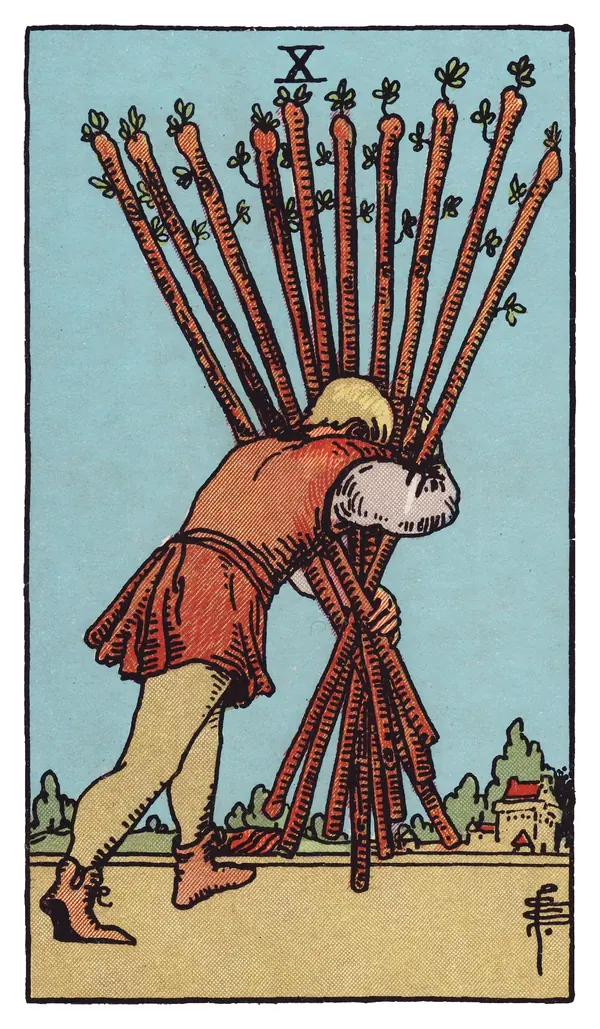
Some mornings the card seems to have nothing to do with the day ahead. You draw the Ten of Wands, a figure bent under a bundle of sticks, on a day that looks light. Before you set it aside, try reading it smaller. The load might be one task you have been carrying alone, a worry rather than a workload, or something you could put down before it gets heavy.
If it still doesn’t fit, let it go. A daily card is an invitation to look, not a claim about your life, and a day when the theme never shows up is a normal day. Reversed cards follow the same rule. A reversed card keeps its theme and meets it with more resistance or delay, and How to Read Reversed Tarot Cards covers that in more detail.
One more thing a daily card isn’t: a way to decide something big. If a morning card seems to push you toward a serious step, such as leaving a job or ending a relationship, treat that as a sign the question needs more room and more time. A three-card spread gives it that room. A single card in the morning isn’t enough to carry it.
Keeping it small
A daily practice lasts when it stays easy. Draw at the same moment each day if that helps, such as with the first coffee or before opening email. Skip a day without guilt. Some readers like to learn each card as it arrives, reading its full page on the days they have time; the card catalogue is there for that. Others never look past the daily text, and that works too.
If you miss a week, start again with the next card rather than catching up. There is nothing to make up for. The practice is only ever about today, and a notebook with gaps in it is still a record of the days you did look.
The point is a minute of attention before the day gets busy, and a moment at the end of it to see what you noticed. Everything else is optional.
Frequently asked questions
Is a tarot card of the day a prediction?
It gives you the day’s theme: what the day may favor, what to watch for, and one step worth taking. Carry it with you and notice where it shows up. If the day goes differently from what the card suggested, the card hasn’t failed. It gave you something to look for, and the step you take is up to you.
Can I pull more than one card of the day?
On this site the daily card is drawn once per day, and drawing again brings back the same card until your local midnight. If you draw by hand, one card is still the simplest habit. A second card usually gets drawn because the first was unwelcome, and that one is often the card worth reading.
Should I draw my daily card in the morning or at night?
Most people draw in the morning, so the card can shape what they notice during the day, then look back at it in the evening. Some prefer to draw at night and read the card as a lens for tomorrow. Either works if you keep to the same time, so your notes can be compared from day to day.
What does it mean if I keep getting the same card?
Tarot tradition reads a card that keeps returning as a message that repeats until it is heard. Look at what the card asks of you and where it has been showing up in your days, then note each appearance in your journal, because the pattern often makes the message clear. What it means when the same card keeps showing up goes into it further.
Written by the editorial team · Reviewed on November 4, 2026 · Method →