Six of Blood
Six of Cups in Familia · Minor Arcana
Family lineIn short
Innocence without proof: the memory of a time when kinship needed no oaths, and a pillar one can return to.
Reversed
Captive to the past: the pull is back toward childhood, not forward to new bonds.
- Blood
- Six
- Water
- The Child’s Palm
- childhood memory as a pillar
- kinship without oaths
- a return to the source
Upright
The Six of Blood keeps the memory of what came before any rite: a child’s palm pressed into the blood of the line long before it could understand what that meant. Upright, this is a warm past that gives strength in the present, such as a childhood friendship, the house one grew up in, or relatives with whom the bond holds without words.
The card favors returning to that source as a pillar, not as a place to live.
A question to sit with
“Which memory from before you understood anything still gives you strength?”
One step
Spend a little time today with an object, place or person from childhood.
Reversed
Reversed, the Six of Blood shows the hand reaching back to the worn toy and the old print instead of forward. The inability to grow out of childhood turns into a refusal to live in the present.
Such a person measures everything by how it used to be, clings to a childhood role in the family and builds no new bonds.
The card asks which part of the past is a pillar and which has become a place to hide.
A question to sit with
“Which childhood role do you still play in your family, and does it still fit?”
One step
Name one family role from childhood that you still step into, and when it happens.
How this deck reads reversed cards
Reversed, the card is not weaker. The same strength runs the other way: blocked, sealed, or drained downward into old patterns instead of reaching the living. The red thread does not break; it carries the strength somewhere else.
In love
Love may draw on an old warmth from before any vow, a closeness that needs no proof, like a child’s palm pressed into the stone.
- Supports
- Playfulness that asks for no oath.
- Watch for
- Demanding promises from a bond that is already easy.
- One step
- Share one childhood memory with them that you have kept to yourself until now.
Love may be measured against how it used to be, the hand reaching back to the old print and missing the cup in front of you.
- Supports
- Meeting the person as they are this year.
- Watch for
- Comparing them to a memory they cannot compete with.
- One step
- Plan one thing together that neither of you has done before.
At work
Work may go better where you remember what you first loved doing, like the small bone horse worn smooth by handling.
- Supports
- Returning to the craft you liked before it paid.
- Watch for
- An early joy lost under titles and targets.
- One step
- Spend twenty minutes on a task you enjoyed as a beginner.
An old role, the one the family gave you as a child, may be getting played out at a desk.
- Supports
- Noticing which childhood part you still act at work.
- Watch for
- Waiting for praise the way you once waited for it at home.
- One step
- Name, on paper, one role you played as a child and where it shows up at work.
The option that feels like the house you grew up in may be a pillar worth leaning on.
- Supports
- A warm memory allowed to steady the choice.
- Watch for
- Choosing against your own roots just to prove a point.
- One step
- Ask someone who knew you as a child what they think you would choose.
One option may tempt only because it recreates the past, the bone horse picked up again in place of a new step.
- Supports
- Asking which choice moves you forward.
- Watch for
- Choosing whatever feels like childhood safety.
- One step
- Cross out on paper the option you would pick only to feel young again, then look at what is left.
Going back to a memory of kinship that needed no oath may give you a stone to stand on now.
- Supports
- Strength drawn from an early bond that still holds.
- Watch for
- Thinking you have outgrown everything from before.
- One step
- Write a few lines about a place where you felt at home as a child.
You may be holding on to a childhood role in the family because it feels safer than any new bond.
- Supports
- Gently outgrowing a part you were cast in early.
- Watch for
- Measuring everything by the way it used to be.
- One step
- Do one thing this week that your younger self in the family was not allowed to do.
Within the line, a cousin, a grandmother’s kitchen or a childhood friend may hold the bond without words, the palm print still in the stone.
- Supports
- Relatives with whom nothing needs explaining.
- Watch for
- Old warmth left unvisited for years.
- One step
- Reach out to a relative or friend from childhood with one small hello.
Everyone in the family may be kept in their old places, the youngest still the child, the eldest still in charge, with no room for new cups.
- Supports
- Letting relatives be who they are now.
- Watch for
- Family stories that freeze people at age ten.
- One step
- Find out from a sibling or cousin what they are working on now, and listen to the answer.
Yes or no
YesNoAn early, wordless belonging supports this, as long as the memory is used as a pillar rather than a place to stay.
Supports
- An old source of strength from home is available to you.
- Early bonds that still hold can support this.
Limits
- Memory can pull you backward.
- The present may not match how it once felt.
One step
Ask whether this draws on the past for strength or asks you to live in it.
The answer here is coming from how things used to be, and the present, where the decision actually lands, gets little say.
Supports
- You can see which old role you are playing.
- The memory can be kept without the role.
Limits
- The past is setting the terms.
- New bonds are not being built while the old ones rule.
One step
Name the childhood role in play here and ask whether you would choose it today.
What is in the picture
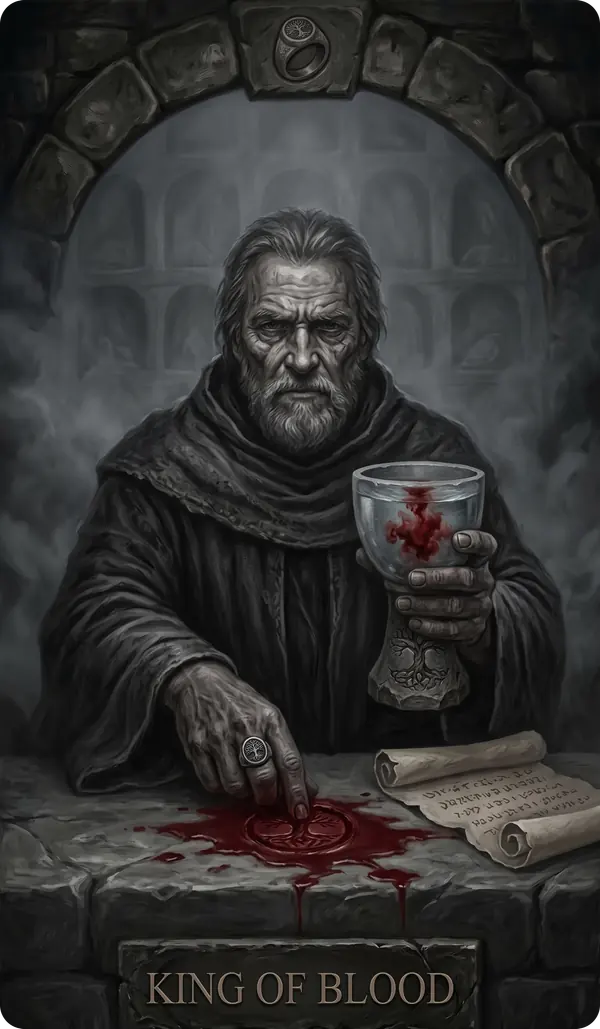
Six carved goblets stand close together on a stone altar, each holding dark merged blood. In front of them is a half-worn print of a child’s palm, pressed into blood long ago and dried dark brown, and beside it a small bone horse lies on its side.
The palm print and the worn toy lie in front of the cups, so the eye reads childhood first and the line’s full cups only behind it.
- six carved goblets
- child’s palm print
- dried blood
- small bone horse
- stone altar
- Ancestral Tree on the stems
This card in other decks
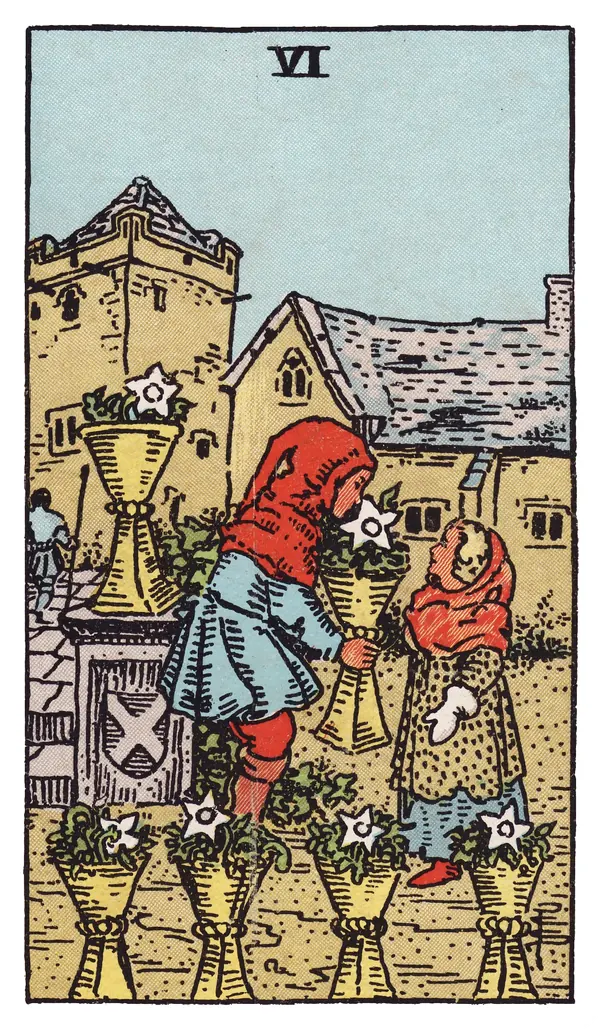 Rider–Waite–SmithSix of CupsA simple, genuine warmth from the past may have something worth offering to your present situation.
 City of WindowsSix of CupsDrawing on a memory for its experience of care and joy.
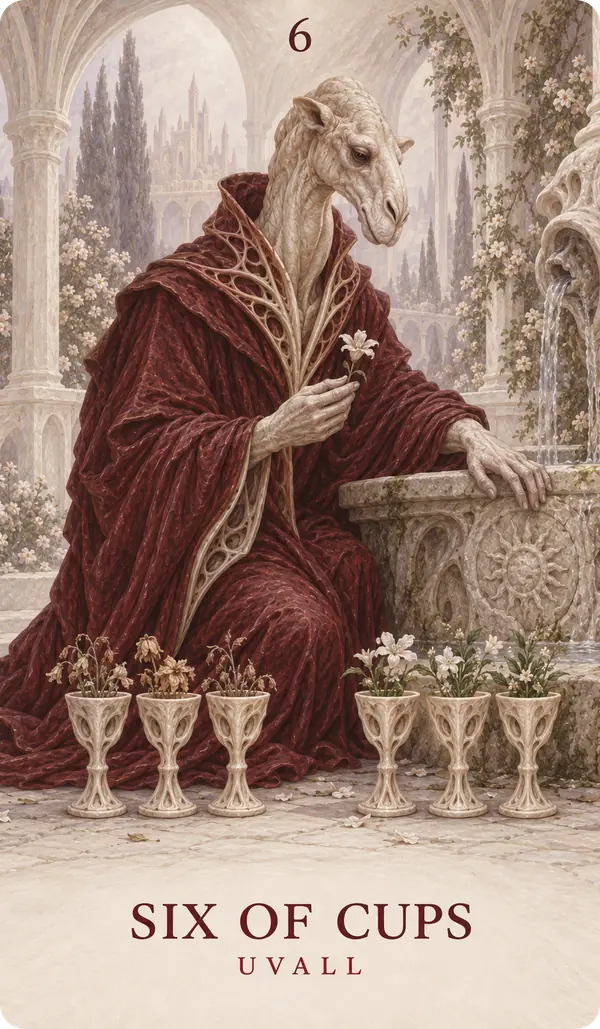 CarnalSix of CupsMemory returns as a resource, with its distortions intact.
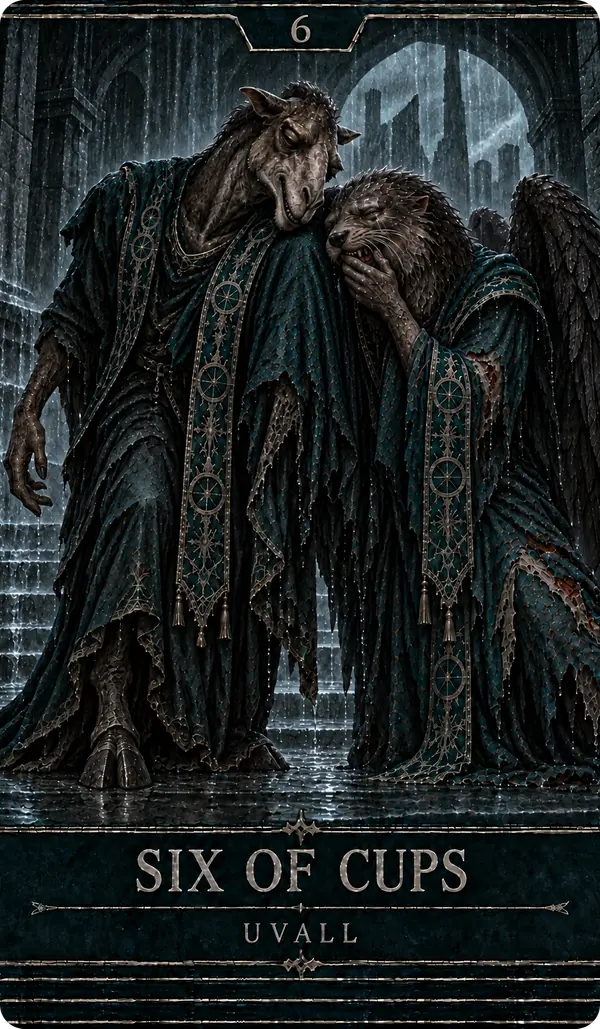 Crimson InfernoSix of CupsLet a nourishing memory support the present.
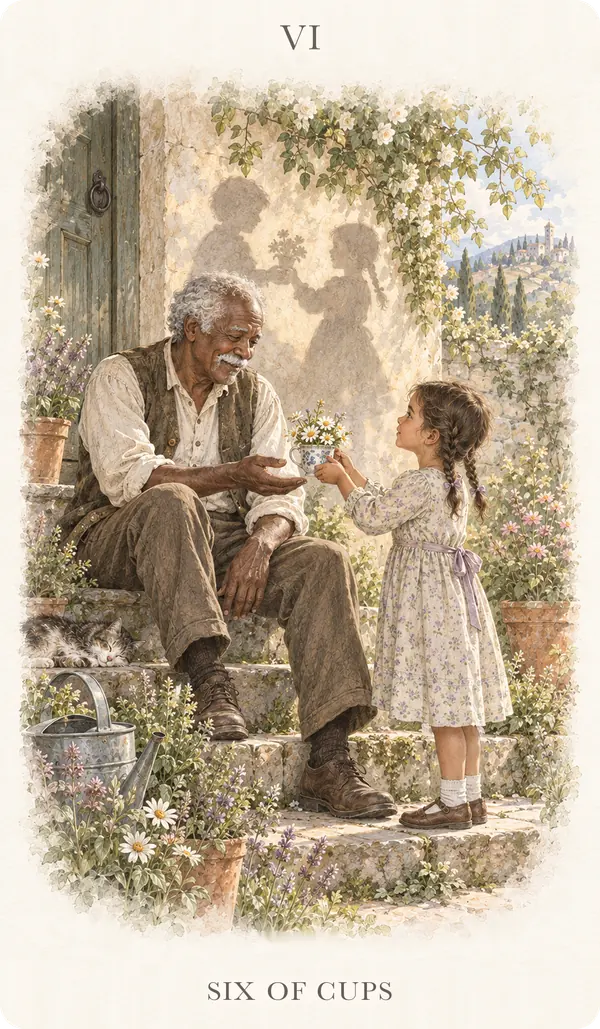 Everyday WondersSix of CupsMemory and a simple kindness from someone familiar.
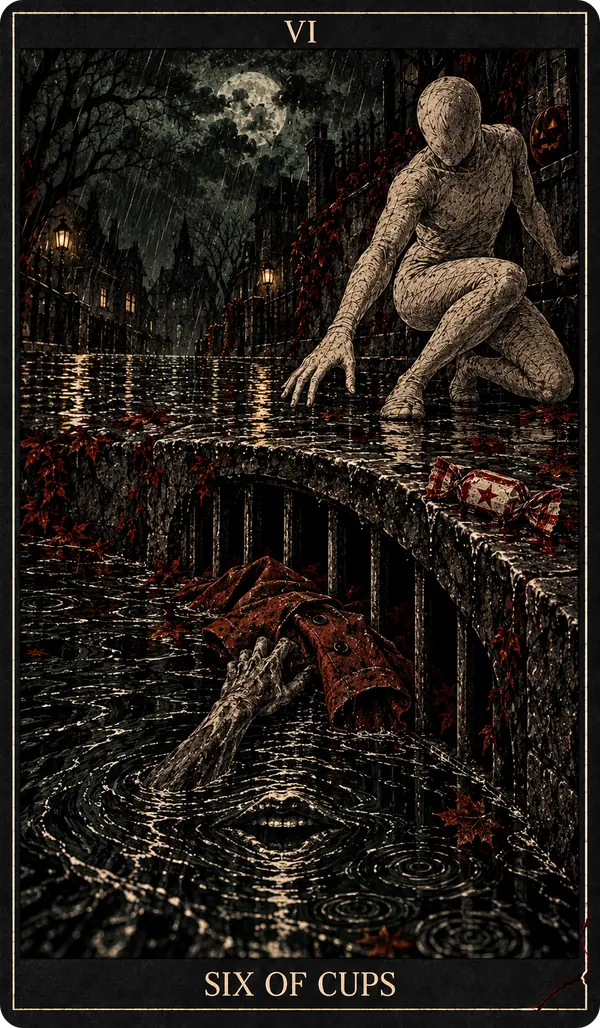 Mirror NightSix of CupsHonour the memory while staying with what is happening now.
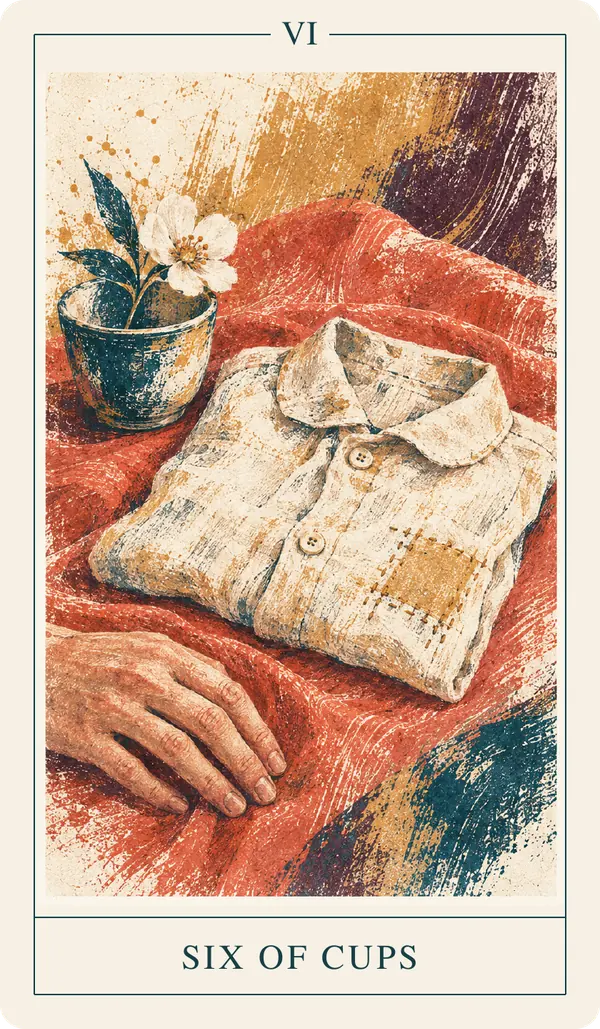 Self ContactSix of CupsAn earlier kindness or simple pleasure can nourish the present.
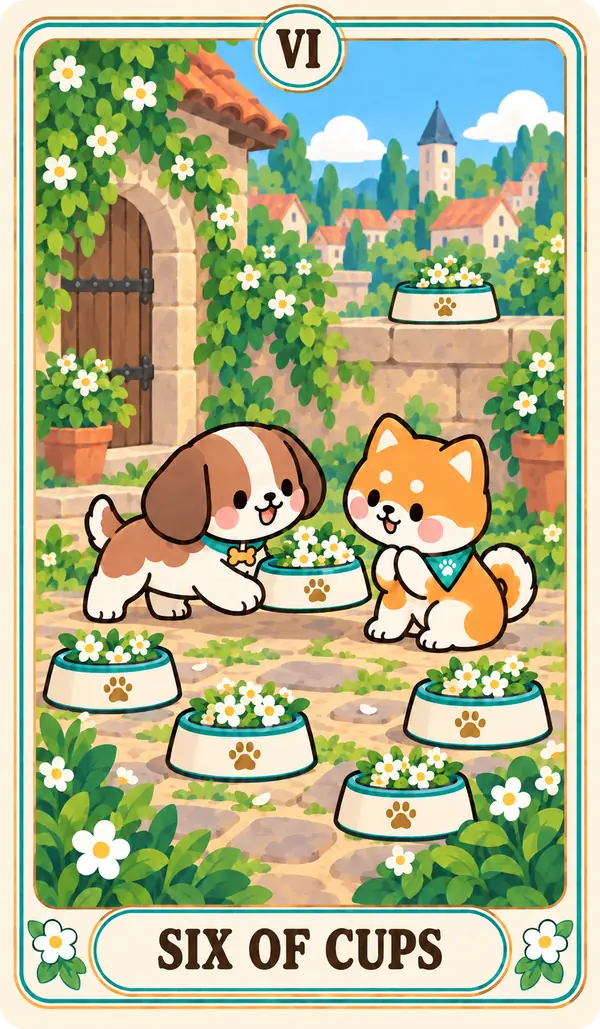 Shiba TownSix of CupsMemory; kindness; familiar affection; a gift from the past.
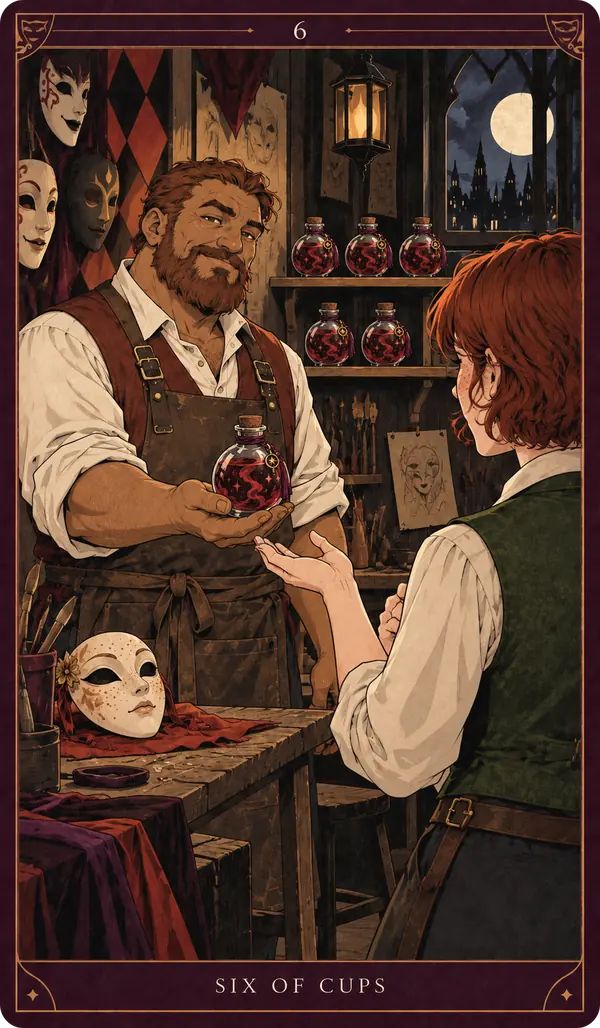 Velvet MasqueradeSix of CupsKindness carried forward from a shared past.
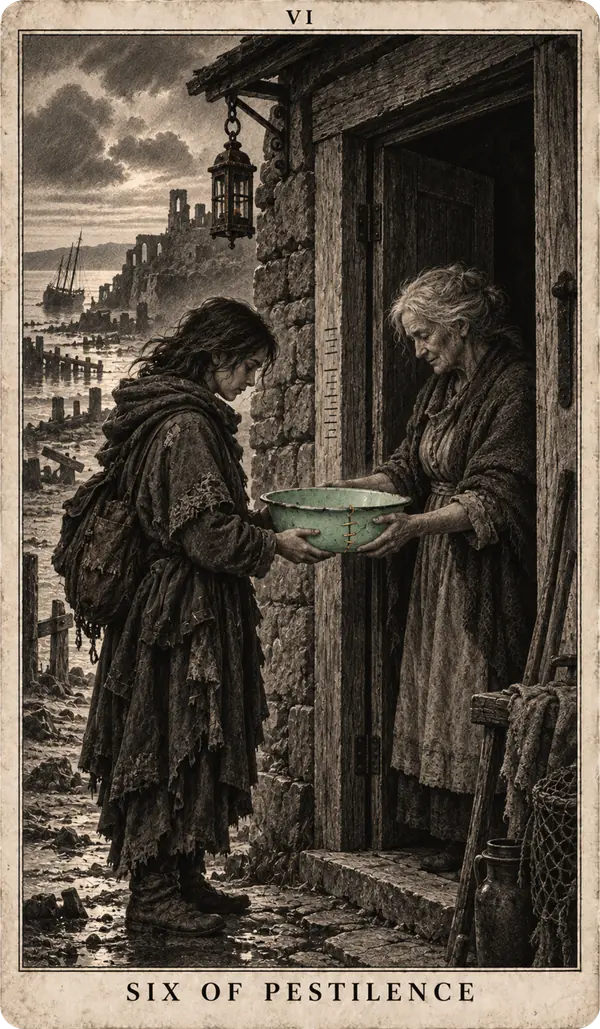 Four HorsemenSix of PestilenceAccept a gift from the past without asking the past to return unchanged.
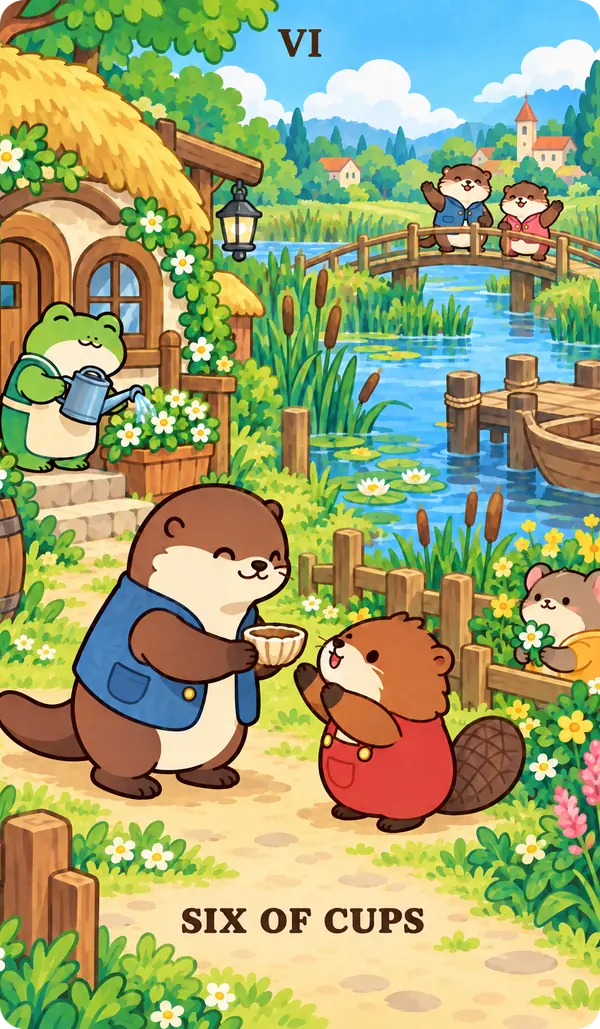 Four TrailsSix of CupsNostalgia, kindness, simple generosity.
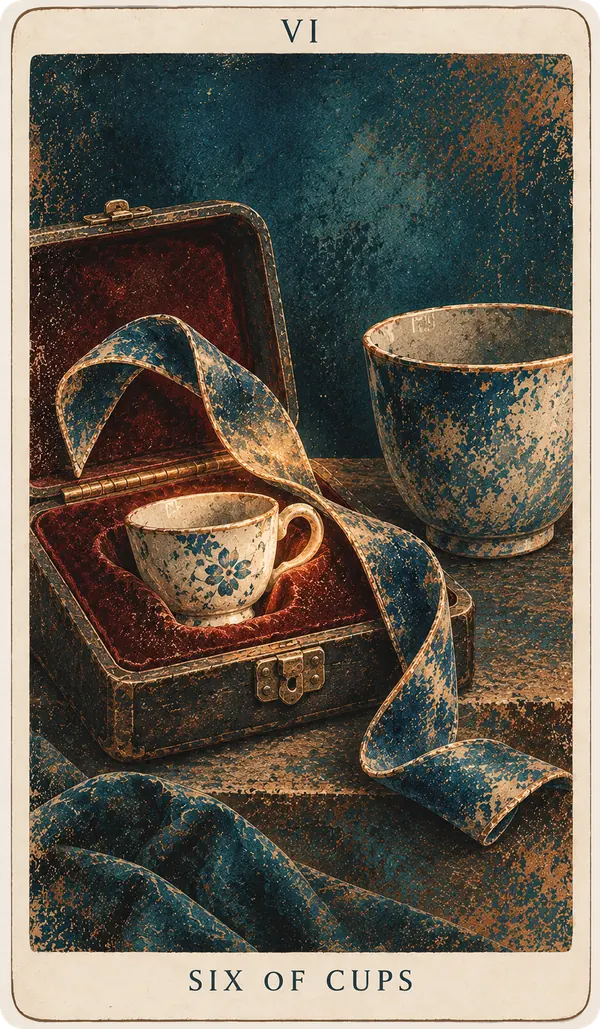 Living ThresholdSix of CupsRemembered tenderness offers shelter while a newer cup leaves room for today.
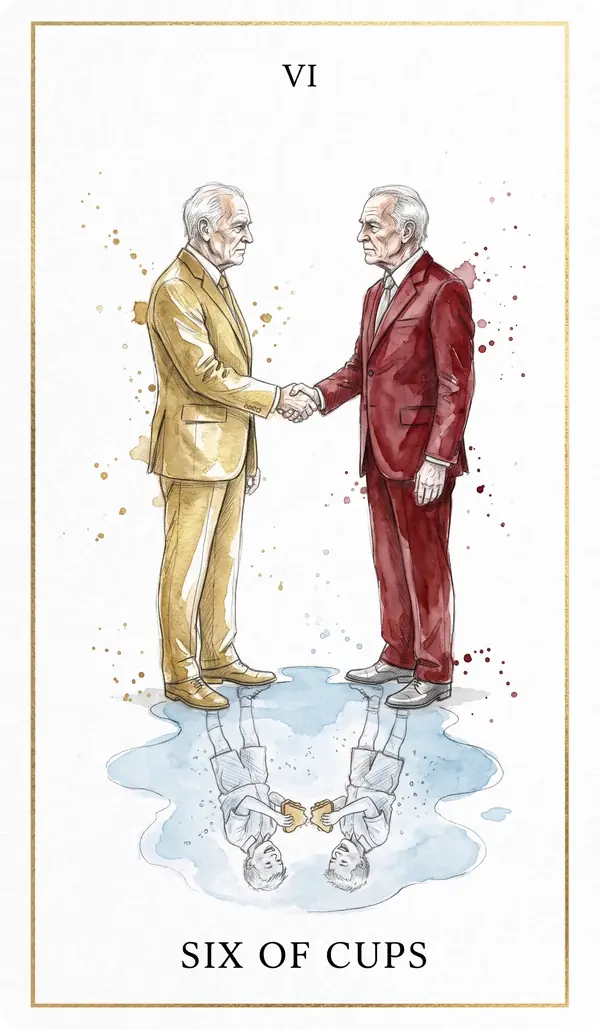 Colour of PowerSix of CupsOld connections hold when contracts fail; your own people need no checking.
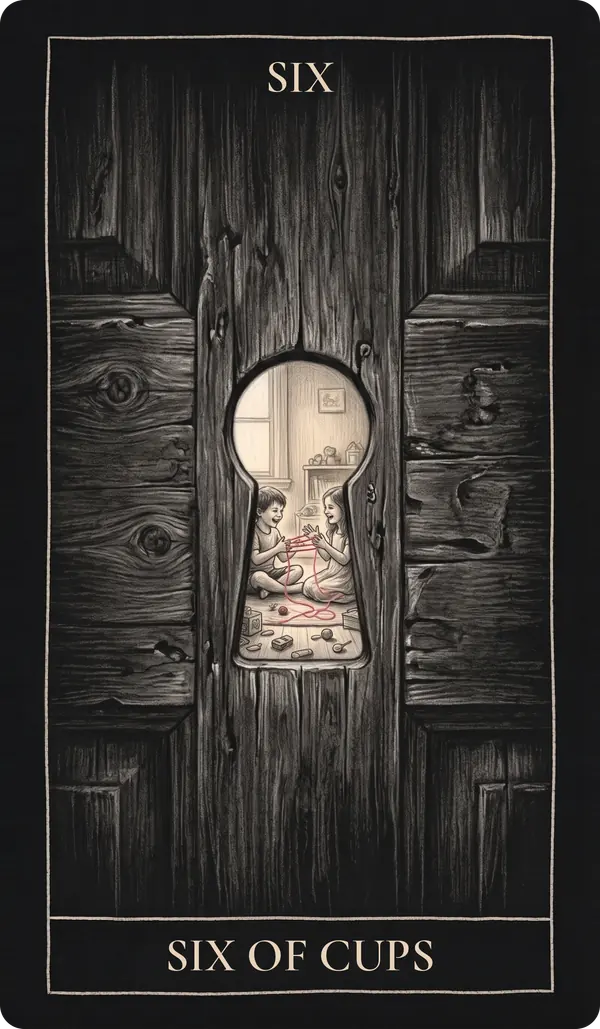 BoundSix of CupsA warm past glows through the keyhole, but the door stays locked.
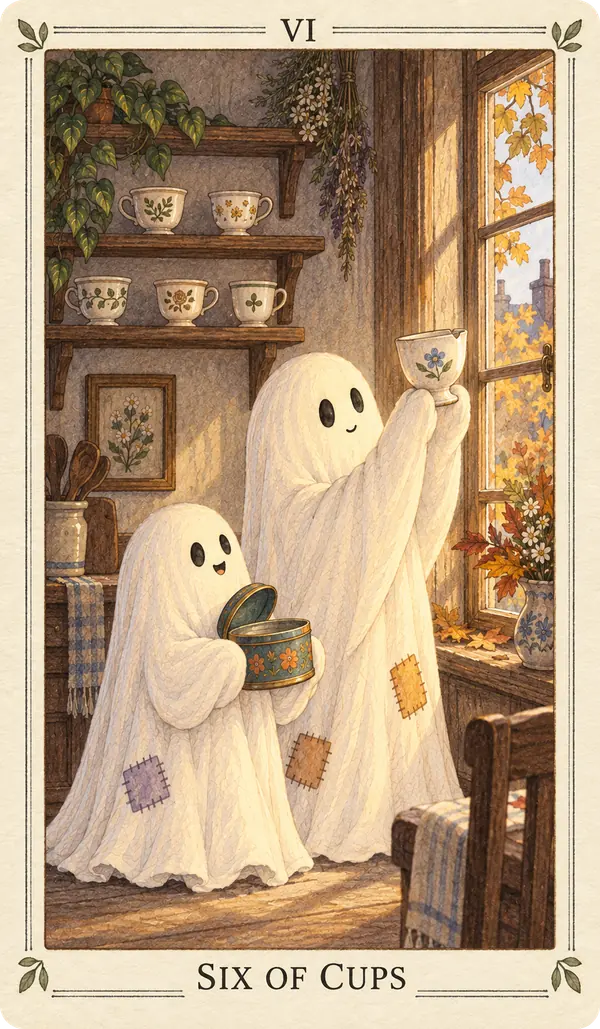 Cozy HauntSix of CupsReceive the past as a source of tenderness.
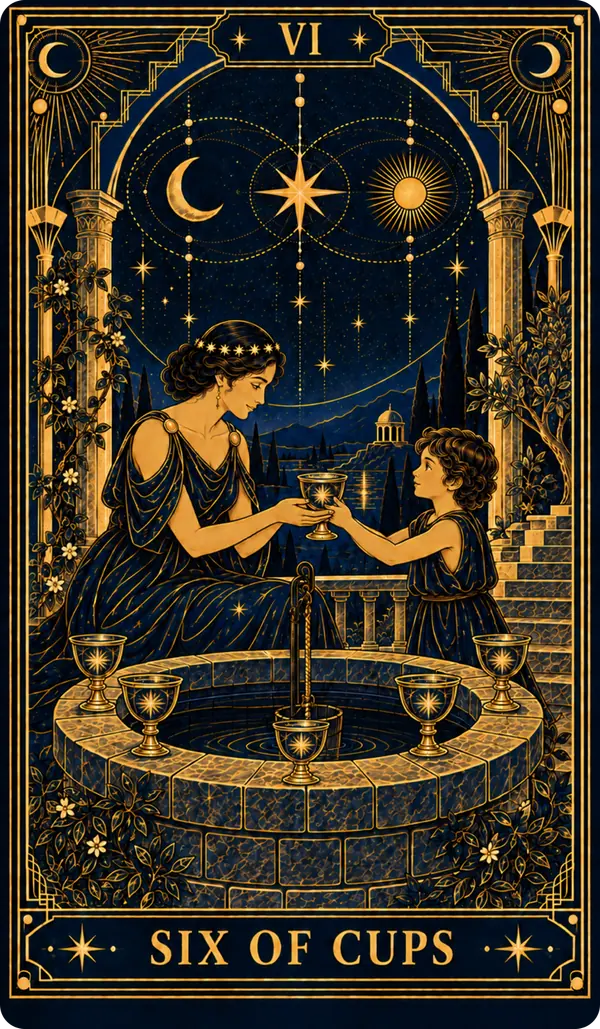 Celestial Night SkySix of CupsAn old skill in use.
Where it appears
Questions about this card
Is the Six of Cups a yes or no card in Familia?
The Six of Cups leans yes upright. An early, wordless belonging supports this, as long as the memory serves as a pillar rather than a place to stay. Reversed, it leans no. The answer is coming from how things used to be, and the present, where the decision actually lands, gets little say.
What does the Six of Cups mean for family?
For the family line, the Six of Cups upright shows childhood memory of home and early ties as a real support for the line now, a kinship that needed no oaths. Old stories still should not replace talking to people as they are today. Reversed, you may still be cast in a childhood role in the family, or casting someone else in one, and stepping back into it happens automatically.
What does the Six of Cups mean reversed in Familia?
Reversed, the Six of Cups is captivity to the past. The hand reaches back to the old picture instead of forward to what is new, and a frozen childhood role takes the place of life as it is. In love, an old idea of love shapes things more than the person in front of you. A partner measured against how things used to be never quite measures up.